
There are many species of pine tree found across Europe, and even in the flesh they can extremely hard to tell apart. All those shown here have leaves split into multiple needles and bear woody cones. Now largely planted to produce commercial timber, in the past most have grown naturally in ancient forests.

Albrecht Altdorfer pioneered the use of repoussoir with trees in his Landscape of the Danube near Regensburg. The tree in the left foreground is most probably a Scots pine, and further examples stand proud in the mixed woodland seen beyond.
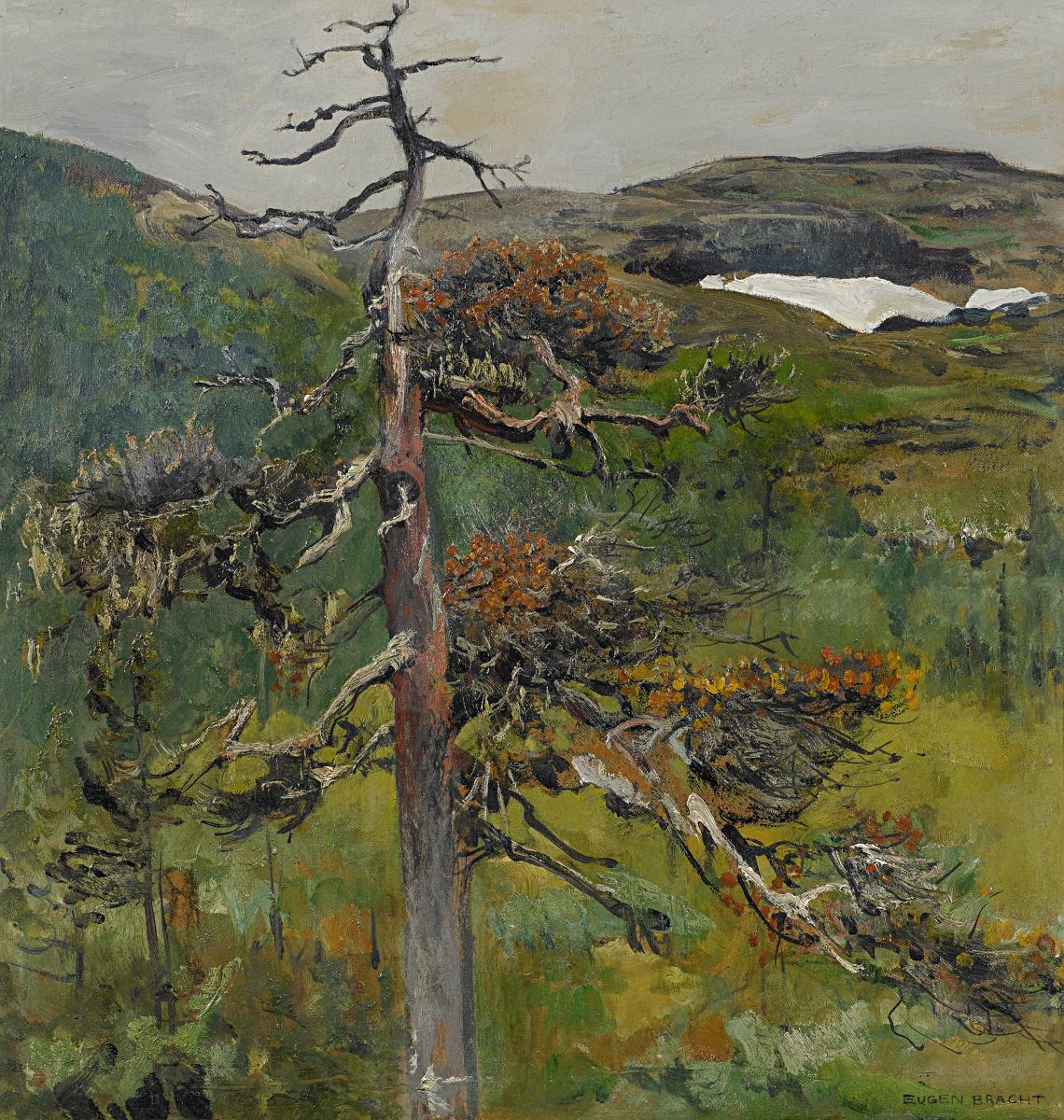
Eugen Bracht apparently painted The Old Pine during a visit to Norway in 1903. This tree has seen better days, and it’s now hard to tell its species.

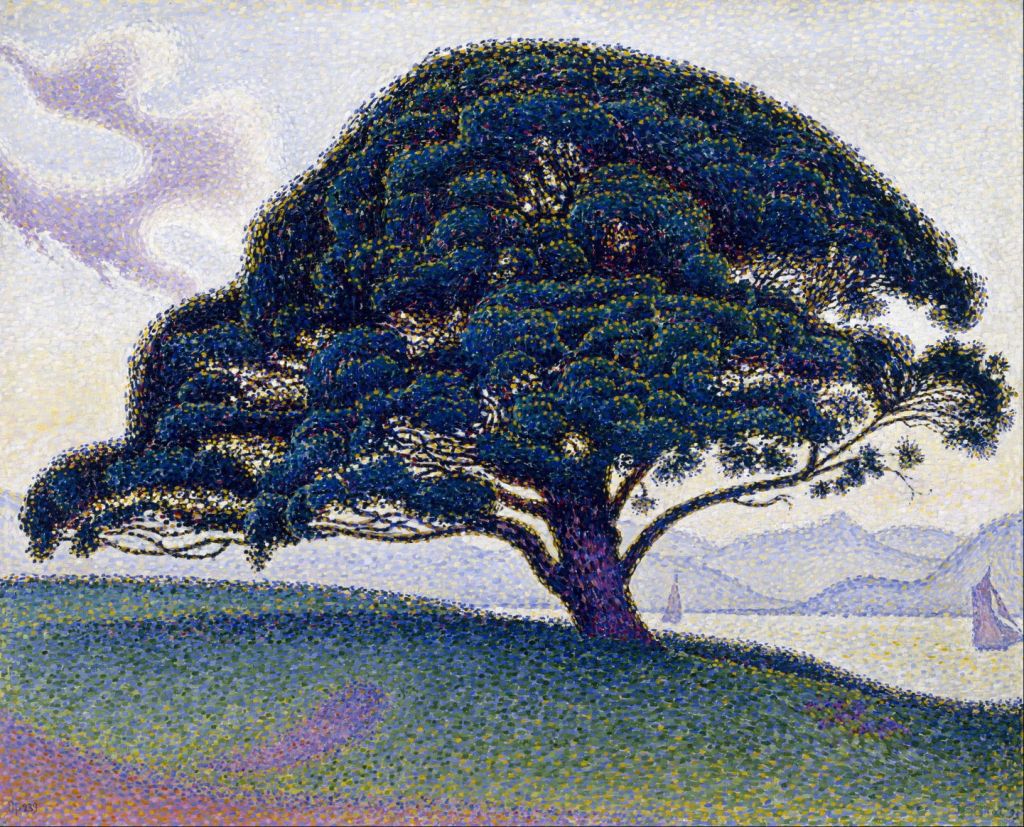
While exploring Saint-Tropez when he returned to the French Mediterranean coast in 1893, Paul Signac came across this huge umbrella or stone pine by the villa of a certain Monsieur Bonaventure, which he painted as The Bonaventure Pine.
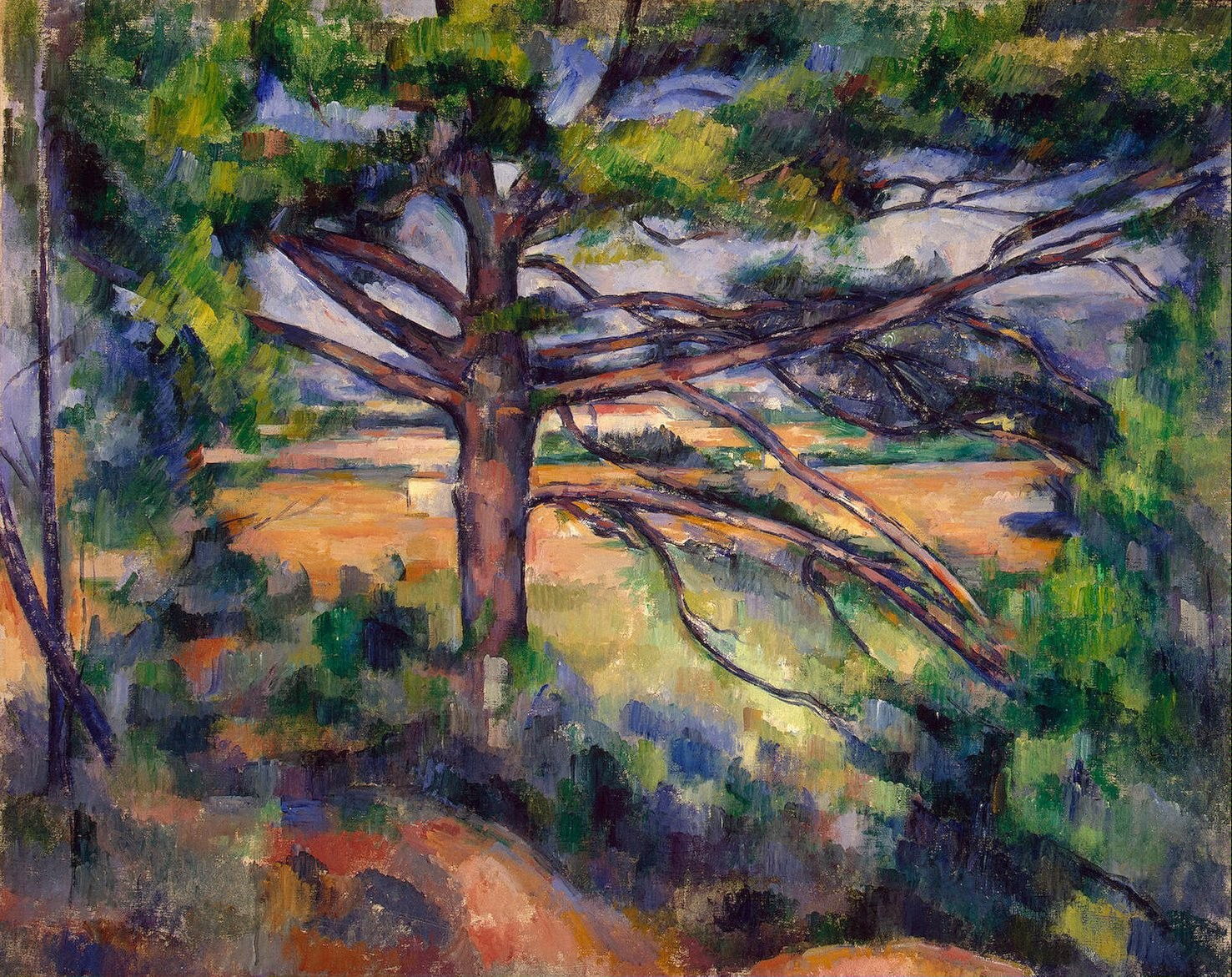
Paul Cézanne frequently included isolated pine trees, probably maritime pines, in his views around Aix-en-Provence. By 1890-95 when he painted this Large Pine and Red Earth, he was using his constructive stroke throughout the foreground foliage and vegetation, and it even starts to appear in patches on the trunk. Maritime pines are the source of turpentine and rosin, so are associated with both oil painting and string instruments.
These maritime pines are common along the Mediterranean coast, where they became featured in many paintings.
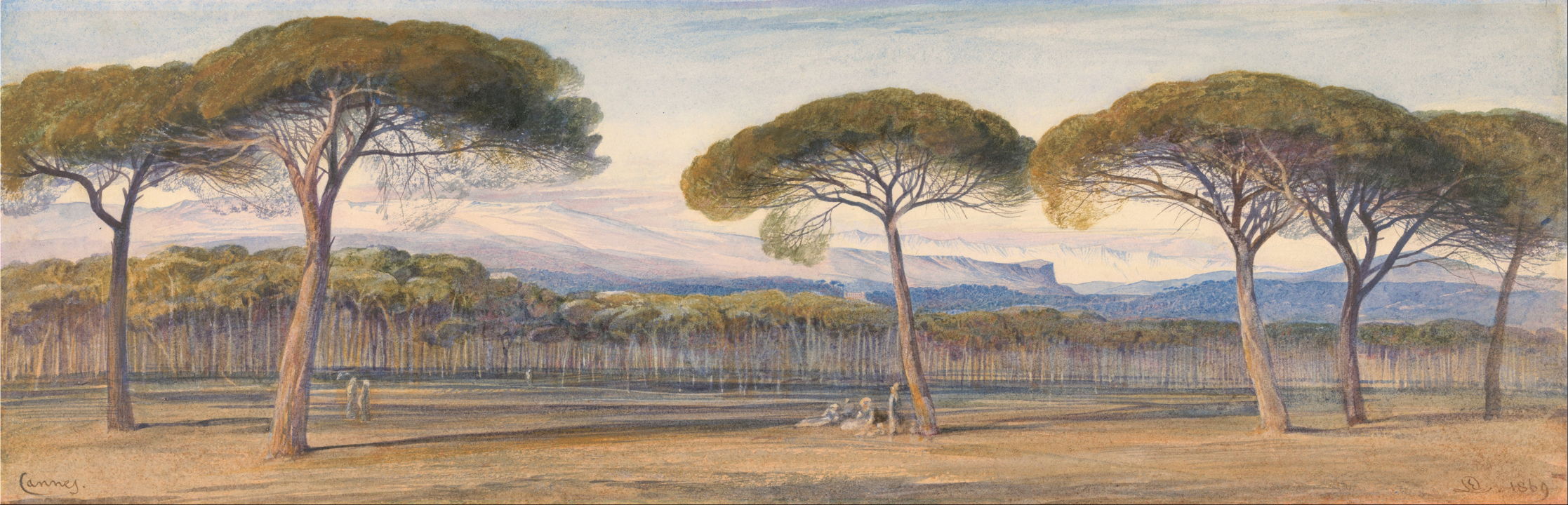
Edward Lear’s watercolour of A View of the Pine Woods Above Cannes from 1869 shows a small forest that must have disappeared as this area was developed later in the century.
It was Théo van Rysselberghe who became the most obsessed with these trees where they almost came into contact with the sea.

In Pointe Saint-Pierre, Saint-Tropez (1896) van Rysselberghe uses traditional anatomical technique to model these pines in the hot light of the Mediterranean coast. Their structure is explicit, each tree assembled from its hundreds of small marks laid along branches, then giving rise to their needles.

In the early years of the twentieth century, he painted recurrent motifs of loose groups of pines behind the beach. In The Mediterranean at Le Lavandou from 1904 there are no bathers or other figures, just the curved and twisting trunks and branches, with their brilliant needles and dark blue shadows.
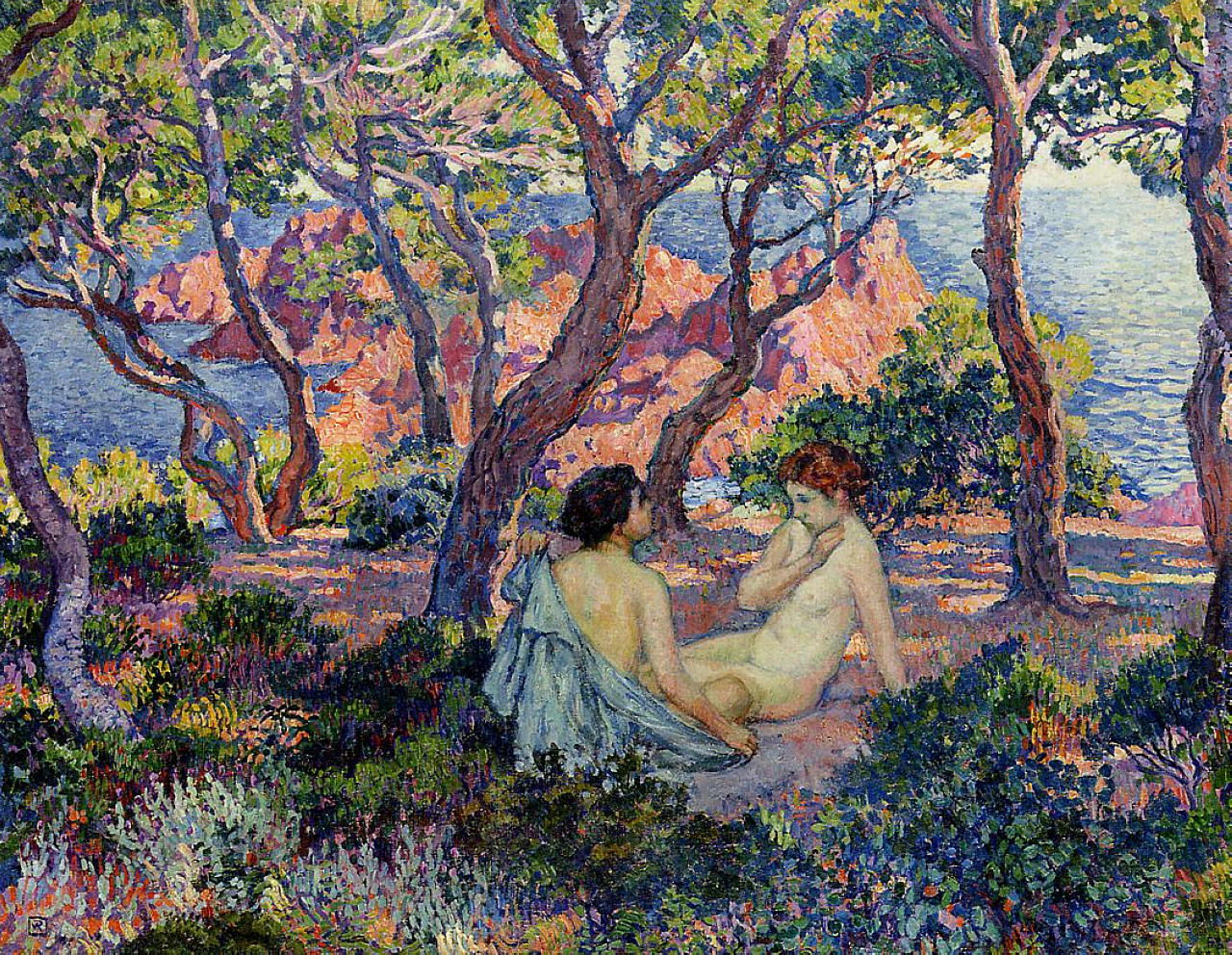
The following year In the Shade of the Pines introduces a couple of bathers, and his earlier fine marks have been lost. Instead he builds the trunks, branches, needles, and other vegetation with orientated brushstrokes, in a manner not unlike that of Vincent van Gogh before his marks organised into whorls and swirls. These enhance the contrast in textures between trees, rocks, sea, and skin.
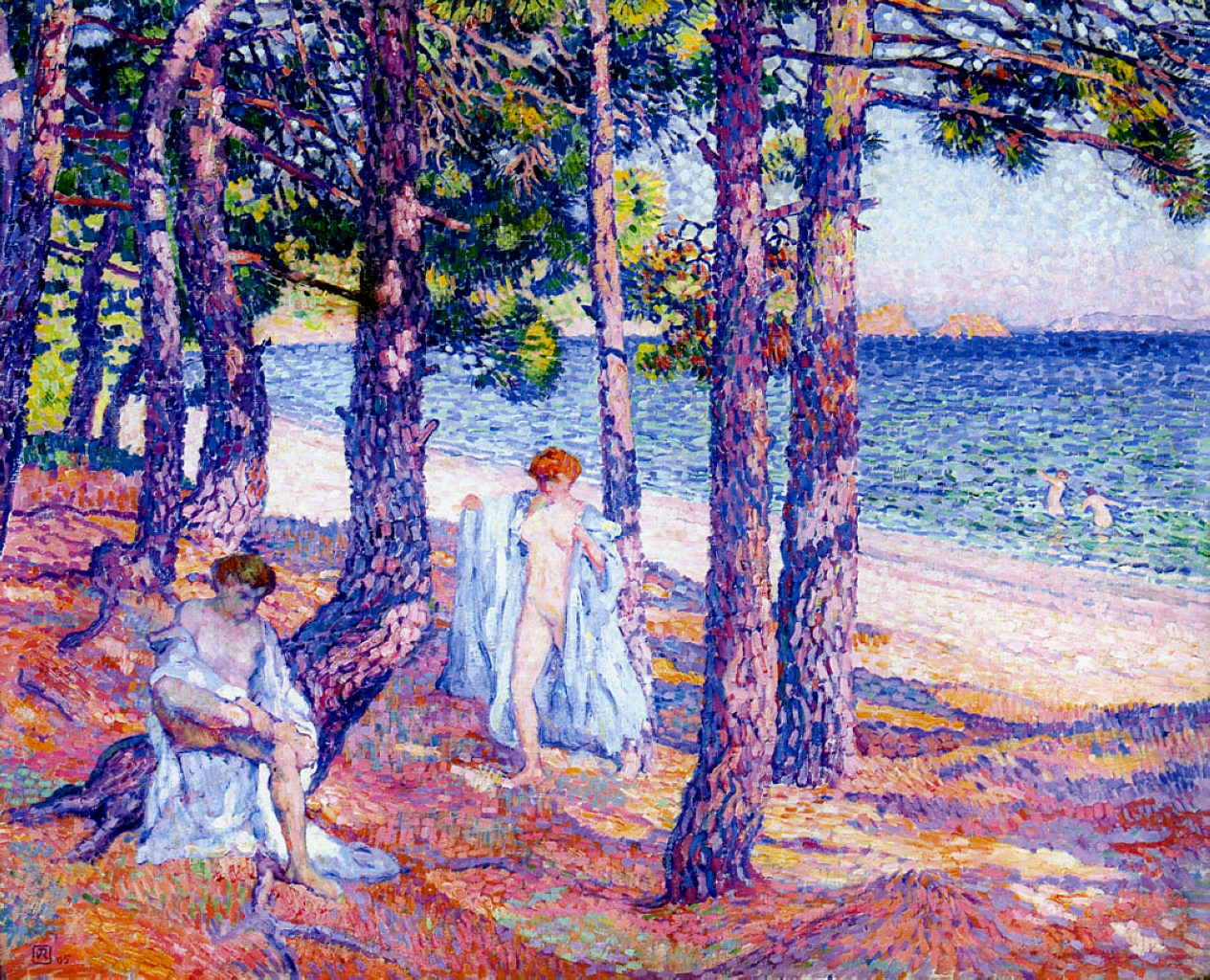
In his secluded Bathers under the Pines at Cavalière (1905), van Rysselberghe has added more young women.
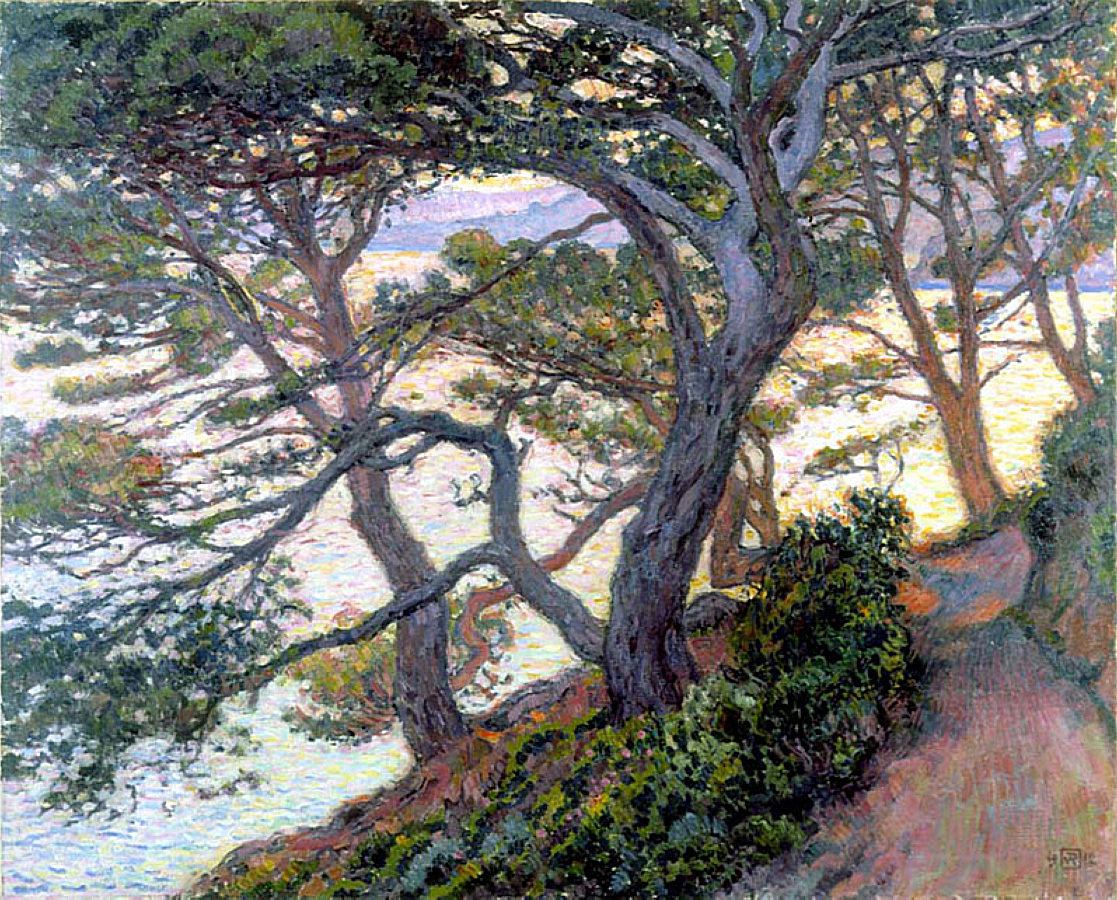
Pines at Pointe Layet (1912) progresses these to a steep cliff without beach or bathers. His colours are more sombre again, and his brushstrokes worked in to model texture in the trunks.

His Pine by the Mediterranean Sea (1916) appears almost as substantial as the bleached rocks below it. Contrast between the lit segments and those in cast shadow behind is very wide, as experienced in the Midi.

Probably the last variation of his pines-beach-bathers motifs, he painted Bathers under the Pines by the Sea in the year that he died. It uses high chroma colours in its shadows, with near-primary red marking the highlights on the rough bark of the pine trunks, ground, and flesh, and livid green over much of the rest of the flesh.

The twisted pines seen in Martín Rico’s early oil painting of this Guadarrama Landscape could be any of several species, as this part of Spain has old Scots pine forests, Austrian, Pyrenean and stone pines all growing naturally. This rugged area is now a national park, and is to the north-east of El Escorial, with the Sierra de Guadarrama mountains in the background.

