
With El Niño in full swing, the forecasters are warning us here that we can expect an autumn and winter of severe storms. This weekend I look at one of the great challenges to landscape painters, how to depict invisible air when it’s blowing in a howling gale.
Winds are usually strongest and have most visible effect where the sea meets land on the coast. In the days when sailing vessels normally kept in sight of the coast as much as possible, this led to ships being blown onto rocks and being wrecked, so providing one of the surrogates for depicting the wind.
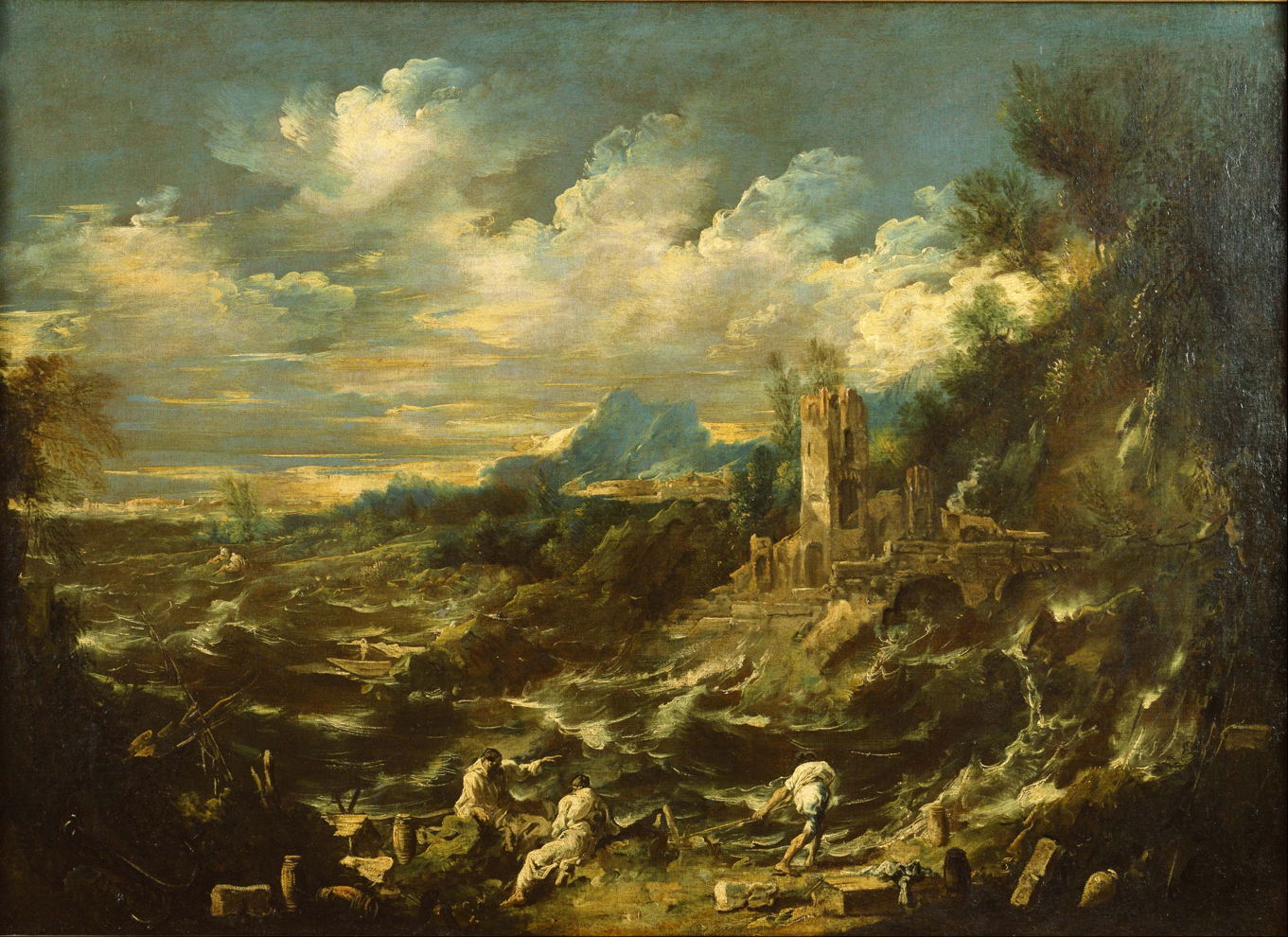
By the early eighteenth century, landscape artists were starting to paint views of the coast during storms, such as Alessandro Magnasco’s Landscape with Stormy Sea, painted between 1718-25. Born and resident in the port of Genoa, he would have been only too familiar with the storms of the Mediterranean, and their short, steep seas, as he shows here.
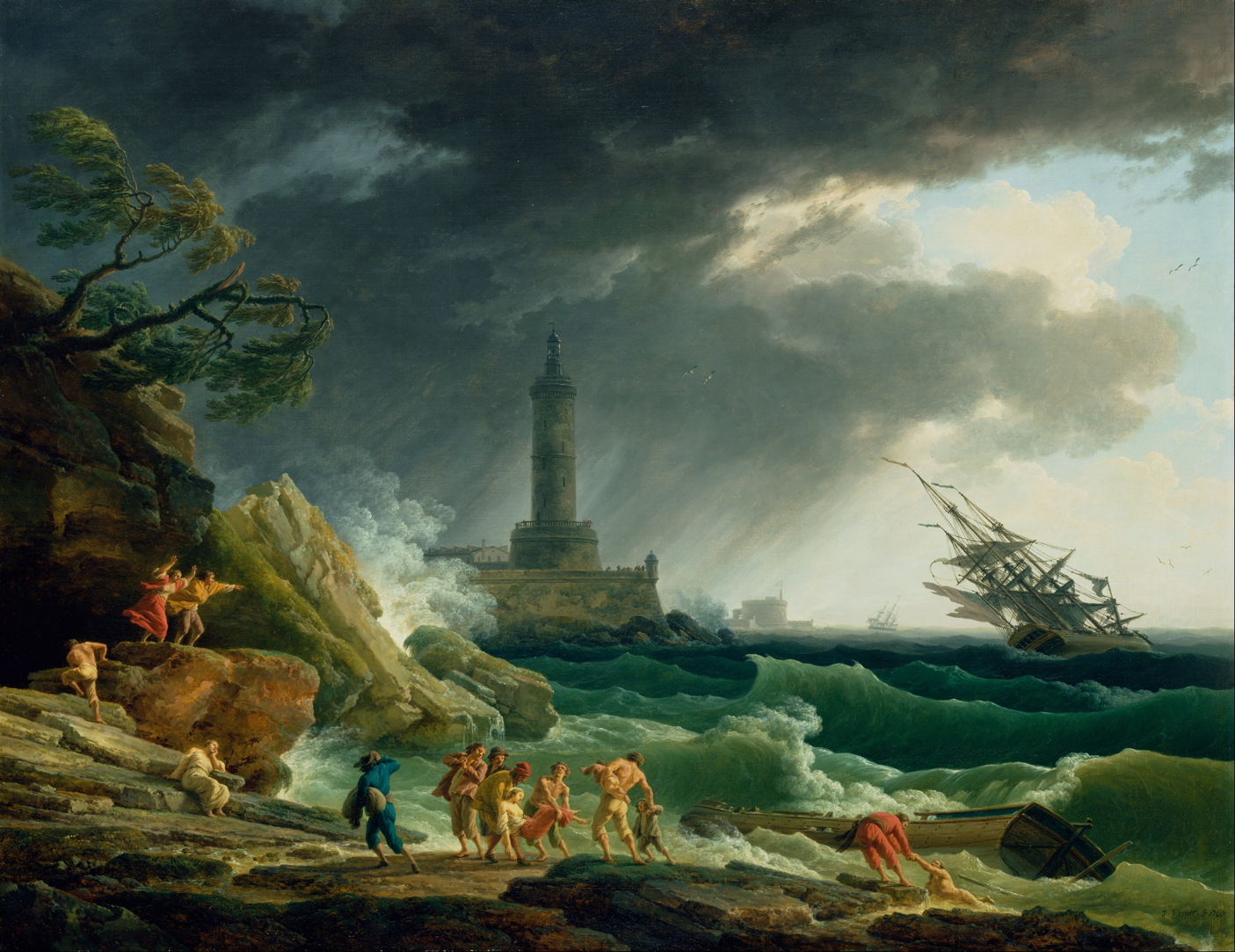
Claude Vernet’s A Storm on a Mediterranean Coast (1767) combines a wrecking with keenly-observed signs of the weather, including the coincidence of reflected and oncoming waves just off its small beach, and the trees at the upper left. Although this was painted in the studio, Vernet probably worked from sketches he had made during storms.
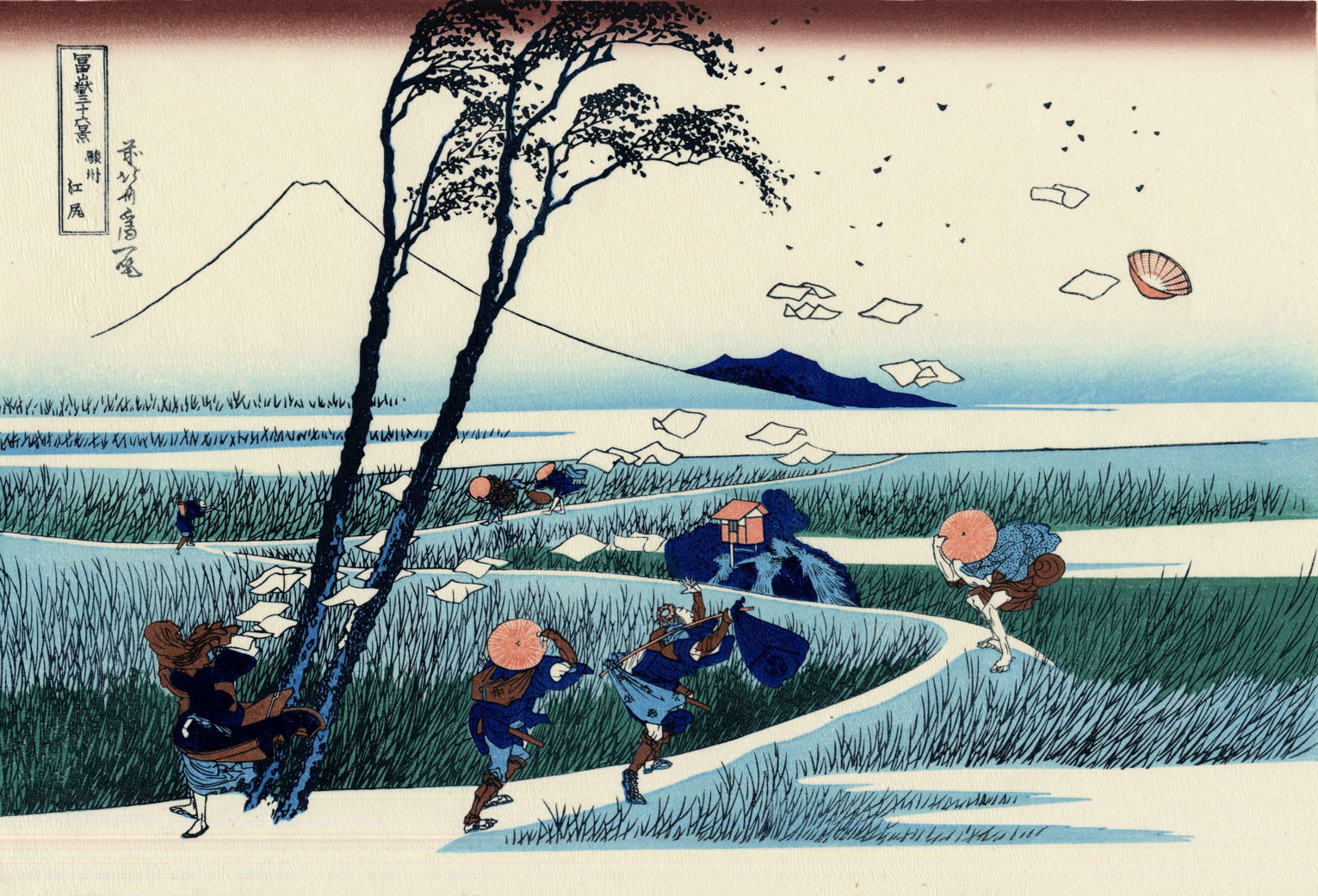
One of the simplest and most effective images of people in the wind is Hokusai’s (葛飾北斎) brilliant woodblock print from about 1830 of『駿州江尻』(Sunshū Ejiri), Ejiri in Suruga Province, also known as Travellers Caught in a Sudden breeze at Ejiri or A Sudden Gust of Wind. On their own, the trees and grass couldn’t have the same visual impact as blown hats, clothing, and most of all the papertrail reaching high into the sky.

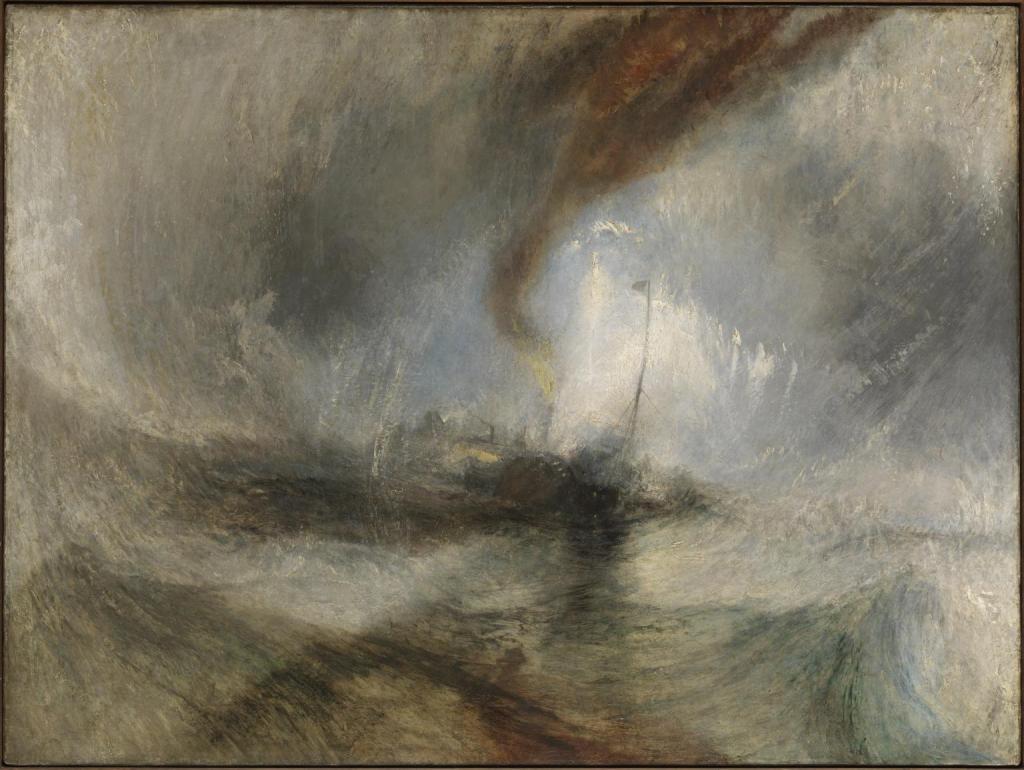
JMW Turner is one of the great masters of the shipwreck/storm maritime scene. My favourite example is this Snow Storm, Steam Boat off a Harbour’s Mouth (1842). This was the work for which it was claimed that Turner had himself lashed to the mast so that he could observe the storm properly, almost certainly false and quite unnecessary anyway: as a seasoned Channel traveller, Turner would have had ample previous experience. This also shows one of Turner’s most distinctive features in painting storms, the vortex, with his subject seen in its central eye. Although not exactly natural, it’s certainly atmospheric.
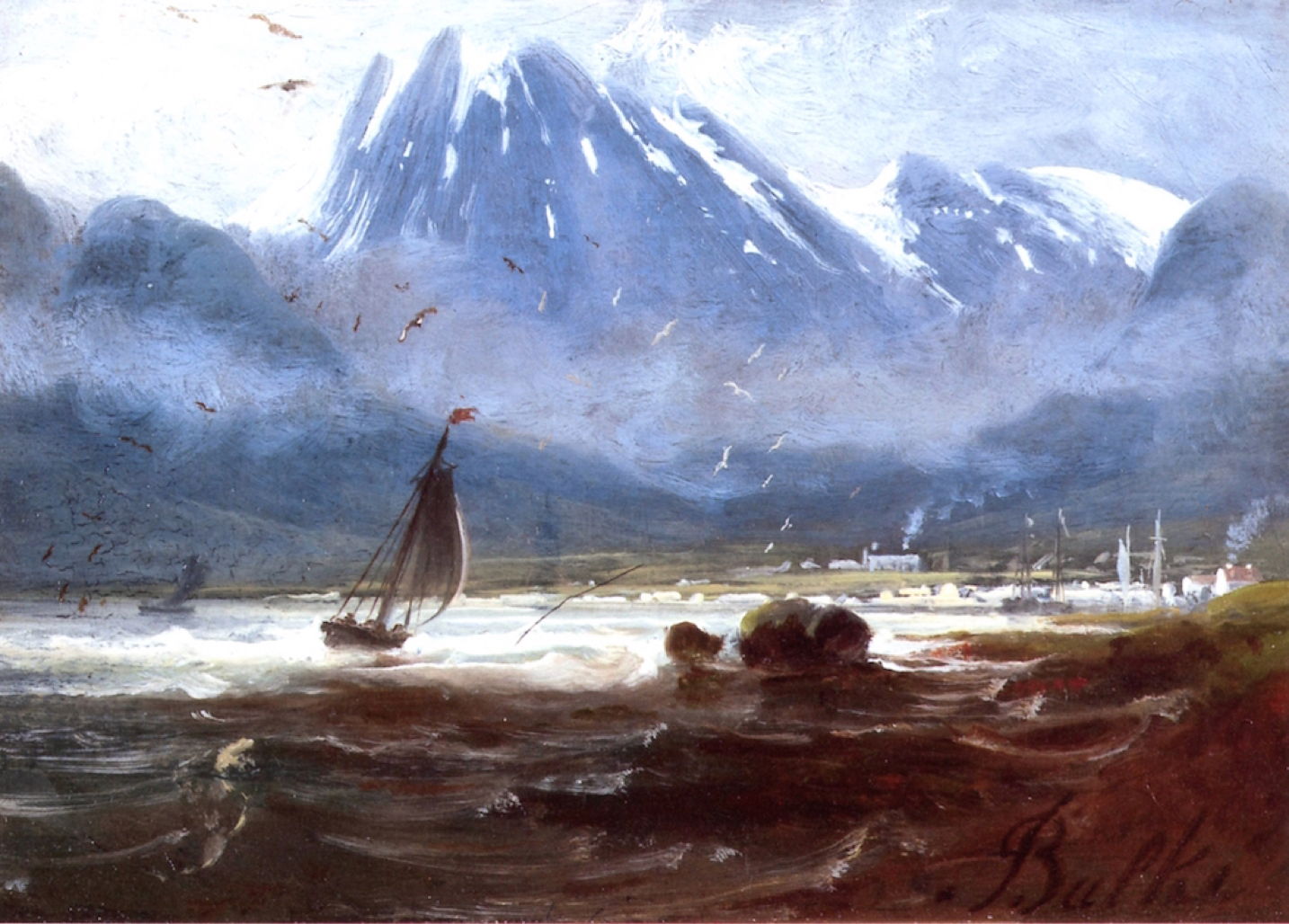
Peder Balke takes advantage of the rich clues provided in The Harbor at Skjervøy (c 1844-46). In this small fishing port in Troms, in the far north of Norway, the wind fills the sky with wheeling seabirds, heels the yachts, turns the sea white from breaking waves, and drives distant smoke almost horizontally.
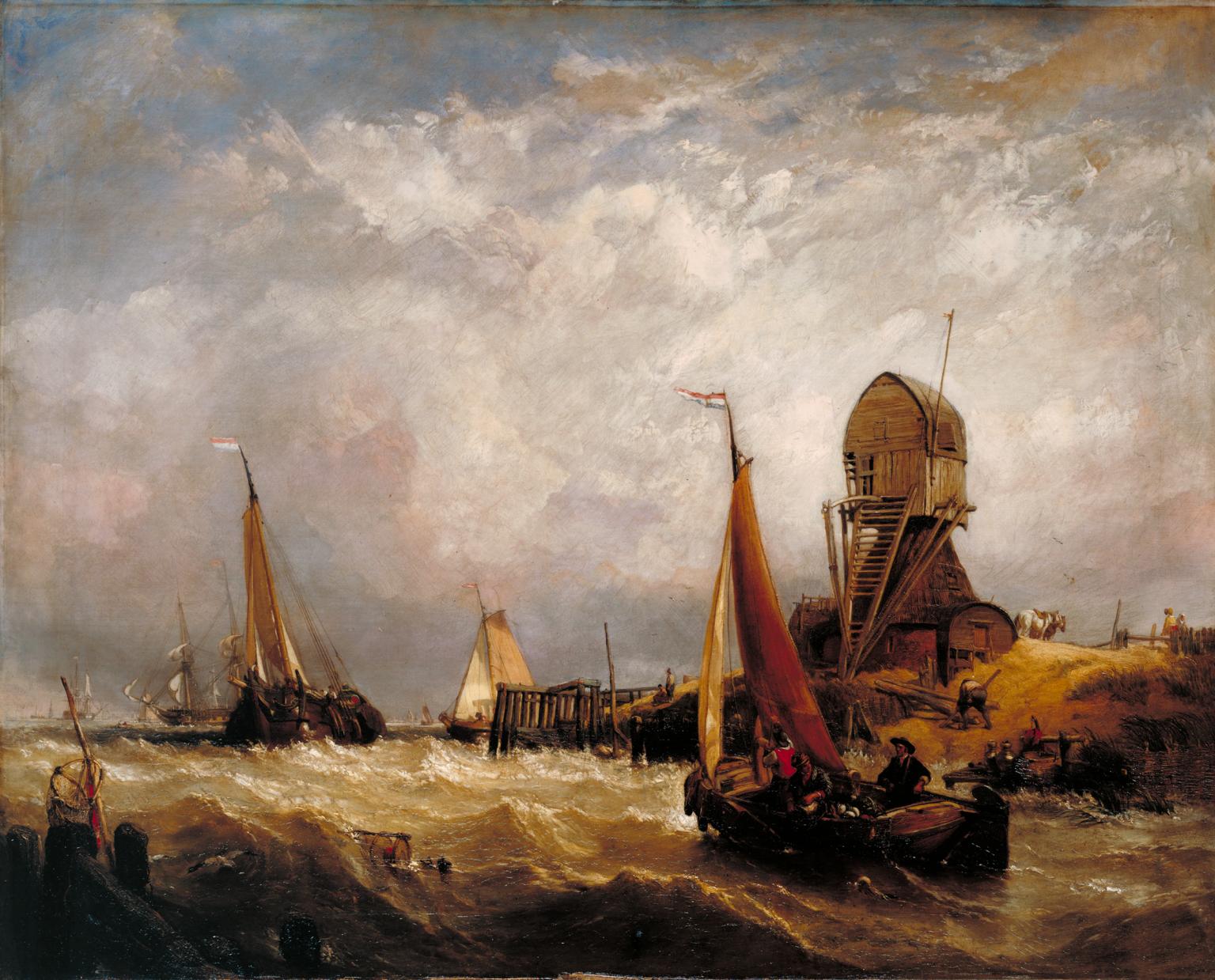
Clarkson Frederick Stanfield made his reputation from marine paintings showing the effects of wind and waves. In the summer of 1843, he toured the Netherlands, finding fresh motifs for his oil paintings, including Oude Scheld – Texel Island, Looking towards Nieuwe Diep and the Zuider Zee, completed in his studio the following year. Its fragmented clouds are paralleled by the frequent small waves, together building the effect of a strong offshore wind. The critics loved it.

Late in his career, Gustave Courbet’s coastal paintings came to concentrate on waves breaking on the beach, as in his Autumn Sea from 1867, where two sailing boats are the only forms to punctuate its horizon. They are heeling in the wind, which is also starting to blow the tops off the waves, as those dirty clouds scud rapidly across the sky.
On land, though, the painter has to work harder to convince the viewer, enlisting the help of trees and their foliage.

Thomas Gainsborough’s sketchy Landscape with Cottage and Church (1771-72) is one of the first works to use angled highlights over the foliage of trees to make them appear as if they’re moving in the wind, and its style was far ahead of its time.

Although trees are a help when depicting wind, Daubigny’s undated October manages very well with tell-tale smoke rising from burning stubble in its open fields.

Gustave Courbet shows how a ‘leaning’ sky can amplify windswept branches, in The Gust of Wind from about 1865.
Tomorrow I’ll add to those surrogates with washing and an umbrella.

