
This weekend’s journey along the north French coast started yesterday at the ferry port of Calais, and had almost reached another major port of le Havre, where we resume in the company of some of Europe’s finest landscape painters. From here we head ever westward until we reach the North Atlantic Ocean.
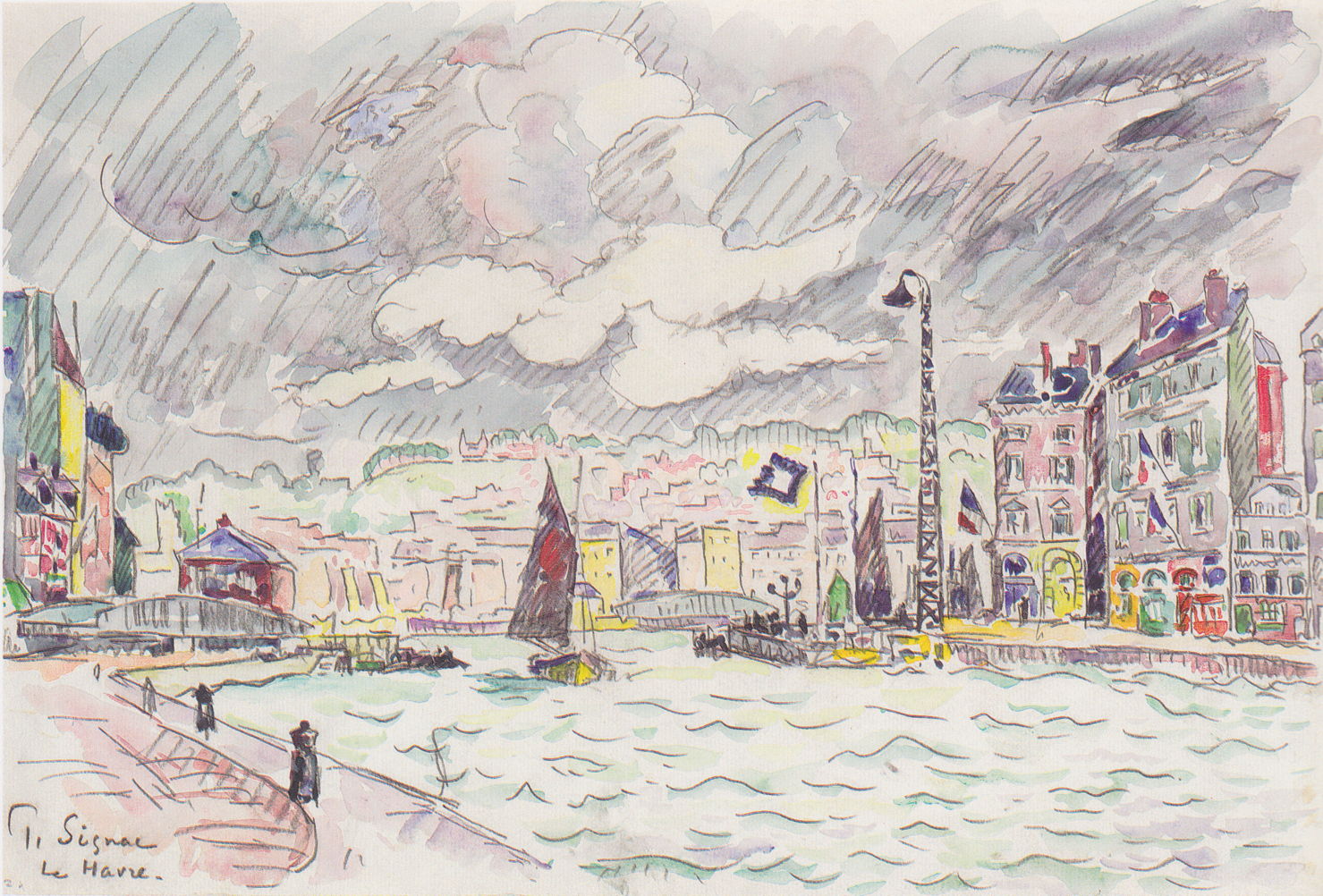
Paul Signac’s fascination for the ports of France wasn’t confined to those of the Midi, or the more picturesque. His view of Le Havre with Rain Clouds from 1922 shows this major port on the northern bank of the estuary of the River Seine, in typical weather. Le Havre was almost completely destroyed during the Second World War, and had to be rebuilt after 1945.

Much earlier, Claude Monet had painted these fishing boats in fairer conditions, on the other side of the mouth of the River Seine, in The Beach at Sainte-Adresse (1867).
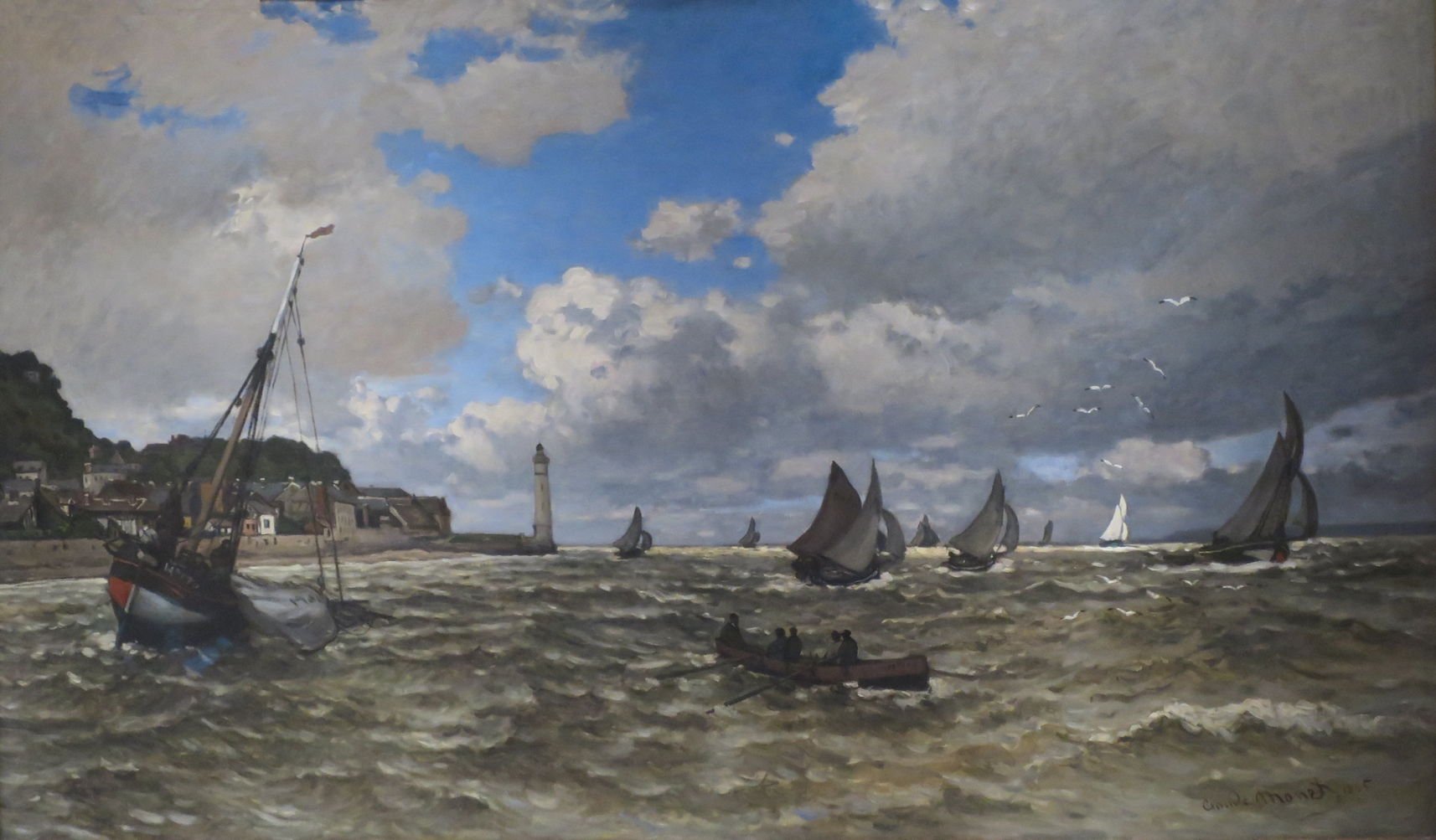
Monet had moved to Le Havre when he was only four years old, and it was there that he grew up and started his career as an artist. He painted The Mouth of the Seine, Honfleur in 1865, when he was still working in realist style, although even at this stage Boudin’s more painterly approach is apparent in his brushwork.
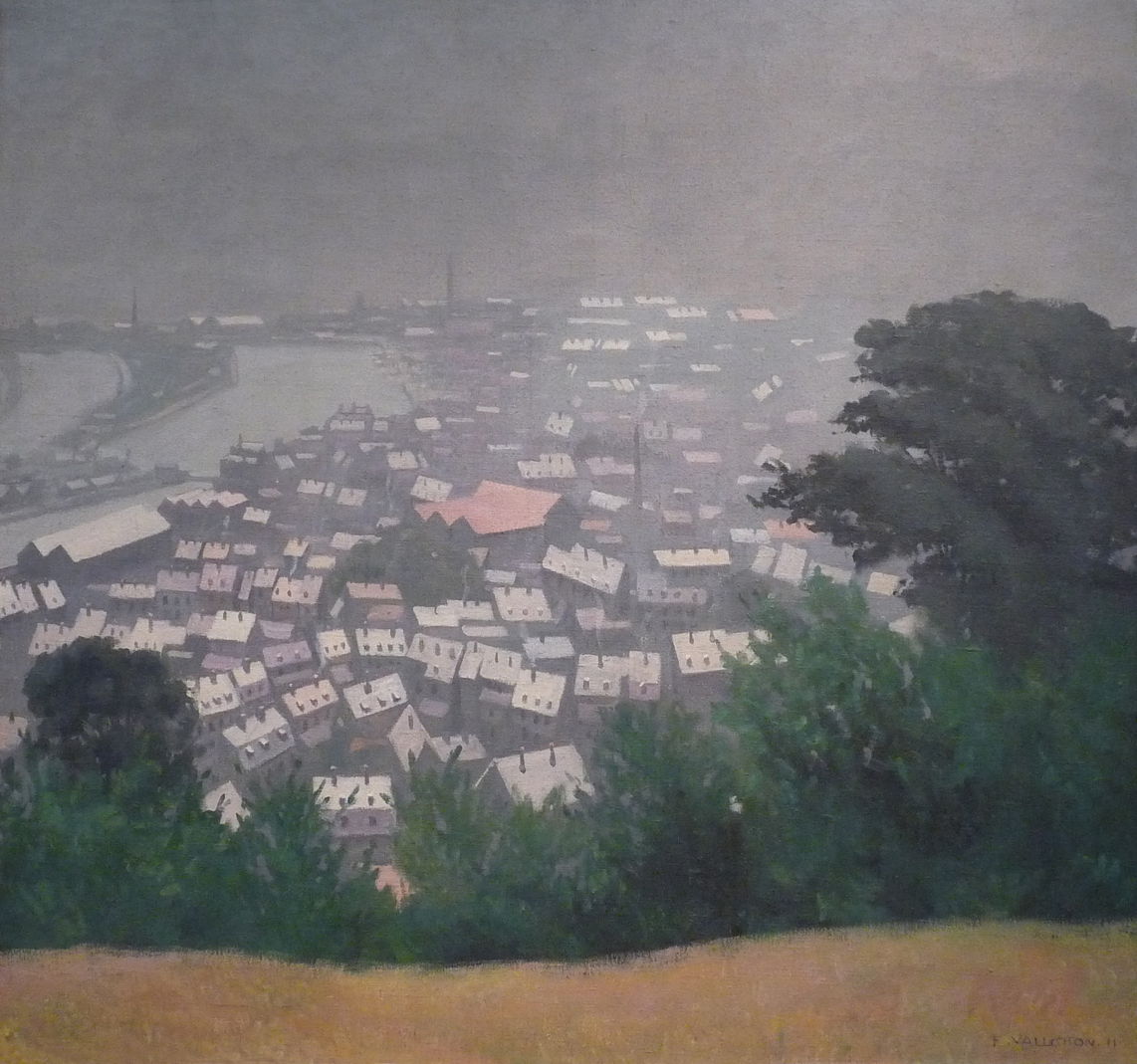
Félix Vallotton’s unconventional view of Honfleur in Fog from 1911 looks down from Mont-Joli to the west of the town centre, to capture exactly the sort of transient effects that had been the concern of the Impressionists who had painted there forty years earlier.
Although the small ports along much of the Normandy coast have been popular with a succession of landscape artists, our next stop is Gréville, just to the west of Cherbourg, at the tip of the peninsula poking up towards the Isle of Wight on the northern coast.
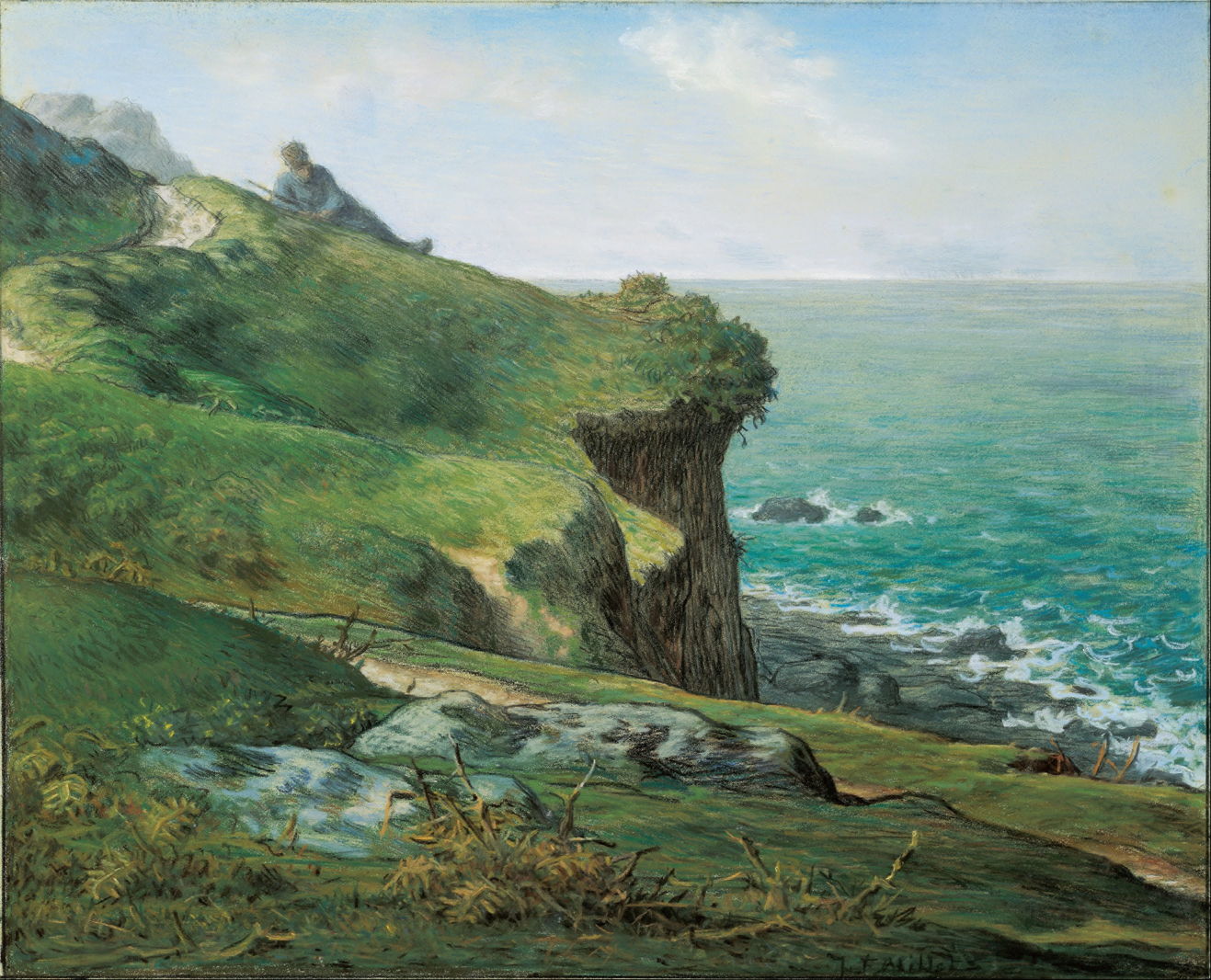
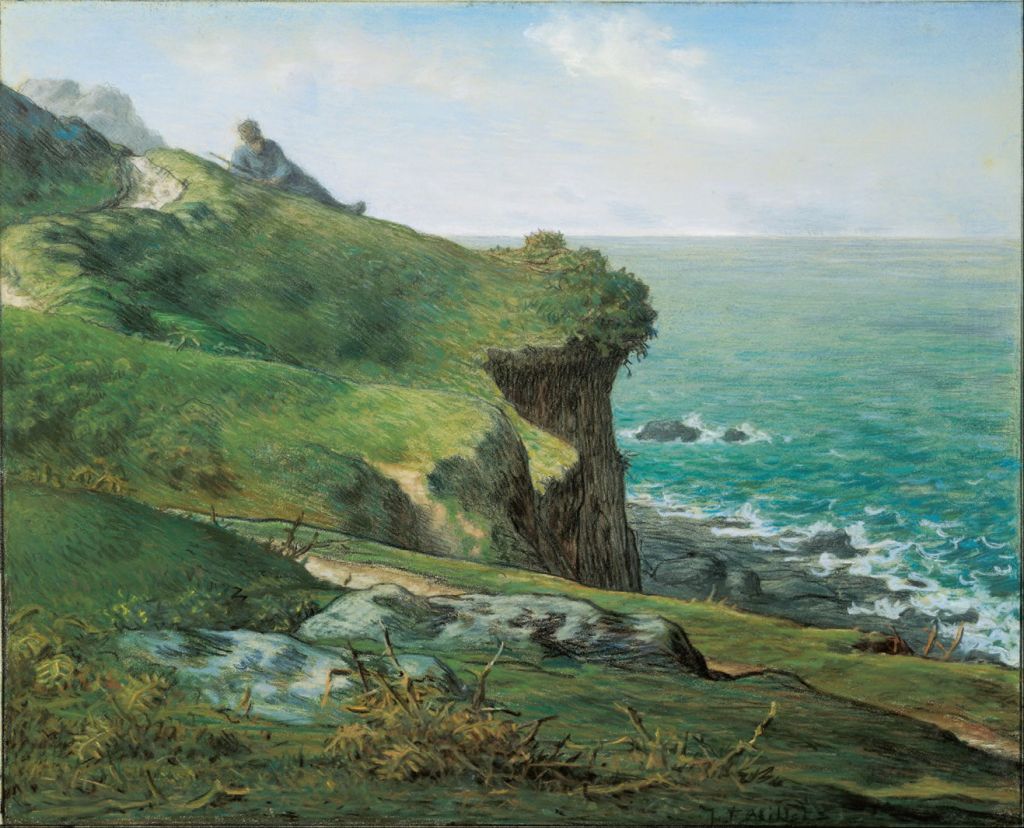
Jean-François Millet painted occasional landscapes, particularly of the coastline near his home village. The Cliffs of Gréville (1871) is a fine pastel depiction which surprises by its unusual scaling and distance effects. At first sight, the more distant clifftop seems quite far away, but the man recumbent on the skyline establishes it’s actually close to the viewer.
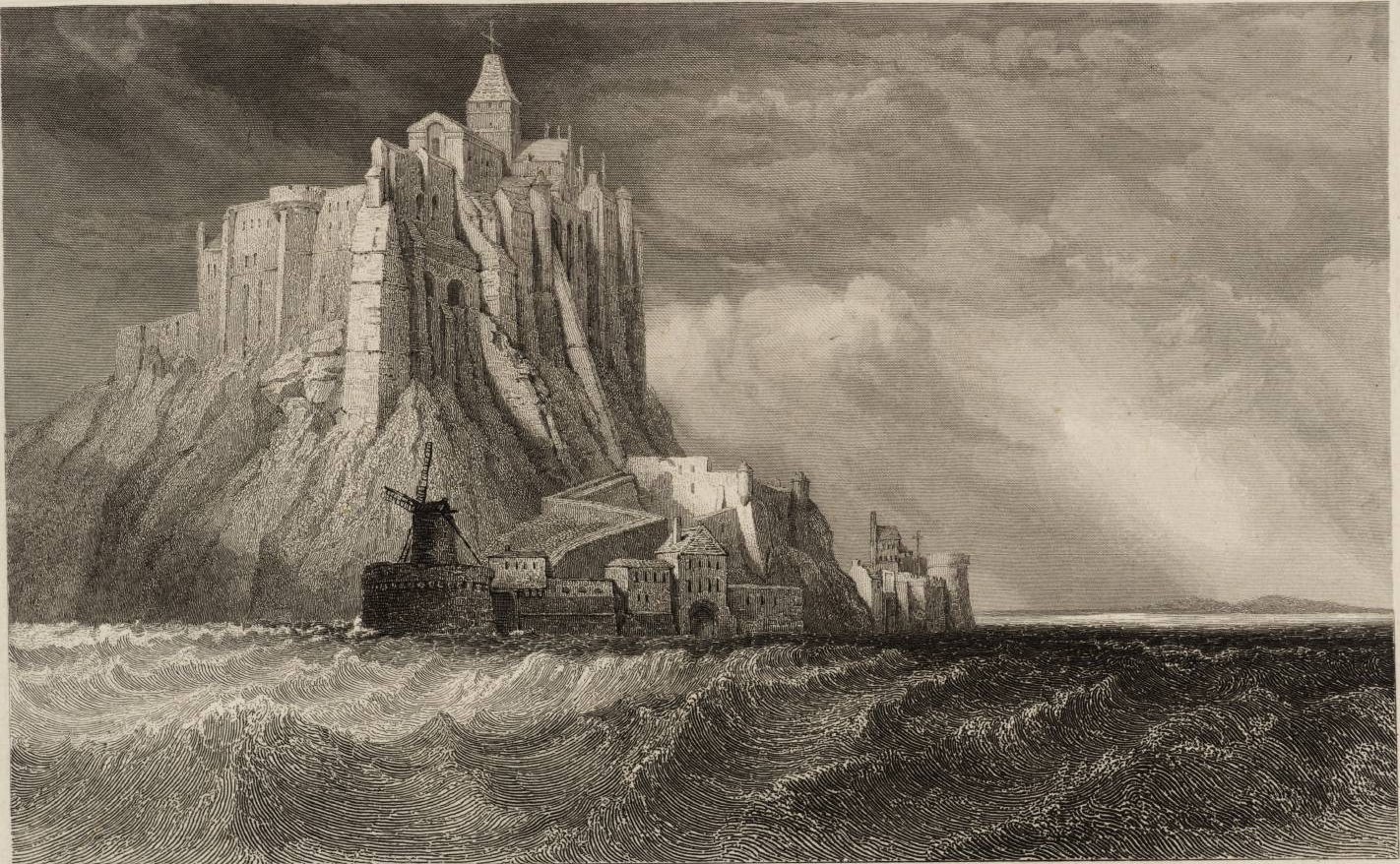
The French Mont Saint Michel nestles on the western side of the base of the Cherbourg Peninsula. It’s only appropriate that this 1836 engraving should be taken from Clarkson Stanfield’s painting of St Michael’s Mount, Normandy, from the West (1836). Six years earlier he had painted its Cornish twin.
Just before reaching the next major port to the west, Saint-Malo, is the oyster fishery of Cancale.

I don’t know whether the young John Singer Sargent was there for the oysters or his art, but his painting of Fishing for Oysters at Cancale (1878) was one of his early successes, made at a time when he was starting to paint major portraits, and the year before he first visited Spain.
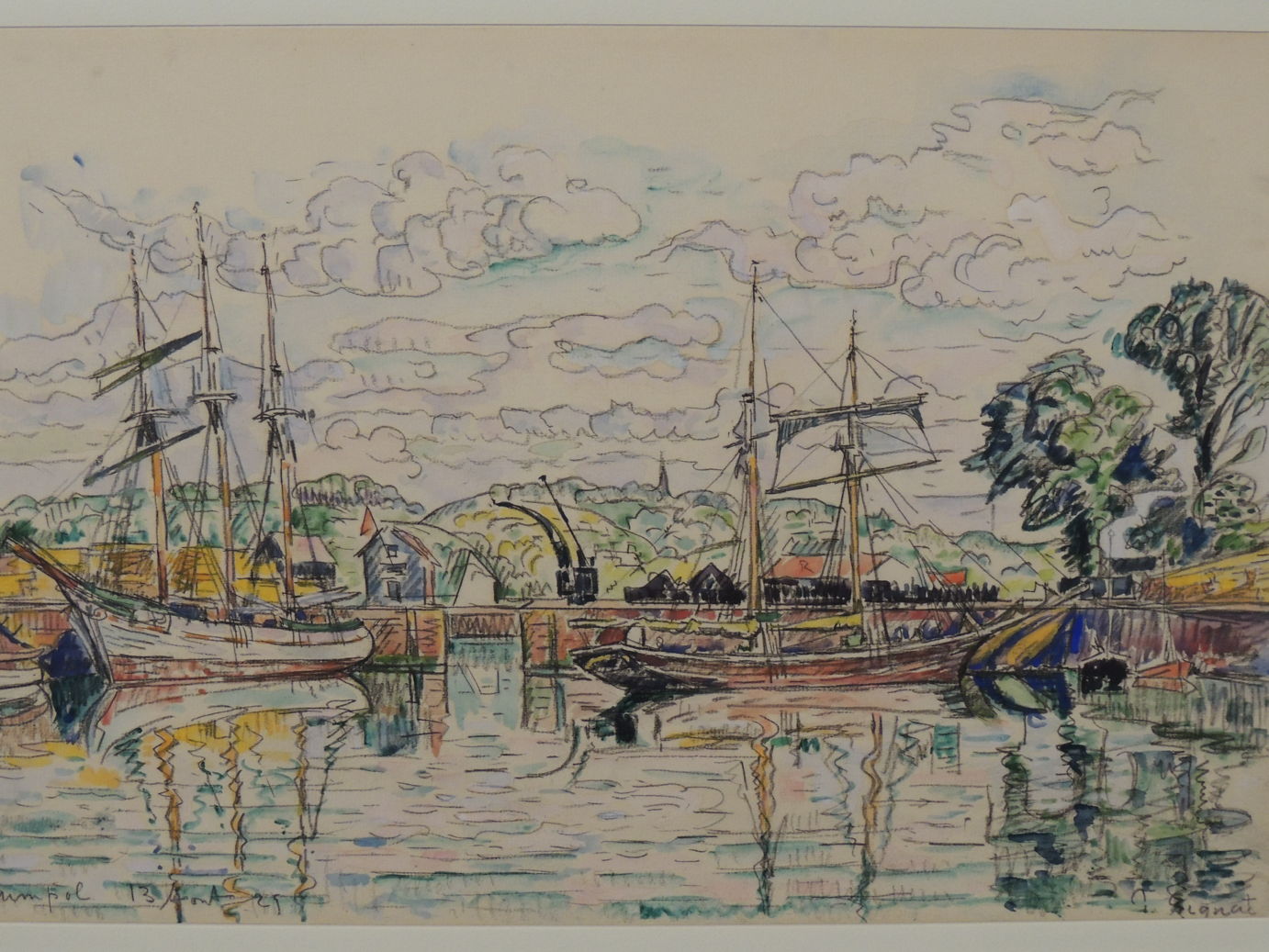
On 13 August 1929, Paul Signac was on the north coast of Brittany, where he painted the small working harbour at Paimpol, a minor port near Lézardrieux (below), in his series of the ports of France.

Signac combined Conté crayon (a proprietary type of hard pastel) with watercolour for this view of Lézardrieux. This is a village at the far western end of the French Channel coast, and a popular port with yachtsmen. He appears to have sharpened his Conté crayon to sketch the outlines before applying watercolour wash, in a manner not unlike the late watercolours of Paul Cézanne.

When the former Nabi artist Maurice Denis spent the summer of 1912 in Brittany, he found a curious mixture of dress among these Female Bathers at Perros-Guirec. This seaside resort had only been established in the late nineteenth century, and is famous for the pink granite rock seen in the distance.
Although the coast of Brittany has attracted almost every landscape painter in Europe since the middle of the nineteenth century, almost all of them visited and painted locations to the south of Brest, in the northern arm of the Bay of Biscay. Few made the boat journey out to Ushant, or Ouessant, which stands solitary guarding the Western Approaches from the great seas of the North Atlantic.
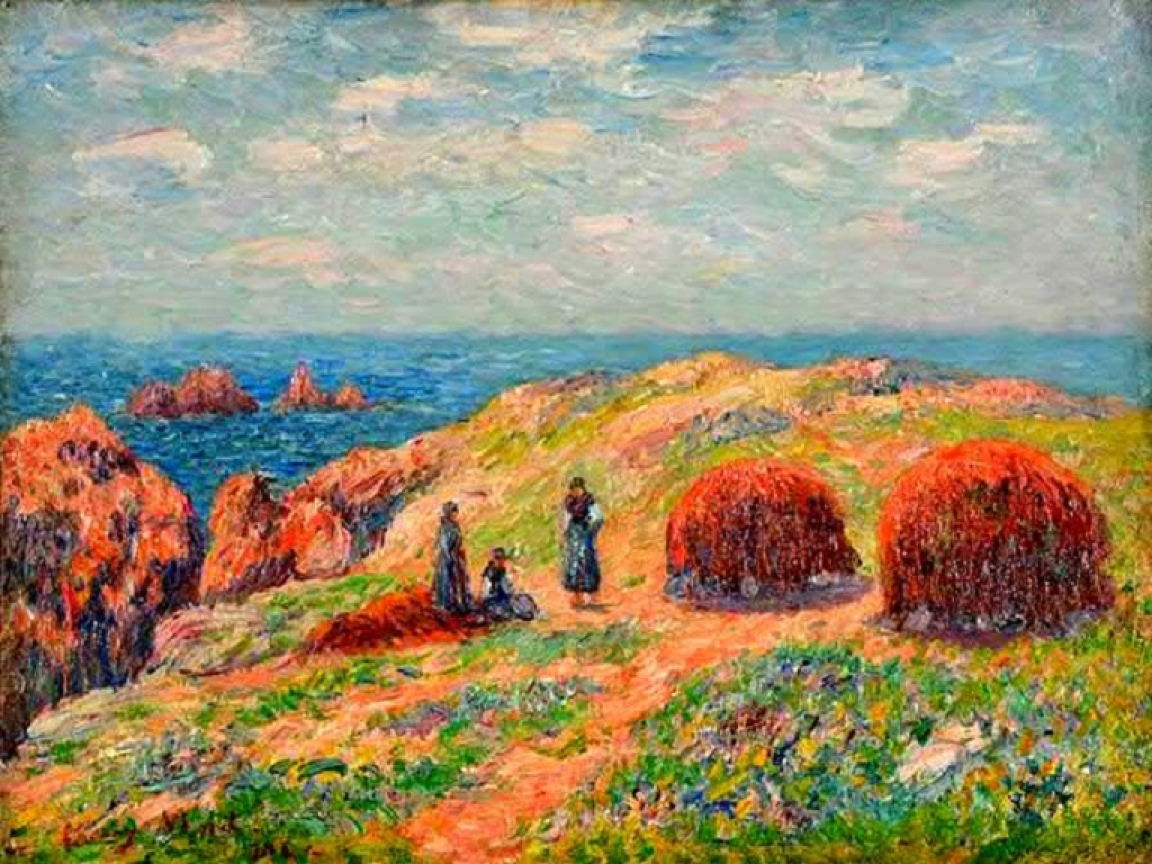
Henry Moret’s Cliffs at Ouessant (1902) shows this small and rugged island with a population of less than a thousand. Its major industry at the time was fishing, and harvested seaweed was used as a fertiliser to support its limited subsistence farming. Since then its population has slowly fallen, but it remains one of the last outposts of the rare Ouessant breed of sheep.

