
Early towns and cities across Europe tended to be cramped, squeezing buildings in so close that those on opposite sides of the street could touch one another from rooms in upper stories. As the affluent had town houses built for them, they brought reminders of their country estates in wider avenues and boulevards lined with trees. This episode shows some examples of the trees that have somehow survived that most hostile of environments in city streets.
Paris

Late in his career, because of chronic problems with his eyes, Camille Pissarro mainly painted from indoors, in cities like Rouen, and most of all Paris. Boulevard Montmartre, Spring Morning (1897) is composed primarily of buildings and streets, a plethora of figures, countless carriages to move those people around, and the London plane trees planted there during the redevelopment of the city under Baron Haussmann.
London

Alice Maud Fanner painted this view of the edge of Hyde Park, London, in about 1900. The London plane trees are leafless, indicating this is a fine day in the winter, although the figures look lightly dressed for that time of year.
Although named after London, this tree is thought to be a hybrid of the oriental plane and the American buttonwood that originated in Spain or Southern France in about 1650. It was subsequently introduced to the south of England, where it has been planted extensively in London, and has become its characteristic tree, with examples living over three hundred years and reaching a height of over forty metres (130 feet).

Spencer Gore’s view from about 1912 of a more unusual Fig Tree in a London garden is one of a series he made in different seasons and lighting conditions.

Gore’s view of Houghton Place (1912) shows the adjacent Ampthill Square in Camden Town, London. Together with the houses in Houghton Place, these were demolished in 1968 and replaced with apartment blocks, although some of the trees were retained.
Berlin
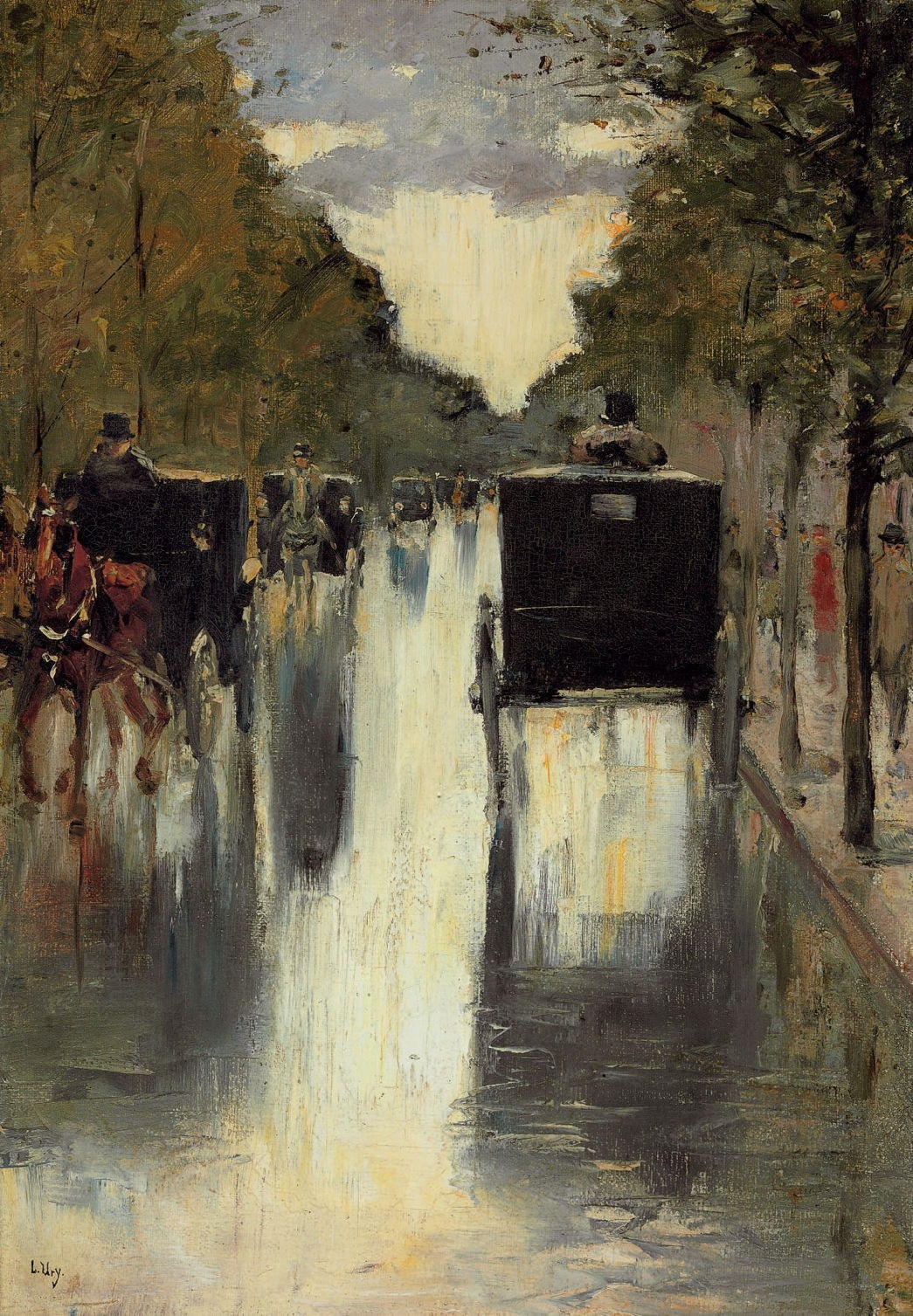
Painted sometime during the first decade of the twentieth century, Lesser Ury’s Berlin Street Scene with Horse-Drawn Cabs retains detail in its trees.
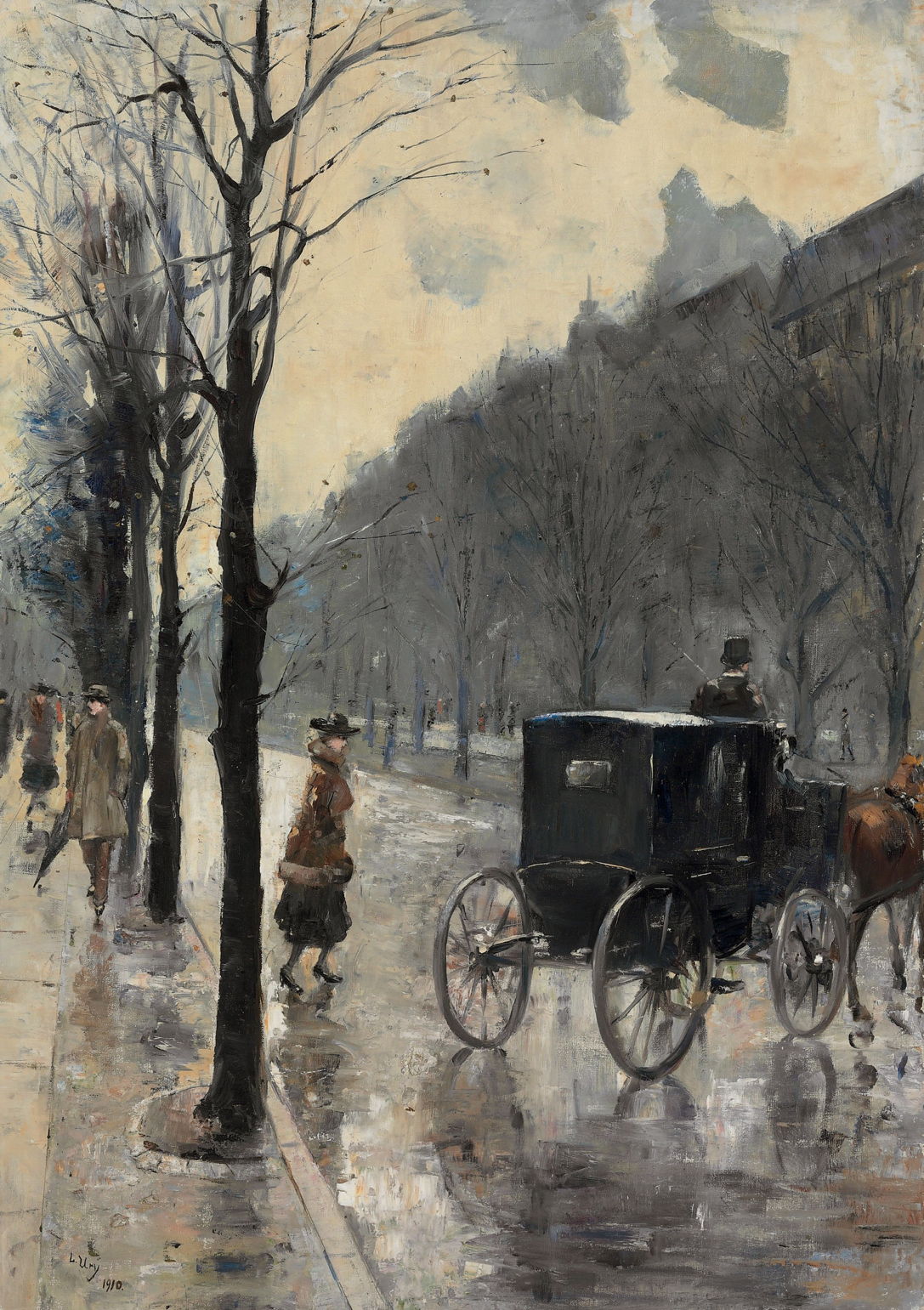
Ury’s view of Kurfürstendamm, from 1910, shows what is probably Berlin’s most famous avenue of shops, on the western side of the Tiergarten. It’s a wet winter day, and for once the street is relatively deserted, with just one of the old horse-drawn carriages, and no motor taxis at all. The trees seen here are probably London planes.
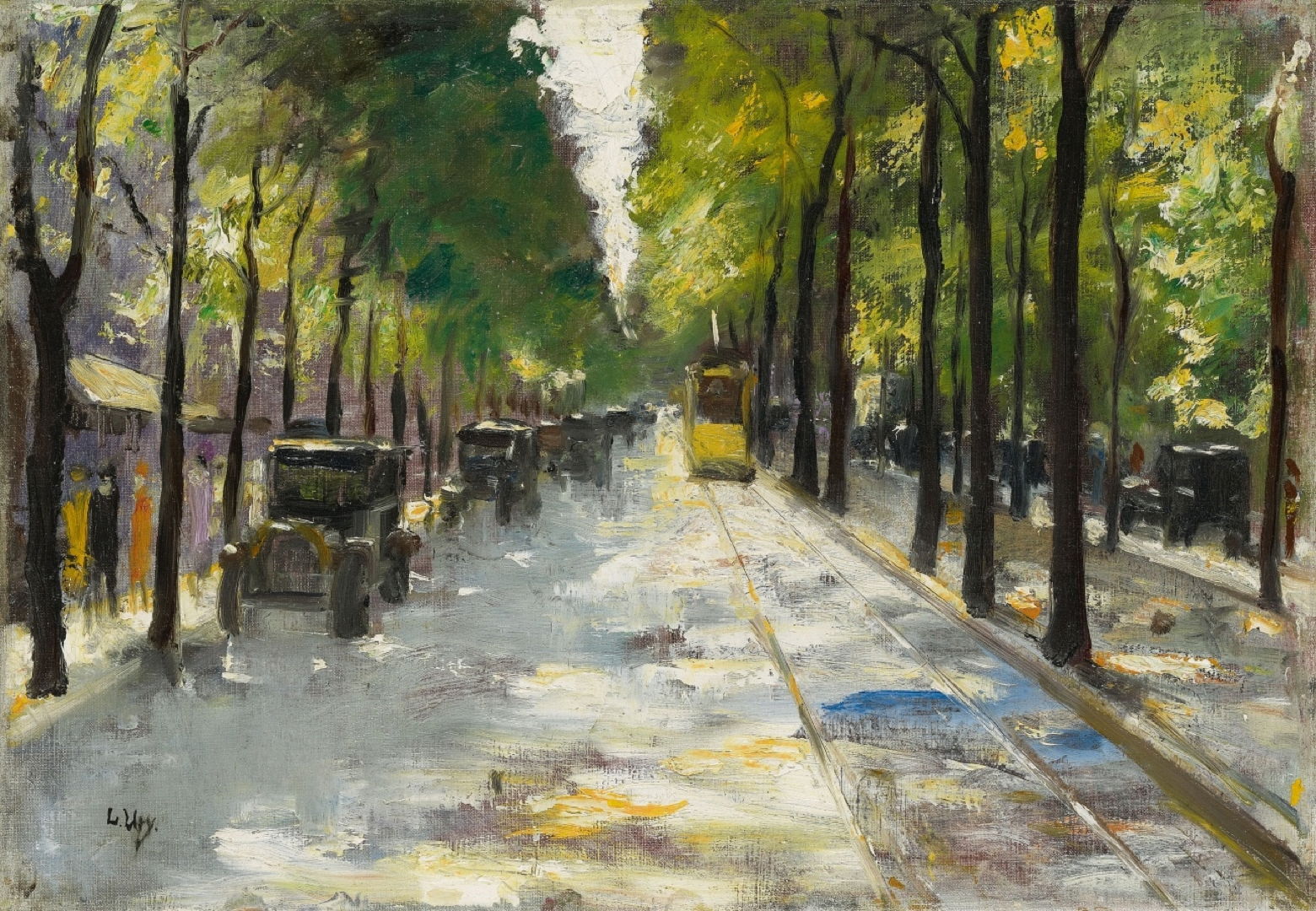
In the 1920s, when Ury painted this view of a Berlin Street in Sunshine, motor taxis and trams had taken the streets over, but the trees survived.
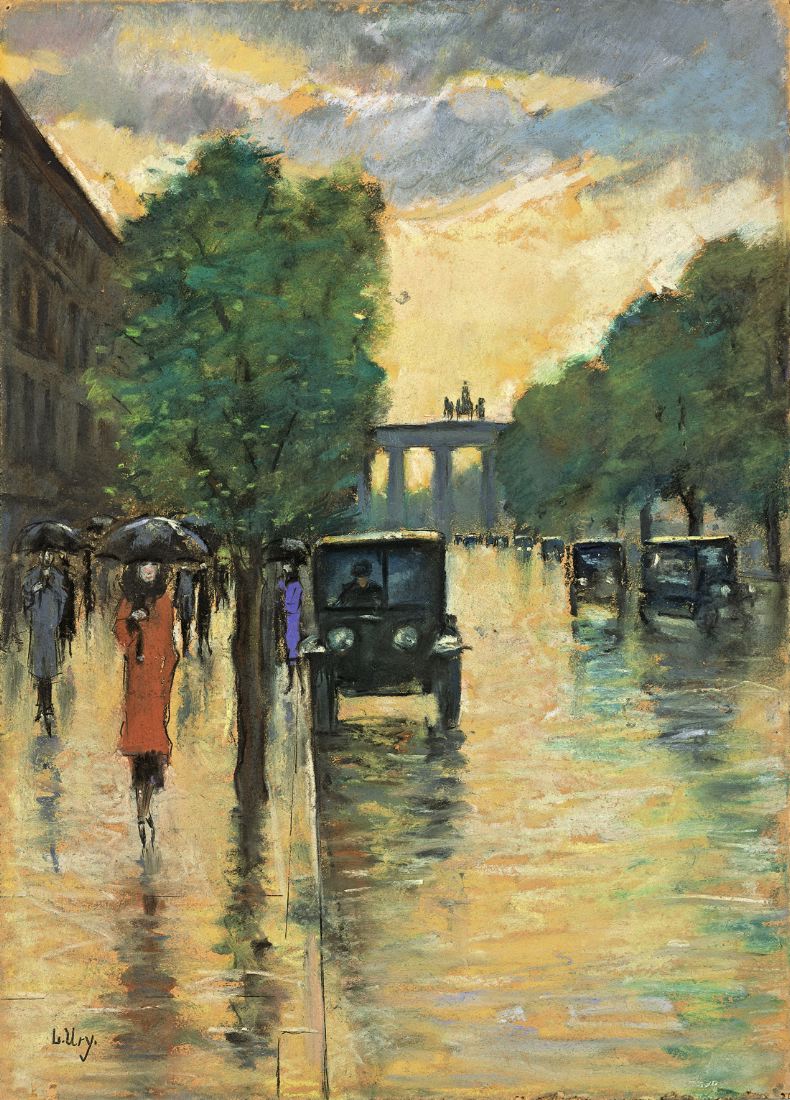
Ury’s pastel of Unter den Linden with View of The Brandenburger Gate from the 1920s shows well the linden or lime trees that give this famous street its name. This is at the western end of Unter den Linden and shows the edge of the Tiergarten on the far side of the Gate.
The trees in Unter den Linden are small-leaved limes, Tilia cordata, whose soft wood is easy to carve and has been used over many centuries for woodcarving.
Amsterdam
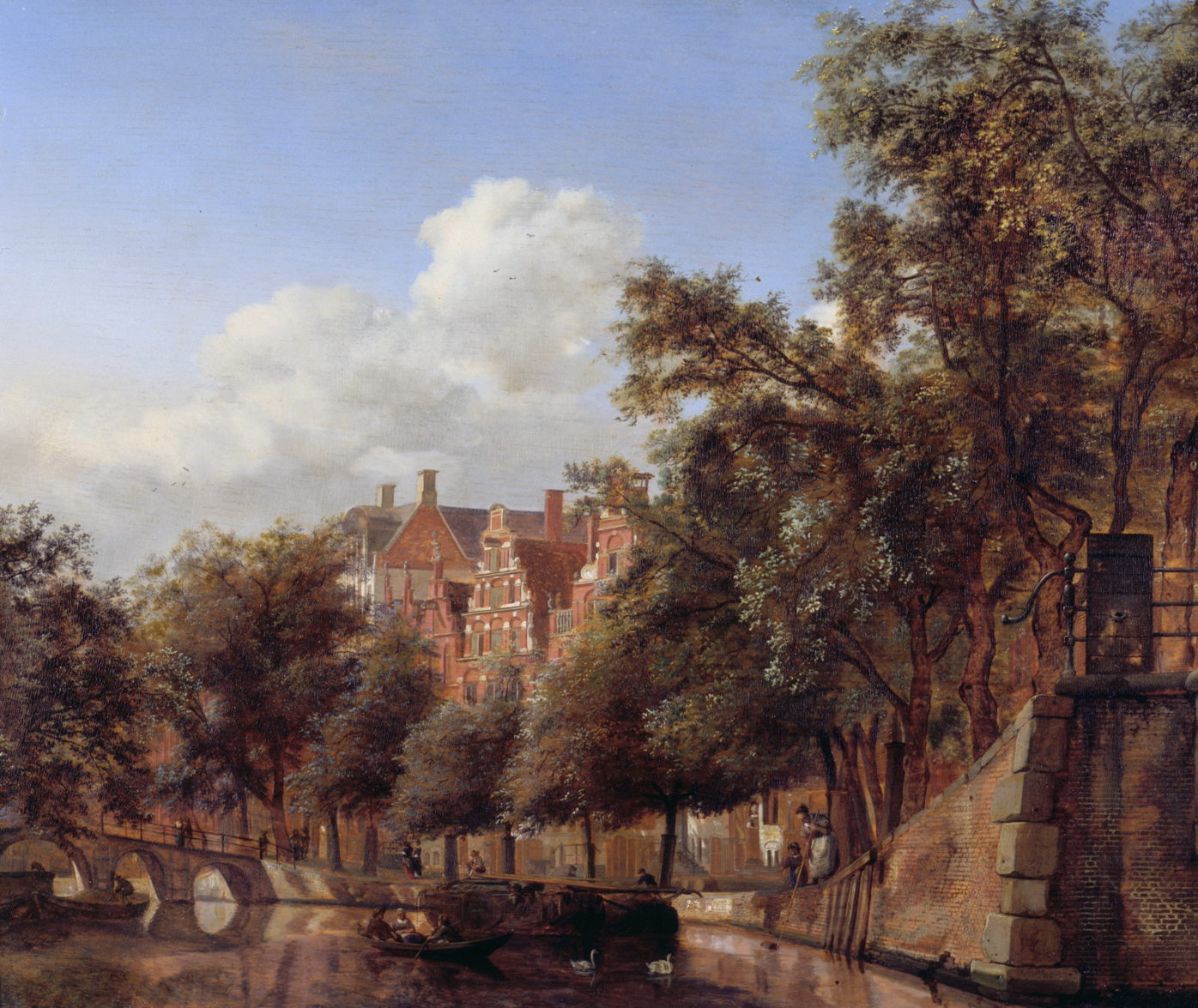
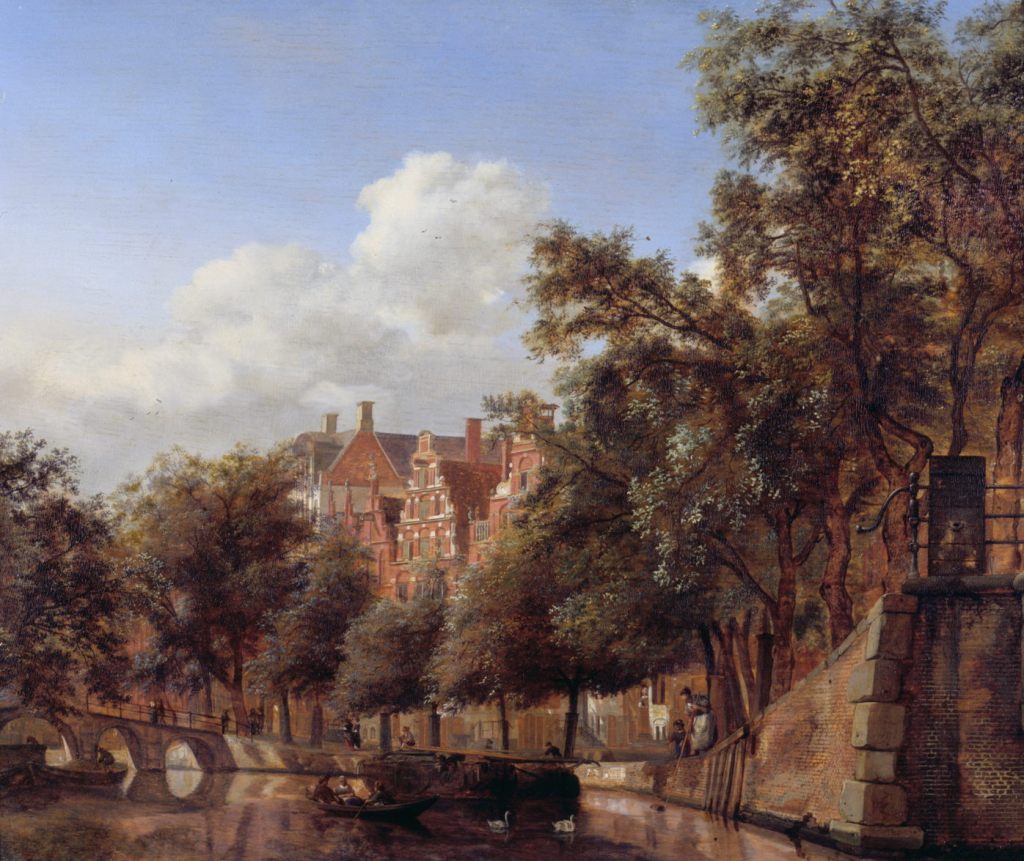
Jan van der Heyden’s View of the Herengracht, Amsterdam from about 1670 shows this canal that has become famous for its large and elegant houses. These were built from 1612, and are finest along this section known as the Golden Bend. The trees are probably Dutch elms, a family that has been ravaged by a virulent fungus, Dutch Elm Disease, since 1966, resulting in the deaths of a great many elms across Europe.
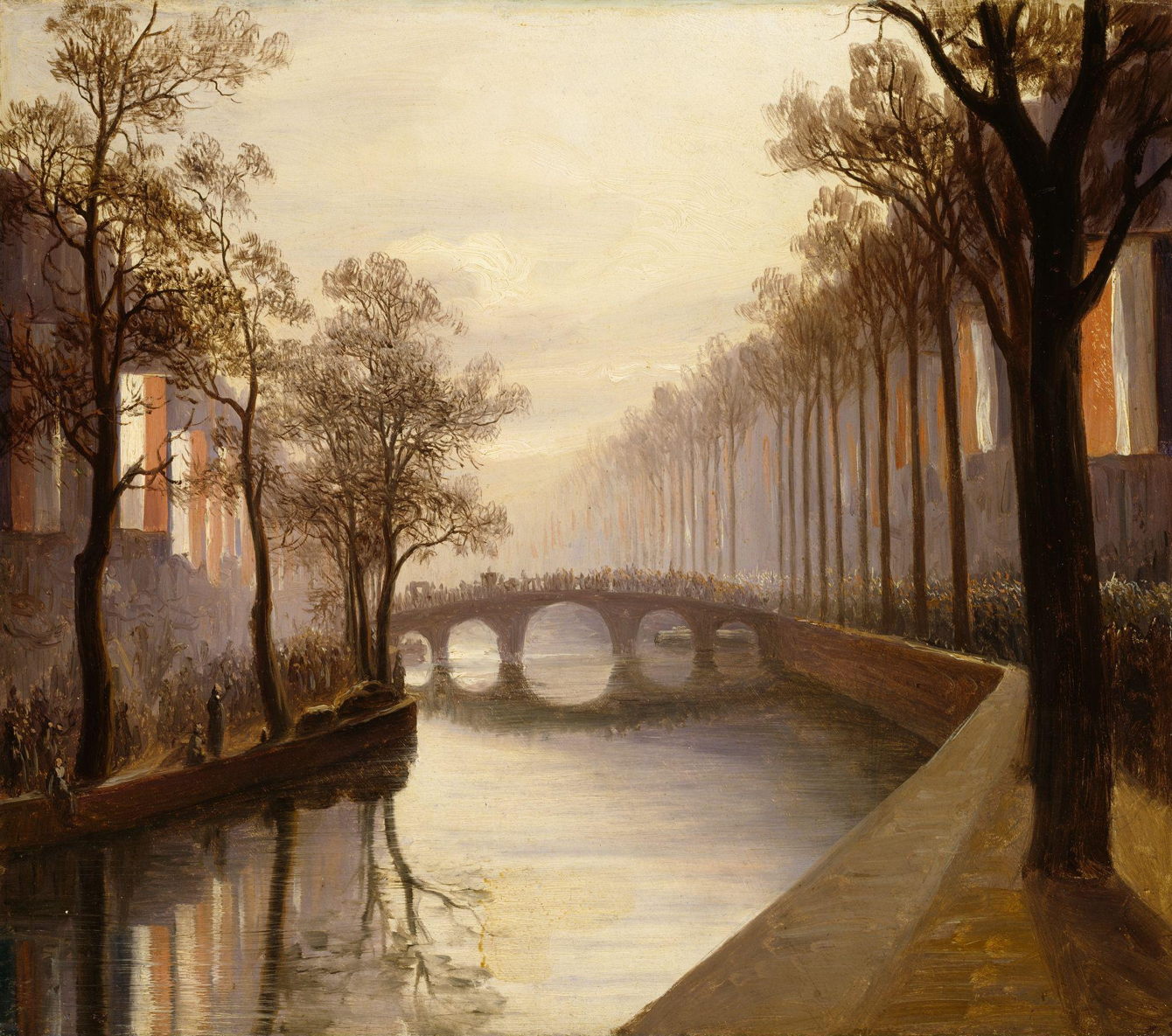
The Norwegian landscape artist Thomas Fearnley appears to have visited Amsterdam late in 1840, when he painted King William II’s Ceremonial Procession in Amsterdam, 27 November 1840 in oils on paper. Although their appearance is contrasting, I think those are the same elms on both sides of the canal.

