
Almost a month ago I took a trip along England’s Channel coast in paintings. This weekend is the return match, travelling west along the north French coast of la Manche, again in the company of some of Europe’s finest landscape painters. We start today as many British visitors would in the ferry port of Calais, and aim to end the day near Le Havre.
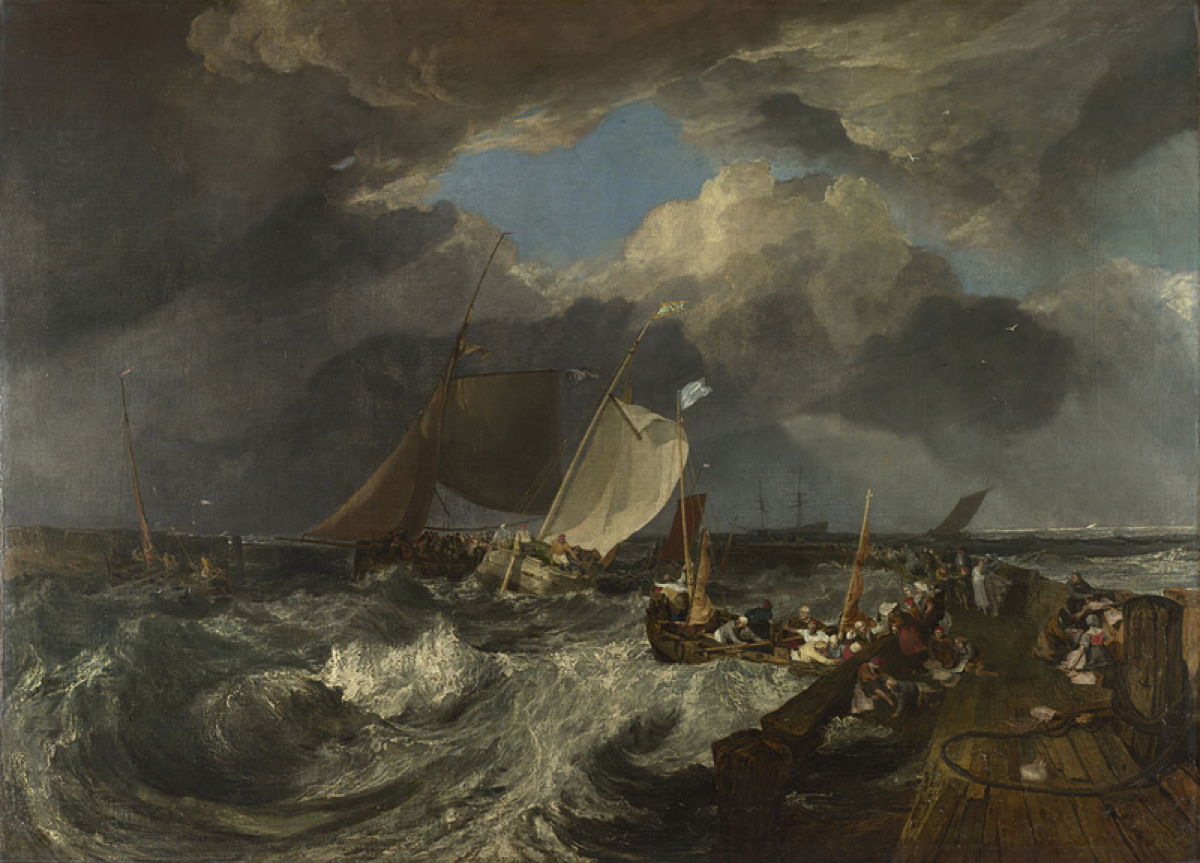
In 1802, during the lull between the French Revolution and the Napoleonic Wars, JMW Turner turned his attentions to the European continent. He crossed from Dover to Calais, the shortest route but often a rough one, and caught the sea when it was less comfortable. He painted the scene of his arrival in France in Calais Pier, with French Poissards preparing for Sea: an English Packet arriving (1803), whose French fishermen seem happy to head out in search of a catch.
Although Turner uses the light with great skill, and illuminates the sail of one of the vessels leaving, when shown at the Royal Academy opinion was that the foreground was unfinished, and it wasn’t well received.
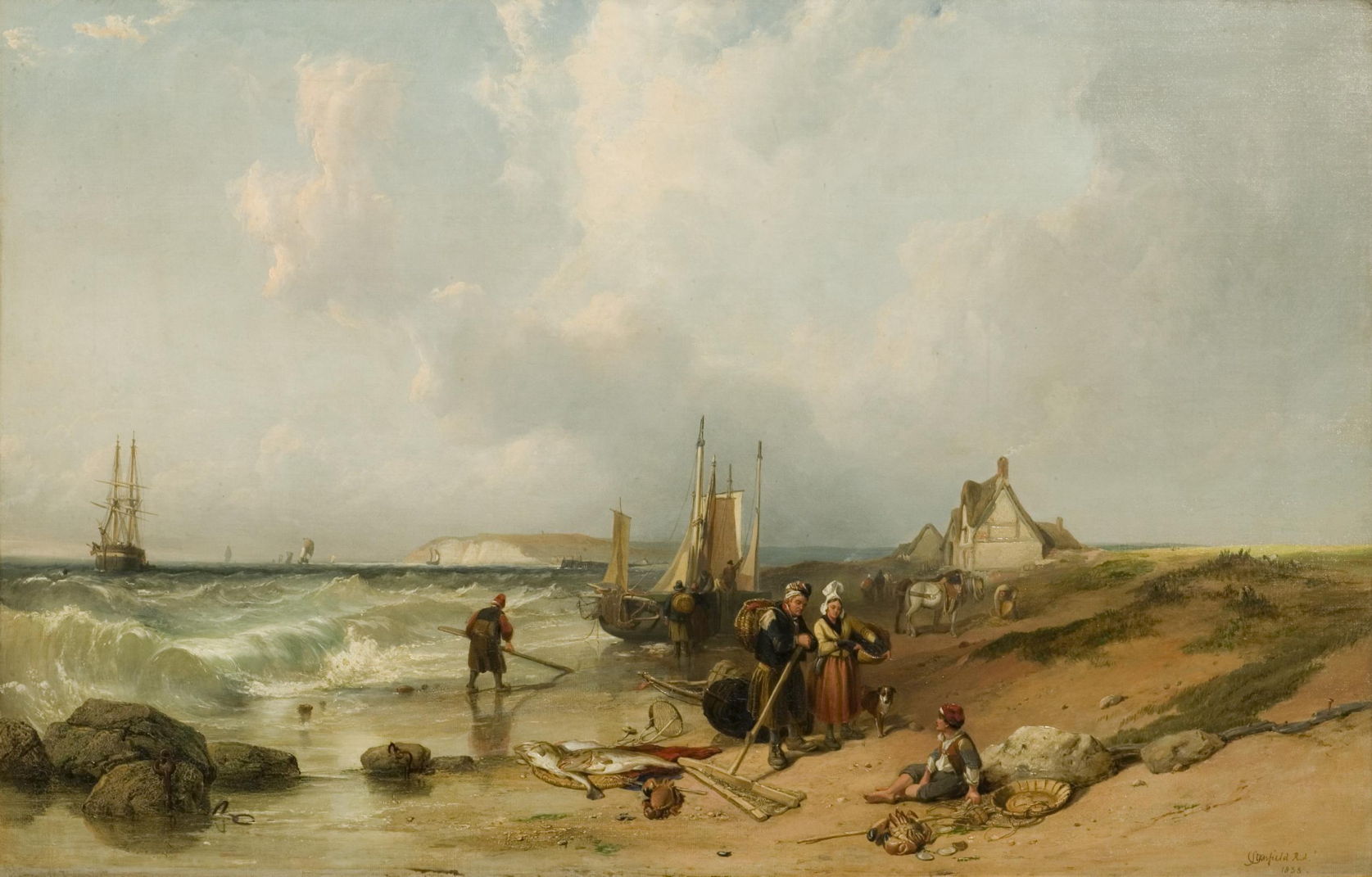
Clarkson Stanfield also crossed the Channel, and his Sands near Boulogne (1838) shows a catch of fish being landed on this low and flat section of the French coast to the south-east of Calais.
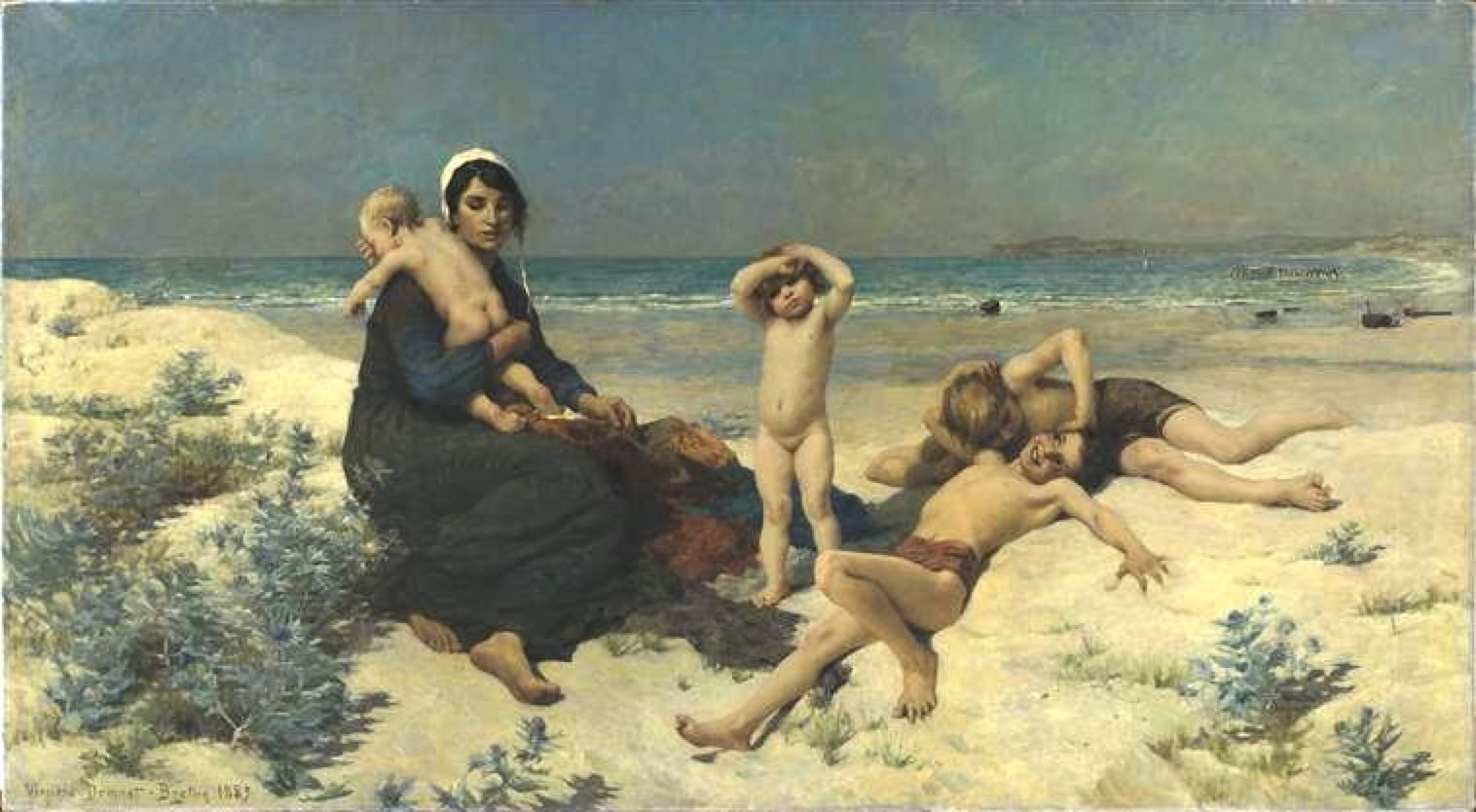
Virginie Demont-Breton’s The Beach (1883), painted on this stretch of the Channel coast, was exhibited at the Salon in 1883, where it earned her ‘hors-concours’ (because of exemplary record, her works didn’t need to be submitted to the jury in future), and was purchased by the state.
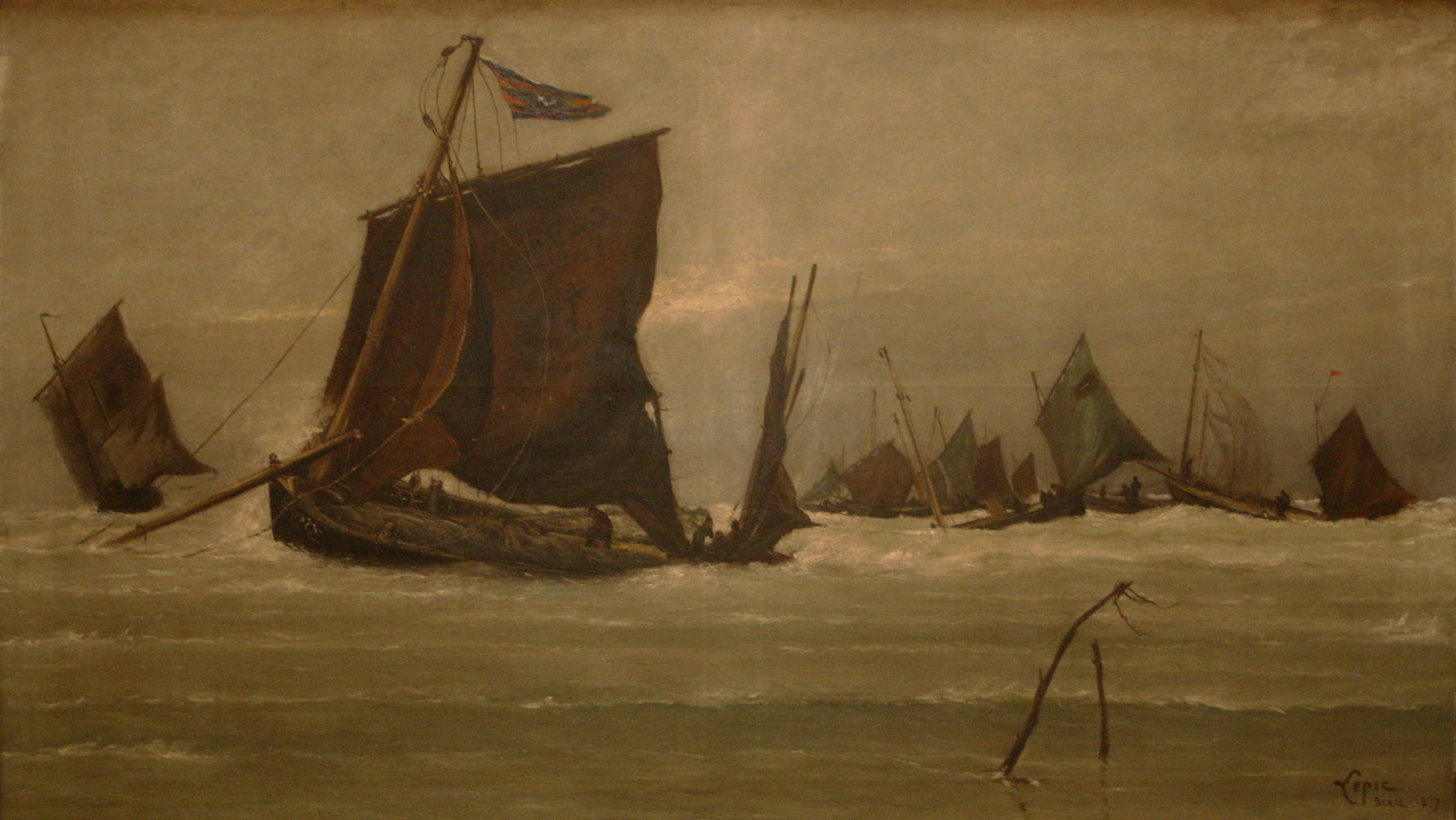
A couple of years after he exhibited at the First Impressionist Exhibition, Ludovic-Napoléon Lepic painted this Fishing Boat Entering Berck, showing the chaos among and damage to a fleet of small fishing boats as they struggle with heavy seas off the fishing port of Berck, to the south of Le Touquet. The vessel closest has sheared its bowsprit, is at risk of sinking by the stern, and its sails are ragged. Others also appear in quite serious difficulties.
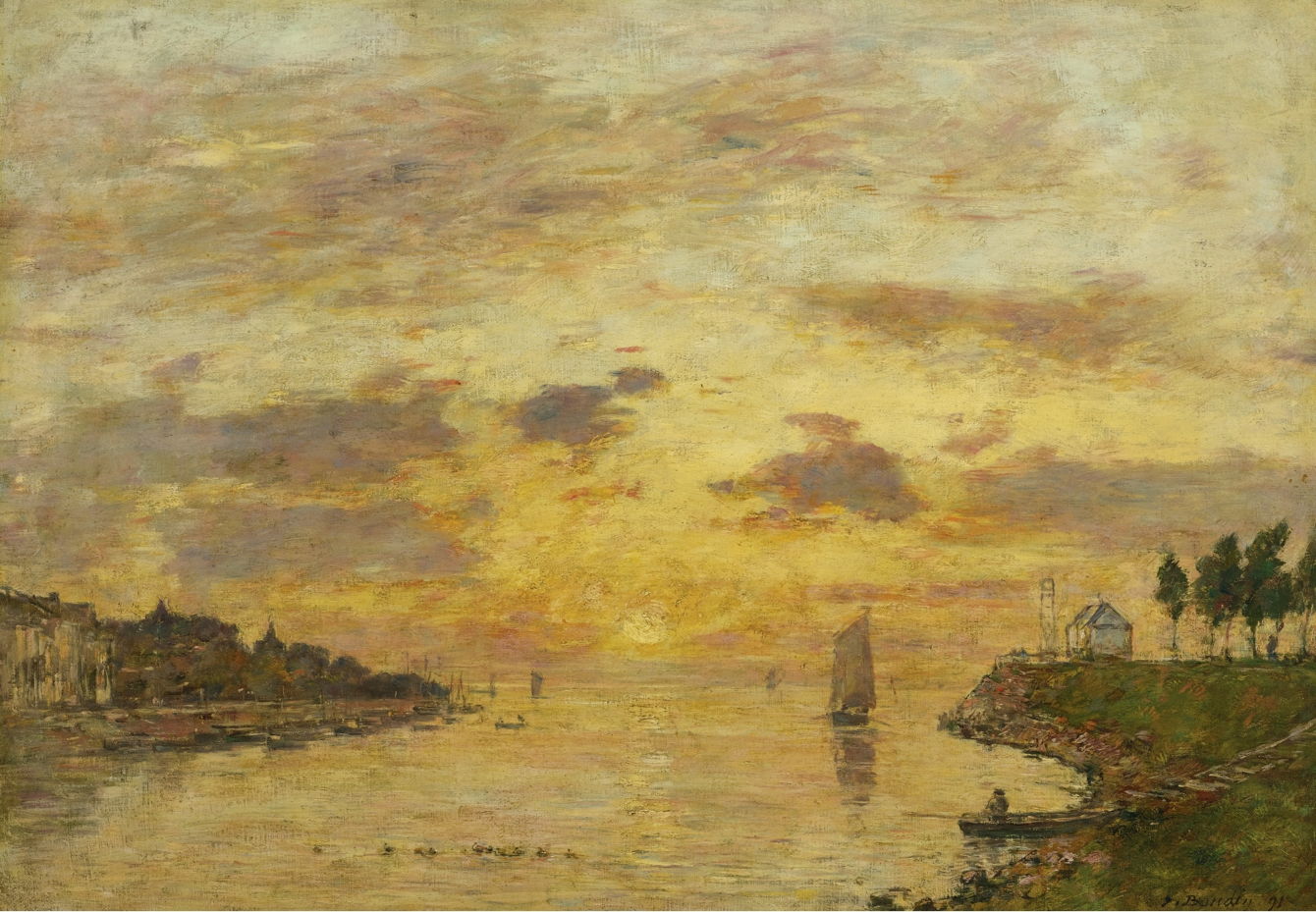
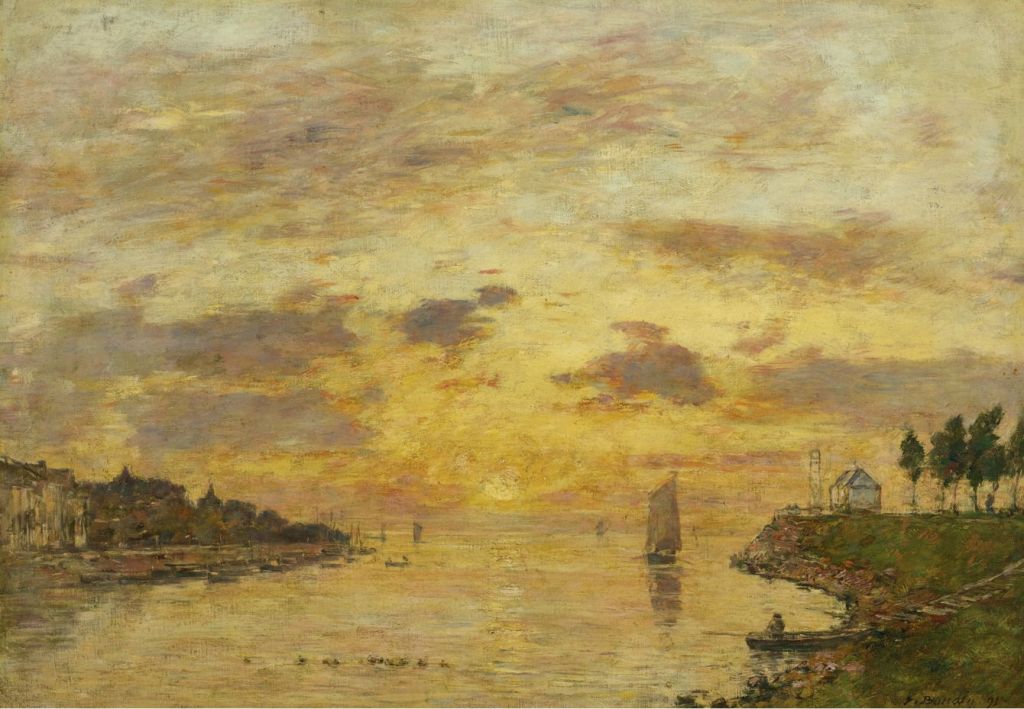
This stretch of coast was also the painting ground of Eugène Boudin, whose Saint-Valery-sur-Somme. The Mouth of the Somme (1891) is a more colourful view featuring the setting sun, to the north-east of Dieppe.
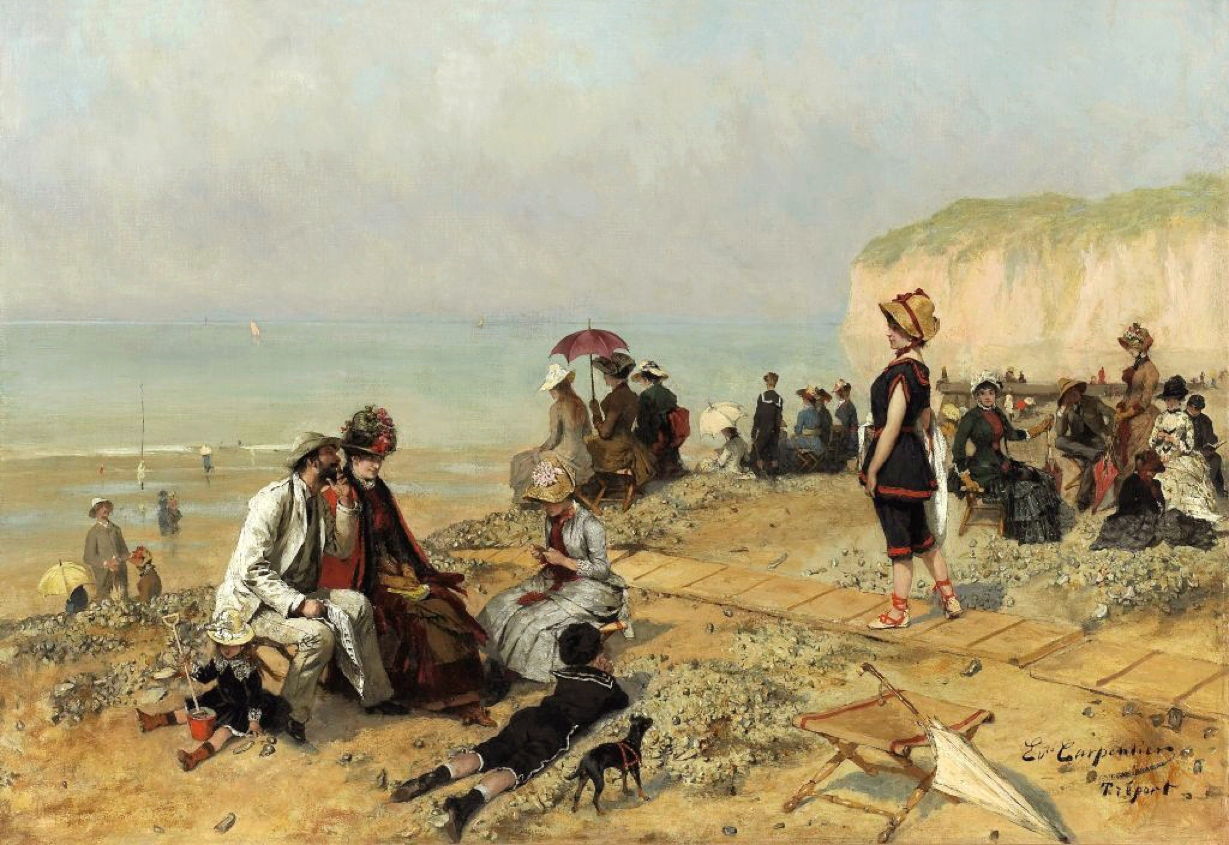
Évariste Carpentier’s Le Tréport, Bathing Time shows progress in the development of beach costume and culture in the late nineteenth century. A young girl in the left foreground is playing with her bucket and spade, while her older brother is admiring the fashionable young woman parading her new clothes, so exposing her arms and lower legs.

Turner toured northern France painting coastal scenes, including the bustling Harbour of Dieppe, which he made in about 1826 from a series of sketches and studies.
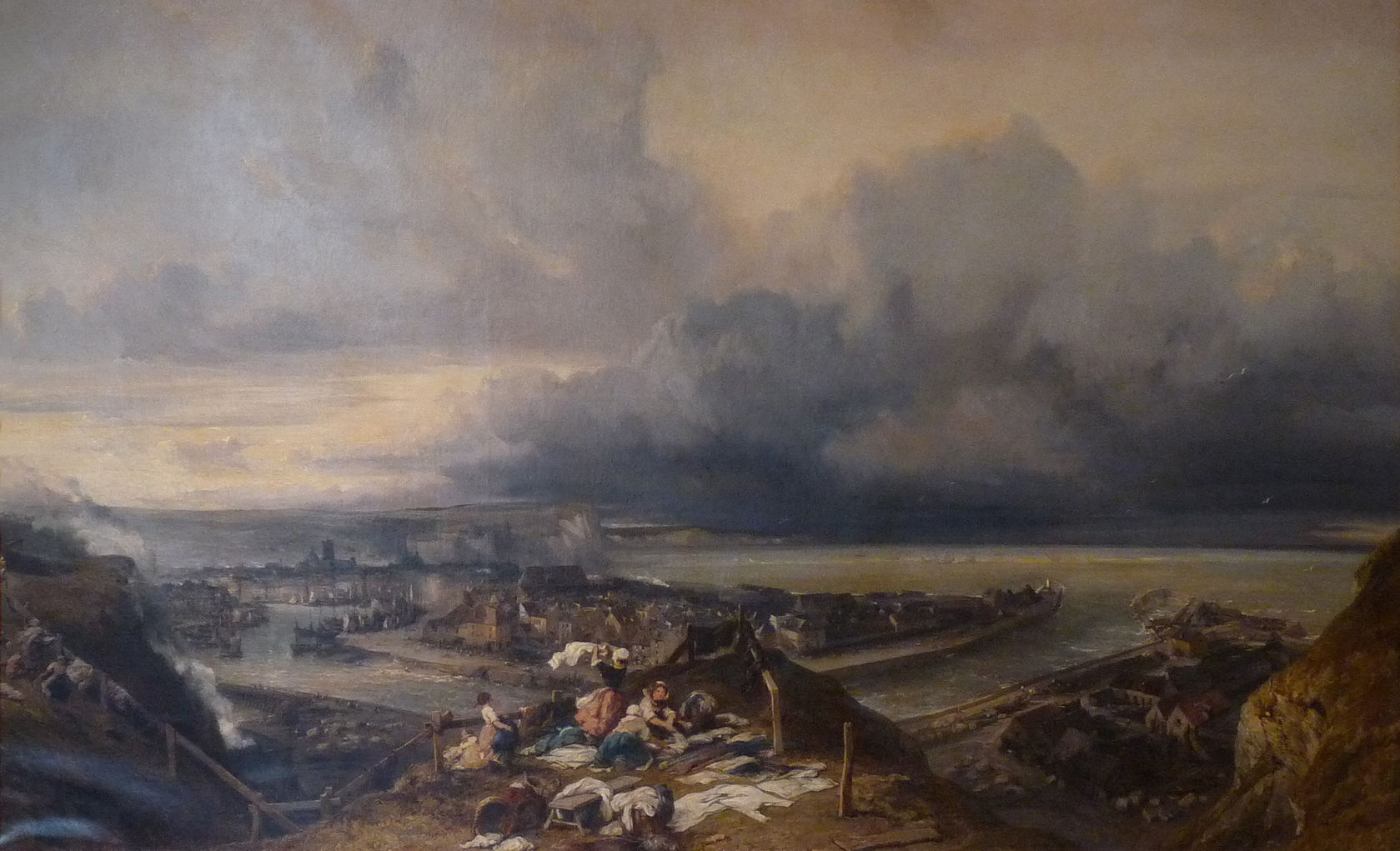
A few years later, Eugène Isabey caught The Town and Harbour of Dieppe on a greyer day in 1842, with laundresses in the foreground seizing a break between showers to get on with their work.
The next major port to the south-west is Le Havre, where Claude Monet grew up. Not far from there is the village and famous cliff at Étretat, which became hugely popular with artists in the middle of the nineteenth century.
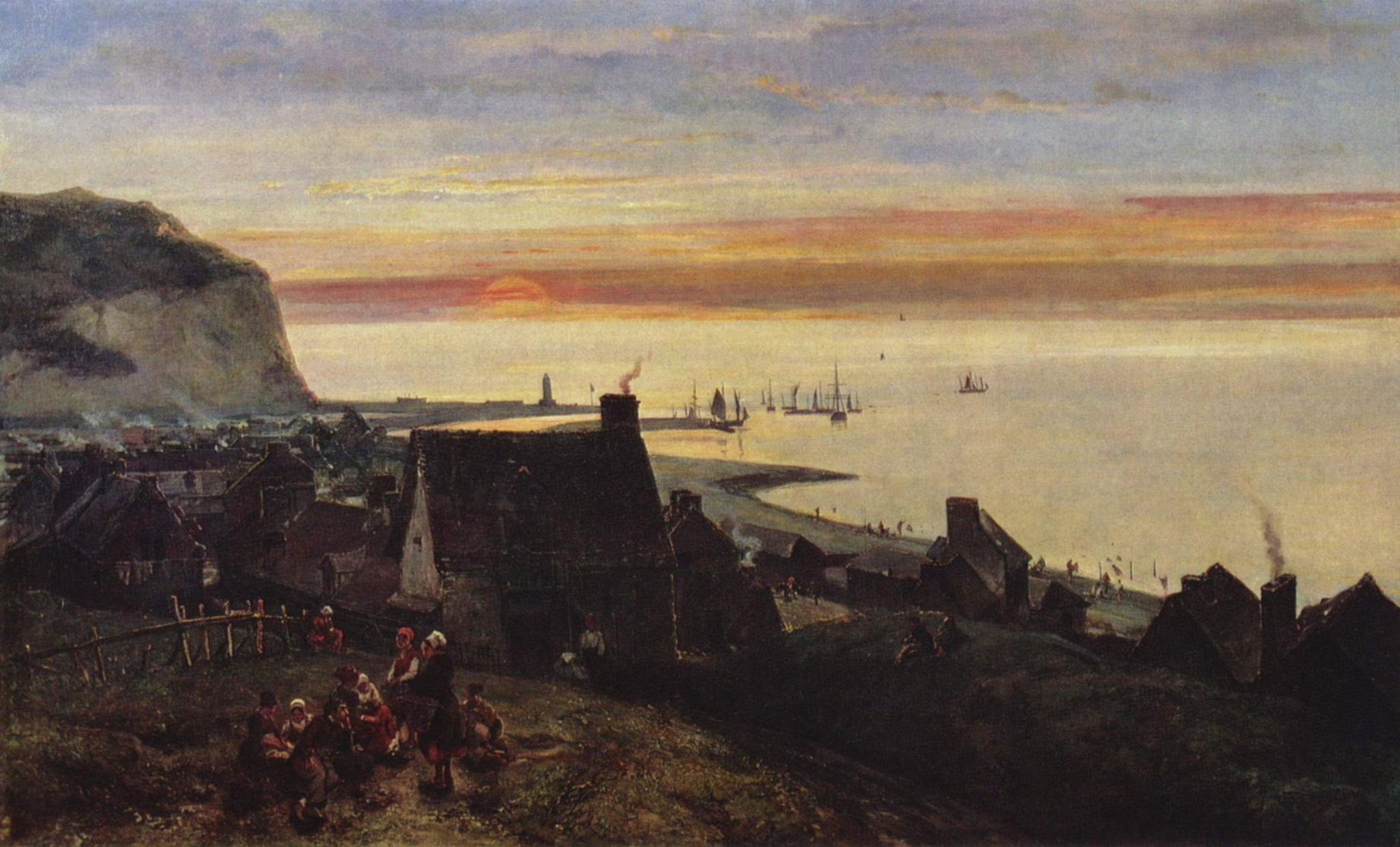
The first pre-Impressionist painter to have shown particular interest in Étretat Harbour was Johan Jongkind, who painted it in 1852, when it was still small and undiscovered.
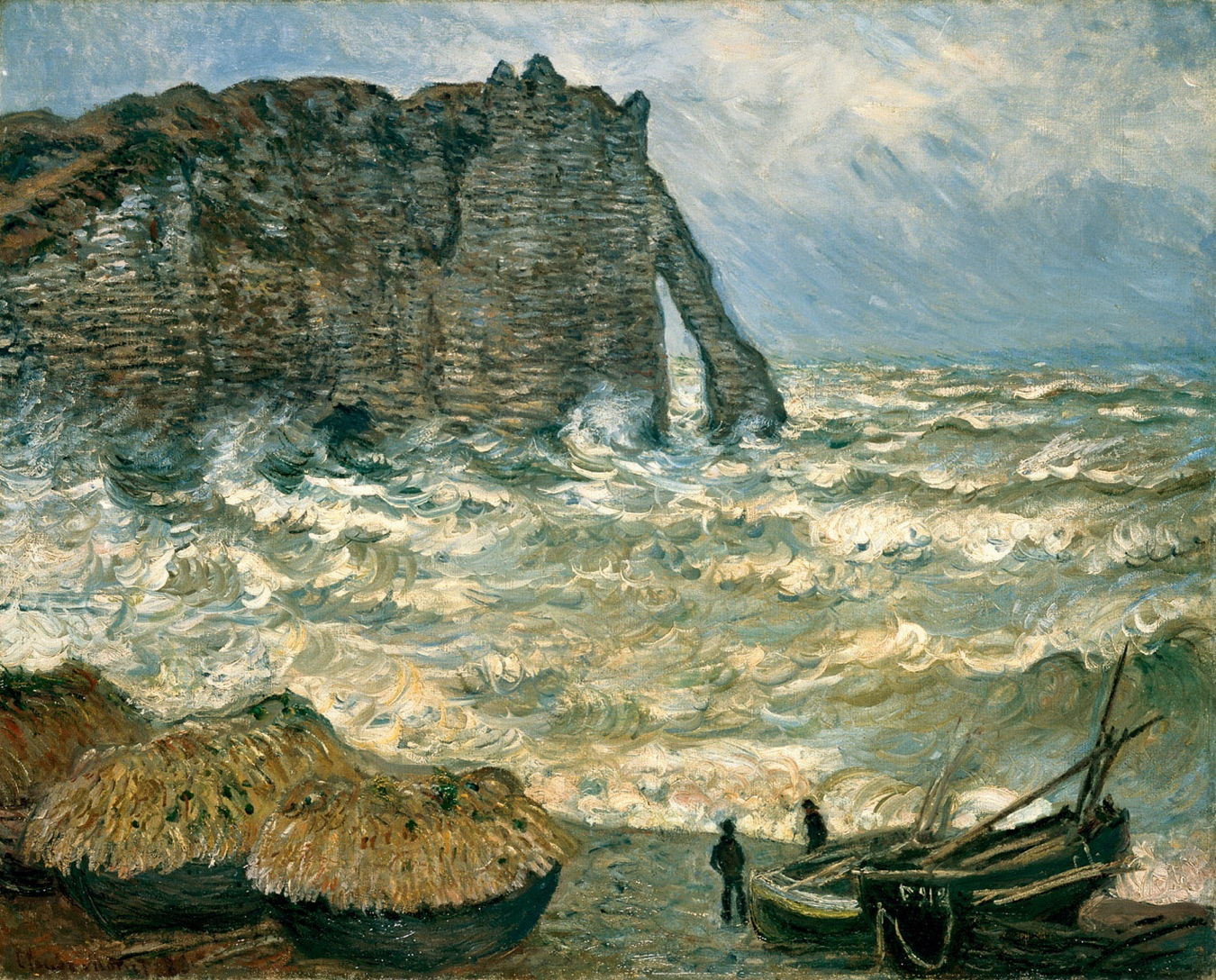
Thirty years later, at the height of Impressionism, Monet painted this Stormy Sea at Étretat (1883) from the beach directly in front of the village, and it proved a prototype for a small series.

Richard Parkes Bonington visited the area just north of Le Havre, where he painted On the Coast of Picardy in about 1825-6.

