
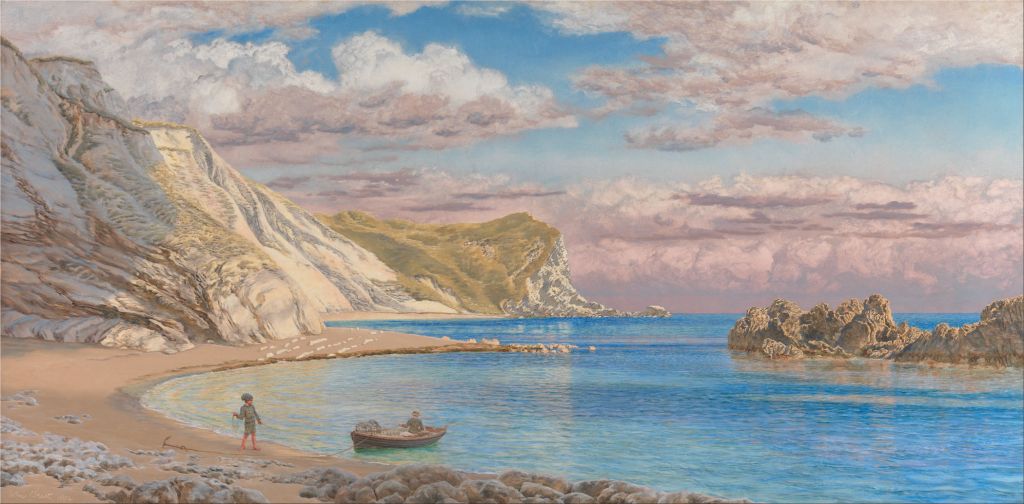
Just half an hour’s walk from here are chalk downs from where we can see the English Channel coast from Durlston Head in Dorset to Selsey Bill in Sussex, a stretch of over fifty miles. This weekend I celebrate the northern shore of the English Channel, stretching from Land’s End in Cornwall to the eastern tip of Kent at North Foreland. It’s a sea far less exotic than most others, often inclement even in summer, and popular with artists from Benjamin West, through JMW Turner to Paul Nash.
Today, we start from Land’s End and head east to the Isle of Wight.
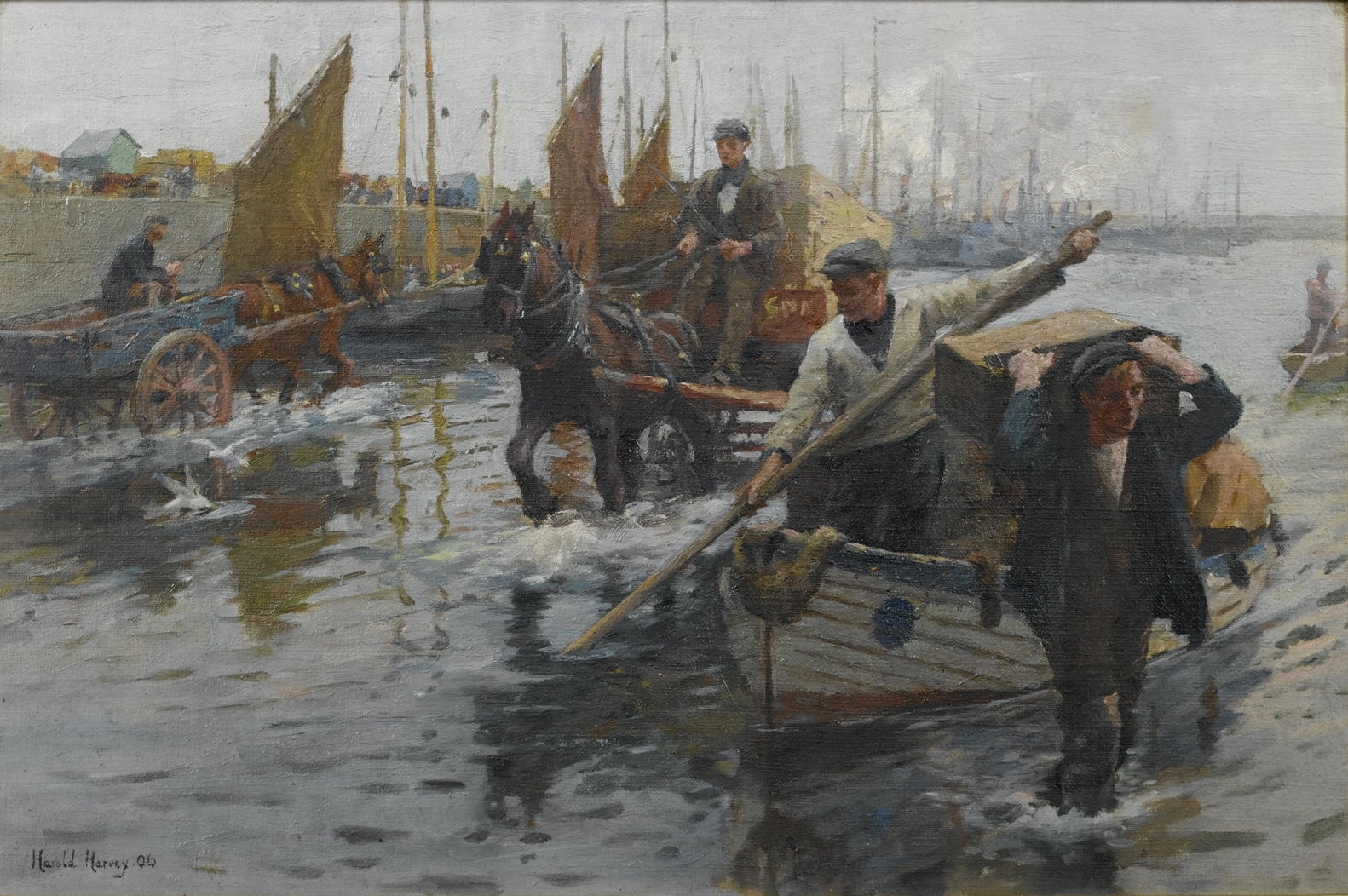
Harold Harvey’s Unloading the Boats, Newlyn Harbour (1906) shows the intense work required to unload the catch from small fishing boats in this harbour not far from Land’s End. Harvey was born in Cornwall and trained at the nearby Penzance School of Arts under Norman Garstin, later becoming a leading member of the Newlyn School.

Clarkson Stanfield’s dramatic painting of Mount St Michael, Cornwall from 1830 is one of his finest. It shows what is now more commonly known as Saint Michael’s Mount, a small rocky island off the south coast of Cornwall, and the defining feature of Mounts Bay. Like its sister Mont Saint-Michel on the southern side of the Channel, it packs a lot of buildings onto its small surface.
The artist uses several devices he must have learned earlier in life as a scenery and panorama painter to inspire maximum awe: the heavy clouds open to blue sky just at the right place to cast the sun’s light onto the buildings, his viewpoint is only just above the short, steep sea, and foreground activity consists of small boats attending a wrecked ship.
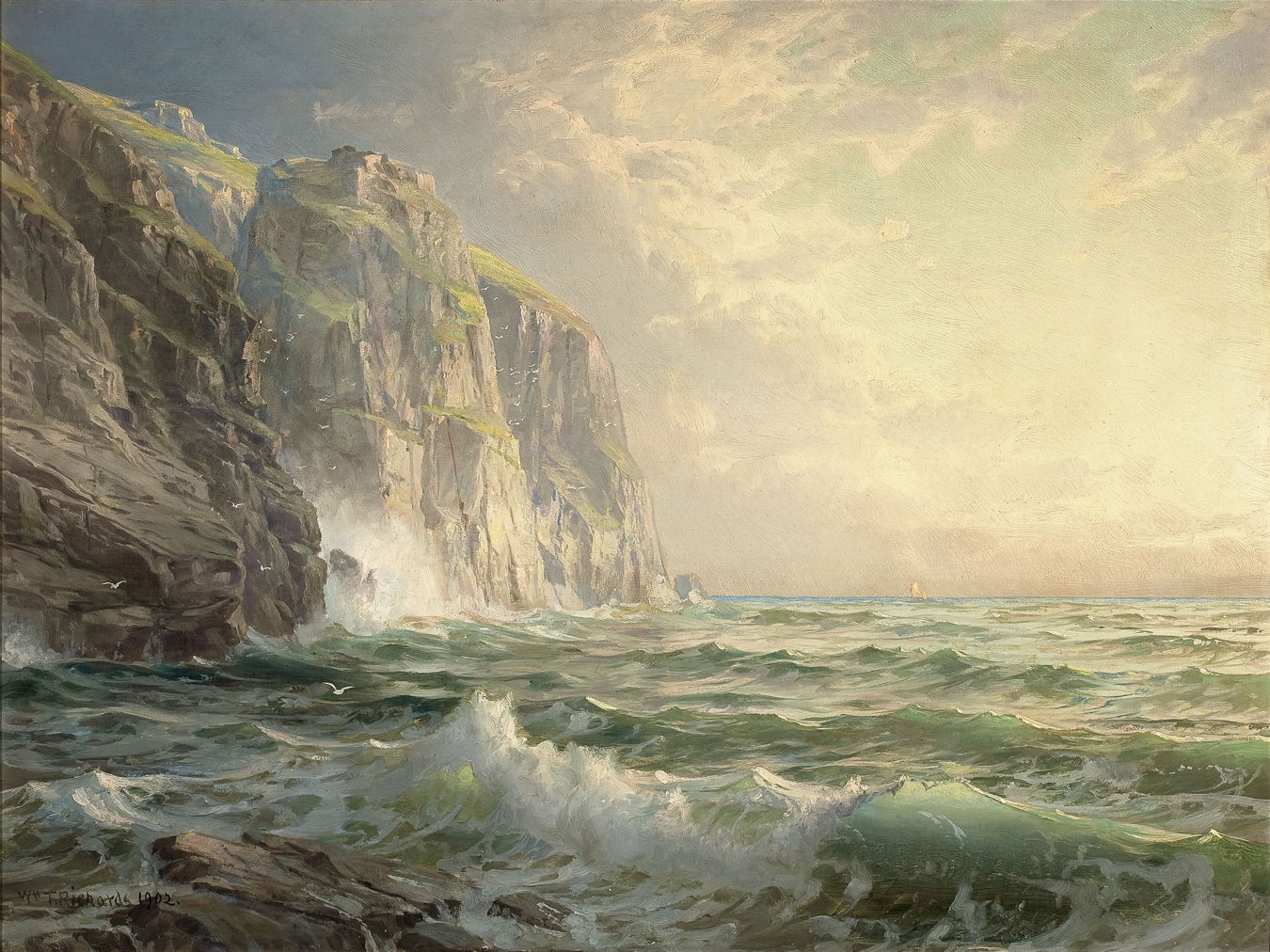
William Trost Richards’ Rocky Cliff with Stormy Sea, Cornwall (1902) follows Clarkson Stanfield’s romantic approach in its depiction of this rugged stretch of the coast.

This painting has been attributed to Anton Melbye’s younger brother Vilhelm, and shows Shipping off the Eddystone Lighthouse. This is one of the most famous lighthouses in the British Isles, built on rocks about nine miles south of the entrance to Plymouth Harbour, in Devon.
The first lighthouse built here in 1696-98 was destroyed completely by a storm in 1703, killing its builder Henry Winstanley and five others. This painting shows the third lighthouse, also known as Smeaton’s Tower after its designer, which remained in use until erosion to its foundation rocks allowed it to move in storms. The current lighthouse replaced it in 1882.
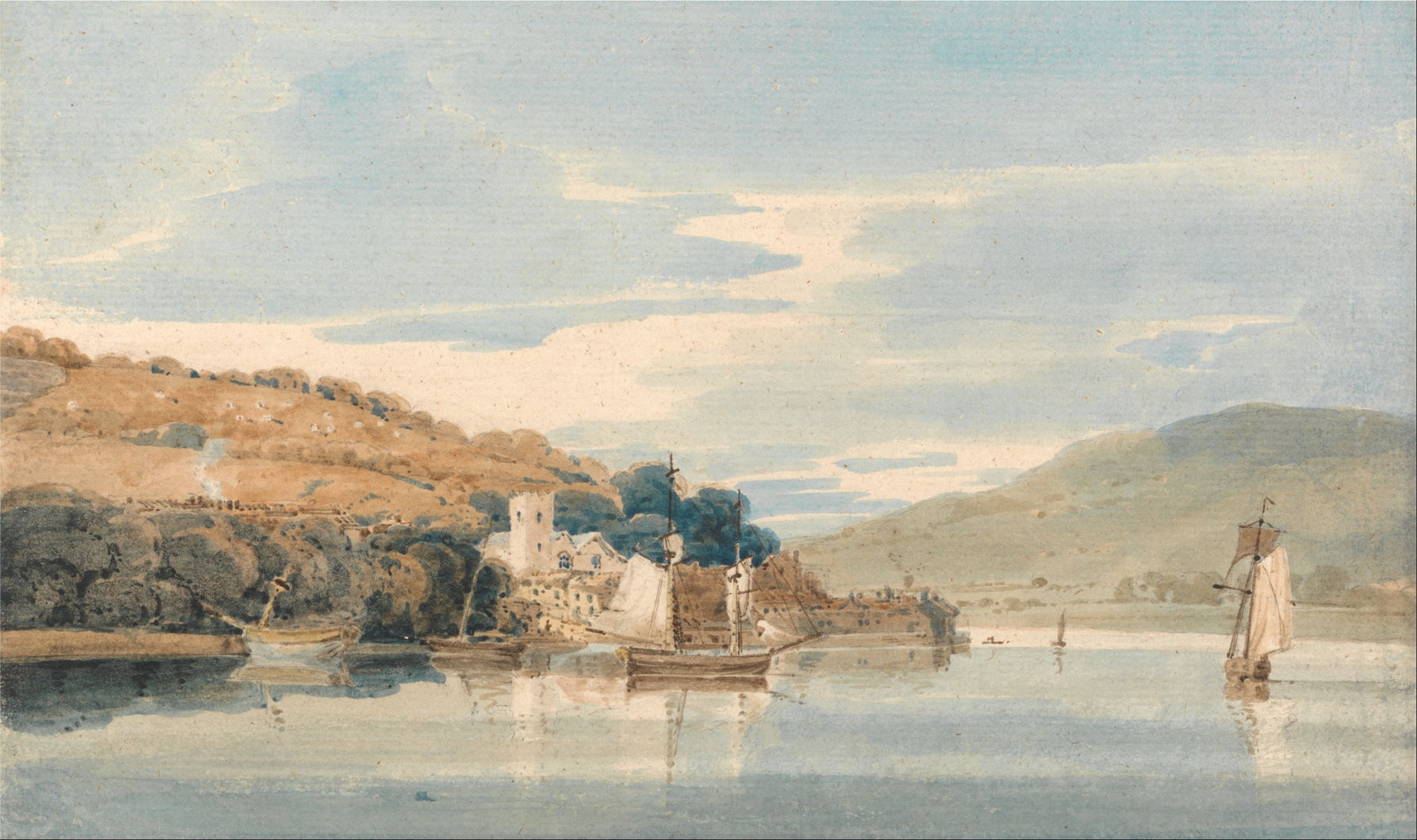
In 1797, Thomas Girtin painted in Devon and Dorset, including this beautifully informal view of Kingswear Seen from Dartmouth, Devon (c 1797). This shows one of the picturesque estuaries typical of this section of the Devon coast.

The scenery changes dramatically with the coast of Dorset, where chalk flows from hills down to the water’s edge. John Brett’s Man of War Rocks, Coast of Dorset (1884) shows Pre-Raphaelite landscape characteristics of foreground detail, meticulous geology, and bright colours.
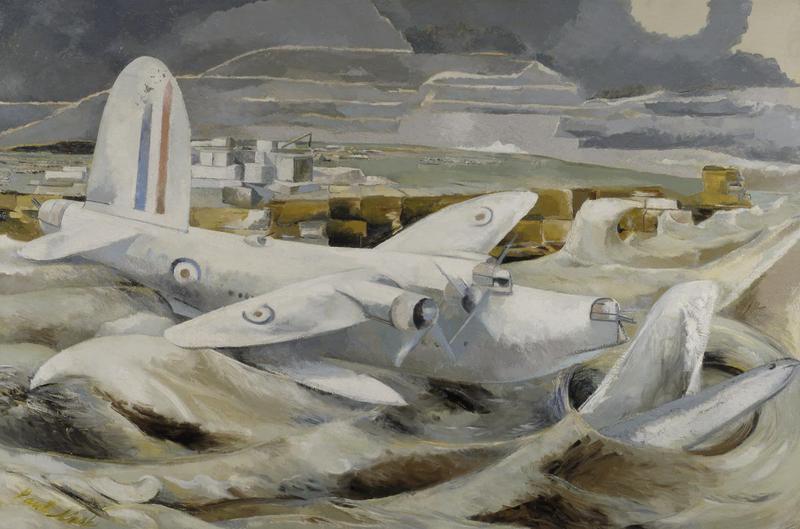
Paul Nash’s Defence of Albion shows a Sunderland ‘flying boat’ operating in rough seas off Portland, Dorset, in 1942. Among the duties of these aircraft were anti-submarine patrols, and part of a German U-boat is shown in the right foreground to emphasise this, in an unreal composite.
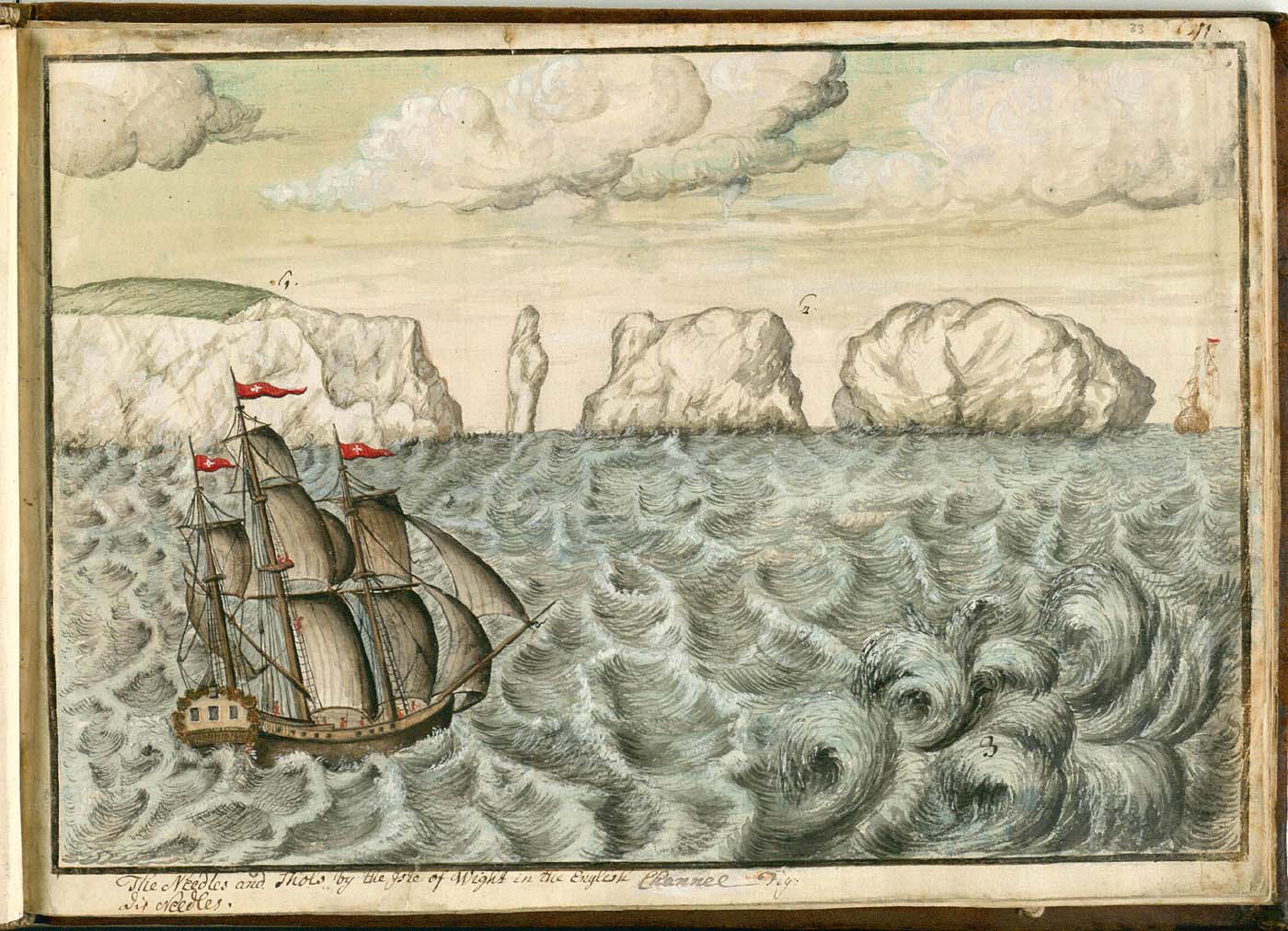
This chalk coastline becomes steadily more spectacular as it reaches the Isle of Wight. The most famous landmark there is the Needles, chalk sea stacks that have been both a welcome and a hazard to mariners over the centuries. These were presumably one of the first sights of Europe when Philipp Georg Friedrich von Reck returned from his pioneering stay in North America. The sea in this page from his sketchbook may appear a little overwrought, but it’s faithful: this channel in the Western Solent is home to one of the more spectacular tidal races of the Channel coasts, and often generates short, steep waves over a metre in height.
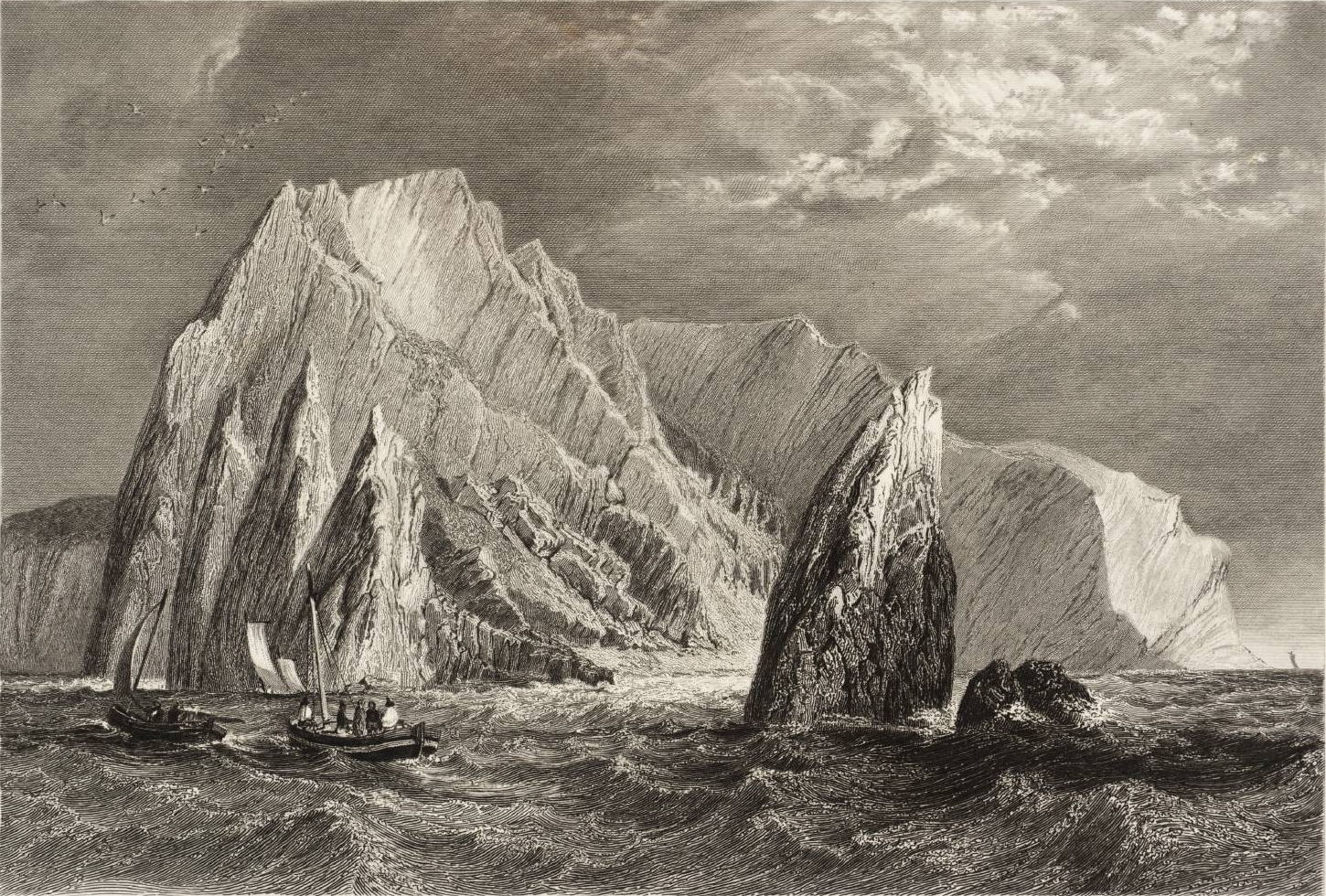
Clarkson Stanfield’s view was engraved as The Needles in 1836. This is a more accurate depiction of this landmark at that time, before the famous lighthouse was built in an effort to prevent ships wrecking on the submerged ledges here. The bay behind the closest chalk pinnacle is Scratchell’s Bay, and the wall of chalk at the back of it forms a huge shield, with dark veins as shown here. Stanfield must have painted his original work from sketches made in a boat just to the west of the Needles.
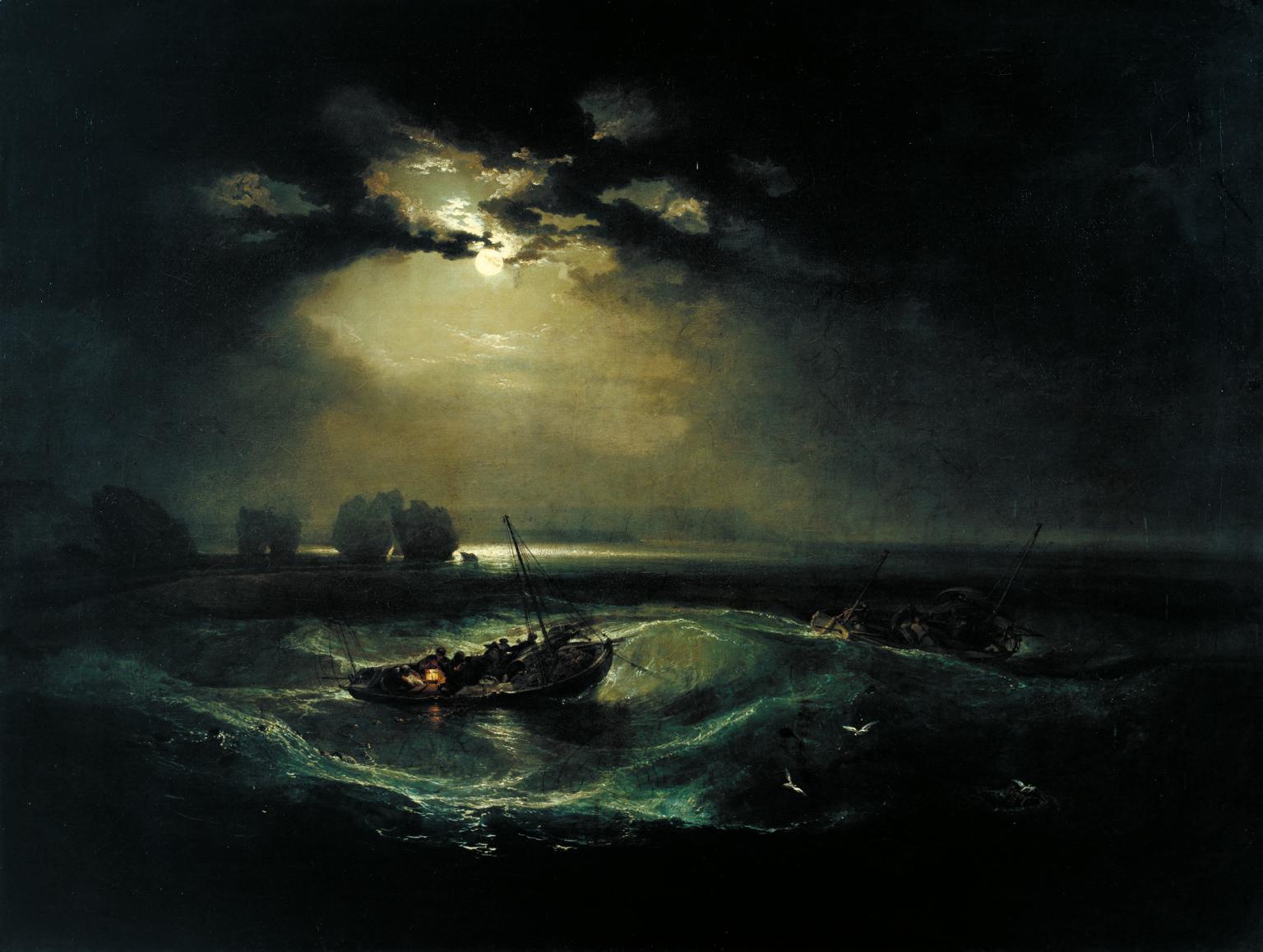
These chalk pinnacles also form the backdrop to JMW Turner’s early success of Fishermen at Sea from 1796. This shows small fishing boats working in heavy swell off The Needles, and was his first oil painting to be exhibited at the Royal Academy.
Closer examination of the painting reveals that, even at this early stage in his career, Turner wasn’t painting motifs as they were in nature: from the position of The Needles, this view would look to the south-west from Totland Bay. Yet he shows the distant promontories of the south-west coast of the Island, as if the view was made on the other side of The Needles in Freshwater Bay looking south-east instead. Another group of chalk sea-stacks was located there, with some common appearances to those at The Needles, and it’s probable that Turner merged them and added the background from the south-west coast.

At Ventnor, Isle of Wight (1856) is a superb watercolour painted by Barbara Bodichon on the coast just a few miles to the south-west of where I live. It conforms to the Pre-Raphaelite expectations of landscape painting, and captures the spirit and detail of the chalk cliffs along this stretch of the Channel coast. Painted from near Saint Catherine’s Point, in a friend’s studio, looking east into the dawn sky, it was successfully exhibited at the Royal Academy.

During the winter of 1885-86, the patron of another Pre-Raphaelite painter, John Brett, stayed on or near the Isle of Wight, where the artist’s new boat had been built. Brett painted two watercolour landscapes of the Island, of which only February in the Isle of Wight (1866) has been traced. This most probably shows Sandown Bay from Bonchurch, like much of this section of the coast subject to huge landslips.

