

Claude Monet was a central figure among the French Impressionists and a prolific landscape painter. Although he was most attracted to other motifs, there were periods during his long career that his art became dominated by depictions of trees, particularly from 1887 to 1892. In that period he must have painted more poplars than anyone before or since, in a succession of series paintings that proved popular and lucrative.

View At Rouelles, Le Havre from 1858 is believed to be the earliest surviving painting in oils by Monet, and is accomplished in thoroughly realist style. Given that Monet was only 18 when he painting this, and had been learning to paint in oils for just two years, it is strong evidence of his technical abilities and talent. It is also interestingly prescient in containing a row of poplars similar to those he later painted repeatedly.

During the 1860s, his style started to change rapidly, moving from his early realism. In The Lemon Grove in Bordighera (1864) he has not yet burst into more vivid colours, remaining still a little Barbizon dark, but he shows his brushstrokes throughout. Each tree is constructed anatomically, each fruit and leaf formed from individual marks, and the grass is carefully textured. At this stage his marks don’t appear as spontaneous as in later work, and this does seem to have been the result of many days’ careful brushwork.

The late 1860s and early 1870s brought increasingly gestural brushstrokes that became a signature of Impressionism, and the development of brilliant colour. Both are shown well in Autumn on the Seine, Argenteuil (1873), together with Monet’s love of reflections, which he painted meticulously. However these trees have lost their underlying anatomical construction, and exist only in their shimmering foliage.
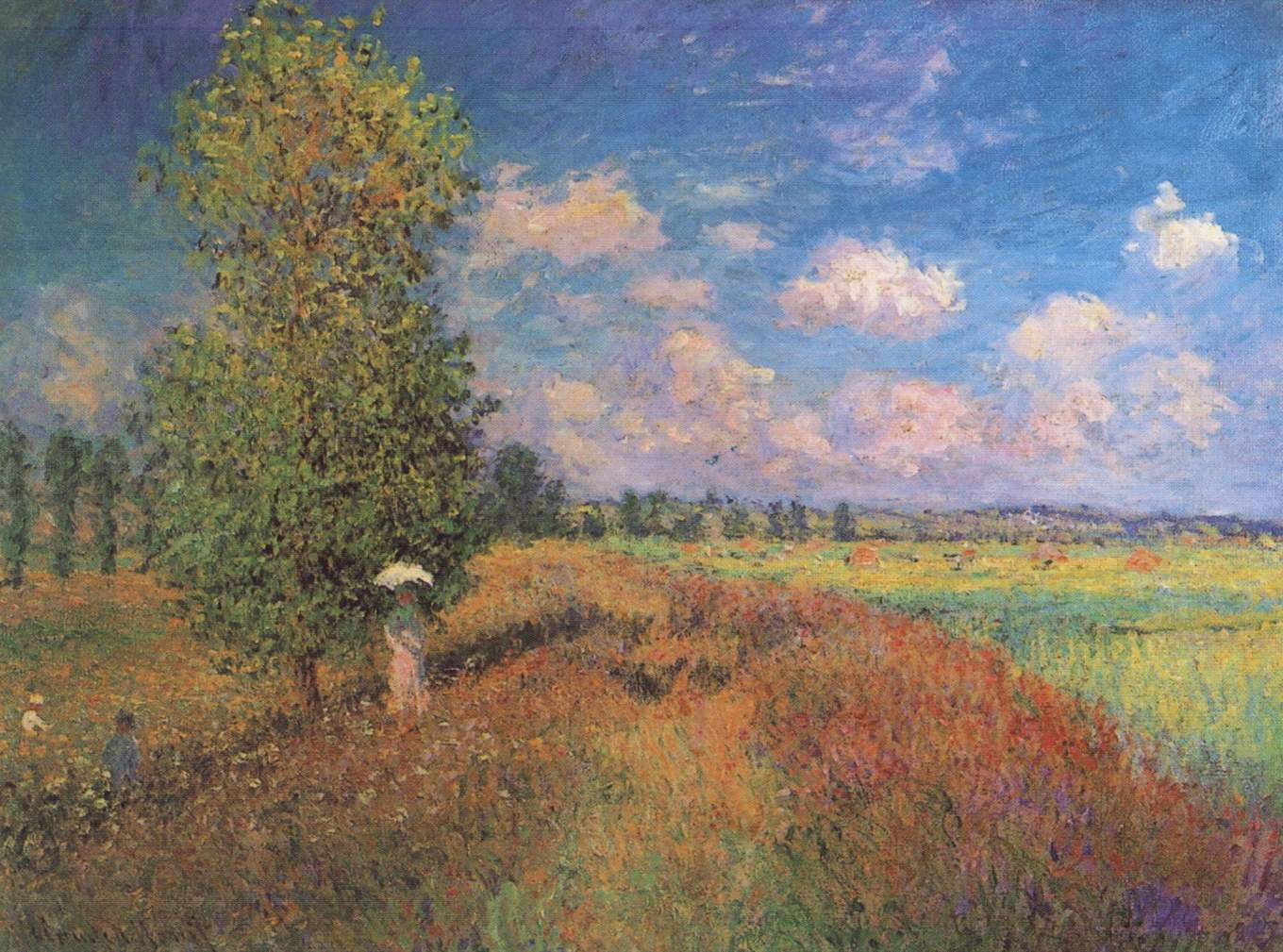
In the 1870s, Monet painted several works featuring figures, usually women and children, in rural landscapes, such as Summer. Poppies (1875). Here his trees only exist in the marks of their foliage, although there is evidence of underlying anatomy in the upper half of the tree in the foreground. Poplars also make another cameo appearance in the middle distance.

Visits to Bordighera, a seaside town just inside the Italian border on the Mediterranean coast, were made possible by high-speed trains from Paris to Rome, and Monet’s growing commercial success. In Bordighera (1884) he captures the weird sinuous forms of trees poised above the town, with their richly-coloured bark and intense green foliage.
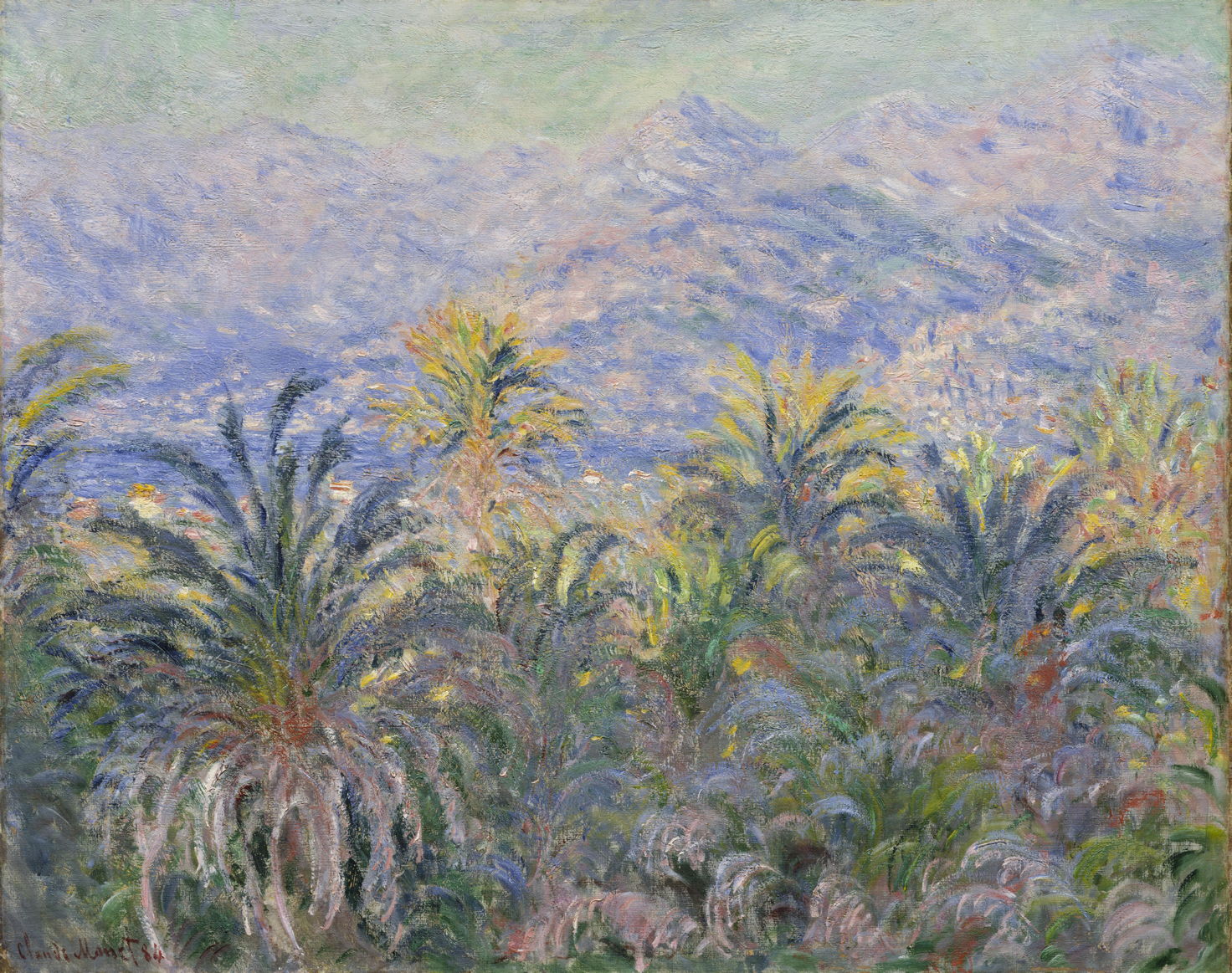
Although his brushstrokes were driven by the underlying form of the palm trees, they show no tendency to become organised in the way that those of Vincent van Gogh did. In Monet’s Palm Trees at Bordighera (1884) the marks help distinguish the foreground trees from the sea and hills in the background.
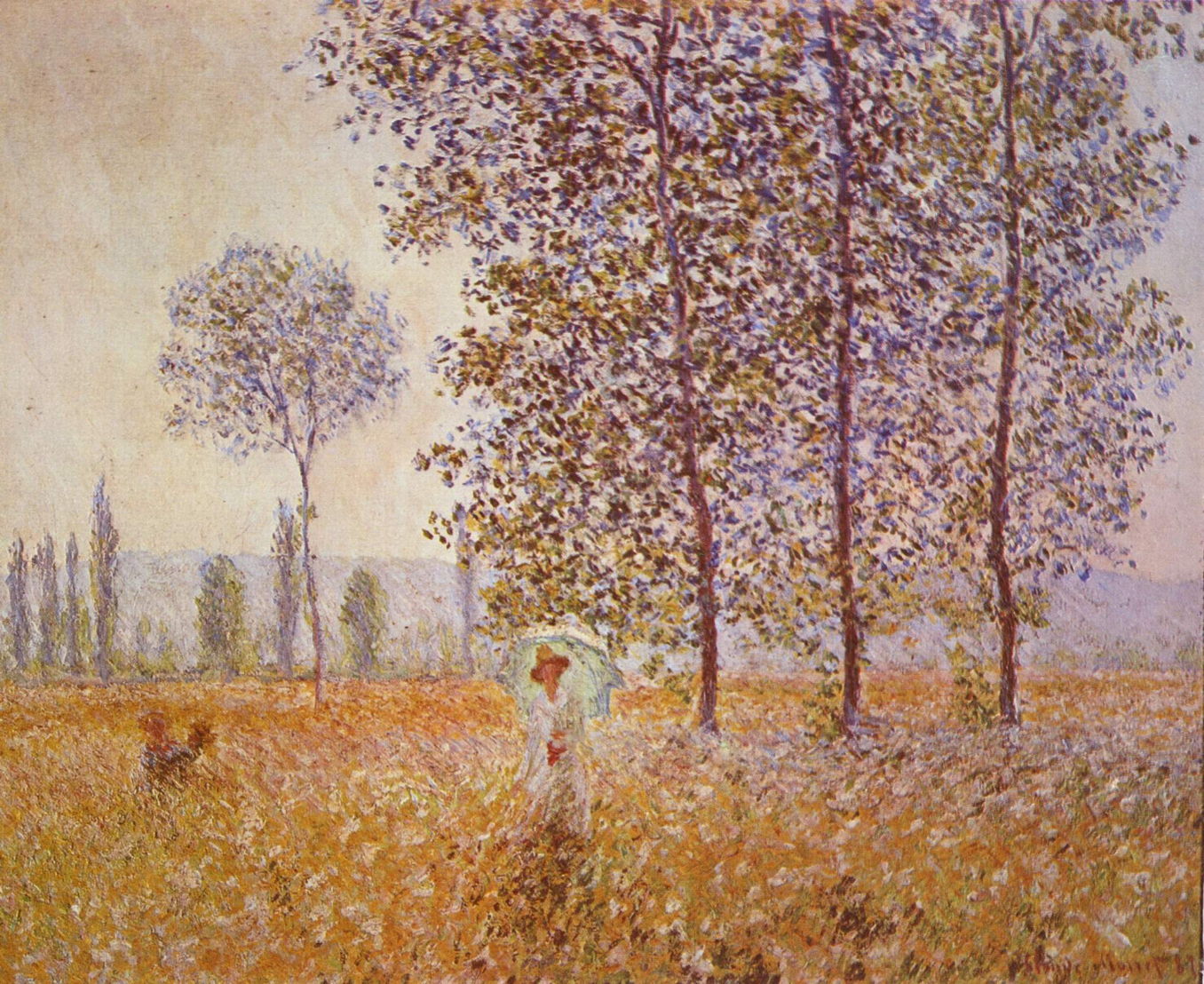
Poplars then started to dominate Monet’s landscapes. At first, as in Poplars in the Sun (1887), they include figures, as they had done a decade earlier. Leaves appear in a general scatter, rather than laid out by branches. The field and foliage are distinctly dotty, at the time that Pissarro had defected to Neo-Impressionism.
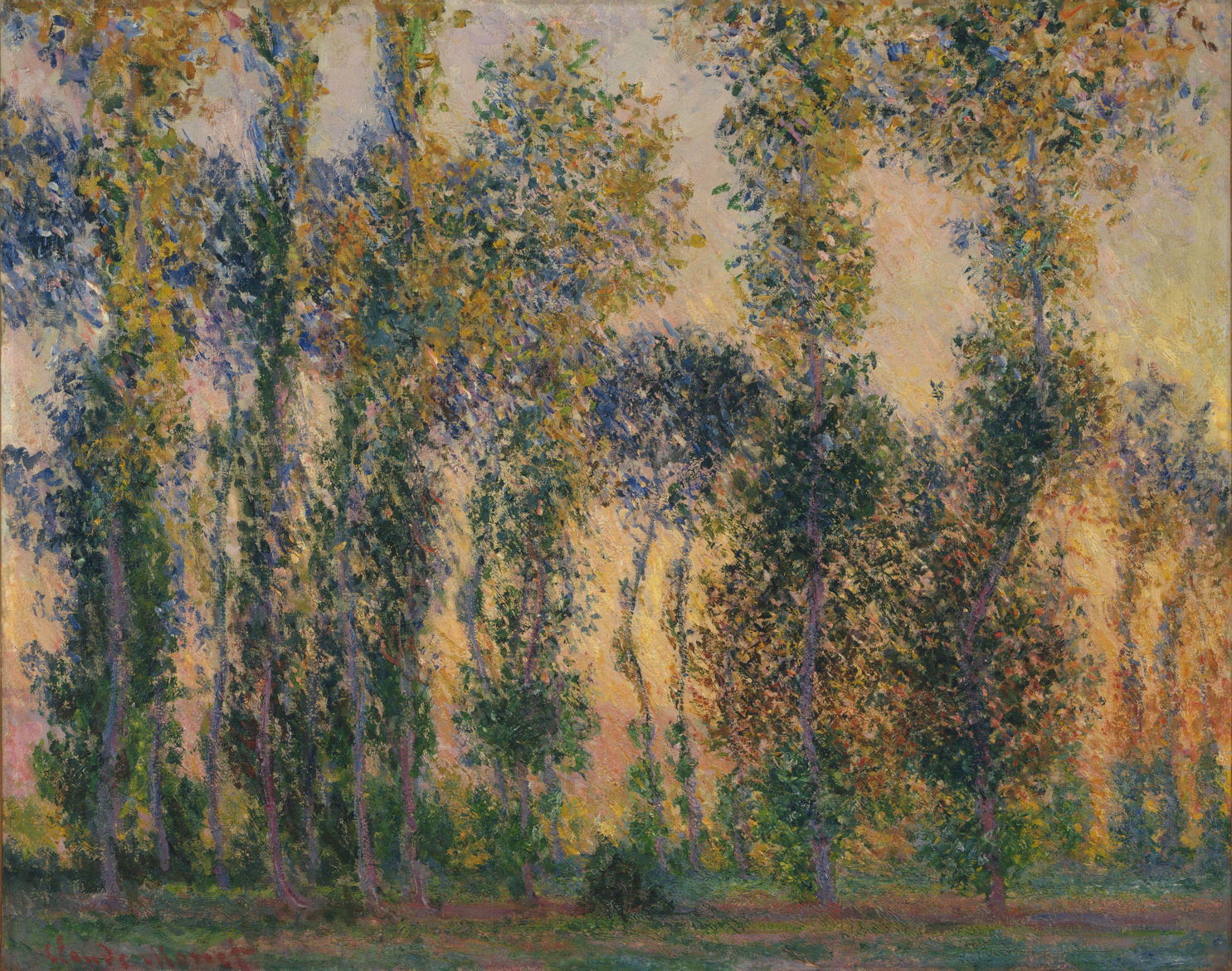
Over the following few years, Monet painted some of his finest portraits of trees; not just trees in the landscape, but trees as the landscape. In Poplars at Giverny, Sunrise (1888) the foliage is still a little faltering and uneven, but transiently brilliant colours are starting to appear in those leaves.
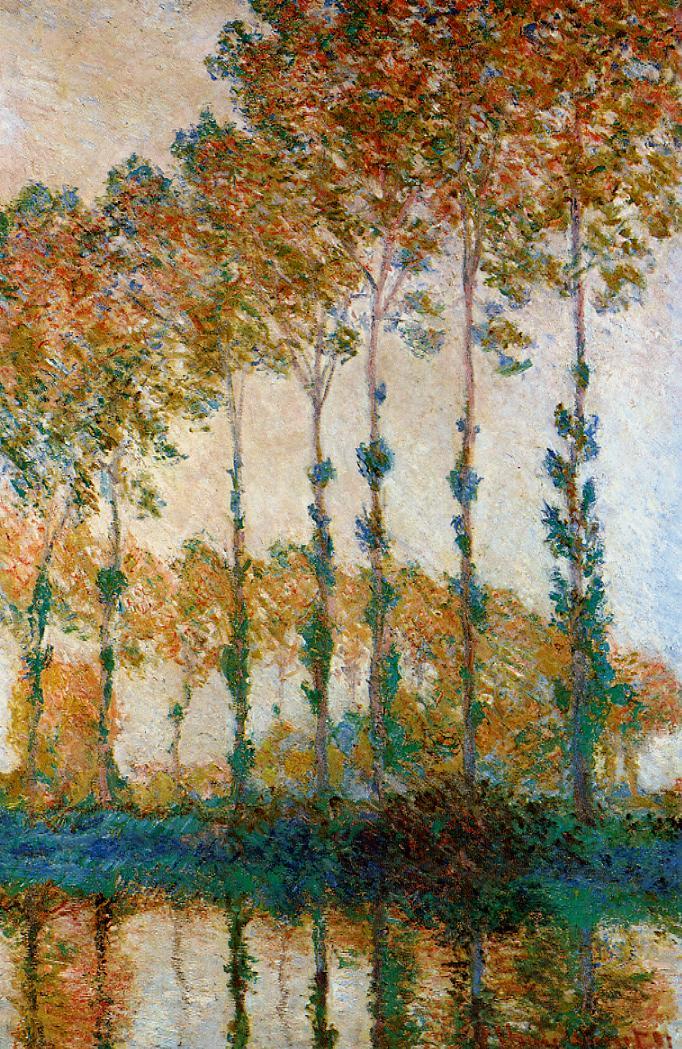
In 1891, Monet painted his first formal series showing poplars, including Poplars on the Bank of the Epte, Autumn, eleven paintings in all. These articulate the contrasts in form within each tree, with sections of bare trunk, and those of more extensive foliage, colours cast by light and those of the leaves themselves, the rhythmic assembly of the line of trees, their reflections in the water, and the formation of the line of poplars into sweeping curves in depth.
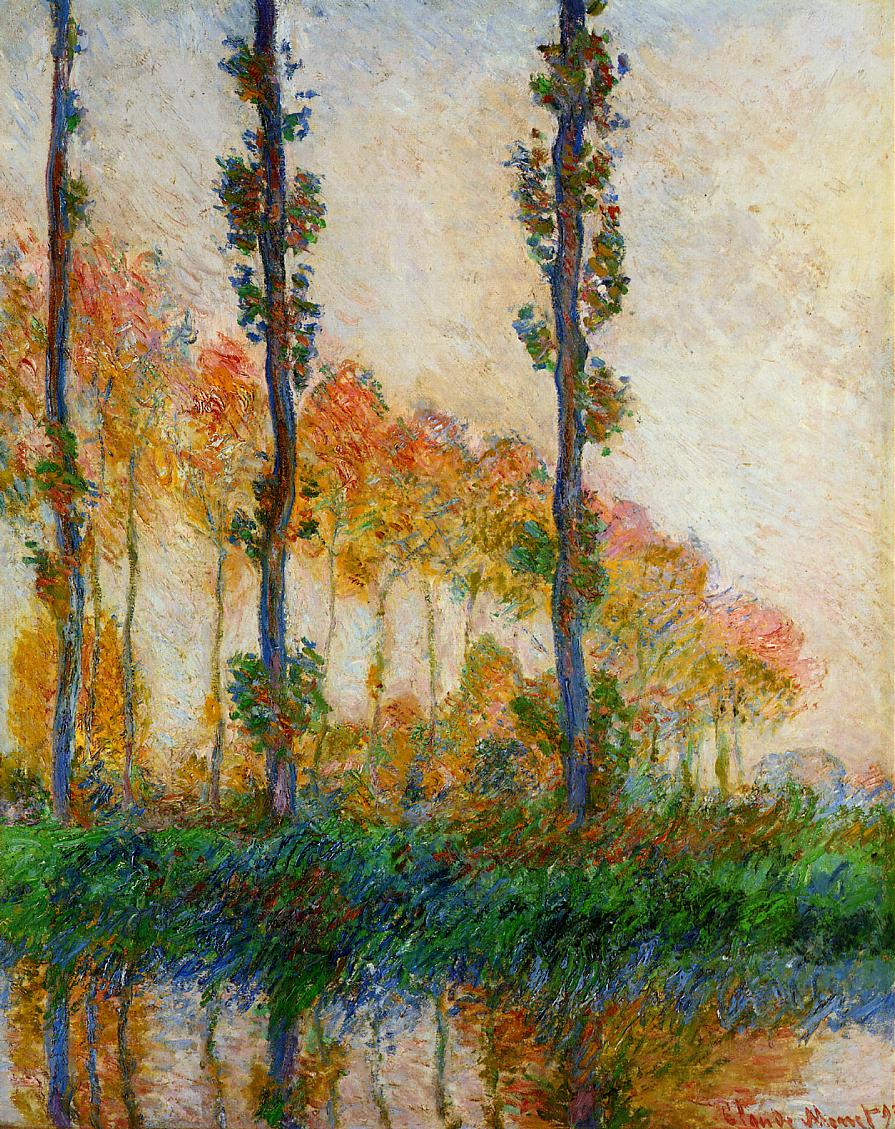
A branch of that main series consists of six further paintings of poplars, also completed in 1891, of which The Three Trees, Autumn (1891) is an example. These explore the same themes but with different emphasis within them.
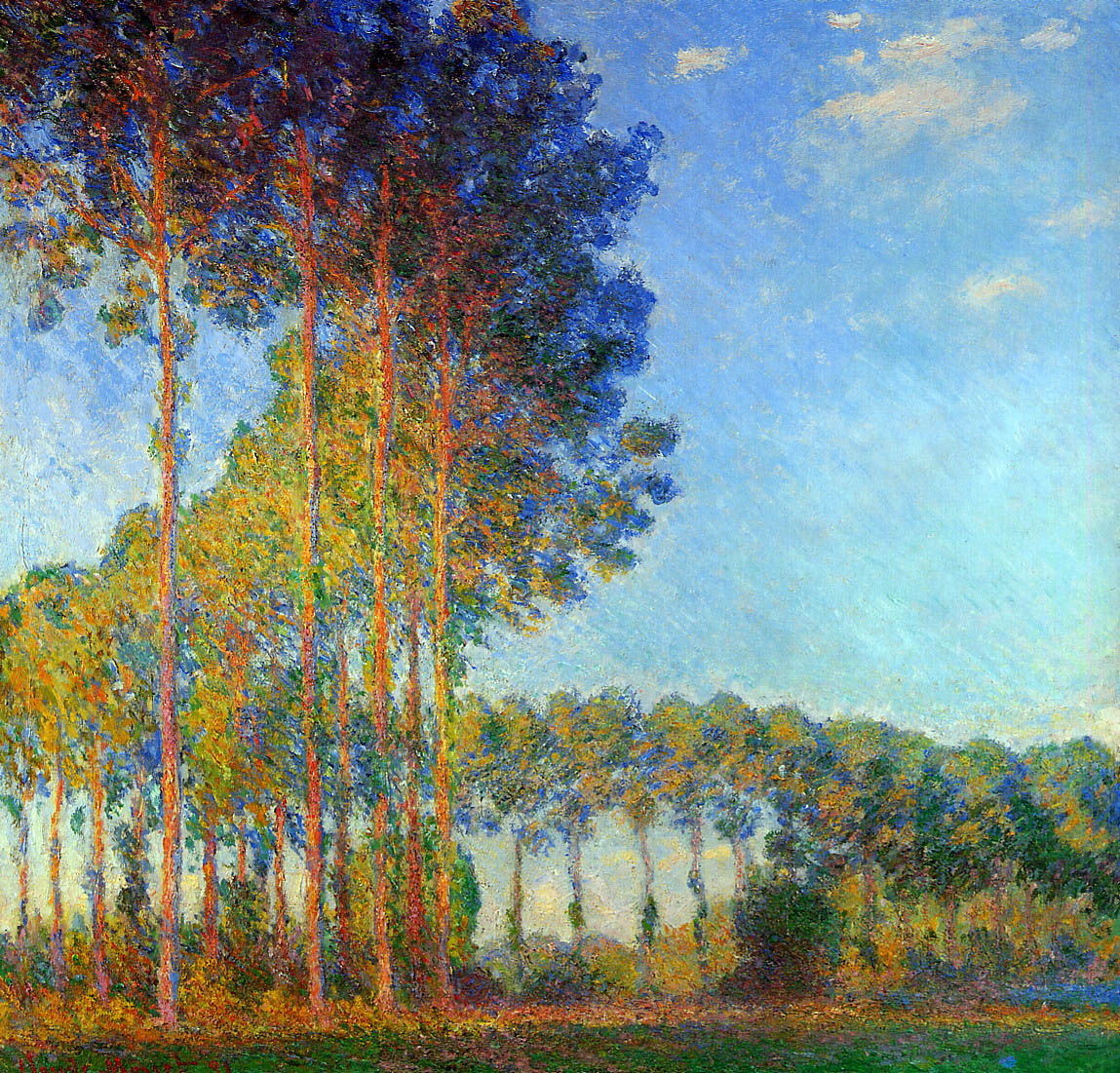
Monet couldn’t stop painting poplars during the early 1890s. My personal favourite is this, Poplars on the Bank of the Epte (1892), although it has dropped the reflections. It is, perhaps, the quintessential Impressionist painting of trees.
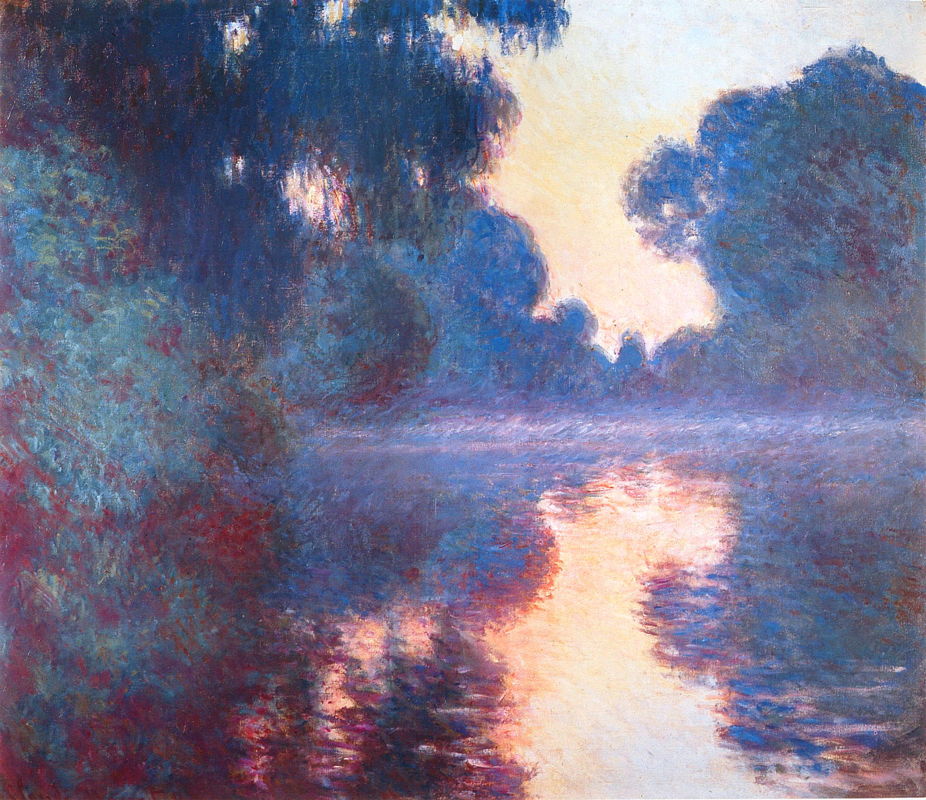
By the mid 1890s, Monet had exhausted the theme of poplars, and travelled further in search of other motifs.
References
Greub S (ed) Monet – Lost in Translation, Hirmer Verlag. ISBN 978 3 7774 2428 6. Reviewed here.
Skea R (2015) Monet’s Trees, Thames & Hudson. ISBN 978 0 500 23940 7. Reviewed here.
Spate V (1992) Claude Monet. The Color of Time, Thames & Hudson. ISBN 0 500 28273 0.
Tucker PH (1989) Monet in the ’90s. The Series Paintings, Museum of Fine Arts Boston and Yale UP. ISBN 0 300 04659 6.
Wildenstein D (1996) Monet, 4 vols, Taschen and the Wildenstein Institute. ISBN 3 8228 8559 2.

