
Two hundred years ago today, the Italian Orientalist artist Alberto Pasini (1826–1899) was born. By the time he turned fifty in 1876 he had undertaken a series of travels through the Middle East, most lately in Turkey painting commissions for Sultan Abdul Aziz, then the 32nd Sultan of the Ottoman Empire. The Sultan died in May 1876, and that seems to have brought an end to his visits to the Middle East, although he instead visited Spain in 1879 and 1883.
As an Italian living and working in France, he faced growing hostility there after the Franco-Prussian War of 1870-71. In the late 1870s, he bought a farm near Turin, where he spent more of his time.

At The Golden Horn from about 1876 shows a dockside not far from the bustling city of Istanbul. The Golden Horn (in Modern Turkish, Haliç) is a horn-shaped estuary that empties into the Bosphorus Strait at ‘Old Istanbul’. As a stretch of sheltered water so close to the city, it had long been a popular port for smaller traders, such as the mixed steam and sailing ship seen shrouded in coal smoke.
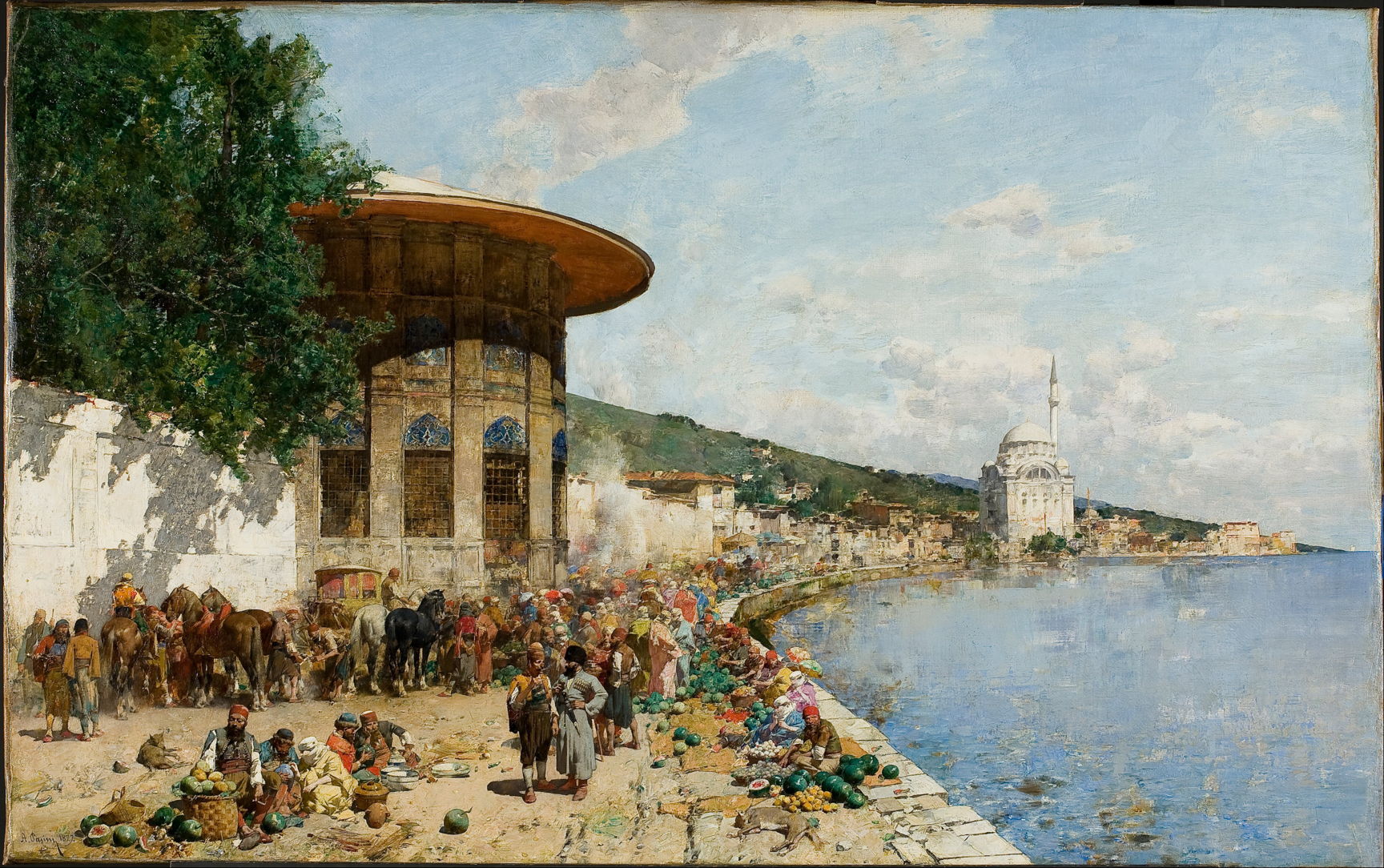
Market Day in Constantinople (1877) is one of Pasini’s finest paintings of the city’s waterfront, and one of several which have made their way to the US. Although its cultural fusion is less overt than his earlier painting of a market there, this is another big view as its quay sweeps gently away into the distance.
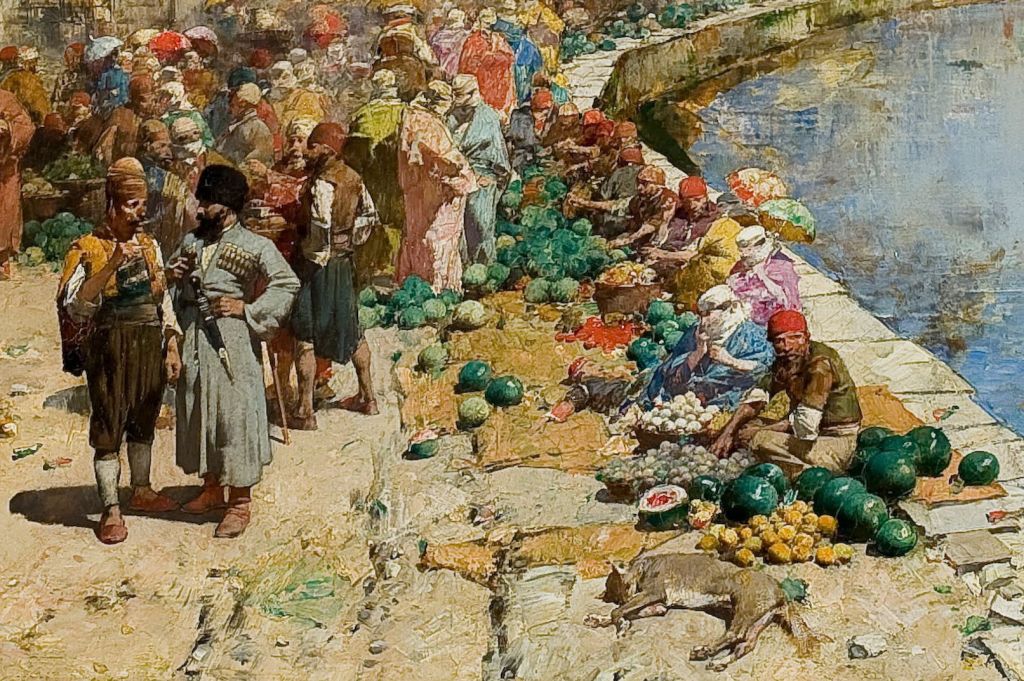
The detail below shows how meticulous Pasini is in his nearer figures and produce, including the inevitable melon sellers with their great green globes glistening in the sunshine.

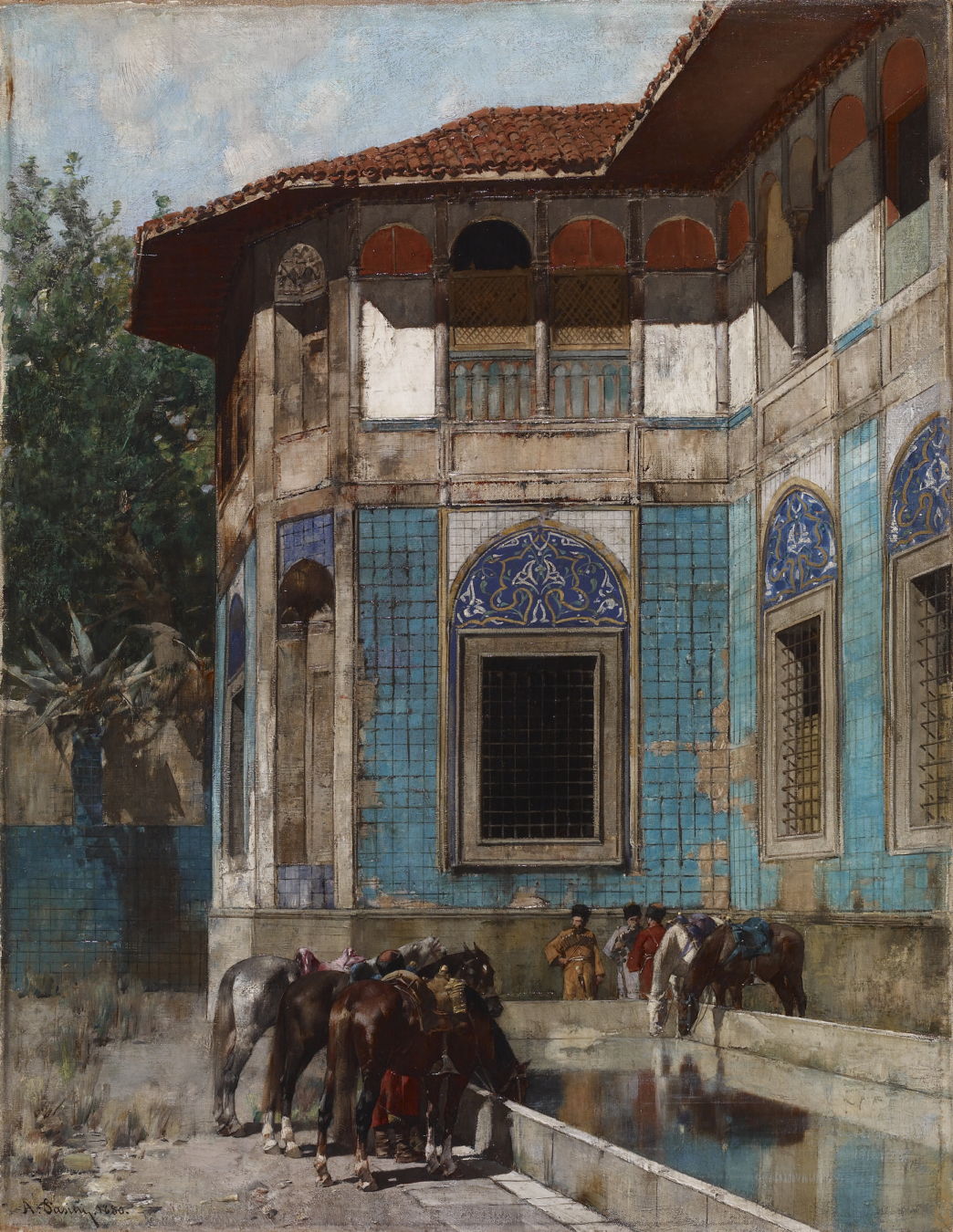
Pasini caught many fine buildings before their destruction or collapse. This unusual scene in Damascus from 1880 shows horses watering in a large pond in the courtyard of this once beautiful building.

In 1882 he painted this view By the Fountain, Constantinople combining a small market with its melon seller and three horses sheltering from the blazing midday sun.
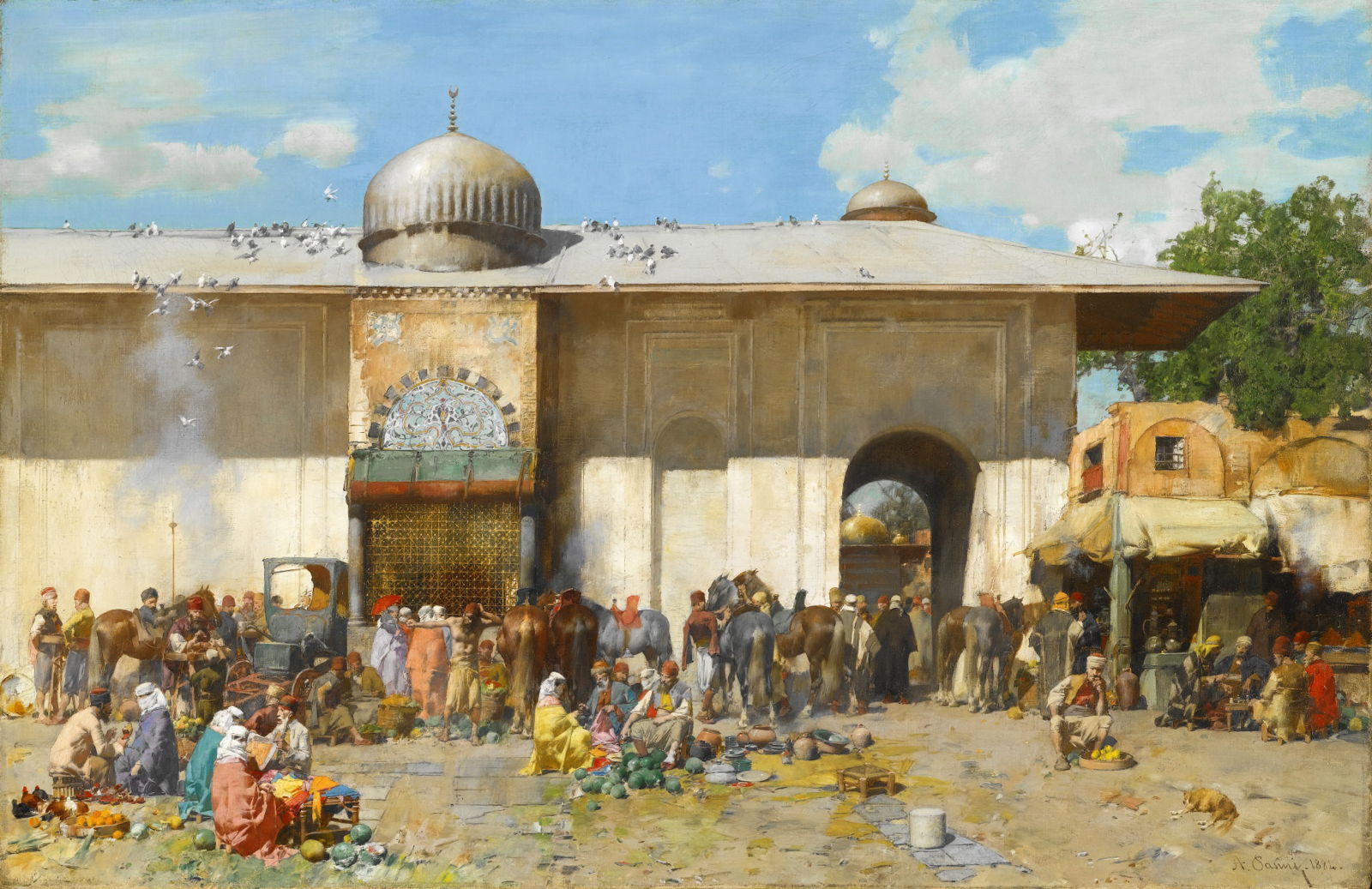
A Market Scene (1884) appears to be set further out in the provinces, with an eclectic mixture of produce, ranging from live chickens to pots and the ever-present melons. To the left of centre is a ramshackle horse-drawn carriage.

A Mosque (1886) is the second of Pasini’s two paintings in the Met, and a marked contrast from the earlier one. There are no smart carriages here, and most of the exterior of the building is in need of decoration if not repair. But there’s a small market running where you can still buy melons, as shown in the detail below.

Although Pasini usually dated his paintings, the dates on these last two works are no longer clear.
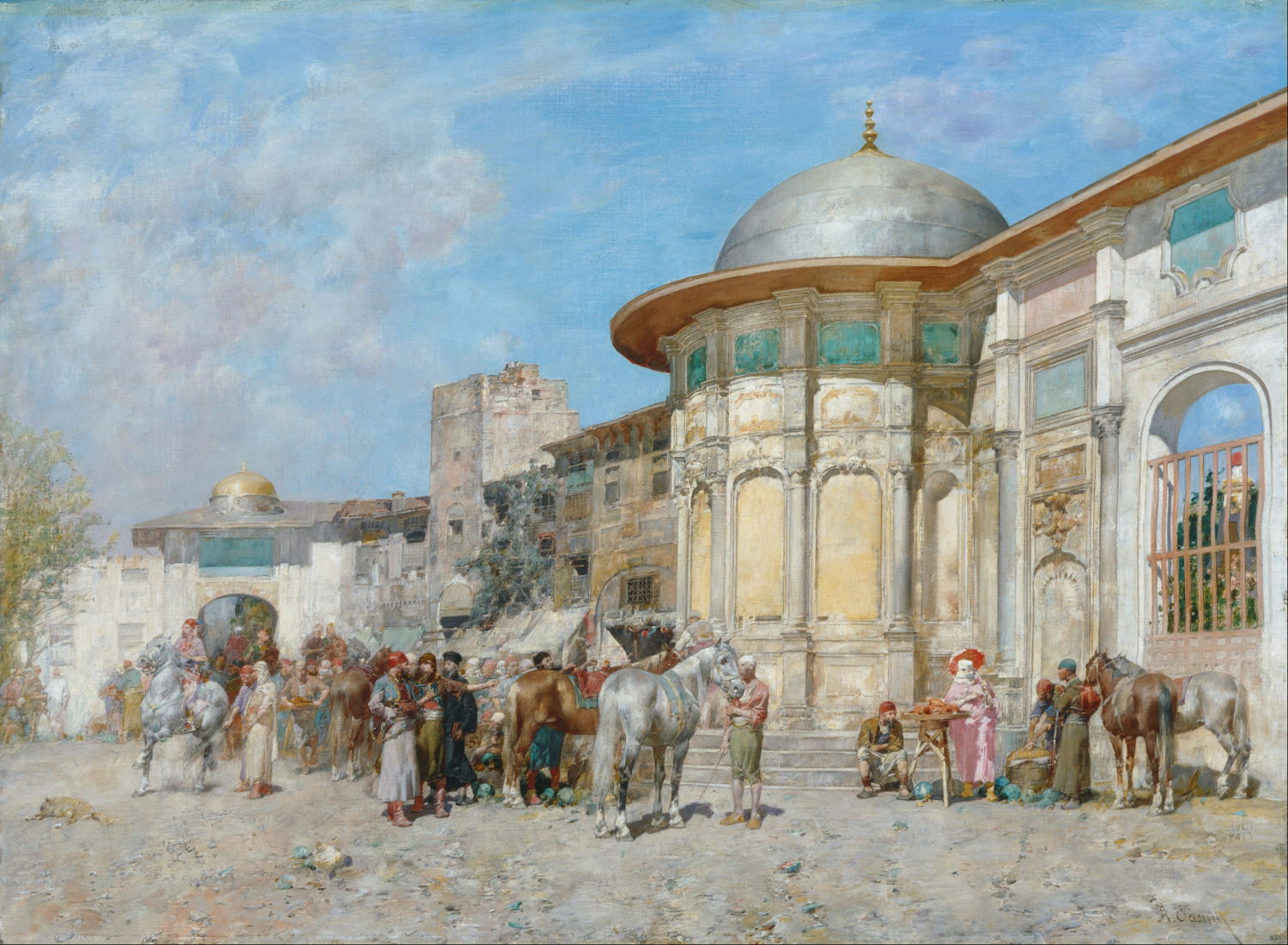
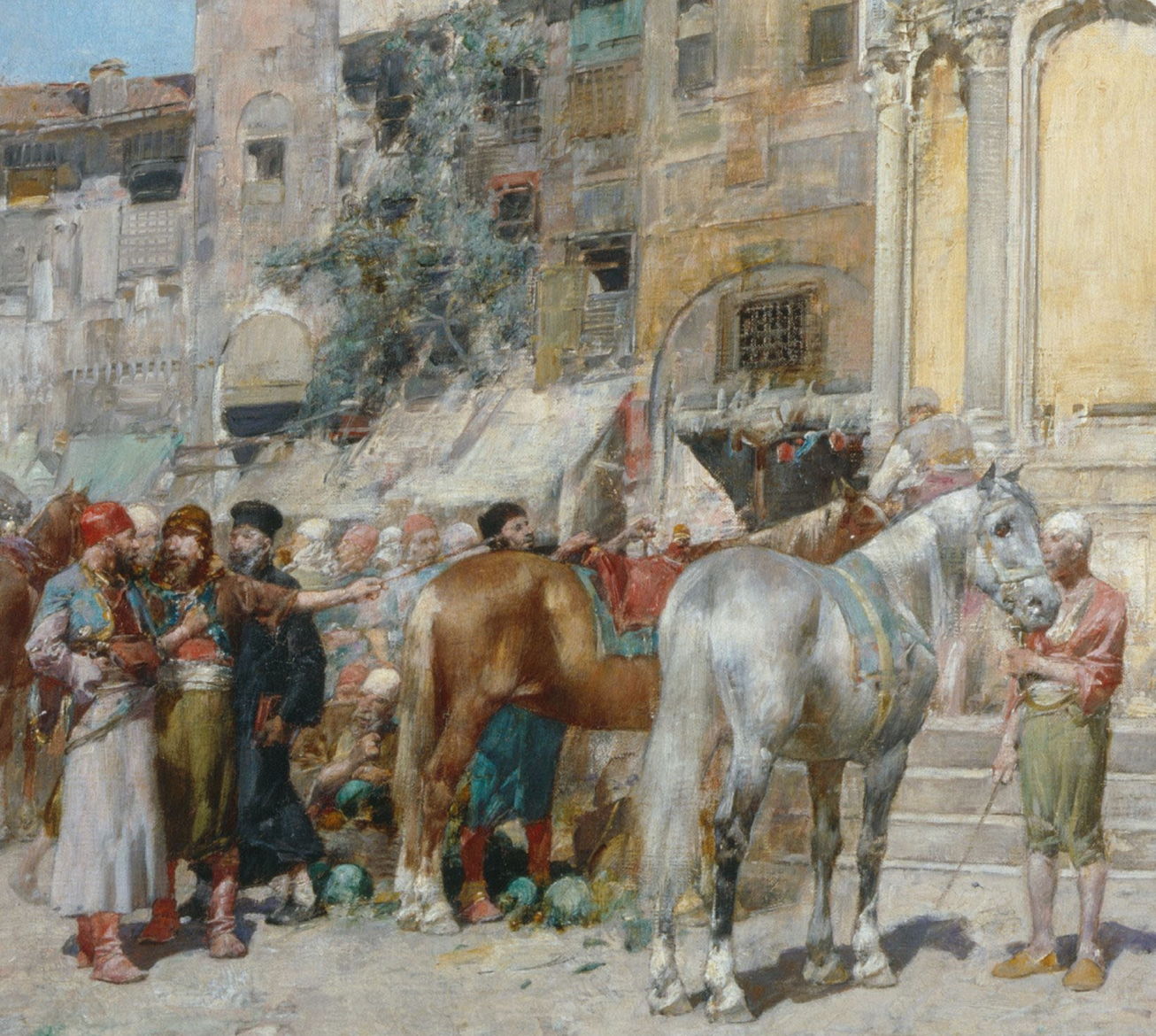
I suspect this view of A Horse Market, Syria was probably painted in his earlier years, perhaps during his initial tour of Syria in the late 1850s. The detail below reveals that he was, in his own miniature way, quite painterly in forming the buildings and vegetation behind the small market.
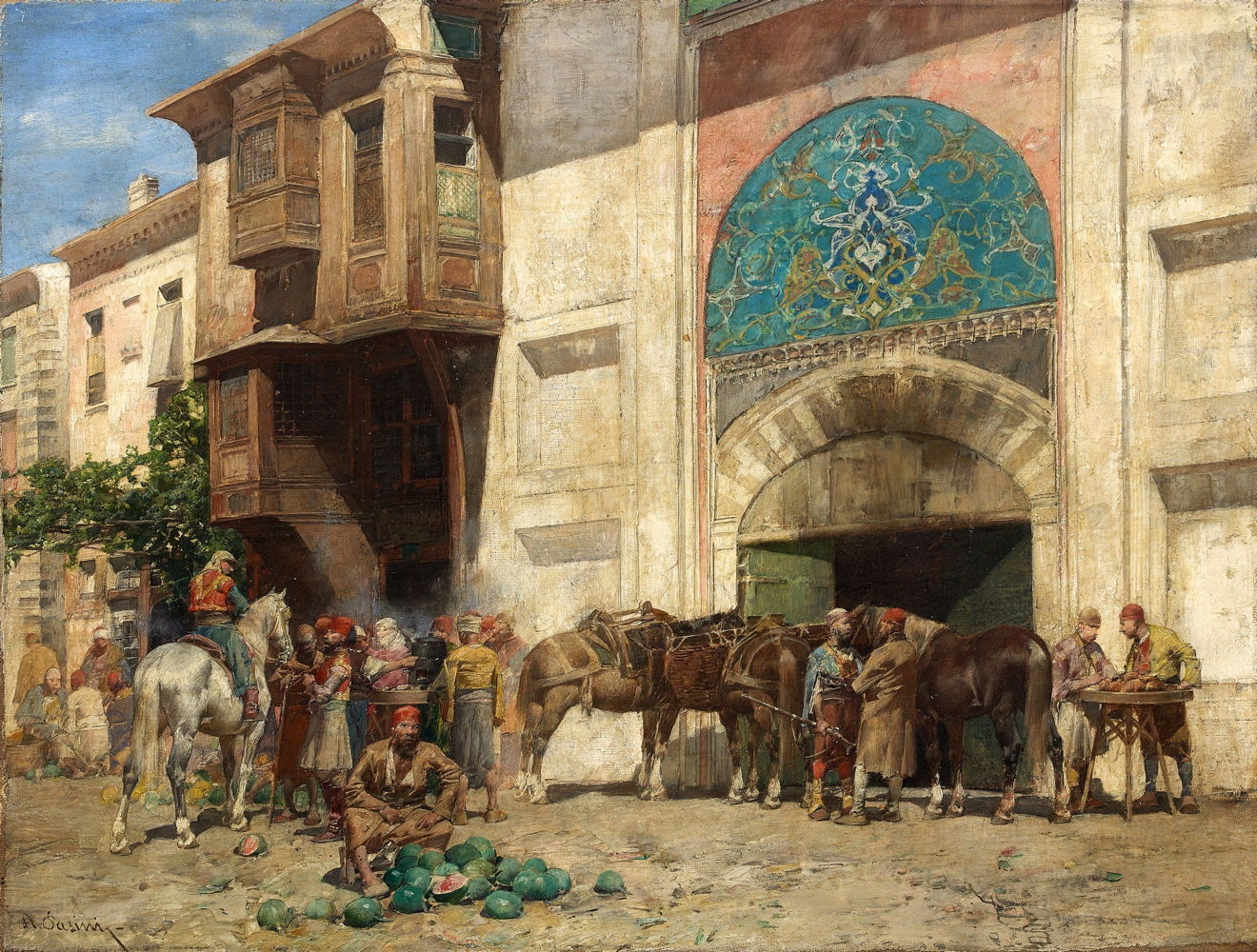
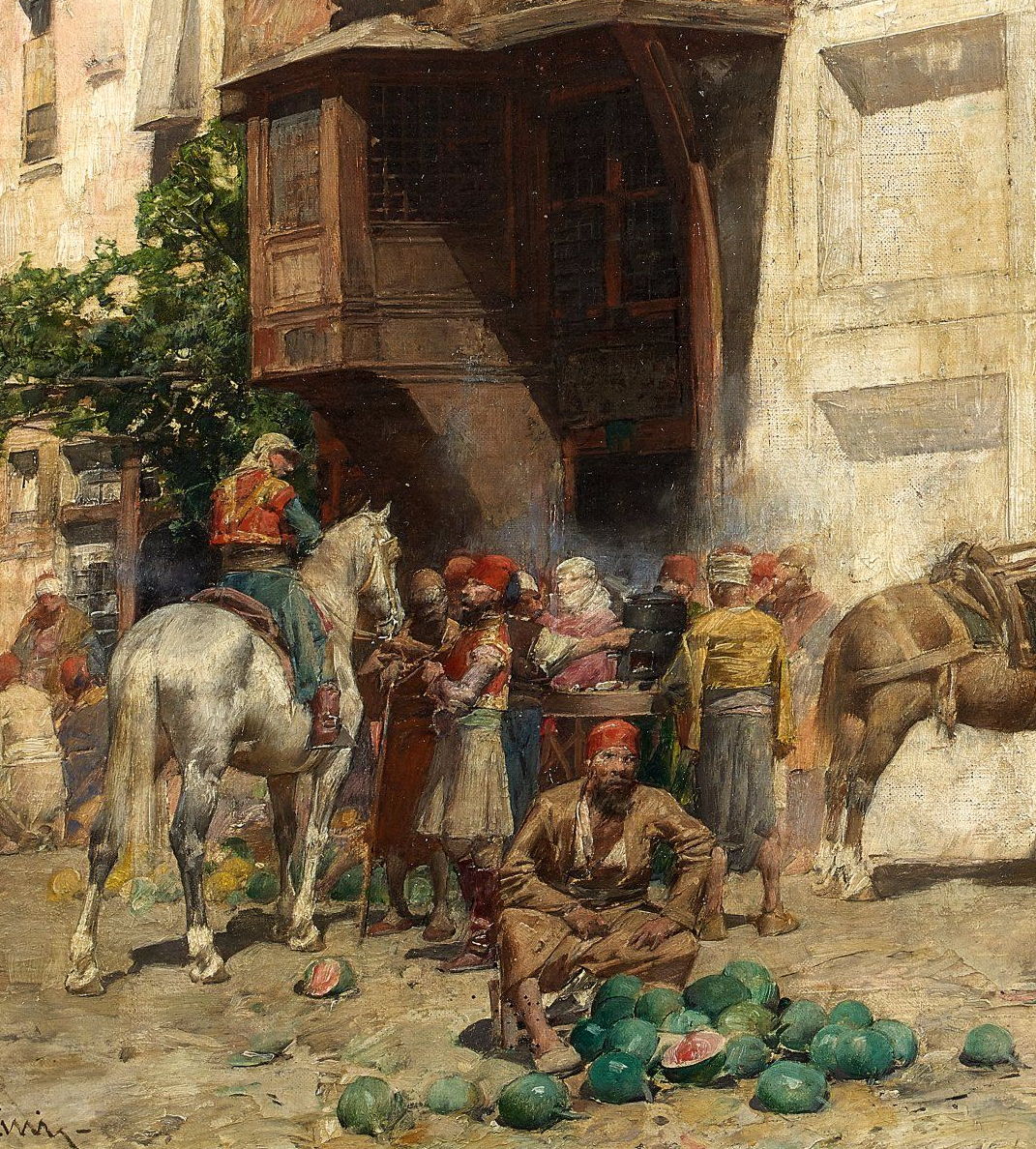
If the melon seller in the foreground is anything to go by, Pasini’s Horsemen in Front of the Entrance to the Bazaar is one of his later works. The detail below shows how he skilfully paints sufficient detail to give a meticulous appearance, while forming that from fine marks.
Alberto Pasini died on his farm near Turin at the end of 1899, when he was rated as one of Italy’s greatest artists of the nineteenth century, with his self-portrait honoured in the Uffizi’s collection. He is now almost forgotten outside his home town of Parma.
Reference
In the summer of 2018 there was an exhibition of his paintings at Fondazione Magnani Rocca in Parma, Italy, the artist’s home town. The illustrated account of that remains accessible here.

