
By the start of the twentieth century the teaching of artists including Thomas Eakins, William Merritt Chase and John Ferguson Weir was paying off, and aspiring American landscape painters no longer needed to train in Europe. In this second part of my celebration of the two-hundred and fiftieth anniversary of American Independence you’ll see the rise of home-grown artists.
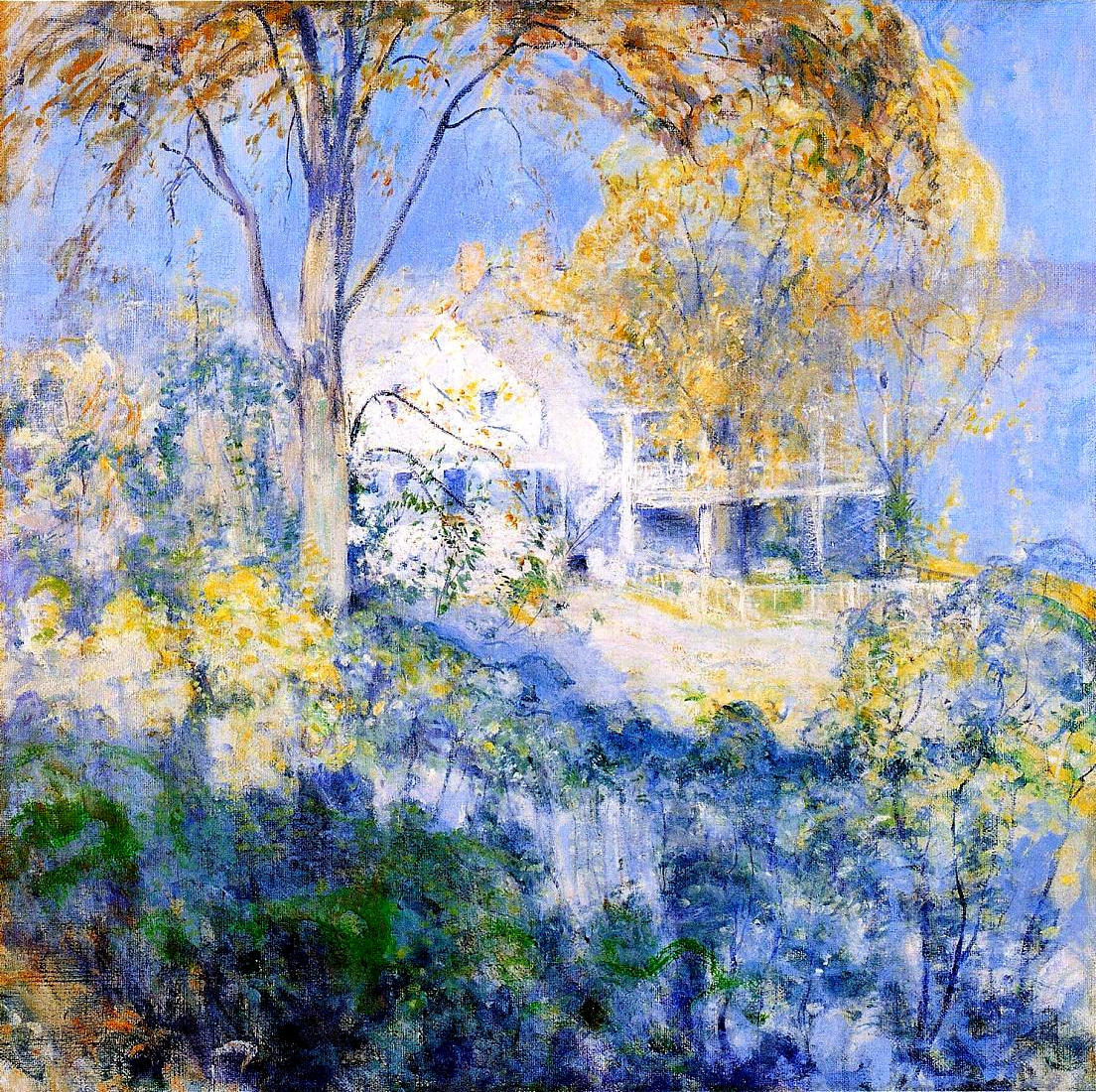
John Henry Twachtman, another Impressionist, was a fellow student in Munich with William Merritt Chase, and went on to the Académie Julian in Paris. He settled on a farm in Greenwich, Connecticut, and was one of the leading members of the Cos Cob art colony there.

John Singer Sargent spent much of his career as an ex-patriate, painting portraits of the wealthy and powerful throughout Europe, but in the last decade of his life he spent most of his time in the USA. He painted this magnificent watercolour of Muddy Alligators when he was staying on the Miami estate of James Deering.

Julian Onderdonk was one of William Merritt Chase’s students, who returned to his native San Antonio in Texas to paint landscapes, most notably those featuring carpets of bluebonnet flowers. His Sunlight and Shadow (1910) must be one of his finest works, and a good example of the local landscape.

Anna Althea Hills was another Impressionist, who painted mostly on the West Coast in Southern California. She had appropriately been born in Ravenna, Ohio (not Italy), and trained in Chicago, New York City, and Europe. She eventually settled in Laguna Beach, California, from where she painted Fall, Orange County Park in 1916 en plein air, as was most of her work. In 1918 she co-founded the Laguna Beach Art Association, and was an active supporter of the town’s first art gallery, which later became the Laguna Art Museum.
The late nineteenth and early twentieth centuries were a period of enormous change in America. It was Colin Campbell Cooper, a Philadelphian, who documented the rise of skyscrapers in New York City.

He painted the Flatiron Building, Manhattan in about 1908, just six years after this distinctive landmark at 175 Fifth Avenue had been completed. Then one of the tallest buildings in New York City, at 20 floors high, its triangular section makes it instantly recognisable. It was originally named the Fuller Building, after George A Fuller, the ‘father of the skyscraper’, but soon gained its more popular title. It was equally quickly photographed in classic images by Alfred Stieglitz (1903) and Edward Steichen (1904), but Cooper’s bustle of people, carriages, and aerial wisps of steam makes his view one of the most impressive.
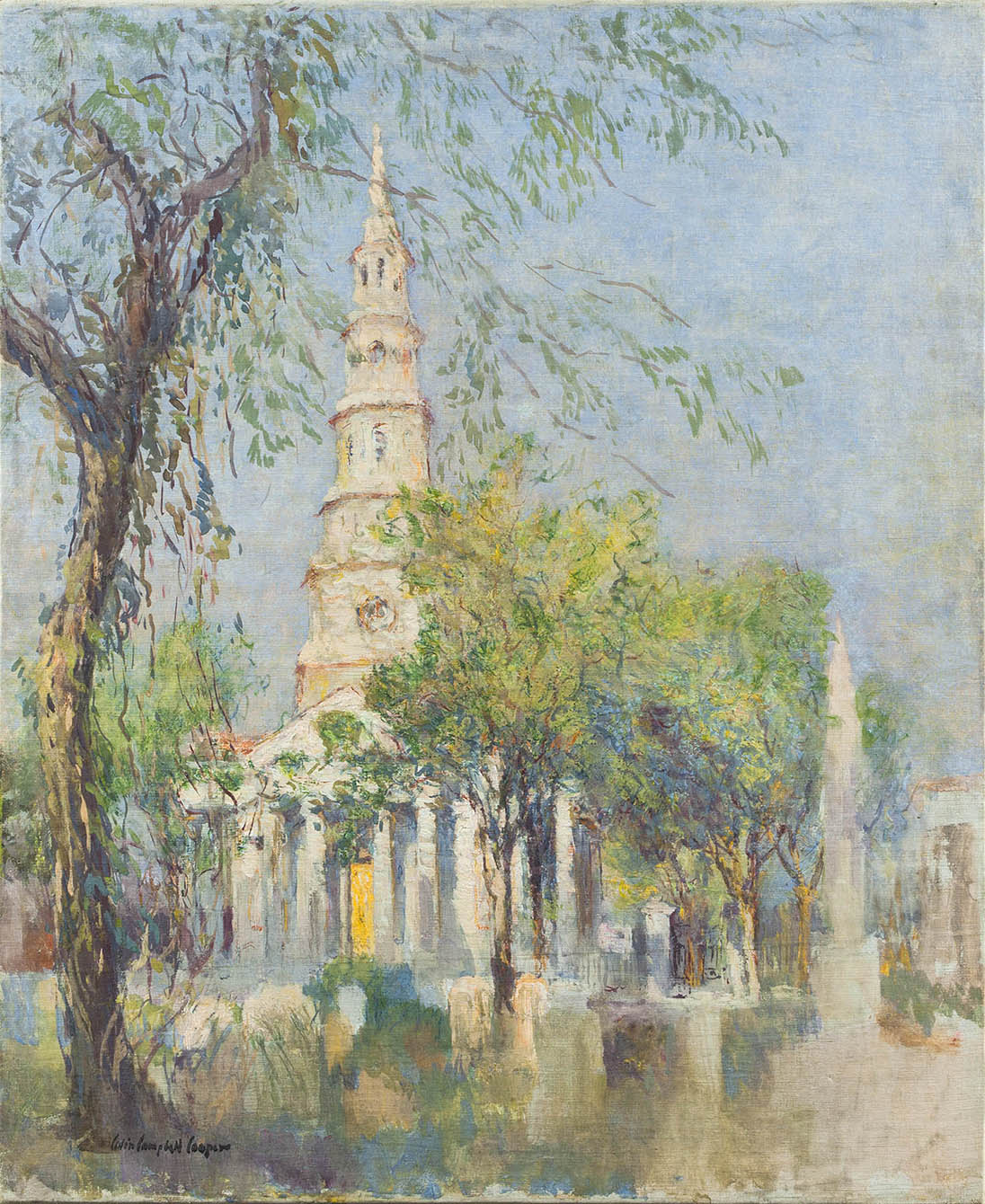
He also painted some older buildings, including Saint Philip’s Church, Charleston (1913) showing this beautiful Episcopal church in South Carolina, amid gestural foliage. This church was built in 1835-6 to replace a series of ill-fated wooden buildings. Its spire was completed in 1850, and served as a navigational lighthouse for many years.

Late in his career, Cooper moved to the West Coast, where he completed some exquisite paintings of the lush vegetation in California, such as his Terrace at Samarkand Hotel, Santa Barbara, California (c 1923). This hotel, most correctly named The Samarkand Persian Hotel, offered the height of luxury when it opened in 1920, in the buildings of what had been a boys’ school. Although it closed in 1940, the name lives on as one of Santa Barbara’s neighbourhoods.

American artists have enjoyed the support of patrons and enthusiasts, such as Florence Griswold (1850-1937), a resident of Old Lyme, Connecticut. She encouraged artists to stay in her house there, so founding the Old Lyme Art Colony. During the early part of his visit there in 1906, Willard Metcalf painted this unusual nocturne of Florence Griswold’s house in Old Lyme, May Night. Her house is now a museum containing the largest public collection of Metcalf’s paintings.
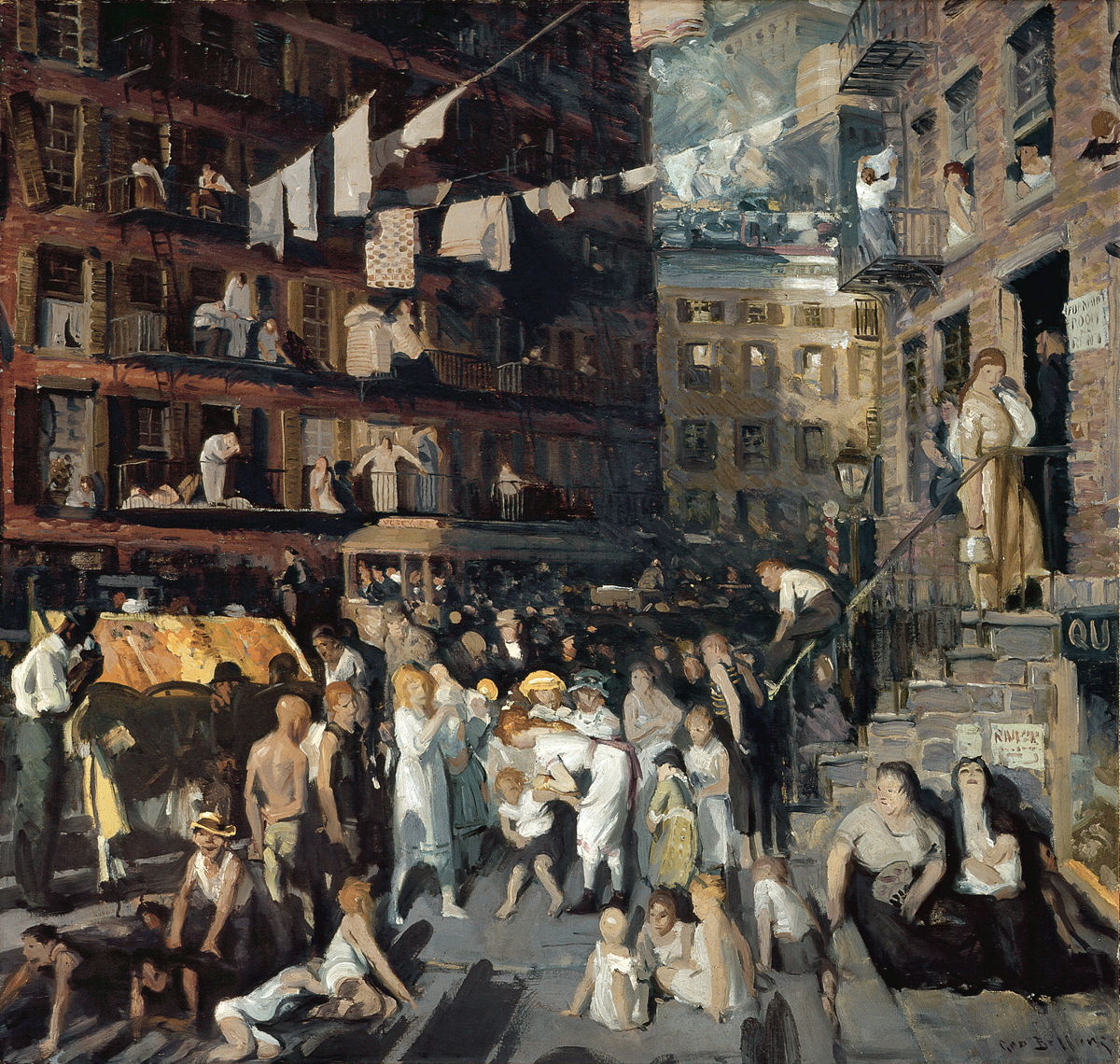
George Bellows’ brilliant paintings of human landscapes in New York City are justly famous, particularly Cliff Dwellers from 1913. This shows the largely immigrant population of tenements in Lower East Side, whose children featured in some of his other paintings. In 1916 this was the first painting to be purchased by the county of Los Angeles for its new museum of art, where it remains today.

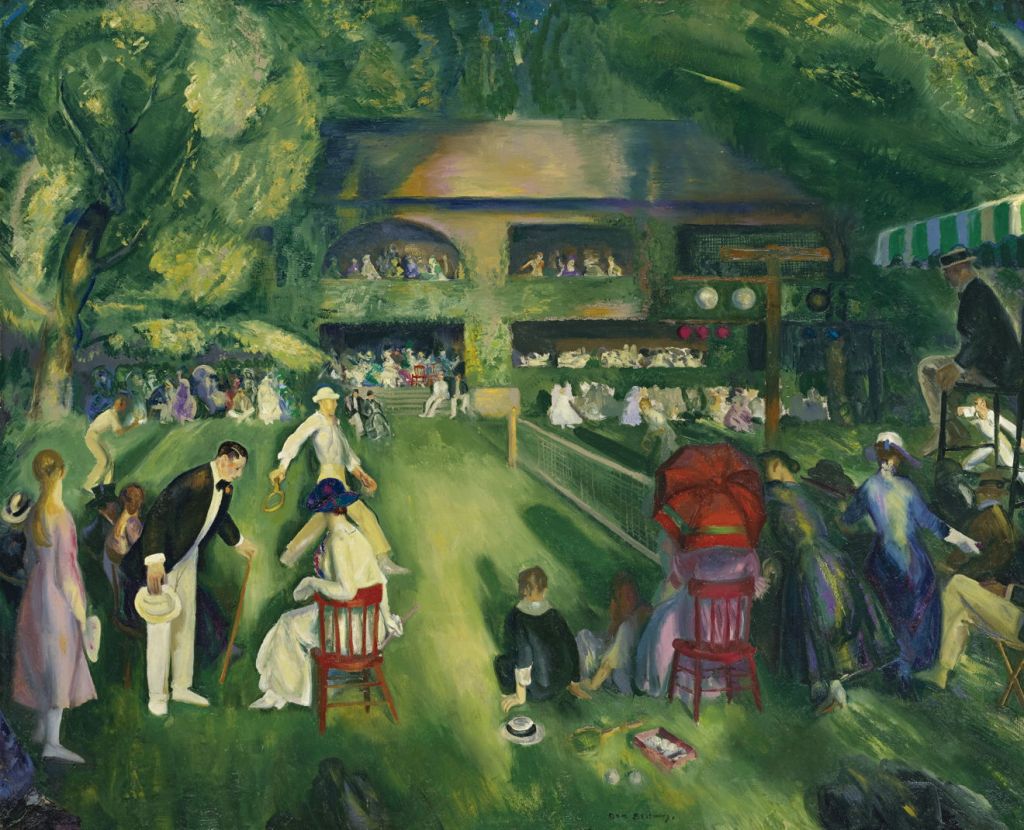
Bellows’ themes were eclectic, including the sea, and several sports. His Tennis at Newport from 1920 is one a series of paintings he made in 1919-20 from sketches and studies made during summer tennis tournaments at the Newport Casino in Rhode Island. His interest here is less in the sport taking place, and more in the social event going on around it.
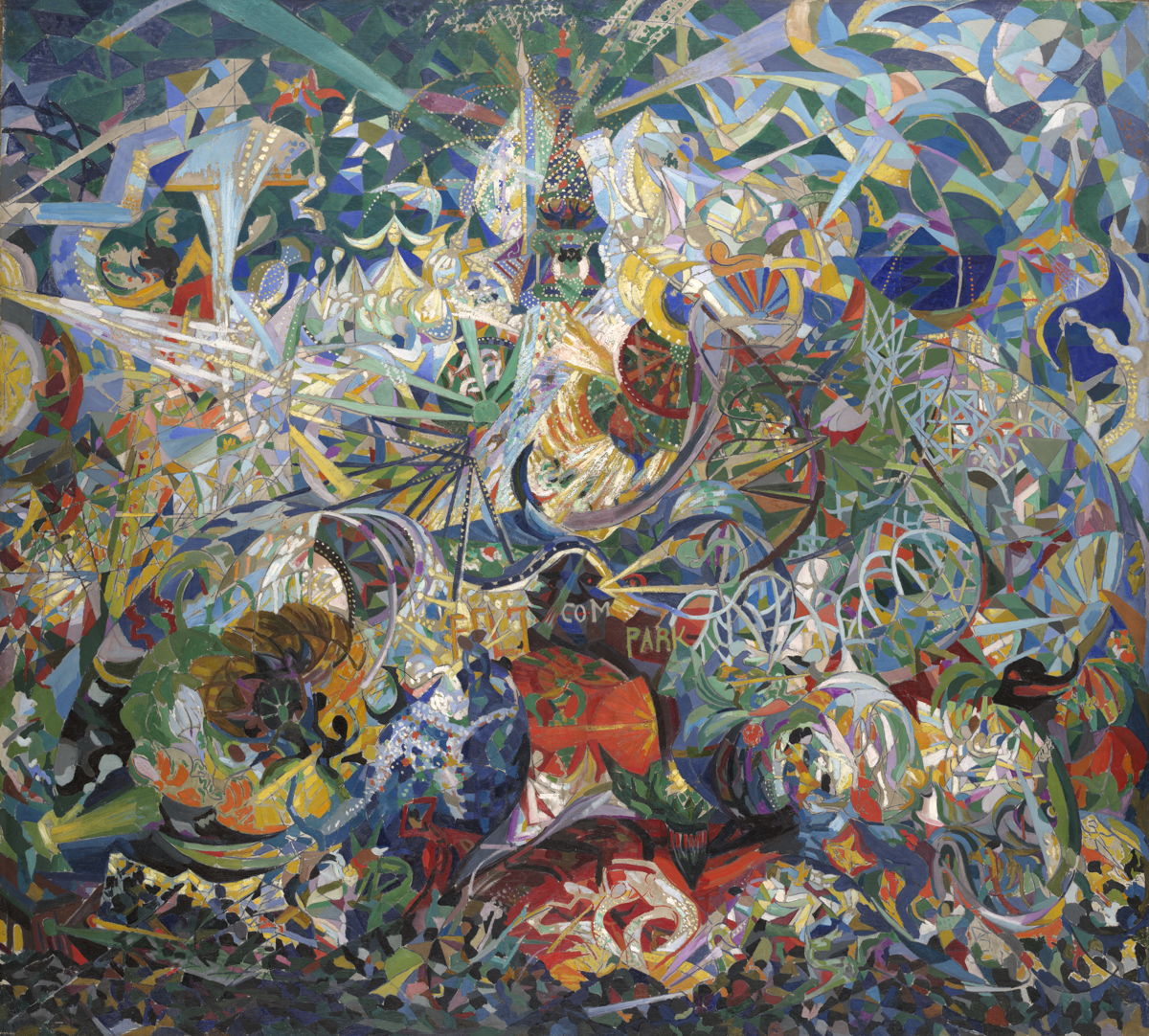
Joseph Stella was even more versatile and ever-changing in his genres and styles. Just before the Great War, he was captivated by scenes of amusement parks on Coney Island, on a peninsula in Brooklyn, New York City. Battle of Lights, Coney Island, Mardi Gras (1913) was one of the earliest, and still among the greatest, of American Futurist paintings.
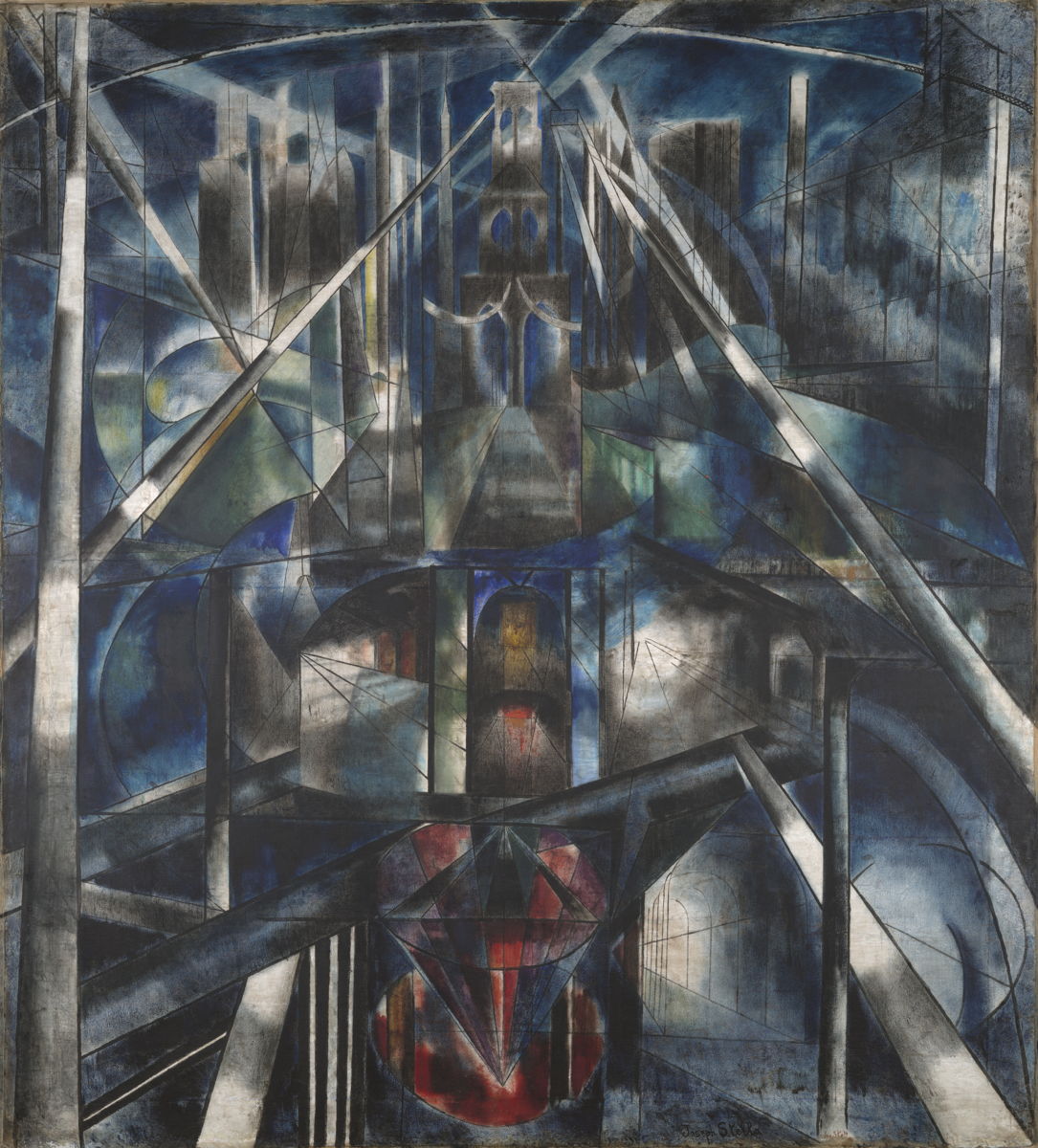
Stella’s best-known landscape, though, is this Cubist geometric analysis of Brooklyn Bridge, New York City, from 1919-20.

The last of these landscape views of the US is Grant Wood’s Spring in Town from 1941, a typically rural Midwest scene as locals get out in the warm sunshine of the Spring and tend to their yards. Wood is most famous for his American Gothic from 1930, also set in Iowa.
I hope you’re all looking forward to celebrating the eleven-hundredth birthday of the Kingdom of England next year.

