
Humans have managed trees and woodland since long before recorded history. Two of the common production systems used have been coppicing and pollarding, both involving cutting a tree down to a stump and letting it regrow to produce usable timber. In coppicing, the cut surface of the stump is close to ground level, while pollards are cut well above that, sufficient to prevent animals from eating the new shoots that grow from the stump. Both techniques result in rapid growth of many thin shoots that can be harvested in anything between three to fifty years, to produce poles, staffs, firewood and wood for charcoal production.
For an artist coppice ‘stools’ aren’t attractive to paint. Soon after coppicing, there’s little to see, while mature coppices are dense masses of rising shoots.
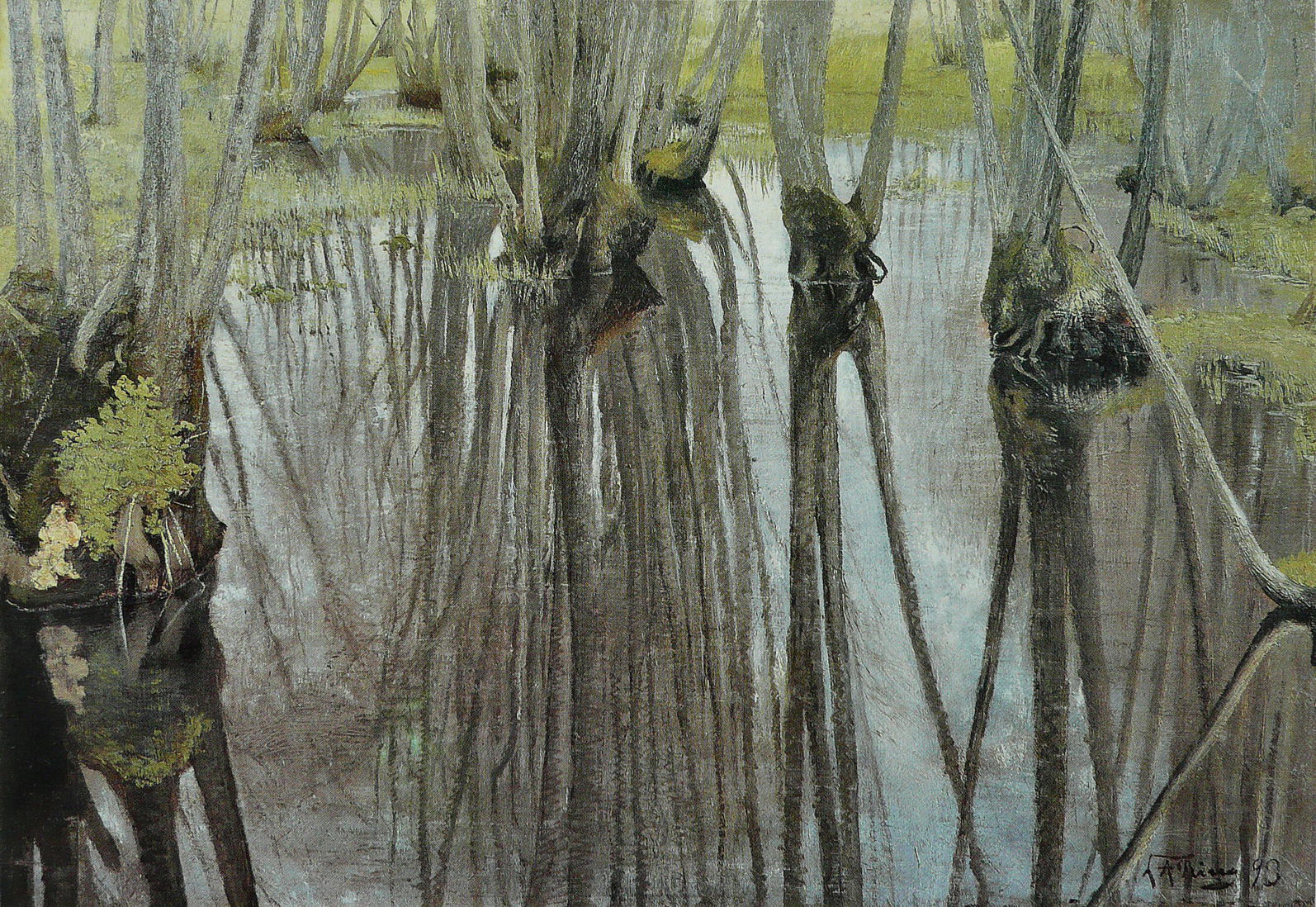
Laurits Andersen Ring’s Alder Trunks from 1893 is one of relatively few fine paintings of coppices, showing these old alders mainly in reflection. The original trunks were cut just above ground level, and each has now grown multiple shoots that are maturing well.
In contrast pollards appear in many landscape paintings across Europe.
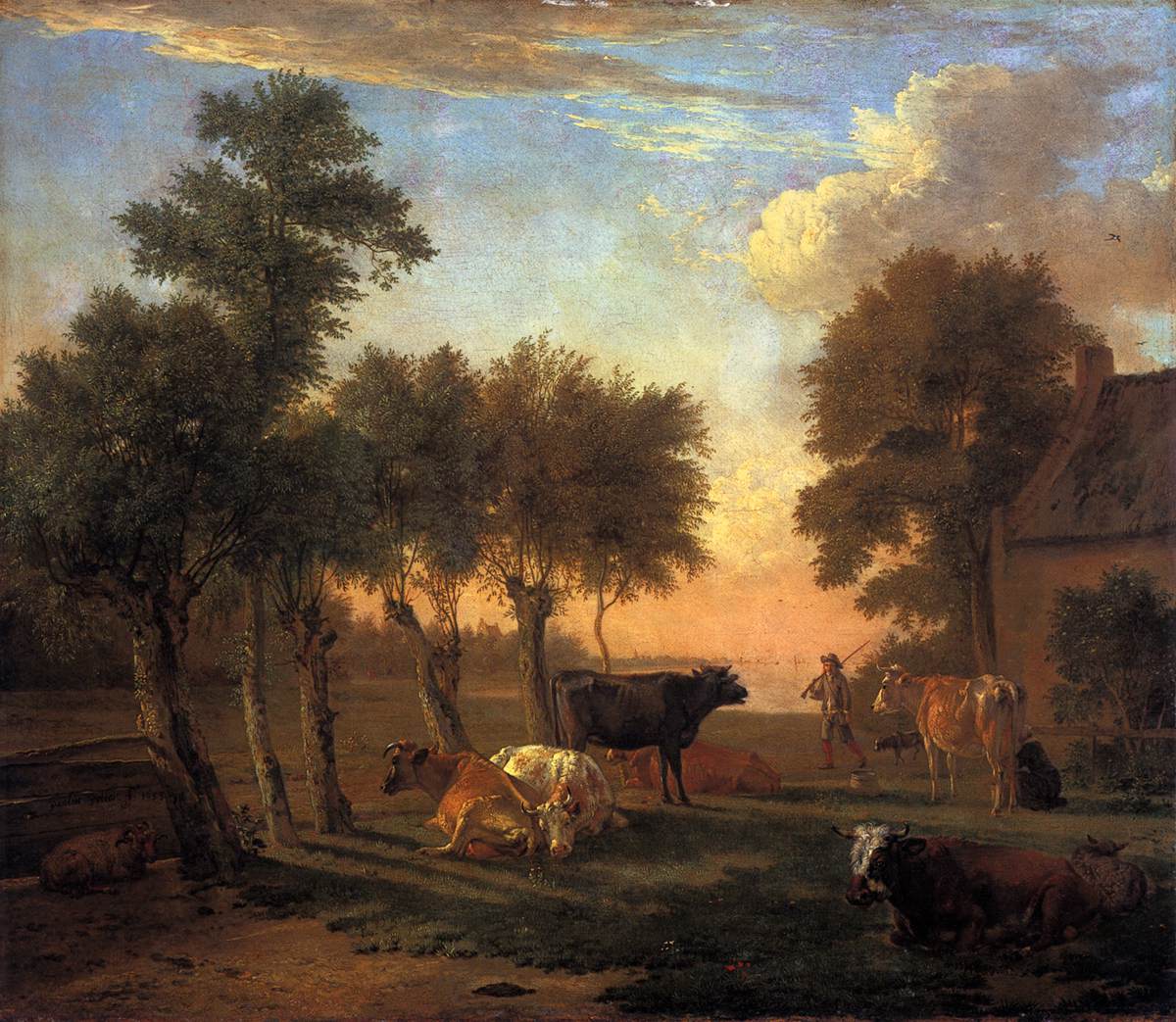
Cows Grazing at a Farm (1653) was one of Paulus Potter’s last paintings, and shows an avenue of pollarded trees, cut at a height of about three metres (ten feet) from the ground, to ensure these cattle can’t browse their foliage.
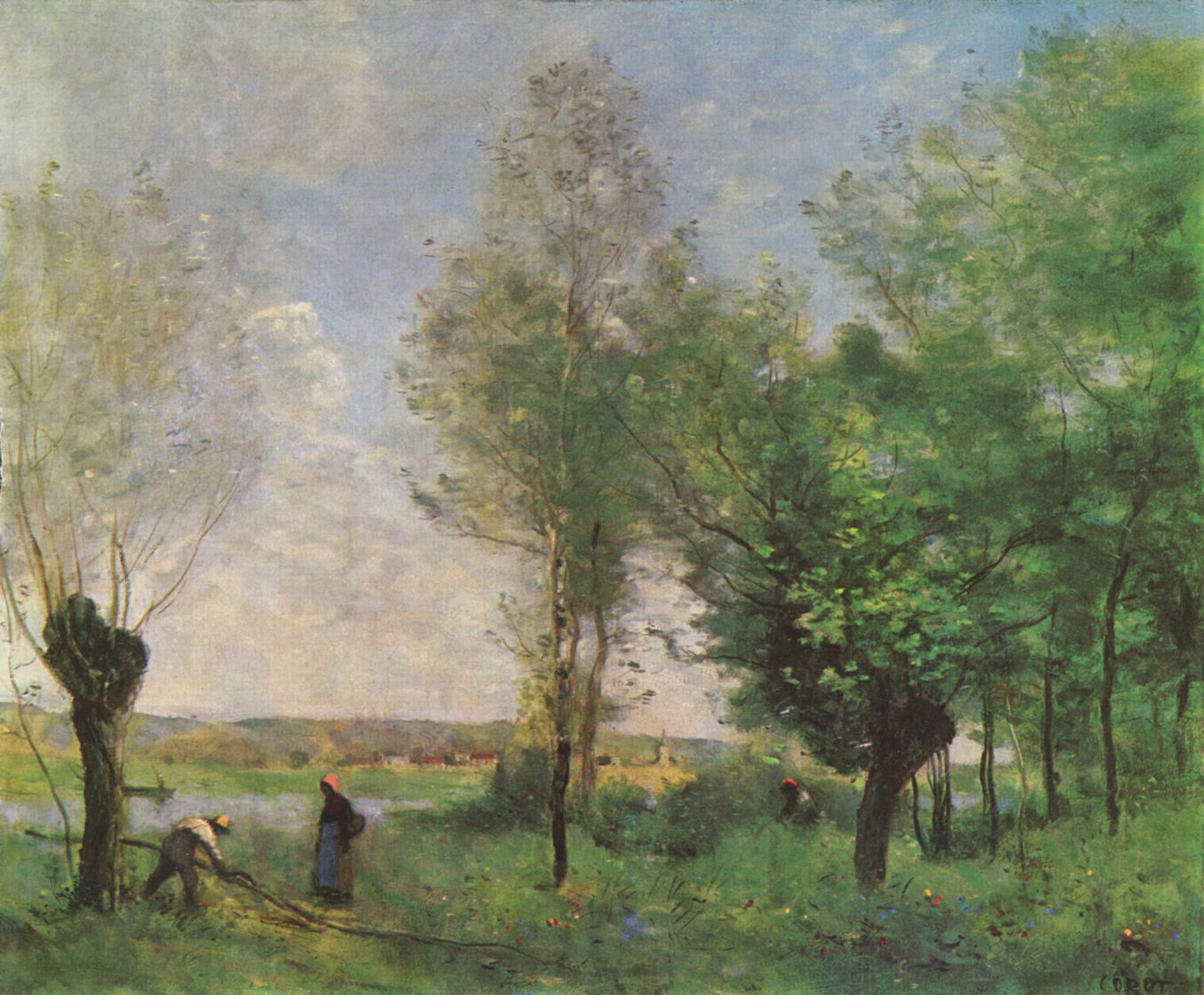
Souvenir de Coubron (1872) is one of Camille Corot’s last but finest souvenirs, with a distinctly early Impressionist look. Unlike most of his others, its colours are more saturated and varied, with hats and flowers in bright reds and yellows, and rich greens throughout its lush vegetation. A couple of its trees are pollards, which are relatively unusual in Corot’s paintings. At the left a man is gathering long poles freshly cut from the pollard beside him.

A dense array of pollards are shown partially submerged in Alfred Sisley’s Boat in the Flood at Port-Marly, painted in front of the motif in 1876. Some of these have been allowed to grow higher so they now tower above the rest.

Hans Andersen Brendekilde’s L.A. Ring Paints at Aasum Smithy from 1893 features an avenue of old pollards either just coming into leaf in the Spring, or shedding at the start of autumn. It has been common practice to pollard trees that are close to buildings, as in this village, to reduce the risk of damage during storms and provide a convenient supply of firewood. This is in the village of Åsum (or Aasum), to the east of Odense in Denmark.

Jules-Alexis Muenier’s undated Angler by the Stream is a pastoral view at the edge of a village, showing a fisherman working the river close to a small wooden bridge. A woman, possibly his wife, is crossing the bridge and appears to have stopped to talk to him from there. Behind her are two magnificent pollards, probably willows, in full leaf.
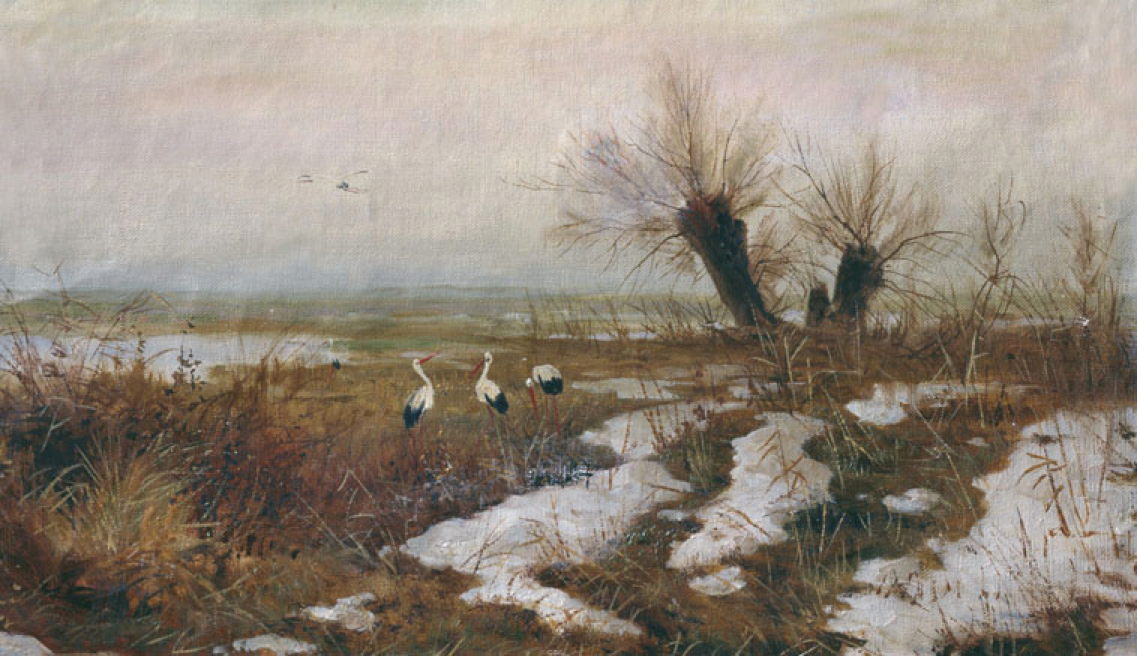
Serhii Svitoslavskyi’s Landscape with Storks, from about 1905, shows a group of white storks returning to their wetland breeding grounds in Ukraine in the early Spring. Judging by their girths, the prominent pollards must be truly ancient, and must have provided many generations with firewood.

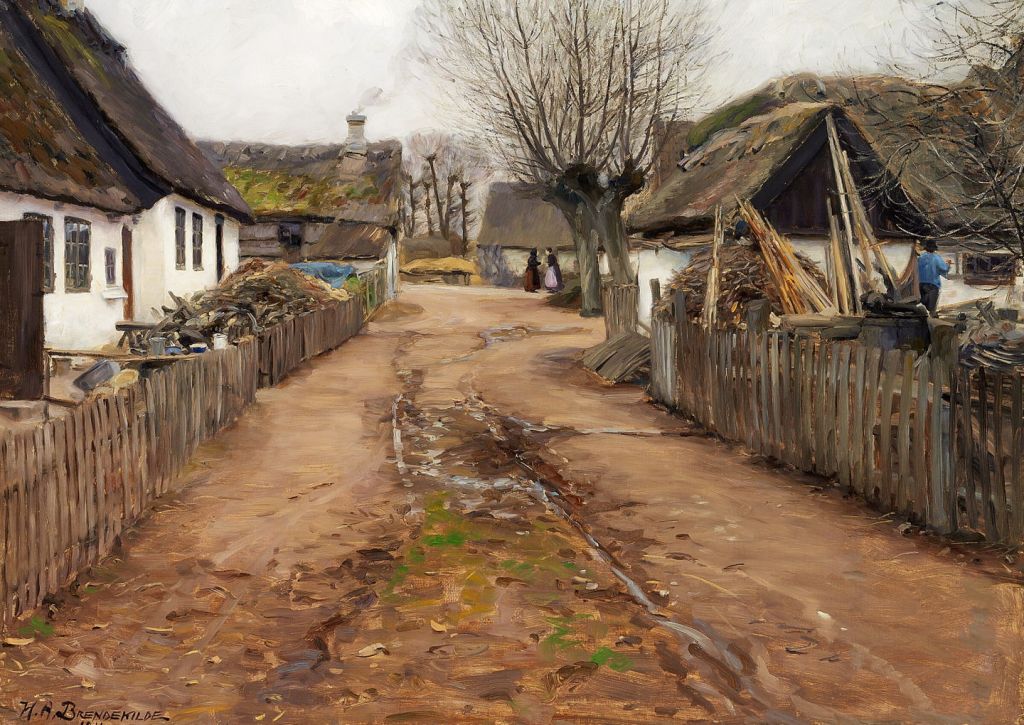
Brendekilde painted this Village Scene in the Early Spring in 1911. The rutted mud track is slowly drying from its winter role as the main drain. A man is out cleaning the tiny windows of his cottage, and two women have stopped to talk in the distance. Smoke curls idly up from a chimney, and two leafless pollards stand waiting for the season to progress.
I finish this short selection with the strangest of them all, found on the shore of a fjord in Norway by Nikolai Astrup.

The motif in Astrup’s March Morning from about 1920 originated from woodcuts based on an earlier painting from 1913, in which he progressively focussed on bare willow twigs. By 1916, those were showing a human form emerging from the willow trunk, from which came this strikingly supernatural painting of an old willow pollard.
 The Eclectic Light Company