
By the first quarter of the sixteenth century, it was no longer exceptional for a painter to leave brushstrokes and other marks in their oil paintings. However, the evidence also becomes more difficult to interpret, as the rapid decline in the use of rigid wood panels and the rise of canvas should make us more cautious.

Explaining away brushstrokes in the work of Dosso Dossi (1490–1542) as being merely the result of Venetian influence, or the effect of wear and age, is more difficult. His Allegory of Fortune (c 1530) may look impeccably smooth, but as the detail below shows, it is here that the vegetation, rather than fabrics, is formed from brushstrokes.
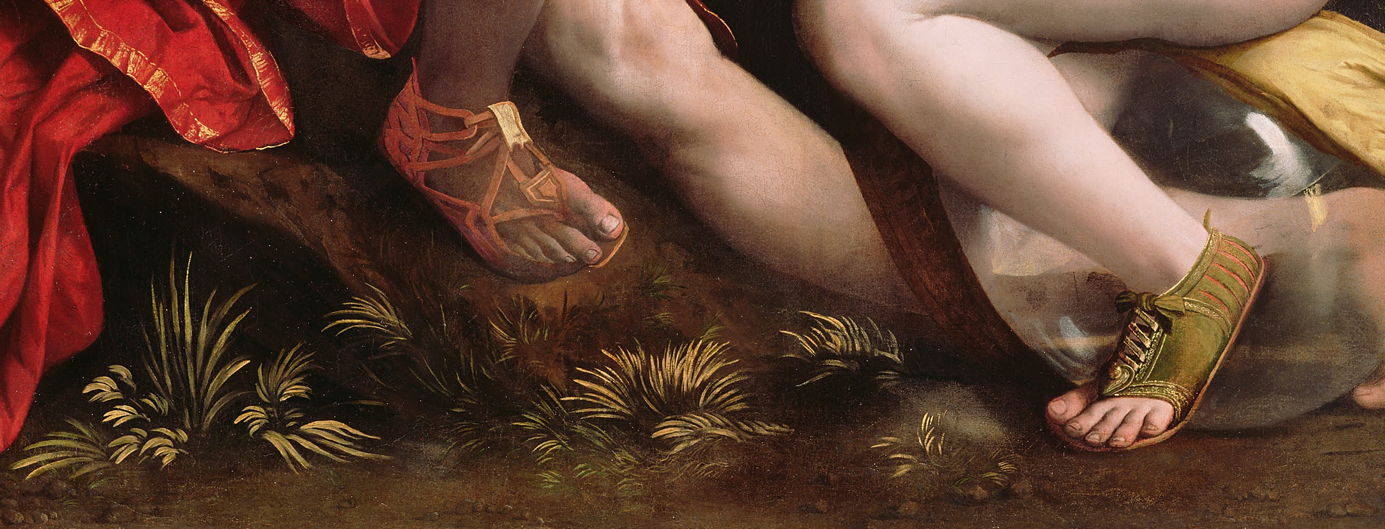
Dosso Dossi was Ferraran, and his only contact with Venetian painting appears rather tortuous: he worked frequently with his brother Battista, who in turn had trained in Raphael’s workshop in Rome, probably between 1517-20, after its influence by del Piombo. Perhaps painterly style was highly contagious.

Although most of Bassano’s paintings appear finished to Florentine standards, and at first sight his The Way to Calvary (c 1544-5) appears no exception, some are delightfully painterly when examined more closely.
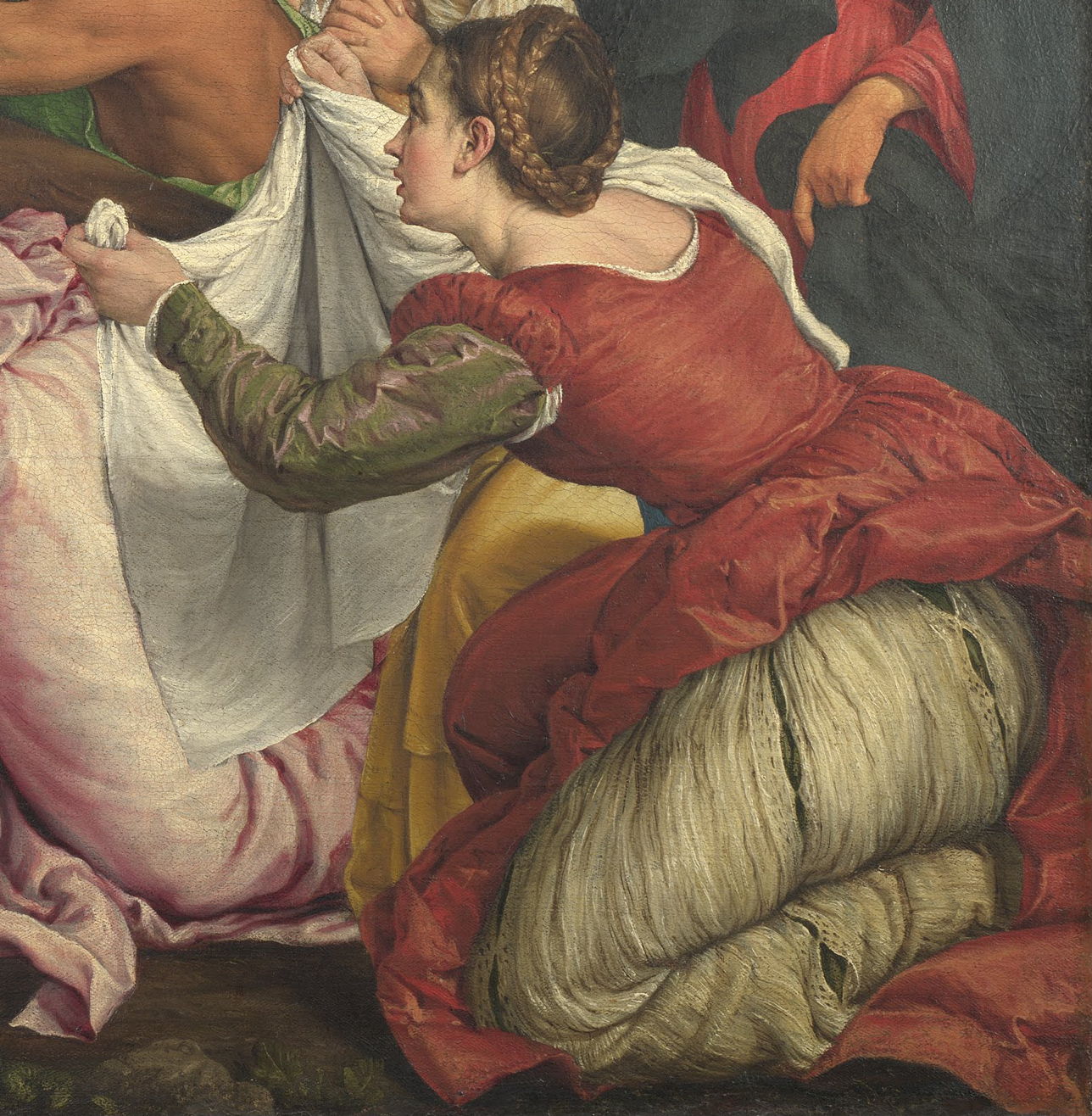
What appear from a distance to be meticulously detailed fabrics turn out to be rich in marks left by the brush. These are most abundant in the coarse petticoat seen billowing in the lower right, and in the sheen on the satin of the woman’s left arm, as well as the white sheet she is holding up.
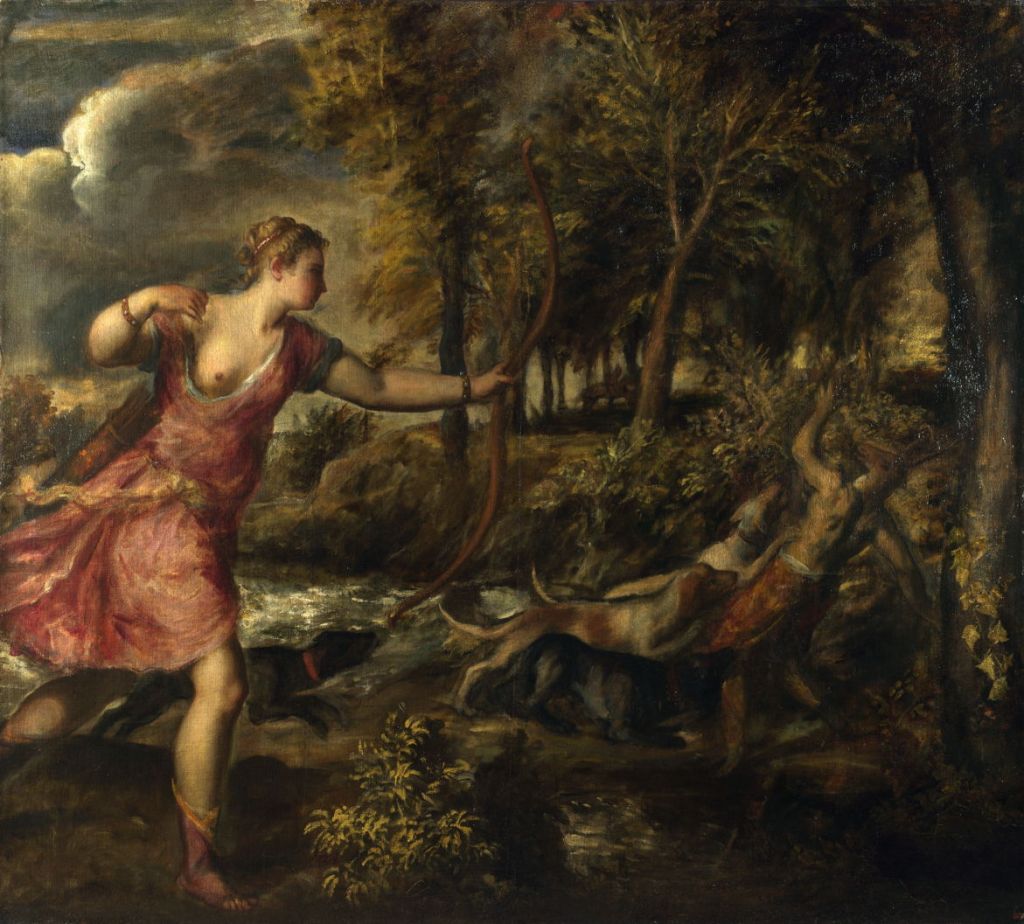
When Titian, perhaps the most famous of all the Venetian Masters, was older, his style became overtly painterly, with significant passages in many of his works having clearly visible brushstrokes.

The Death of Actaeon (c 1559-75) is a good example of his painterly style, with many of the looser passages being obvious even at this scale.

Closer examination shows painterly rough brushwork in the brights of the water surface, fabrics, vegetation, and distant objects. In each case, this practice generates distinctive texture, compared with the smooth skin, and the coats of the dogs.

The Rape of Europa (1560-2) is another painting which doesn’t attempt to hide its painterly facture, although its paint layer does look worn as well.

The most obvious gestural marks once again appear in fabrics, the water surface and objects beneath it, such as the large fish at the bottom.
Many of the later works of Veronese are rich in visible brushstrokes. I offer just two examples: it is worth studying high-resolution images and the originals of his paintings after about 1570 to discover more painterly passages.
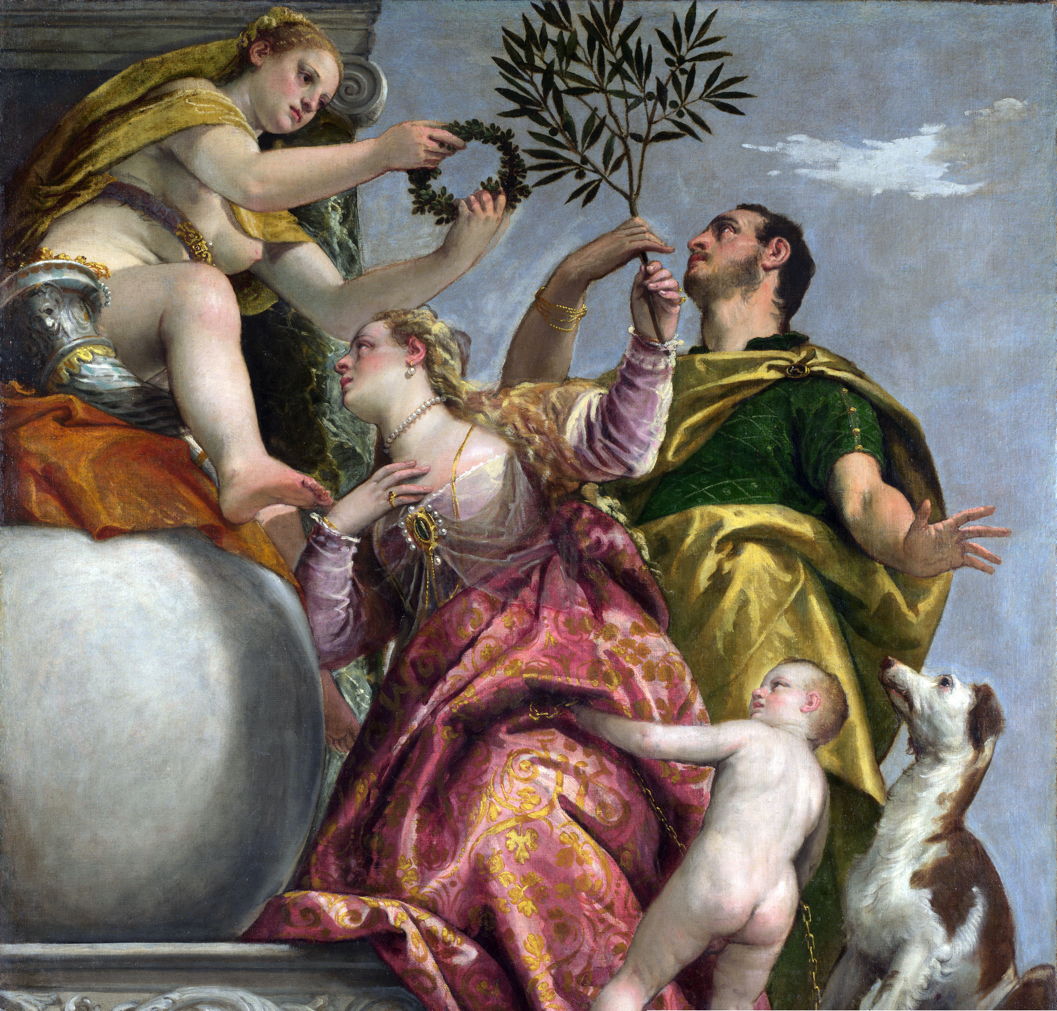
From a distance, the tight composition of his Allegory of Love, IV, ‘The Happy Union’ (c 1575) looks to have been painted in disegno, although differences in fabric textures and the splash of light cloud suggest more detailed examination is warranted.
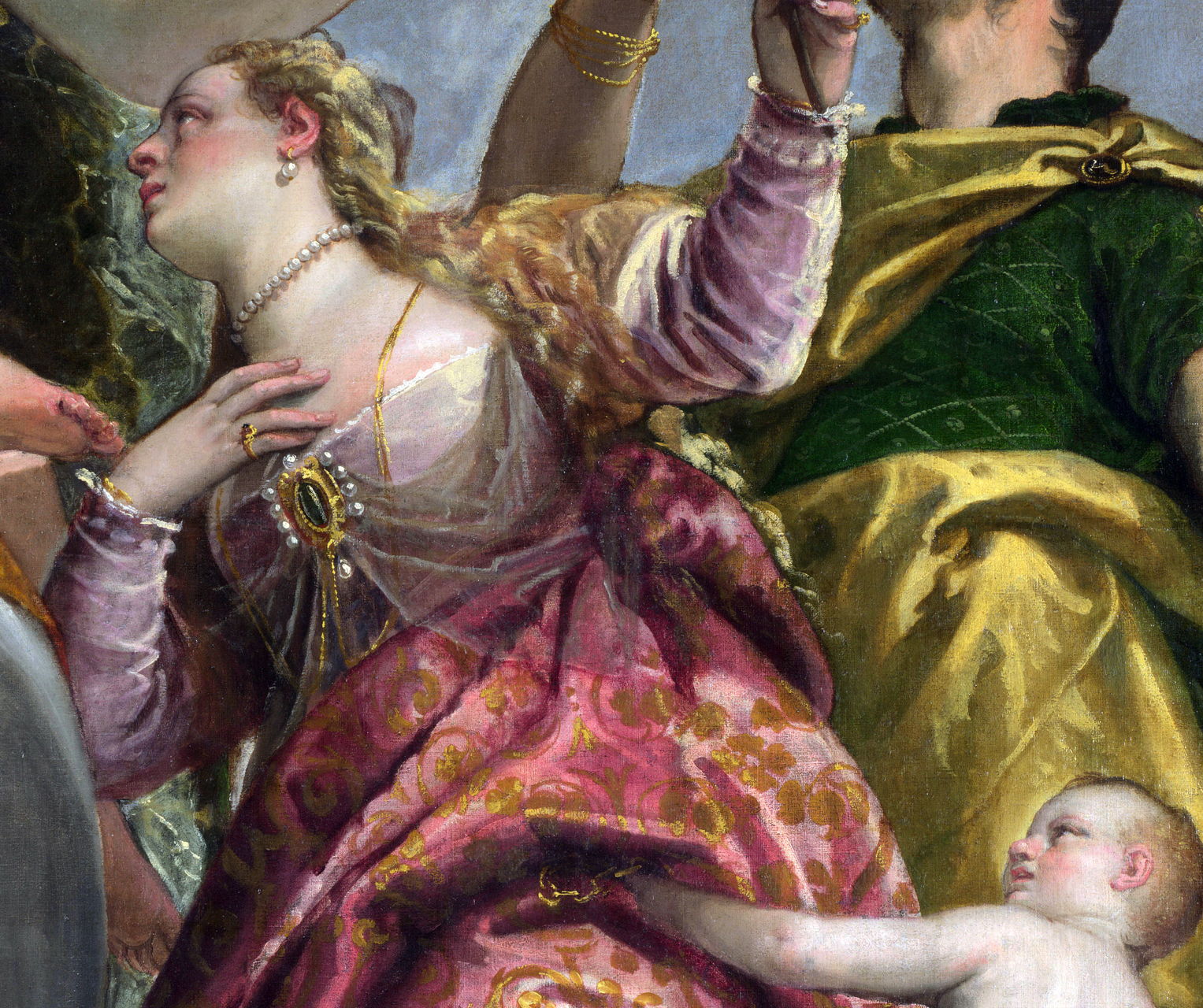
Once closer to the canvas, many of the details turn out to be painterly caresses with the brush, in the fabrics and hair in particular.
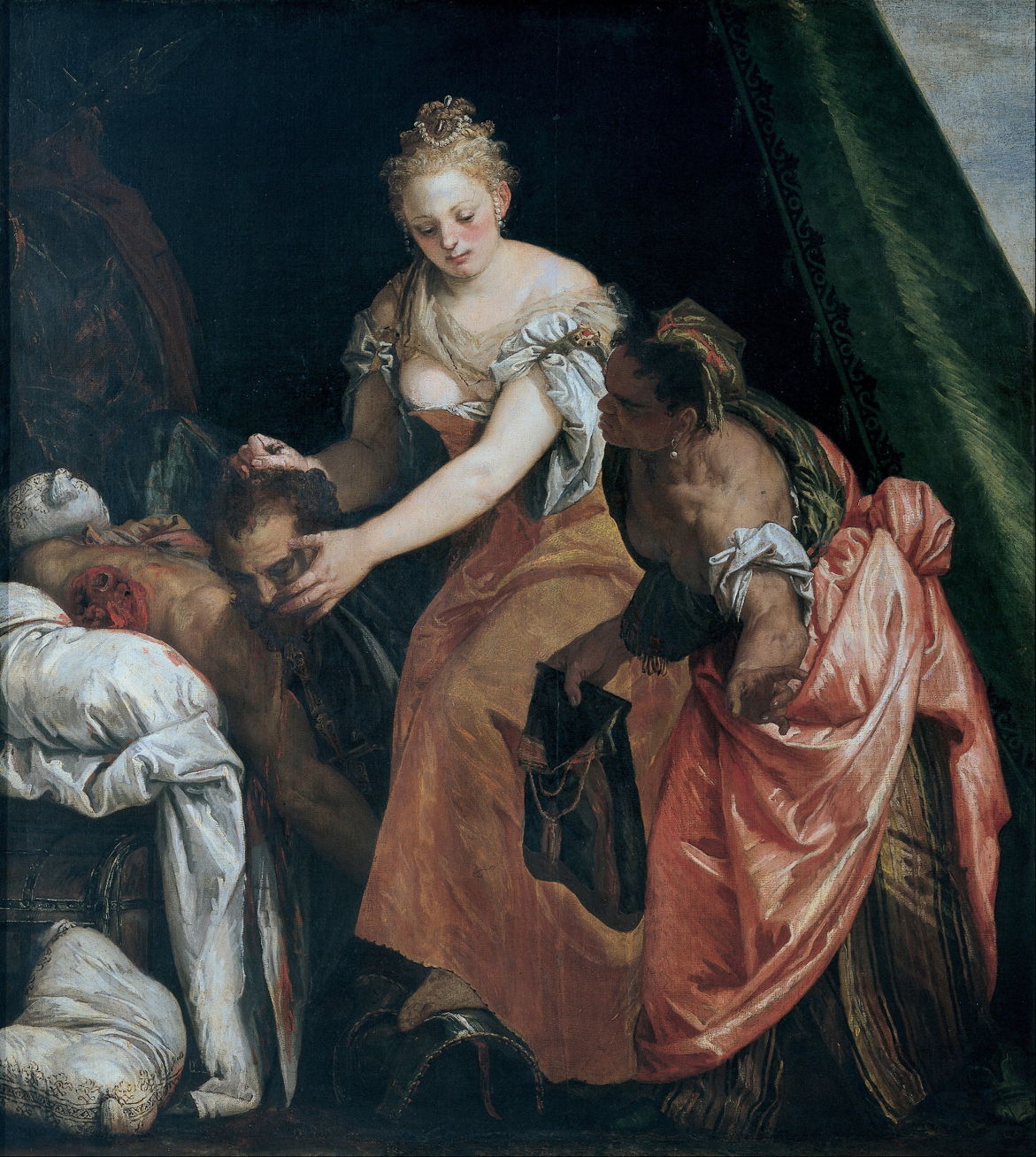
Later still, Veronese’s Judith and Holofernes (c 1580) make no attempt to conceal the scumbled highlights of its fabrics.
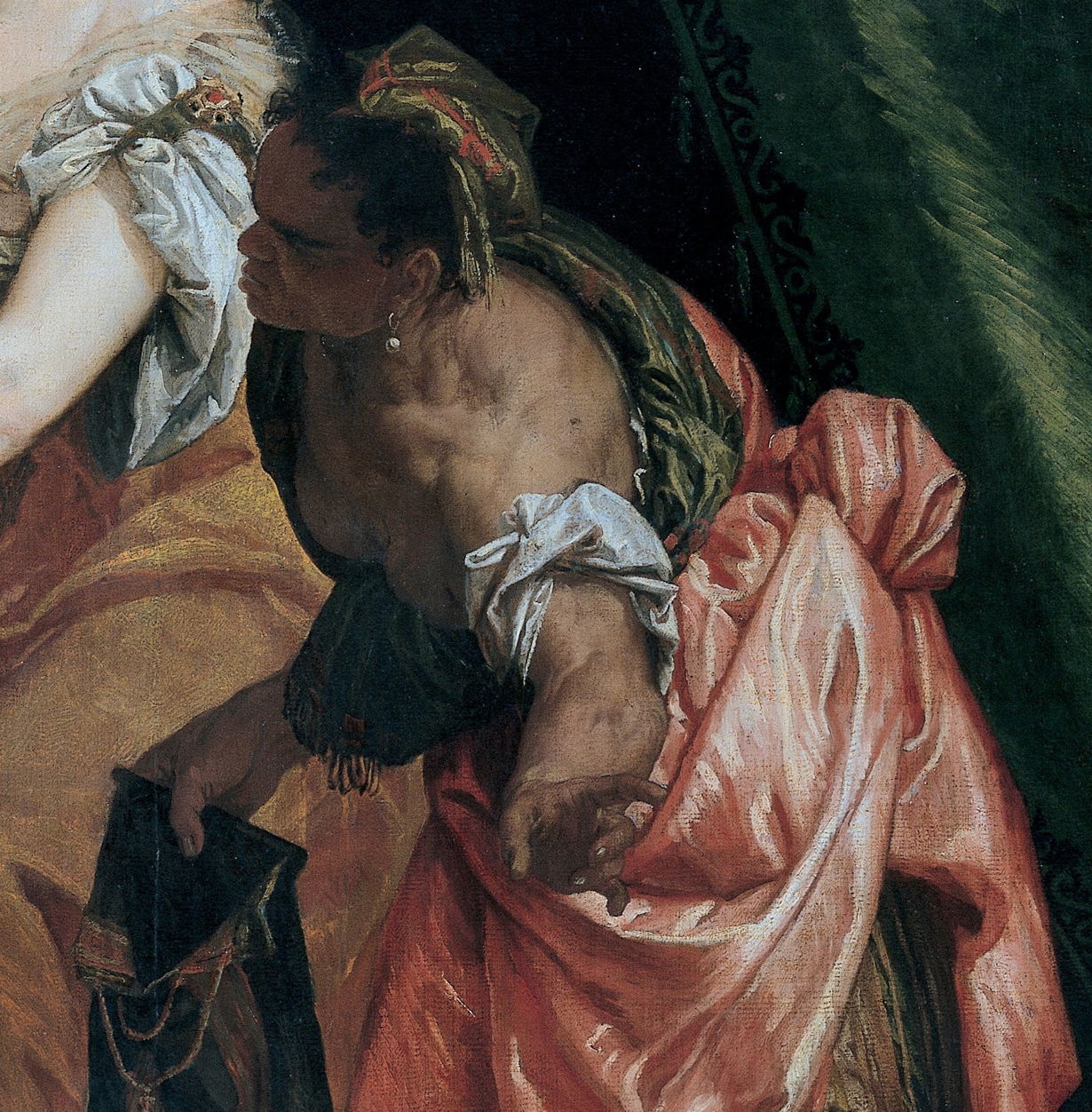
A detail shows how extensive and free Veronese was in making his marks, although they are largely confined to fabrics, with flesh being painted more smoothly.
With the seventeenth century fast approaching, it was high time for El Greco and Peter Paul Rubens.

