
One of the tragic consequences forced on us by those philistines who think it’s fair game to try to damage great works of art, is that it’s increasingly difficult to look properly at many paintings. When you do get the chance to go in really close, and study their paint surface, it’s amazing how few of them really are as perfect in their detail as they appear from a few metres away. This is because of the illusion that those brushstrokes create, and is by no means a recent phenomenon. And it certainly wasn’t invented by the Impressionists. This series looks at that detail, and how many great painters leave visible brushstrokes and marks.
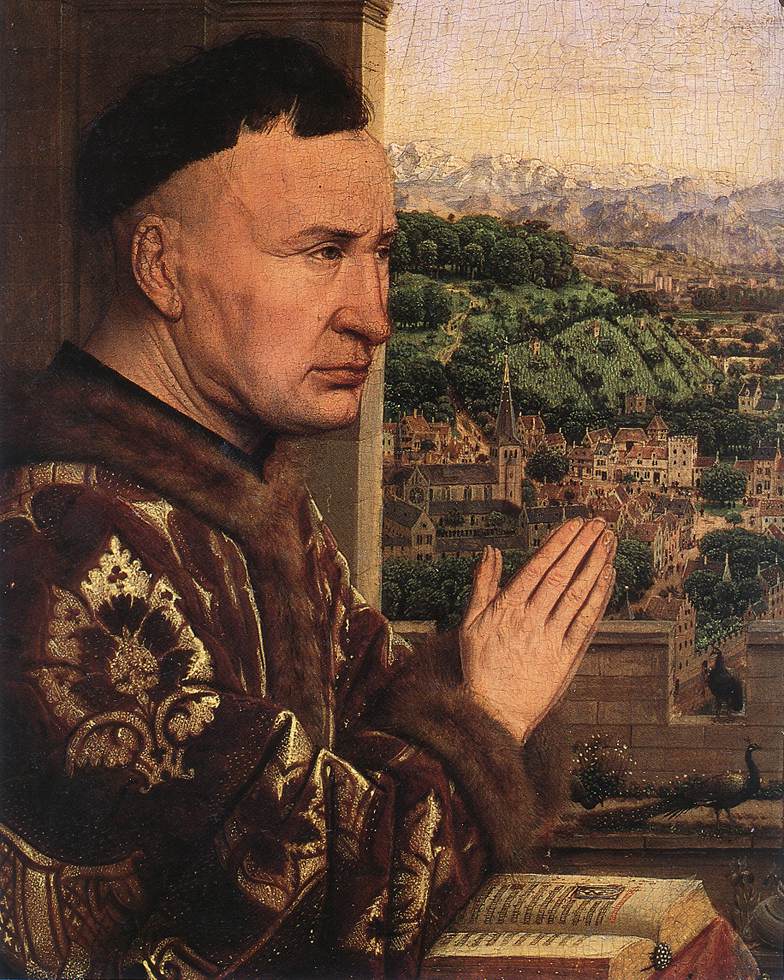
This is about the journey from the painstakingly fine detail seen in Jan van Eyck’s Madonna of Chancellor Rolin in about 1435 (detail, above) to Claude Monet’s Bathers at la Grenouillère over four centuries later, in 1869 (below).

In addition to the requirement to see surface details of paintings, there’s one caution needed when interpreting their structural appearance, and that’s the effect of age on those made on canvas. Centuries of physical damage and deterioration in their paint layer can make it appear painterly. To minimise the risk of misinterpretation, I’ll concentrate on works painted on panels, which should have suffered less mechanical trauma over the years.
If you have managed to sneak up and take a really close look at even those masterpieces from around 1400, you can still spot the occasional passage where the painter, who of course could have been another person in the workshop of the Master, has been a little more abandoned. I have two examples from the workshop of Jan van Eyck showing this.

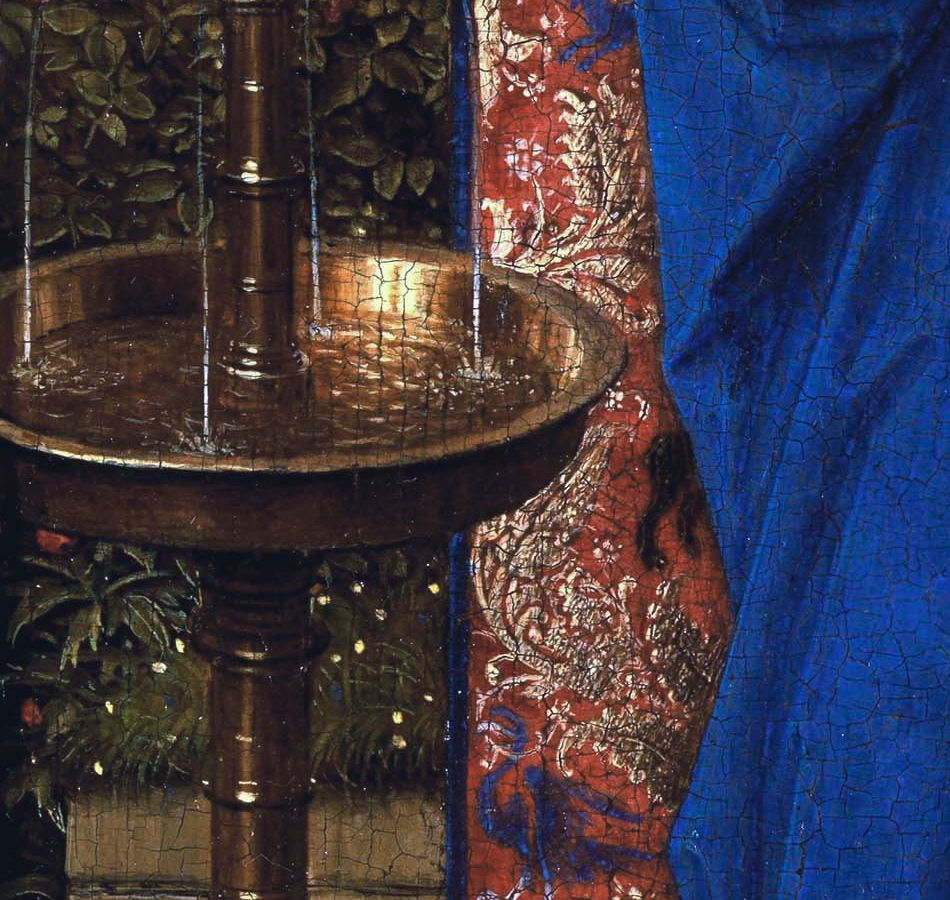
The great majority of the surface of the Madonna and Child at the Fountain (1439) is, as usual, finished without a trace of a mark. But look at the water surface in the fountain of the title, and the bright reflections on the water are slightly more painterly, as shown in the detail below.
Another type of passage which can sometimes become a little less tight and slightly more gestural is rough vegetation. A well-finished panel, attributed to Jan van Eyck, is Saint Francis of Assisi Receiving the Stigmata (1430-2).

Here are more gestural marks showing the vegetation (below), flicks of the brush contrasting with painstakingly tight work elsewhere.

From the start of the sixteenth century, after they had made the transition from egg tempera to oil paints, some Venetian painters including Giovanni Bellini and Sebastiano del Piombo took the first steps in exploring the texture and properties of oil paint.
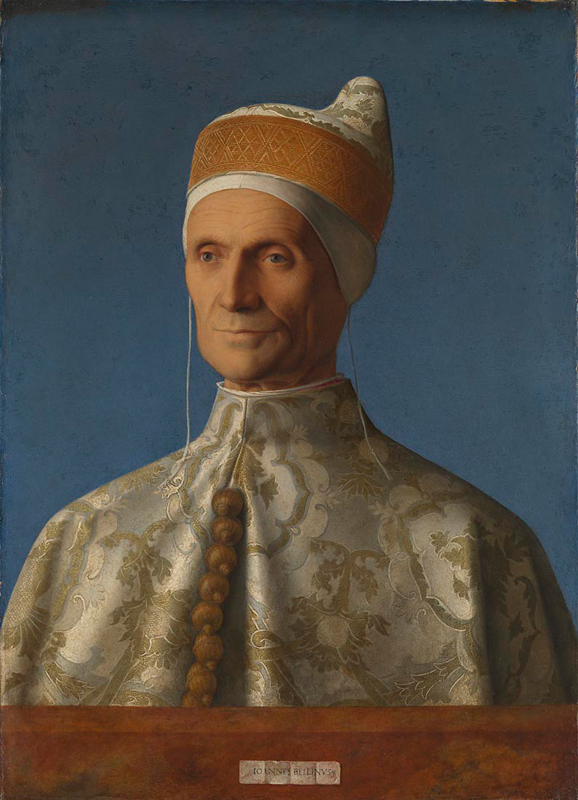
Bellini’s (c 1430–1516) portrait of The Doge Leonardo Loredan (c 1501) is an early example of fine impasto work. Not exactly brushstrokes, but certainly a step in that direction. At that time, such impasto was unique to oil paint, and a radical departure from anything which could be achieved by egg tempera or fresco.
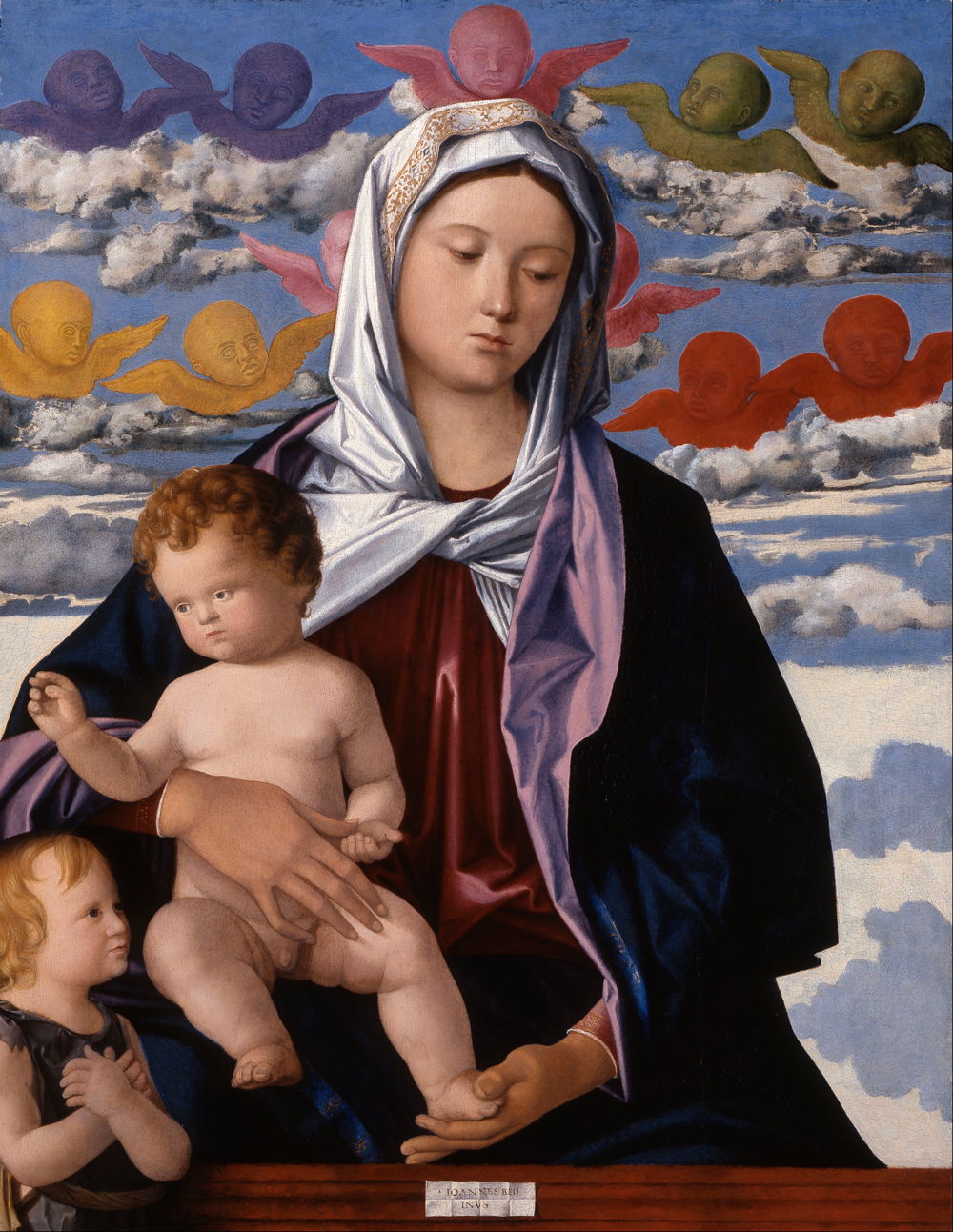
Although perhaps not by the hand of Bellini himself, Madonna and Child with Saint John the Baptist (c 1490-1500) is a good example of the fine modelling of textiles and textures without making brushstrokes apparent, as shown in the detail below.

This painting still clung to the remains of the tempera tradition, in using both egg tempera and oils, but otherwise follows the Northern Renaissance approach in modelling textures and their highlights, as detailed by Gombrich (1976). It was a pupil of Bellini who broke from tradition and started striding down the road towards Impressionism, the Venetian Sebastiano del Piombo.
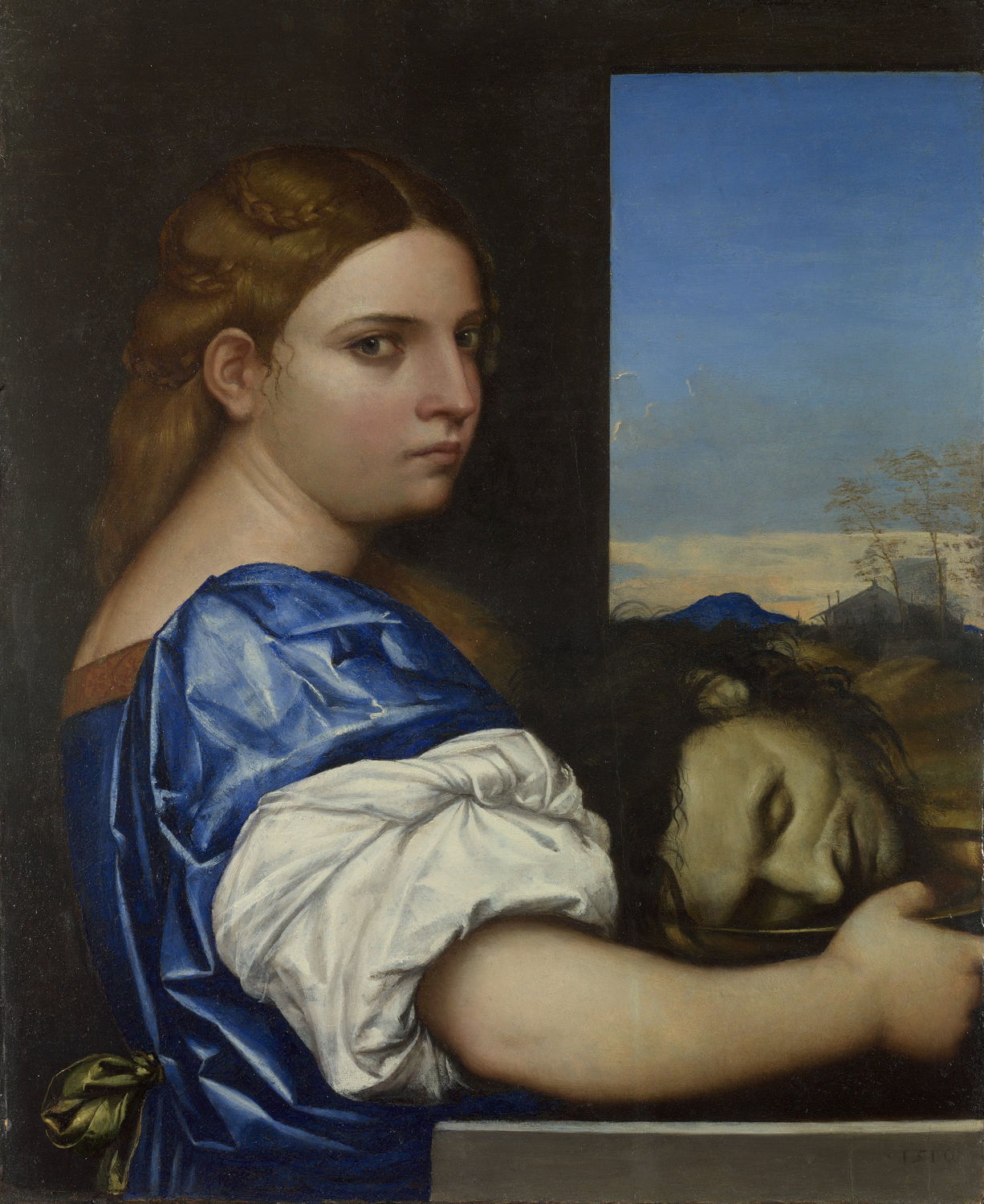
Del Piombo’s The Daughter of Herodias (1510) is a good example of his free handling of paint, shown clearly in its detail (below), which contrasts with the Bellini above.
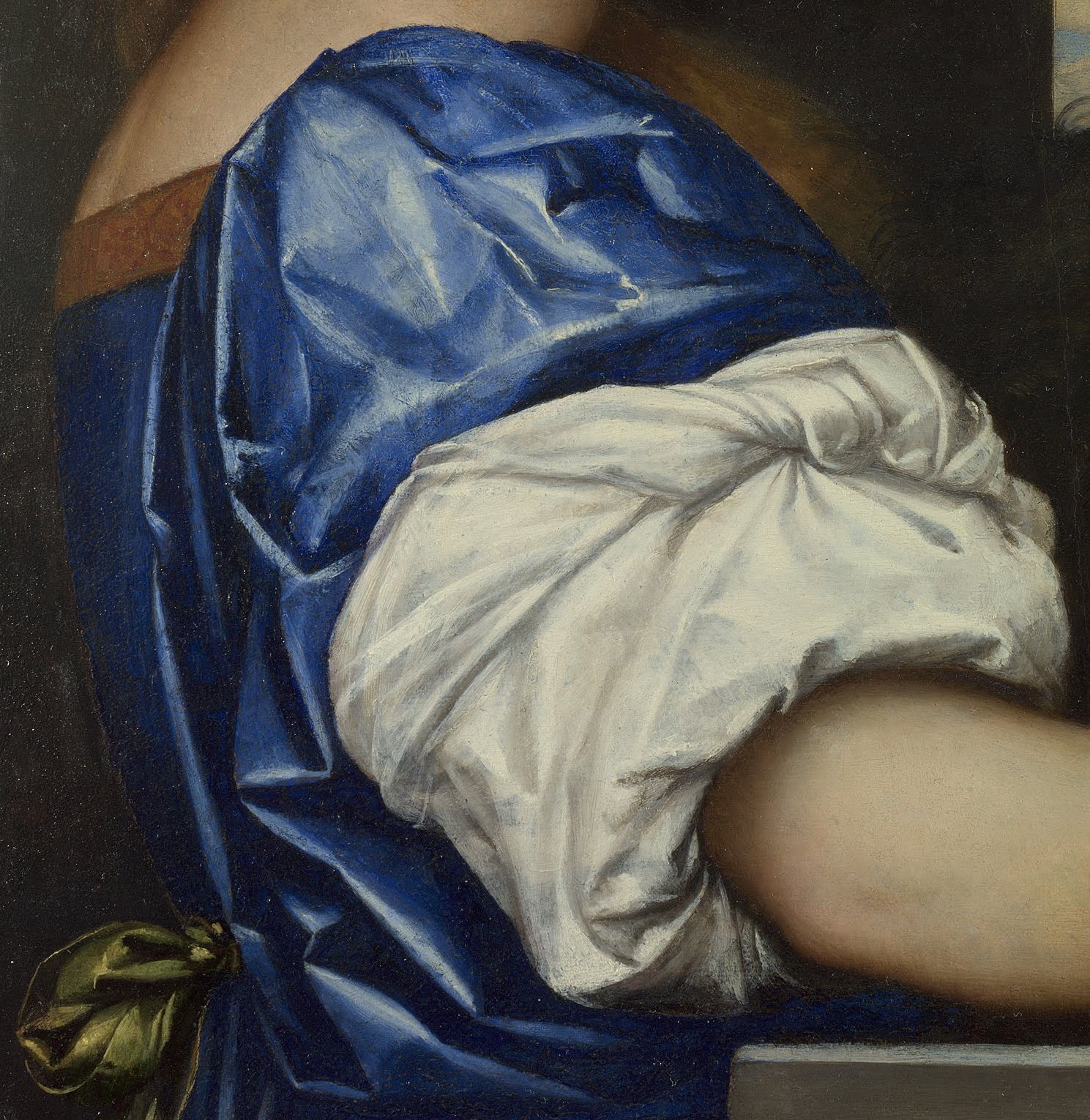
Del Piombo didn’t abandon his Venetian brushwork when he moved to Rome in 1511.

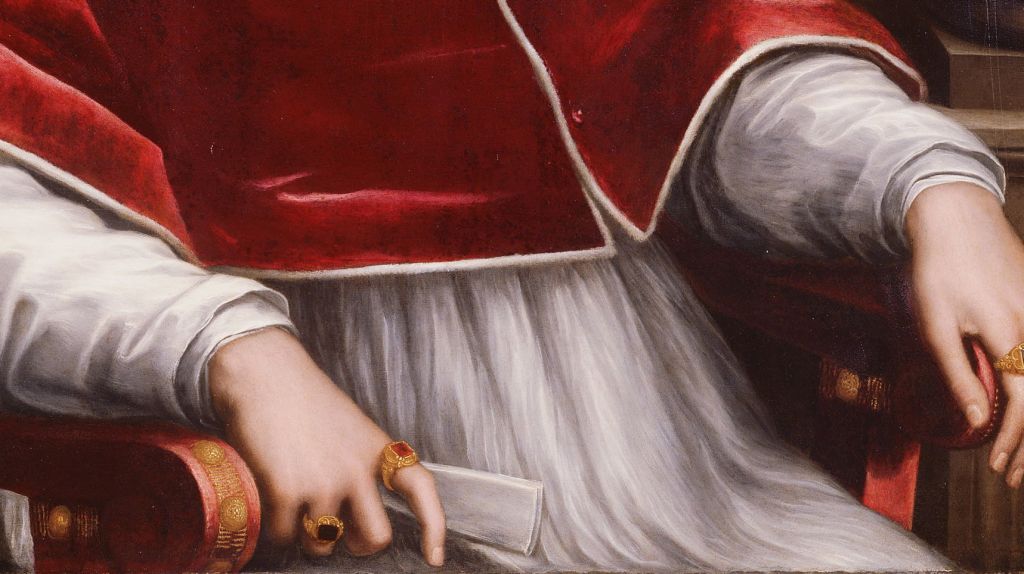
Neither did he lose his painterly panache with time: this portrait of Pope Clement VII (c 1531) is rich in marks, as seen in the detail below.

It may have been when Sebastiano del Piombo and Parmigianino (1503–1540) were both in Rome from 1524 that the latter started leaving marks in his paintings.

Parmigianino’s Portrait of a Man (perhaps Condottiere Malatesta Baglioni?) (c 1527-8) shows his extensive use of marks in the depiction of hair, both in the fur trimming and the man’s beard, as seen in the detail below.

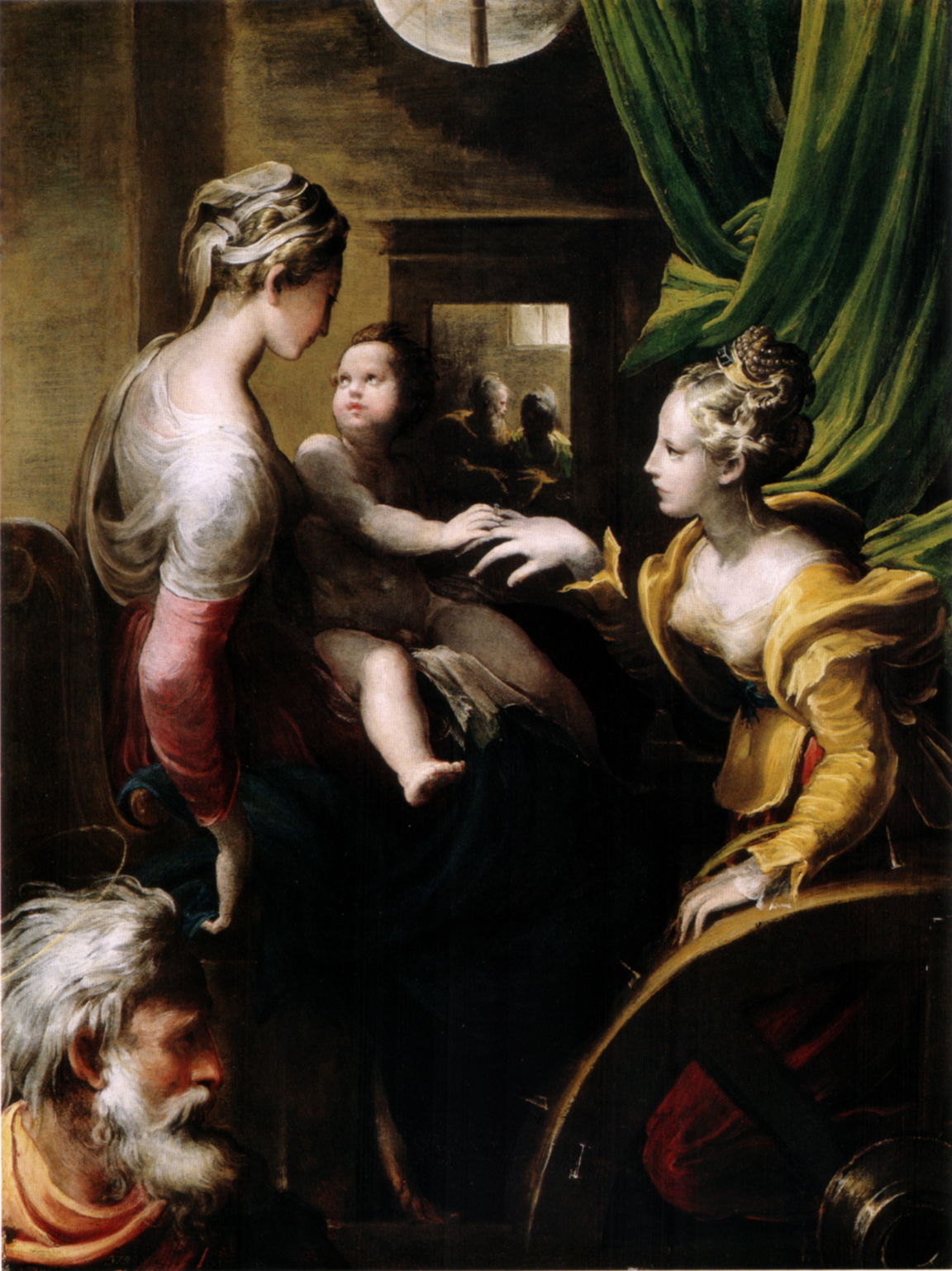
Brushstrokes are even more apparent in his Mystic Marriage of Saint Catherine (c 1527-31), seen above and in detail below.

By the early sixteenth century, several painters were leaving brushstrokes and other marks in their oil paintings, most typically when depicting textures in hair and fabrics.
References
Dunkerton J, Foister S & Penny N (1999) Dürer to Veronese, Sixteenth-Century Painting in the National Gallery, The National Gallery Company and Yale UP. ISBN 978 0 30007 220 4.
Gombrich, EH (1976) The Heritage of Apelles, Studies in the Art of the Renaissance, esp. Chapter 2, Phaidon. ISBN 0 7148 1708 2.

