
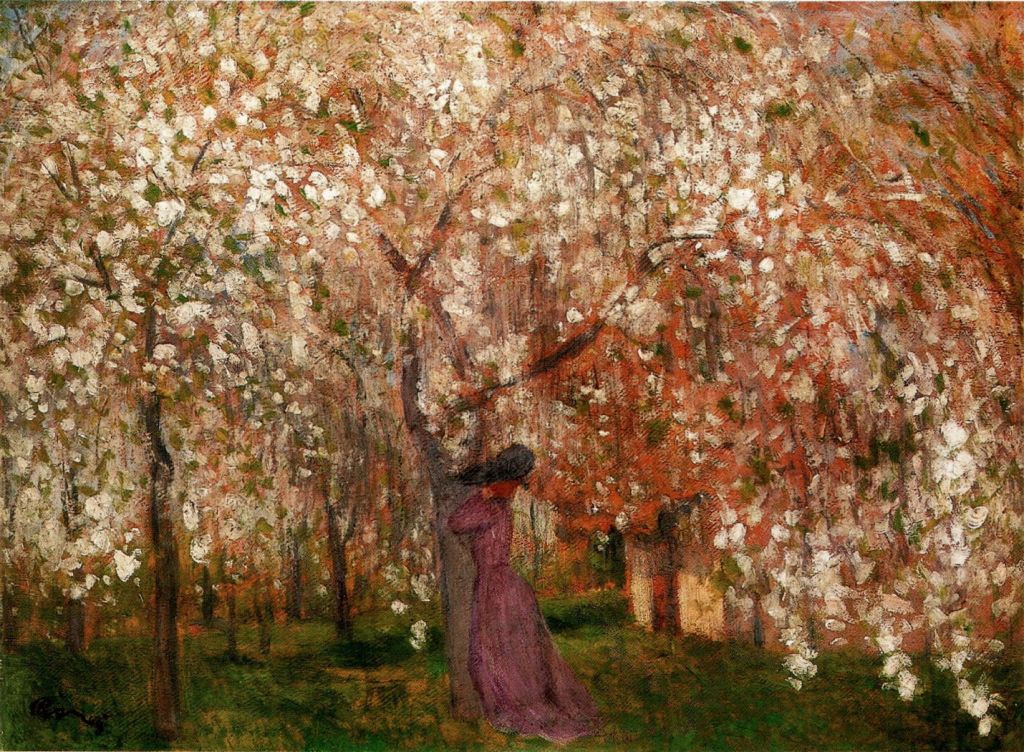
Following their popularisation in the nineteenth century, paintings of Spring blossom continued to flourish, reinforced perhaps by increasing urbanisation.

Helen Allingham’s Buckinghamshire house at Penstreet (c 1900) shows a house in the hamlet of Penn Street, near the village of Penn, in Buckinghamshire, England. This remains a relatively unspoilt part of the Chilterns to the north-west of London.

For Willard Metcalf, Dogwood Blossoms (1906) also provide the opportunity to explore the shimmering effects of dappled light, and how it can break the forms of large boulders.

Pierre Bonnard painted Early Spring in 1908, shortly after his return to France from a visit to North Africa. The children are probably the artist’s friends from the Terrasse family, enjoying their garden as it comes into bloom in the improving weather.

The Small House, Spring Evening is an unusual landscape painted by Bonnard in 1909. It offsets the rich blossom on the trees at the left against the plain wall of a house, seen in failing light.
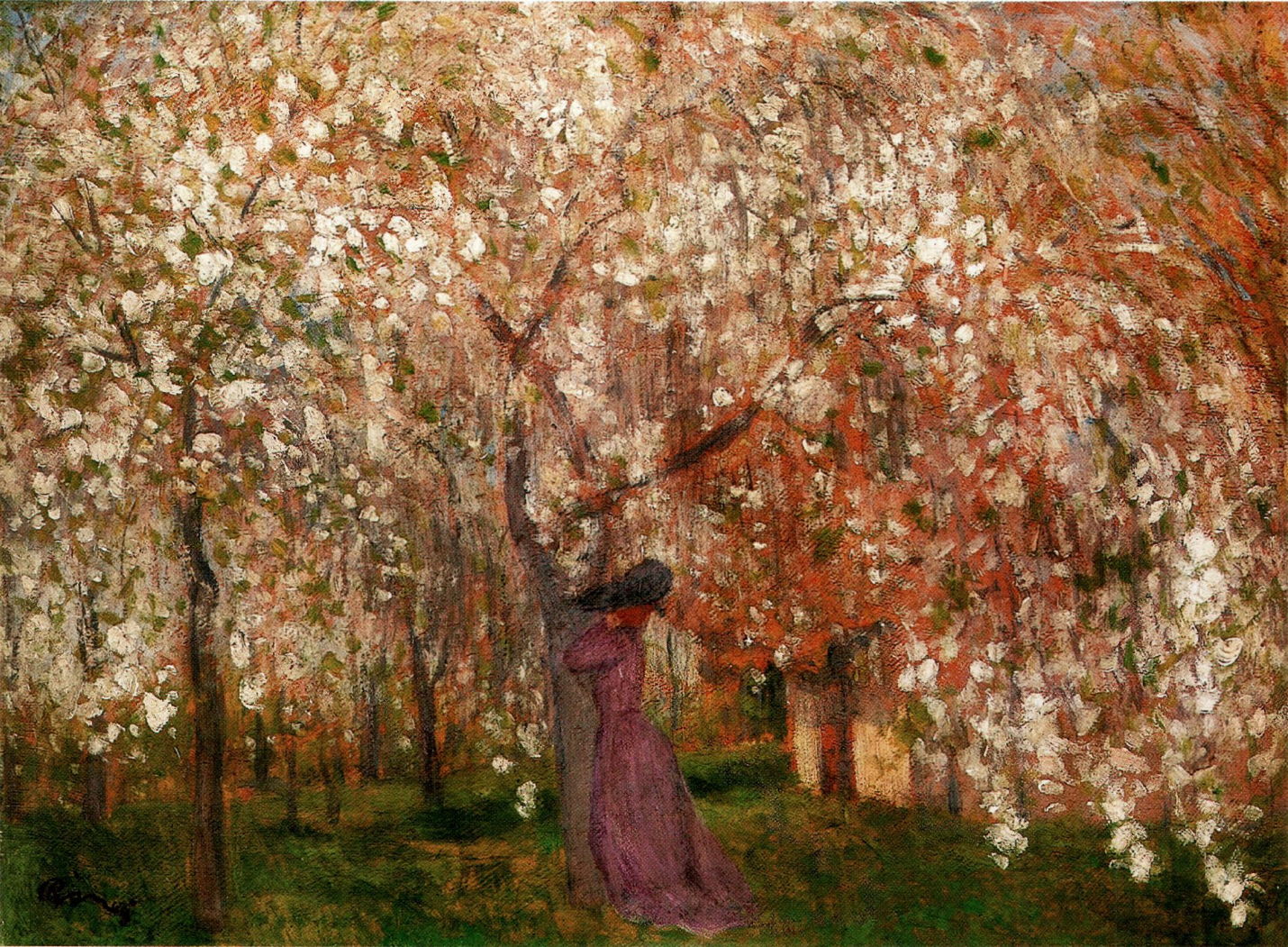
József Rippl-Rónai was the founding father of modern painting in Hungary, and in 1909 painted this Sour Cherry Tree in Blossom, in which the flowers overwhelm the whole painting, just as they had for Samuel Palmer nearly eighty years earlier.

One of the eclectic Georges Clairin’s later paintings from about 1910 brings an elegant group out among lush blossoms On the Balcony.
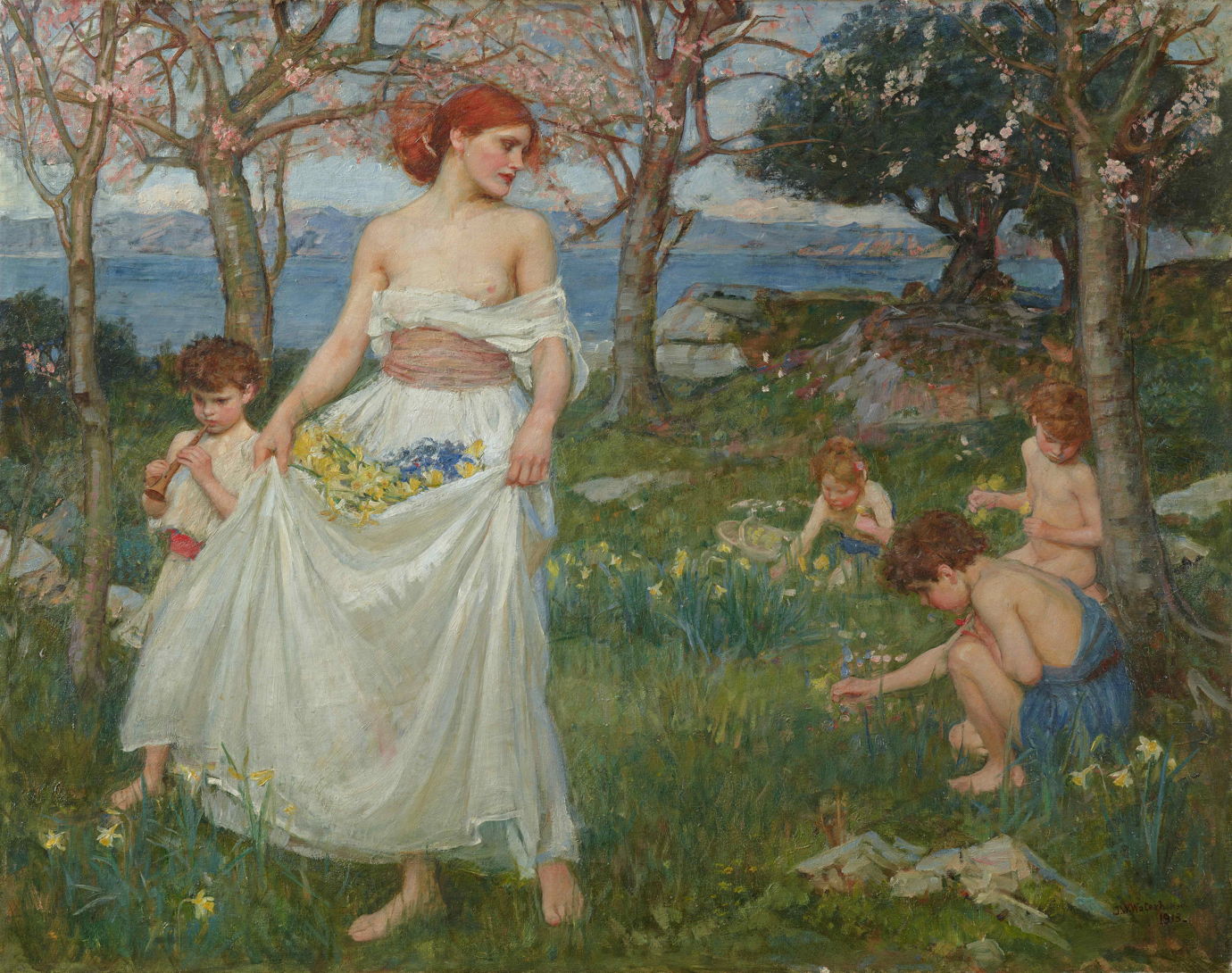
John William Waterhouse’s A Song of Springtime from 1913 has lost much of the narrative from more classical accounts of Flora and the Spring, but still features plenty of cherry blossom. Flora appears with her breasts bared, and a skirtful of daffodils or narcissi, perhaps a cross-reference to Poussin’s figure of Narcissus in his Empire of Flora, and the Graces have been replaced by young children.
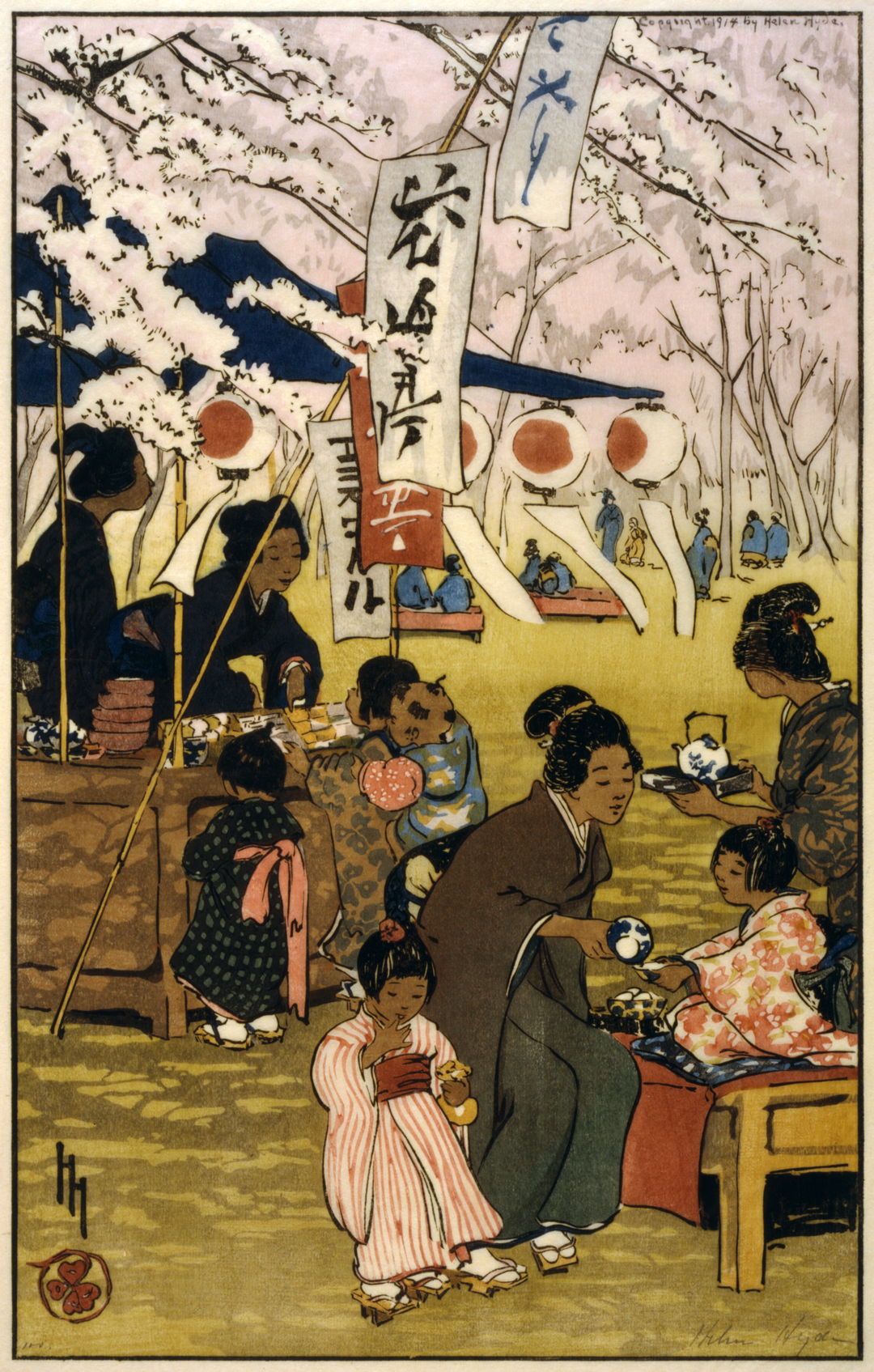
By the First World War, Western artists weren’t just collecting and studying the art of south-east Asia, but some went to live in countries such as Japan. Among these was the American printmaker Helen Hyde, who demonstrates her mastery of colour woodcut prints in her Blossom Time in Tokyo, from 1914. This shows the tea ceremony taking place during the Spring viewing of blossom.

By the end of the war, Théo van Rysselberghe’s colours had become as strong as those of the Fauves. In Almond Trees in Blossom (Morning) the more delicate pinks of the flowers pale in comparison with his full reds and blues, even down to the blue horse pulling a plough.
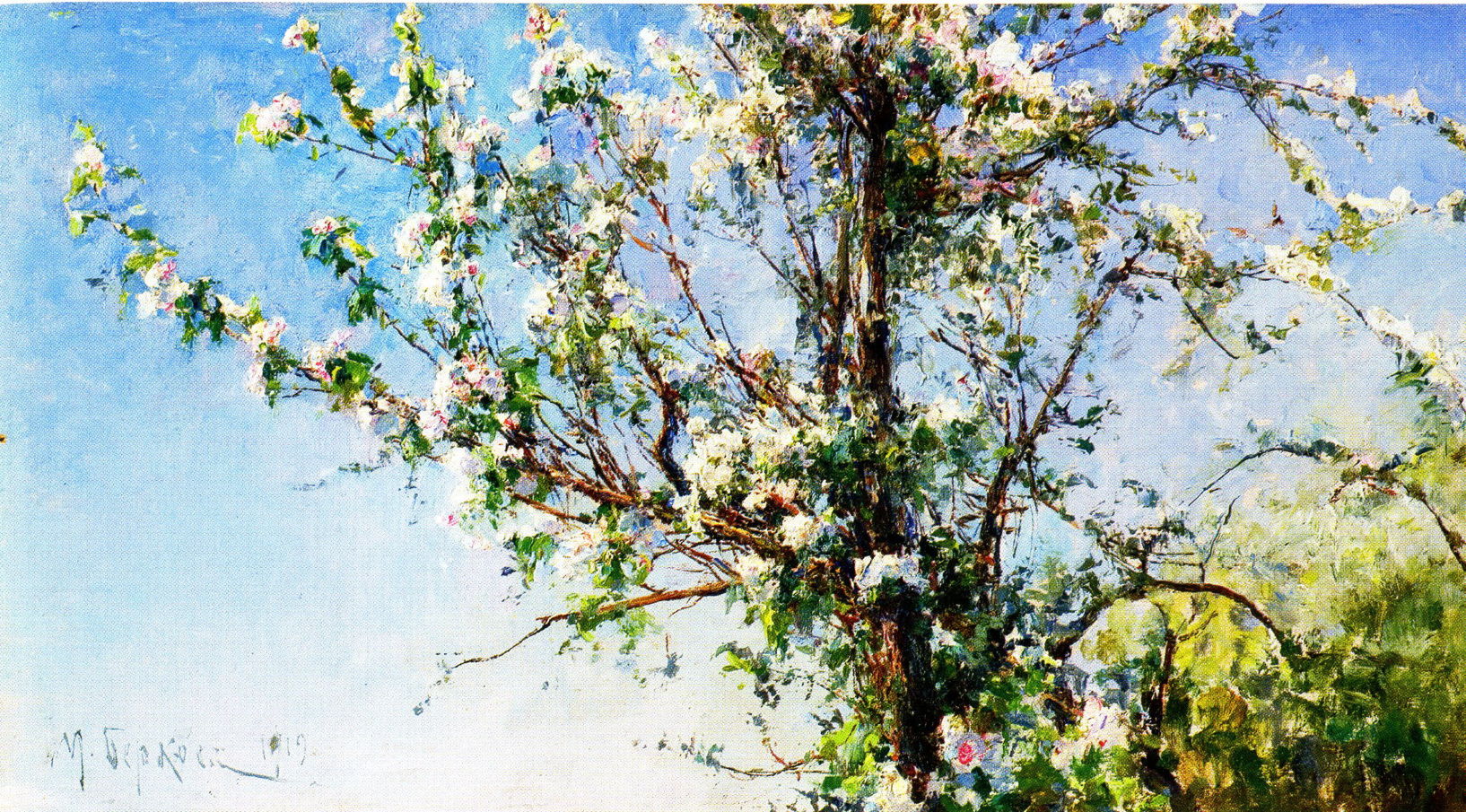
The Ukrainian artist Mykhaylo Berkos painted this classic Impressionist motif of an Apple Tree in Blossom in 1919. But this was to be his last Spring, as he died of typhus just before Christmas that year, at the age of only 58.
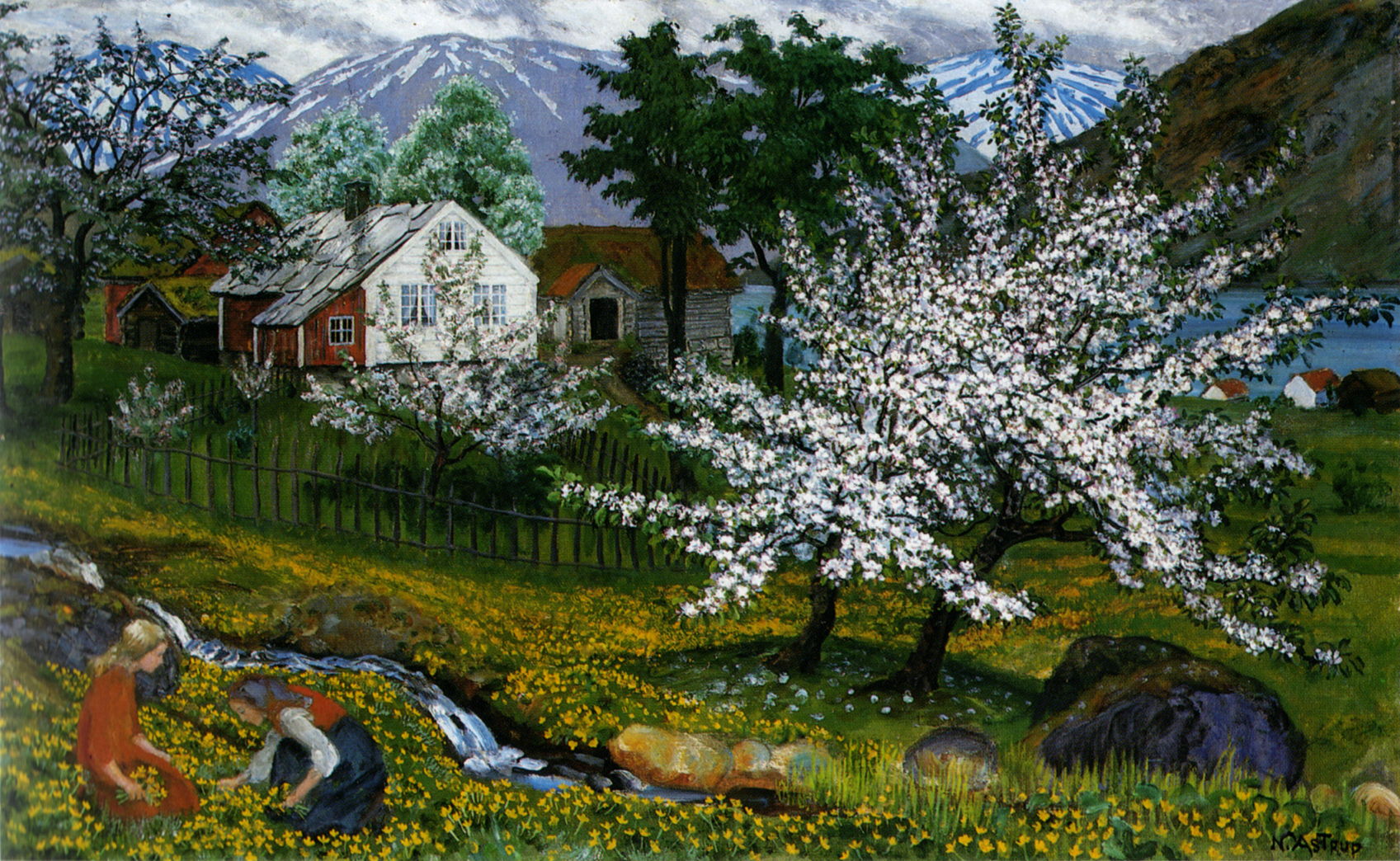
In the far north of Europe, the Norwegian Nikolai Astrup included blossom in many of his paintings of Spring and early summer in the fjords, as in his Apple Trees in Bloom, painted after 1920.
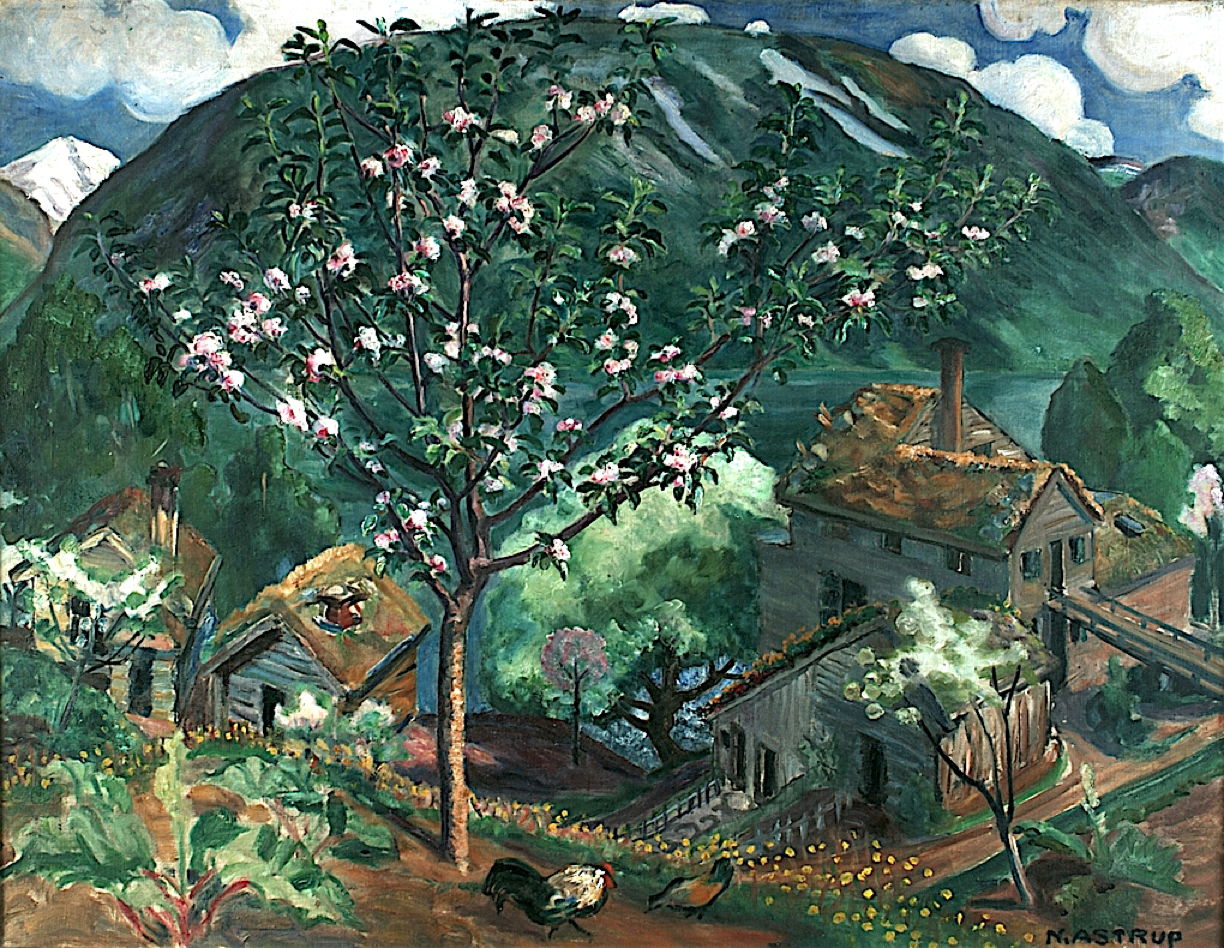
In about 1927, Astrup painted Apple Tree in Bloom showing the trees in full blossom and marsh marigolds in flower.
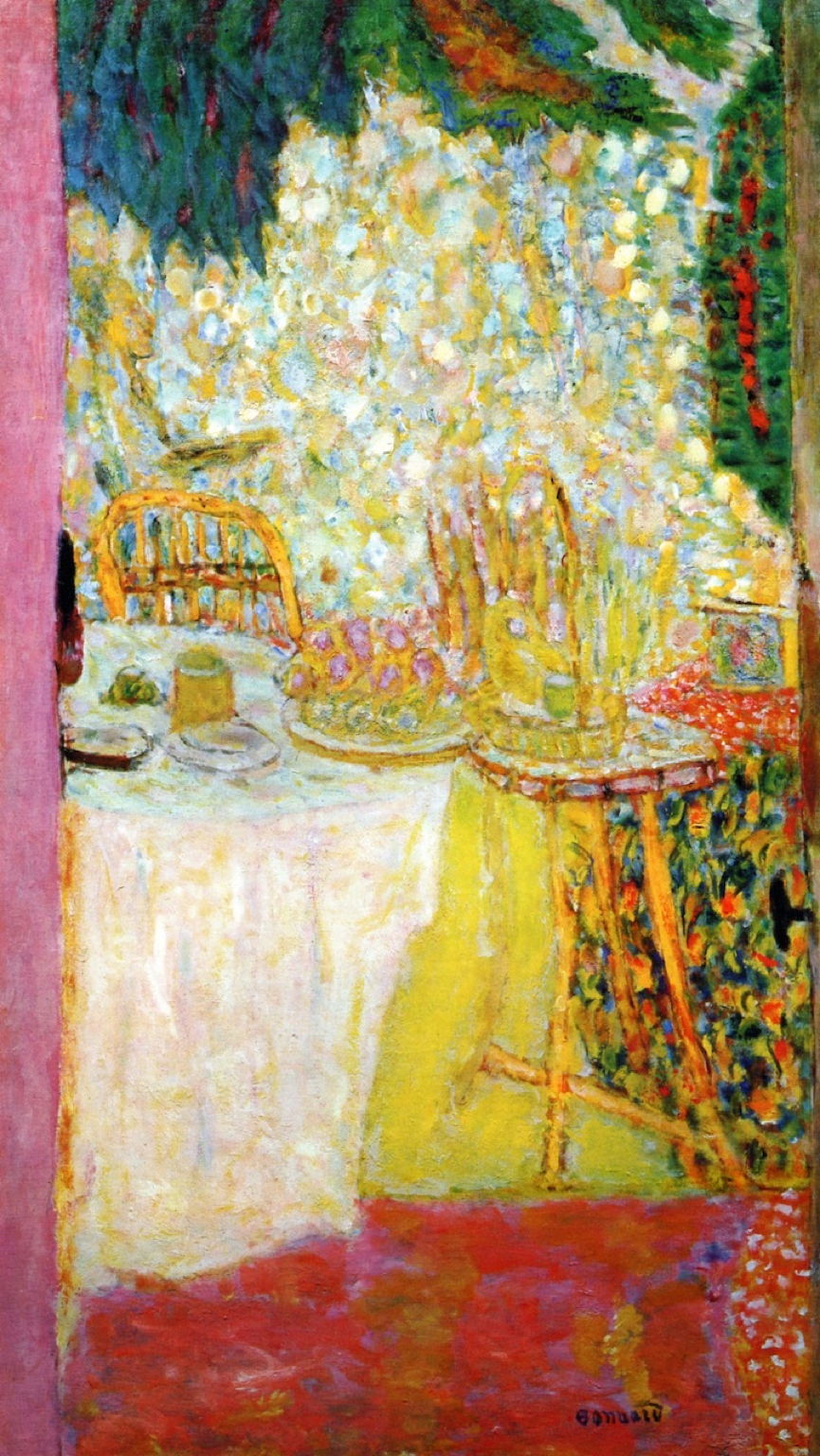
In Pierre Bonnard’s Open Door from about 1937, we look out through the frame of French windows to a table that has escaped into the landscape, and dazzles against brilliant blossom beyond.
I wish you a happy blossom festival, and above all peace.

