
We have now reached the letter n in this alphabet of landscapes, and that brings us to nocturnes, showing them after dark. Only yesterday, that was the theme of this week’s look at German Romantic art, so I won’t feature any of those works in today’s selection.
Nocturnes go right back to the earliest European landscape paintings, and since then have become fashionable for a while, then fallen from favour again. Some artists have specialised in nocturnes, and painted many of them, but they’re generally unusual.
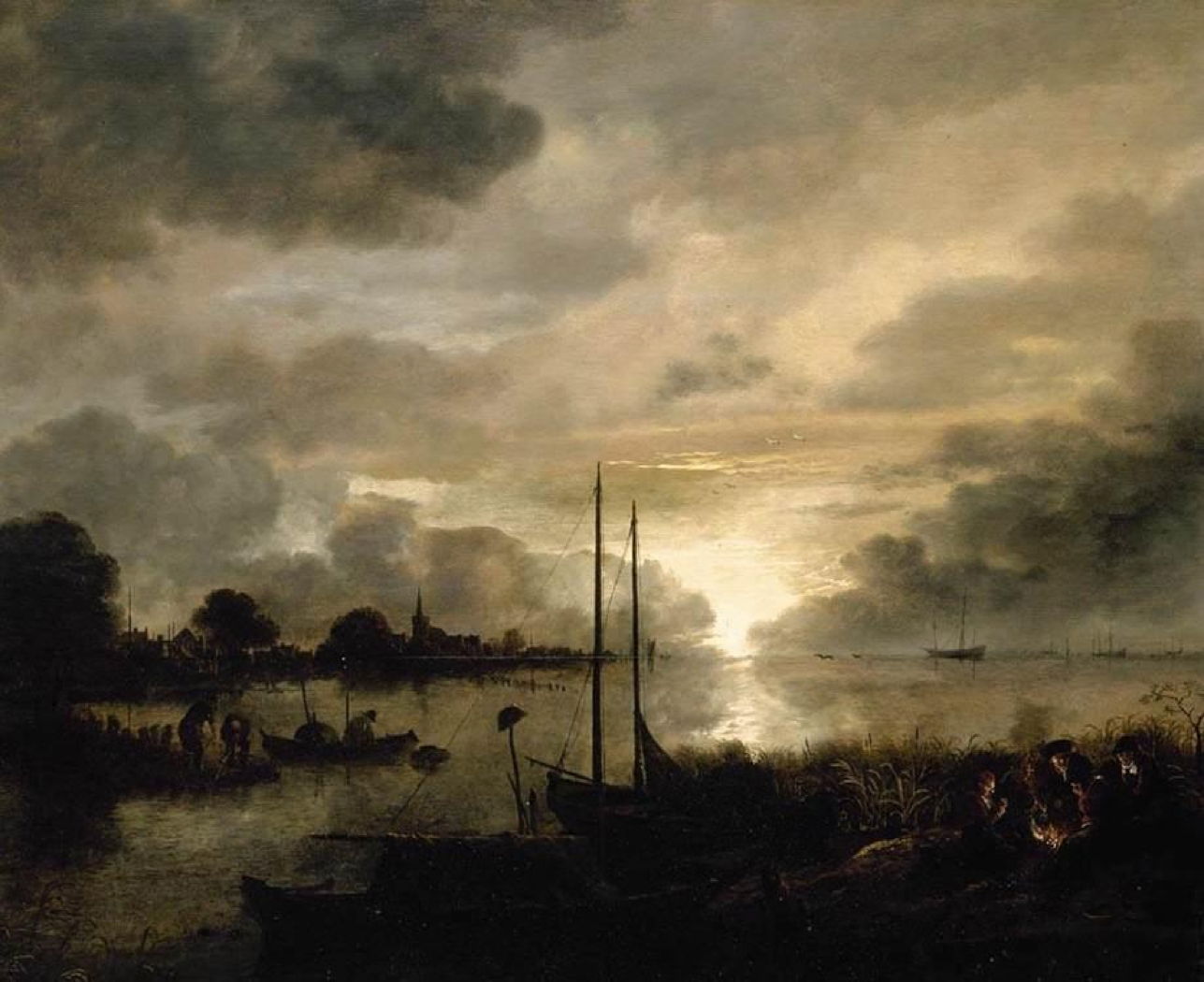
Their first wave of popularity was during the Dutch Golden Age, when artists like Aert van der Neer came to specialise in nocturnes lit only by the moon and fire. Among his paintings is this undated Estuary Landscape by Moonlight using light from both sources to great effect. Landscape details are shown largely in silhouette, and lack internal detail except in the group gathered around the fire in the foreground. Van der Neer is unusually faithful to reality in this monochrome, the result of the severely impaired colour vision we all suffer in conditions of low light, when there’s insufficient to enable colour vision using the cone cells in the human retina.

Whistler too had a penchant for nocturnes, here his Nocturne: Blue and Gold — Southampton Water from 1872. Its vague blue-greys make the pinpoints of light and the rising sun shine out in contrast, a good reason for limiting his palette, while remaining faithful to nature.
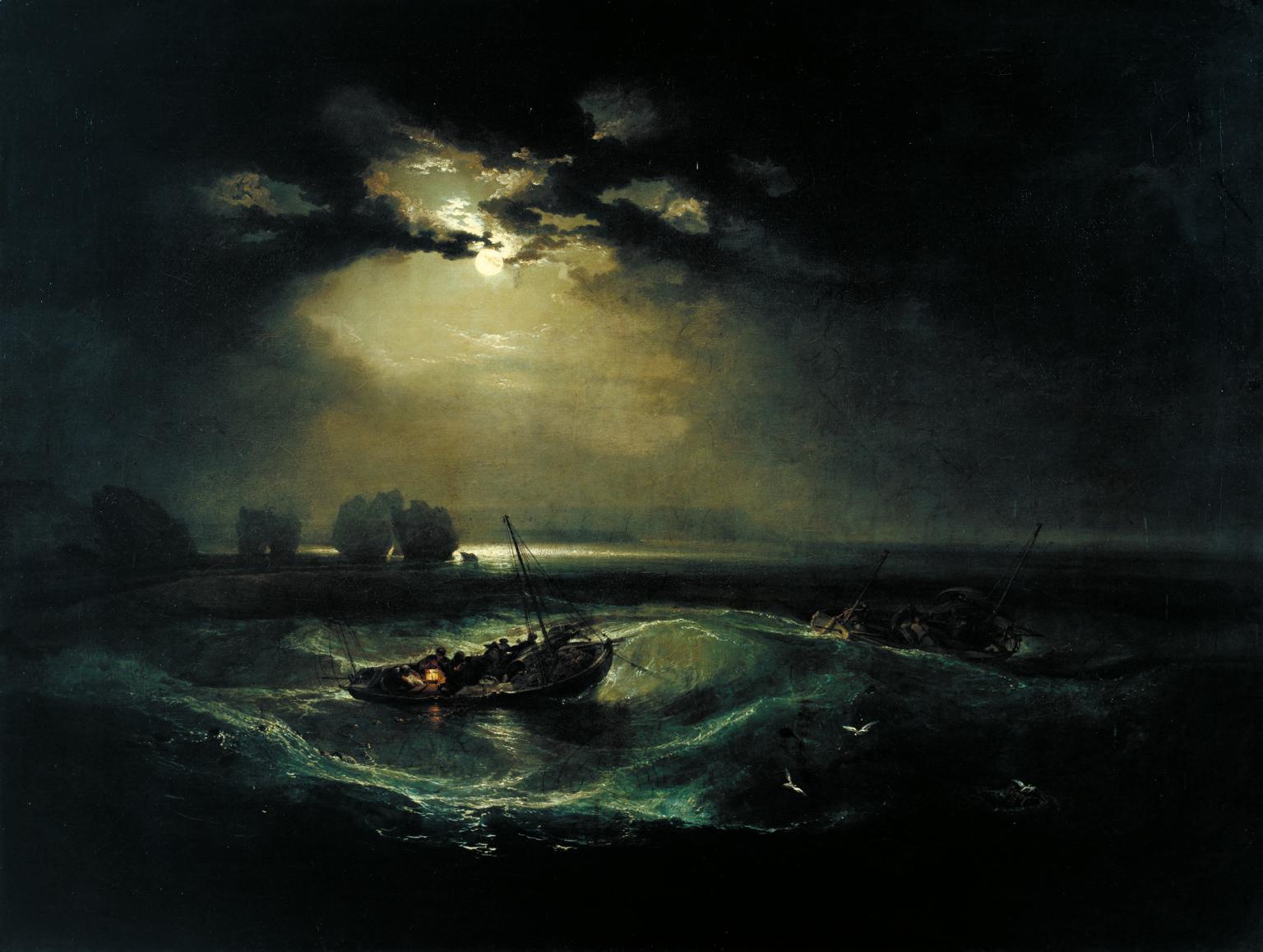
Turner’s Fishermen at Sea (1796), showing small fishing boats working in heavy swell off The Needles, on the Isle of Wight, is probably the most famous and successful coastal nocturne of all time. This was Turner’s first oil painting to be exhibited at the Royal Academy, when he was just twenty-one.
Nocturnes show some of the most calm and peaceful landscape views, even attaining that magical stillness of night.

Arkhyp Kuindzhi’s Night from 1905-08 shows horses grazing on the bank of a broad river, probably the Dnipro, under the light of a crescent moon.

Although dockland industrial areas are bustling and noisy much of the time, Maximilien Luce caught a moment of peace in his painting of the Port of London, Night, in Divisionist style, from 1894.
Darkness is the perfect time to explore unusual lighting effects.

Vincent van Gogh’s famous Starry Night over the Rhône (1888) shows a clear night on the bank of the wide, calm river, with the water and sky filling most of the painting. The sky is paler in the centre of the painting. Several stars are shining brightly, with lemon bursts around each. Seven form the constellation of Ursa Major, straight ahead of the viewer.
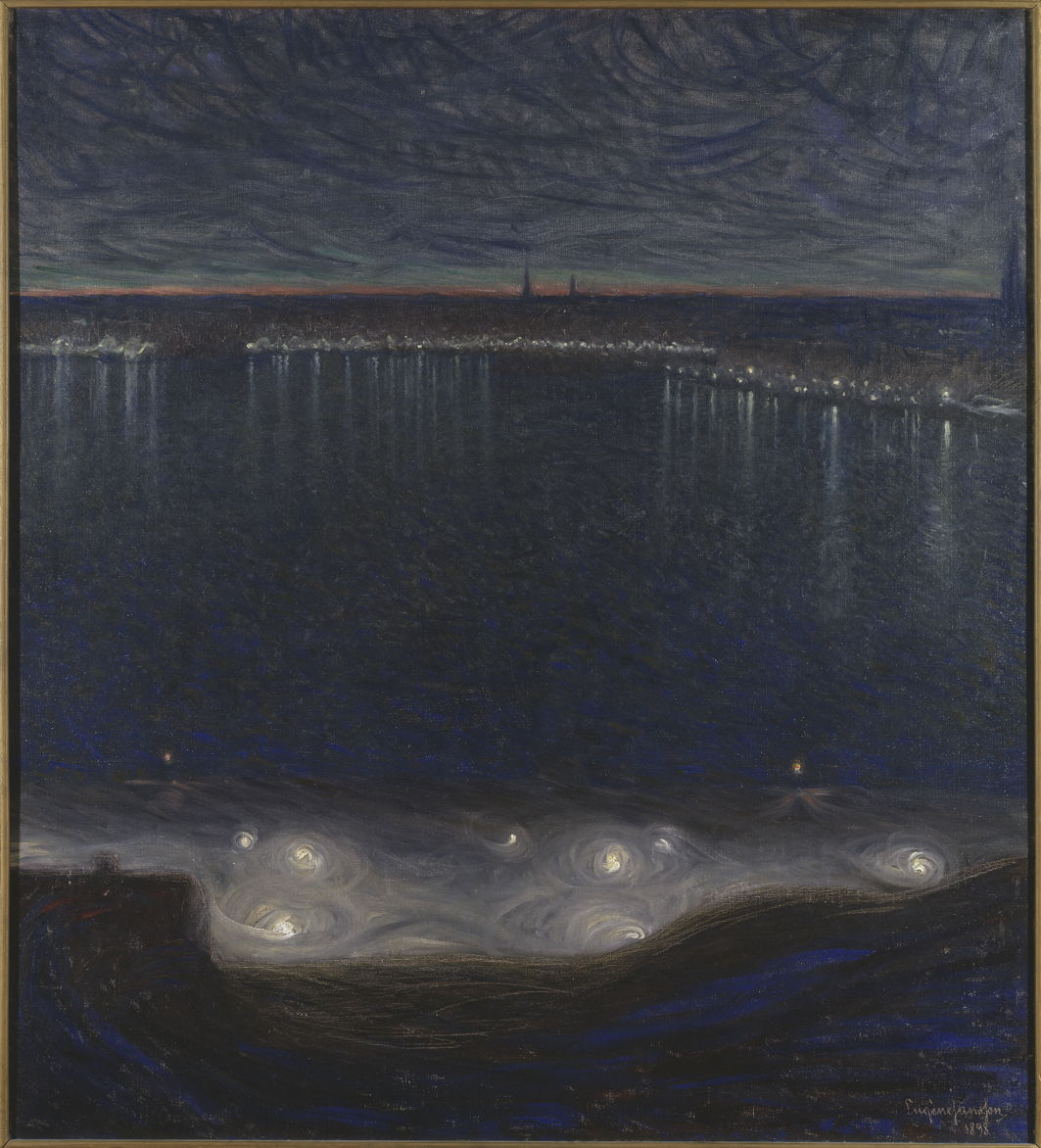
Eugène Jansson’s nocturnes of the city of Stockholm are even more unusual. This view from Mariaberget over Riddarfjärden, Stockholm (1898) shows the white lights on the waterfront of the old city reflected on the surface of the harbour.
Until the late nineteenth century there was only limited artificial light, even in cities, and there was almost no light pollution.
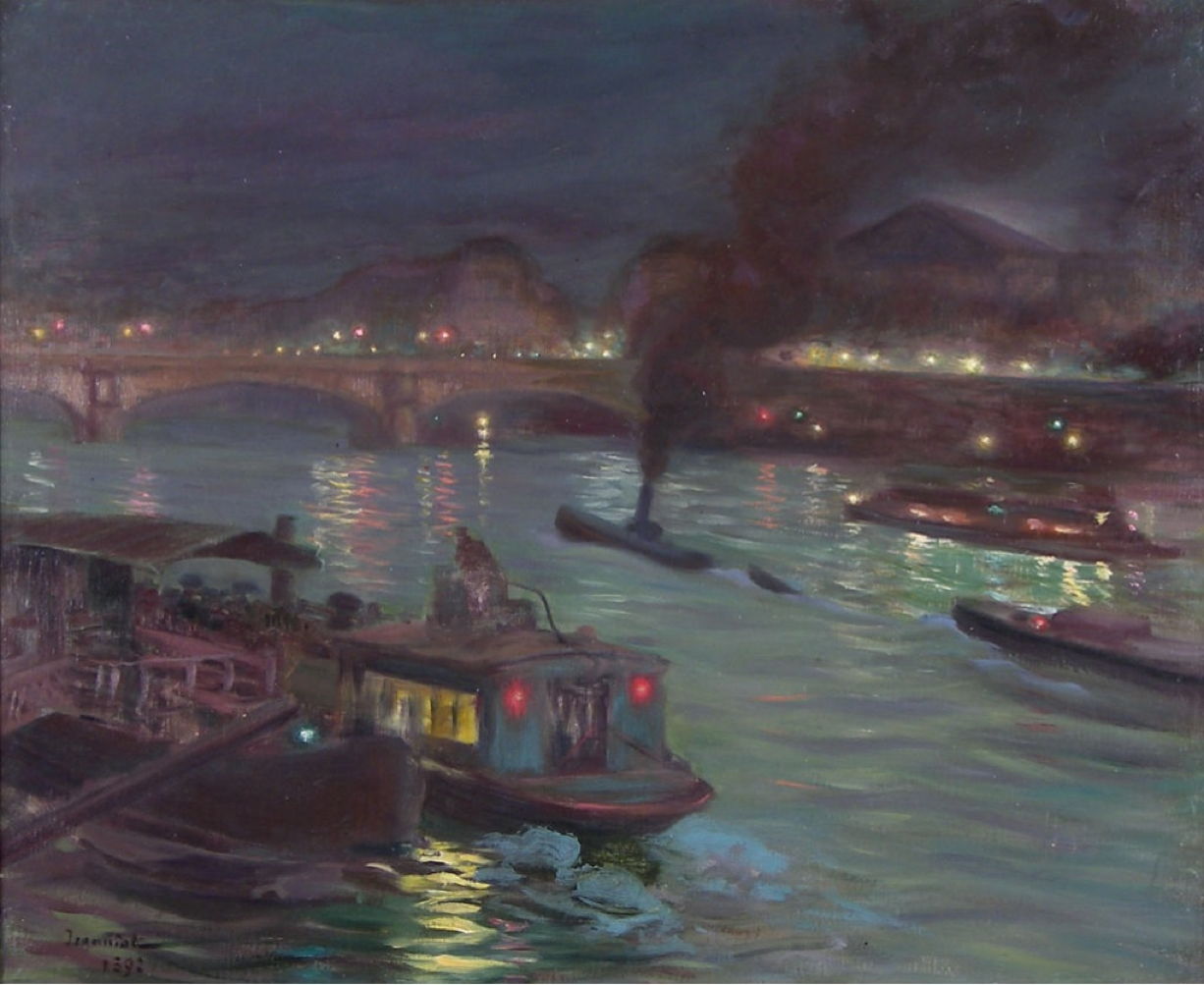
The city of Paris gained its first electric lights in 1878, as part of the Exposition Universelle that year. By the time Pierre-Georges Jeanniot painted his atmospheric Night on the Seine in 1892, those brighter lights had spread along the banks of the river and onto its many bridges.

Christian Morgenstern was a major influence in the development of Realist landscape painting in Germany. He painted a few nocturnes, of which his Helgoland in Moonlight from 1851 is his best and most dramatic coastal view. Its lighthouse would have looked completely different in daylight, of course.

In the early 1870s, Johan Jongkind tried a series of atmospheric nocturnes, which gave him even greater scope to develop his painterly style. The painting above shows Overschie in the Moonlight, what was then a village on the edge of Rotterdam, in 1871.
Some nocturnes exploit the simplification brought by darkness to place emphasis on form.

Arkhyp Kuindzhi’s Darial Pass. Moonlit Night, painted following a visit in 1890-95, shows a section of the Military Road in the tranquil conditions of summer.

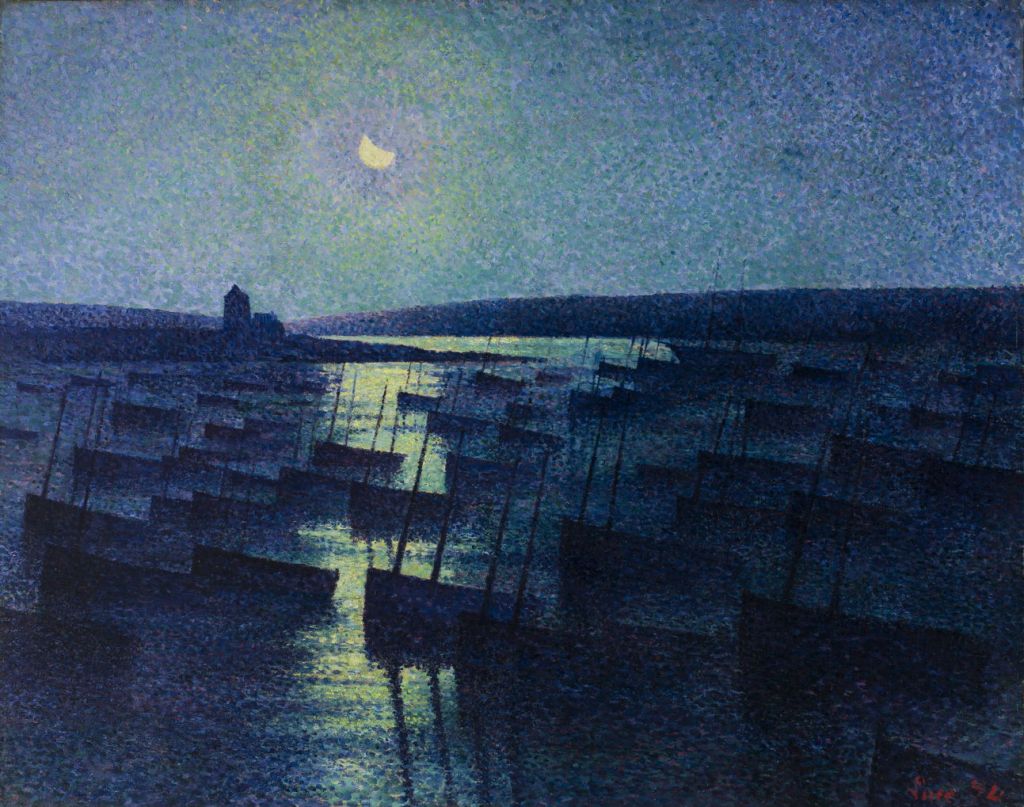
In 1894, Maximilien Luce painted this outstanding nocturne of Camaret, Moonlight and Fishing Boats with its rhythmic fishing boats and their masts, and the distant Tour Vauban, a fortification dating back to the end of the seventeenth century.
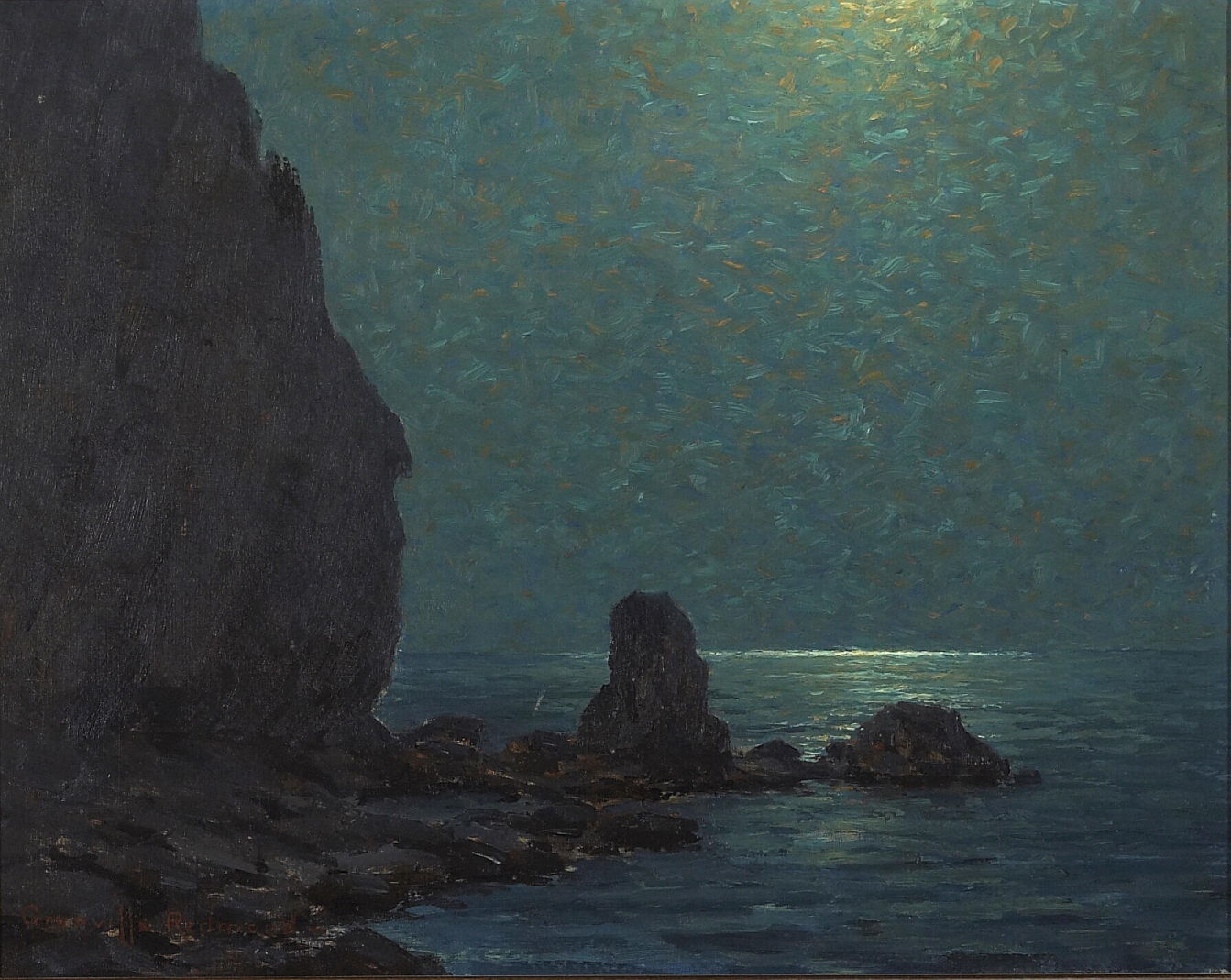
The American landscape artist Granville Redmond painted several nocturnes, including this of the Catalina Island Coast under a Moonlit Sky in 1920. Its sky is formed from innumerable short, fine brushstrokes in apparently random directions, giving the effect of the atmospheric buzz of small insects.
 The Eclectic Light Company