
This is the time of year when those who can, go high into the cool of the mountains to wait for the summer’s heat to ease in the lowlands and coast. To mark that, and prepare for the coming winter, this is the start of a new series looking at paintings of mountains.
As landscape started to become established as a genre in its own right, some artists found motifs and subjects that were as awe-inspiring and horrifying as possible, as expressed in Edmund Burke’s concept of the sublime, as opposed to the beautiful. In contrast to beauty’s proportion, fitness and perfection, he proposed that the formal cause of this sublime was fear, particularly of death, thus horror.
The English word bandit came from the Italian term for outlaws during the sixteenth century, but it became popularised by, and almost synonymous with, the paintings of Salvator Rosa. Early in his career he started to paint the romantic landscapes for which he remains best known, although his later work was more varied. They feature rugged, often precipitous, rocks and cliffs, populated by brigands and warriors, some of whom attacked travellers and held them hostage.
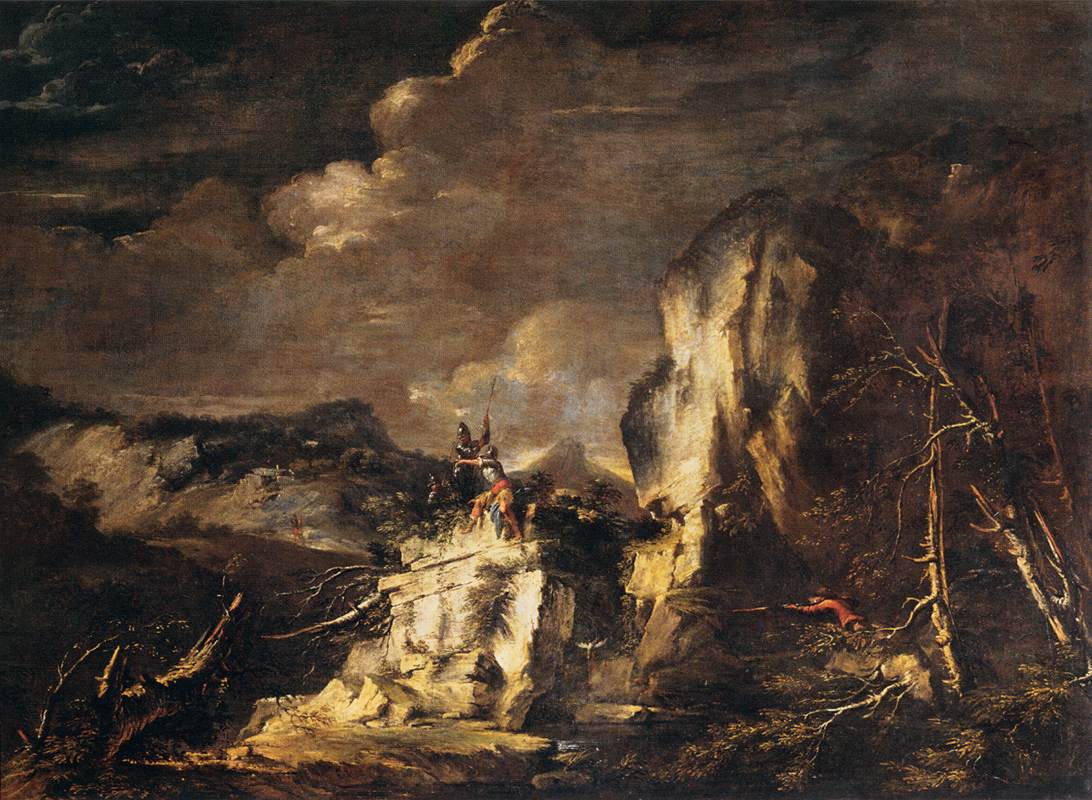
Rosa played successfully on the popular, and probably justified, contemporary fear of travel in wild regions, particularly mountainous areas. But over the following century, public tastes changed, and the more adventurous saw merit in exploring Burke’s sublime for themselves.

Caspar Wolf’s paintings of the Lower Grindelwald Glacier from 1774 are among the earliest faithful depictions of the mountains of central Europe. His Panorama of Grindelwald with the Wetterhorn, Mettenberg and Eiger shows two prominent glaciers flowing down towards the village of Grindelwald from the massif behind. The Eiger, of course, is well known for the great challenge it has presented to those trying to climb it via its north face. It wasn’t until 1938 that this route was successfully completed, to reach its 3,967 metre (13,015 feet) summit.

The mountains of North America had a little longer to wait. Albert Bierstadt’s huge painting of A Storm in the Rocky Mountains, Mt. Rosalie was completed in 1866, seven years after he had first travelled west towards the Rocky Mountains. He established a pattern of sketching and photographing spectacular scenery, then returning to his studio in New York and turning those into a series of paintings of the Burkean sublime.
He uses his full array of skills and sketches from his second expedition to the West in 1863, to fill the viewer with awe and trembling. The foreground shows a pastoral valley floor with a native American camp, in mottled light. Some people and their animals are seen making haste to return from the pastures to the shelter of the camp. A small rocky outcrop has trees straggling over it, which are silhouetted against the brilliant sunlight on the lake behind, in the middle distance.
Behind the lake the land rises sharply, with rock crags also bright in the sunshine. In the background the land is blanketed by indigo and black storm clouds. Those clouds are piled high, obscuring much of Mount Rosalie (named by Bierstadt after his wife), but its ice-clad peaks show proud, high up above the storm, with patches of blue sky above and beyond. A single large bird, an eagle perhaps, is seen in silhouette, high over the lake. Rosalie Peak, as it’s now known, is in the Colorado Rocky Mountains and reaches a height of 4,138 metres (13,575 feet).
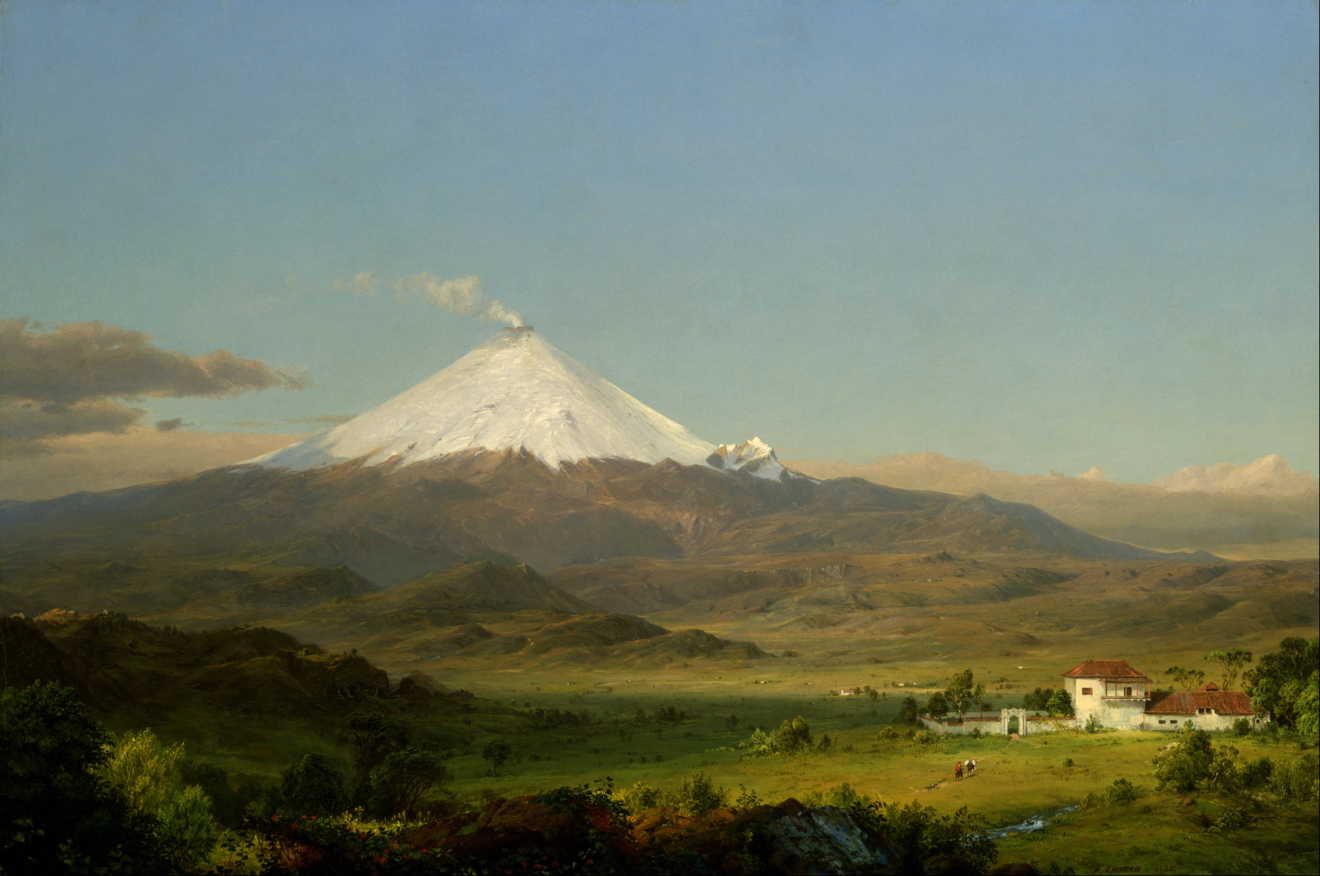
Meanwhile in Frederic Edwin Church’s studio in New York, he was busy turning hundreds of sketches and drawings he had made in Ecuador into one of his many views of Cotopaxi, in this case slightly earlier in 1855. Not far to the south of Quito, this rises to 5,897 metres (19,347 feet).
The great mountain artists of the late nineteenth century travelled even further, into the remote mountains of unexplored New Zealand.
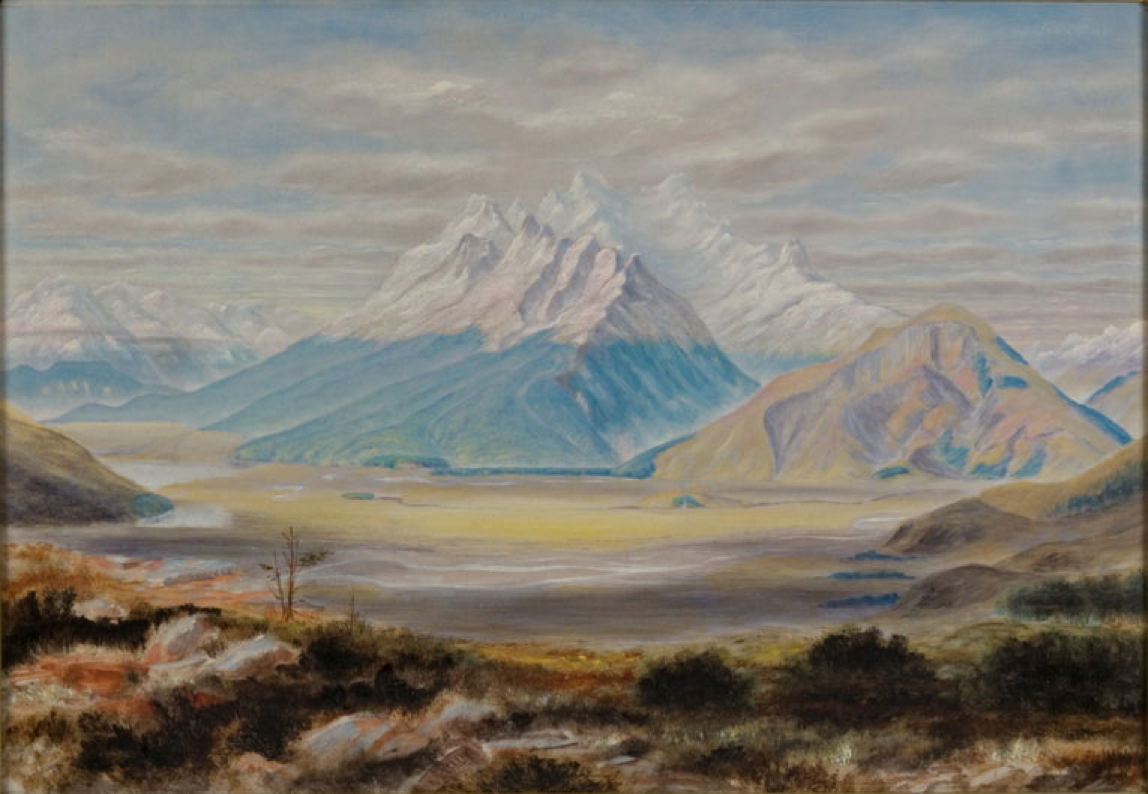
John Turnbull Thomson painted Mount Earnslaw in 1883, just a year before his death. This mountain, also known by its original name of Pikirakatahi, is 2,819 metres (9,000 feet) high, and is another peak discovered and named by the artist, in honour of his father’s home town. The previous year, the mountaineer the Reverend WS Green, who had intended to climb Mount Cook, attempted to climb Mount Earnslaw, but was forced to abandon the climb at the halfway point, and it wasn’t climbed until 1890.
Others, like Nicholas Roerich, went to live among the highest peaks in the world.
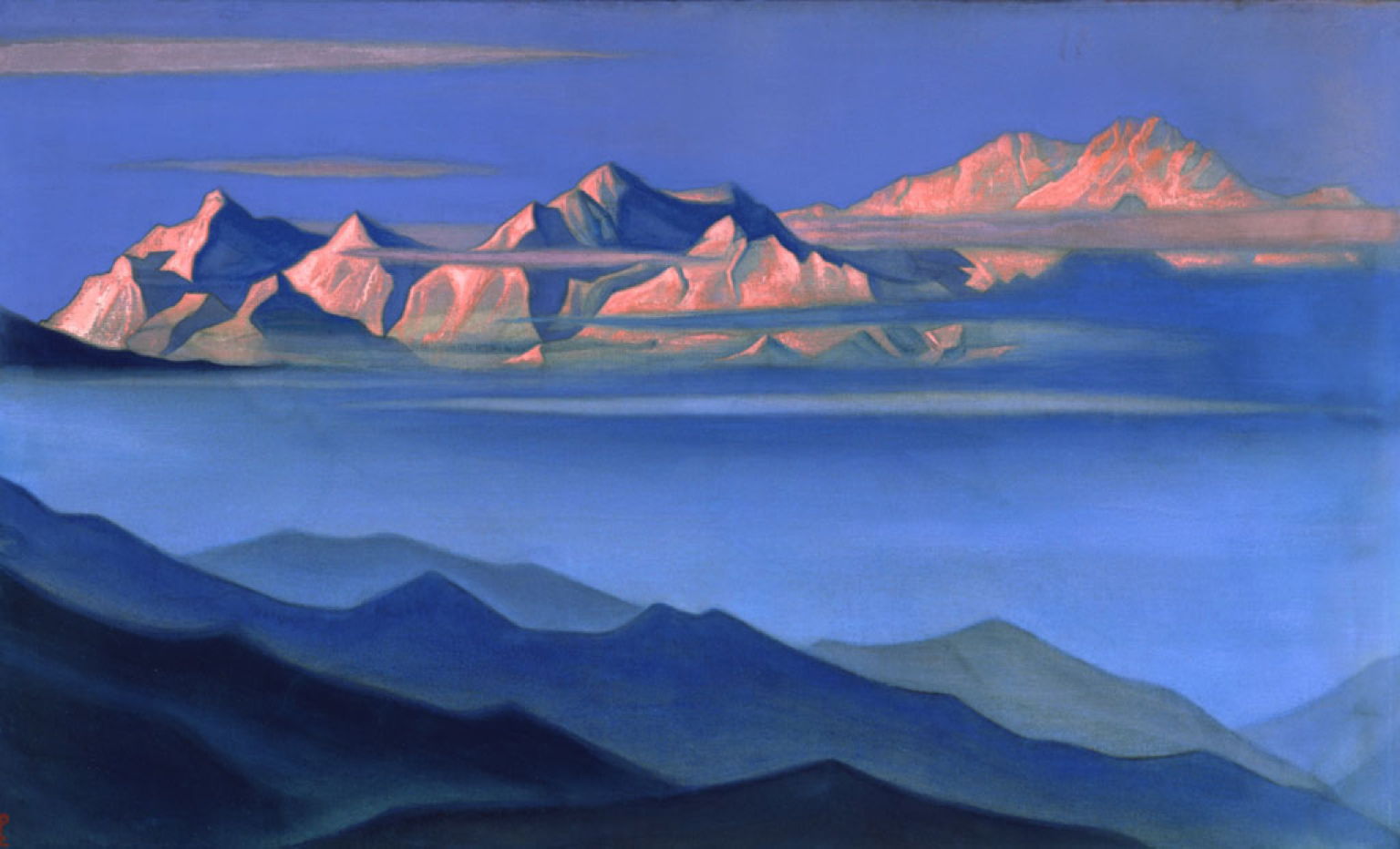
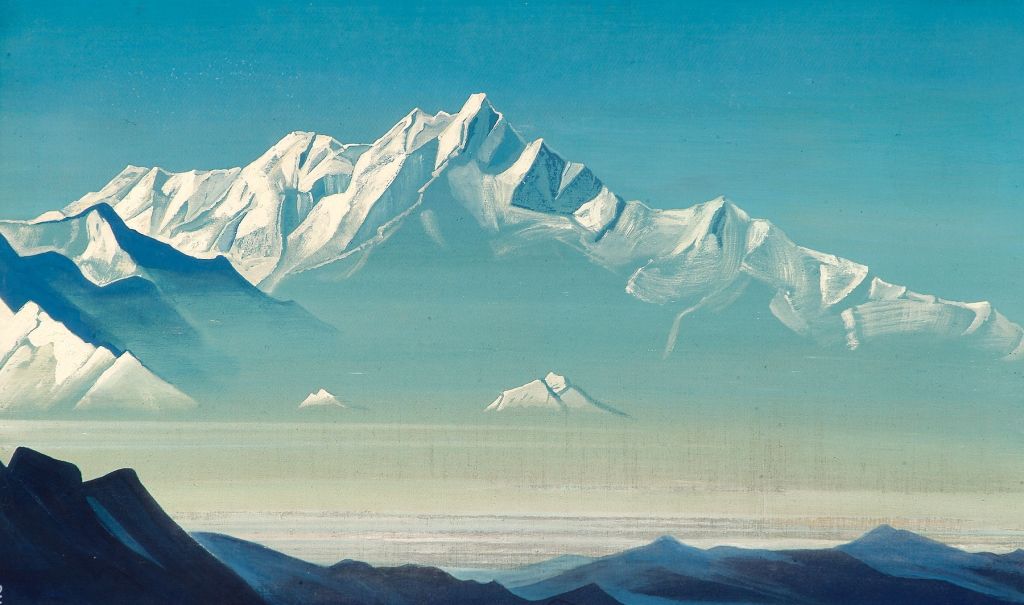
Roerich painted this superb view of the distant Kanchenjunga in 1944, when he was living in India. This is the third highest mountain in the world, rising to 8,586 metres (28,169 feet), and wasn’t climbed until 1955. This view may have been painted in Darjeeling, and shows the mountain in the rich light of dusk. This peak is a holy place, and by convention those who climb it stop short of its summit in respect.
Where there are mountains, there are also valleys, gorges and fjords between their high ridges.
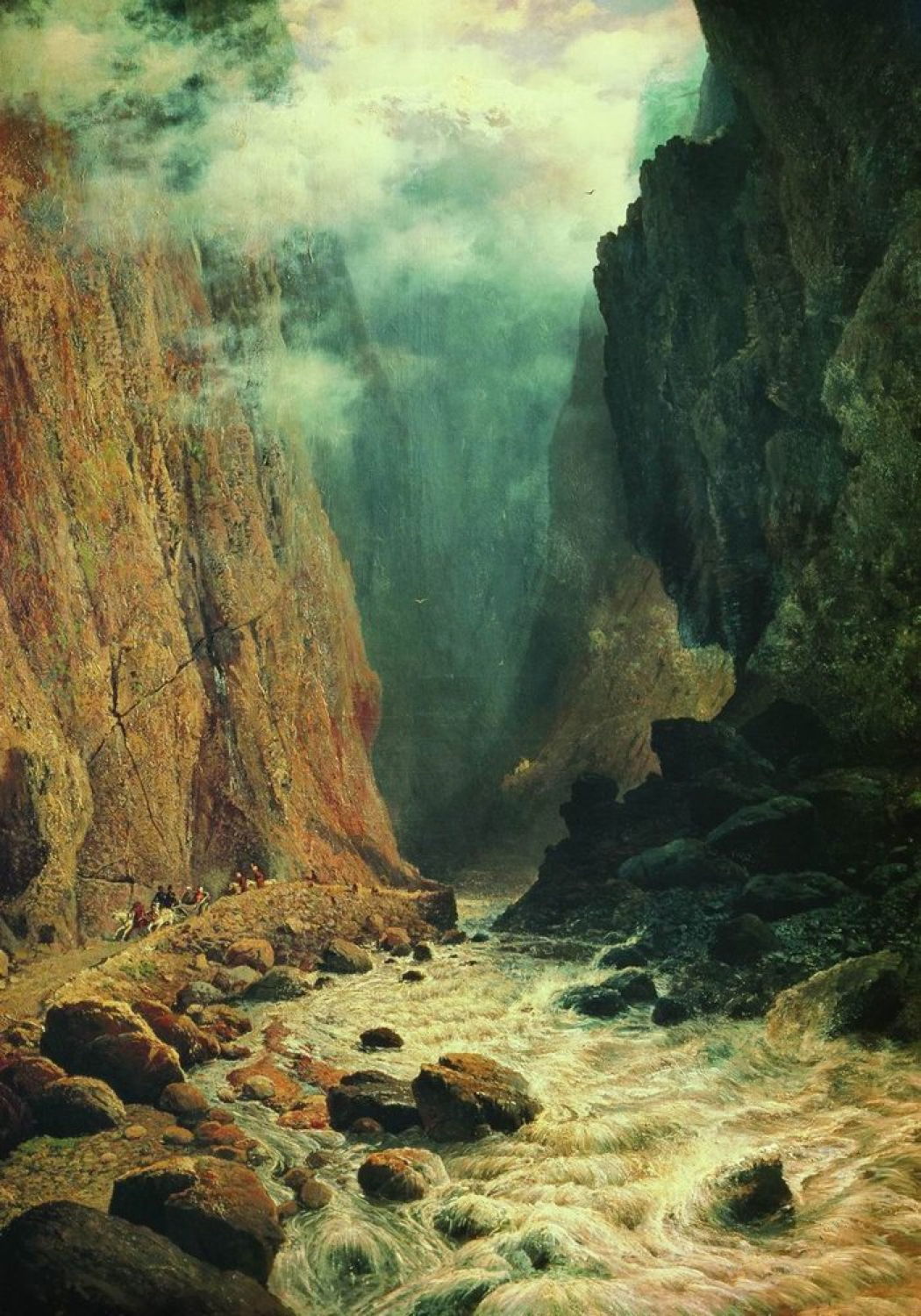
Rufin Sudkovsky’s Darial Gorge from 1884 shows this long and narrow gorge carving its way through the granite heart of the Caucasus Mountains, connecting Russia and Georgia, one of only two crossings of that range. He shows its dramatic and near-vertical rock walls towering above a small group of travellers on the road next to the River Terek. The mountain peak vaguely visible towards the top may be Mount Kazbek, rising to 5,034 metres (16,515 feet).
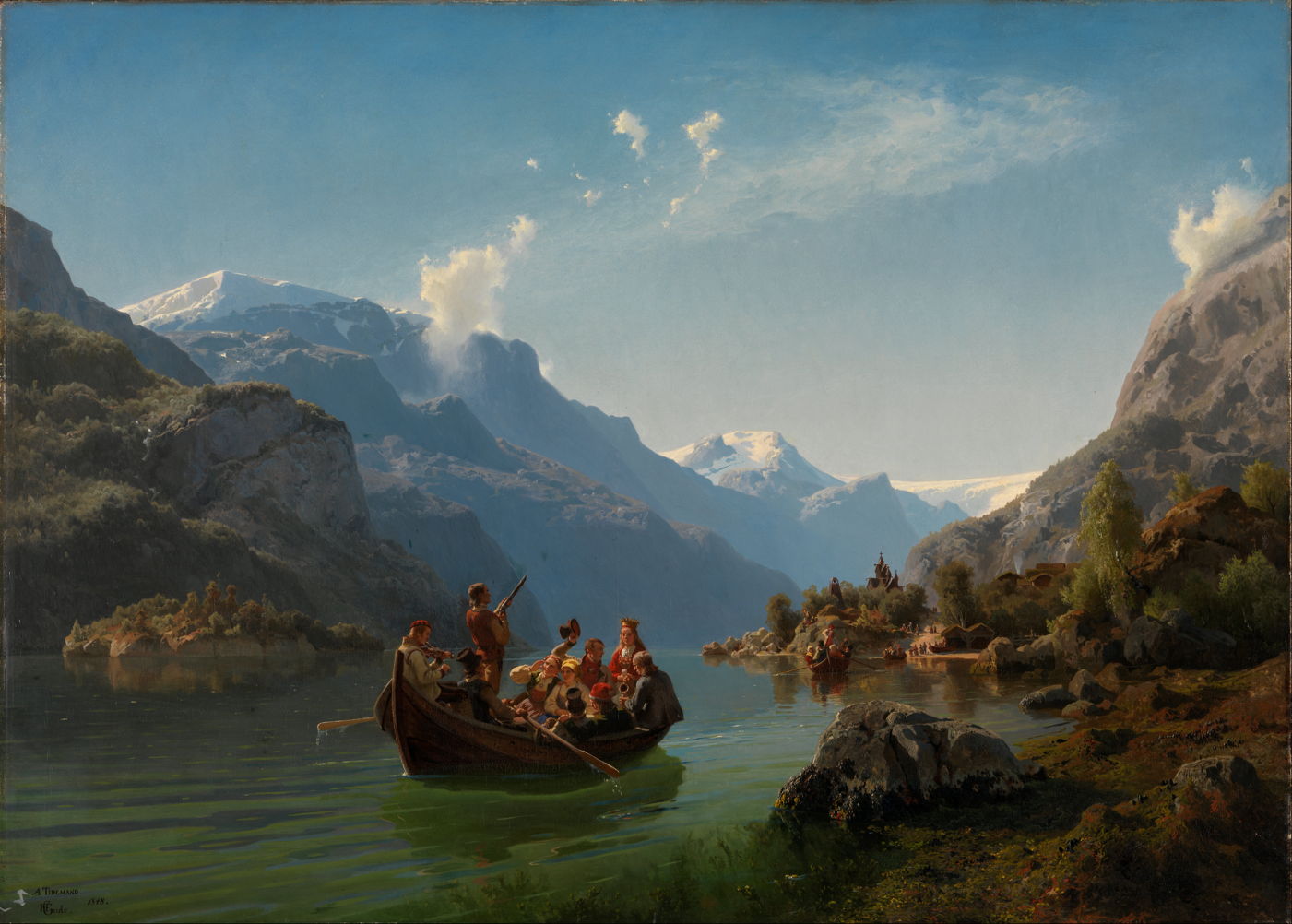
Adolph Tidemand and Hans Gude collaborated to paint one of the world’s largest and most spectacular fjords carving its way from the Hardanger Glacier to the sea, to the east of Bergen in Norway, in their Bridal Journey in Hardanger from 1848.
Over the same period, the intrepid started climbing to the top of these mountains. A very few of them not only climbed but painted too.
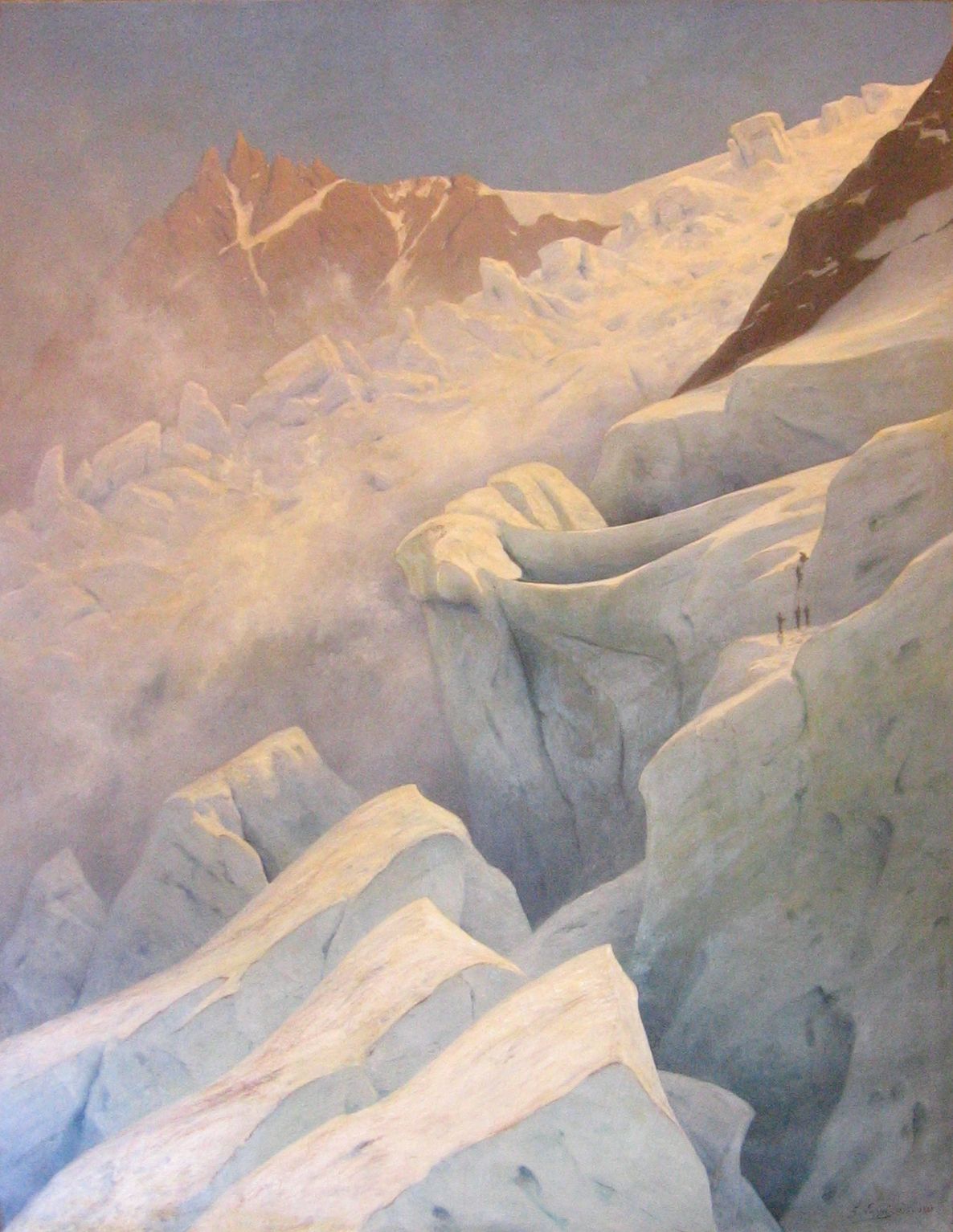
Gabriel Loppé’s Crevasses Below the Grands Mulets, Ascent of Mont Blanc was painted between 1875-83, and shows a view at an altitude of around 3,000 metres (10,000 feet), now the site of a refuge hut or bothy. Loppé was both a painter and mountaineer, and became the first foreign member of the prestigious Alpine Club in London. From the 1850s, he was an avid climber, and completed over forty ascents of Mont Blanc, often making oil sketches when climbing.
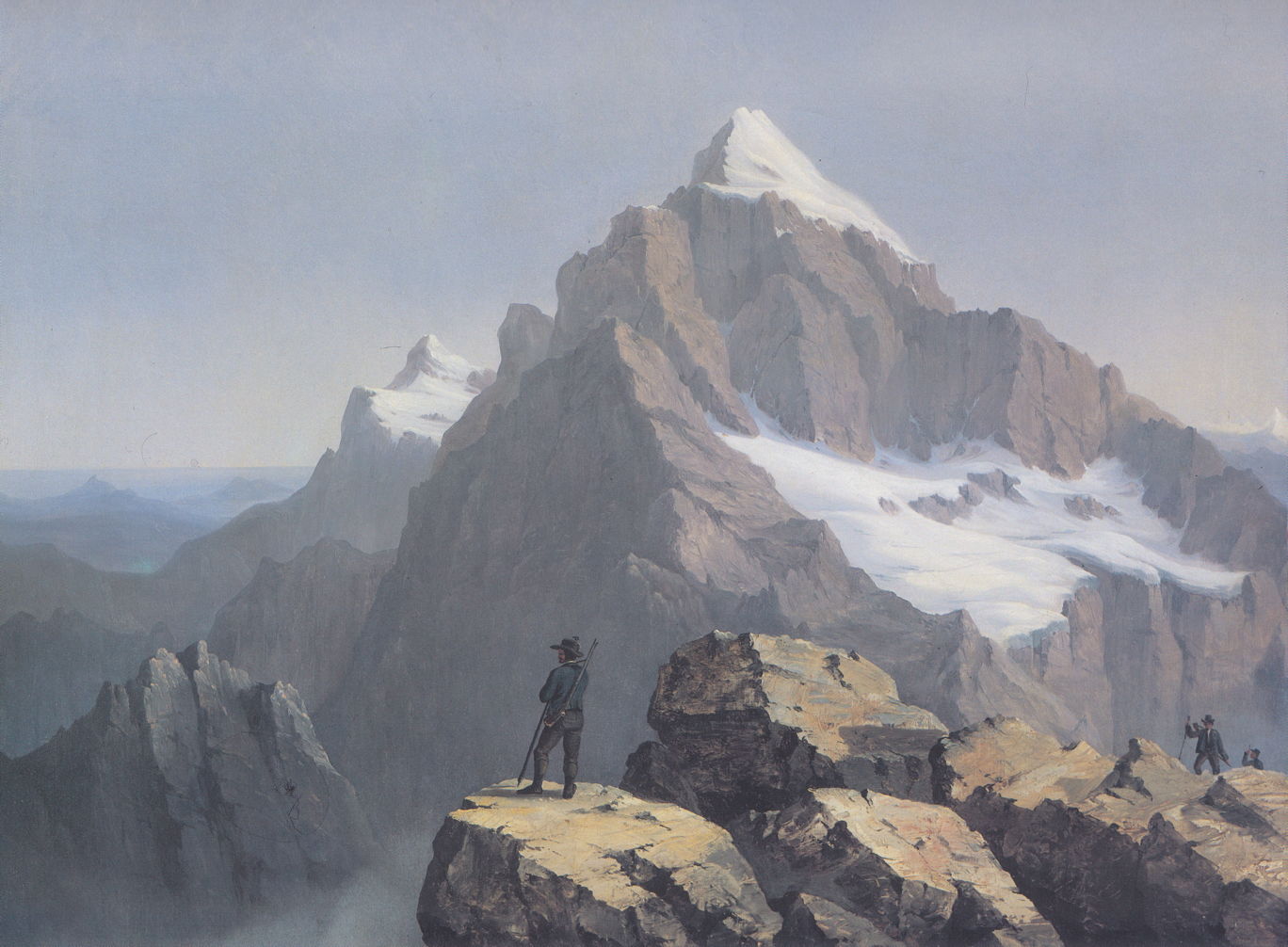
Marko Pernhart’s undated painting of Triglav III shows the lower summit of this mountain which at 2,864 metres (9,400 feet) is the highest in Slovenia and the Julian Alps. Its first ascent was recorded in 1778, and it was another peak which became popular during the nineteenth century. Unlike Loppé, Pernhart wasn’t a mountaineer, but a successful Austrian landscape painter.
I hope that you’ll join me in the coming weeks as I explore mountains from the comfort and safety of painted canvas.
 The Eclectic Light Company