
Truth is so important in life that it’s surprising it wasn’t incorporated into a proper deity by the classical civilisations. Although sometimes named as Aletheia (Greek ἀλήθεια) or Roman Veritas, neither is quite the same as the personification of truth normally depicted in paintings. This is because, for much of the history of art, truth has had even greater connotations for the painter, in terms of the faithfulness and accuracy of their work. This weekend, I look at some of the more significant depictions of truth. At a time when phrases such as false news and euphemisms like AI hallucinations are so widely used and misused, these have contemporary relevance.
Truth is one of the oldest recorded themes in painting, going back to the ancient Greek painter Apelles of Kos, who flourished around 330 BCE. Rivalry between painters in Apelles’ day could become intense, and at times underhand methods were called into play. One of his rivals accused him of taking part in a conspiracy against Ptolemy, one of Alexander’s generals. This almost led to Apelles’ execution, but the artist instead expressed himself in his allegorical painting of Calumny, in which an innocent youth is falsely accused by Ignorance, Envy, Treachery, and Deceit.
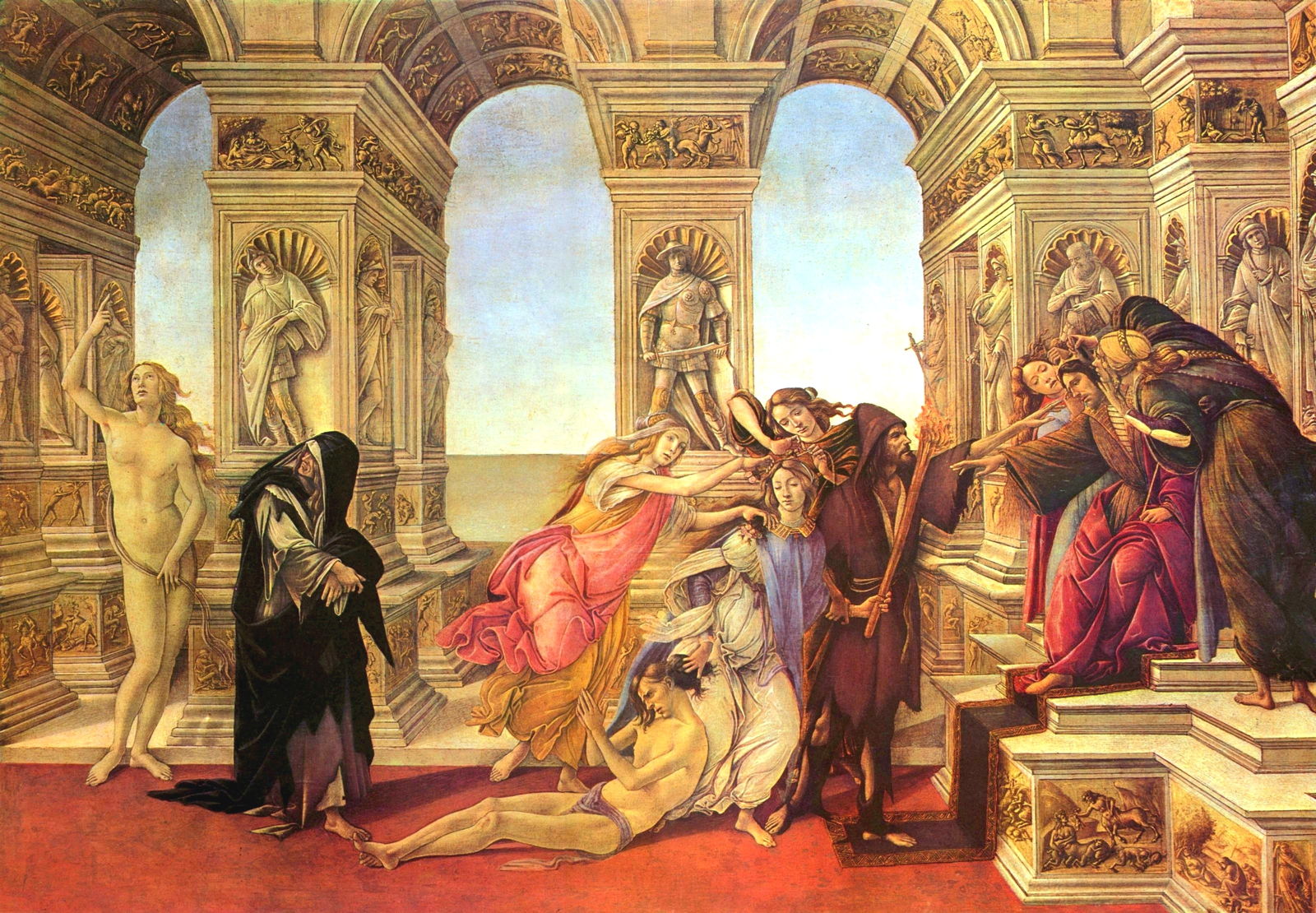
As with the whole of Apelles’ work, the original has long been lost, leaving us with a detailed description by Lucian. Inspired by that in his ekphrasis, Botticelli’s intricate Calumny of Apelles (c 1496-7) tries to reconstruct the allegory.
The youth who is the victim of the calumny is being dragged by his hair, clad only in a loincloth, with his hands pressed in prayer. On the throne at the right, perched on a dais, sits King Midas, with ass’s ears, extending his right hand towards the distant figure of Slander. On either side of Midas are Ignorance and Suspicion, speaking simultaneously in those ears.
Slander is shown as a beautiful woman, holding a blazing torch in her left hand, and the accused’s hair in her right. At her left, between Slander and Midas, is Envy, who reaches his left hand out towards Midas’ eyes. The two women attending Slander are Fraud and Conspiracy. To the left is Repentance, dressed in deep mourning, her clothing in tatters. She glances back at the naked Truth, who looks up to the gods.
In more modern painting, Truth assumes a different appearance based on a family of classical proverbs, referring to her being at the bottom of well, having been put there or even killed by liars and their lies.
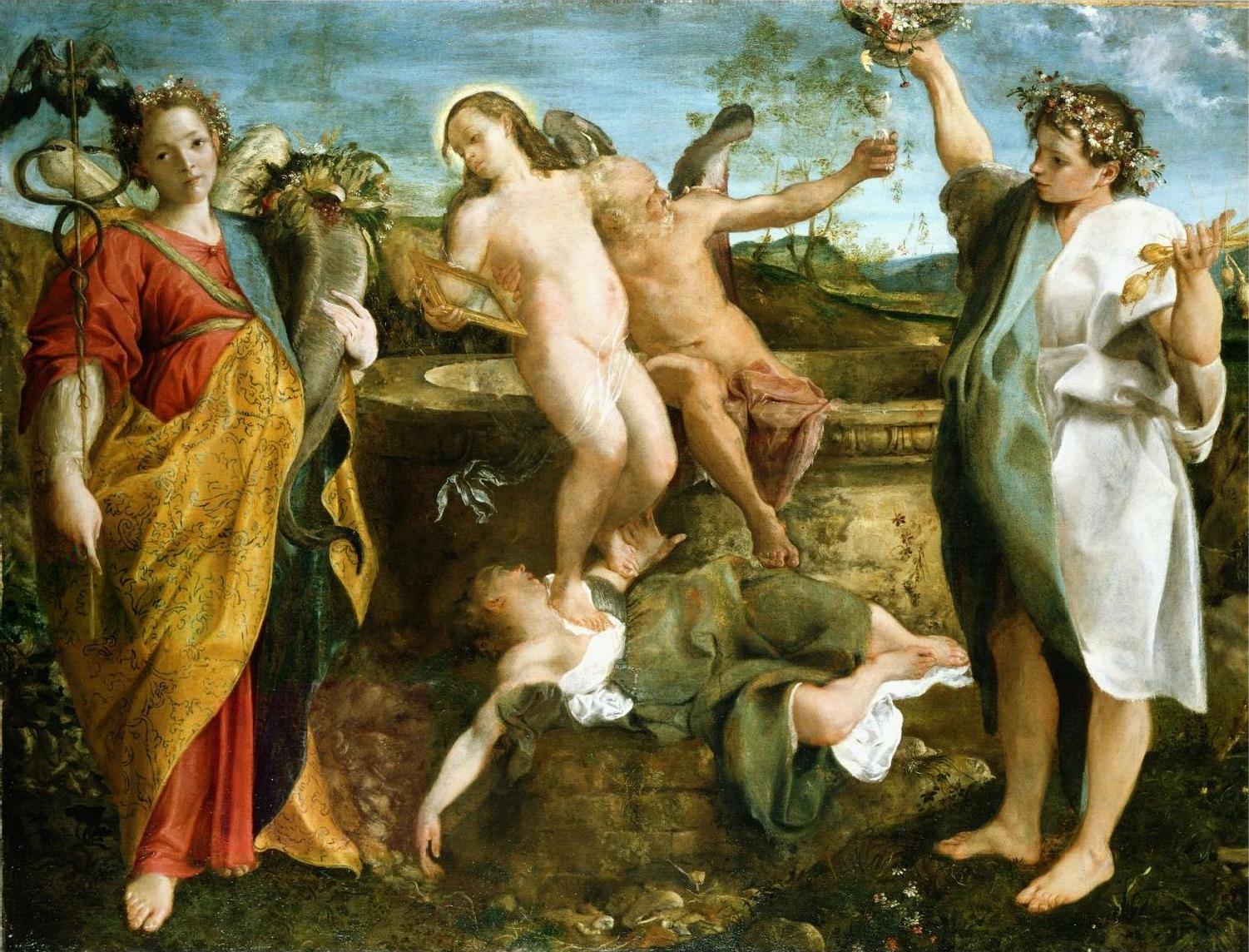
Annibale Carracci’s Allegory of Truth and Time from 1584 is one of the earliest paintings to follow this proverbial line. The winged Father Time lacks the scythe which became his most frequent attribute, and is here putting his shoulder to Truth to raise her from the well. She’s clutching a mirror in her right hand.
Trampled under the feet of Truth is the strangely chimeral two-faced figure of Deceit. The two figures framing the image are more controversial: the official identification gives them as Good Luck or Happiness on the left, and Happy Ending on the right. That on the left bears a winged caduceus and a cornucopia (horn of plenty), an unusual combination which may allude to good health as well as abundant food. That on the right is scattering Spring flowers, which might relate her to Flora.
There doesn’t appear to be any visual precedent to Carracci’s image, which must therefore be presumed as the start of Truth’s painted mythography. Interestingly, the first recorded occurrence of the phrase the naked truth is in the year after this painting (1585).

Later paintings of Time saving Truth aren’t uncommon: this is Peter Paul Rubens’ The Triumph of Truth, painted as part of his Medici Cycle, between 1622-25. But the mirror and well are missing.

Nicolas Poussin’s later tondo Time Defending Truth against the Attacks of Envy and Discord (1641) puts Father Time at its centre, with a firm grip around Truth’s waist, while Envy and Discord sit below them. On this occasion Time doesn’t have a hand free for his other attribute, an hourglass.

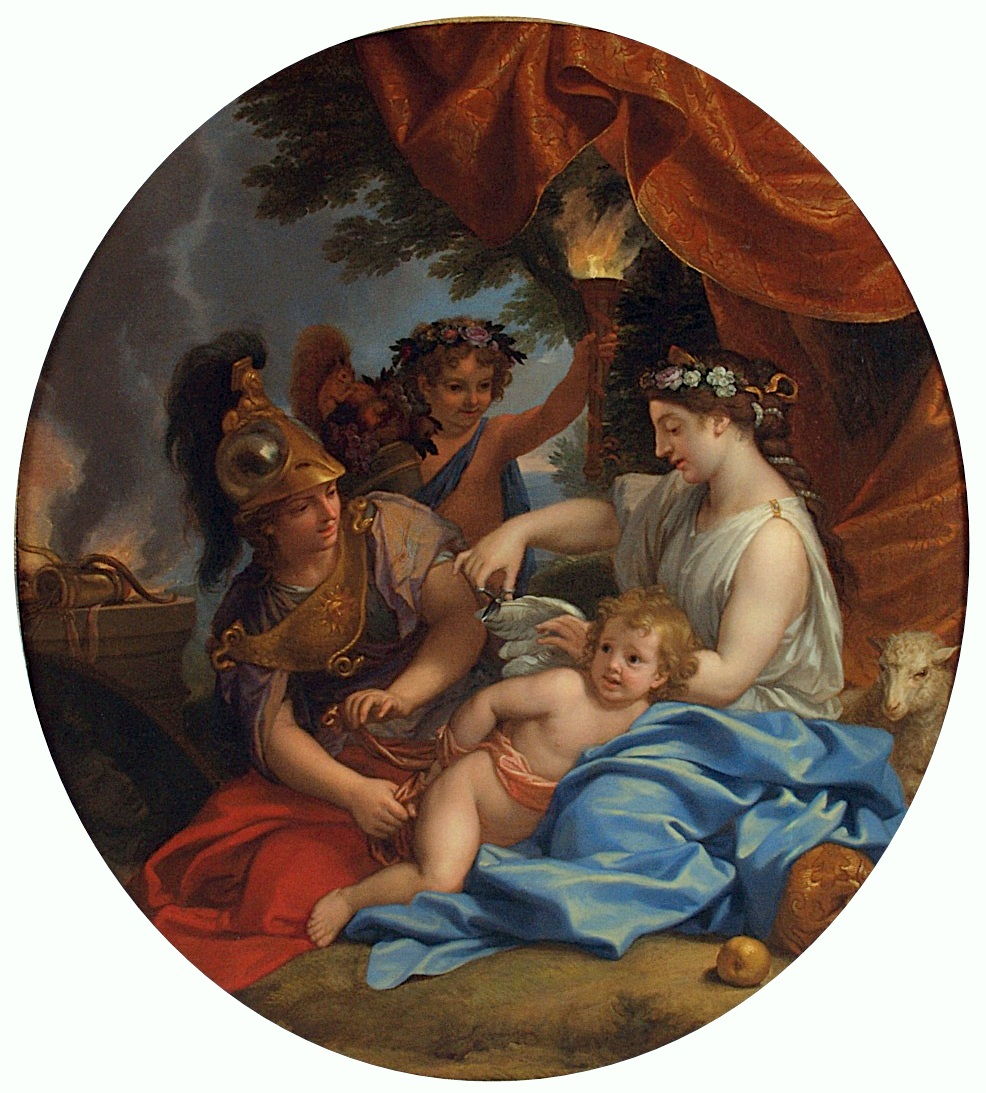
In about 1655, Charles Le Brun painted this more lighthearted tondo showing Venus Clipping Cupid’s Wings. Truth is at the back, where she has emerged from her well at the left, and holds an eternal flame, a combination that was to become more widely known in the Statue of Liberty.

François Lemoyne (1688–1737) was a brilliant, highly accomplished and successful Rococo painter who suddenly committed suicide on 4 June 1737, when he was only 39. For reasons that remain obscure, the day after he finished painting Time Saving Truth from Falsehood and Envy (1737) for a friend and patron, Lemoyne stabbed himself in the chest and throat nine times before collapsing and dying.
Lemoyne’s Truth has no mirror, and is being borne aloft by winged Father Time, who holds his scythe in the other hand. Behind them is the unmistakable marble lip of a well, from which she has presumably emerged, only to be confronted by Falsehood and Envy, whose personification Time is pushing to the ground.
Tomorrow, we’ll see what became of Truth in the nineteenth century.

