

Birch trees are the pioneers, found where no other species ventures, in the high Arctic and in most mountainous regions across Europe. They’ve been the only native trees of Greenland and Iceland, and have given their support to the humans living there. Their distinctive silver bark can be stripped without killing them, and has been used to fabricate canoes and more. Their sugar-rich sap can be tapped like maples, making it valuable as food and readily fermented to form alcoholic beverages.
Both the native European species are similar, and I’m not clever enough to distinguish them in these paintings. The silver birch Betula pendula, as its Latin name suggests, is pendulous like a weeping willow, and has hairless leaves and black marks in its bark that run vertically. The downy or white birch Betula pubescens tends to stand more upright, has hairs on the underside of its leaves that render them light or white, and the greyer marks in its bark form circumferential bands. Most of those in the paintings below appear to be downy birches, but I’m probably wrong.
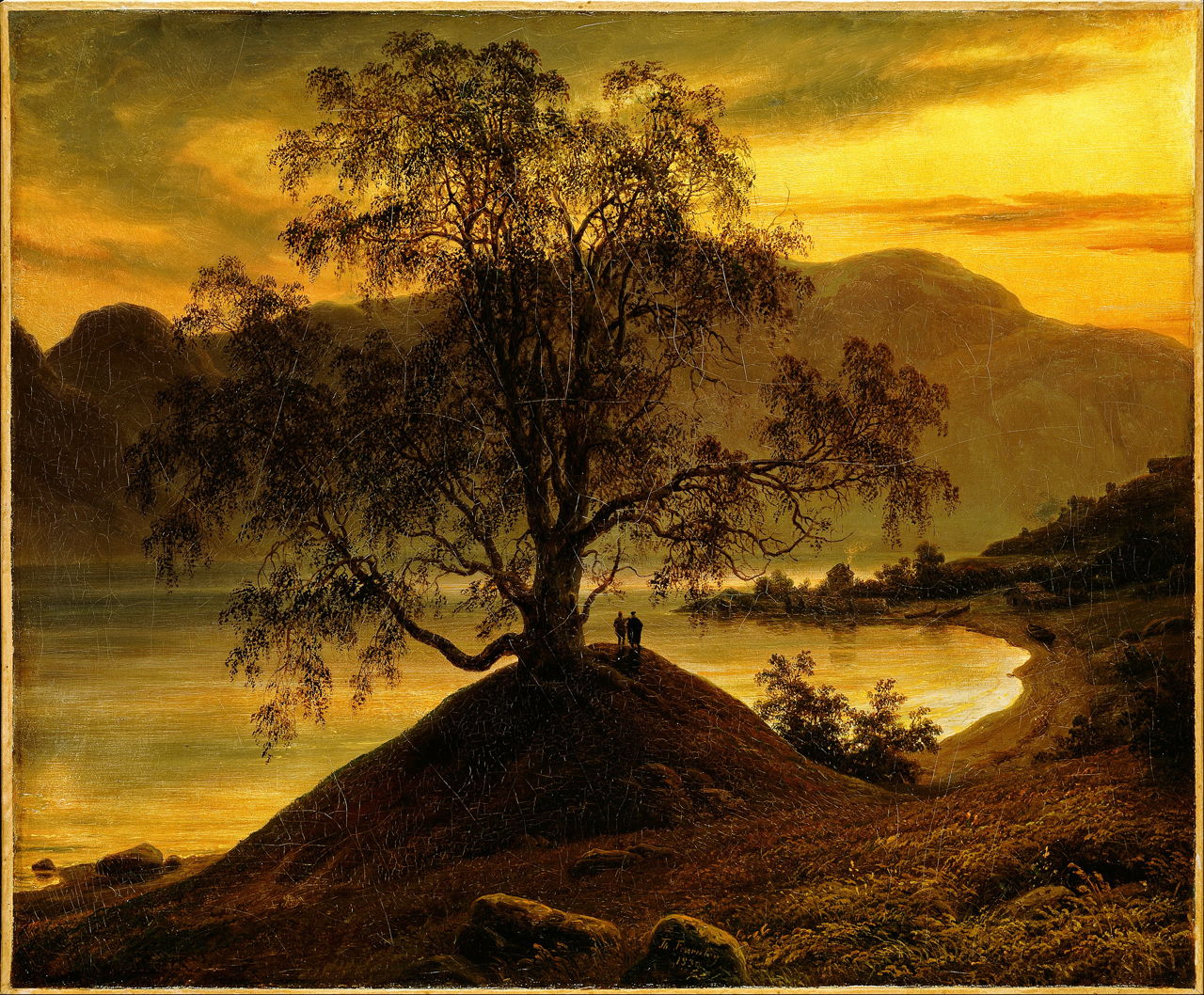
Thomas Fearnley was a Norwegian painter, so although this tree looks to me to be far larger than any birch I’ve ever seen, I’m sure he knows what he was painting in this Old Birch Tree at Sognefjord (1839), with the two wanderers standing at its base.

Alfred Sisley’s Rest along the Stream, Edge of the Wood (1878) features a row of birch trees in the right foreground. Their trunks are delicately coloured, textured, and shown with dappled shadows. Their foliage consists of carefully graded brushstrokes to detail individual leaves, gradually merging in the distance. They appear to be downy birches in every respect.

Lovis Corinth painted A Forest. Flooding on Lake Starnberg (1896) in the countryside near Dachau, where there’s a flooded stand of birch trees at the edge of the lake.
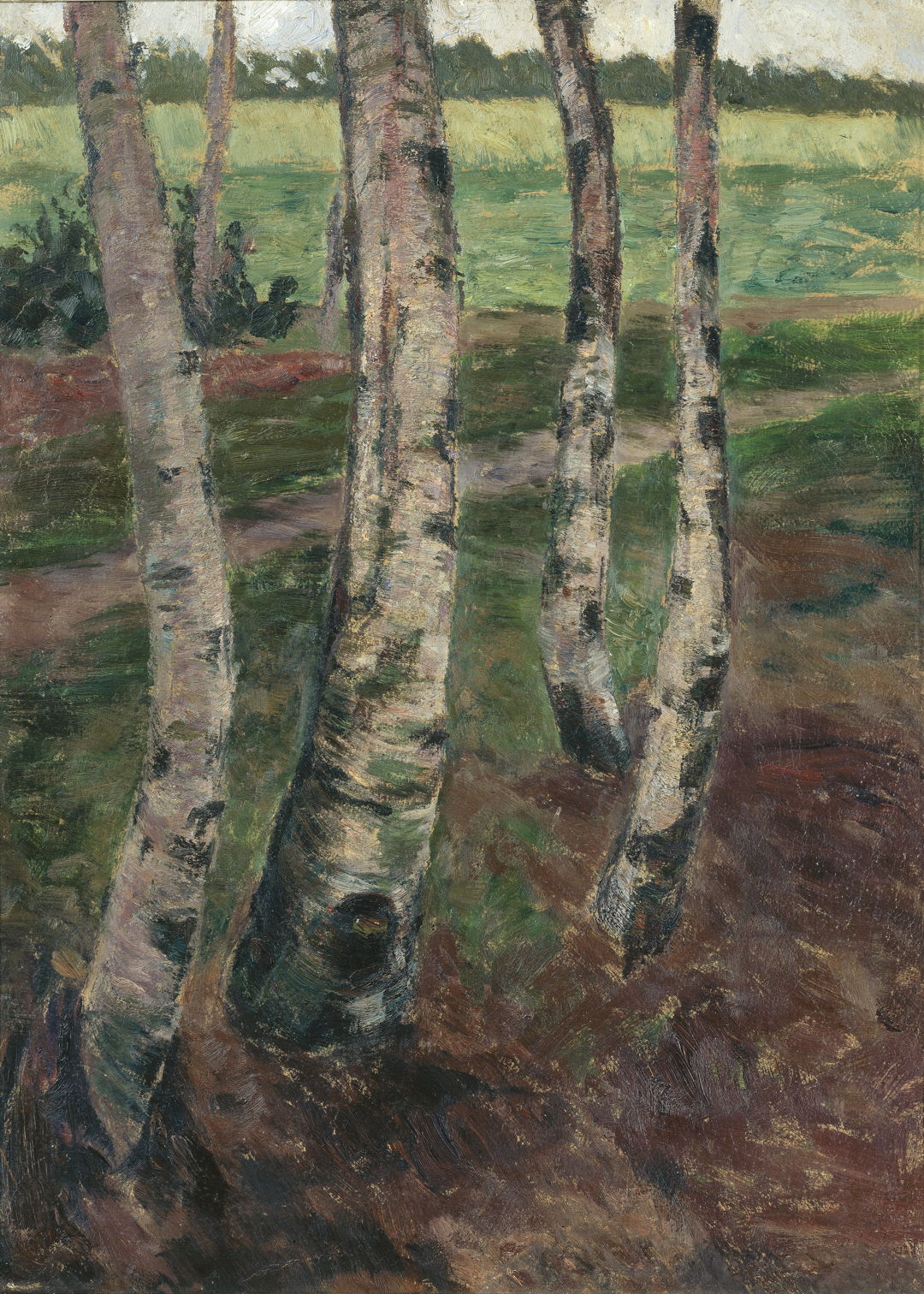
Fritz Overbeck seems to have been particularly interested in the sinuous forms of lichen-encrusted trunks of birch trees, as shown in his painting of a Group of Birch Trunks from about 1896. This is in boggy moorland on Teufelsmoor, Lower Saxony, Germany.

Adrian Stokes found two deer approaching young birch trees in his Autumn in the Mountains from 1903, when he was travelling in the South Tyrol.
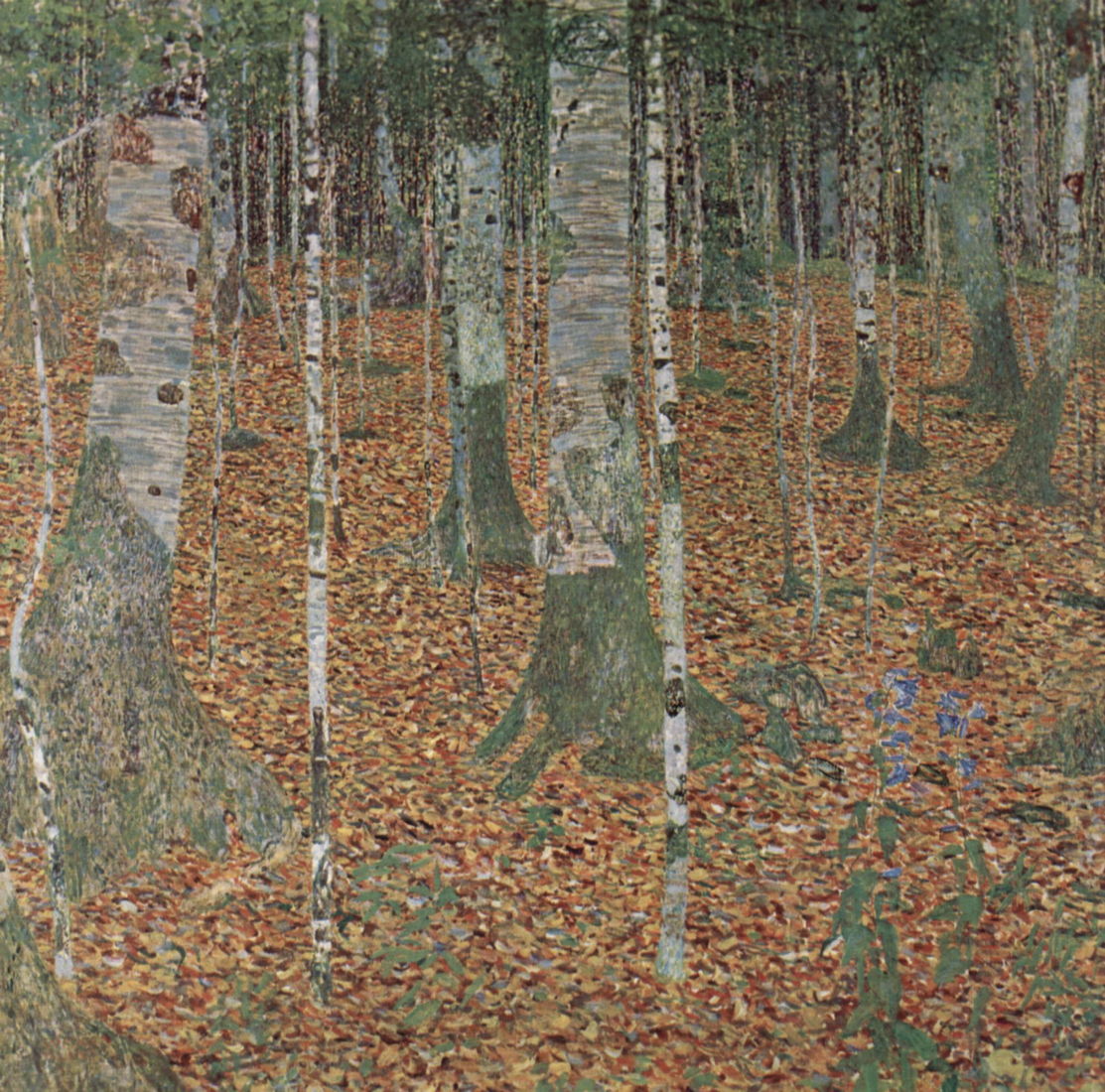
Birch Forest (1903) is one of Gustav Klimt’s landscape paintings from the summer of 1903, in which he has intentionally removed depth.
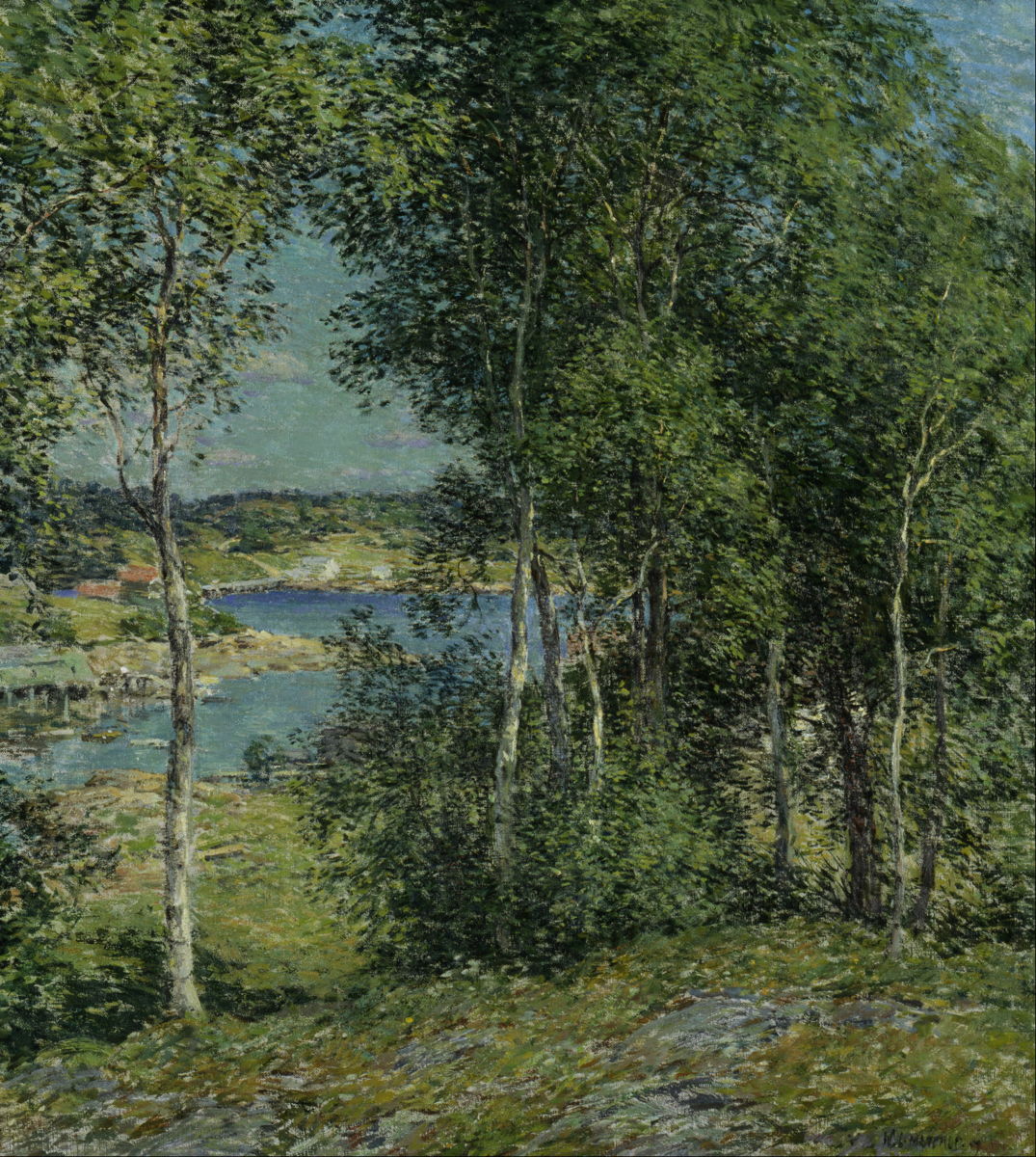
Willard Metcalf’s Family of Birches from 1907 is a traditional Impressionist landscape. This was most probably painted near Old Lyme in Connecticut where he spent the summer, making them likely to be paper-bark birches, Betula papyrifera.

Birches are one of the favourite themes of the Ukrainian painter Arkhyp Kuindzhi, whose Birch Grove is one of his many undated oil sketches.
Birches have also had a long-standing association with magic and rituals.

In 1920, Nikolai Astrup revisited an earlier painting he had made of Foxgloves. A stream emerges from the dark and vague forests behind, to drop in a series of small waterfalls to the lower right. Two almost identical women are bent in strained arcs as they forage among the dense birch trees in the middle distance. In the centre the far waterfalls glint like the eyes of unseen trolls. In the foreground is an evocative combination of delicate foxglove flowers and lichen-encrusted rocks. The scene is rich in Nordic legend and enchantment.

A few years later, Astrup uses the natural environment to generate another of his magical works, in The Befring Mountain Farms from about 1924-28. Two people are engaged in milking a goat by the entrance to a building in the left foreground. The farm buildings have turf roofs with luxuriant growth, in one case sporting a small tree. Spindly birches stand next to them in repoussoir, their leaves shimmering in the light of the crescent moon. That moon is reflected in a small pond surrounded by marsh marigolds in full flower. You can hear the silence among the massive rock bluffs towering over the lake, and that in the centre looks like the head of an owl, watching over the stillness of the night.

Finally, Hans Thoma’s best-known Self-portrait in Front of a Birch Grove probably marked his sixtieth birthday in 1899.

