

Multiplex narrative, in which a single painting contains representations of two or more moments in time from a story, had all but died by the end of the Renaissance. The quest for greater realism had made such constructed scenes inappropriate for telling stories in visual art. Curiously, it was to return in the nineteenth century, when realism was pushing further forward, and traditional history painting was entering decline.
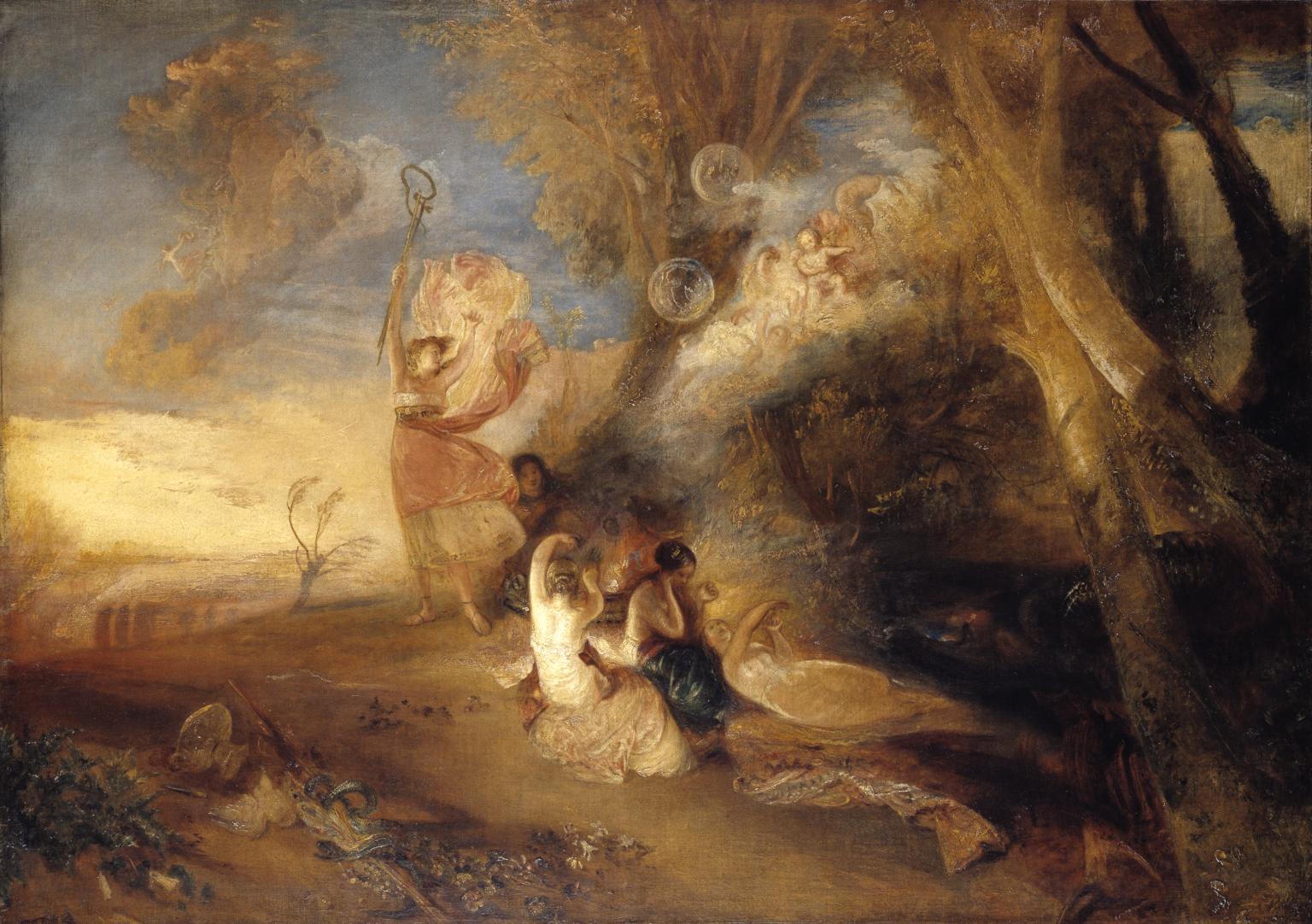
JMW Turner’s Vision of Medea (1828) is the first in a series of more modern attempts to tell the story of Medea and her failed relationship with Jason, and one of Turner’s few uses of multiplex narrative.
In the middle of the canvas, Medea is stood in the midst of her incantation to force Jason’s return. In the foreground are the materials she is using to cast her spell: flowers, snakes, and other supplies of a sorceress. Seated by her are the Fates. In the upper right, Medea is shown again in a flash-forward to her fleeing Corinth in a chariot drawn by dragons, the bodies of her children thrown down after their deaths.
Just eight years later, and apparently independently, Camille Corot adopted a more classical approach in his account of the death of Actaeon, as told in Ovid’s Metamorphoses.

At the centre, Diana and her attendant nymphs are bathing in a stream, and soaking up the sunshine. At the right, Actaeon with one of his hunting dogs is just about to run straight into them. Diana, appropriately crowned, stands pointing to the distant figure at the left, which is again Actaeon, antlers growing from his head as she transforms him into a stag. Actaeon appears twice in spatially separate scenes, with Diana and her group being part of both. In the first, they are simply bathing and larking about, but in the second Diana stands, points, and transforms the unfortunate Actaeon.
This technique was also resurrected by British artists of the Pre-Raphaelite movement.
Edward Burne-Jones worked on many sketches and preliminary designs for his Perseus series, among which were gouache and gold layouts to show how his paintings would fit into their carved surrounds in his patron’s Music Room.
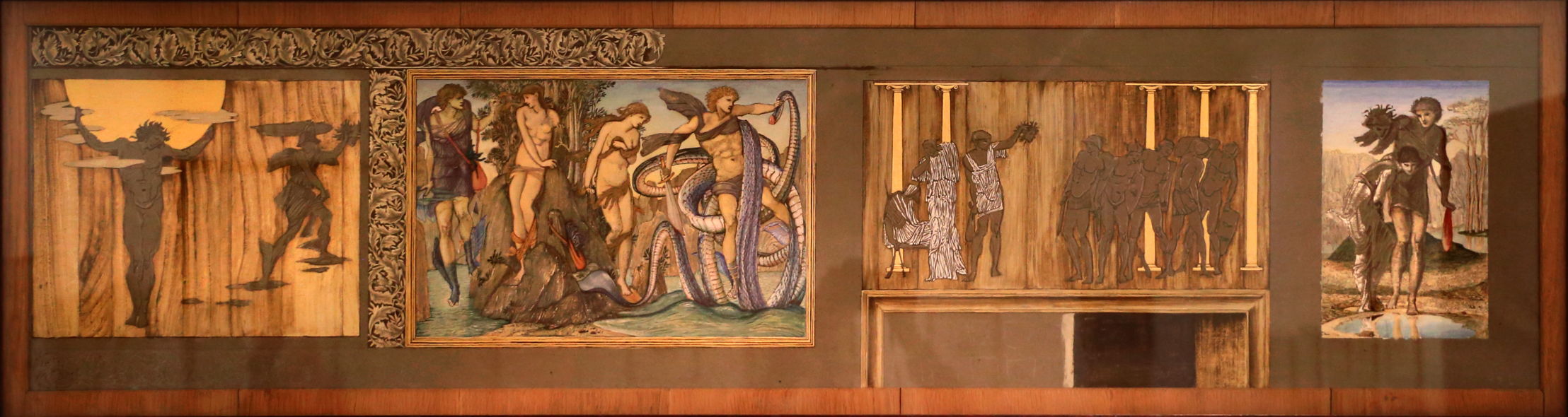
This design shows an outline of the whole series, which had originally been intended to include Phineus and the wedding. The scenes shown are, from the left, Atlas Turned to Stone, The Rock of Doom and the Doom Fulfilled together in multiplex, The Court of Phineas, and The Baleful Head.
Ford Madox Brown retold William Hogarth’s series Stages of Cruelty from 1751 in a single image in 1890.
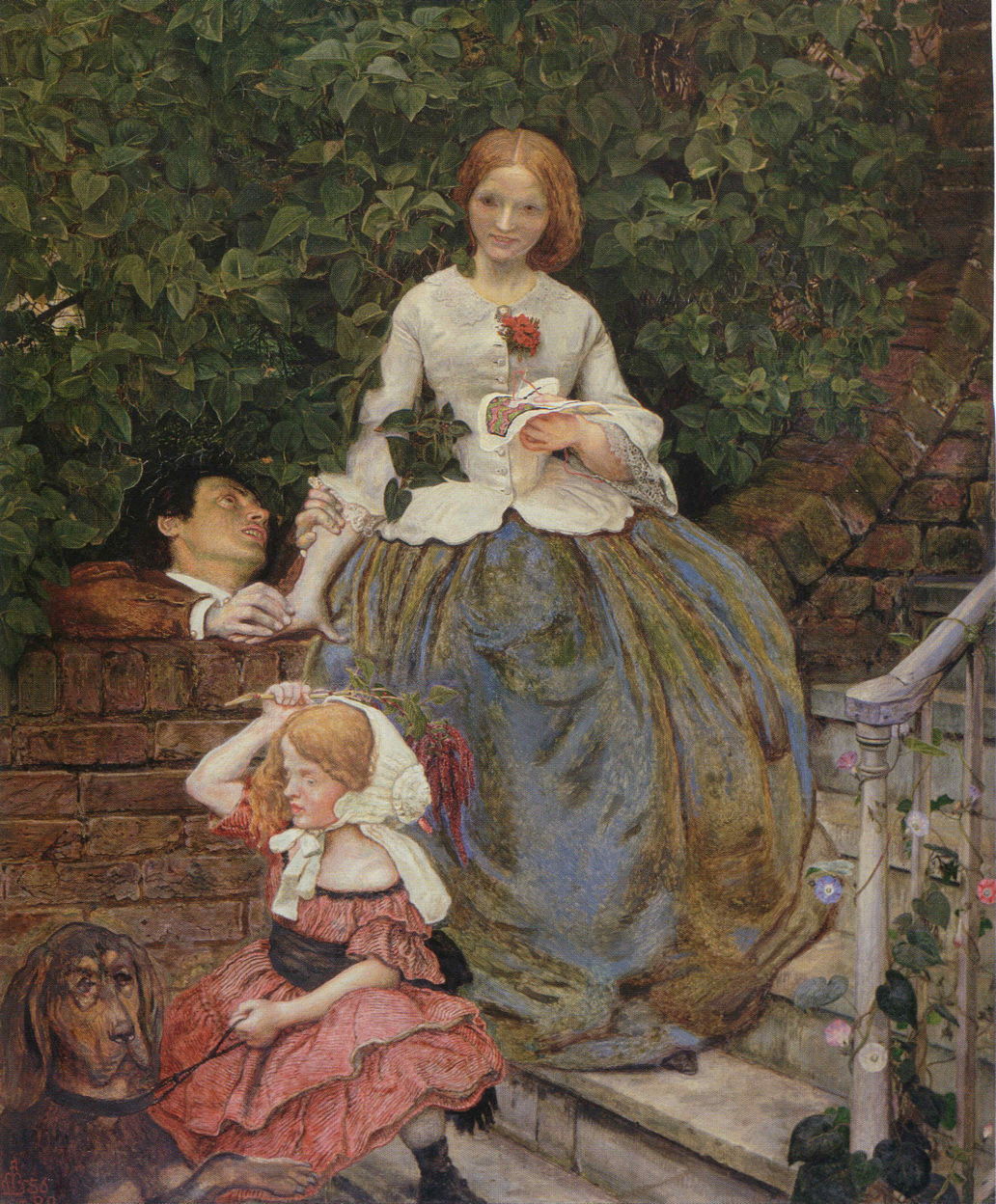
The girl and the woman in his Stages of Cruelty are the same figure, seen years apart. In the lower left, Brown shows her as a girl, hitting her bloodhound with a bunch of flowers, appropriately known as Love-Lies-Bleeding. The dog, whose face shows signs of previous injury, holds up a paw in response. Behind, the woman shows that childhood cruelty grown into an adult, as she shuns the pleas of her lover, who is being rejected into the lilac bush.
The next notable use of multiplex narrative is in Lovis Corinth’s account of the abandonment of Ariadne by Theseus on the island of Naxos.
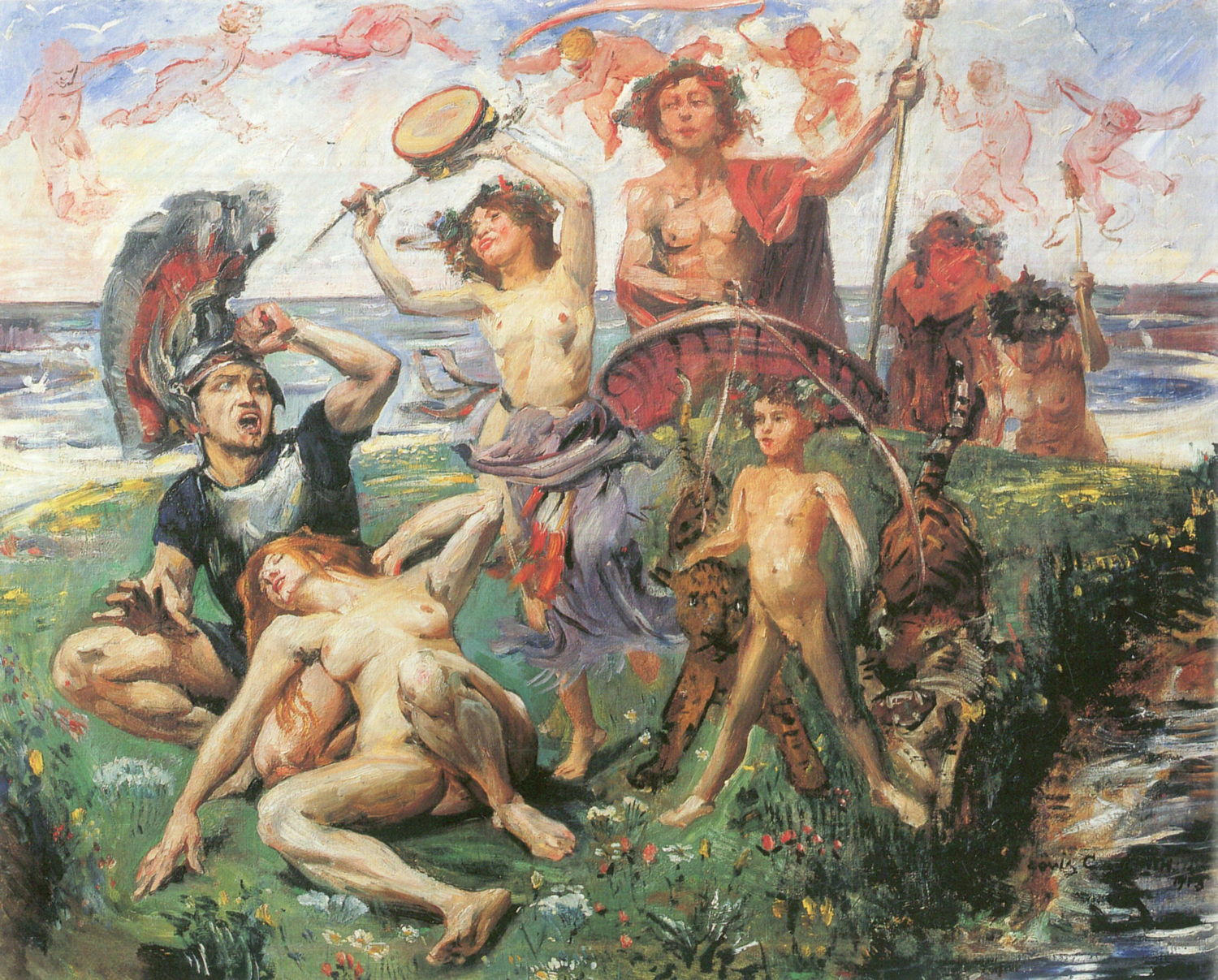
Ariadne on Naxos is one of Corinth’s most sophisticated mythical paintings, and was inspired by the first version of Richard Strauss’s opera Ariadne auf Naxos. This was first performed in Stuttgart in October 1912, and Corinth probably attended its Munich premiere on 30 January 1913.
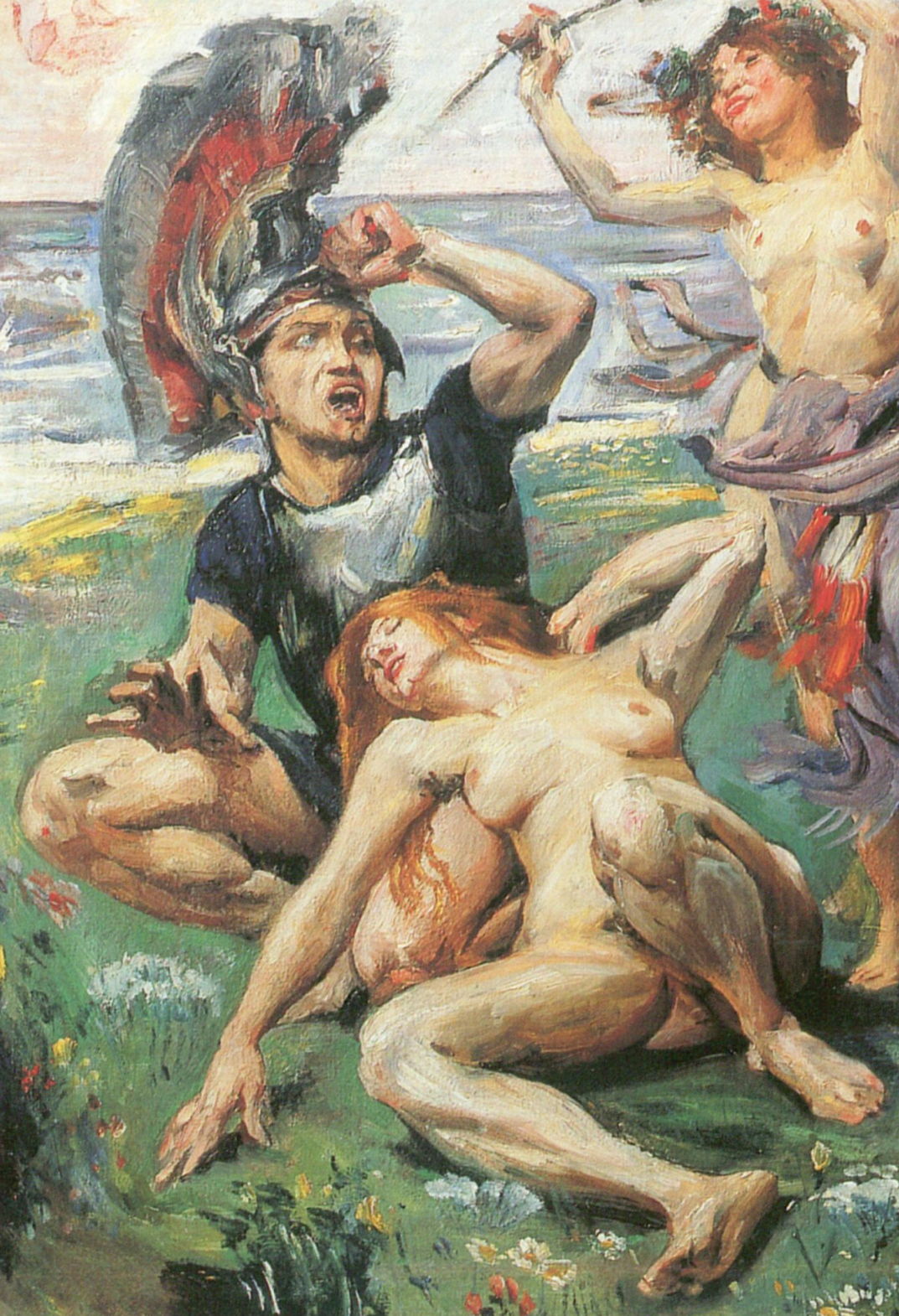
At the left and in the foreground, Ariadne lies in erotic languor on Theseus’ left thigh. He wears an exuberant helmet, and appears to be shouting angrily and anxiously towards the other figures to the right.
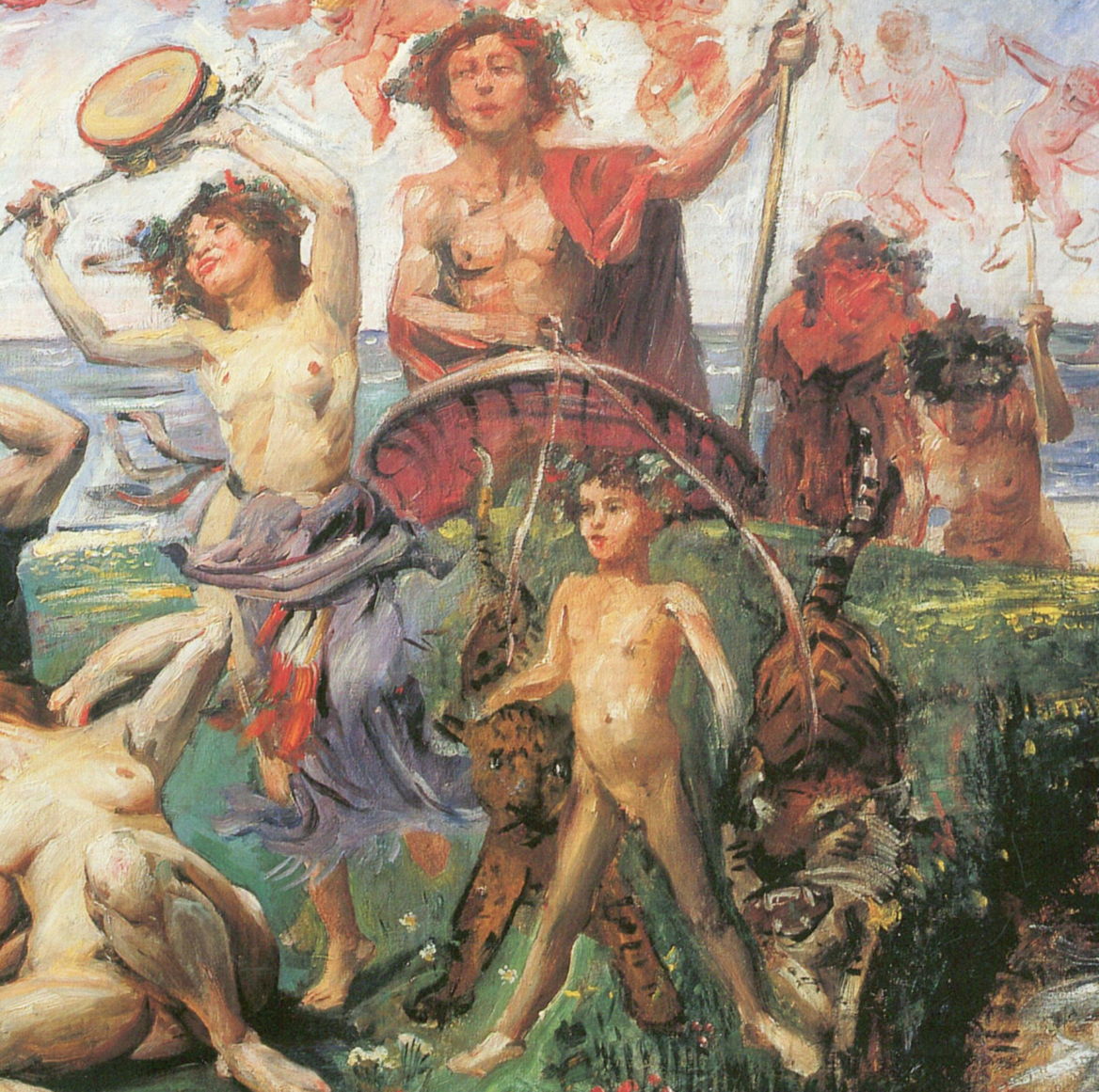
The group in the middle and right is centred on Dionysus, who clutches his characteristic staff in his left hand, and with his right hand holds the reins to the leopard and tiger drawing his chariot. Leading those animals is a small boy, and to the left of the chariot is a young bacchante. Behind them is an older couple of rather worn-out bacchantes. Crossing the sky in an arc are many putti, their hands linked together. Corinth has combined two separate events in the story into his single image: Ariadne’s eventually broken relationship with Theseus, and her subsequently successful affair with Dionysus.
After the First World War, Aksel Waldemar Johannessen used the technique in his autobiography.
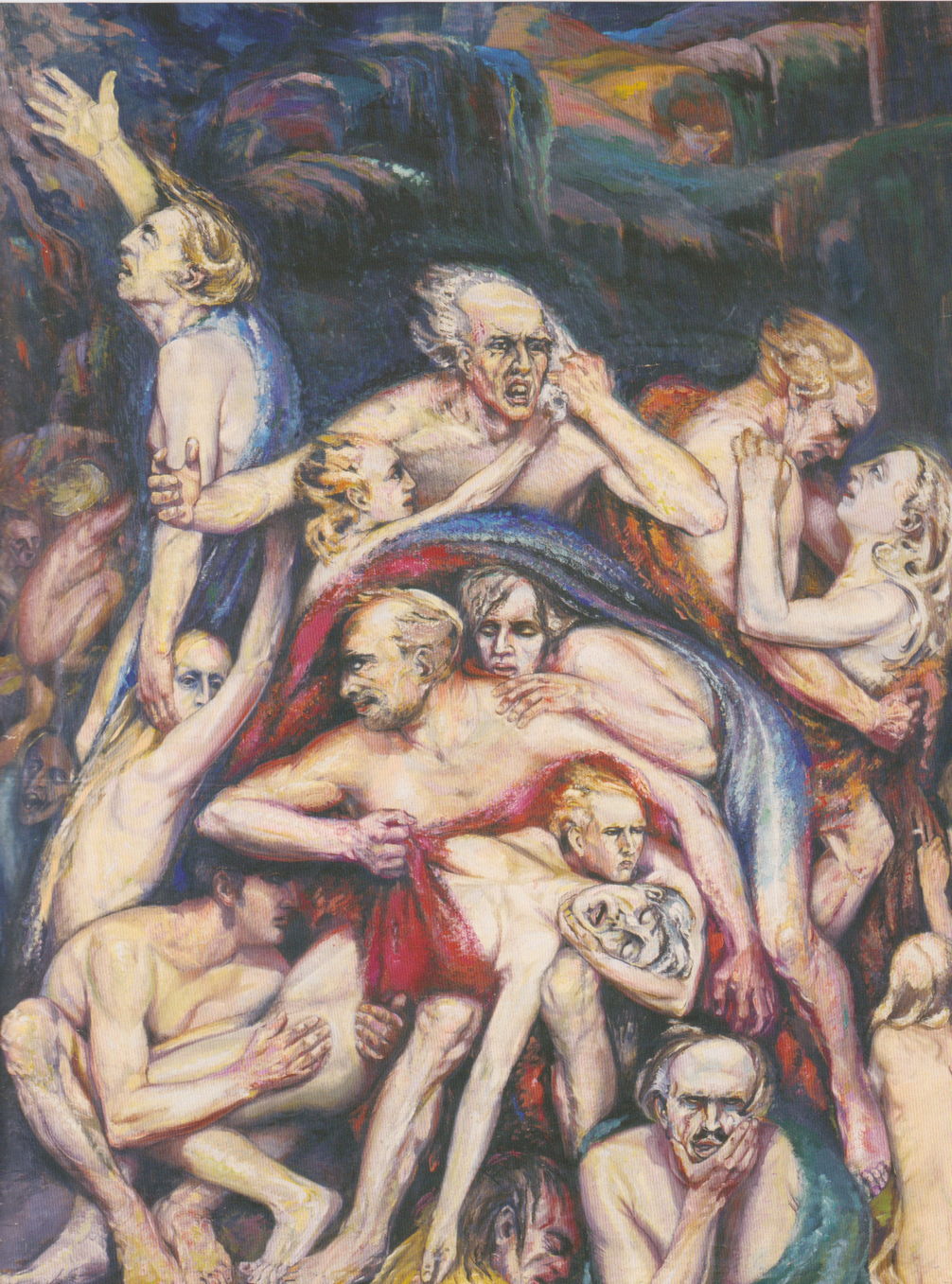
His late masterwork Without Peace, started in 1921, tells his life story. He appears at its centre, cradling the body of his dead wife on his thighs. Above are three separate self-portraits of him undergoing earlier crises, and other figures from his past crowd much of the rest of this large canvas.
Most remarkable of all these revivals is a huge panorama painted in 1947 for Harzfeld’s department store in Kansas City.

Thomas Hart Benton’s Achelous and Hercules tells the story of the wrestling match between the hero Heracles and the river-god Achelous, from Ovid’s Metamorphoses, set in a contemporary context. At the centre, Heracles, stripped to the waist and wearing denim jeans, is about to grasp Achelous’ horns. Immediately to the right, Deianira is also shown in contemporary American form, with a young woman next to her bearing a laurel crown and sat on the Horn of Plenty.
To the left of centre, Benton shows a second figure of Heracles holding a rope, part of a passage referring to ranching and cowboys, and further to the left to the grain harvest. To the right, the Horn of Plenty links into the cultivation of maize (corn), the other major crop from the area.
There can’t be many department stores that have ever featured such a wonderful example of one of the oldest visual narrative techniques.

