
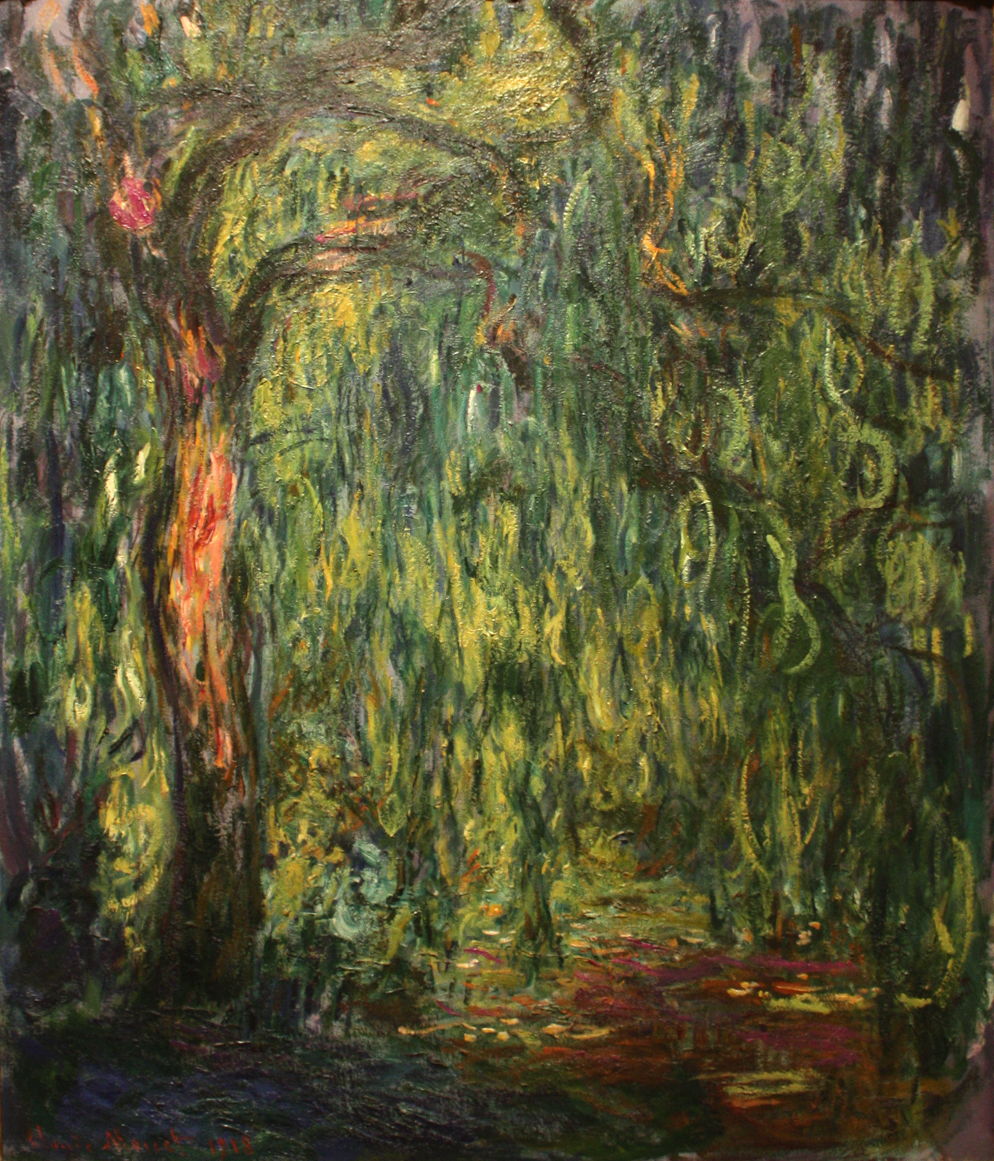
Willows are a number of subtly different species with long, narrow leaves that most commonly grow close to water and thrive in wet land. Some species droop their shoots in a characteristic manner and as a result are known as weeping willows. The wood of one variant has been used extensively to make bats for playing cricket, otherwise they’re often pollarded to produce rods and staffs.
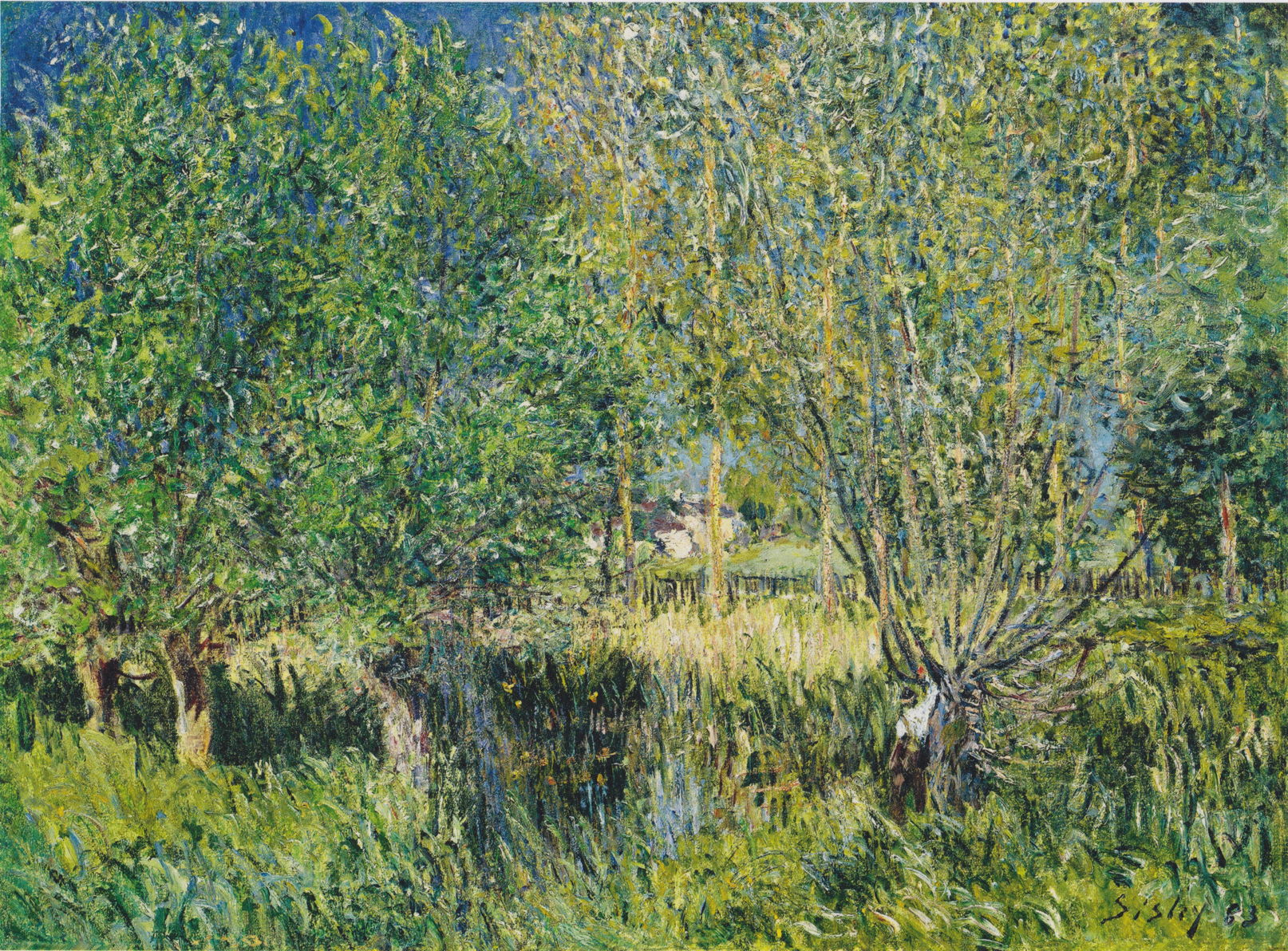
Alfred Sisley’s Willows on the Banks of the Orvanne from 1883 is perhaps their canonical portrait. An irregular row of pollarded willows, with well-developed heads, crosses the foreground, behind which there is the river Orvanne, reeds, and a tall stand of poplars. Behind this dense succession of trees is a fence, field, and distant buildings, at the midpoint of the painting. The colours reverse the transition normally seen in aerial perspective, and despite the dense branches, the painting maintains those planes and doesn’t dissolve into confusion.
Their best-known literary association is in the drowning of Ophelia in William Shakespeare’s play Hamlet, where Hamlet’s mother Queen Gertrude gives an account of events in Act 4 Scene 7. In that, Ophelia climbed into a willow tree whose branch broke, dropping her into the stream below where she drowns.

It was Eugène Delacroix who first seems to have realised the visual potential of this tragic event in The Death of Ophelia from 1838. He painted a more finished version of that in 1844, and another in 1853. By the last of those, John Everett Millais had painted his masterpiece of Ophelia, and many others were to follow where Delacroix had led. Although the branch she is hanging onto could be that of almost any species, at the right is a dense row of willows on the bank.

Of Delacroix’s successors, it’s probably Alexandre Cabanel who devotes most attention to the appearance of the trees, in his Ophelia of 1883.
Willows appear in at least two of Piet Mondrian’s early realist landscapes, before he started painting abstracts.
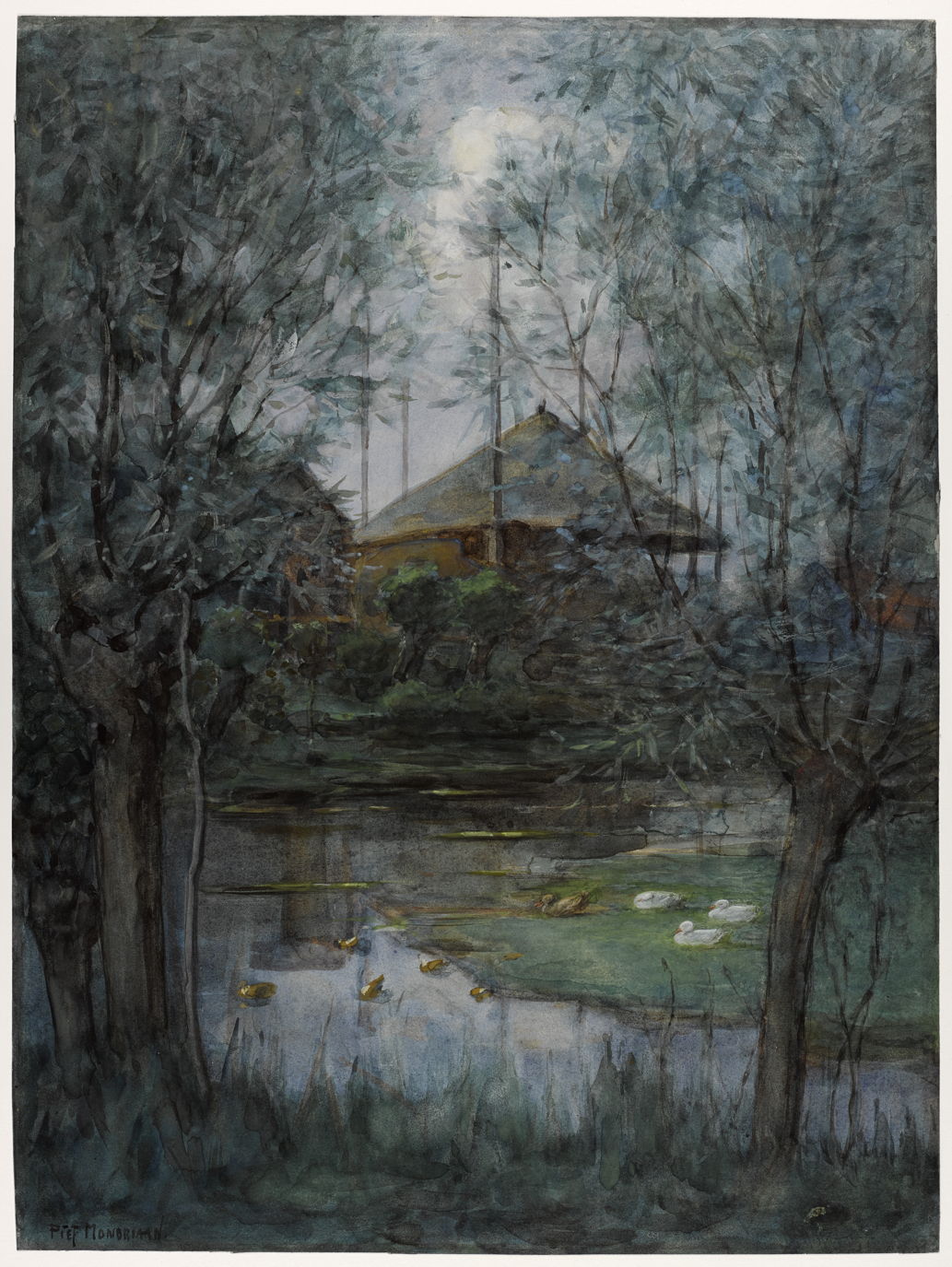
Mondrian’s watercolour of what is described as a Haystack from 1897-98 shows a haybarn in repoussoir with willow pollards.

In about 1905 Mondrian’s style had become post-Impressionist, as shown in his Willow Grove: Impression of Light and Shadow with its tangle of pollards.
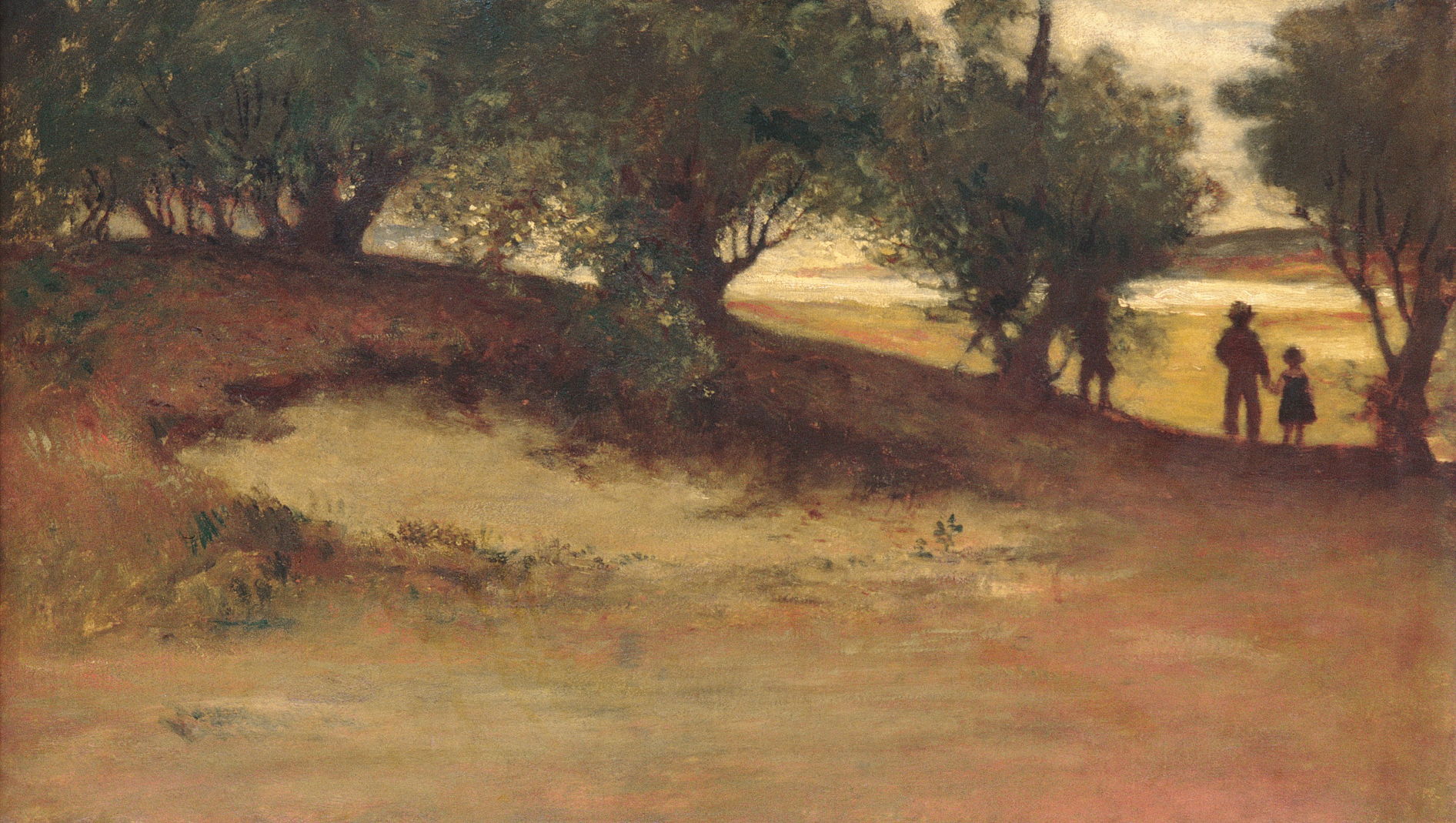
William Morris Hunt also painted a row of old pollards in his Sand Bank with Willows, Magnolia from 1877.

The forms of old willow pollards can appear strikingly supernatural, as shown in Nikolai Astrup’s March Morning from about 1920.
The distinctive pendulous branches and leaves of weeping willows aren’t associated with graveyards, unlike cypresses, but with sorrow more generally.

Carlos Schwabe developed the theme of the Grim Reaper in his watercolour of Death of the Gravedigger from 1900. An old gravedigger is seen deep in his own work on a snowy winter’s day. Squatting beside that grave is the female figure of Death, holding in her right hand a small oil lamp emitting an unnatural green light. She looks languidly down at the gravedigger, and he looks up at her in fear. The long barren twigs of a weeping willow form a curtain that echoes the curves of her wings.

At the end of the First World War, when he was in his late seventies, Claude Monet concentrated on painting series of water lilies in his garden at Giverny, and of weeping willow trees, which he dedicated to the memory of all the French personnel who had died in that war. Weeping Willow is one example of the latter.
 The Eclectic Light Company