
For those who could afford to wear fashionable clothing, outrageously impractical footwear was and remains a sign of their affluent disdain for working and walking, tasks of the proletariat.
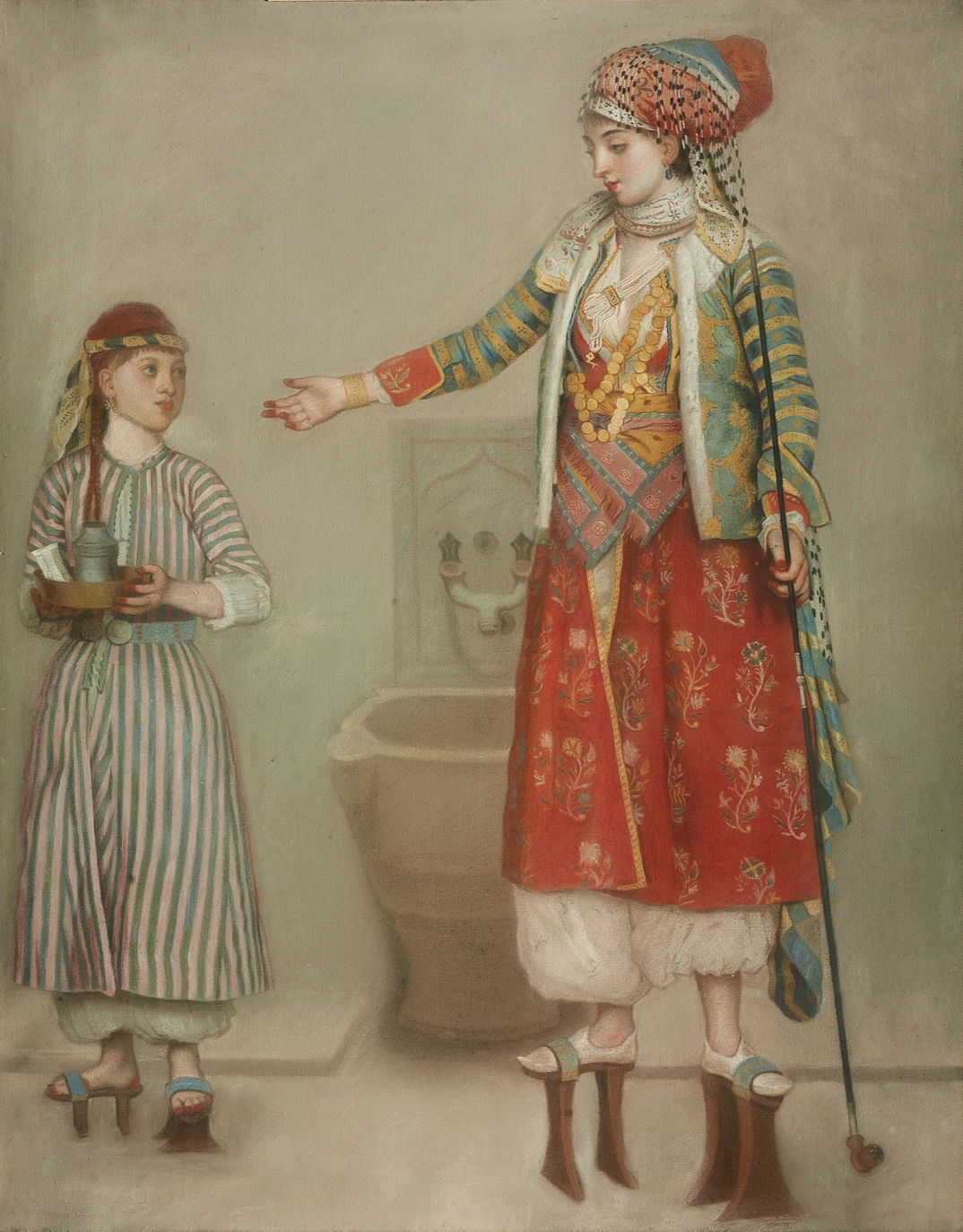
Jean-Étienne Liotard’s A Lady in Turkish Costume with her Servant at the Hammam probably dates from the period he lived in Turkey. The hammam is more generally known as a Turkish Bath, and is a steam bath popular throughout the Muslim world. The distinctive shoes they are wearing are known as kabkabs from the sound they make when walking on stone, and were standard for ladies when they were in the hammam, and to protect the feet from dust and dirt when outdoors.
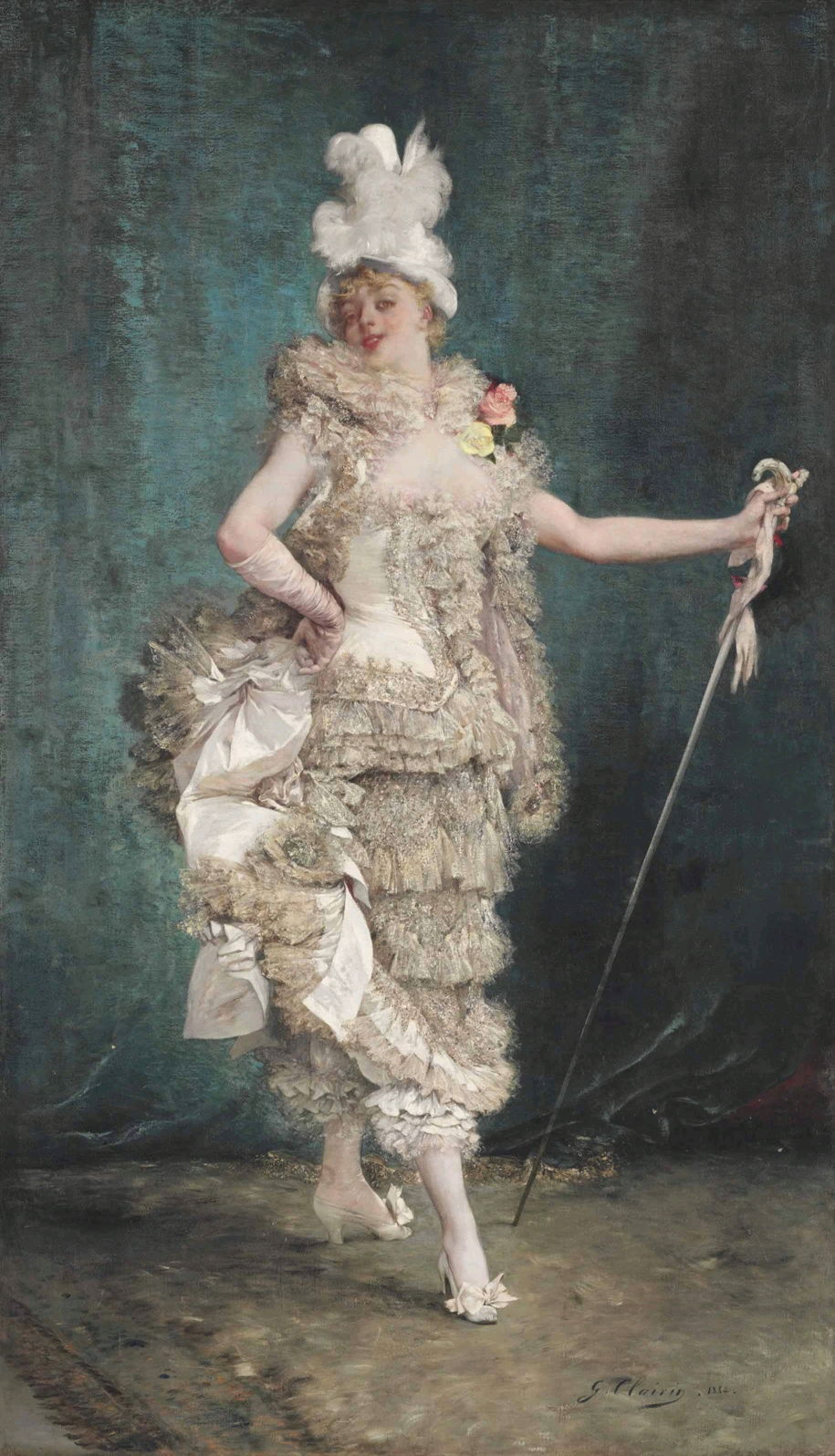
In 1882, Georges Clairin painted Frou-Frou, the lead in a comedy based on a novel written by Henri Meilhac and Ludovic Halévy, and published in 1870. Although not a portrait of the actress, this is said to have been inspired by her interpretation of the role of Frou-Frou on stage, and the ultimate fashion statement of the day. Just look at those high heels and pointed toes, the cause of many chronic structural foot problems later in life.
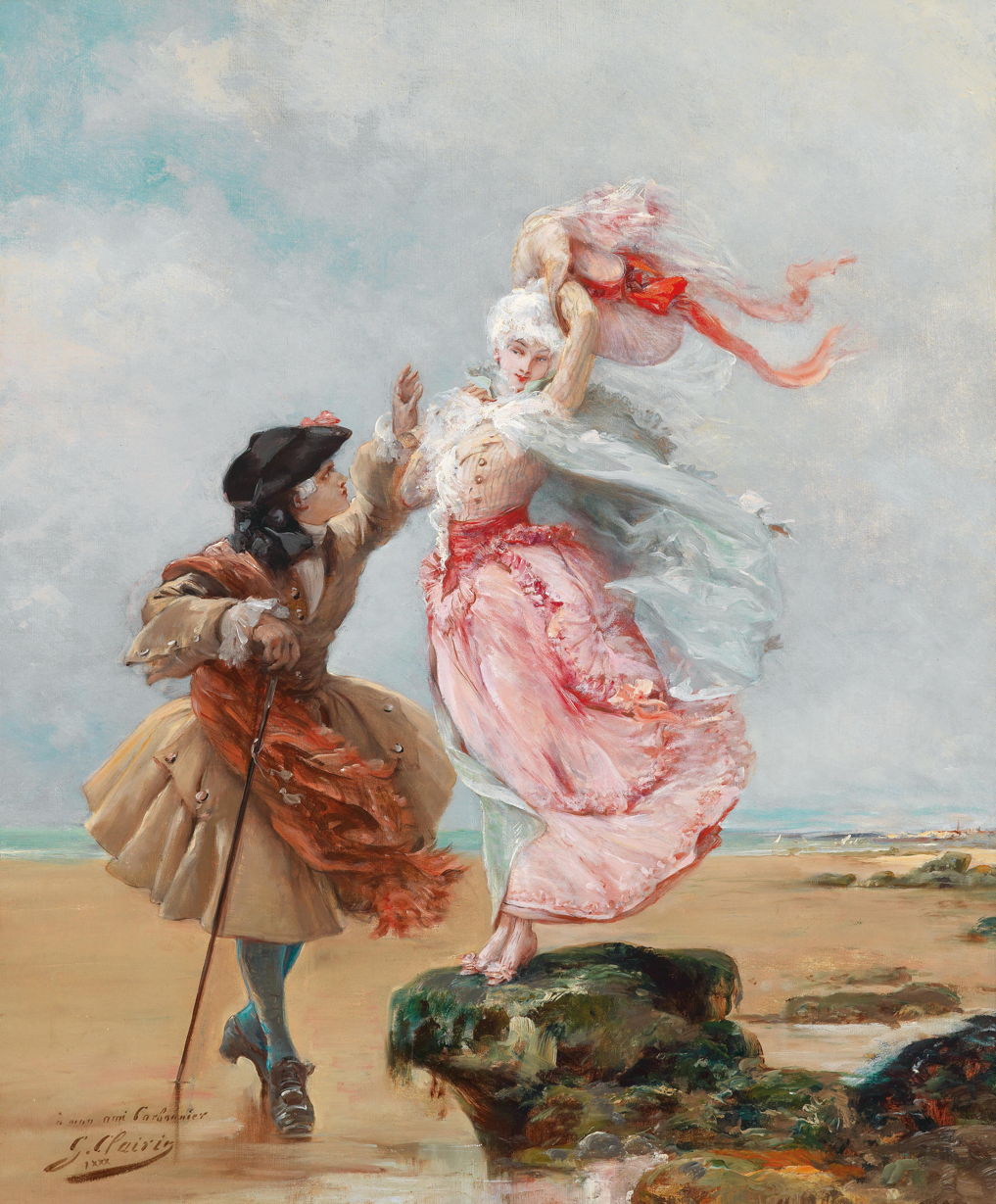
Among Clairin’s other paintings of ‘frou-frou’ is this undated Elegant Couple at the Coast, whose shoes certainly weren’t intended for standing on slippery rocks.

In the early nineteenth century, streets in major cities in Europe including Paris spent much of the winter as muddy morasses. Enterprising poorer inhabitants took long planks to locations where the more affluent would try to cross those rivers of mud, and hired them out to enable the rich to stay cleaner.
This is shown well in Louis-Léopold Boilly’s Passer Payez, or Pay to Pass, from about 1803, where a whole family is taking advantage of one of these crossings. This spared their fashionable footwear and clothing the otherwise inevitable coating of mud. As you can see, their shoes, lower legs and clothing are amazingly clean, as if they might actually have been painted in Boilly’s studio rather than the muddy streets of Paris.
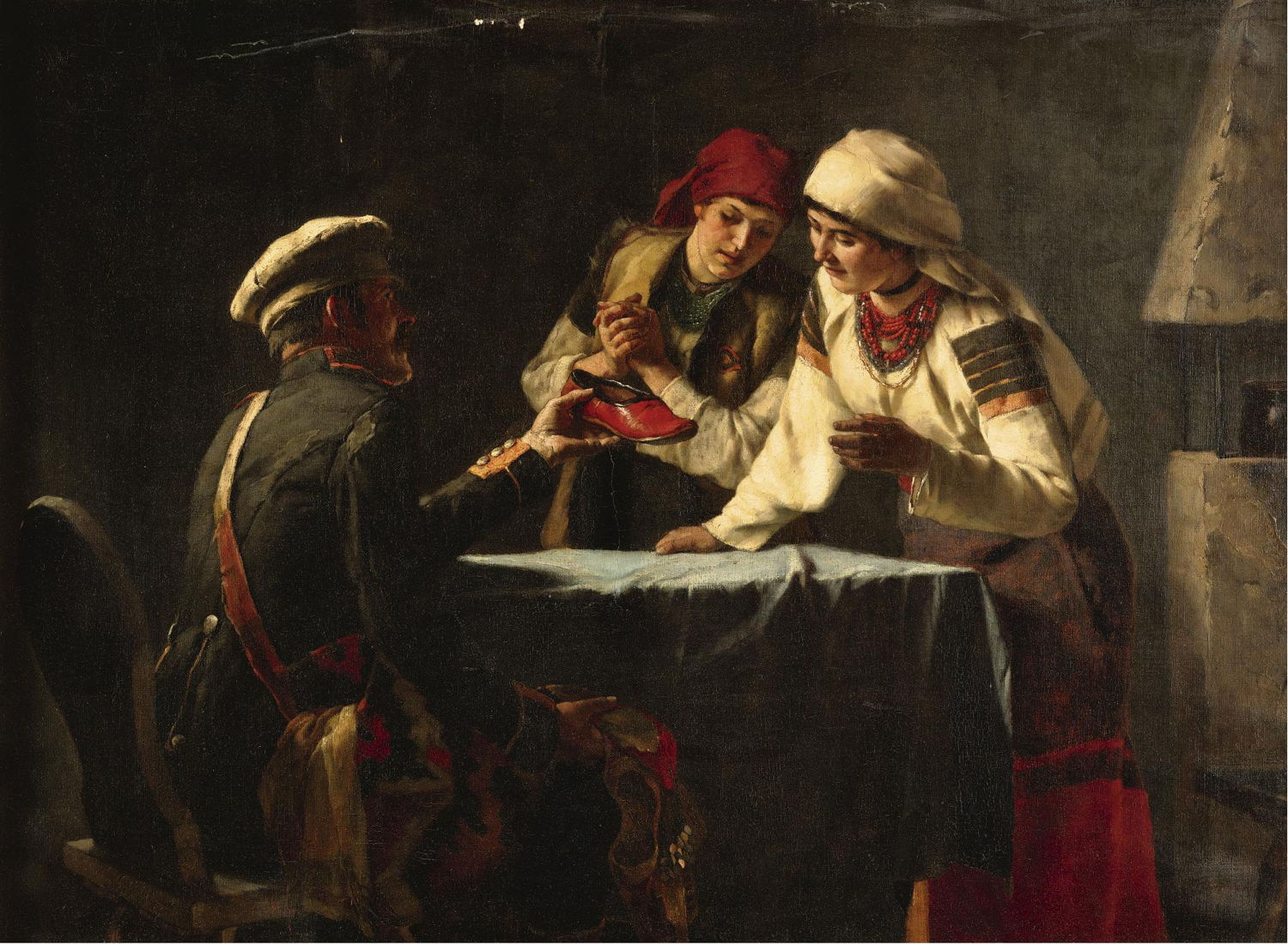
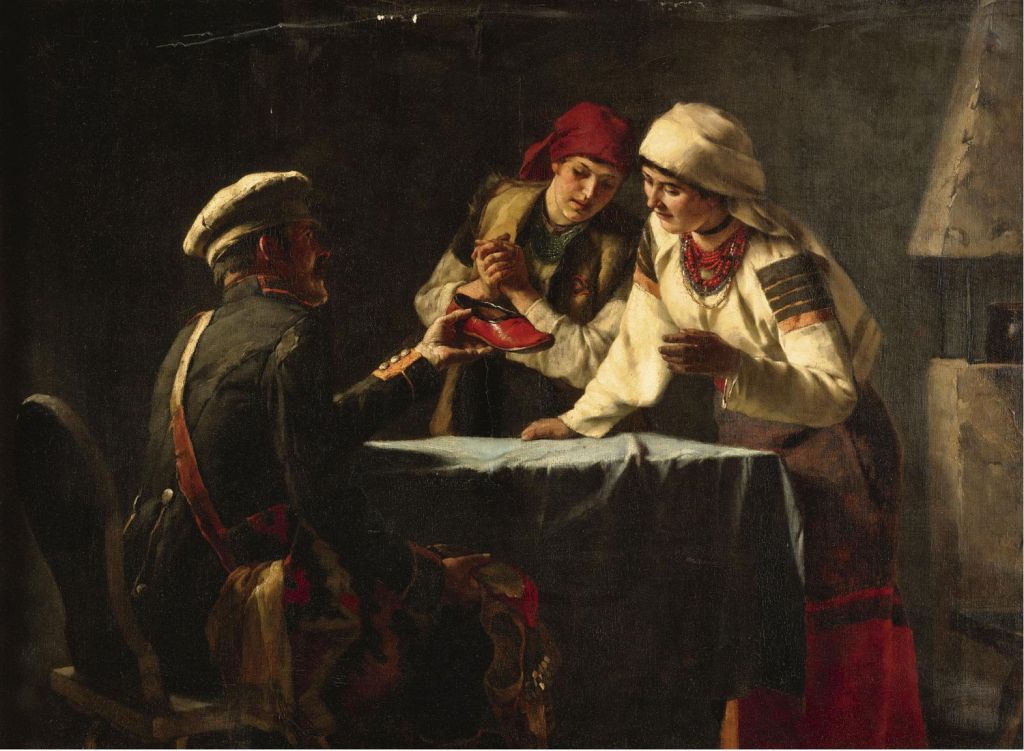
Fashion footwear wasn’t confined to the affluent living in cities. Red Shoe, painted in 1890 by Juliusz Zuber (1861-1910), shows an itinerant salesman trying to interest two young Hutsul women in a pair of red shoes. They would have been living in the Carpathian Mountains, in what is now western Ukraine and northern Romania, hardly the terrain for walking in those, even in summer.
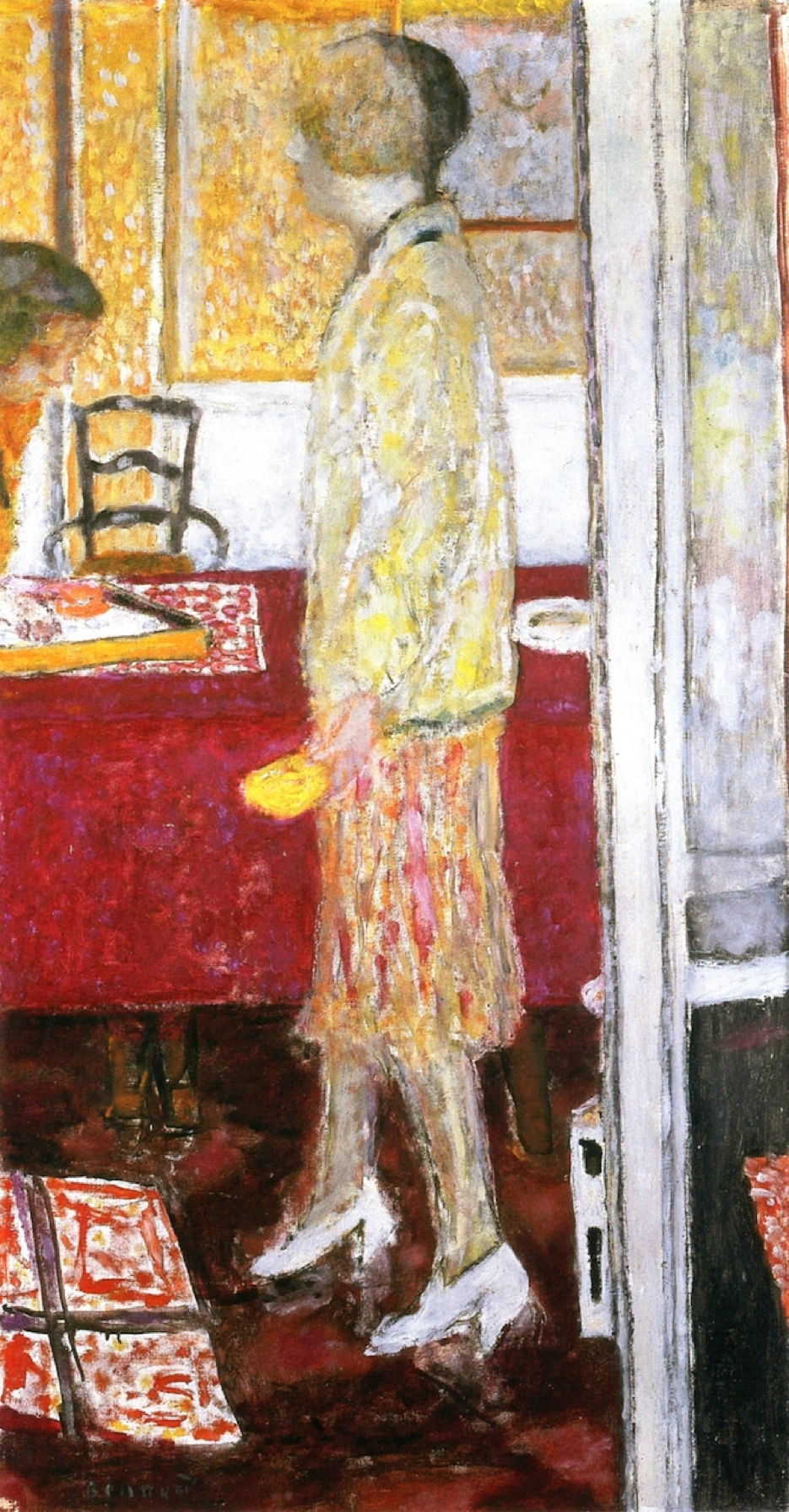
For all Marthe Bonnard’s humble origins, she developed a lasting fondness for white high-heeled shoes, which appear in many of Pierre Bonnard’s domestic scenes, including this of Marthe in the Dining Room from 1933.
If these paintings have given the impression that only women wear fashion shoes, let me restore some balance with a full-length portrait of the American painter William Merritt Chase.
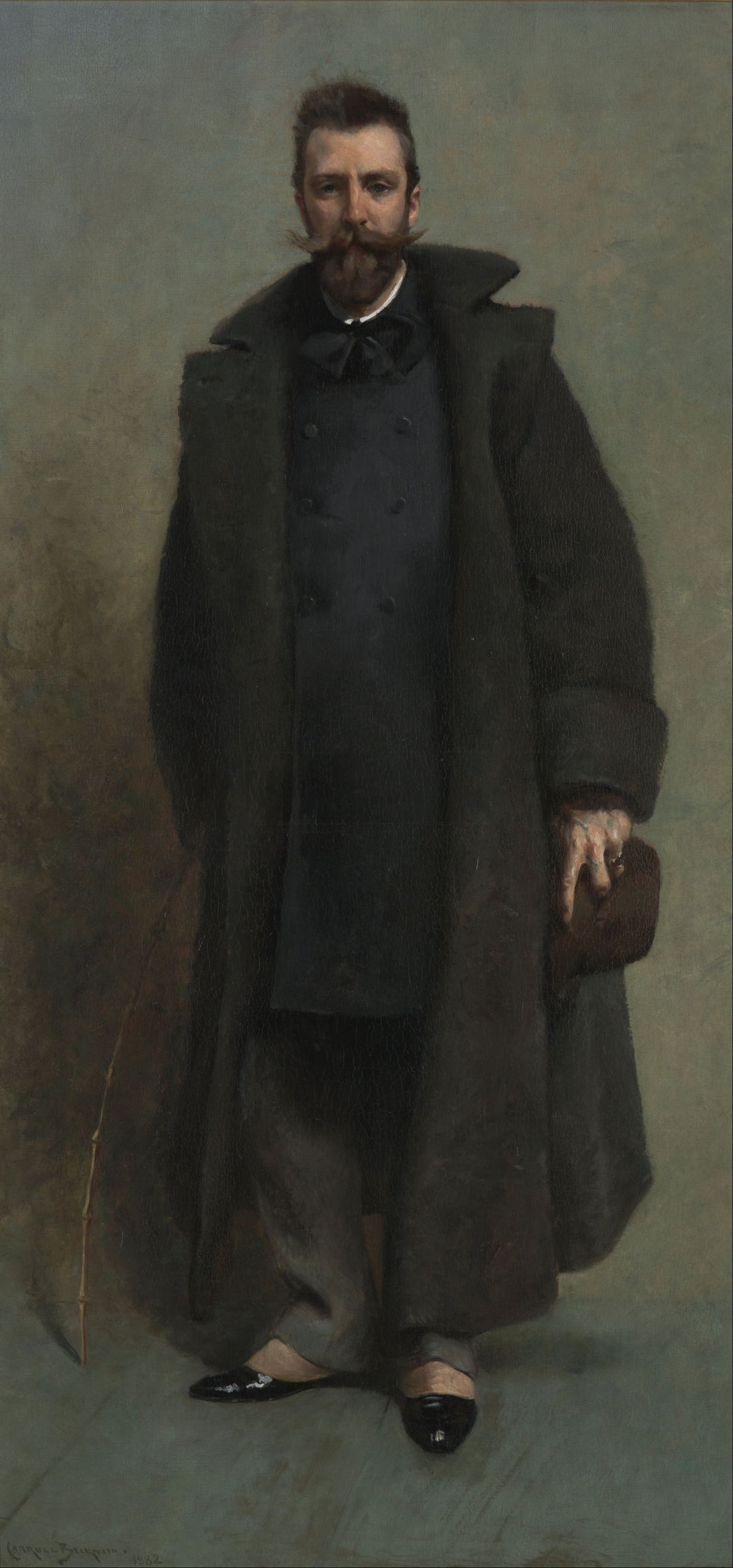
James Carroll Beckwith painted Chase in 1881-82, when the latter was in his early thirties. His shiny black patent leather shoes appear completely incongruous, and his left hand looks far older than his years.
As with other fashion garments, footwear tiptoes gently into the realms of the erotic. This starts innocently with the famous glass slipper in the folk tale of Cinderella, popular throughout Europe and beyond.

Jean-Antoine Laurent’s Cinderella: a Perfect Match, from 1818, shows the three sisters during the slipper-fitting for the prince after the ball. Although it’s not easy to tell them apart, it’s Cinderella, with her plain clothes, who has just shown how her foot is a perfect fit.
From there footwear has become more deeply involved in sex and its symbolism, particularly during the twentieth century.

Pornocrates, or Woman with a Pig from 1878 is Félicien Rops’ best-known work, showing a nearly-naked woman being led by a pig tethered on a lead like a dog. She wears a blindfold, and an exuberant black hat, suggesting she is a courtesan or prostitute. Long black gloves, decorated black stockings and black high-heeled shoes contrast with the nakedness of her body.
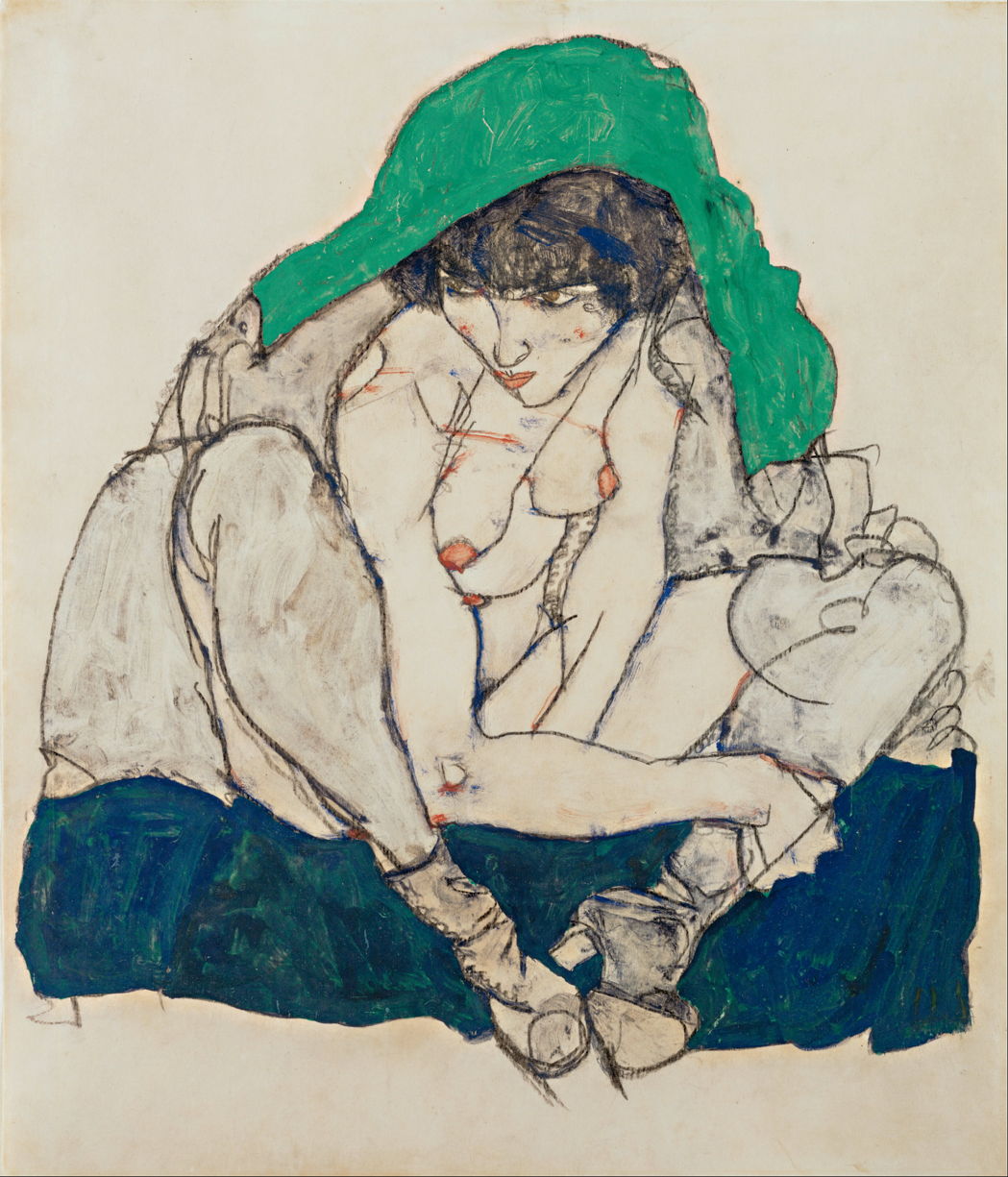
Egon Schiele uses bright colour to draw attention to this woman’s lips, nipples, and navel in his Crouching Woman with Green Headscarf from 1914, and further sexualises her with a pair of high-heeled boots. Those are the only items of clothing she is wearing apart from the green headscarf of the title.

