

When Imelda Marcos, former First Lady of the Philippines, fled into exile in 1986 she left her personal collection of shoes behind. All 1,220 pairs. But that is modest compared to the late Darlene Flynn, who had a verified total of 16,400 distinct pairs. This weekend I dip my toes gently into paintings of footwear, from minimalist sandals to Turkish kabkabs.
Most people travelled on foot until relatively recently. Extended families migrating across Europe, Roman legions expanding the empire, tinkers moving from village to village, and painters, all tended to walk. In March 1880, Vincent van Gogh walked nearly 50 miles (80 kilometres) to visit Jules Breton, Alfred Sisley earlier walked for several days through the Forest of Fontainebleau, and Paul Cézanne walked daily into the countryside around Aix-en-Provence to paint. Feet and what you wore on them were among each person’s defining properties.
Go back to ancient civilisations around the Mediterranean, and most people much of the time remained barefoot.
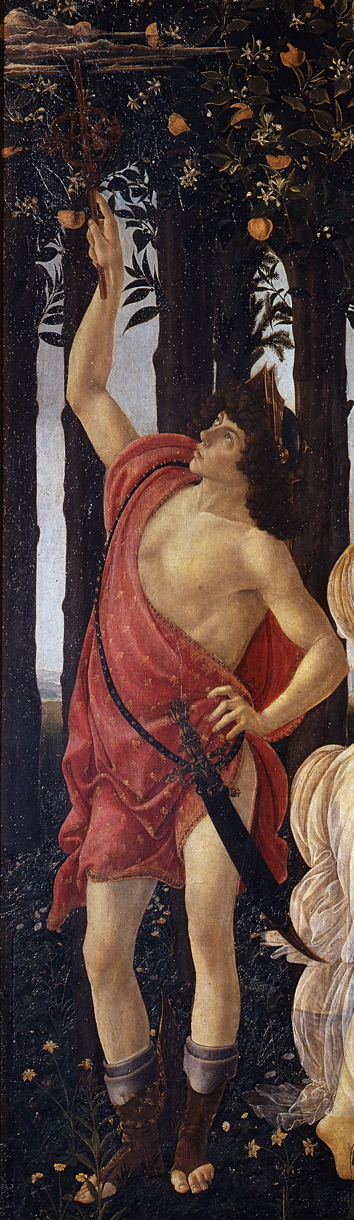
The gods were exceptions to this, and generally wore sandals. Notable among those, as seen in this detail from Botticelli’s Primavera (c 1482), was Mercury. As the Messenger of the Gods, he is distinguished by his staff and special sandal-boots, often depicted with wings attached.

Lionel Royer’s painting of Vercingetorix Throwing down His Weapons at the feet of Julius Caesar from 1899 shows an interesting array of footwear from the Roman Empire. Caesar wears sandals without wings, and Vercingetorix some sort of riding boot. But the other barbarians are shown barefoot, compared with Roman soldiers who have combat assault sandals.
Footwear also plays an important part in some classical myths. Theseus’ father King Aegeus of Athens abandoned his mother Aethra, leaving only his sandals and sword hidden under a large rock.

When Theseus came of age, his first major task was to discover his father’s hidden sword and sandals, then set off in search of him. This is shown in Laurent de La Hyre’s Theseus And His Mother Aethra from 1635-36, although the king’s sandals appear more contemporary than classical.
Again, sandals reveal rank. The common people still went barefoot.

Bartolomé Esteban Murillo is one of the earliest artists to pay attention to vagrants and the homeless. The Young Beggar, painted by him in about 1645, shows a young boy squatting in a tiny bare nook in a building. By his filthy feet is a bag full of rotting fruit, and some sort of worms, which apparently form his diet. His clothes are made of poor cloth, dull browns and greys, and have worn bare, torn and frayed.
When visible in a painting, footwear often tells you a great deal about the wearer.
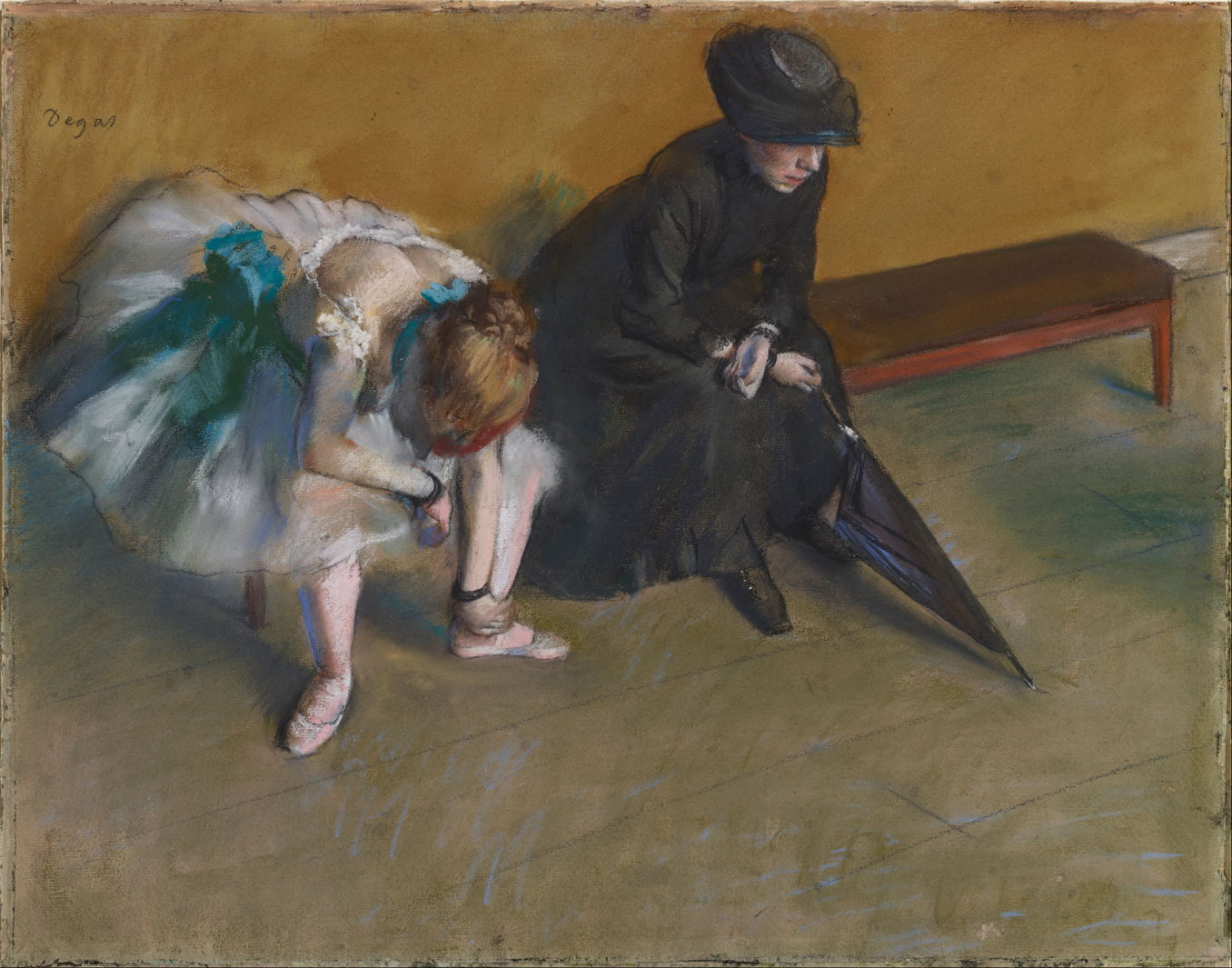
The contrasting footwear worn by the two almost faceless women in Edgar Degas’ Waiting from about 1882 is a key part of this enigmatic pastel painting, and a reminder of the importance of the feet to those who dance. The dancer wears thin, flat ballet slippers, while the woman in black has chisel-toed leather shoes.
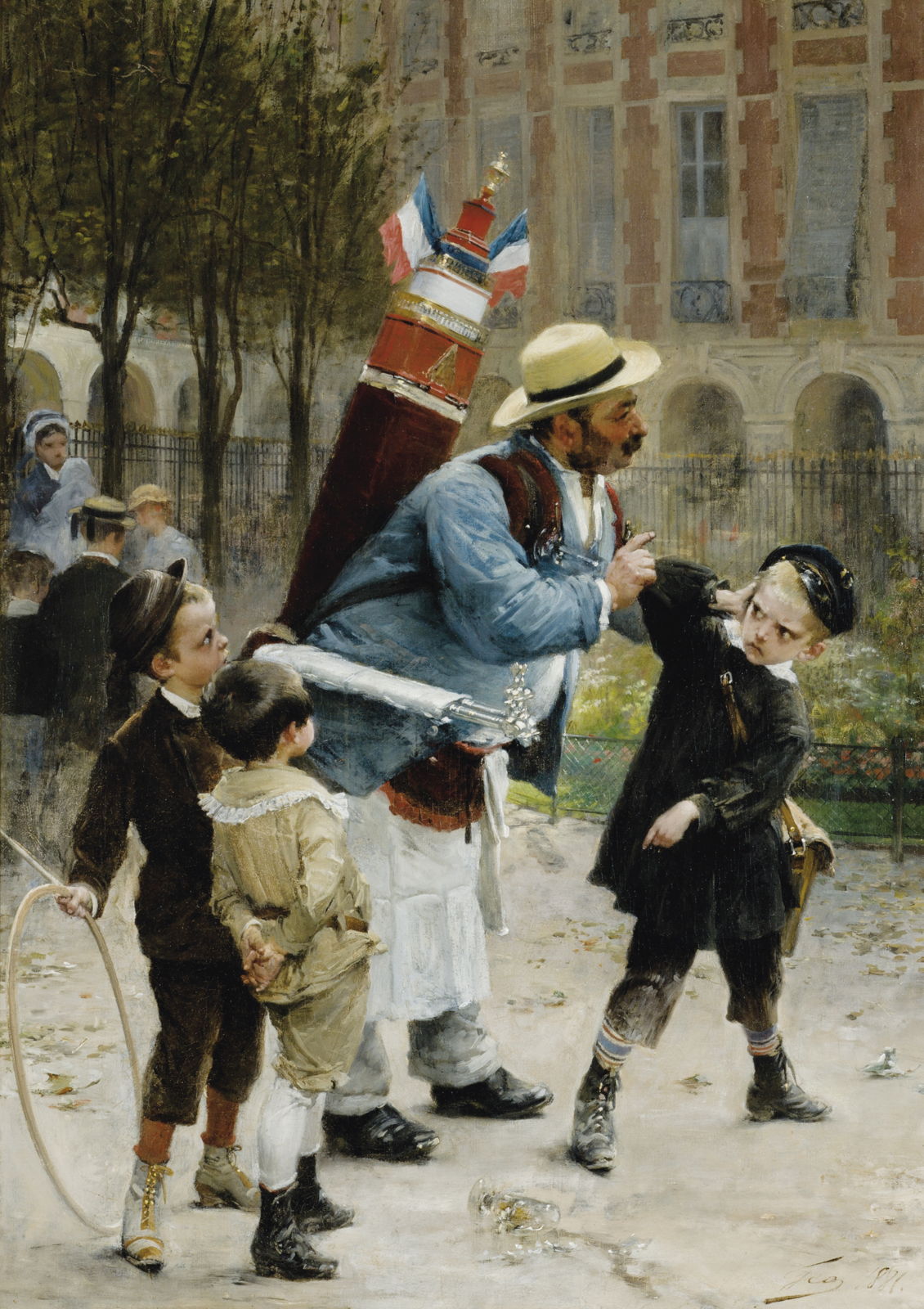
In Henri Jules Jean Geoffroy’s Whoever Breaks the Glass Pays for It from 1881, a group of three young boys have broken a glass from a street café. The boy at the right is pointing down at the fragments of glass on the ground, and looking daggers at the other two; his clothing and lace-up boots are grubby and tattered. Those on the other boys are clean and more fashionable.
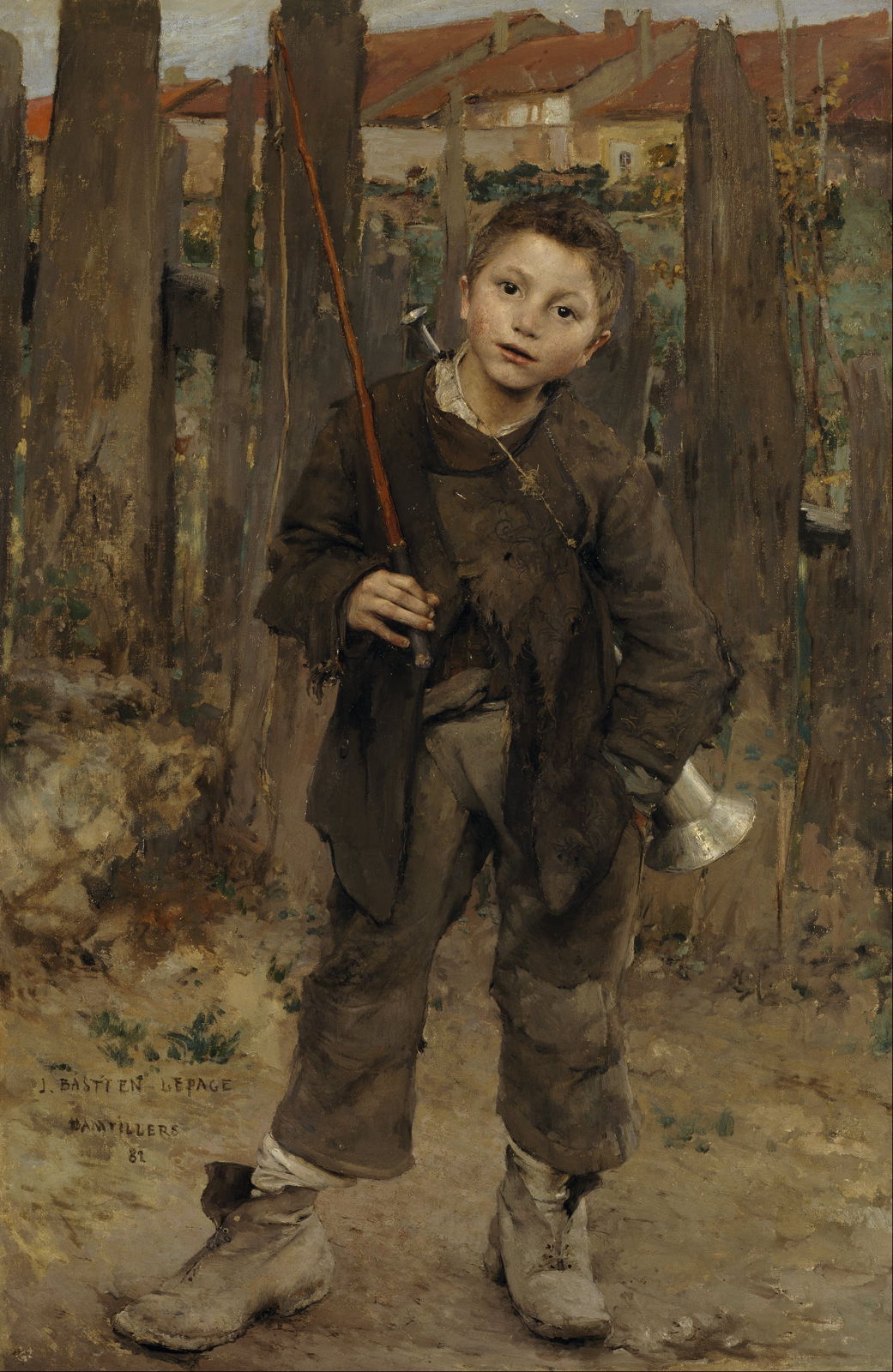
The cheeky ploughboy in Jules Bastien-Lepage’s Pas Mèche (Nothing Doing) from 1882 is on his way out to work in the fields. His face is grubby, his clothing frayed, patched, and dirty, and his amazing hand-me-down boots are laceless, caked in mud and a couple of sizes too big.
Working folk aspired to a pair of wooden clogs, still worn by many healthcare and catering workers.
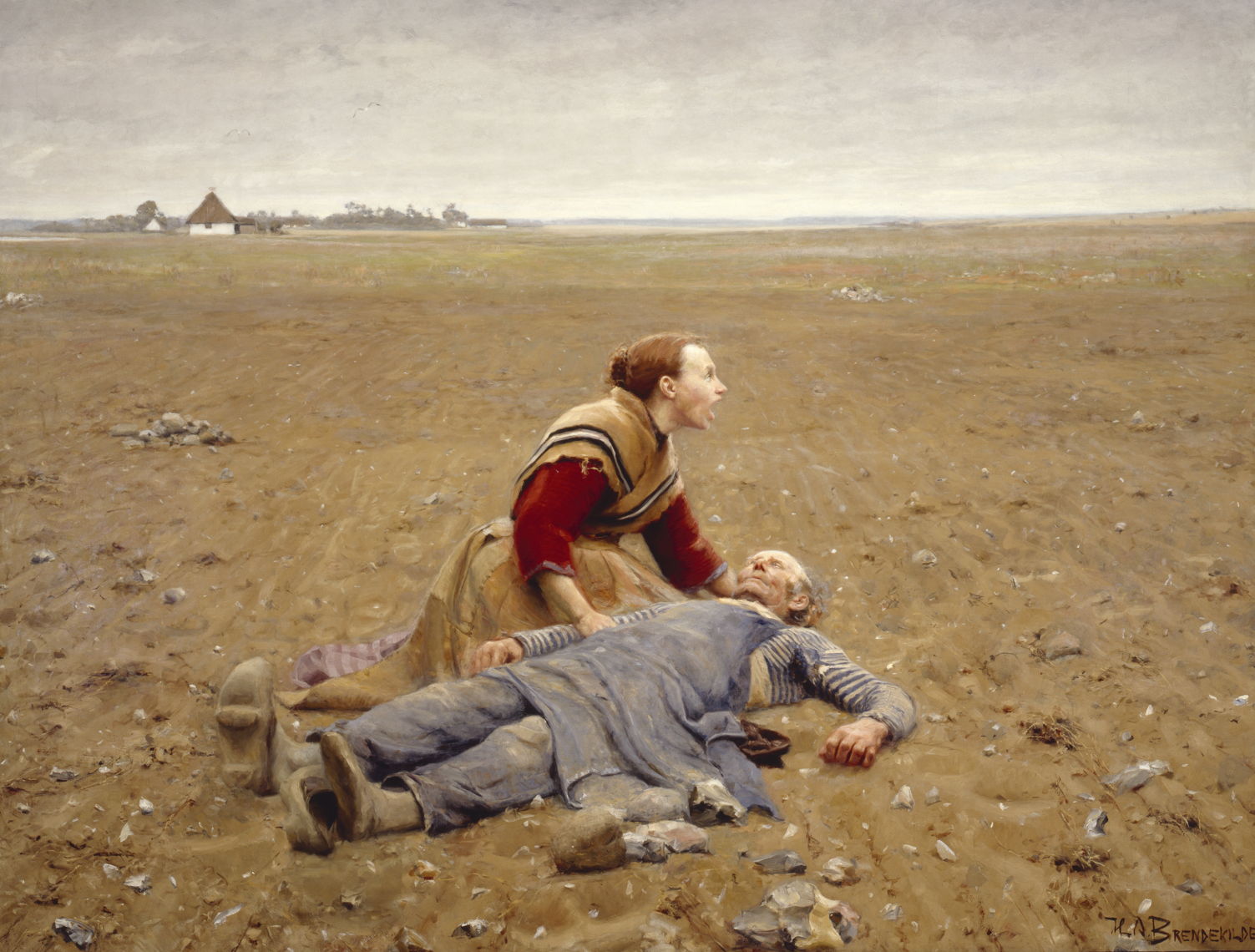
In Hans Andersen Brendekilde’s Worn Out from 1889, footwear tells an important part of the story. An old man has collapsed when working in the fields. A younger woman, his daughter perhaps, is giving him aid and shouting for all she’s worth to summon assistance. He was wearing wooden working clogs, as a poor farm labourer would; one of them has fallen off, an indication that he’s not going to get back up in a hurry. A century later, the English phrase popping your clogs came (coincidentally) into general use as an idiomatic euphemism for dying.
Proper protective boots were only worn when essential, as they were too costly to replace.

Antoni Piotrowski’s Homeless (Country girl at the fence) (1896) shows a young pregnant Polish woman standing barefoot by the side of a country road. Her meagre possessions are laid out around her: a pair of worn boots, a bundle of clothes, and a stick.
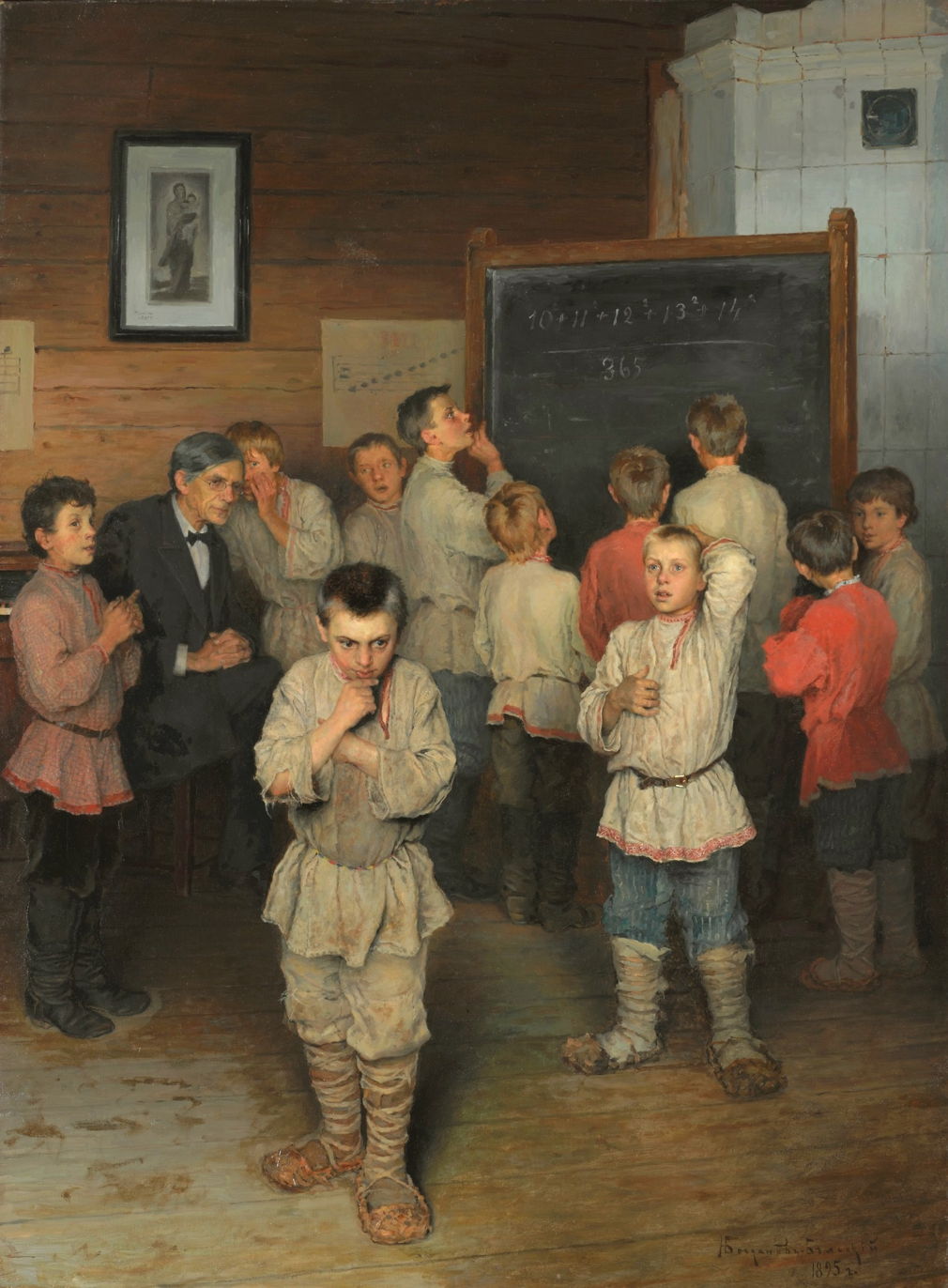
In much of the Russian Empire, the poor wore not clogs but felted boots to keep their feet as warm as possible during long and bitter winters. These are seen on pupils in Nikolay Bogdanov-Belsky’s painting Mental Arithmetic. In Public School of S. A. Rachinsky from 1895, showing a class in the village of Tatev in Smolensk province.
Having told you at the beginning of Vincent van Gogh’s long walks, it should come as no surprise that he made old, worn boots the subject of some of his still life paintings.

This image of his Pair of Shoes from early 1887 has been digitally reconstructed to reproduce its original colours better. What is most strange about these idiosyncratic still lifes is that the footwear was bought solely for the purpose of modelling. Van Gogh apparently bought boots from flea-markets, selecting them for signs of wear. This pair shows the many hobnails in their sole, and has marked wear at both toe and heel.
So much for the lot of the working classes. Tomorrow I’ll look at the footwear of those who, given half a chance, would have loved the collection of Imelda Marcos.

