

Although not painted as often as chestnuts, two other nut-bearing trees have modelled for well-known portraits: walnut and almond.
Walnut
The common walnut Juglans regia is found most widely in southern Europe, although it also grows as far north as Scotland. It’s prized for its nuts, the oil produced by pressing them, and some of the finest timber of any species. Because its most precious wood is that of the base of its trunk, instead of being felled conventionally, walnuts are more usually dug out. Walnut oil is a drying oil suitable for use as the binder in oil paint, although it has never been as widely used as linseed.
There are several folk tales associated with walnuts, in particular one that exhorts growers to beat the tree to encourage it to produce a greater crop. In fact, good crops are more likely to result from the long, hot summers experienced in southern Europe, and no amount of beating will help a tree in Edinburgh.
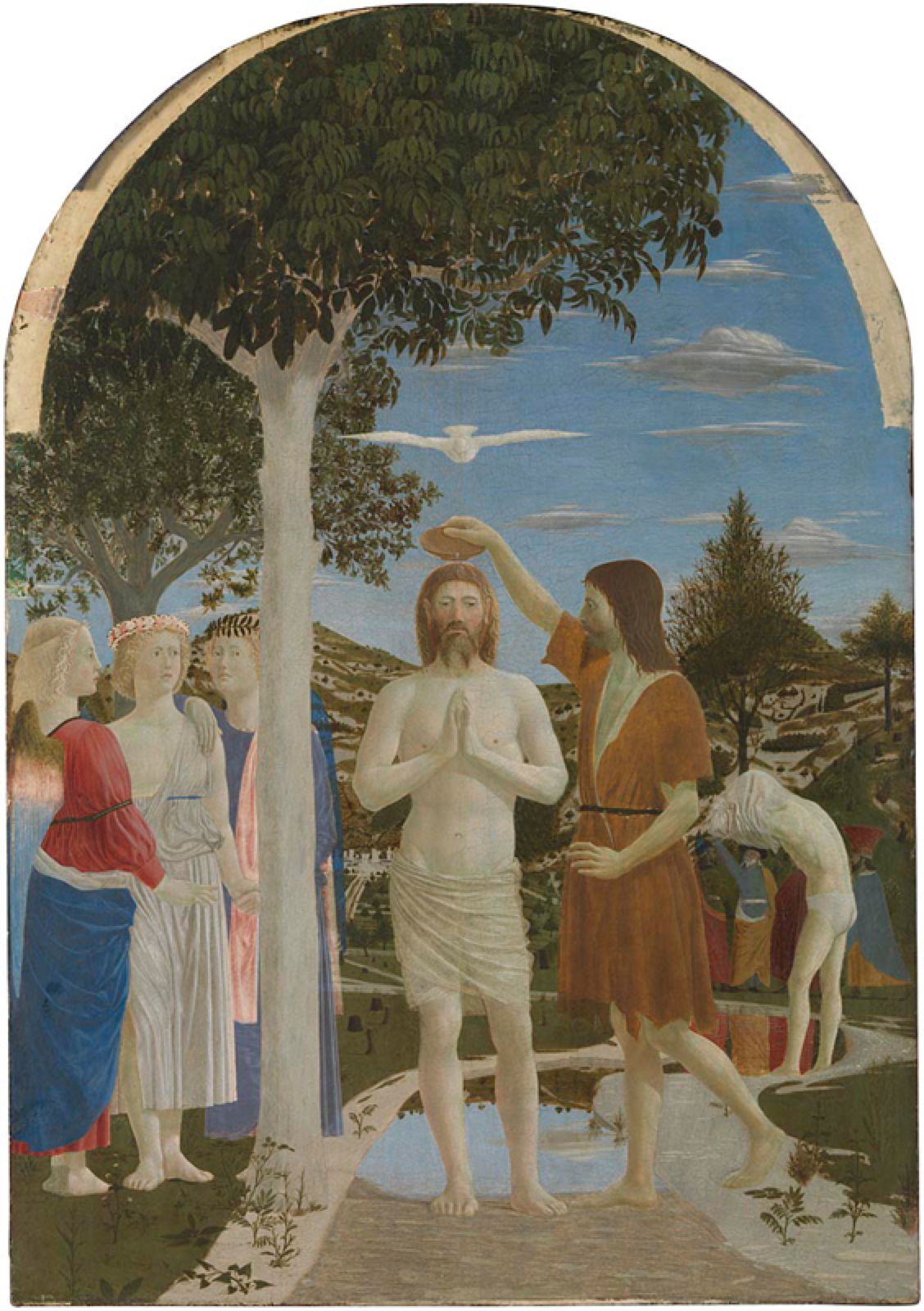
In Piero della Francesca’s Baptism of Christ, painted after 1437 in egg tempera on poplar wood, the prominent walnut tree beside the figure of Christ is a faithful depiction of a common walnut, although the detail of its rugged bark appears to have faded. Its only unreality is at the base of its trunk, where it appears inserted into the path.

Alfred Sisley’s Walnut Tree in a Thomery Field from 1880 has its subject carefully constructed on anatomical principles. He has applied the paint in finer strokes of contrasting colours and tones, giving an overall effect of shimmer, particularly in the river. This gives a rougher texture to the bark of the trunk, and a granularity throughout its canopy, against which the two women in white really pop out. Thomery is a village near Moret-sur-Loing, on the west bank of the River Seine, and due east of Fontainebleau.

Camille Pissarro’s Big Walnut Tree in Spring, Éragny from 1894 shows a fine example that must have proved a sound long-term investment for the landowner’s heirs.
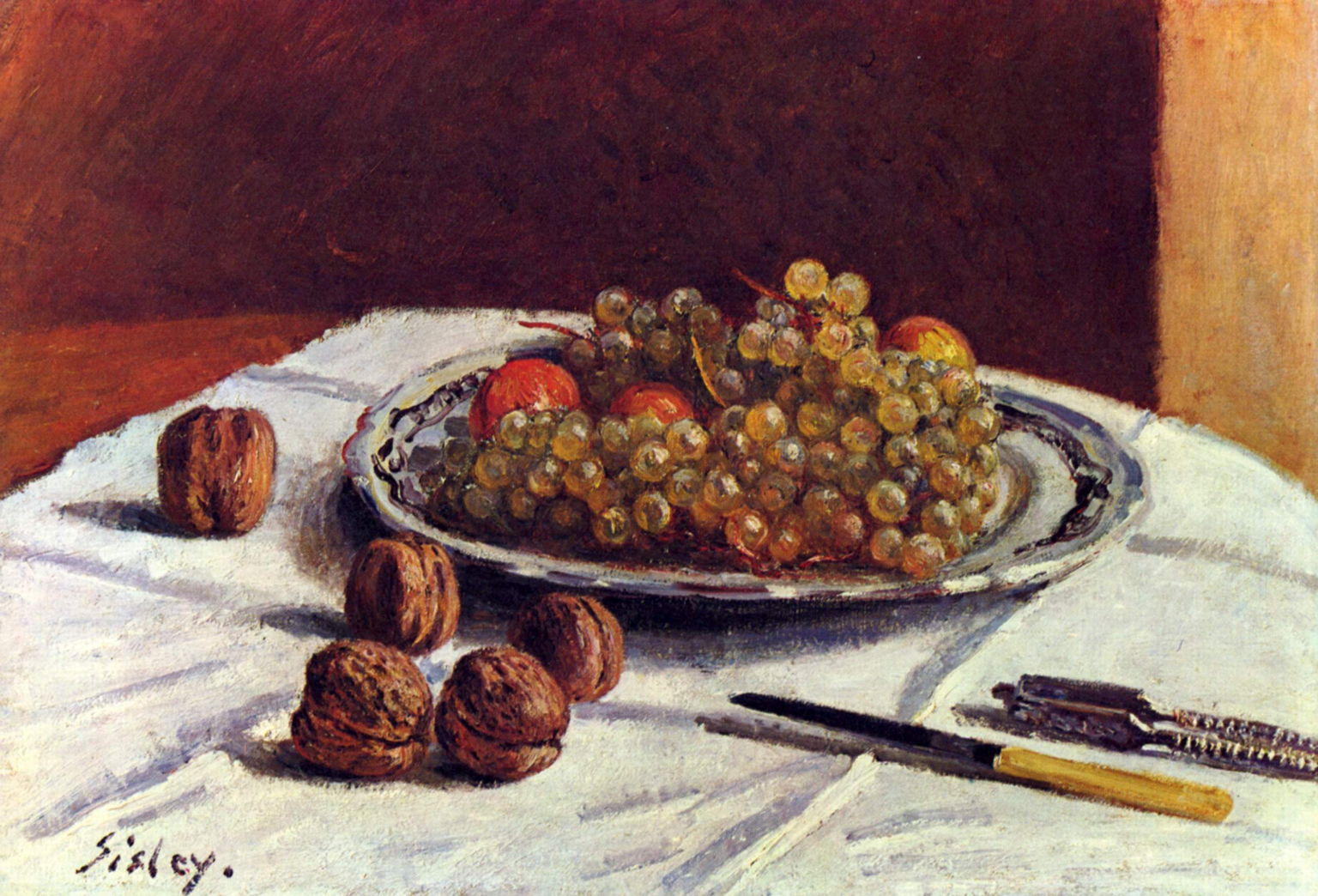
Sisley also included five nuts still in their shells in his Grapes and Walnuts on a Table from 1876. The metal implement at the far right, next to the knife, is a nutcracker. It takes skill to crush the shell without crushing the nuts inside.
Almond
The almond tree Prunus dulcis is a close relative of cherries, peach, apricot and plums. Like the walnut, it’s found widely across Europe but fruits most successfully in warmer areas close to the Mediterranean. Although its nut is used extensively in food, in some varieties it can release potentially lethal quantities of highly toxic cyanides. Oil is extracted from almonds, but as it isn’t a drying oil it’s of no use in painting, and is now mostly used as a cosmetic application.

Edward Burne-Jones’s Phyllis and Demophoön (1870) is a watercolour showing Phyllis embracing her estranged husband from within the structure of an almond tree in full flower. When exhibited in London, this painting caused a scandal demanding its removal. Exposure of Demophoön’s genitals in the exact centre of the painting was the most obvious reason, but behind it was a problem more compelling: both figures were modelled by Maria Zambaco, who had recently been Burne-Jones’ mistress.
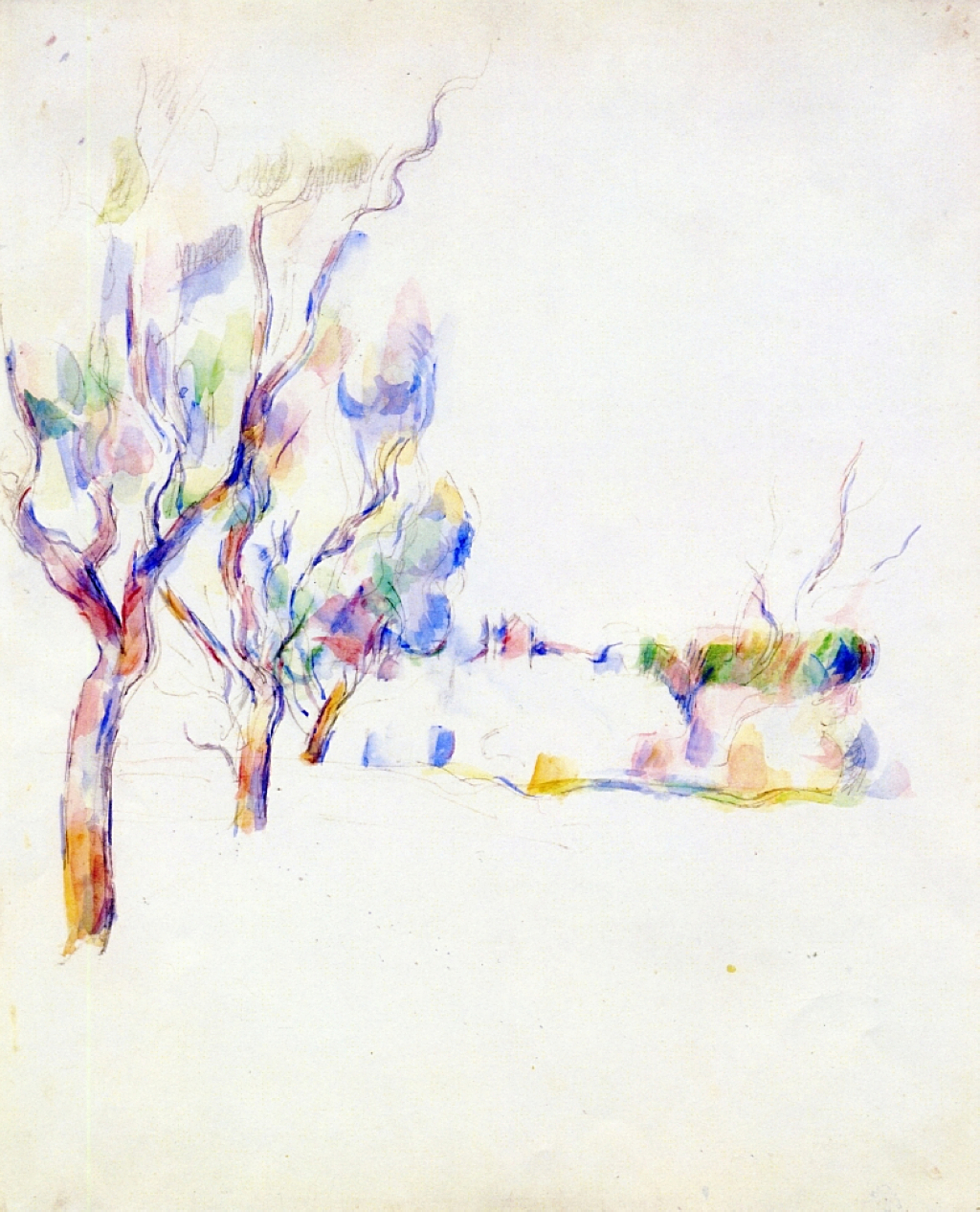
Paul Cézanne’s oil paintings of trees, although abundant, show his emphasis on patterned brushstrokes in what’s known as his constructive stroke. This isn’t true of his watercolours, as shown in Almond Trees in Provence from 1900, where each tree rises in a flare of brilliant colours, making them some of the most remarkable in art.

By the end of the First World War, Théo van Rysselberghe’s colours had become as strong as those of the Fauves. In Almond Trees in Blossom (Morning) the more delicate pinks of the almond flowers pale in comparison with his full reds and blues, and the blue horse pulling a plough.

This Almond Tree from about 1930 must be one of Pierre Bonnard’s finest paintings of trees. Although it might look quite haphazard and sketchy, it has been carefully constructed according to anatomical principles.

