

From the early days of the Renaissance, artists used the play of shade and shadows to transform their paintings by giving them depth. At first this was predominantly used in near-monochrome images, where it developed from what would normally have been a tonal base layer over which colour would have been applied, grisaille.
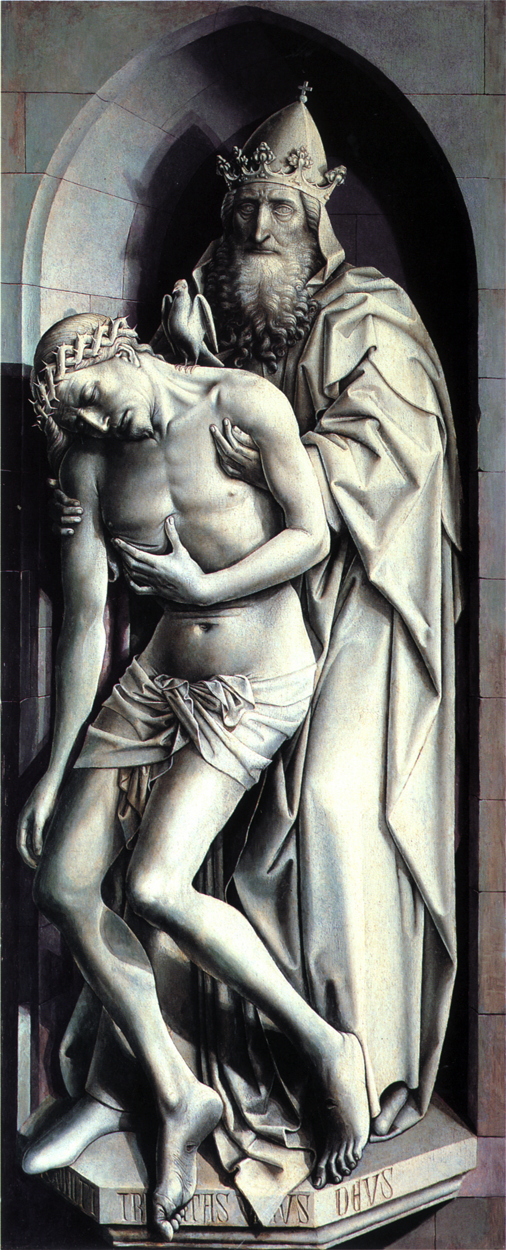
In the Northern Renaissance in particular, cast shadows transformed these into trompe l’oeil mimicking sculpture. This example by Robert Campin of The Trinity of the Broken Body from 1410 is both optically rigorous and startlingly realistic.
Over the millennia before the arrival of more powerful sources of light, many must have used candles and oil lamps to project shadows onto walls, much as children of all ages have done during our lifetimes. Paintings from the eighteenth century demonstrate this traditional shadow play.

Johann Eleazar Zeissig shows A Family Making Chinese Shadows in his painting from the late 1700s. A family are entertaining themselves late in the evening with the aid of a lamp as a point source of light. An older boy is tracing the silhouette of his mother on a sheet of paper which he holds on the wall behind her. At the upper right are more examples of his ‘shadowgraph’ drawings. Three younger children are holding up their hands to form the silhouettes of a rabbit and a cat.
In the middle of that century, cut-out silhouettes became a popular substitute for painted portraits among those who struggled to find the money to pay a portraitist. They were named after a French finance minister, Étienne de Silhouette, who attained fame for doing things on the cheap in a bid to save money, although they’re well known from ancient times.
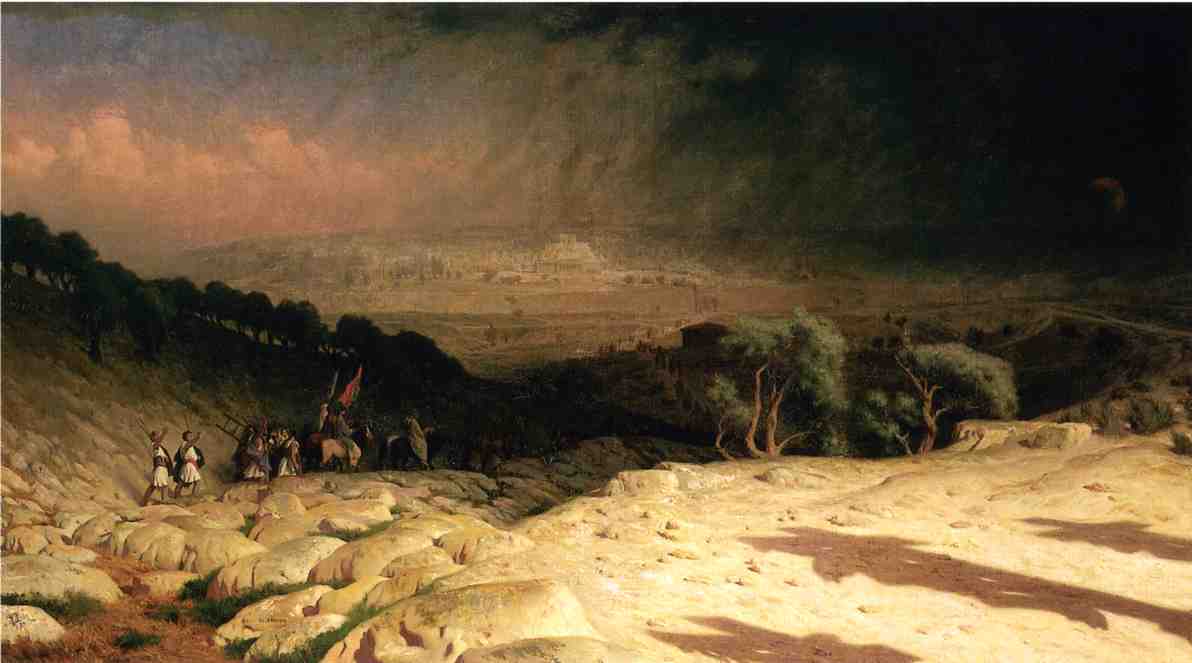
Golgotha (Consummatum Est, or Jerusalem) from 1867 is one of Jean-Léon Gérôme’s few religious paintings, which composes the scene of the crucifixion in a novel way. It shows the view from Golgotha looking towards Jerusalem as the executioners and crowd make their way down toward the city, which is being overwhelmed by darkness. The three crucifixions aren’t shown directly, but only in shadows cast by a brilliant light. This formed part of Gérôme’s exploration of images and truth.

In William Holman Hunt’s celebrated painting of The Shadow of Death from 1870-73, the young Jesus Christ is seen in his father’s carpentry workshop, holding his arms up to savour the bright sunlight. His cast shadow on the rack of tools and wall behind shows him crucified on the cross, with his mother Mary already on her knees, as in so many paintings of the crucifixion.
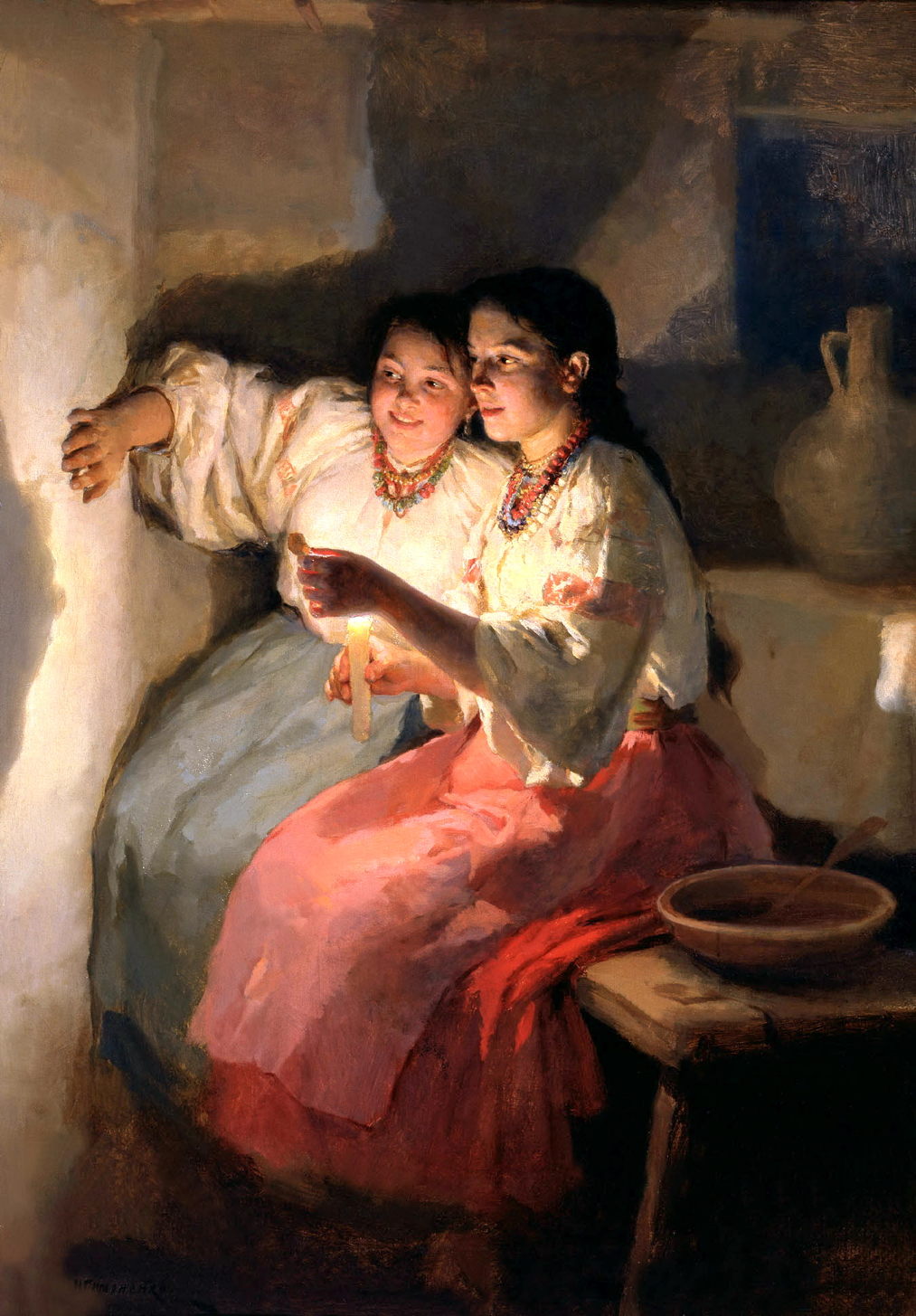
Mykola Pymonenko’s Yuletide Fortune Tellers from 1888 shows two young women playing a shadow game with a candle, which brings its own shadow play in the magnified head and shoulders cast on the wall behind them.
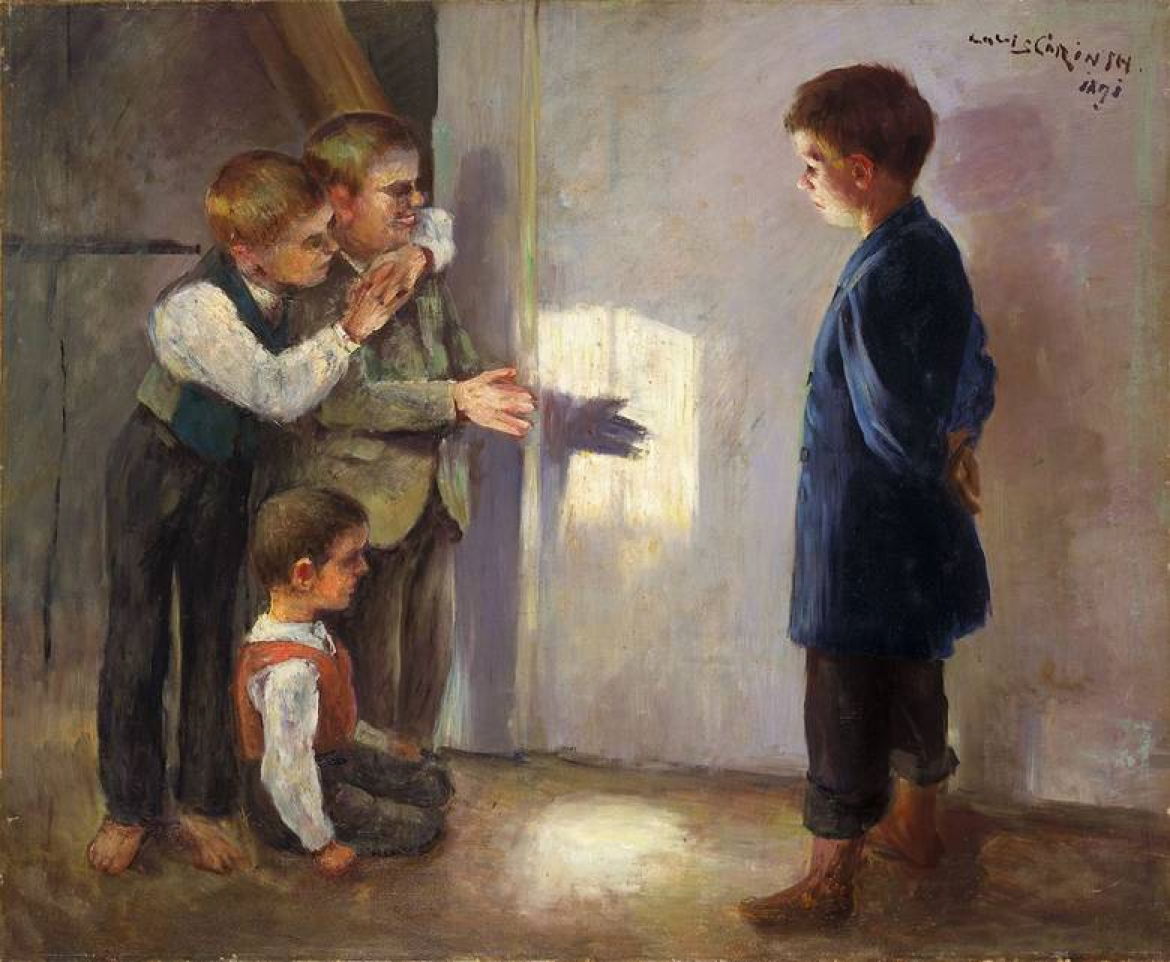
In 1891, Lovis Corinth painted four young boys engaged in Shadow Play, here using the light cast from a high window.
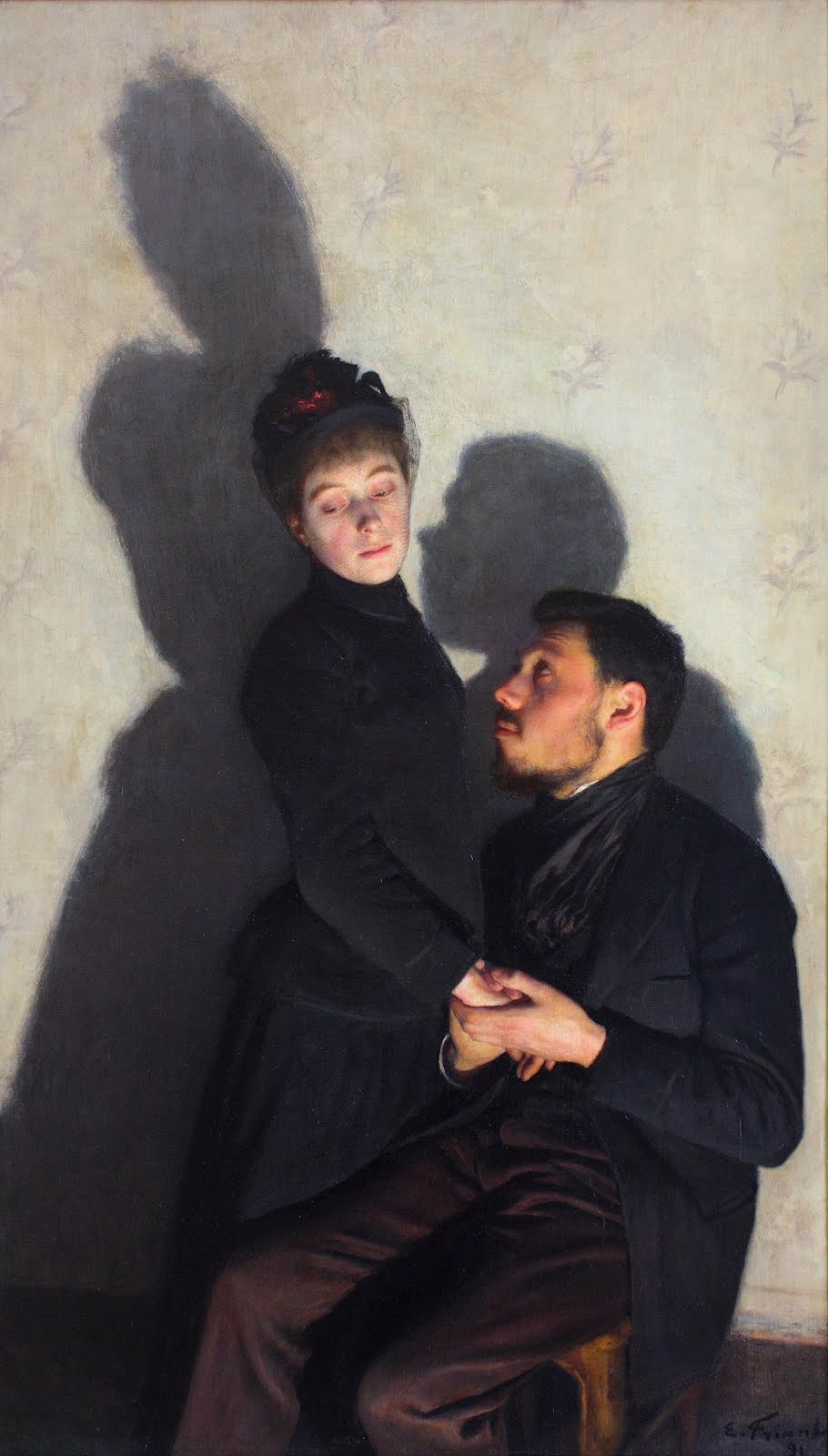
The Naturalist artist Émile Friant was an early and enthusiastic photographer, who used photographic prints as an aid to his painting. By the 1890s, some of his paintings bore the hallmarks of optical experimentation, including his Cast Shadows of 1891. This shadow play of a couple lit by a bright point source shows the man looking imploringly up at the woman, who looks aside. Their cast shadows have been manipulated, though: the shadow of his head is about to kiss her left cheek, but her shadow remains distant from his.

John Collier became famous with this ‘puzzle picture’ of The Prodigal Daughter in 1903. An elderly middle-class couple are seen in their parlour in the evening in their sober black clothes and sombre surroundings. They’re surprised when their prodigal daughter turns up out of the blue, in her low-cut gown with floral motifs and scarlet accessories. Father is still sitting, backlit by a table lamp to heighten the drama. Mother has risen from her chair and is visibly taken aback. Daughter stands, her back against the door and her hand still holding its handle, as if ready to run away again should the need arise. Collier augments this open narrative with ingenious shadow play: here the mother’s cast shadow makes her appear much larger than the daughter’s, like an ogre bearing down on a child.
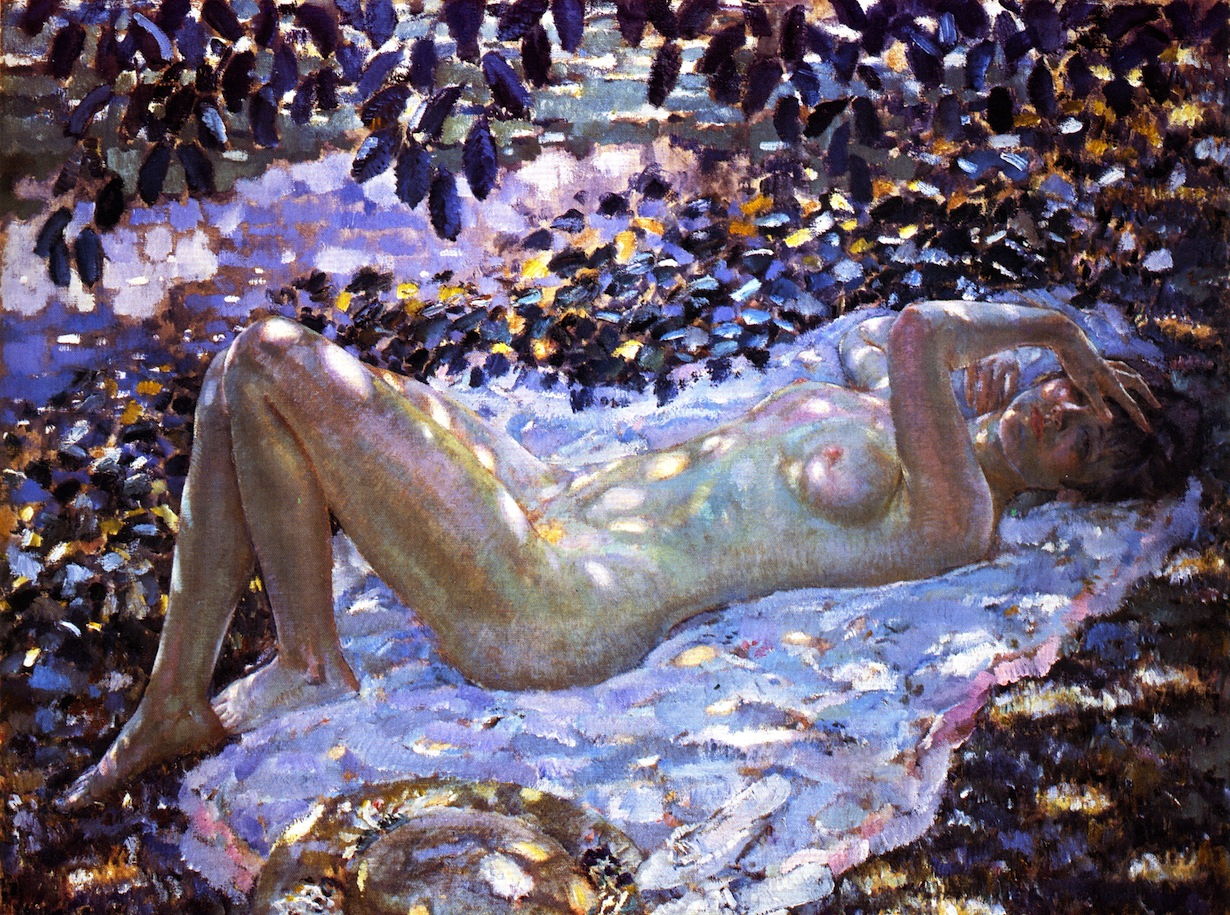
Frederick Carl Frieseke, who excelled at paintings of dappled sunlight such as this Nude in Dappled Sunlight from 1915, includes a gamut of different colours in the shadows cast on this nude.
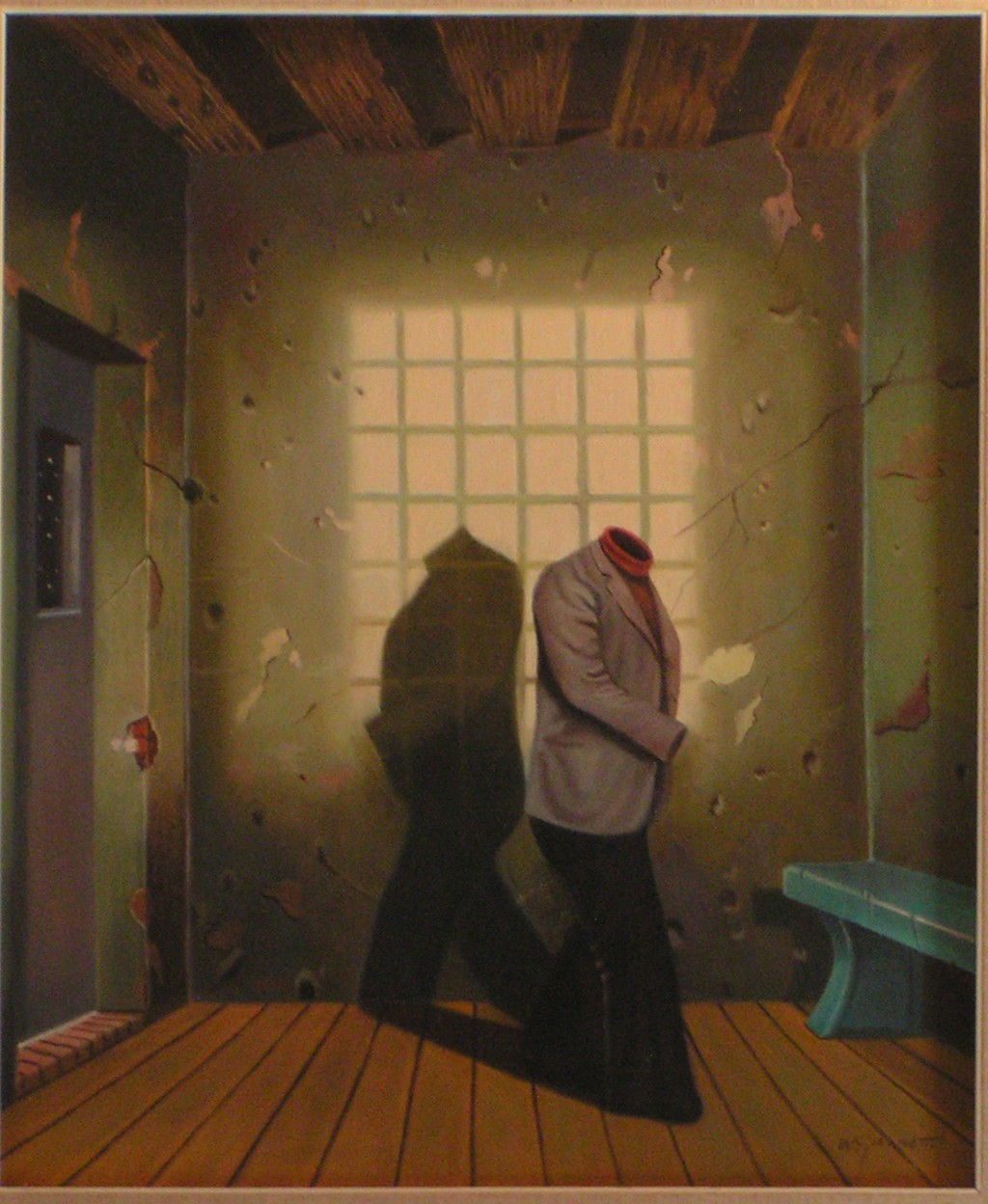
During the twentieth century, Surrealists and others engaged in even greater shadow play. In William Girometti’s Life in the Reflection of Freedom from 1972, one shadow is cast from the bars of a window in a prison cell, the other is shown as a combined reflected shadow from the unoccupied clothing.

