
During the first half of the nineteenth century there was no shortage of landscape painters sketching in front of the motif. But like John Constable, many of those paintings weren’t intended to be seen by the public, and were seldom submitted for exhibition. This appears to have changed in the middle of the century, when artists began to create painterly works that were intended from the outset to be exhibited and sold to the public. This article shows some examples painted mainly in France.
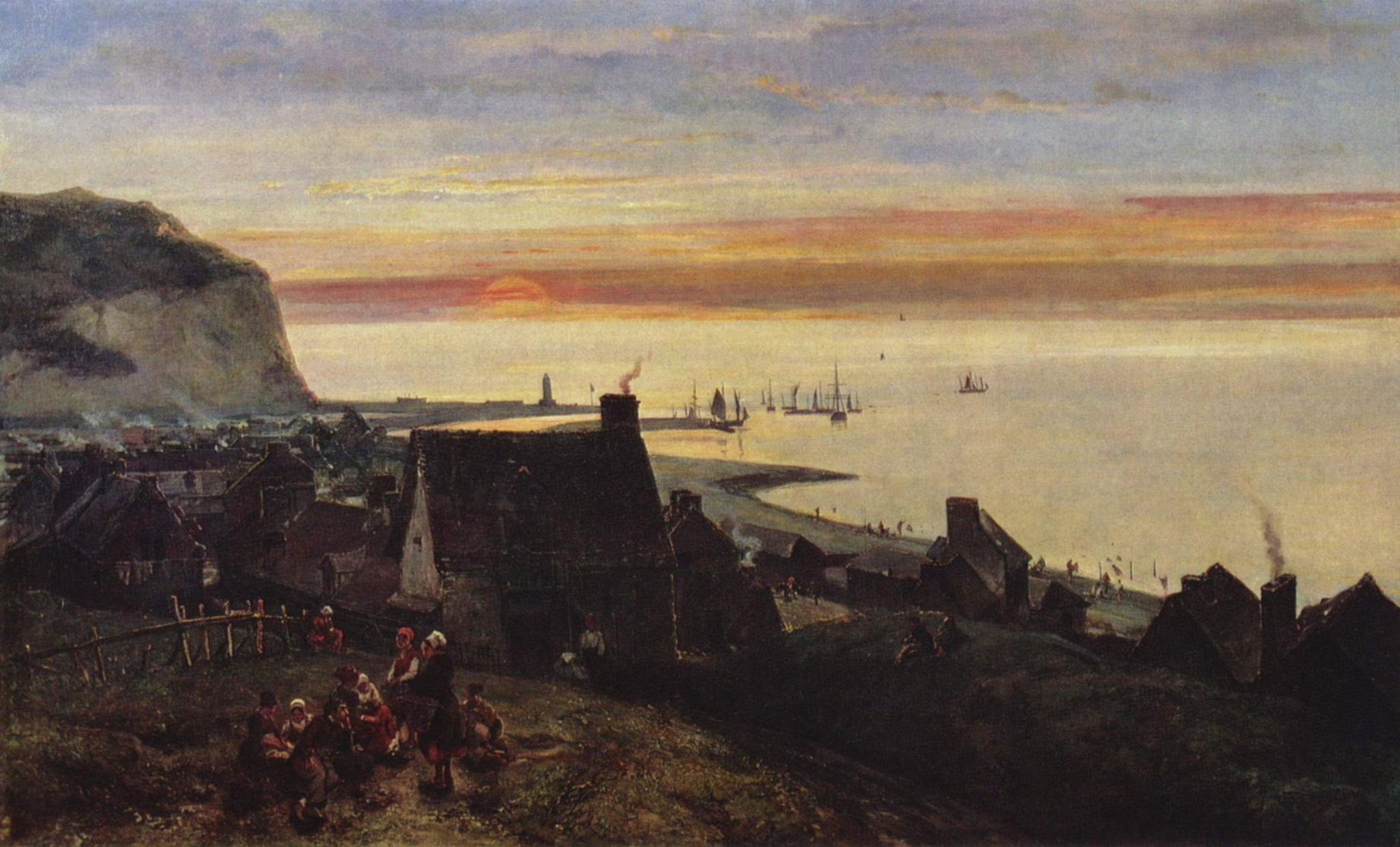
The first pre-Impressionist artist who appears to have painted the cliff overlooking Étretat Harbour was Johan Jongkind, who visited it in 1852. This marvellously sketched view in the rich colours of sunset is surely a herald of Impressionism. Jongkind had trained conventionally, at the academy in The Hague, and had earlier paintings accepted by the Salon.
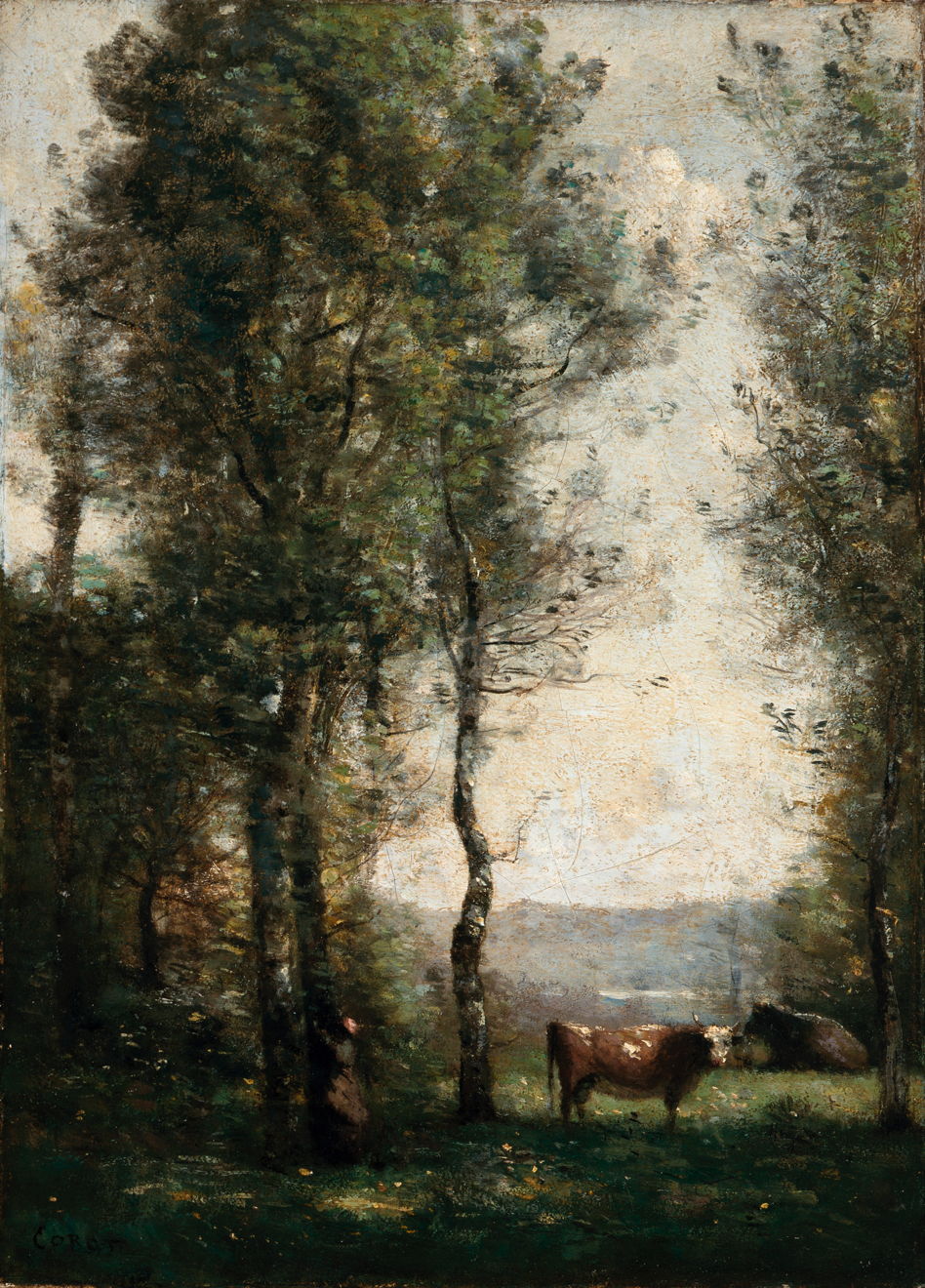
Camille Corot’s Wooded Landscape with Cows in a Clearing from about 1855 features gestural marks in highlights on the cows and trunks of the trees.

Charles-François Daubigny’s landscapes from this period are also rich in brushstrokes and marks, as seen in this view of the Banks of the Seine from 1855.
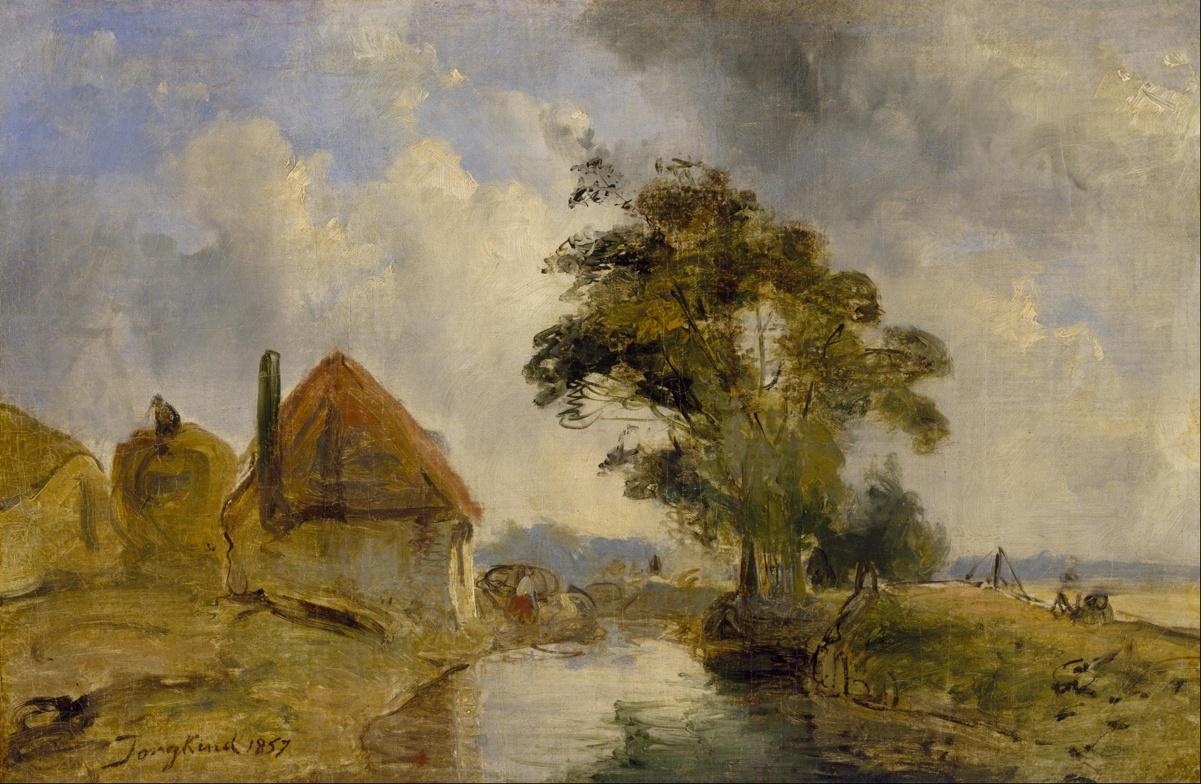
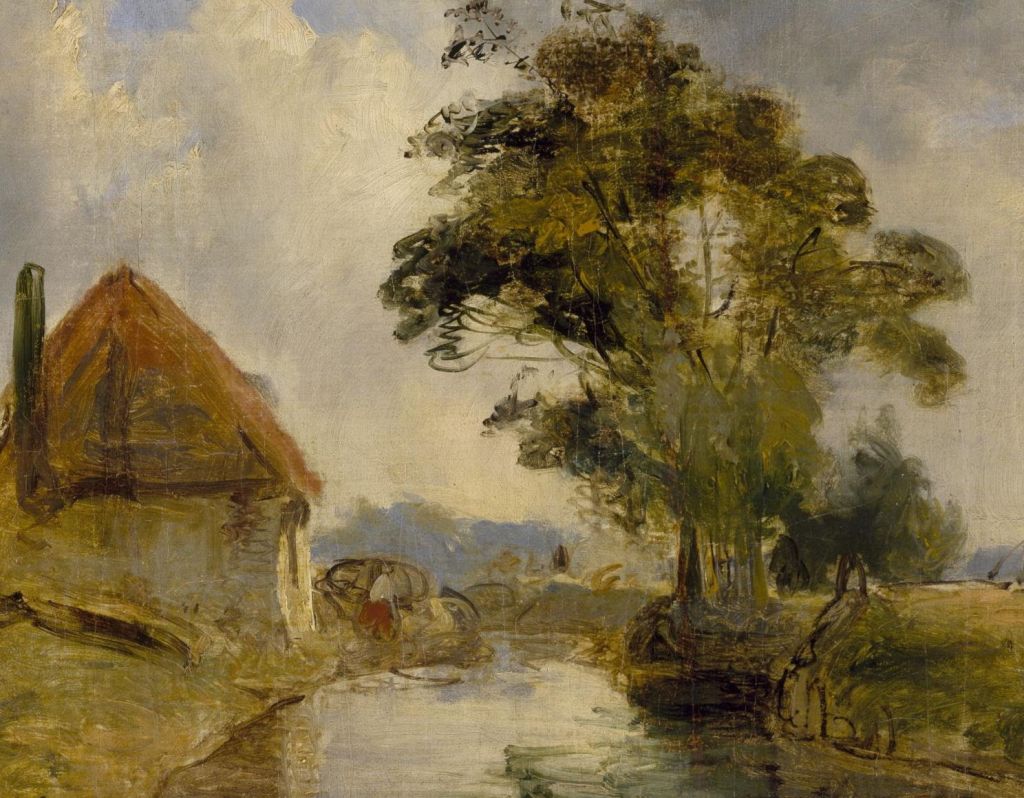
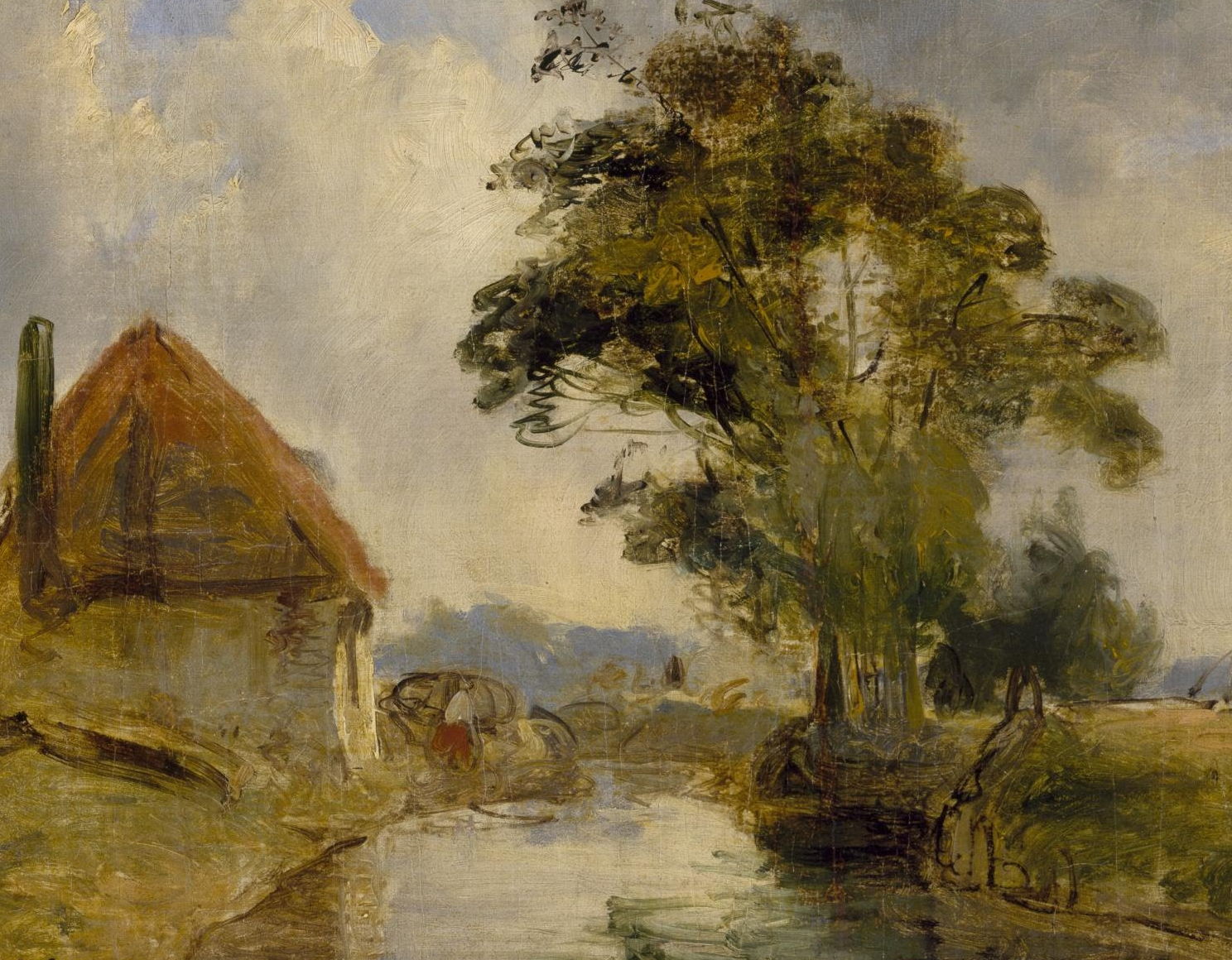
Jongkind’s sketchy mark-making became more overt in plein air landscapes such as this showing the Environs of Breda in 1857, a detail of which is shown below. This wasn’t painted in France, but in the countryside around the city of Breda, in the far south of the Netherlands close to Belgium.
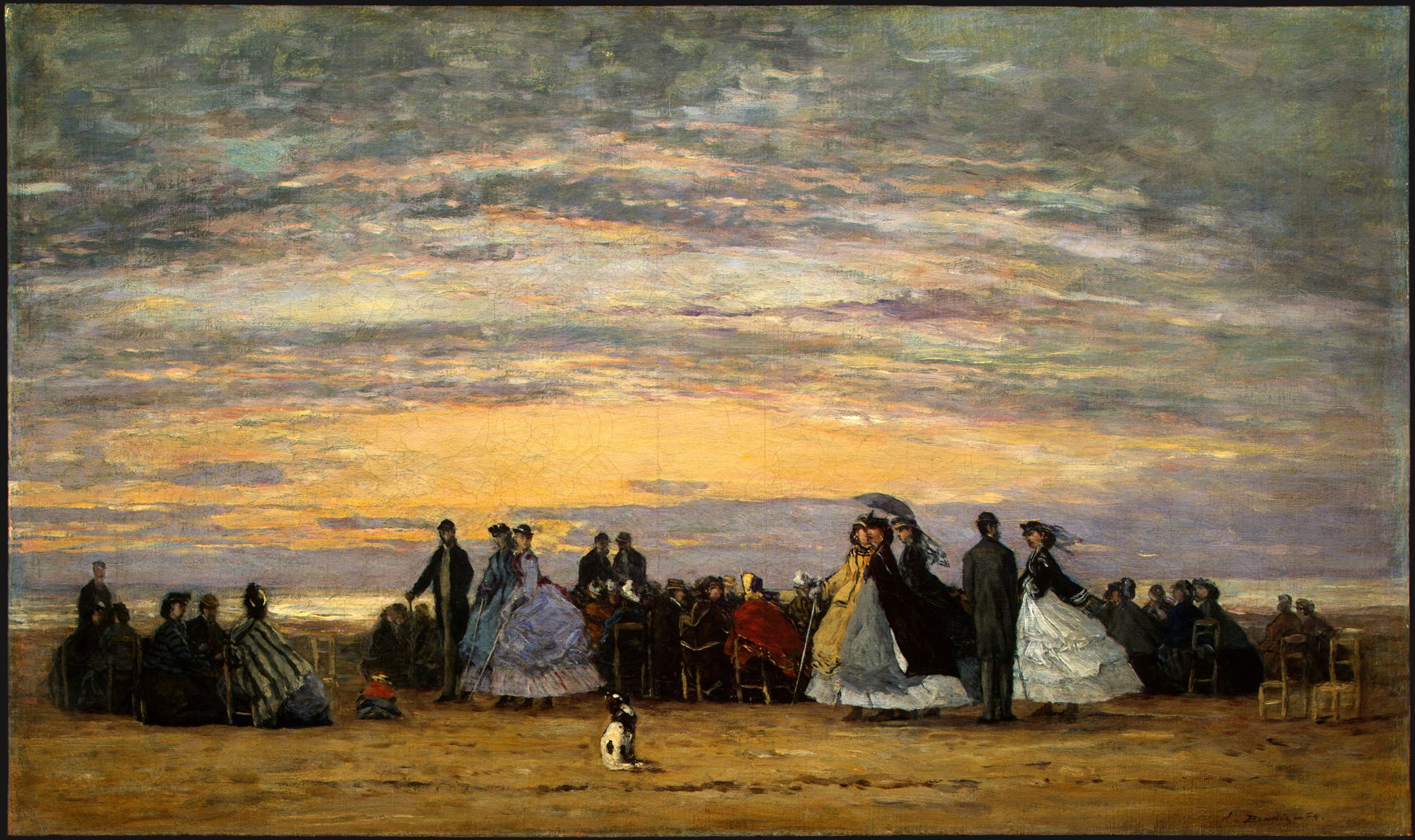
Eugène Boudin’s The Beach at Villerville from 1864 is an unusual dusk setting in a small seaside community between Trouville and Honfleur. Its figures are more painterly. Boudin is a central figure in these years before Impressionism. He trained in the studio of Eugène Isabey, and submitted works to the Salon. It was Johan Jongkind who first advised him to paint en plein air, and Boudin who persuaded the young Claude Monet to paint landscapes, then became his mentor.

In contrast, at this time Claude Monet’s Boatyard near Honfleur (1864) remains tightly realist even down to individual stones on its beach.

Jongkind’s watercolours were even more radical. This sketch of a Windmill at Antwerp from 1866 is far looser than his oils.
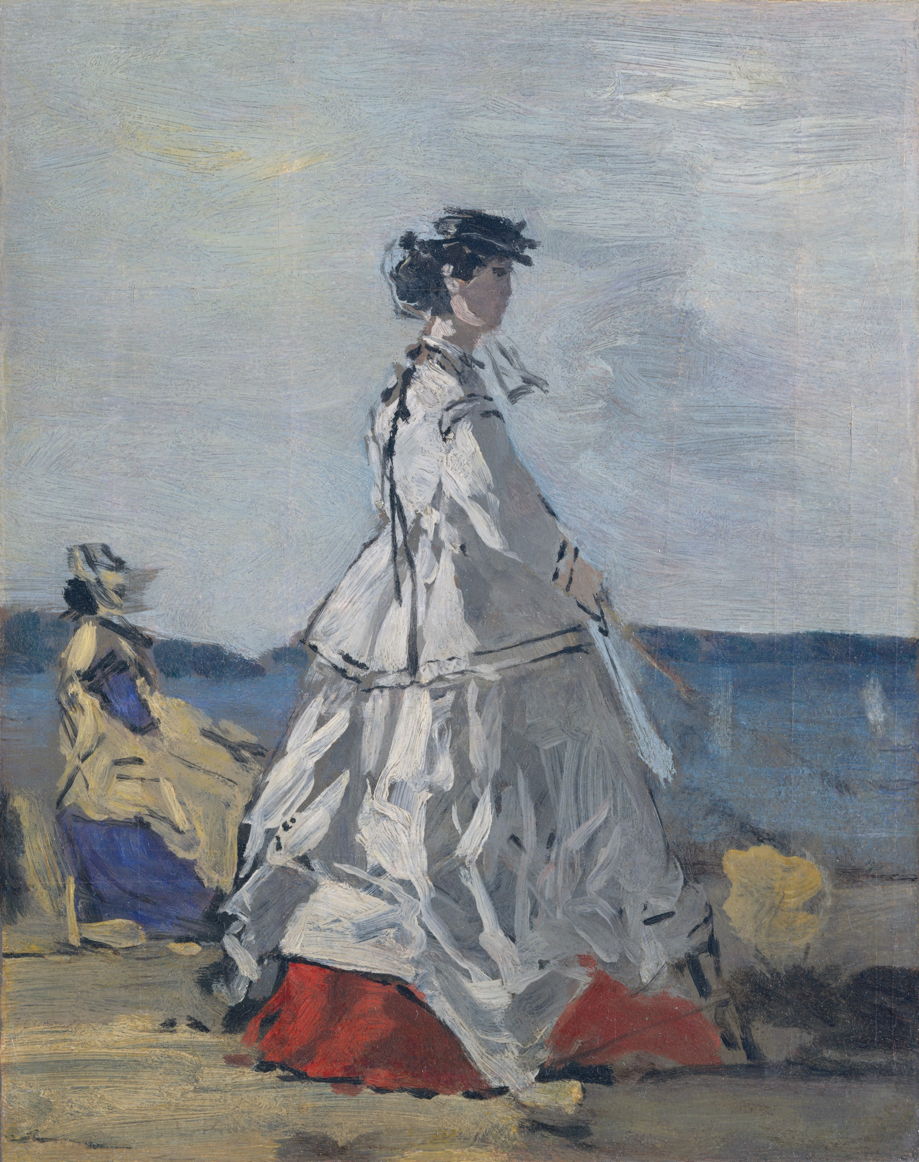
For a while, Boudin painted celebrities including Princess Pauline Metternich on the Beach (1865-7) when they visited the seaside around Honfleur and Le Havre. As he became more successful in the Salon, he dropped these opportunistic sketches.
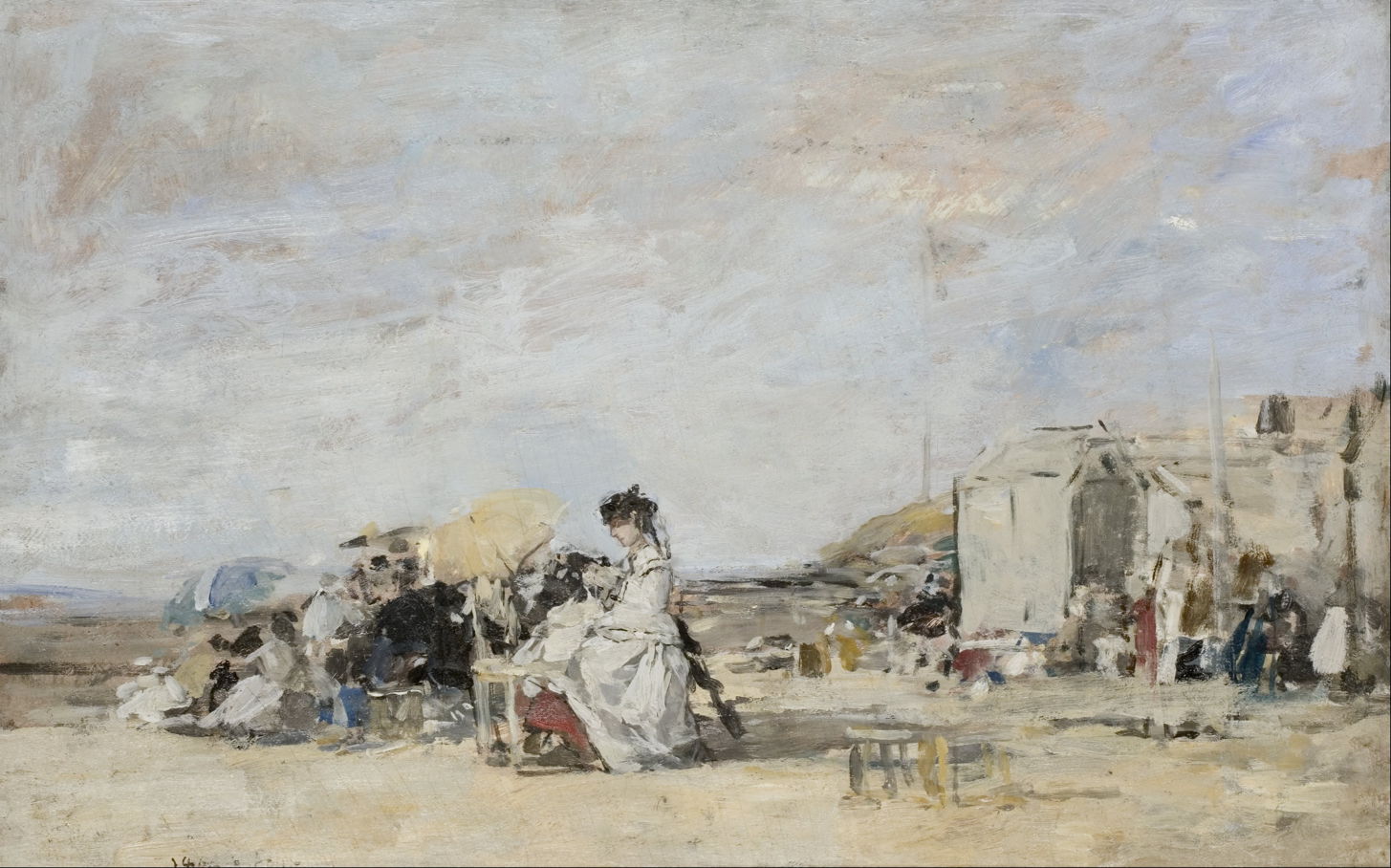
Some of Boudin’s oil sketches, here of a Lady in White on the Beach at Trouville in 1869, are amazingly loose and painterly, and inspiration to Monet and the Impressionists.

