

If depicting shade and shadows in studio paintings of landscapes was difficult, capturing them when painting in front of the motif became one of the great challenges. Even in stable weather and lighting conditions, shade and shadows only remain consistent in nature for a period of thirty to sixty minutes, and that’s when you’re lucky and there are no clouds to occlude the sunshine. It takes considerable practice and great skill to complete a landscape view with all its shade and shadows in that brief window.
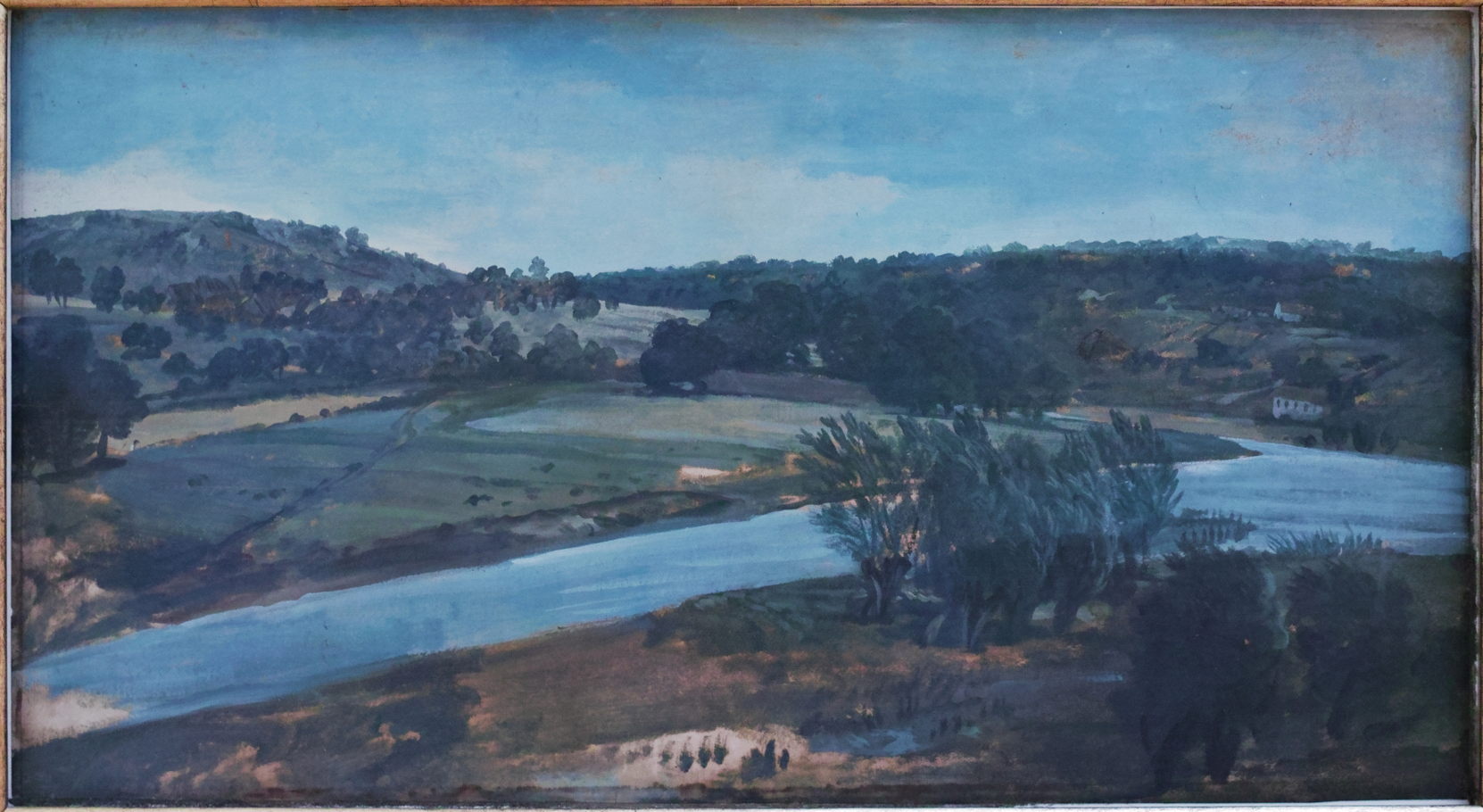
Among the earliest artists to paint regularly in front of their motif was Alexandre-François Desportes (1661-1743), a professional painter of hunting scenes and animals, whose Landscape Study was painted in about 1700. Although the sky here appears mostly cloudless, Desportes has only included notional shadows, sufficient for his painting to look right, but in truth they’re largely absent.

When the young Pierre-Henri de Valenciennes made copious oil sketches such as this of Farm-buildings at the Villa Farnese: the Two Poplar Trees in the Roman Campagna in 1782-85, he was building himself an image library. Although he captured cast shadows on the buildings, the two poplars don’t join them, as he would add those later in the finished paintings he made from this sketch.

View of the Convent of Ara Coeli with Pines is a superb view of what’s known as the Basilica di Santa Maria in Aracoeli, in central Rome. This is on the top of the Campidoglio, and affords the view over the city appearing behind the pine on the right. Once again, Valenciennes is careful to include detailed highlights and shadows on the buildings.

Thomas Jones was taught by the Welsh artist Richard Wilson, but none of the latter’s oil sketches have survived. Jones’ Capella Nuova outside the Porta di Chiaja, Naples from the same time, 1782, includes coherent cast shadows frozen at a moment in time, despite its careful detail.
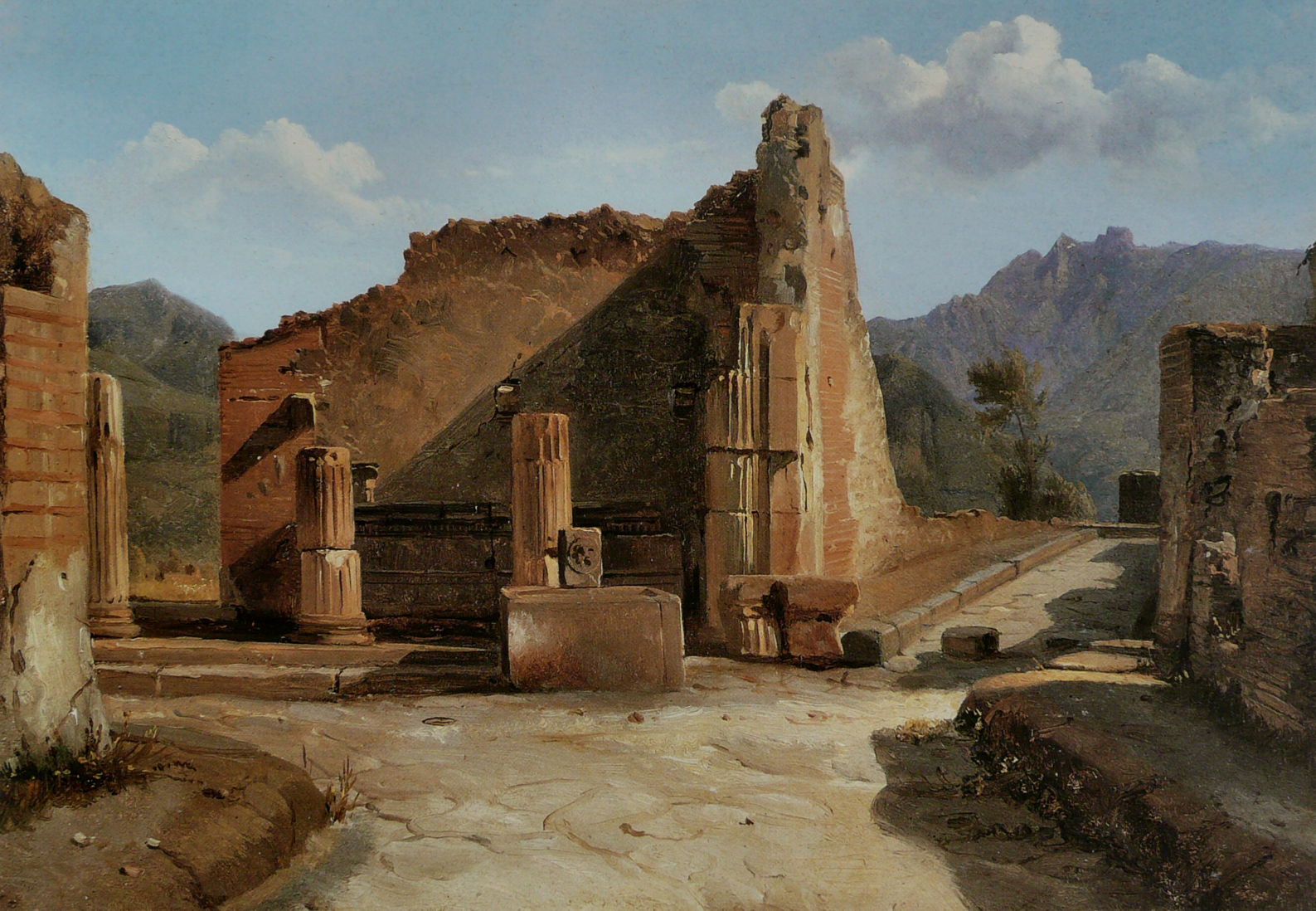
When Achille Etna Michallon, a former pupil of Valenciennes, was in Italy, he must have visited the ruins at Pompeii, where he painted The Triangular Forum in Pompeii, for which I have no date, but suspect this was around 1819-20. This could have been intended as a study in shade and cast shadows, which appear to have been carefully synchronised.
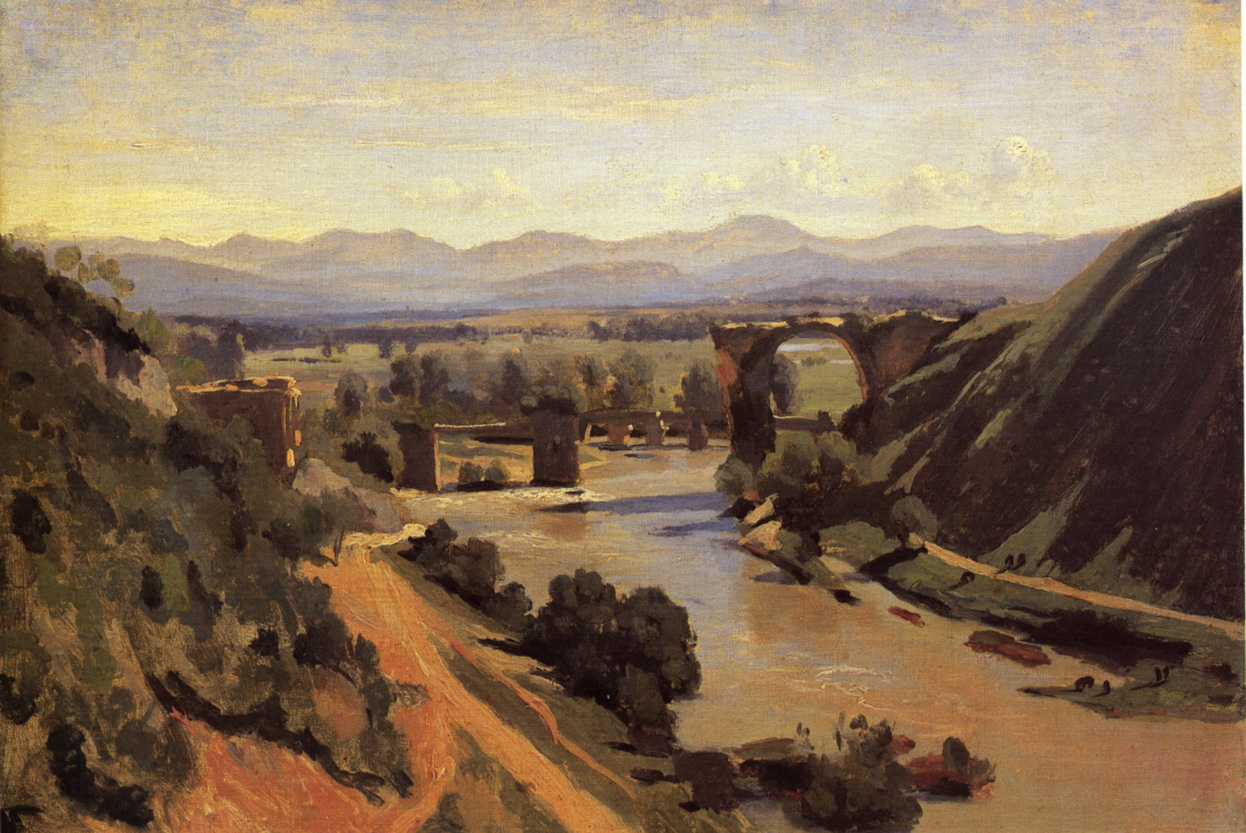
For a short period before Camille Corot went to paint in the Roman Campagna, he was a pupil of Michallon, who was his contemporary (although Michallon died shortly afterwards, at the age of 25). Corot’s years in Italy were formative in his own development, and one of the key elements he put in place to hand on to Camille Pissarro and other Impressionists. The Bridge at Narni is one of his finest oil sketches, and was painted in 1826. At this stage, his handling of shadows is patchy and doesn’t match the detail of his teacher.

Corot did better in this slightly later view of The Island and Bridge of San Bartolomeo in Rome.
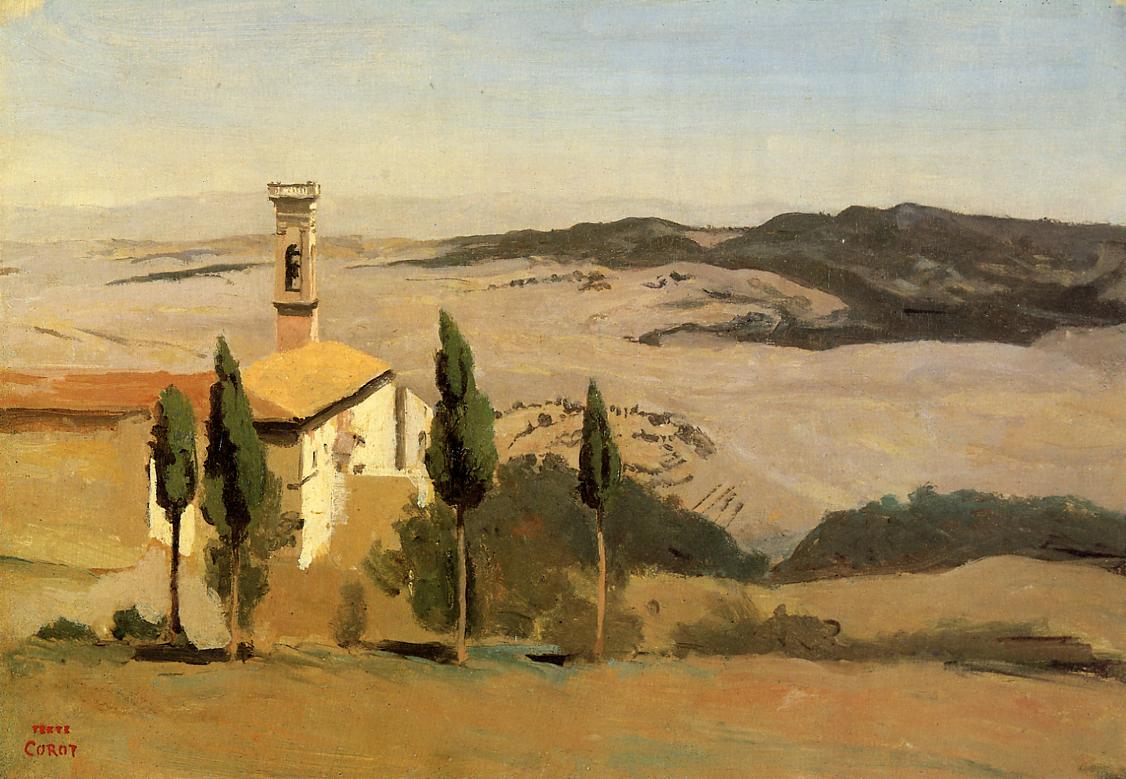
By 1834, when Corot painted Volterra, Church and Bell Tower, he was able to capture shadows cast by the trees in its near-vertical sunlight.

Corot went on to teach Camille Pissarro, at around the time the latter painted this Forest Path (c 1859). These cast shadows seem to be mainly for effect, and don’t correlate closely with the tree trunks.

by about 1870, when Pissarro painted Route de Versailles, Louveciennes, Winter Sun and Snow, he is using the rhythm of the shadows cast by these barren trees.
A succession of painters en plein air had risen to the great challenge, and their practice and skill enabled them to paint shade and shadows as convincing as those in photographs. The stage was set for Impressionism.

