
Of the four great ladies of Impressionism, Eva Gonzalès (1849–1883) was the youngest, died first, and in her brief career was probably the most prolific. Yet her paintings are often forgotten altogether.
She was born in Paris on 19 April 1849, the daughter of a French novelist, and started as a pupil of the portraitist Charles Chaplin when she was only sixteen. Four years later she became the only pupil of Édouard Manet (1832-1883), who seems to have related warmly to her, and soon painted her portrait.
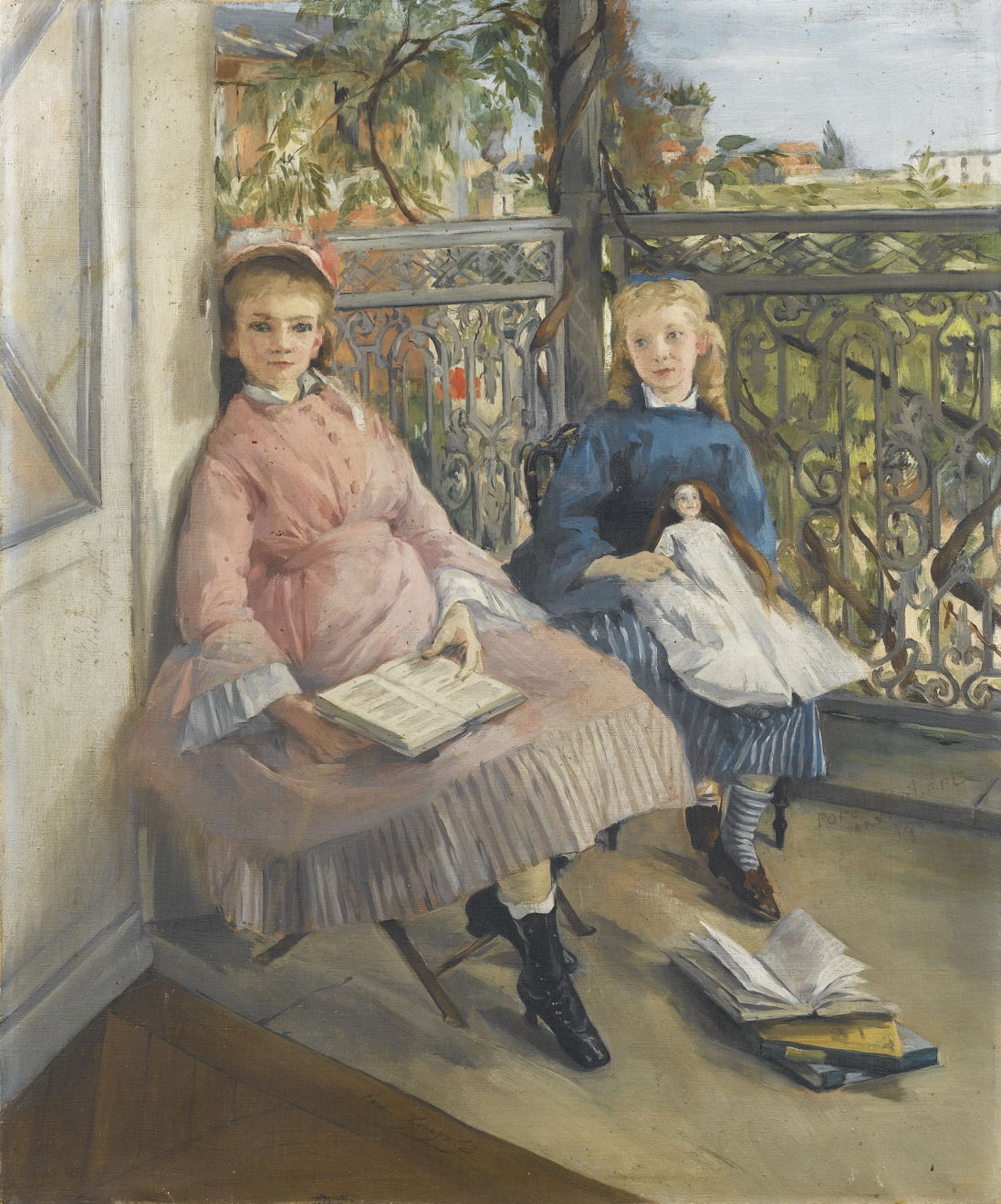
Her earliest paintings show greater influence from Manet rather than Chaplin’s society portraits. The Window (c 1865-70) shows two young girls sat out on the balcony of an apartment, presumably in Paris. The girl on the left is busy studying, something still quite radical for the day.
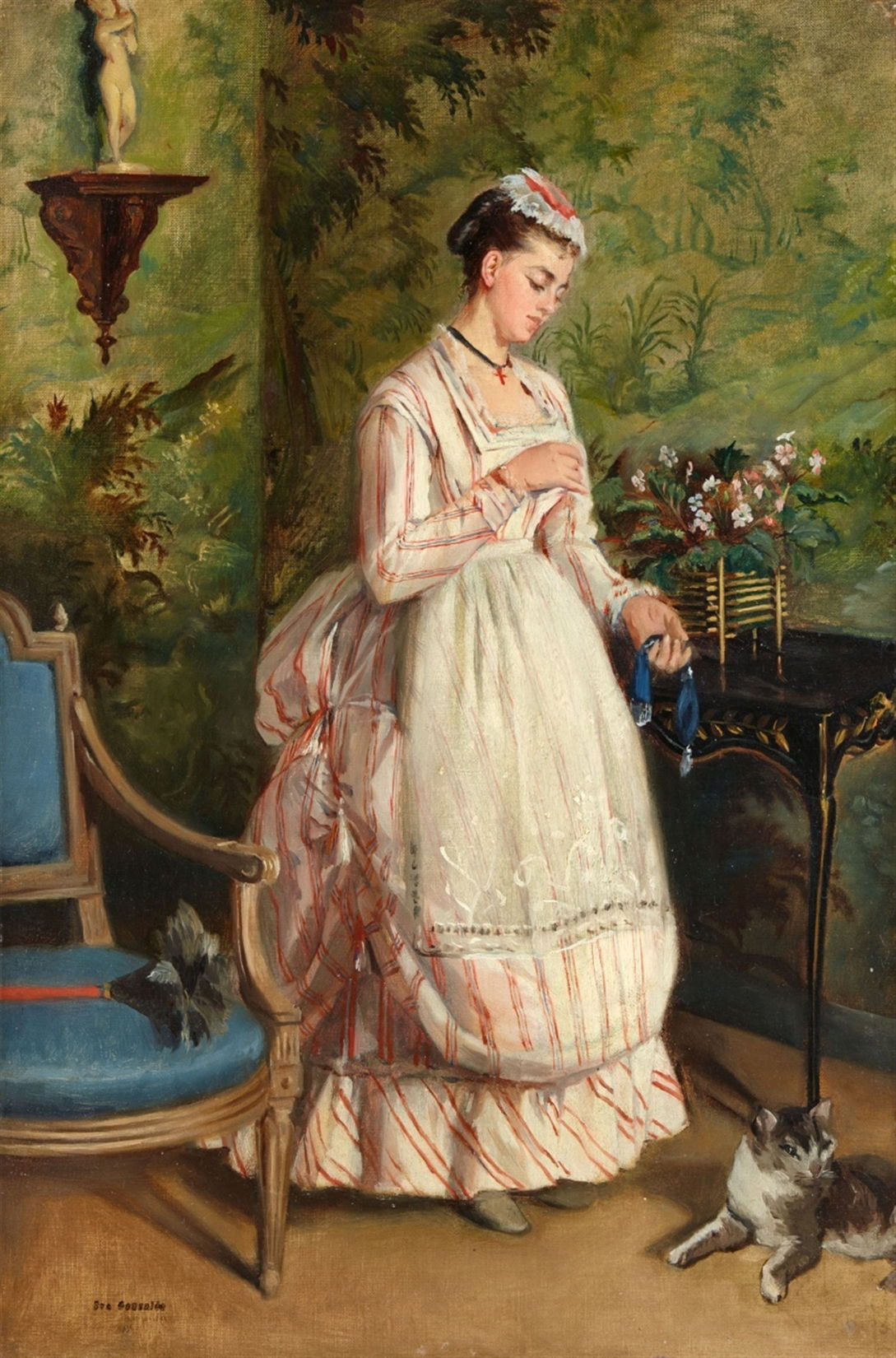
The Maid from about 1865-70 is a more conventional interior, perhaps set in the artist’s family home. The maid’s feather duster rests on a chair at the left, and a cat lies in the right foreground.
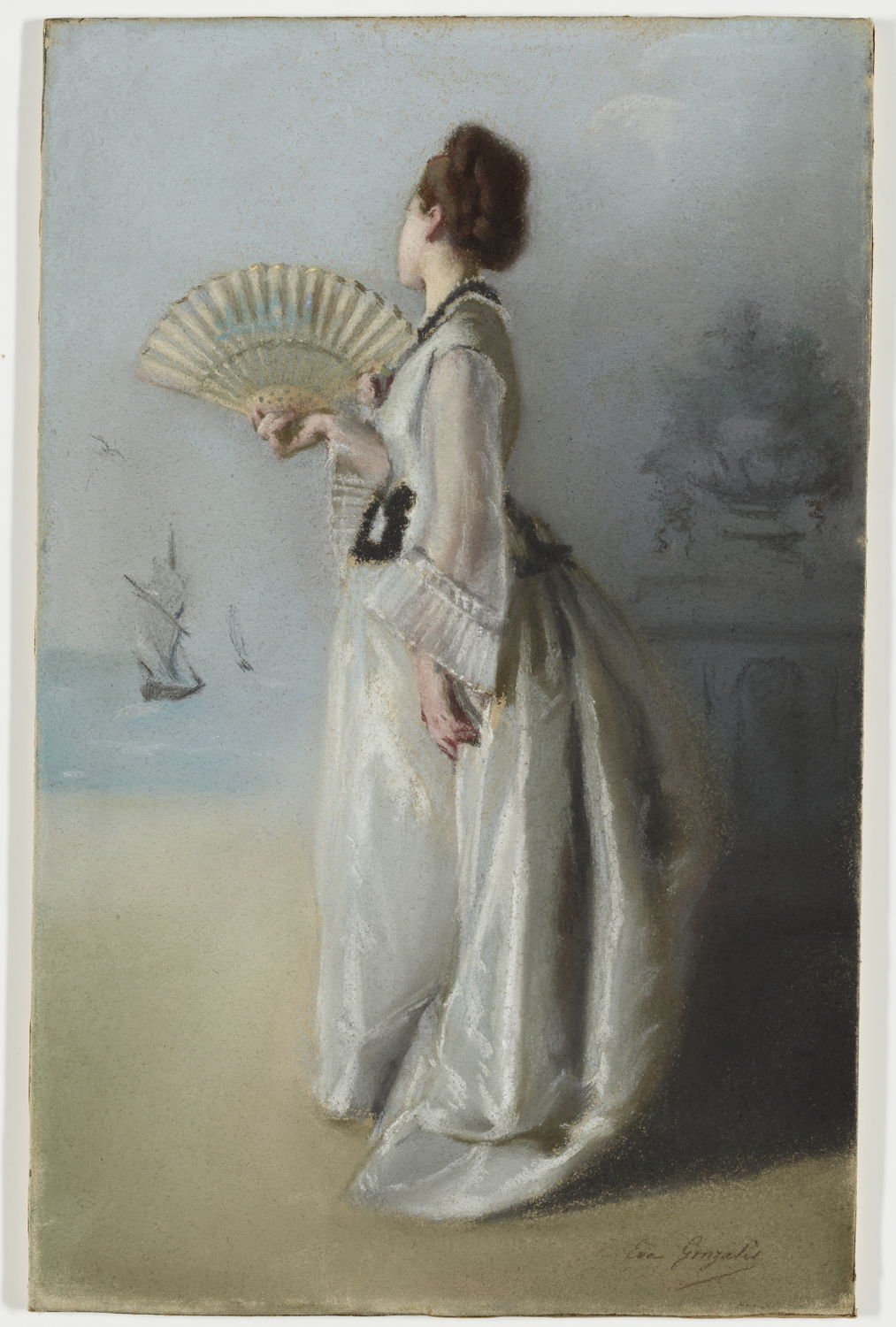
Although Manet is only thought to have come to pastels later, by about 1878, Gonzalès used them earlier, while she was still his pupil. Whether it was she who encouraged Manet to paint his late pastel works, or his earlier use of them, remains unclear. Either way, she made good early progress with the medium, and this portrait of a Lady with a Fan from about 1869-70 already shows her skill, with its careful control of sharpness. This woman stands next to a pot of plants placed on a low stone wall, looking away from the viewer towards two sailing ships at sea.
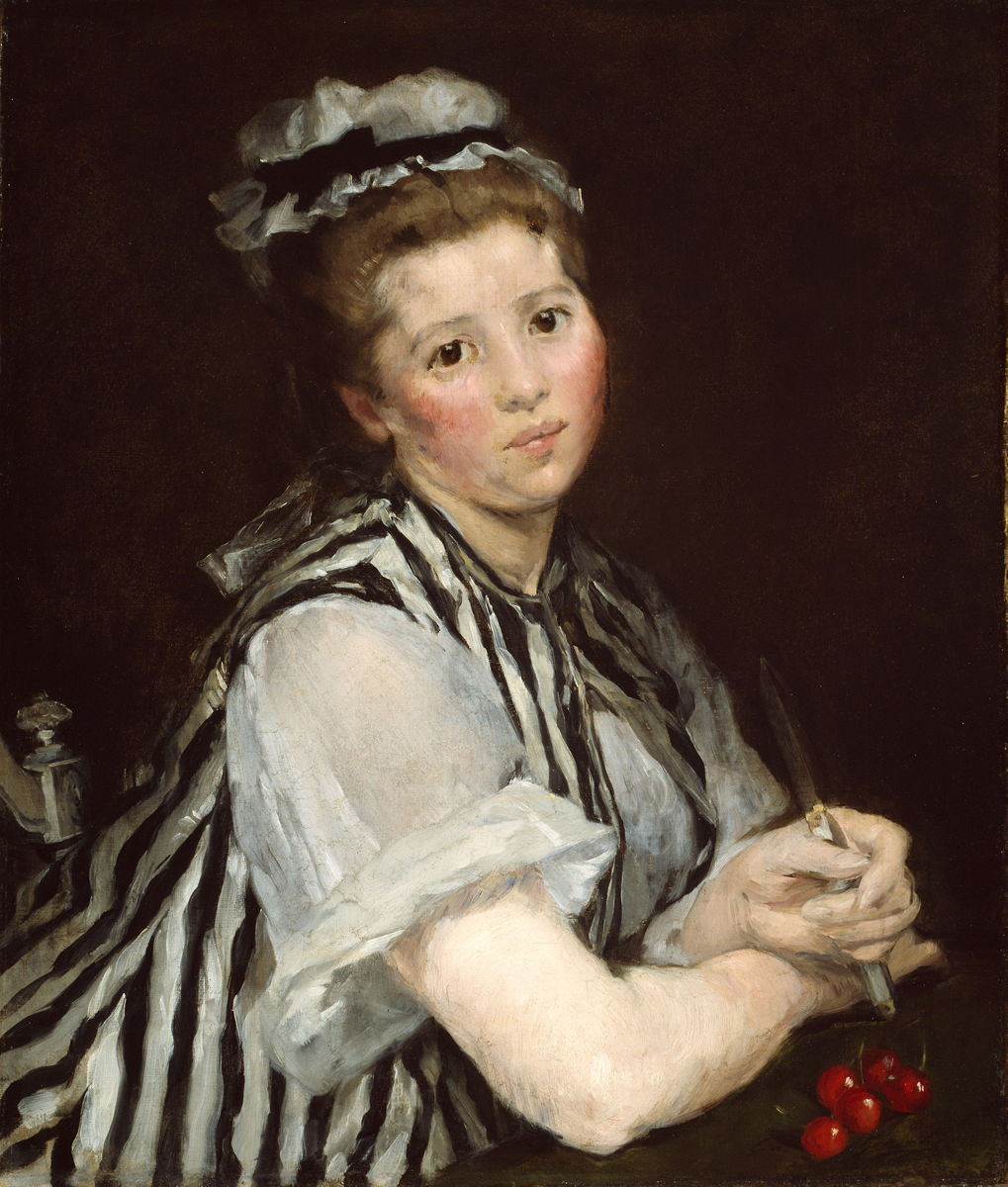
Her dark portrait of a Girl with Cherries from 1870 shows her style developing under Manet’s guidance, and her brushstrokes becoming more painterly, not only on the girl’s clothing but even in the flesh of her face and arms.
She first submitted paintings to the Salon in 1870, but there’s disagreement as to whether they were accepted that year. In 1872, her style started to become more overtly Impressionist, although she never exhibited in any of the Impressionist Exhibitions.
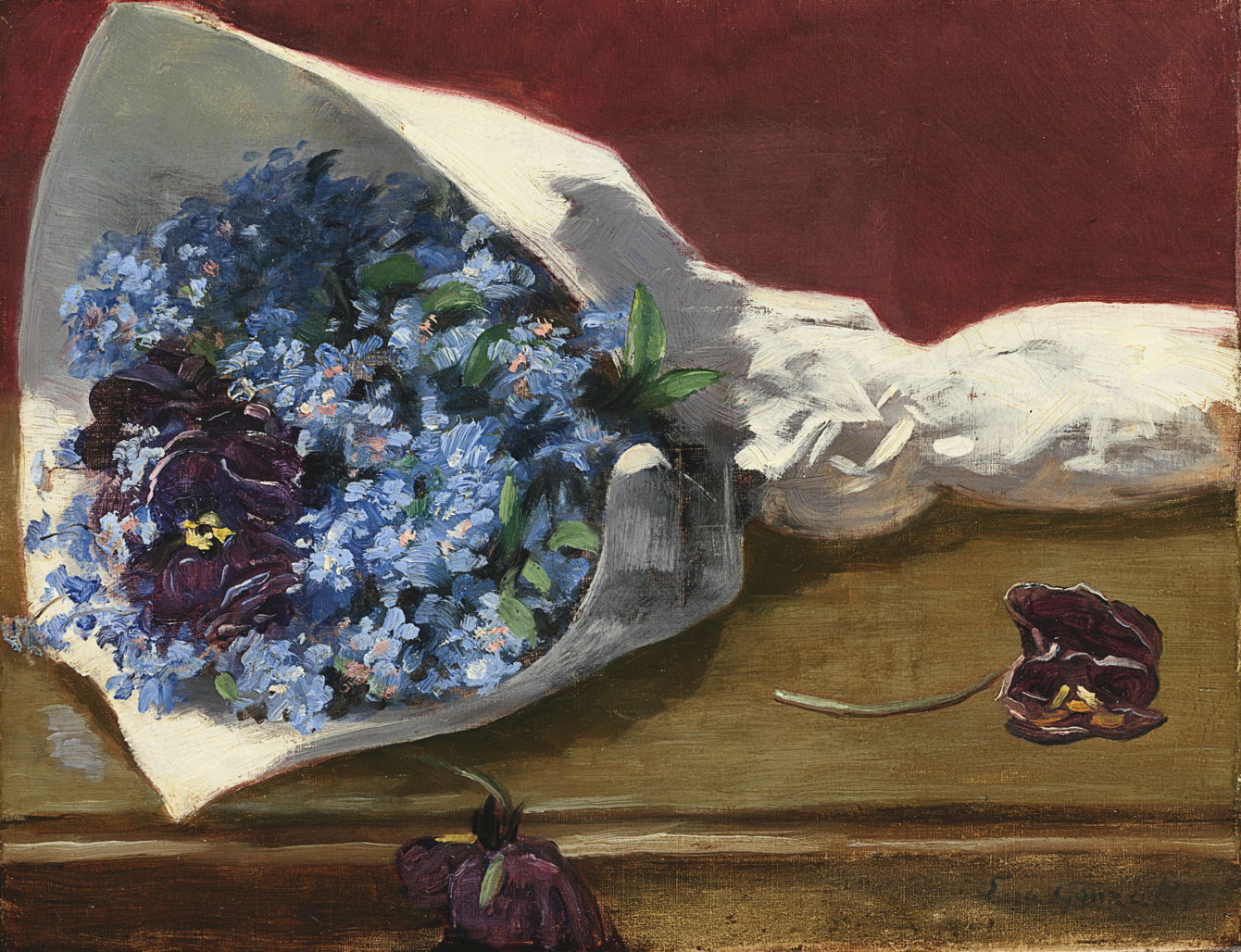
This changing style is reflected in her Bouquet of Flowers (1873-74), where the flowers themselves are formed from visible brushstrokes, together giving the impression of fine detail.
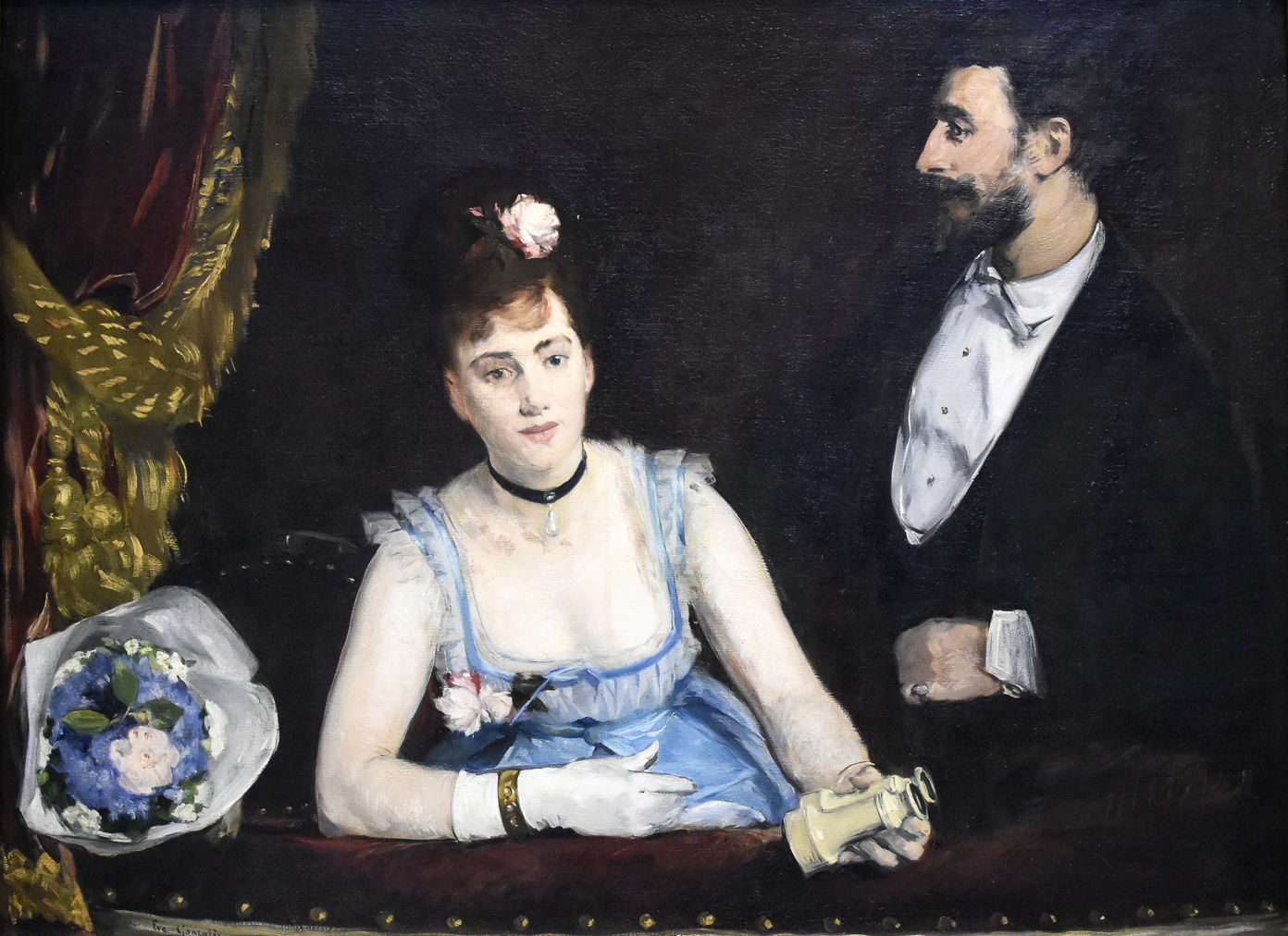
A Box at the Théatre des Italiens (1874) was initially rejected by the Salon jury who felt it was too “masculine” to have been painted by a woman. She was more successful five years later, though, when she had reworked it and submitted it a second time. Her models were her sister Jeanne, who appears in many of her paintings, and (I believe) the man she was going to marry five years later, Henri Guérard. There’s some confusion over his identity, as Guérard married Jeanne Gonzalès after Eva’s death.
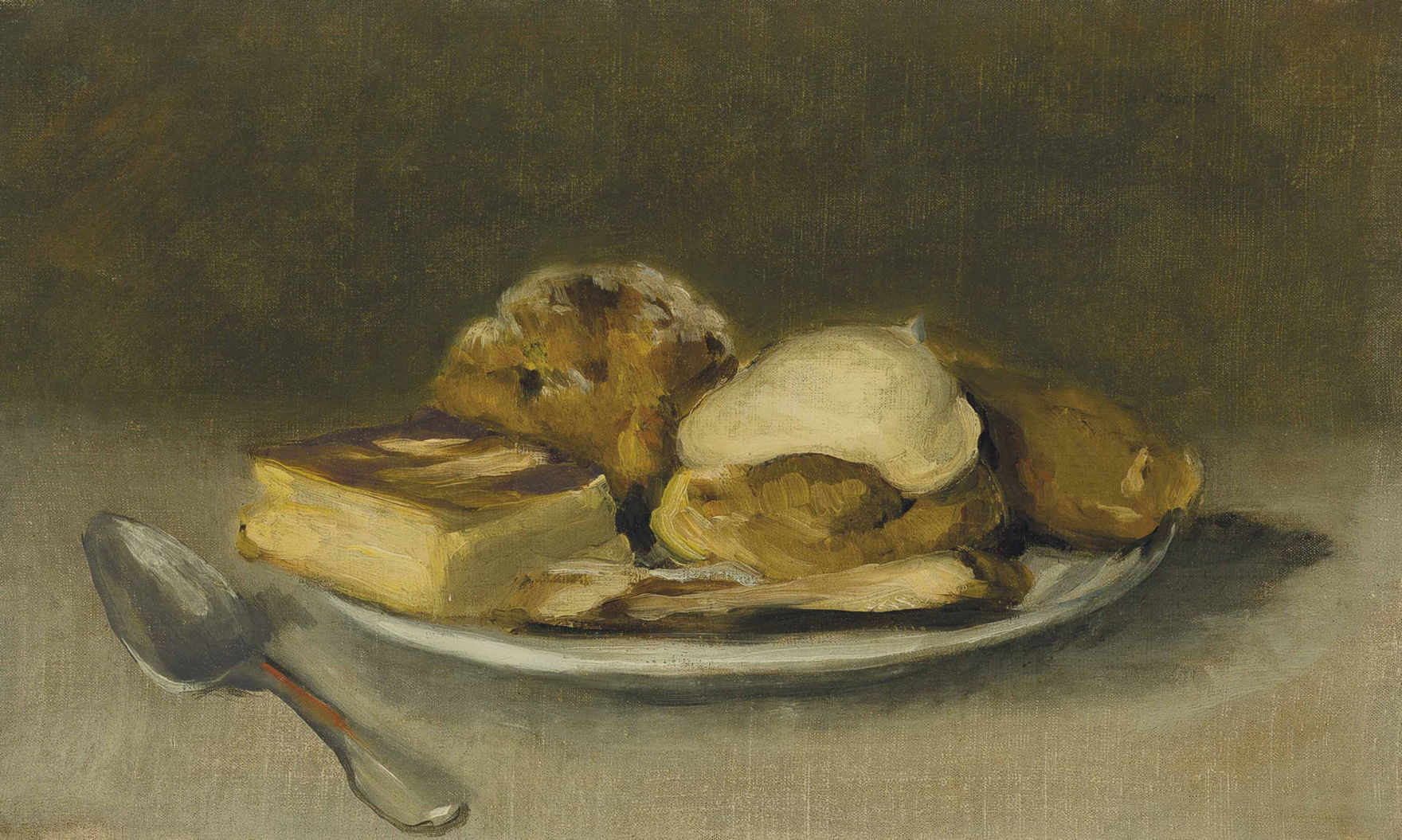
This small still-life of Dessert from 1875-76 appears to have been an exercise for her painterly style.
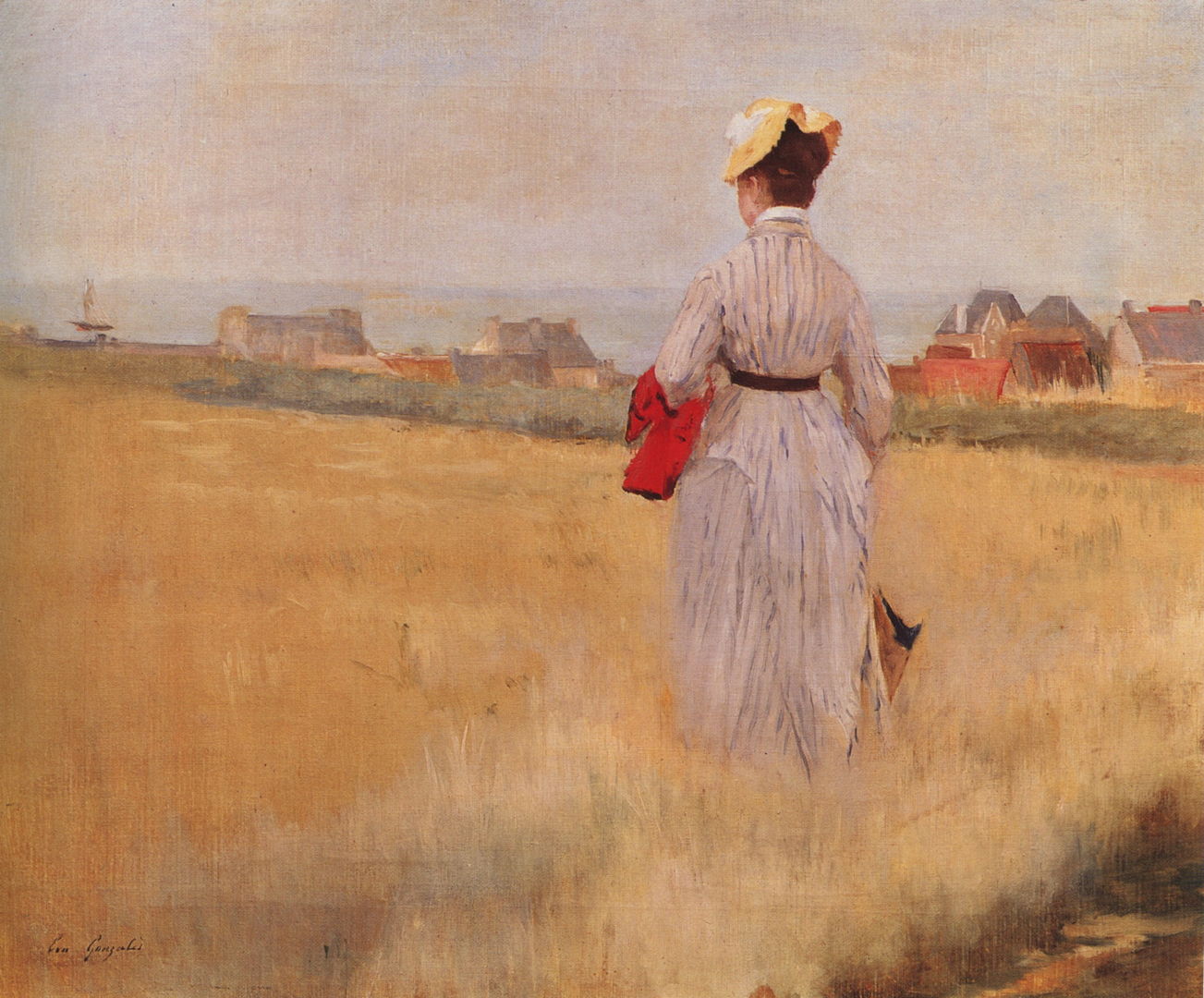
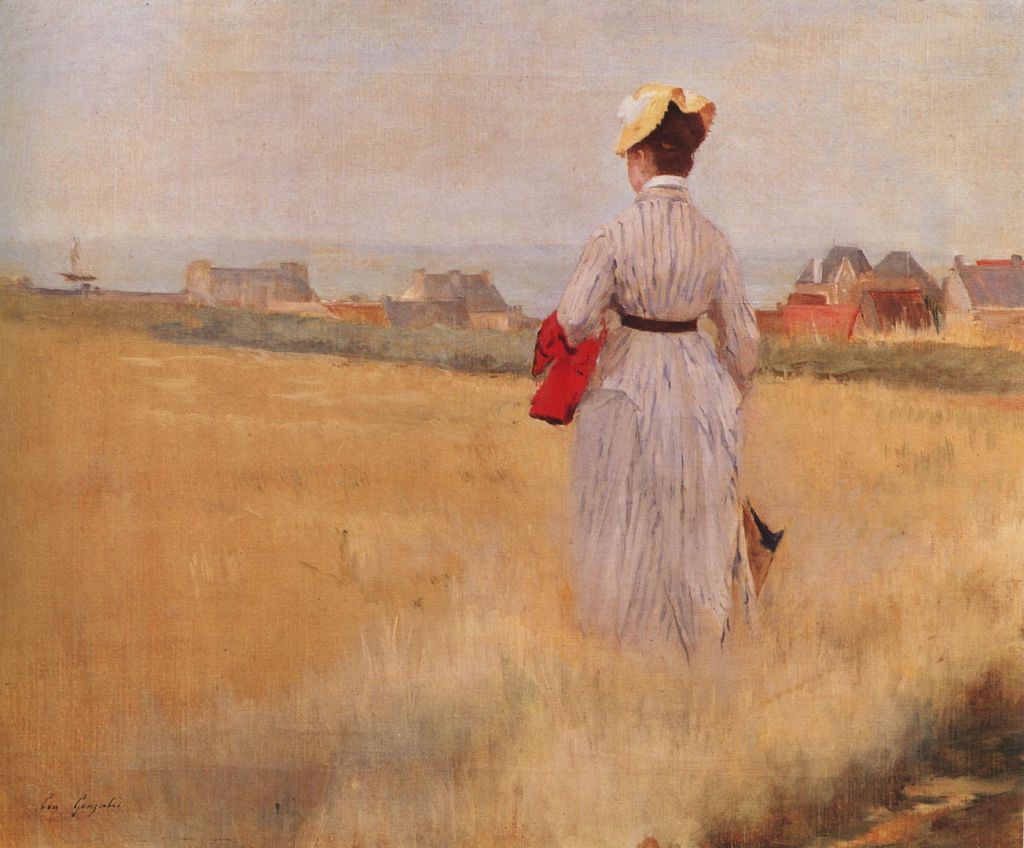
During the Franco-Prussian War of 1870-71, Gonzalès took refuge in the north French port of Dieppe, where she seems to have returned in later years. In about 1875-76, she painted this thoroughly Impressionist view In the Wheat (Dieppe). It has been painted thinly, with fine strokes suggesting the ripe stand of wheat, and the brilliant red jacket draped over the woman’s arm. She looks over the roofs of the small port towards the waters of the Channel.
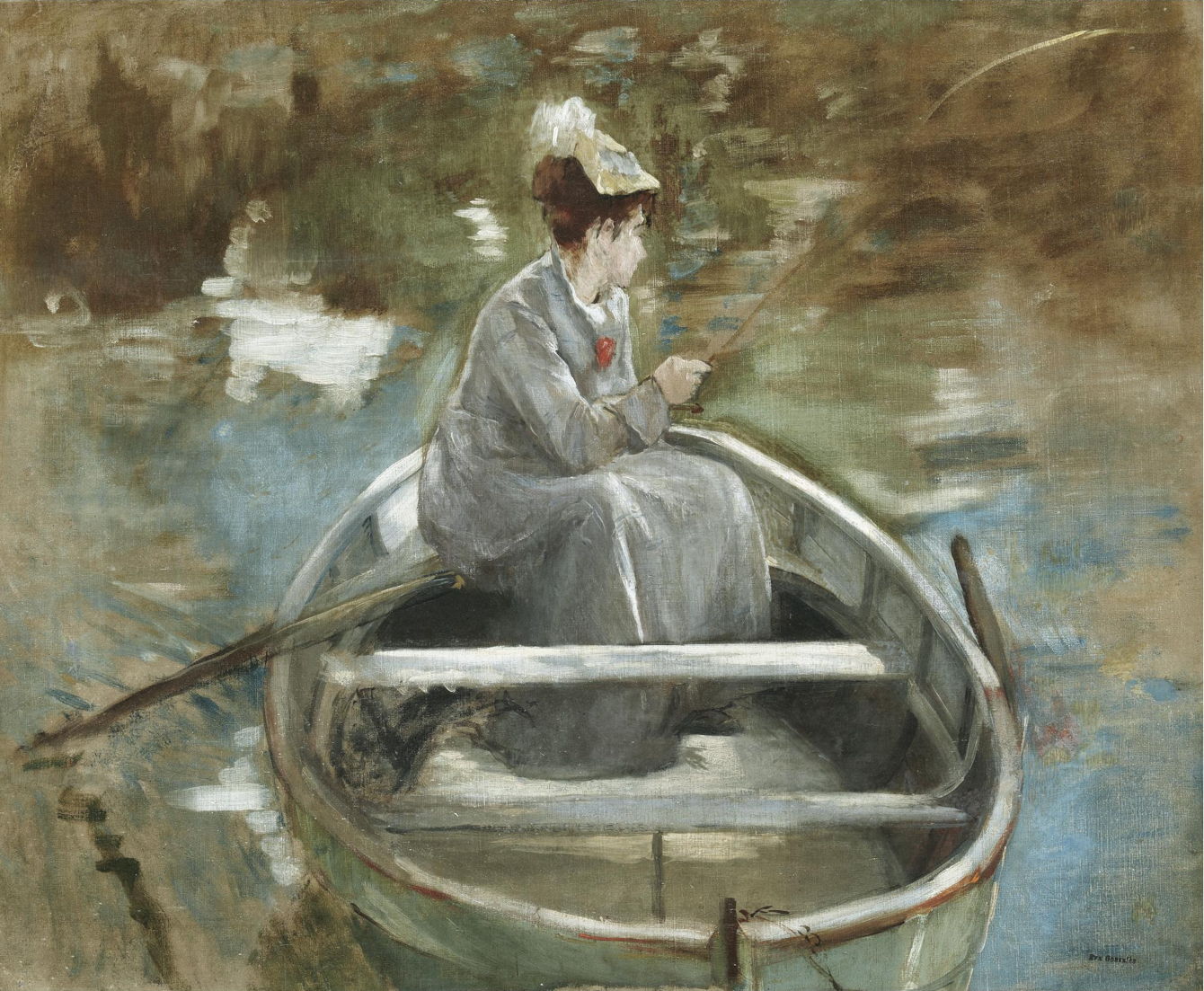
In a Boat (c 1875-76) shows a young woman, probably her sister again, fishing from a small rowing boat on a lake.
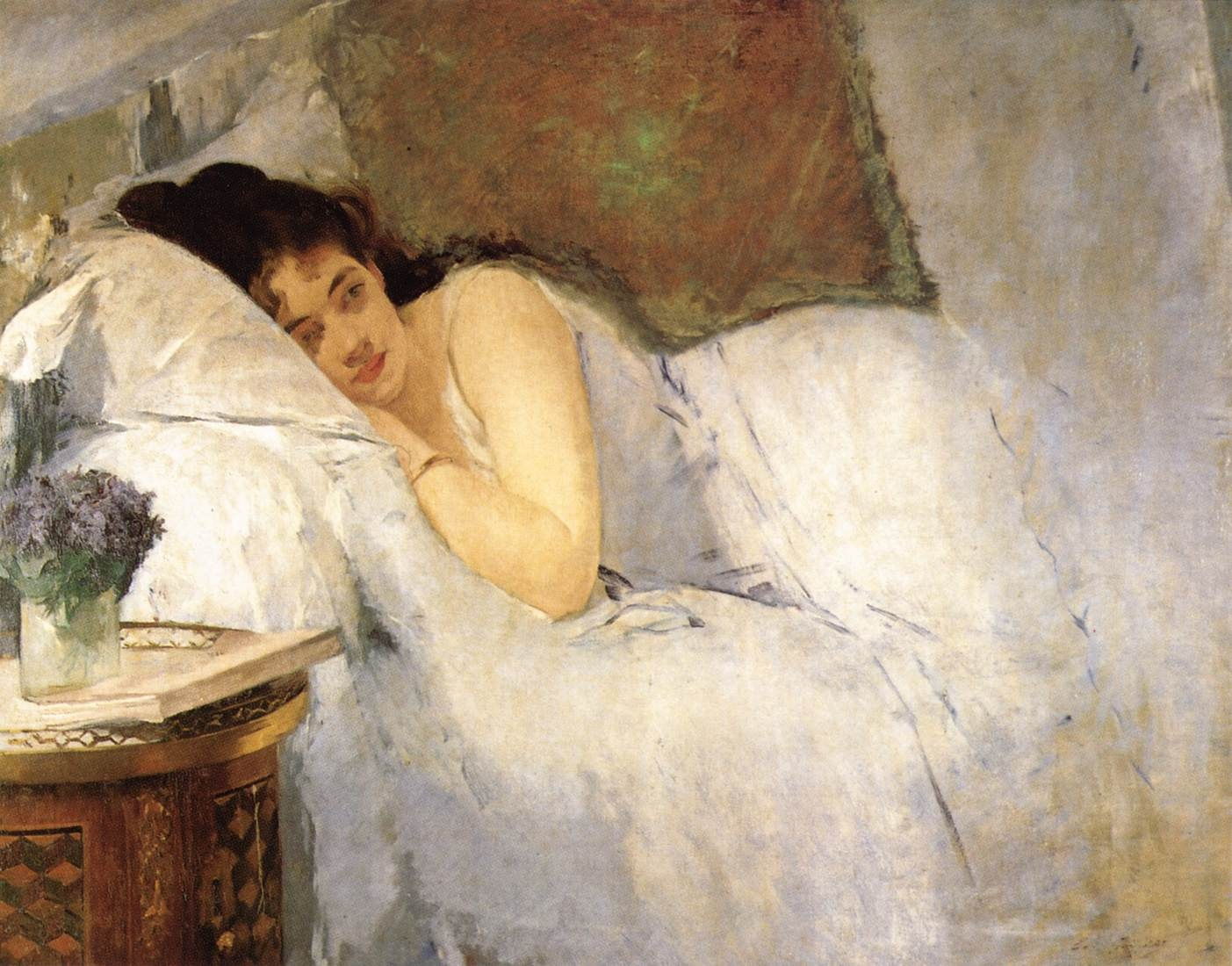
Her sister Jeanne makes another appearance in Morning Awakening (1876), one of a pair of paintings, the other showing the woman in a similar position but with her eyes still closed.

Gonzalès must have returned to Dieppe in 1877-78, where she painted this Nanny and Child in one of its parks. The nanny is thought to have been English, as was popular among the upper class at the time. Despite its sketchy background, she exhibited this at the Salon in 1878.

Another work probably painted at Dieppe, this time on its beach, is Boat at Low Tide (c 1877-78), a popular theme with other French Impressionists at the time.
Over this period, her pastel style had also changed considerably, and appears similar to that of Edgar Degas, with linear strokes of colour.
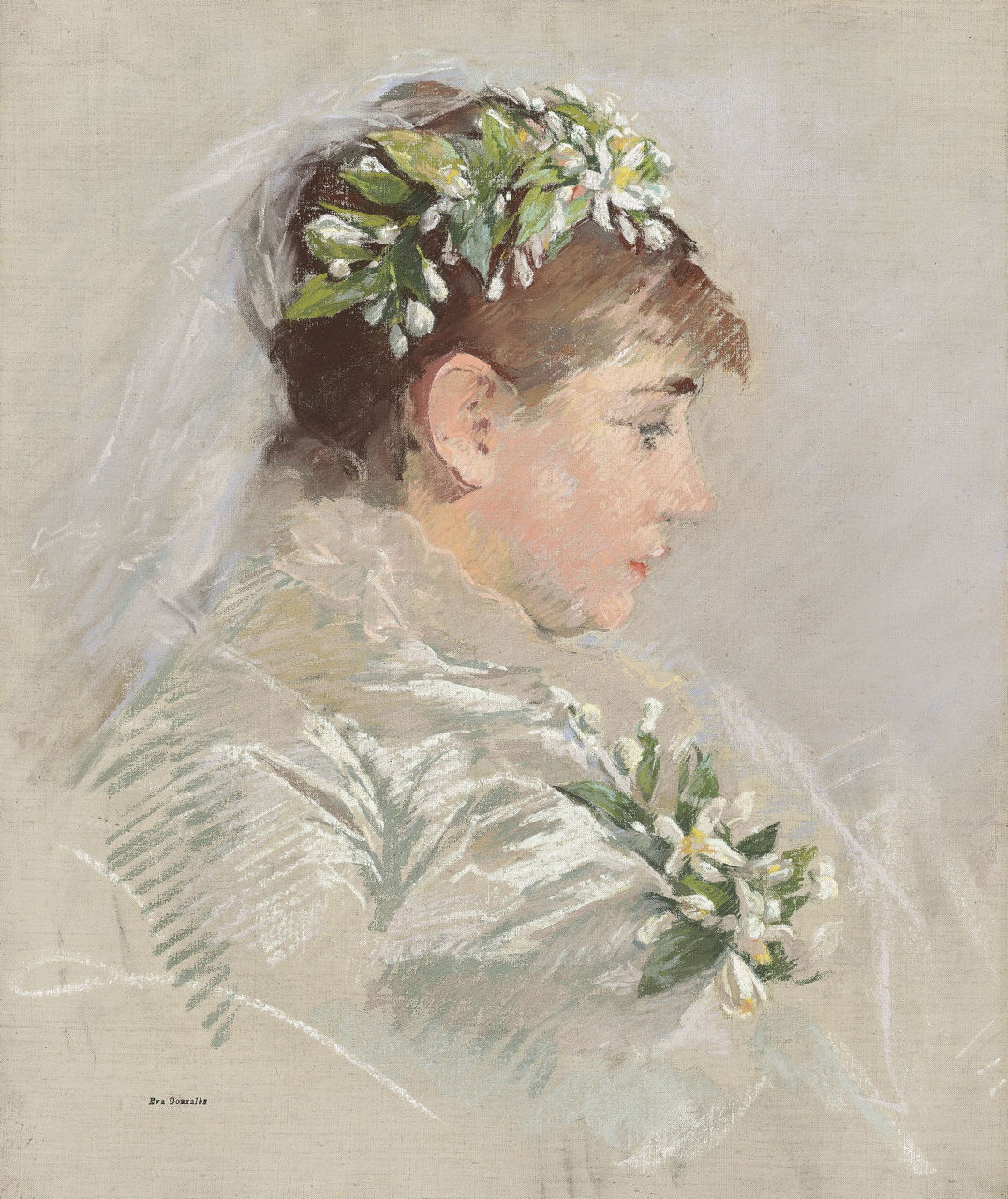
She painted The Bride (Jeanne Gonzalès) in 1879, another portrait of her sister, this time in pastels. This is a curious painting, though, as it was Eva who married that year, to Henri Guérard the graphic artist who was also Manet’s engraver, and Jeanne didn’t marry until after Eva’s death.
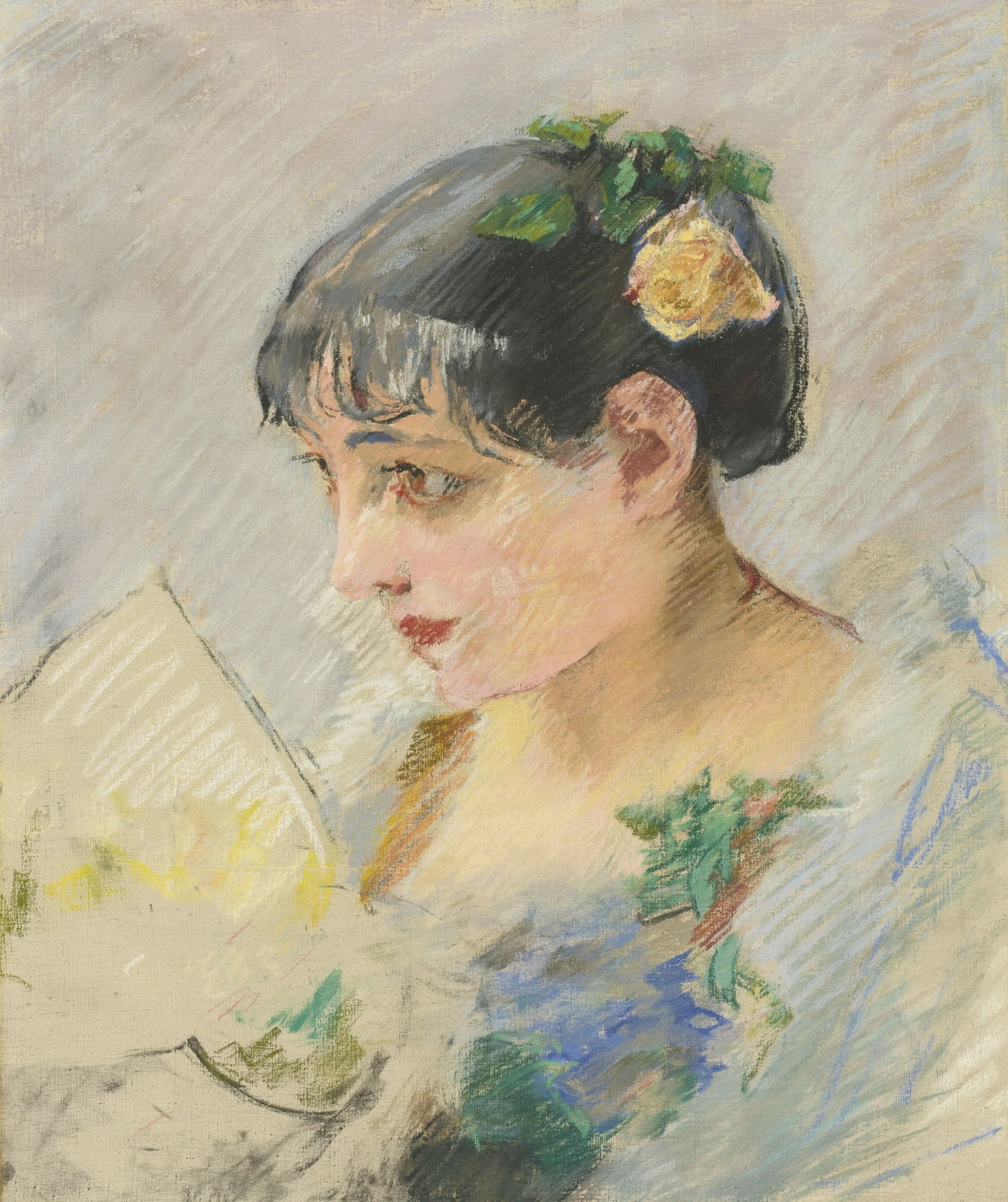
In 1882, she painted this Spanish Woman (Portrait of the Milliner) in pastels, using similar technique.
Five days after the death of her teacher Édouard Manet in 1883, Eva Gonzalès died of complications following the birth of her son. Although she has been remembered by a few exhibitions since, the last of those retrospectives appears to have been in 1959, well over sixty years ago. Her catalog raisonné lists 89 oil paintings and 22 pastels, but may well be incomplete. Tragically, she is today better known not for her art, but for the portrait of her painted by her teacher in 1869-70.

