
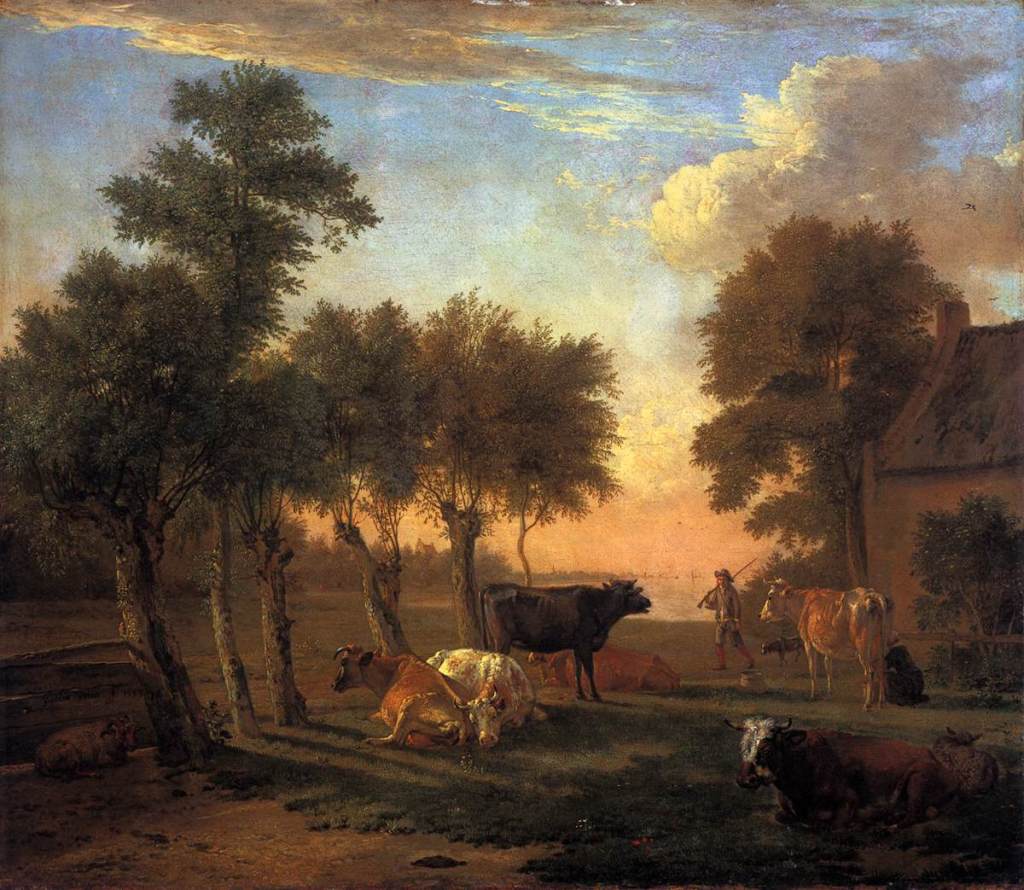
So far this series has concentrated on figurative paintings and the detail of their shade and shadows. As they have normally been painted in a studio that can be lit to demonstrate to the painter where the highlights and shadows should be, all they have to do to be optically faithful is to paint what they can see.
Problems for landscape painters who also produce their finished paintings in the studio are considerably more challenging. This episode looks at some of the solutions adopted by pioneering landscape painters of the seventeenth century.
One of the most popular approaches both then and now is to avoid the problem by depicting the scene in flat, even light typical of an overcast day. We’re so used to that weather that even the most aware viewer may not notice the almost total absence of shadows. However, the penalty is that the landscape also looks flat, and if you’re not careful dull as well.

Jacob van Ruisdael demonstrates a better alternative in his first panoramic landscape, a View of Naarden and the Church of Muiderberg from 1647. There are faint patches of blue sky in the clouds, and the land beneath is lit in patches by the sun. He uses those to silhouette the nearer church in darkness against the lighter sky, and a more distant church in bright sunlight. Although trees and corn stooks cast shadows, they can easily be recreated in the studio without the need for any accurate study made in front of the motif.
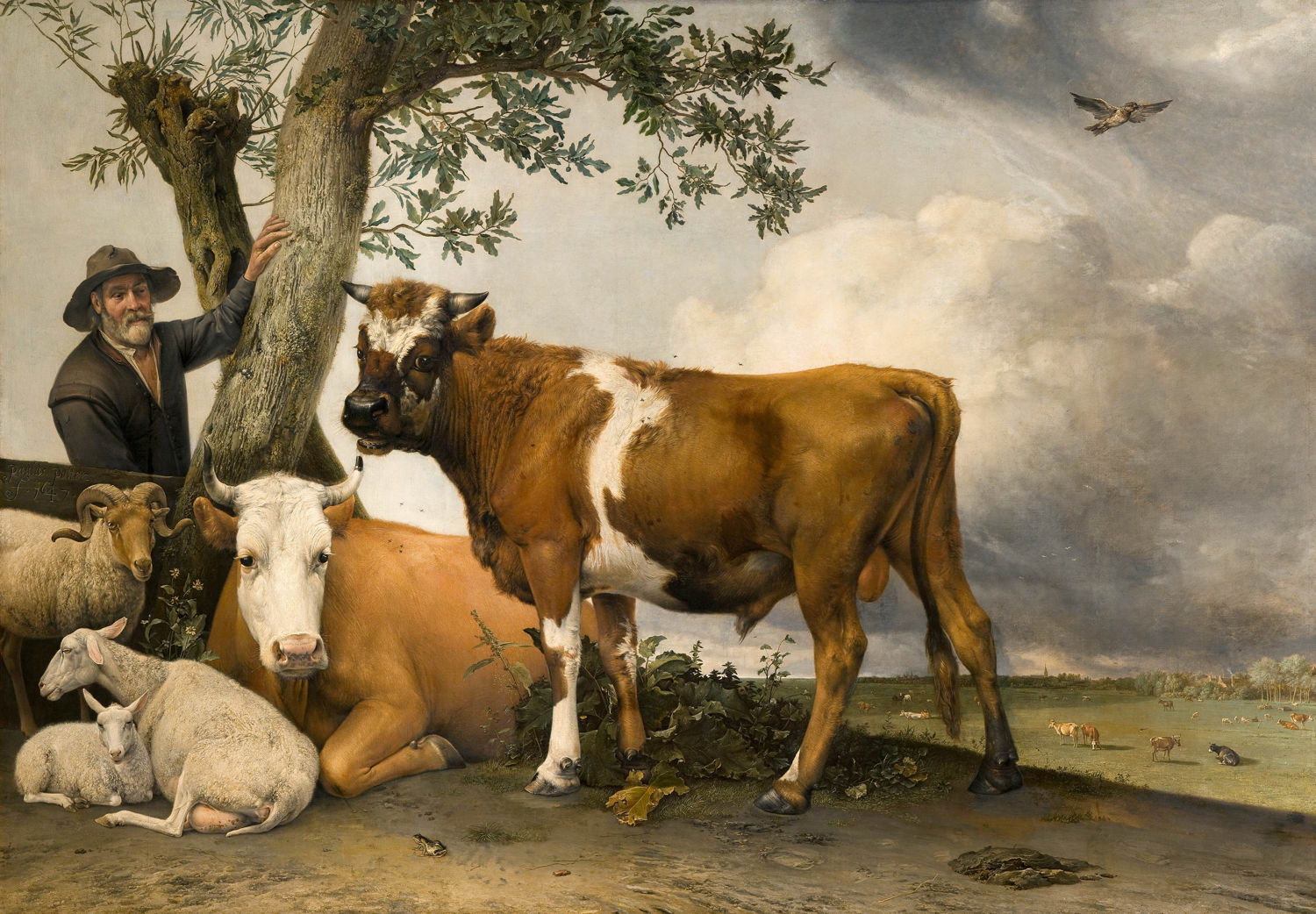
Paulus Potter’s first masterpiece, The Bull from 1647, is an example of a composite approach that isn’t optically consistent. Originally intended just as a portrait of the central bull, Potter enlarged the canvas to accommodate other animals and birds, and distant cattle in the meadows, which recede to the church of Rijswijk.
In doing so, each part of his painting has slightly different shade and shadows. The farmer and his livestock in the foreground are lit fairly evenly by a diffuse source above and to the left, casting only faint shadows. Down on the meadow to the right, though, the cattle have more obvious shadows indicating direct sunlight, as if taken from a different view altogether.
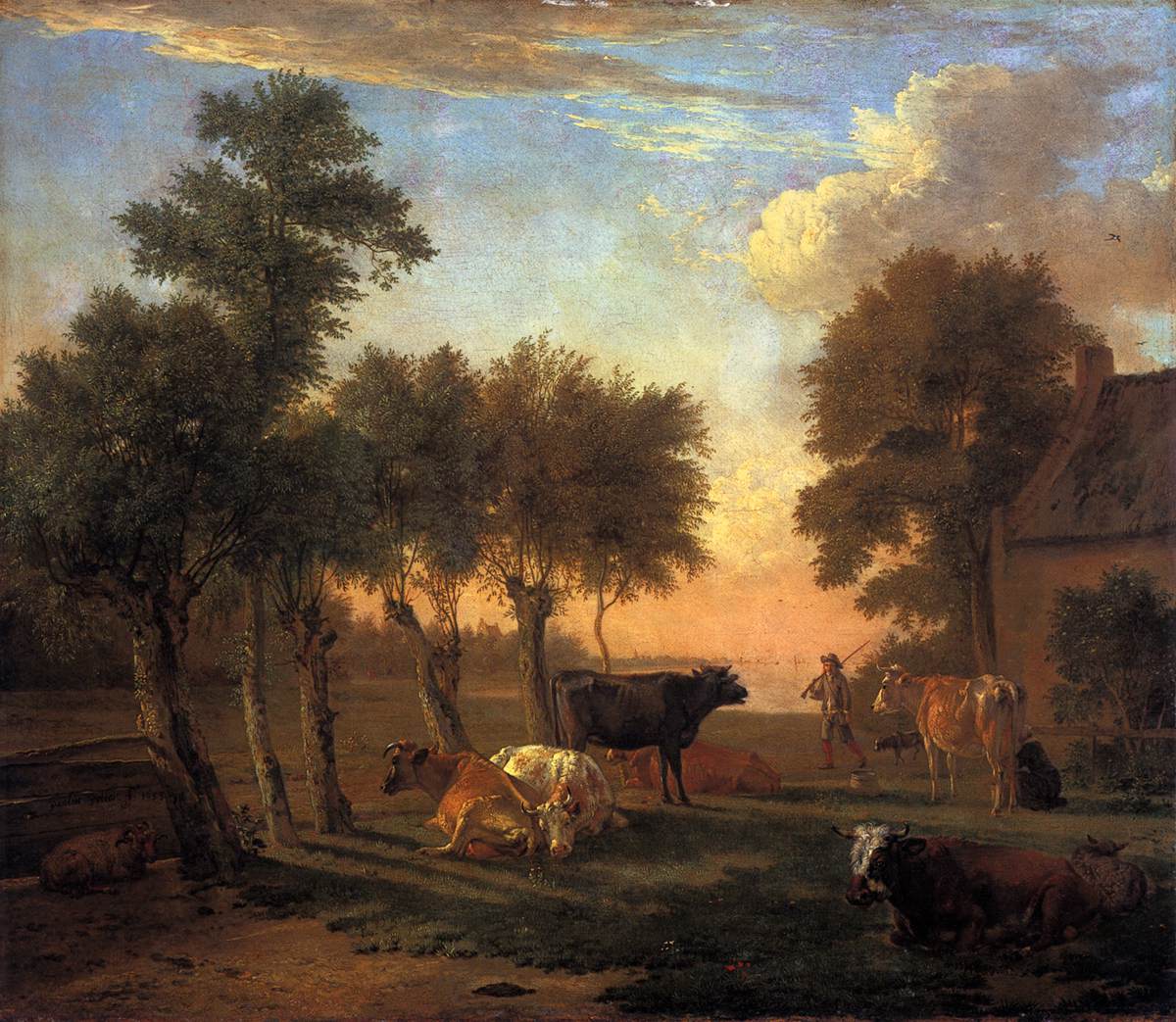
Later in his brief career, Potter used prominent cast shadows in Cows Grazing at a Farm from 1653, one of his last paintings. These most probably came from a detailed lighting study.
Some views are more suitable for achieving optical accuracy, typically those in predictable and reproducible lighting conditions, such as urban environments.

Gerrit Berckheyde’s view of Groote Market in Haarlem from 1673 benefits from the fact that the artist lived and worked nearby, so was able to make careful studies to get its cast shadows correct. However, while his depiction of the shadows from the buildings appears faithful, cast shadows of the family of three and a dog in the right foreground lack detail.
Painters from the Low Countries most probably brought their enthusiasm for painting faithful landscapes to those in Rome, among them being Paul Bril.

Bril’s panoramic View of Bracciano from about 1622 is a painting ahead of its time: a fairly accurate depiction of a real place, with all sorts of fascinating little scenes within it, like the young boy doffing his hat to the passing dignitary in his coach with armed guard. Although it avoids running into problems with shade and shadows by using diffuse lighting, they are used to give depth to the town, and in the foreground details as well.
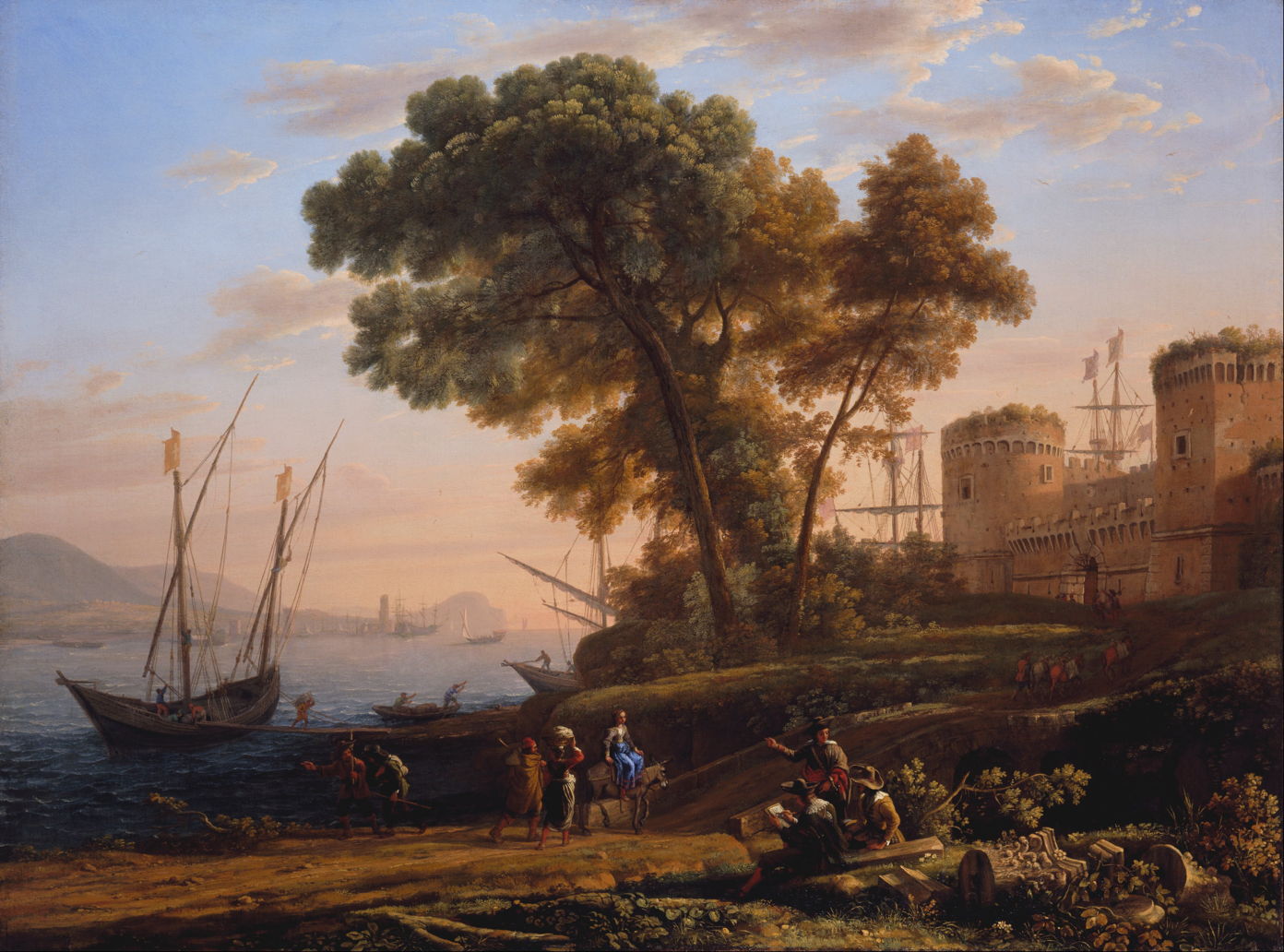
Claude Lorrain adopted a similar approach, here in An Artist Studying from Nature from 1639. This is an asymmetric and informal view, reversing the composition of Bril’s View of Bracciano, and avoiding high contrast shadows except in the figures in the foreground.
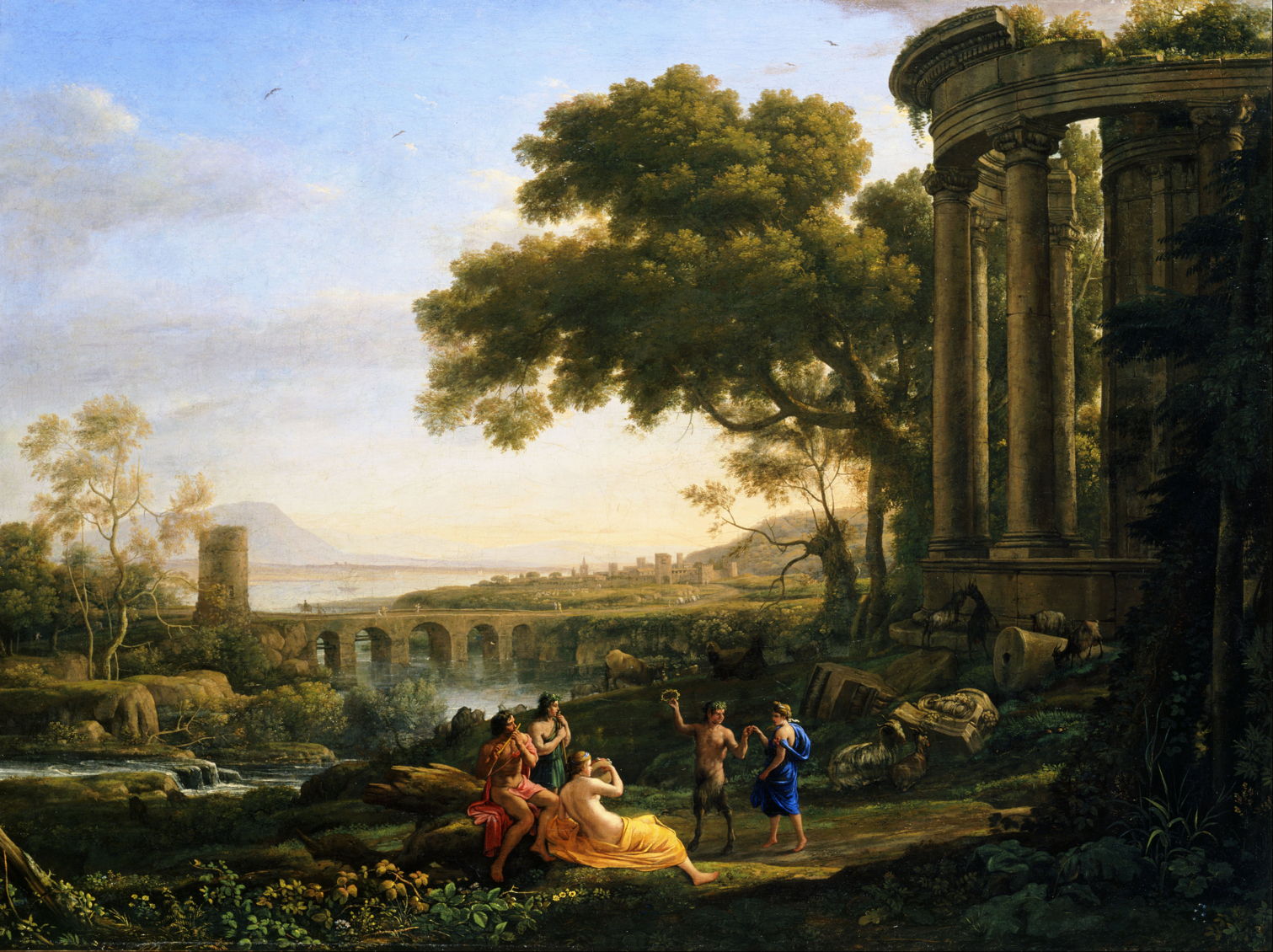
Of course Claude didn’t really paint in front of the motif like that, but works like this Landscape with Nymph and Satyr Dancing (1641) were assembled from his library of sketches made in front of the motif. It does have some peculiarities as a result, such as the two sources of light shown in the shade on the columns at the right.

Claude’s most characteristic views into the setting sun, such as his later Embarkation of St Paula, simplify his lighting, although there are surprisingly few shadows cast by the figures in the foreground.

Nicolas Poussin used similar working methods, with the addition of 3D models of his idealised landscapes. Although it’s hard to see how they could have informed light and shadow, he seems to have been able to envision them consistently, as seen in this Landscape with the Funeral of Phocion from 1648. Even though you know this location only ever existed in Poussin’s mind, its shade and shadows seem well observed, and generally faithful to such a scene had it ever existed.

