
During his brief life, Caravaggio was highly popular in Italy, and although he quickly became forgotten, other artists from across Europe were influenced by his paintings of shade and shadow. This article considers their depiction in a selection of works by successors, some who have been recognised as Caravaggisti, those who embraced Carvaggism.
As a reminder, of the 10 paintings by Caravaggio that I showed last week, the primary source of light came from the left or upper left in 7, or 70%.
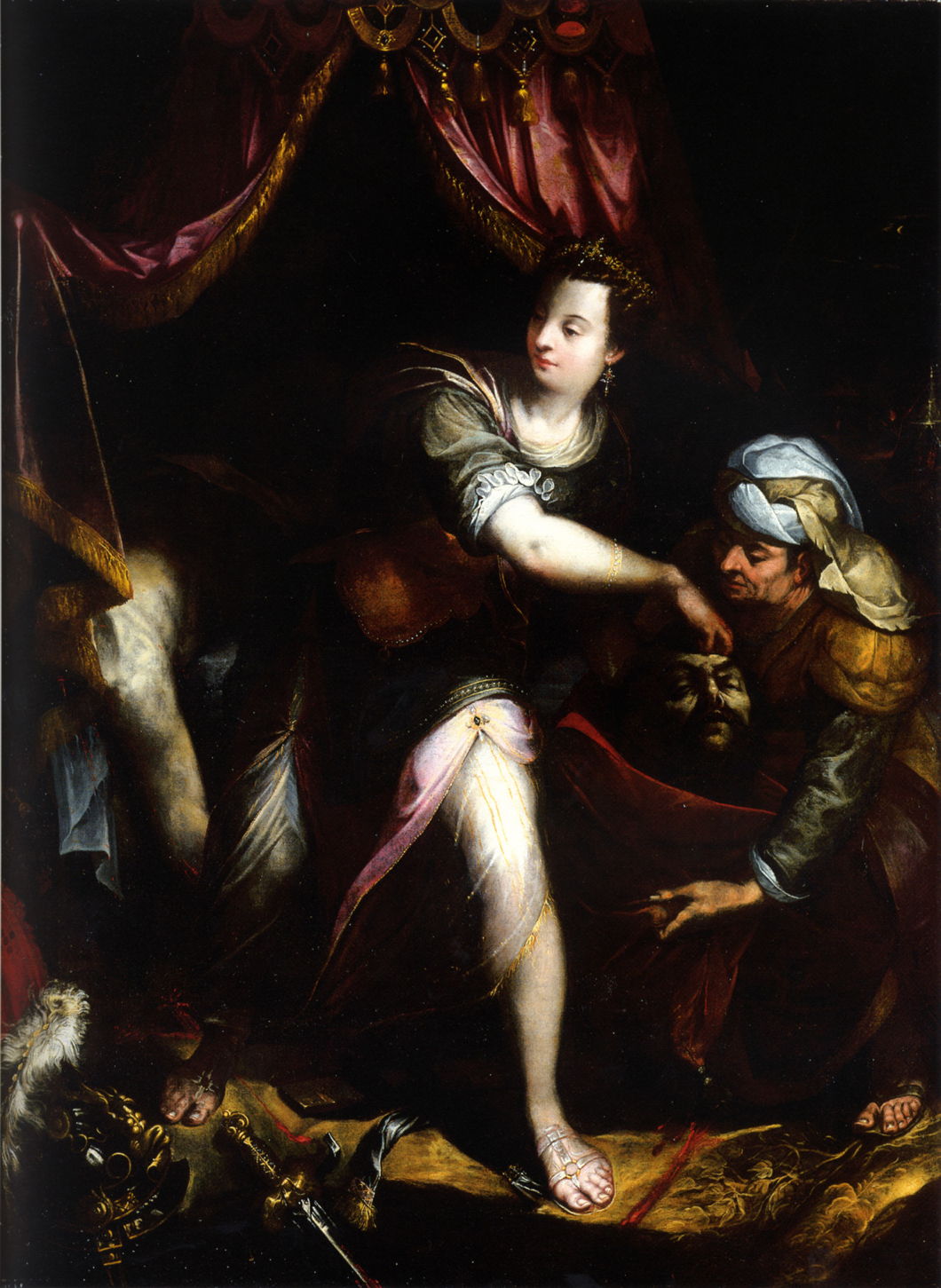
Lavinia Fontana’s Judith with the Head of Holofernes from 1600 has several good reasons for its use of chiaroscuro. Here is Judith with the decapitated body of Holofernes, passing the head she has just hacked off to her maidservant. The darkness hides some of the more ghoulish parts of the scene, heightens the sense of drama, and is entirely appropriate for the location and time of day. Its light source comes from the upper right, and the artist avoids depicting any cast shadows on the figures, as Caravaggio did.
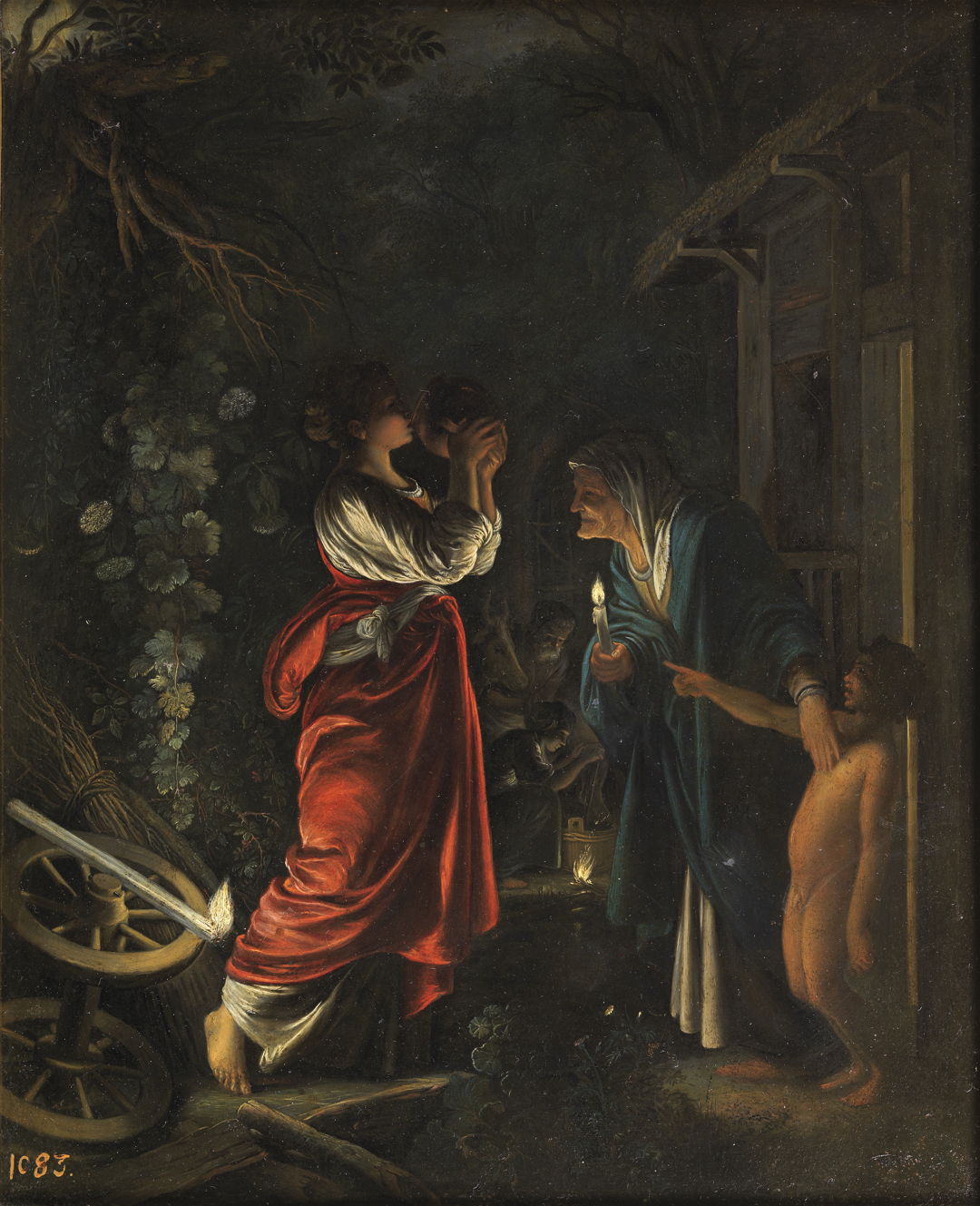
Many of Adam Elsheimer’s exquisite oil paintings on copper use very strong chiaroscuro too, showing stories which are set during the night, such as that of Ceres at Hecuba’s Home from about 1605. Unlike Caravaggio’s works, this scene relies on three separate point sources of light, all within the image. These appear to have been located with great care to create this effect.

Jusepe de Ribera (also known as José de Ribera or Josep de Ribera) was born near and trained in Valencia, but by 1611 had made his way to Rome, where he worked until 1616. His powerful interpretation of The Judgement of Solomon from 1609-10, when he was still working in Valencia, is emotionally eloquent and shows the influence of Caravaggio in what is also known as Tenebrism. This also relies on light from the upper left, and adds simplified cast shadows such as those from the mother kneeling in its foreground and looking up at Solomon.
Among the most brilliant of the Caravaggisti is Artemisia Gentileschi.
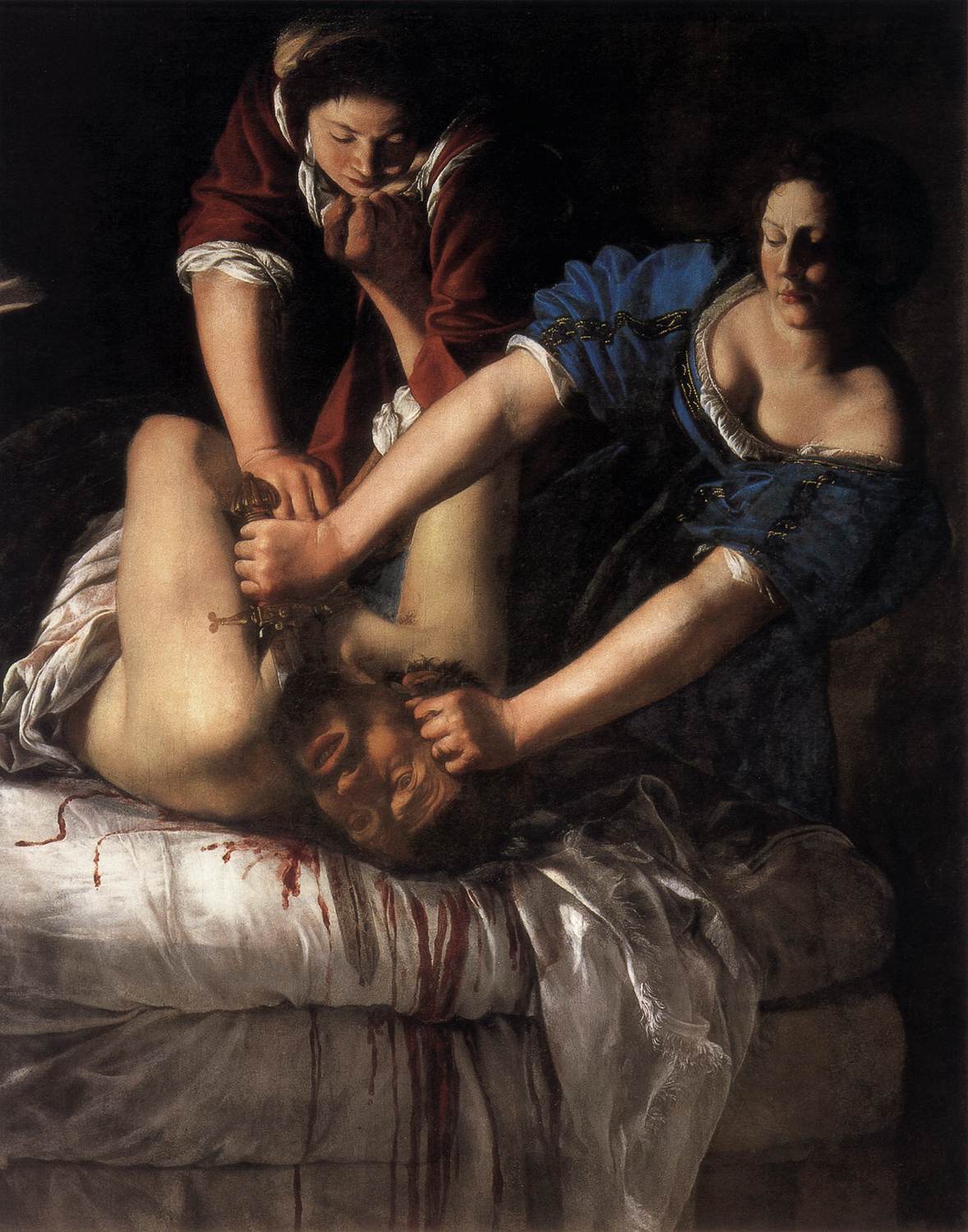
In her earlier version of Judith Beheading Holofernes from 1611-12 she out-darkens even Caravaggio. The sole source of light is to the left of the picture plane, and she has limited shadows cast by its three figures on others.
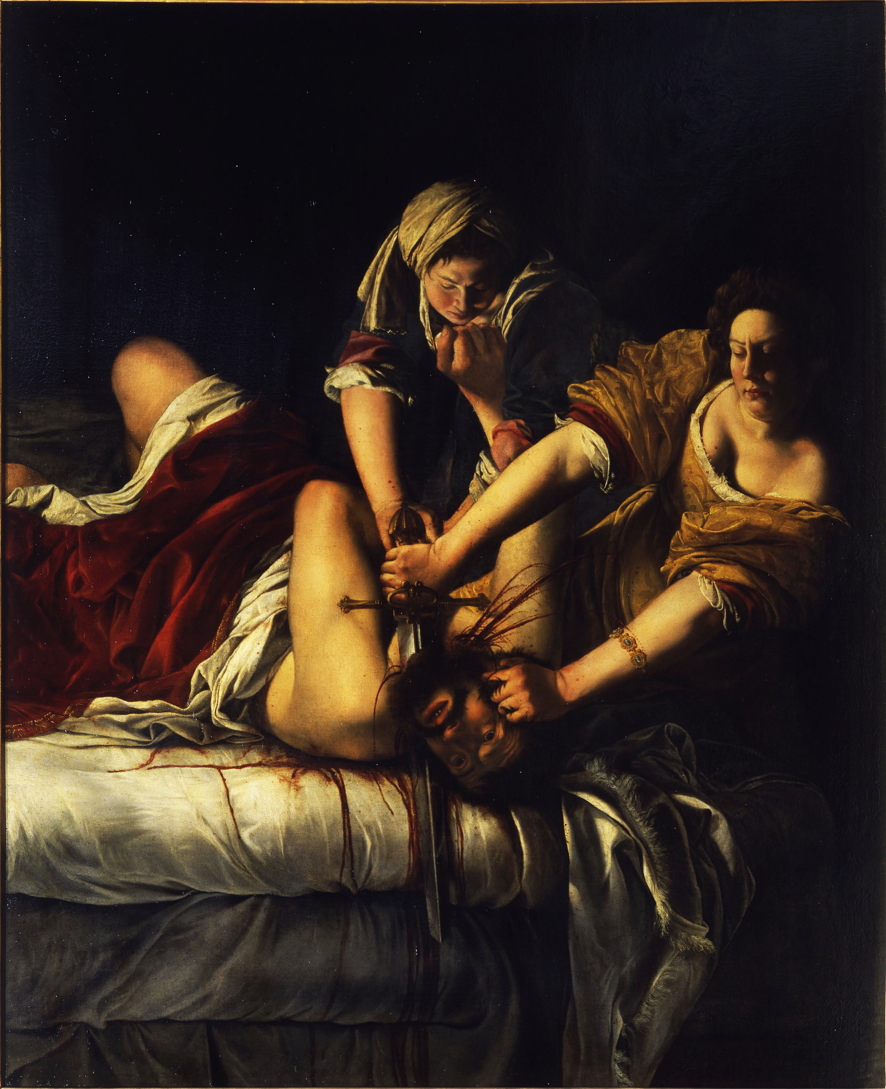
Artemisia Gentileschi’s father was a well-known Caravaggist, and she followed suit for the early years of her career. Her second version of Judith Slaying Holofernes from 1620-21 isn’t as close-cropped, and the light source is in a similar position, off to the left.

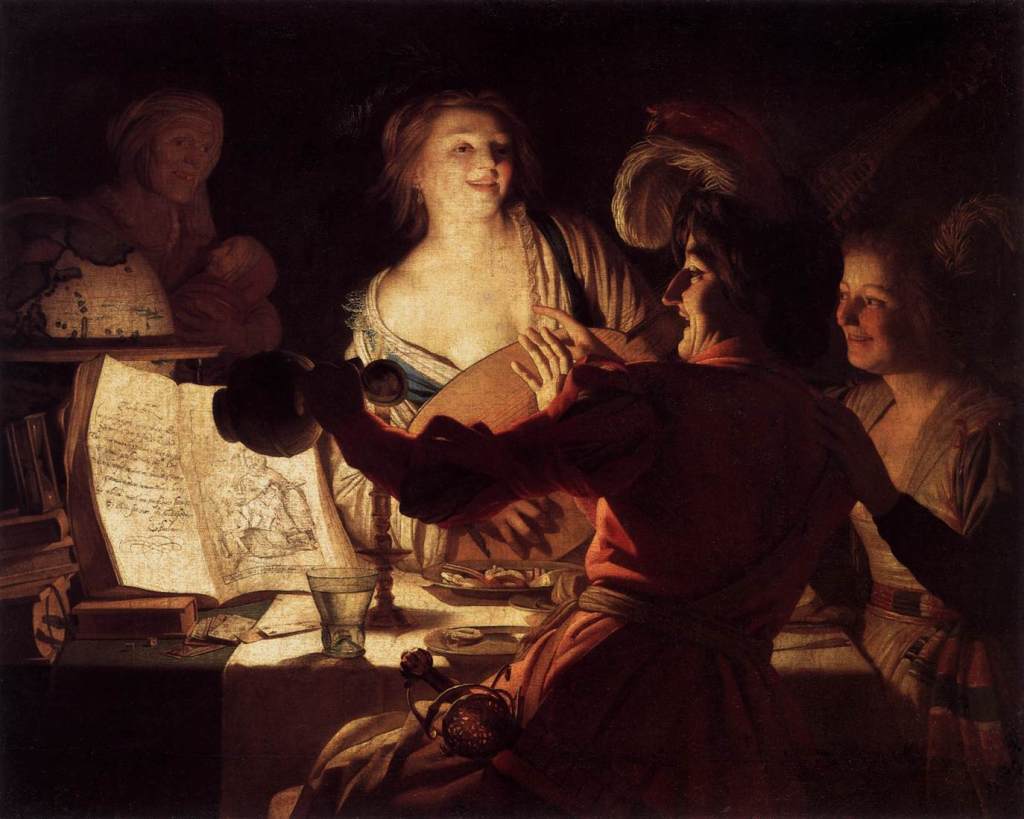
For Gerard van Honthorst, sometimes referred to as a Utrecht Caravaggist, dimly lit indoor scenes were associated with pleasures, often fairly sinful ones, as in his Merry Company from 1623. He also shows us how directional lighting can transform appearance, turning quite ordinary or ugly faces into caricatures. This is lit by a single point source, a candle the tip of whose flame can be seen just to the right of the man’s left hand, confirmed by the cast shadows on the tablecloth. Although most of the shade and shadow is coherent with that source, there is a little cheating in the lighting of the front of the man’s face.
One of the great exponents of chiaroscuro in religious painting was Georges de La Tour, whose series of paintings of Mary Magdalen are among the finest examples of the style.

De La Tour’s Penitent Mary Magdalene from 1628-45 is one of his simpler compositions, lit by the flame of the single candle behind the human skull. Shadow cast on the tabletop by the left side of the book that skull is resting on has been cropped, but this otherwise appears to comply with optics.
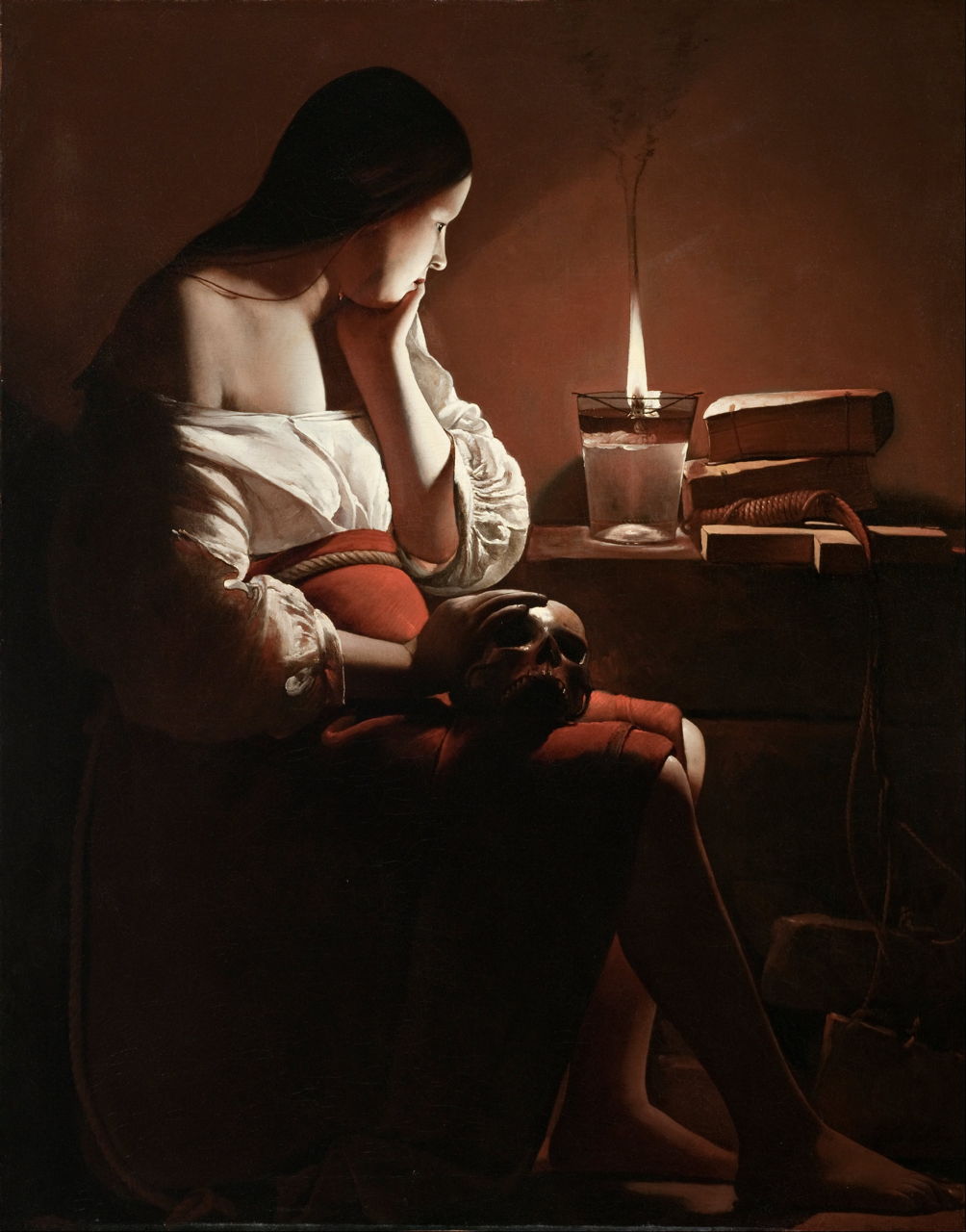
The Magdalen with the Smoking Flame is another example which probably dates from around 1630, again lit by the single flame. De la Tour draws clear distinction between the softer edges of shade, and the crisper edges of cast shadows.
As Caravaggism was dying out, the Dutch Golden Age brought together a great many painters with some of the pioneers of modern optics.

