

According to ancient legend, the person who invented painting wasn’t a man but a woman, and she did so by tracing the shadow of her boyfriend.
Dibutades, a maid of Corinth in Greece, was about to see her boyfriend sent away from the city on military service. As the daughter of a potter, she devised an ingenious way of making a portrait to remember him by: when he was asleep, she positioned a light to cast his shadow against a wall behind him, then traced the outline of that shadow in the plaster. Once he had gone, her father transformed that painted silhouette into the first relief sculpture by daubing clay within its outline.
In 1778, William Hayley told this story succinctly in his poem An Essay on Painting:
The line she trac’d with fond precision true,
And, drawing, doated on the form she drew …
Thus from the power, inspiring LOVE, we trace
The modell’d image, and the pencil’d face!
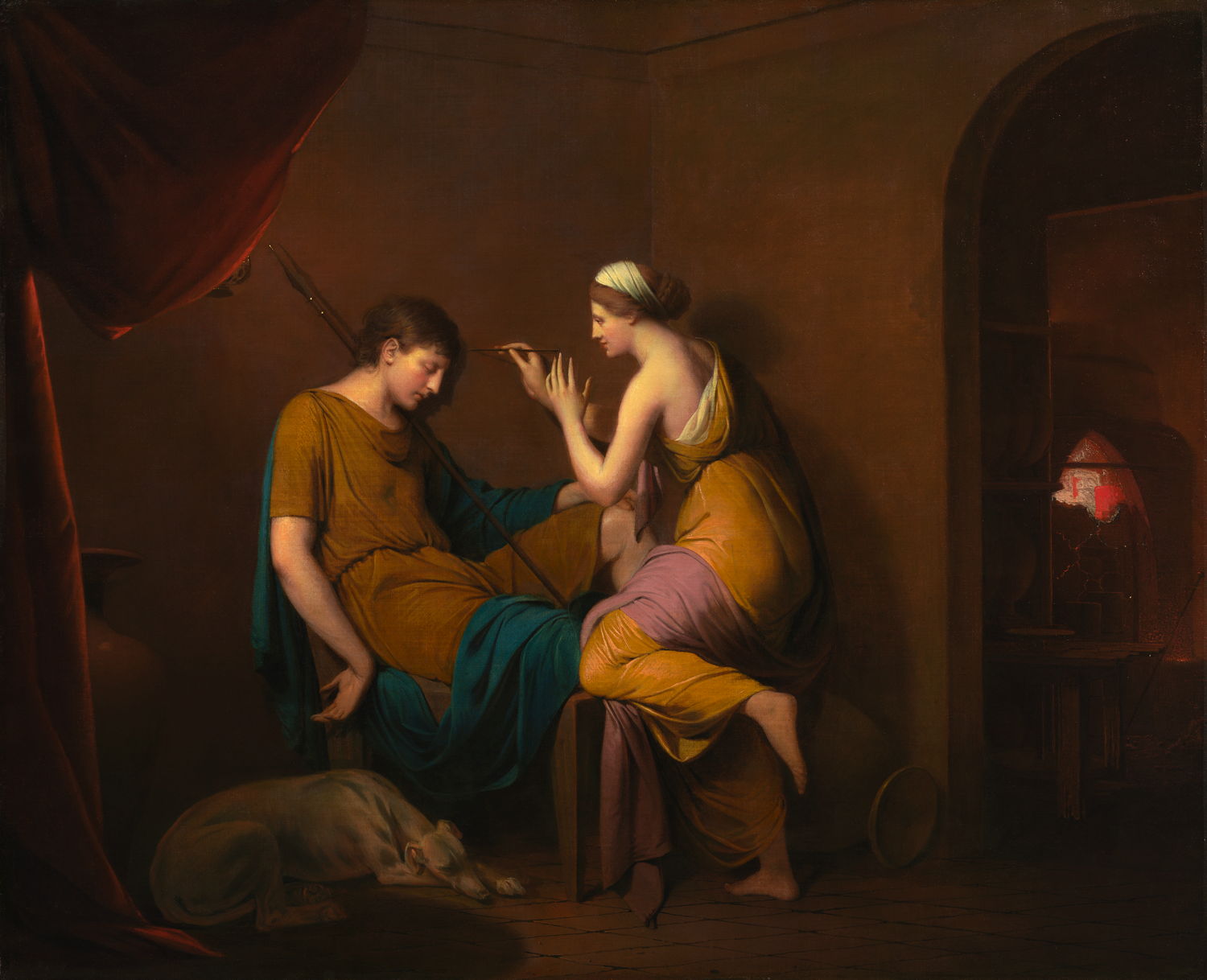
Hayley’s friend, the painter Joseph Wright of Derby, turned that into this painting of The Corinthian Maid in about 1782-5, as a commission for Josiah Wedgewood, the affluent founder of the local Wedgewood pottery.
Although I don’t believe a word of this legend, it establishes the importance of shadows in visual art, something not always appreciated by the viewer. Although shown in paintings long before the Renaissance, it wasn’t until the drive towards vivid realism in the early Renaissance that more careful attention was paid to them.

Masaccio and Masolino were among those who progressed the accurate depiction of shadows in their paintings. In this example by Masolino, shadows cast by the different figures are still exploratory, and not optically consistent. The cripple at the left has the light on his back, and his cast shadow is projected directly in from of him. Other figures cast shadows aligning more to the right, though. These probably arise because of the artist’s desire to project the shadows within the painting’s single-point 3D projection.
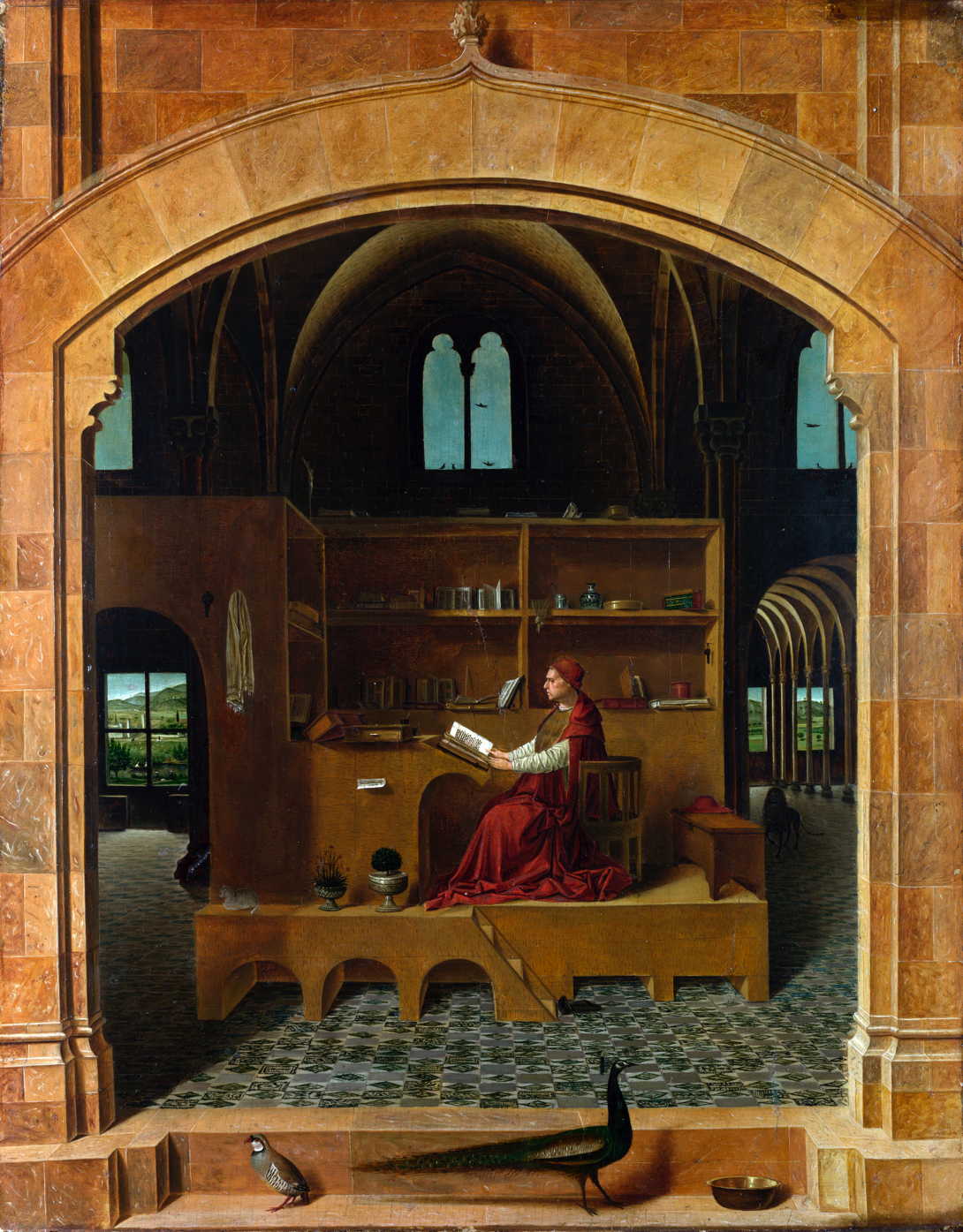
Antonello da Messina’s magnificent Saint Jerome in his Study from about 1475 shows well how the depiction of shadows progressed, in his skilful handling of multiple light sources. The two birds at the foot of the trompe l’oeil framing doorway are consistent with slightly diffuse light cast from behind the left of the viewer, which also illuminates the saint at his desk. Secondary sources come through the two windows revealing miniature landscape views.

The differences between shade and types of shadow are shown well in Giovanni Battista Moroni’s Portrait of a Gentleman with his Helmet on a Column Shaft (c 1555-56). Here the light source is to the right of and behind the viewer, forming a highlighted band down the length of the marble column.
Either side of that highlight, the rounded surface is no longer perpendicular to the source of light, and the column falls gradually into shade. At its left edge, there’s no light falling directly onto the marble, and it’s dark with attached shadow, that’s the shadow from the object itself, and not cast by anything else. At the base of the column, the light is blocked by the gentleman’s right leg, where that limb’s cast shadow falls onto another surface.
You’ll see these optical phenomena referred to using other terms, but here I’ll keep to shade, attached shadow, and cast shadow for clarity.
Shade and shadows are classical examples of strong cues to the shape and depth of the object, and became detailed in all good accounts of both drawing and painting. They are often the only features enabling the brain to transform an area of colour into a proper 3D object.
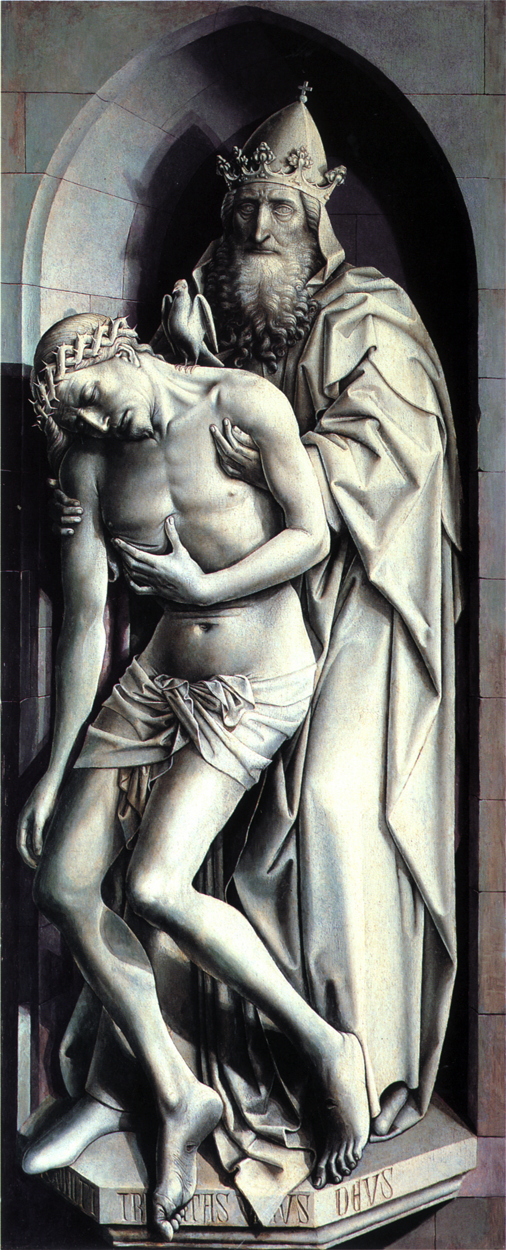
In the Northern Renaissance in particular, shade and shadows were used to transform grisaille paintings into trompe l’oeil mimicking sculpture. This example of The Trinity of the Broken Body (1410) by Robert Campin is startlingly realistic.

Viewers, particularly those who don’t themselves paint, aren’t always good at noticing shadows in paintings. We are so used to seeing the world in relatively flat, even illumination that the absence of shadows doesn’t normally cause alarm. But when they are included, shade and shadows make a great difference, particularly in views dominated by buildings, as shown in Gerrit Adriaensz Berckheyde’s Groote Market in Haarlem of 1673.
In figurative painting, painstaking attention to shadows can be central to success. This is best seen in works using chiaroscuro lighting, in which most of the canvas is very dark, and only limited details are lit, often using point sources of light.
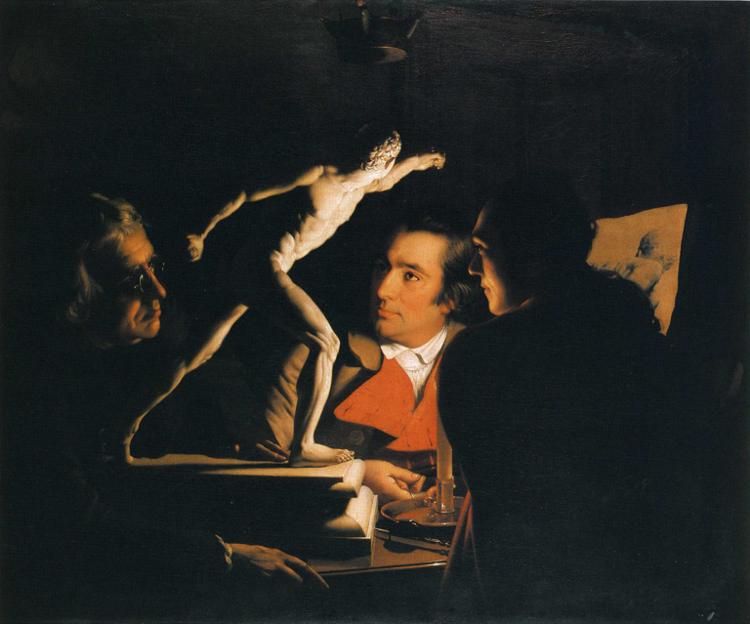
Three Persons Viewing the Gladiator by Candlelight (1765) was Joseph Wright of Derby’s first exhibited painting, and a brilliant demonstration of his skill in forming an image from the limited cues provided by well-lit fragments of figures and their shadows. In Wright’s case, this reflected the influence of the philosopher John Locke’s metaphor of the mind as a darkened room into which the eye lets in images to be reflected upon and stored.

JMW Turner used cast shadows in many of his landscapes, particularly those at sunrise or sunset, when their elongated cast shadows emphasise the time of day. Petworth Park: Tillington Church in the Distance (c 1828), is viewed from a high level to further exaggerate the length of its shadows.
Cast shadows have long been used in shadow play, in which hands and other objects are used to create silhouettes of rabbits and more.

Johann Eleazar Zeissig shows this in A Family Making Chinese Shadows, painted in the late 1700s. A family are entertaining themselves late in the evening with the aid of a lamp as a point source of light. An older boy is tracing the silhouette of his mother on a sheet of paper held on the wall behind her. At the upper right are more examples of his shadowgraph drawings. Three younger children are holding up their hands so as to form the silhouettes of a rabbit and a cat.
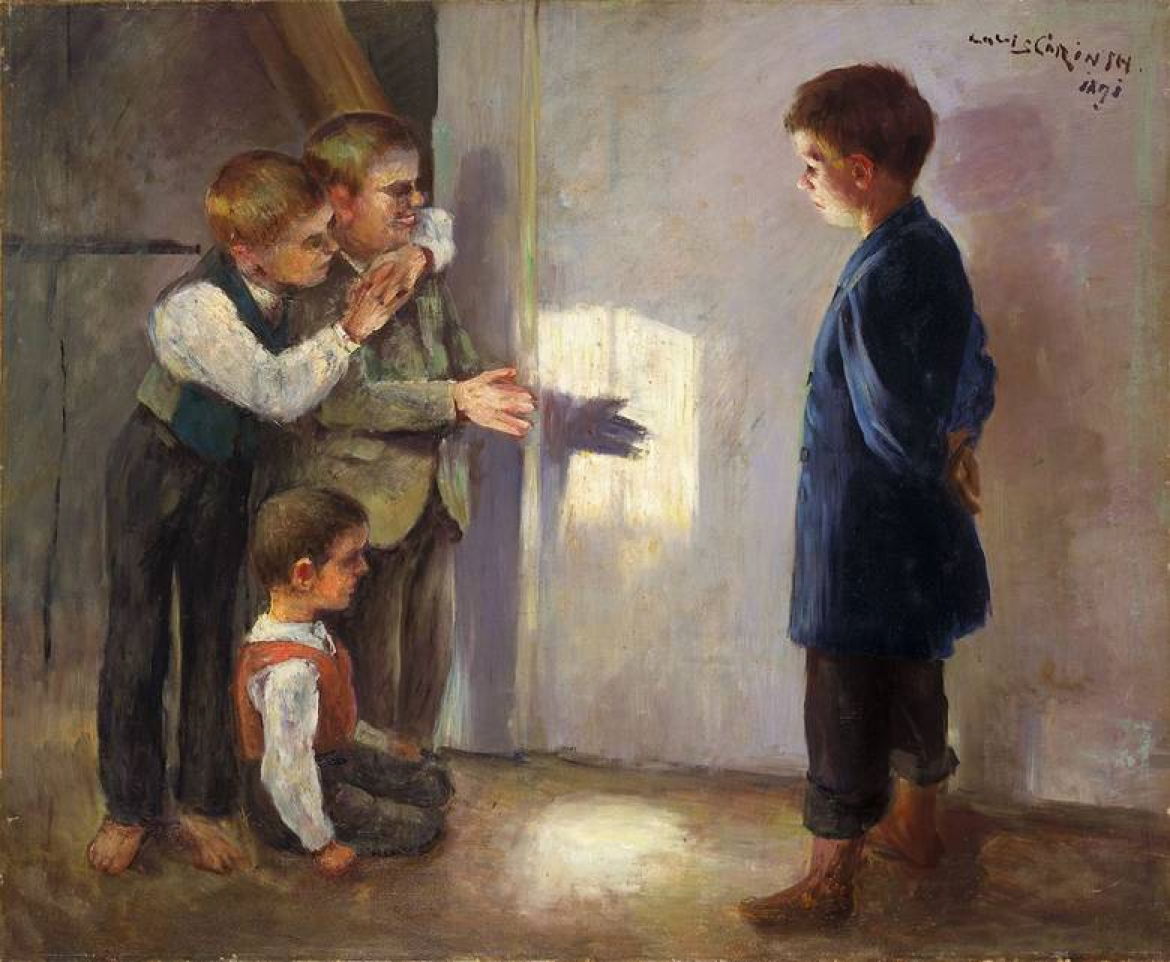
As late as 1891, Lovis Corinth showed four young boys engaged in Shadow Play, using the light cast from a high window.
Other paintings engage in shadow play, where cast shadows are used to extend the story shown. This appears to be linked to the use of photography as a tool by more modern painters.
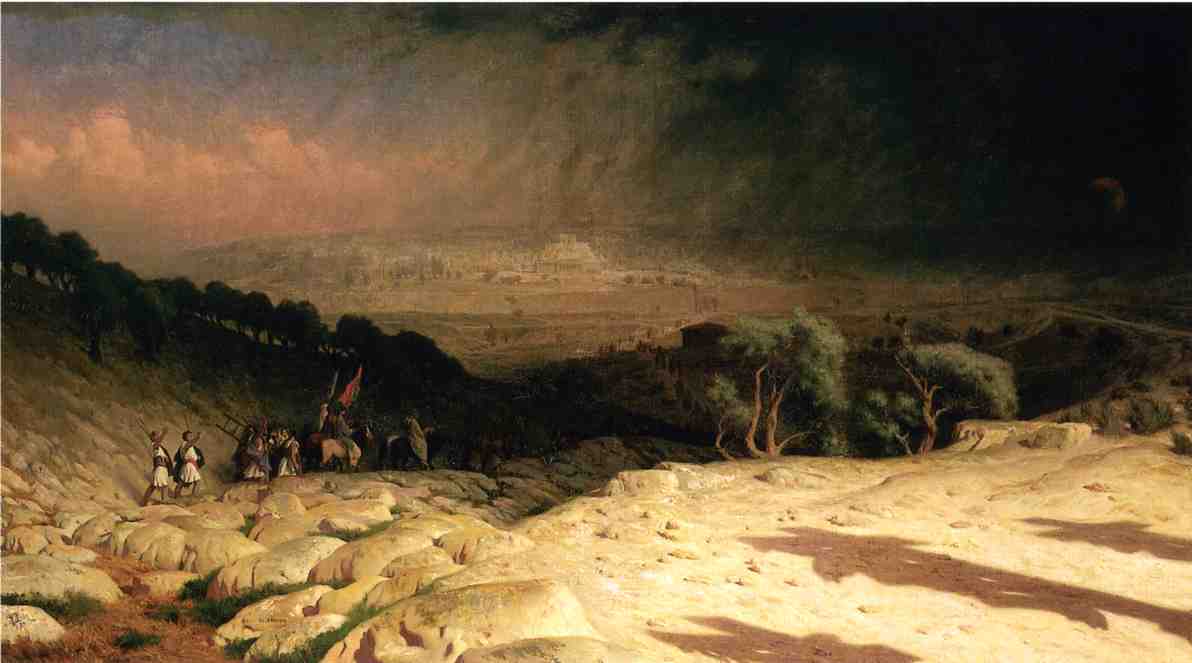
Golgotha (Consummatum Est, or Jerusalem) from 1867 is one of Jean-Léon Gérôme’s few religious paintings, which composes the scene of the crucifixion in a novel way. It shows the view from Golgotha looking towards Jerusalem as the executioners and crowd make their way down towards the city, as it’s being overwhelmed by darkness. The three crucifixions aren’t shown directly, but only in shadows cast by a brilliant light.

In William Holman Hunt’s celebrated painting of The Shadow of Death from 1870-73, the young Jesus Christ is seen in his father’s carpentry workshop, holding his arms up to savour the bright sunlight. His cast shadow on the rack of tools and wall behind shows him crucified on the cross, with his mother Mary already on her knees, as shown in so many paintings of the crucifixion.
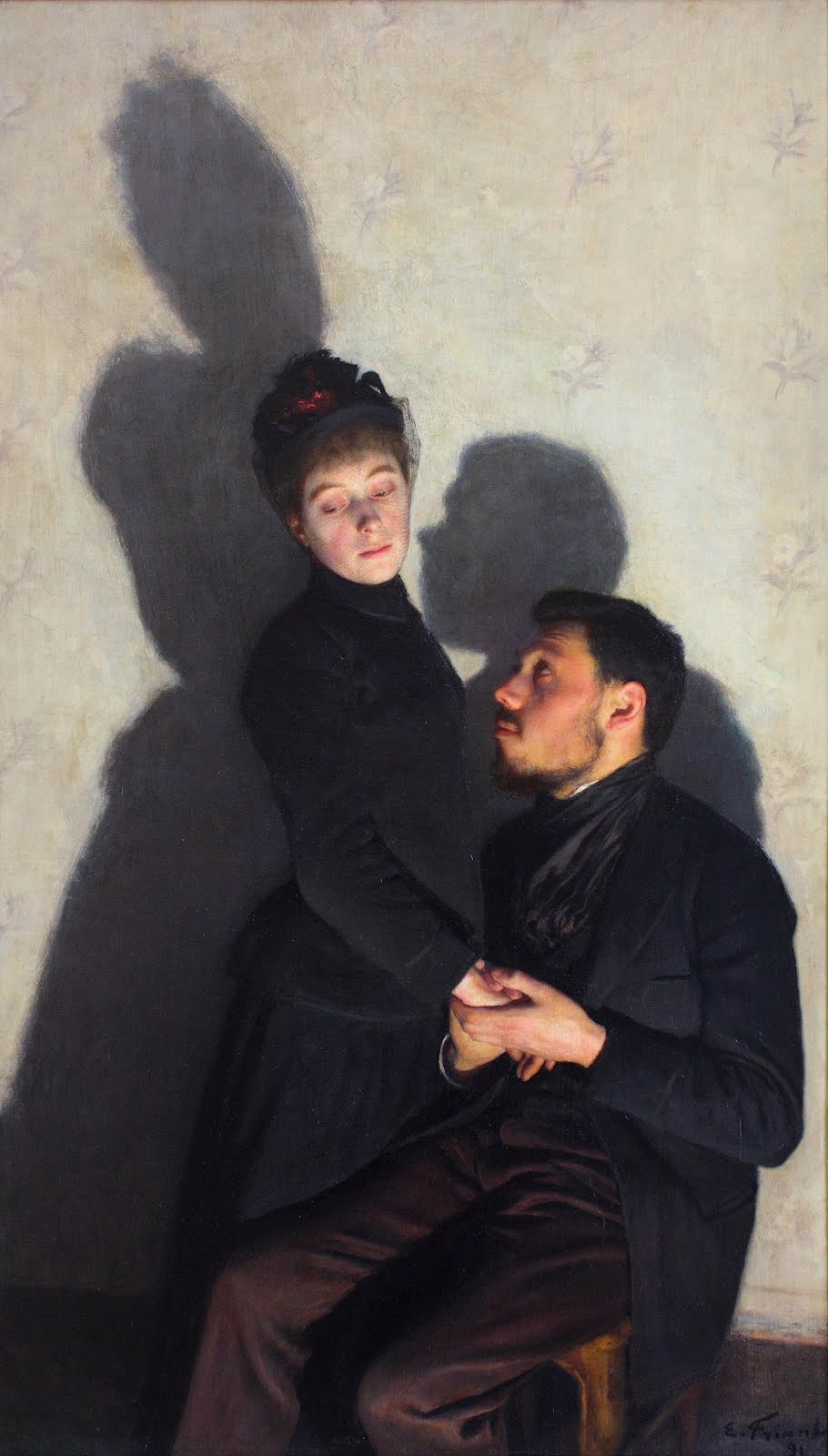
Émile Friant’s Ombres portées (Cast Shadows) of 1891 shows a couple lit by a bright point source of light. The figure of a man is looking up imploringly at the woman, who looks aside from his gaze. The shadows tell a different story, though: his head is about to kiss her left cheek, but her shadow is distant from his.
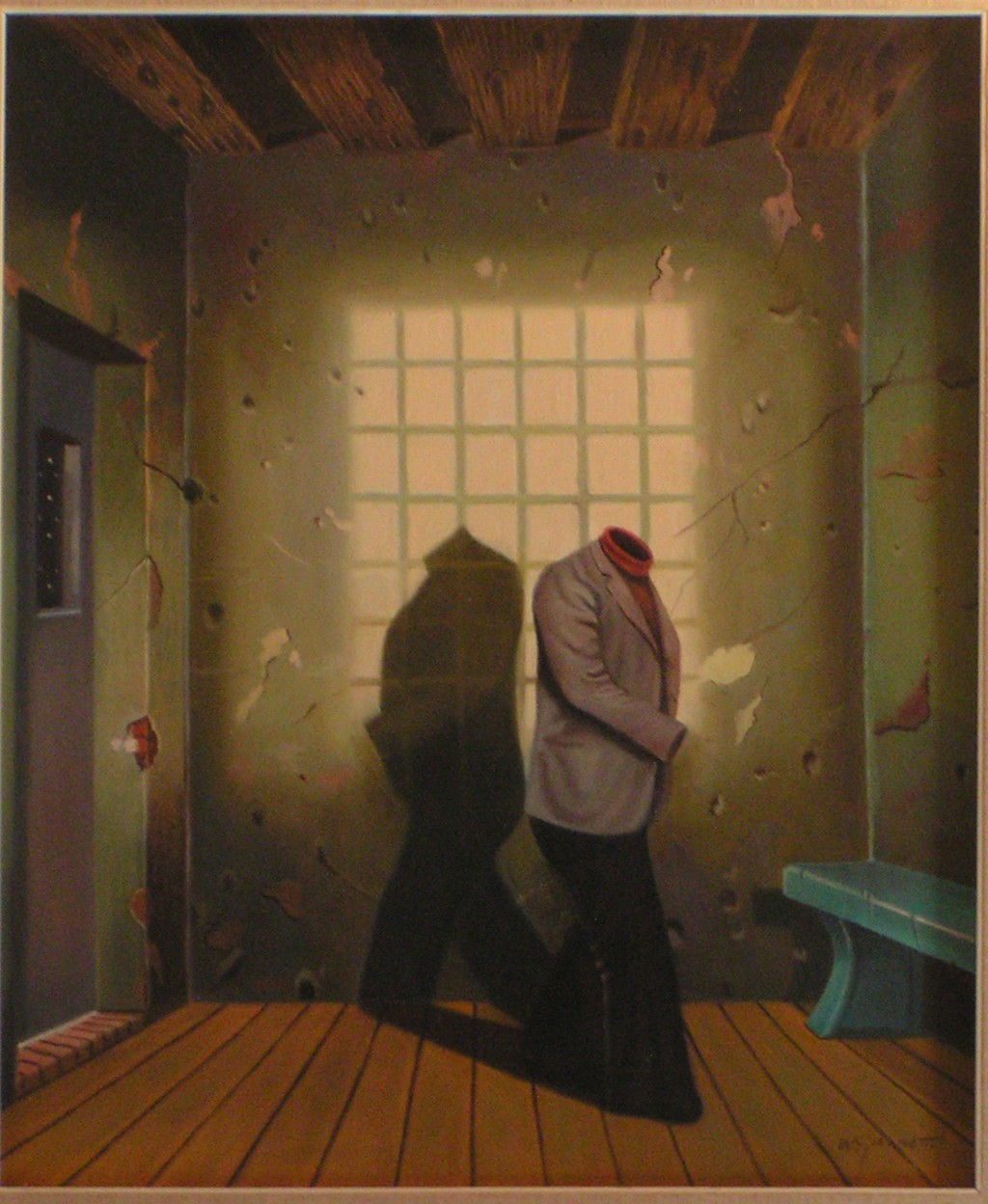
During the twentieth century, Surrealists and others have engaged in even greater shadow play. In William Girometti’s Life in the Reflection of Freedom from 1972, one shadow is cast from the bars of a window in a prison cell, the other is shown as a combined reflected shadow from the unoccupied clothing.
Further reading
Michael Baxandall (1995) Shadows and Enlightenment, Yale UP. ISBN 978 0 300 07272 4.
Roberto Casati and Patrick Cavanagh (2019) The Visual World of Shadows, MIT Press. ISBN 978 0 262 03958 1.
EH Gombrich (2014/1995) Shadows. The Depiction of Cast Shadows in Western Art, Yale UP. ISBN 978 0 300 21004 0.

