
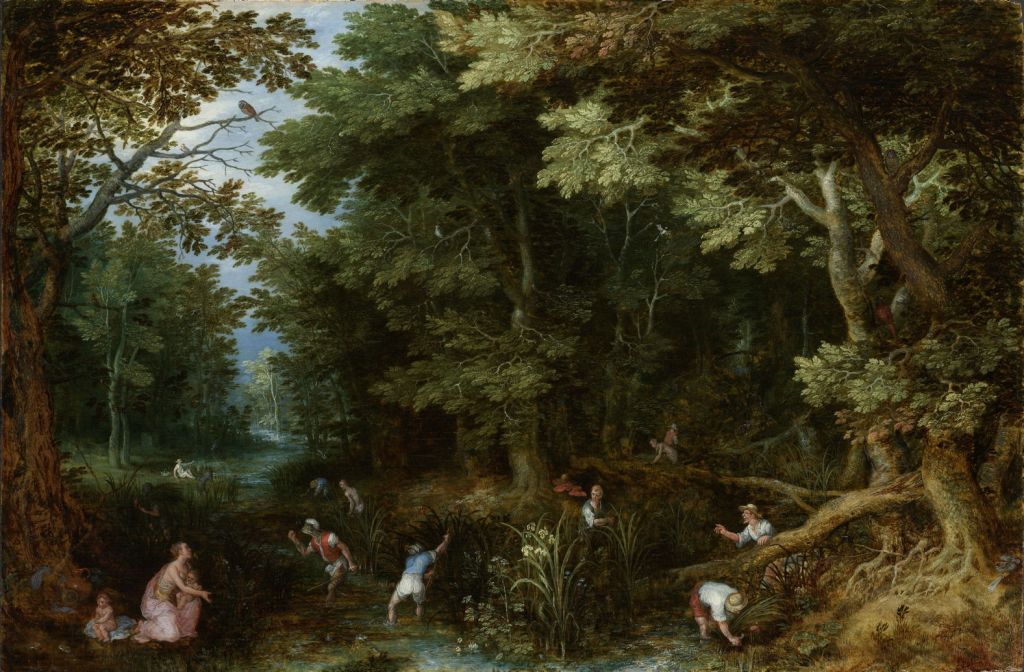
Before the Renaissance, when paintings were seldom intended to be realistic representations, trees were largely symbolic, although some artists did differentiate between species. The new emphasis on realism that developed in the fifteenth century introduced the first true portraits of trees, although they remained largely scenic in purpose.
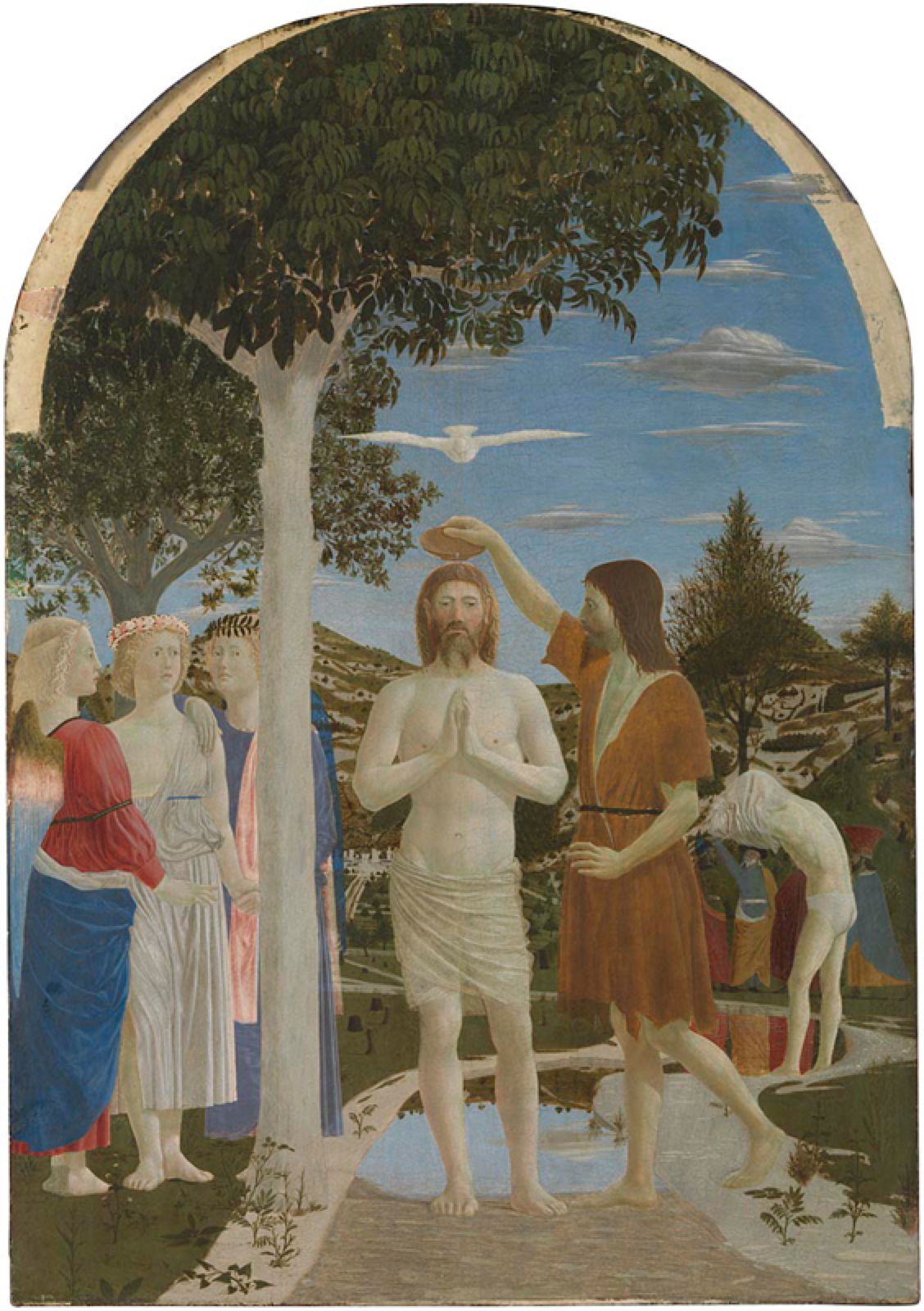
In Piero della Francesca’s Baptism of Christ, painted after 1437 in egg tempera on poplar wood, the prominent walnut tree beside the figure of Christ is a faithful depiction of a common walnut, although the detail of its rugged bark appears to have faded. Its only unreality is at the base of its trunk, where it appears inserted into the path. Other trees in the background are shown as distinct species.

Giorgione’s revolutionary landscape The Tempest from just after 1500, arguably the earliest surviving true landscape painting in the European canon, includes several distinct types of tree, each of which has been carefully built on anatomical principles after close observation and probably studies of living trees.

In the Northern Renaissance just before 1530, Albrecht Altdorfer was pioneering the use of repoussoir with trees in his Landscape of the Danube near Regensburg. He adds interest by pairing a pine on the left with a deciduous species on the right, taking that mixed woodland back to the buildings in the middle distance.
Later in the sixteenth century, members of the Brueghel family advanced tree portraiture through the seasons.
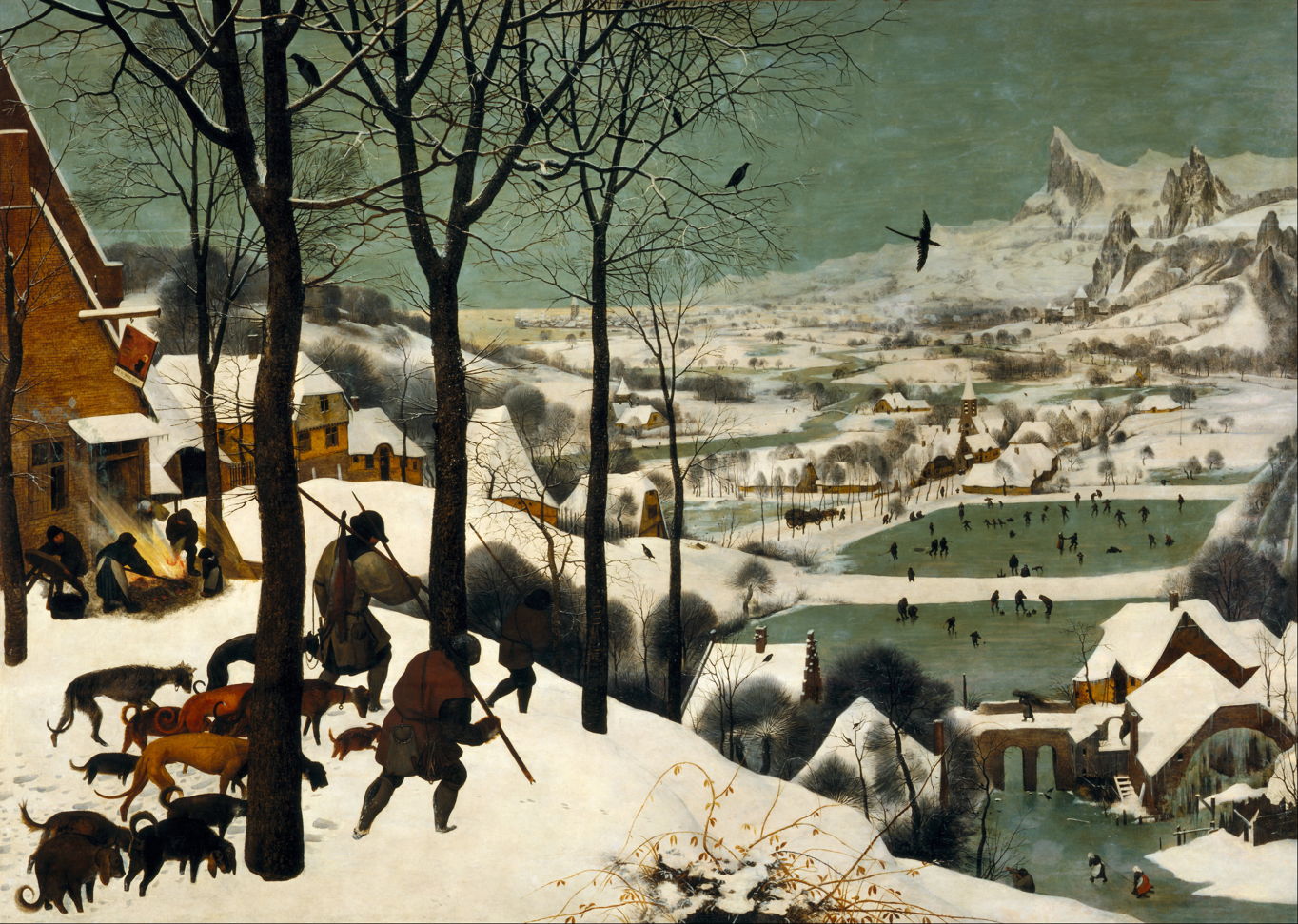
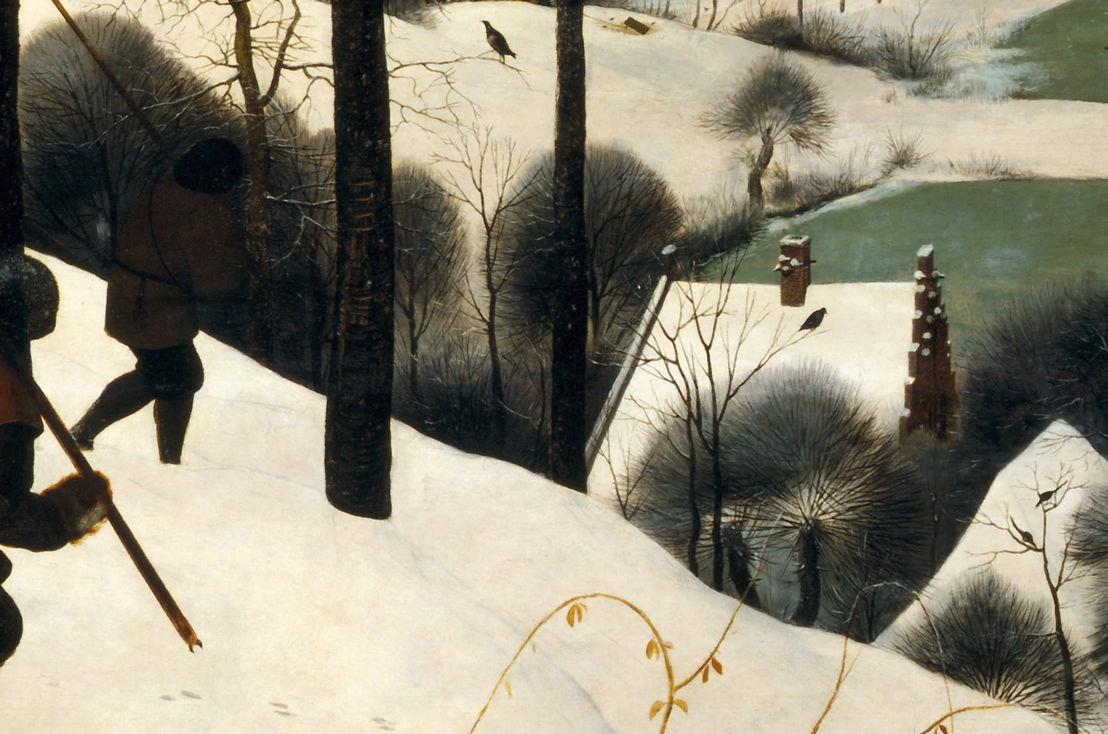
Pieter Brueghel the Elder (1526/1530–1569) was not only one of the founding fathers of landscape painting, but a particular exponent of winter scenes, often populated with country people. His Hunters in the Snow (Winter) (1565) brings together many of these elements, and is one of his best-known works. It’s unusual for his innovative treatment of the dense branches and twigs in trees (detail below), which has seldom been copied by others.

Painted at about the same time, possibly during the same winter, his Winter Landscape with Skaters and Bird Trap (1565) is more typical of his home country, the Netherlands. The bare branches of trees, even in the distance, are here painted more conventionally than in his Hunters in the Snow (Winter), and are an essay in the anatomy of branches.

It was Jan Brueghel the Elder who developed this into dense forest in his Latona and the Lycian Peasants, painted between 1595-1610, although this was probably completely inappropriate for this setting of Ovid’s myth in Lycia, in the south-west of modern Turkey.
The next landmark in painting portraits of trees was the practice of painting in front of the motif, attributed to Diego Velázquez when he was staying in Rome in 1630. He spent two of the hottest months of that summer at the Villa Medici, where he made what are probably the first landscape oil sketches en plein air in European art.
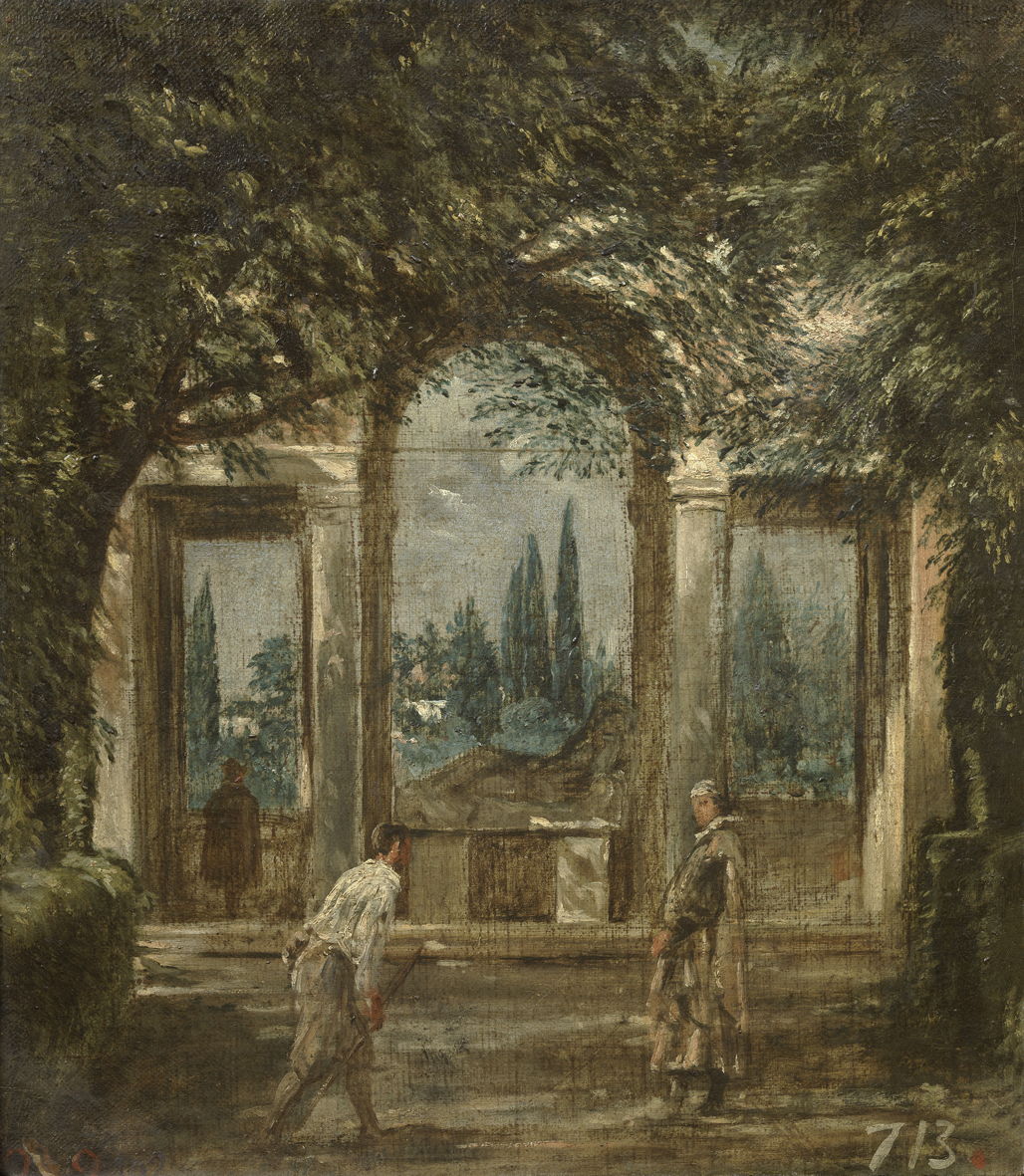
Villa Medici in Rome, Pavilion of Ariadne (1630) shows one of the sculptures Velázquez had been interested in drawing. It is relatively small, and has been executed sketchily, using thinned paint that has subsequently abraded from patches of the surface. The columns and arches are quickly formed, and the details of the two figures in the foreground are made from a series of quick brushstrokes, some with thicker paint.
The trees forming repoussoir in the foreground are constructed anatomically, although their foliage has been sketched in quickly. Scattered Italian cypresses are seen through the arches, together with other species.
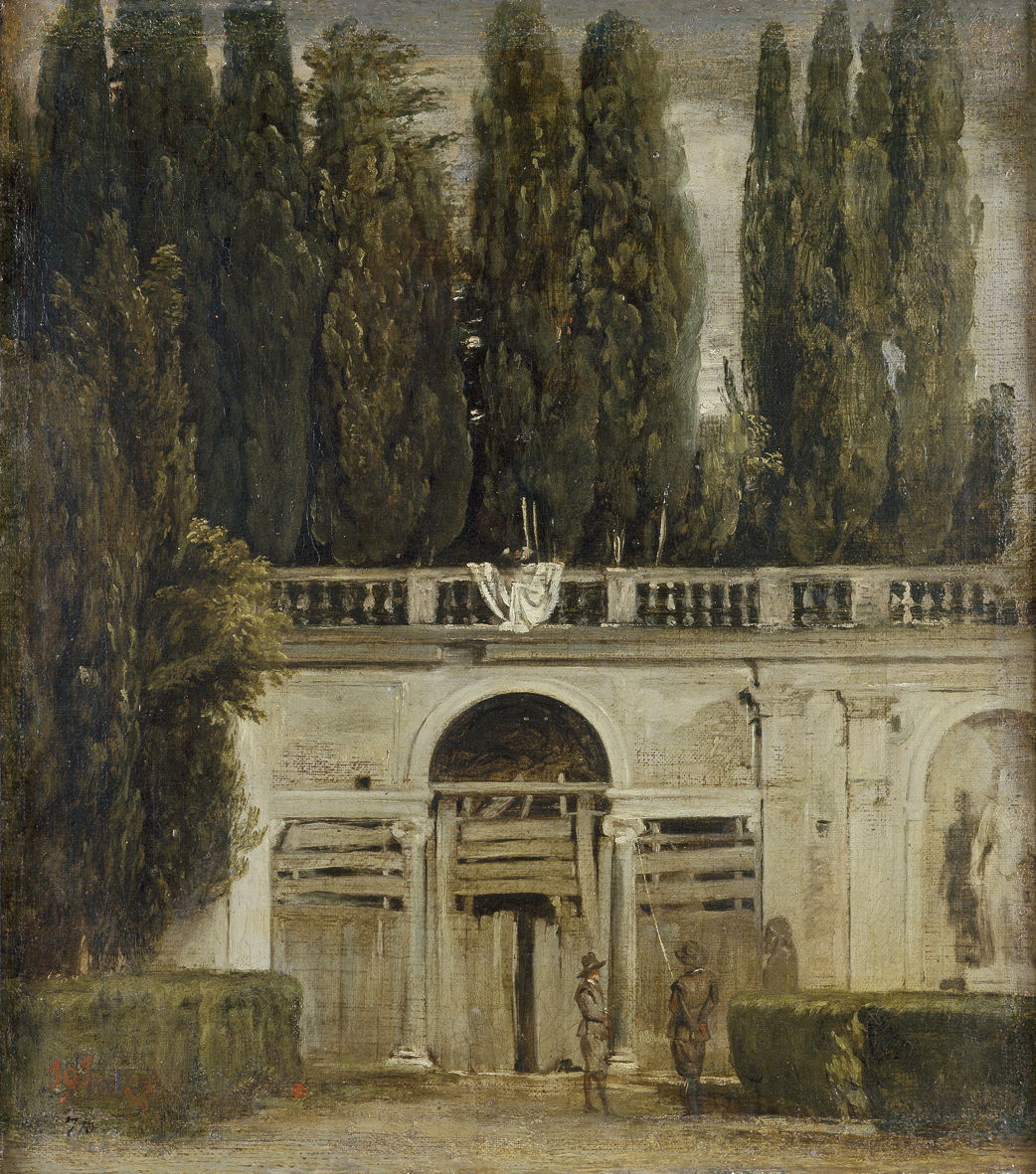
His second landscape to have survived is Villa Medici in Rome, Two Men at the Entrance of a Cave (1630), which is the better-preserved. This shows the entrance to a grotto, which is thought to have been undergoing repair at the time, and is therefore boarded shut. A close-packed collection of Italian cypresses forms a rich backdrop.
These brought together the ingredients for Nicolas Poussin, Claude Lorrain and Peter Paul Rubens, together with the landscape artists of the Dutch Golden Age.

