
By the early 1920s, the Italian-American painter Joseph Stella had breezed through many styles and schools, including Futurism, Precisionism, Cubism and Surrealism at a breakneck pace.

In this period he briefly painted mythical narratives, with The Birth of Venus (1922), shown above, and Leda and the Swan (1922), below.


In The Virgin from 1922, Stella adopted a traditional religious motif, expressed in his near-Surrealist style with fantastic fruit, flowers and birds.
Although he became a citizen of the USA in 1923, he soon felt unsettled and homesick. He spent much of the next decade travelling in Europe, returning to the US mainly to organise his work for exhibitions.
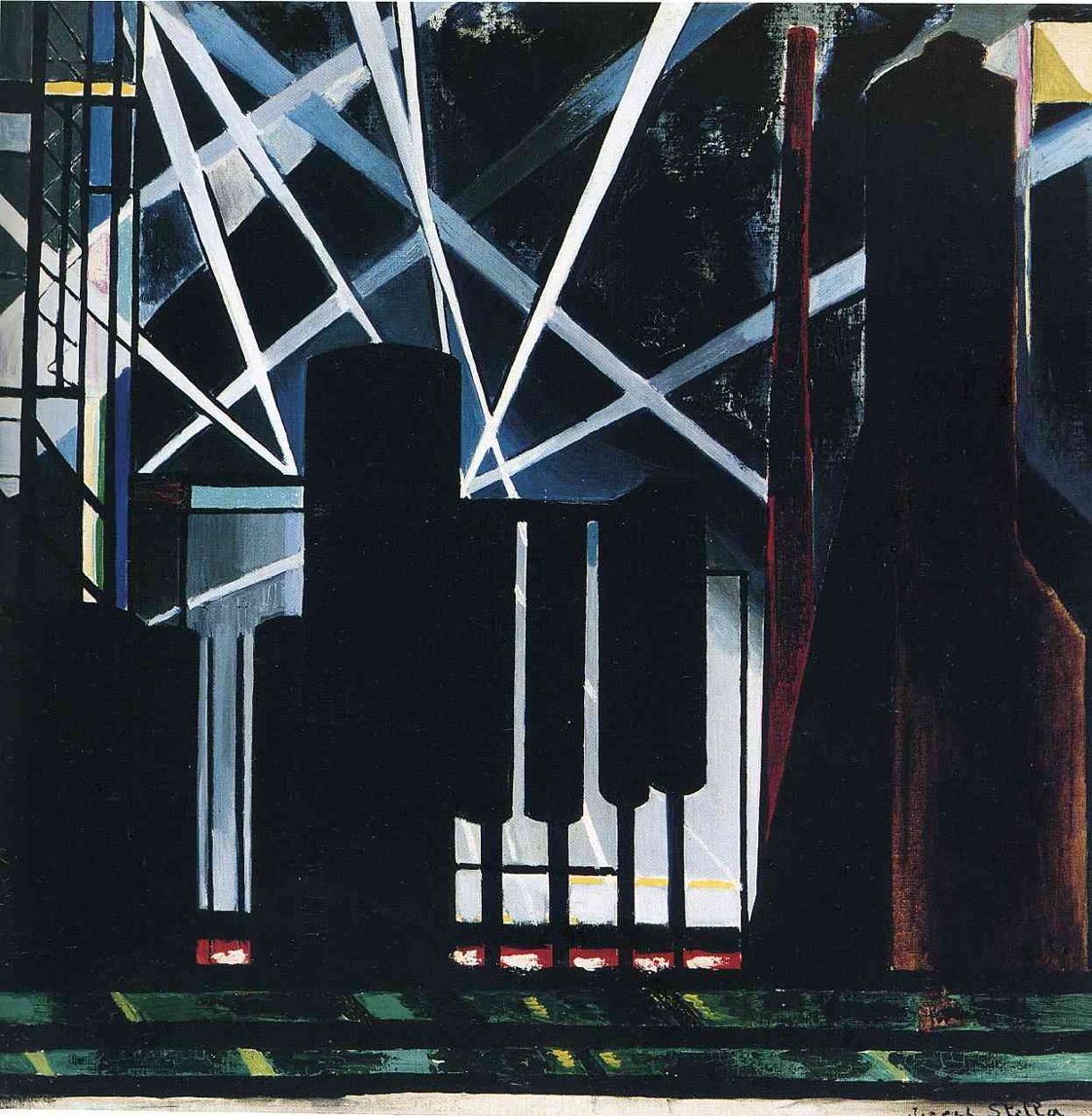
Then, just when you might have thought that Stella was done with factories, smoke and Precisionism, in about 1923-26 he painted this view of By-Products Plants.
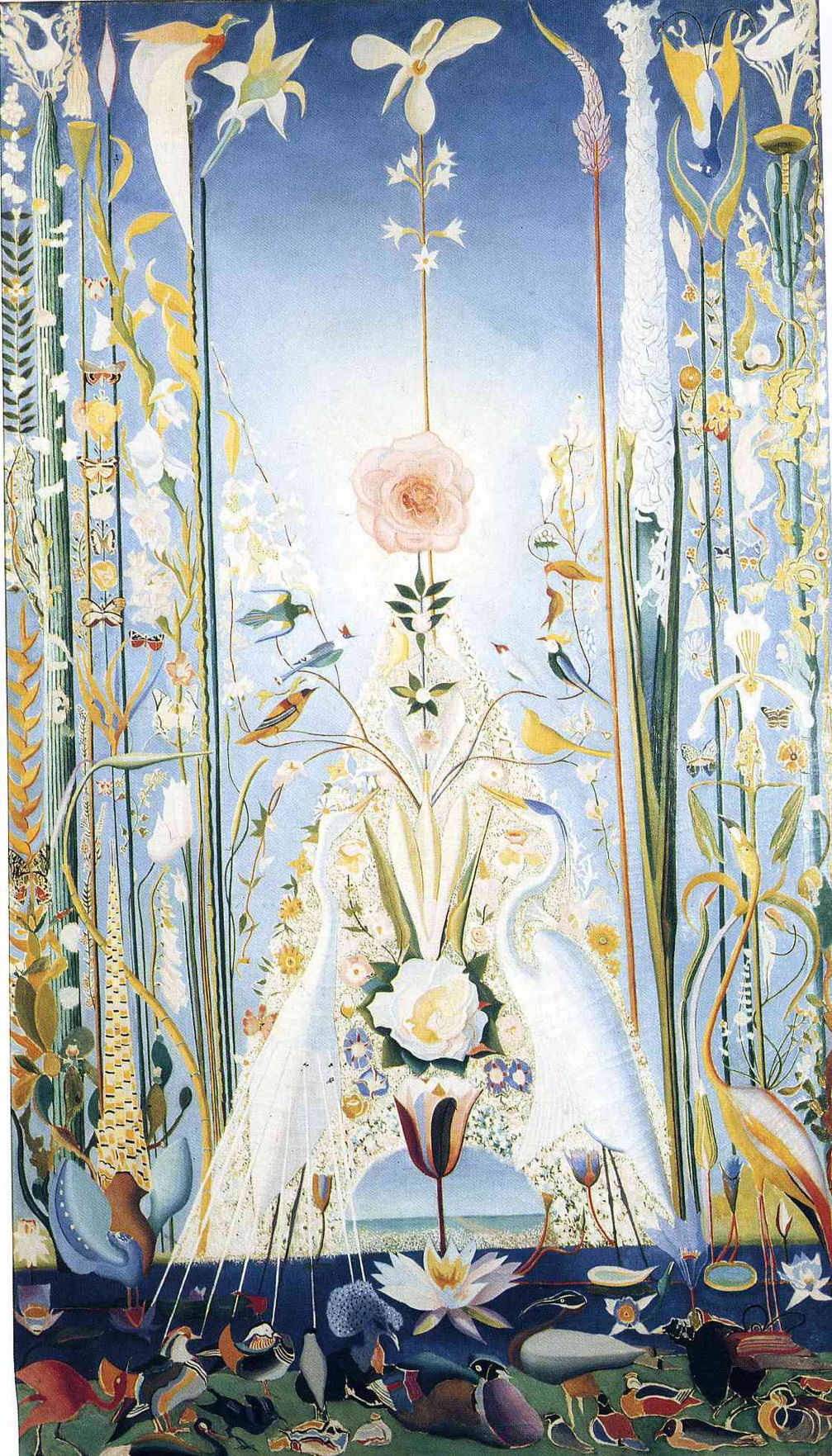
The Apotheosis of the Rose from 1926, painted in oil on copper, is a brilliant example of his neo-Surrealism, with its extensive collection of exotic birds and weird vegetation.

Stella’s Purissima from 1927 places a mystical woman between the two sacred Ibis birds. In the background is the Bay of Naples, with Mount Vesuvius at the right.

Later in the 1920s, Stella developed rhythmic palm structures, in Palm Tree and Bird from 1927-28. These were to be a recurrent feature in many of his later works.

Neapolitan Song (1929) brings a waterbird and palm in front of the quietly smoking volcano of Vesuvius.

This undated landscape sketch of Vesuvius III probably dates from this period. It appears to have been made looking south-east across the Bay of Naples, with Castel dell’Ovo nearest.
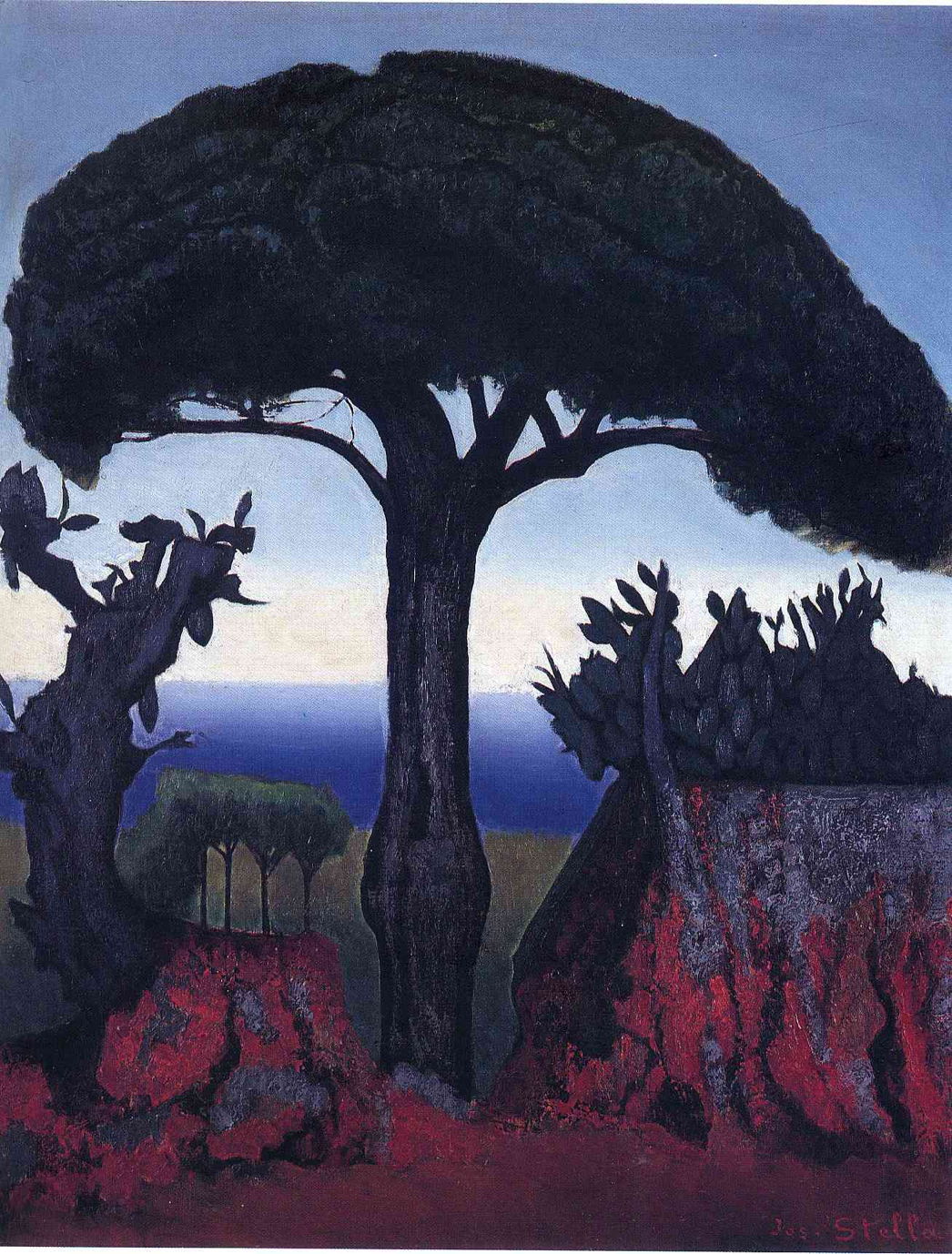
He changed again in Tree of Nice from about 1930, which was presumably painted in the south of France.
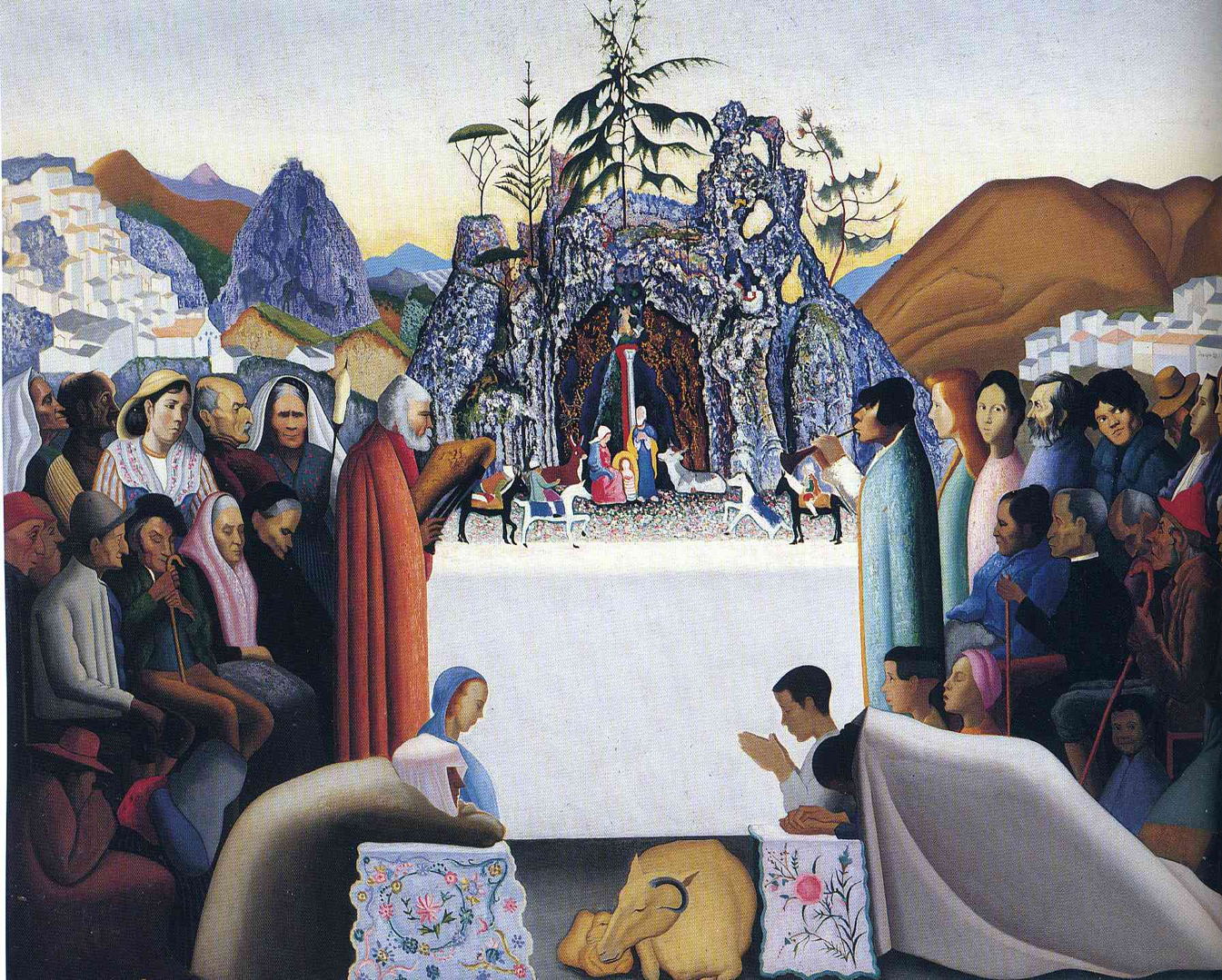
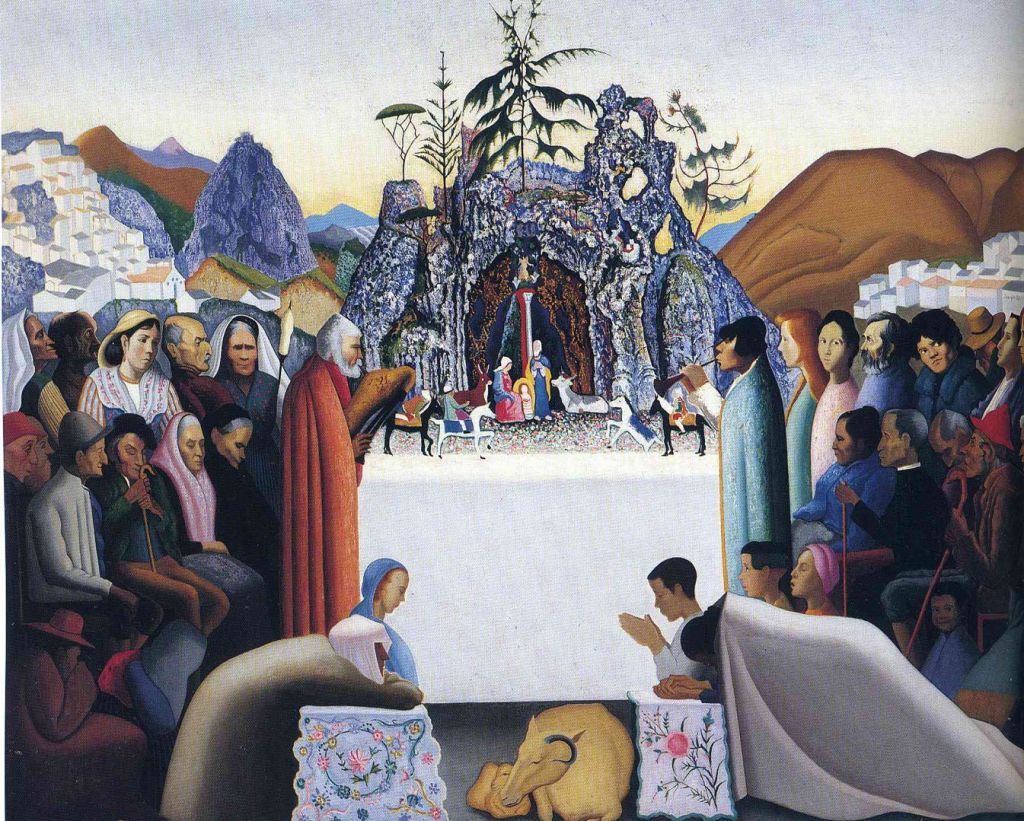
The Crèche from 1929-33 is an ingenious framing of the Nativity. At its centre is the crib so often shown at Christmas, with an audience who appear to have been drawn from Stella’s home city in Italy, playing traditional bagpipes in homage.
In 1934, Stella and his wife finally settled in the Bronx. His popularity steadily faded, and a retrospective exhibition in 1939 failed to revive interest. His personal health also started to deteriorate at this time.

In 1937, Stella painted Serenade, a Christmas Fantasy, or La Fontaine, one of his last works combining birds and flowers in a fantasy setting. This appears to have been intended as a design for a Christmas card.
In 1942, Stella became mostly confined to his bed because of worsening heart disease, and he died in 1946, just after the end of the Second World War.

