
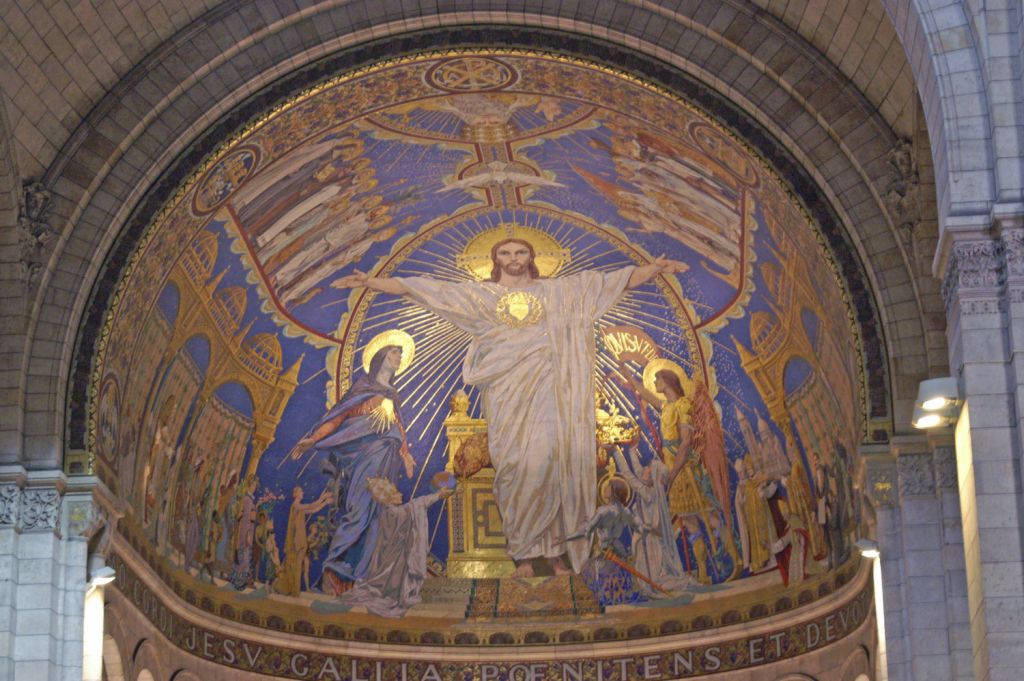
Mosaics, composed of small fragments of coloured stone, glass or ceramic in a matrix of plaster or mortar, have ancient origins in the civilisations of the Fertile Crescent in the Middle East. Although widely viewed as being decorative, some of the best examples transcend that to become fine art.

This breathtaking mosaic in the vault of the chapel of San Zeno, in Santa Prassede, Rome, created in 817-824 CE, goes well beyond mere ceiling decoration.
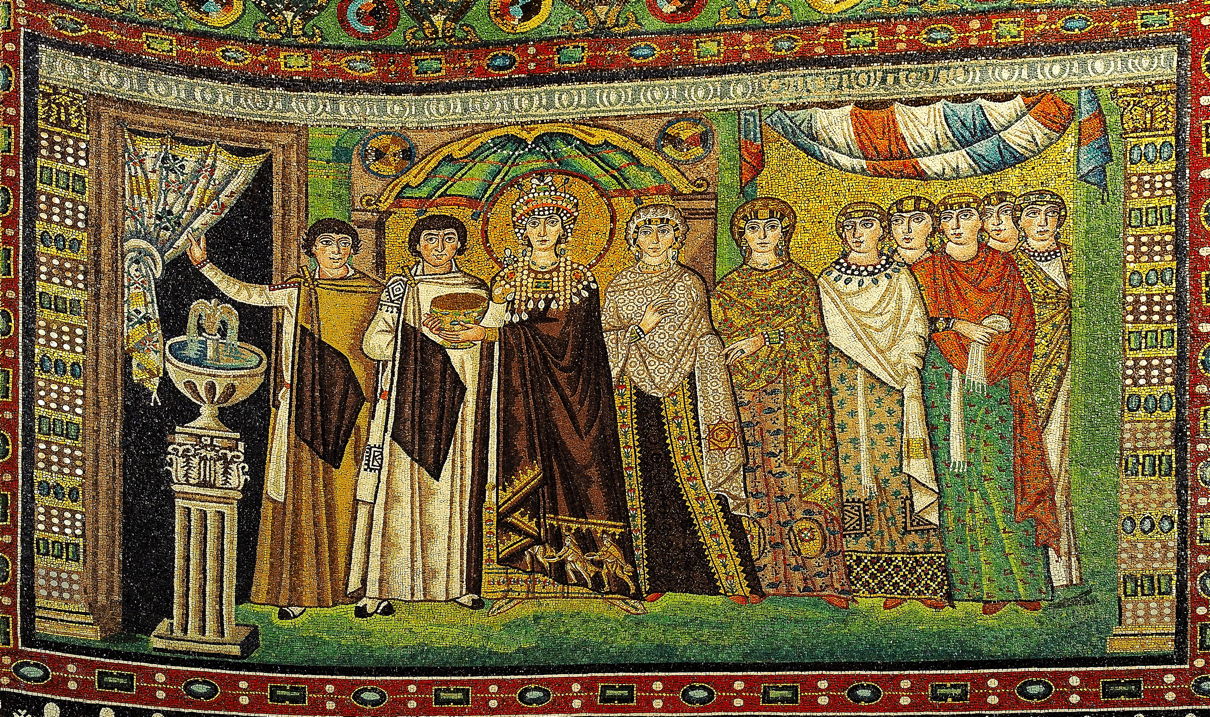
At the end of 1903, Gustav Klimt visited one of the major collocations of mosaics in Ravenna, Italy, where he saw and was deeply impressed by the spectacular Byzantine mosaics of Justinian I and the Empress Theodora in the Basilica of San Vitale. They inspired a portrait he completed four years later.

His first Portrait of Adele Bloch-Bauer (1907) is the most extreme and startling work from Klimt’s Golden Phase. Apart from her bust and arms, which are painted in oils, the rest of his canvas is, like the mosaic of the Empress Theodora, encrusted with gold and silver. Its decorative patterns include symbols of eyes, flowers, whorls, ellipses divided into halves, and rich textures worked into the gold leaf.
A few accomplished painters also created mosaics, usually later in their career.
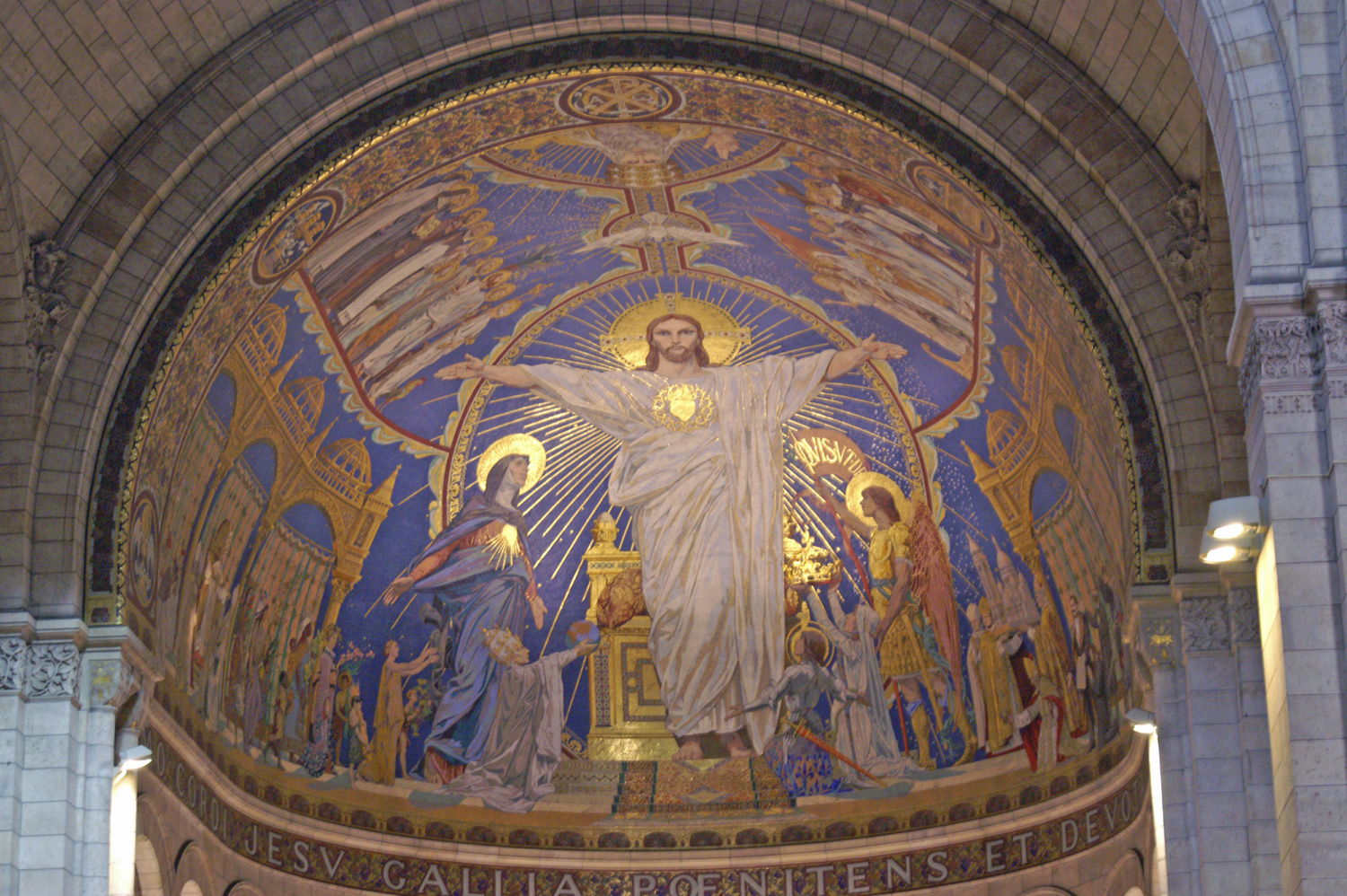
Between about 1890-1910, the French Naturalist painter Luc-Olivier Merson created this extraordinary mosaic of Christ in Majesty in the apse of the Basilica of the Sacred Heart (Sacré-Cœur) of Paris in Montmartre. This is thought to be one of the largest mosaics in the world.
At about the same time, the American painter Elihu Vedder was creating a mosaic in the central arched panel leading to the Visitor’s Gallery of the Library of Congress, in Washington, DC.
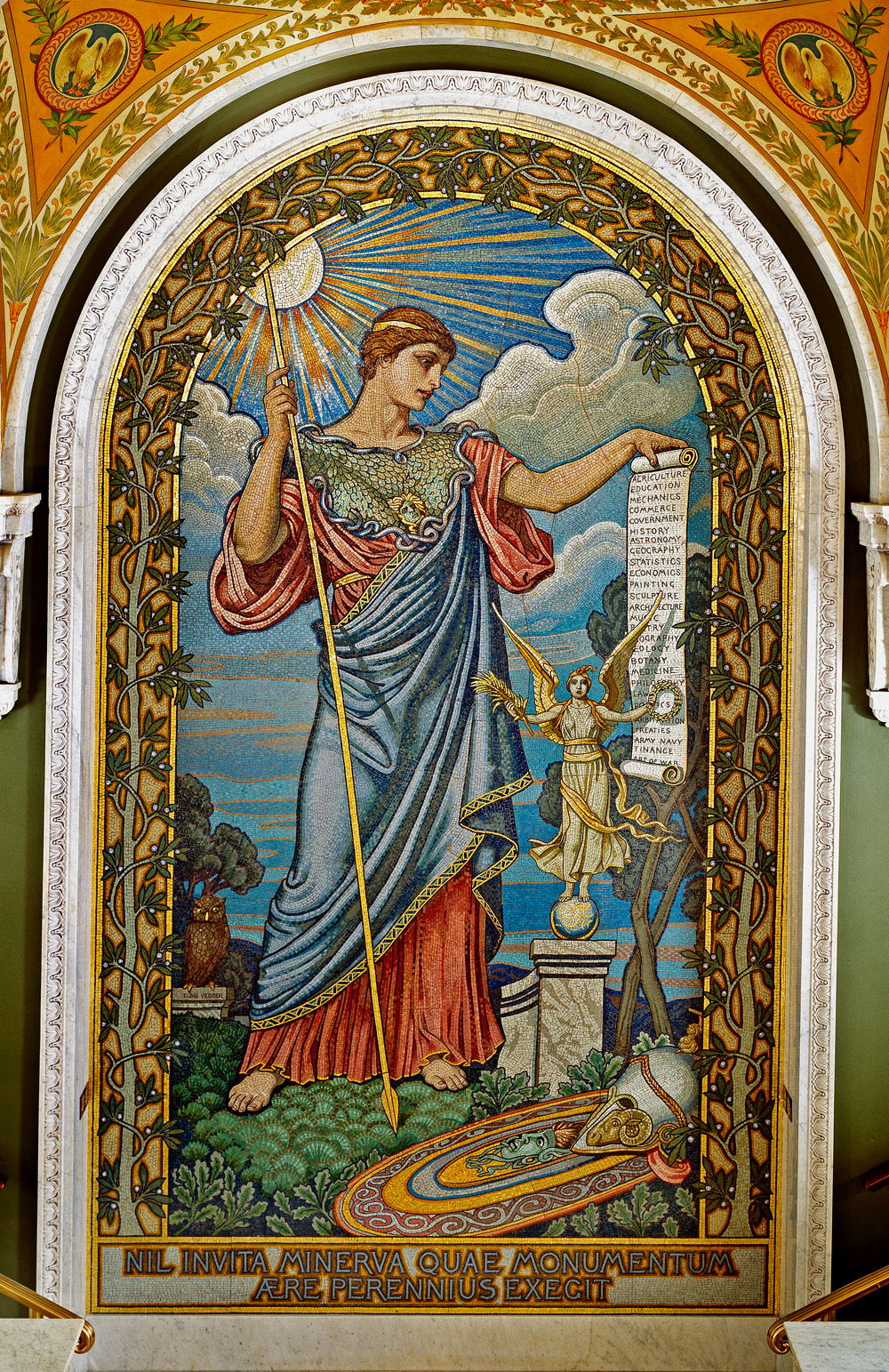
His Minerva of Peace (1897) shows this Roman goddess of wisdom, the guardian of civilisation, and sponsor of arts, trade, and strategy. Vedder stresses that this was attained by warfare, and shows a miniature statue of Nike, the Greek winged goddess of victory, known to the Romans as Victoria. Nike holds the palm frond of peace and the laurel of victory.
Minerva’s helmet and shield rest on the ground, but she remains ever-vigilant in holding a spear in her right hand. Her left hand holds a scroll listing the fields of learning, from Agriculture to Zoology and Finance. These reveal her association with wisdom and knowledge. To the left of Minerva’s right knee is an owl, symbolising wisdom.
The inscription below, Nil invita Minerva, quae monumentum aere perennius exegit, means Not unwilling, Minerva raises a monument more lasting than bronze, and is quoted from Horace’s Ars Poetica.
Other artists painted in the style of mosaics.
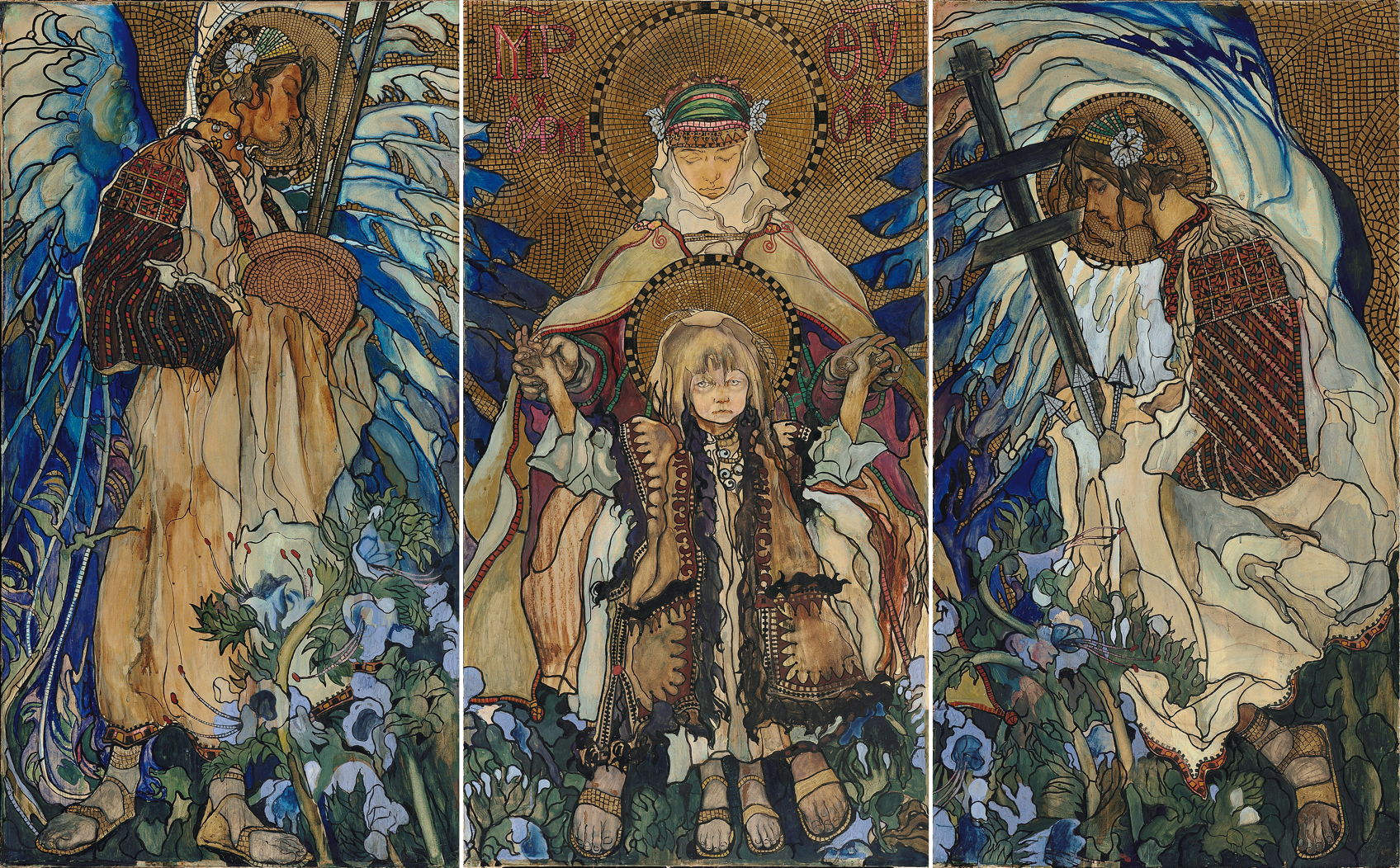
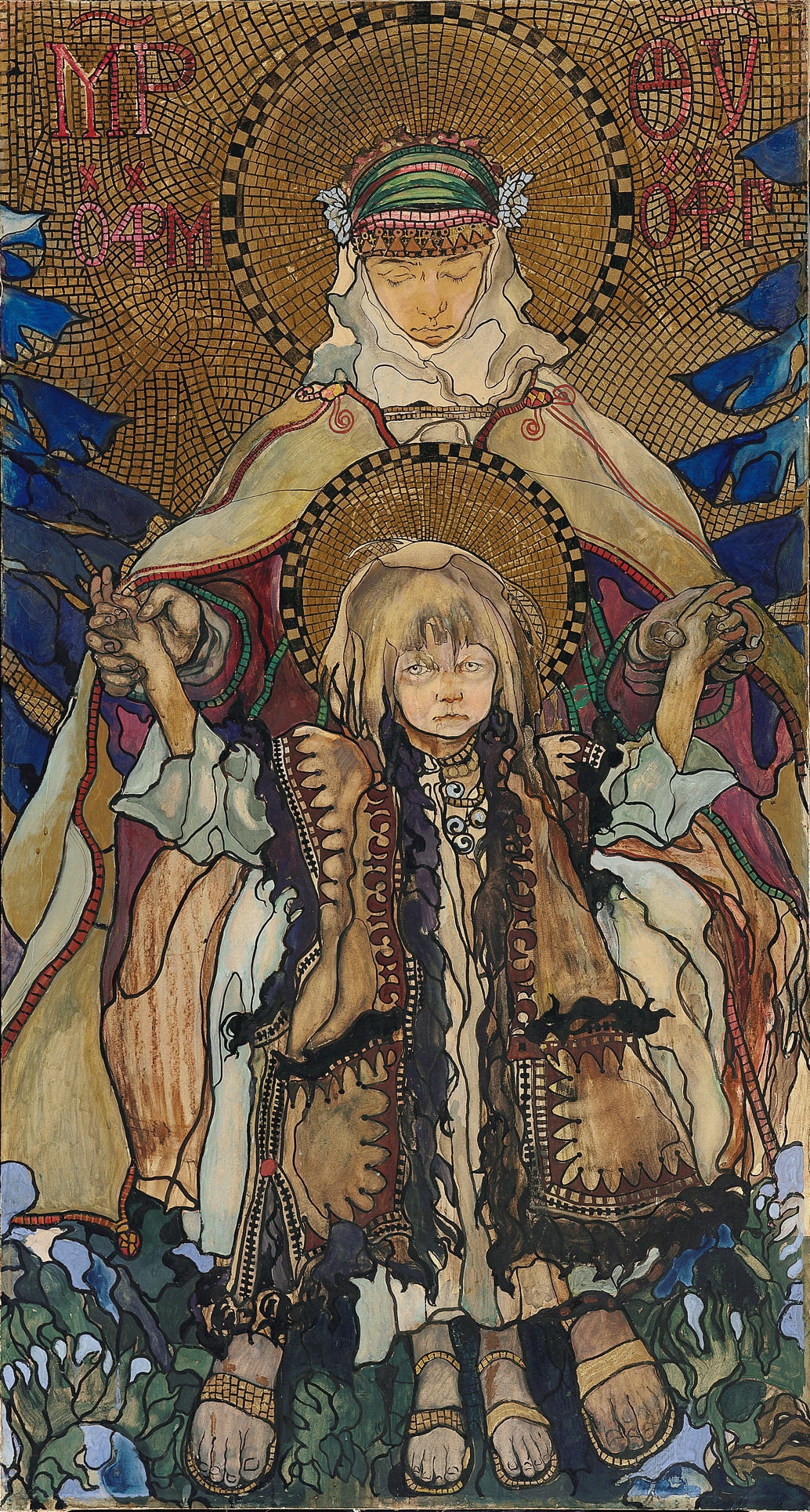
In The Hutsul Madonna from 1909, Kazimierz Sichulski used a combination of tempera and pastel to create passages that appear to be mosaics, while others look more like stained glass, in a luminous Art Nouveau style.
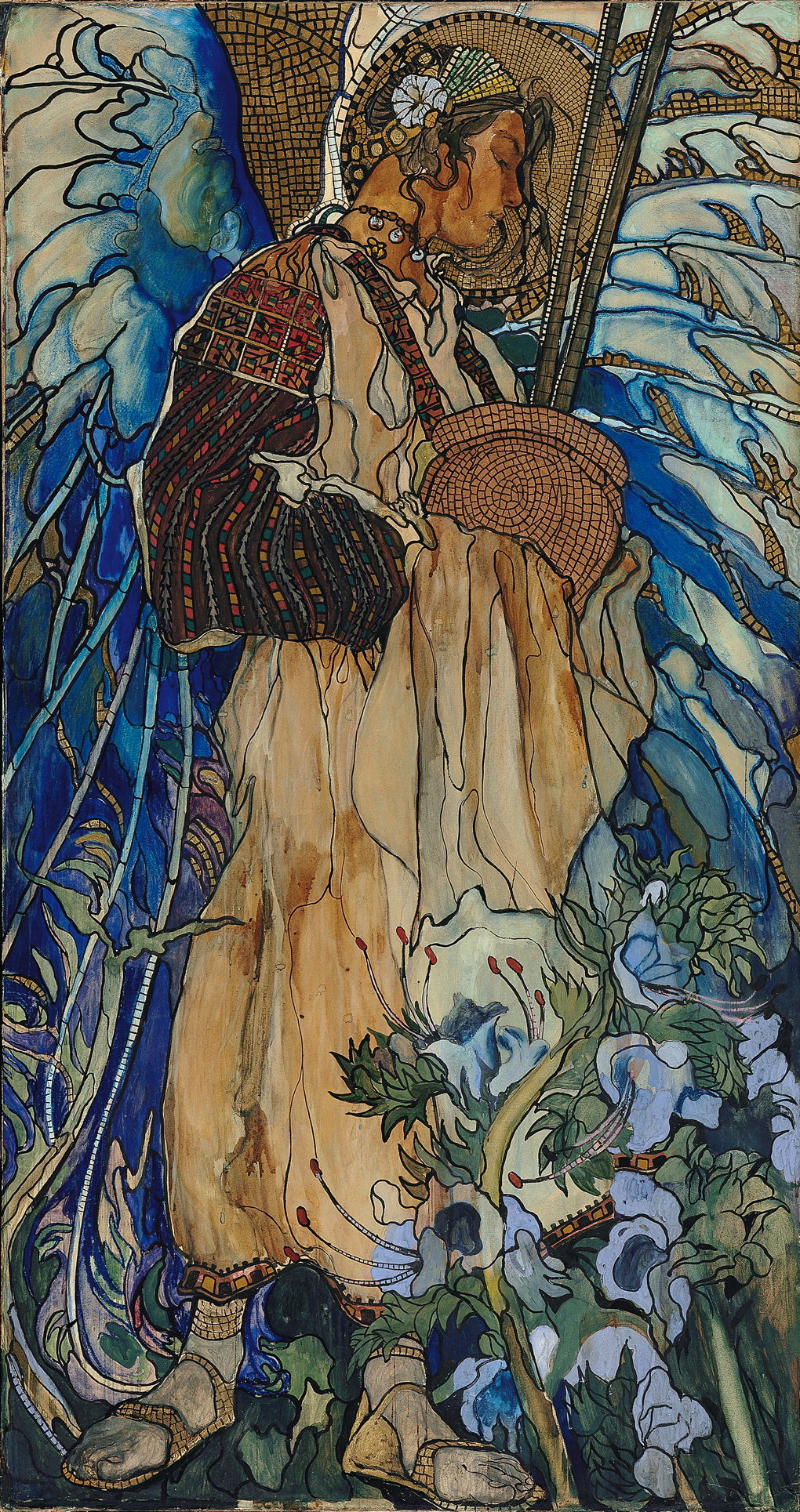
Above is the left panel, and below is its centre panel.
Some of the Divisionists, notably Paul Signac, applied their paint in small rectangular patches termed tesserae, the same word for the coloured pieces used to compose mosaics.

Signac adopted these by 1905, and continued to use them for the rest of his career. They’re shown above in his painting of The Lighthouse at Groix from 1925, and in the detail below. These are oriented to help form each object.

Although these create a distinctive effect, they don’t follow Georges Seurat’s original intention of optical mixing of colours in fine dots, although they’re much quicker to apply, and refer back to the great Byzantine mosaics.

