
Hokusai’s woodcuts including The Great Wave of Kanagawa from 1831 may now be most strongly associated with the vogue for Japonisme that swept across Europe in the late nineteenth century, but the prints of others were equally important. Among those were the works of Utagawa Hiroshige (歌川広重) (1797–1858).
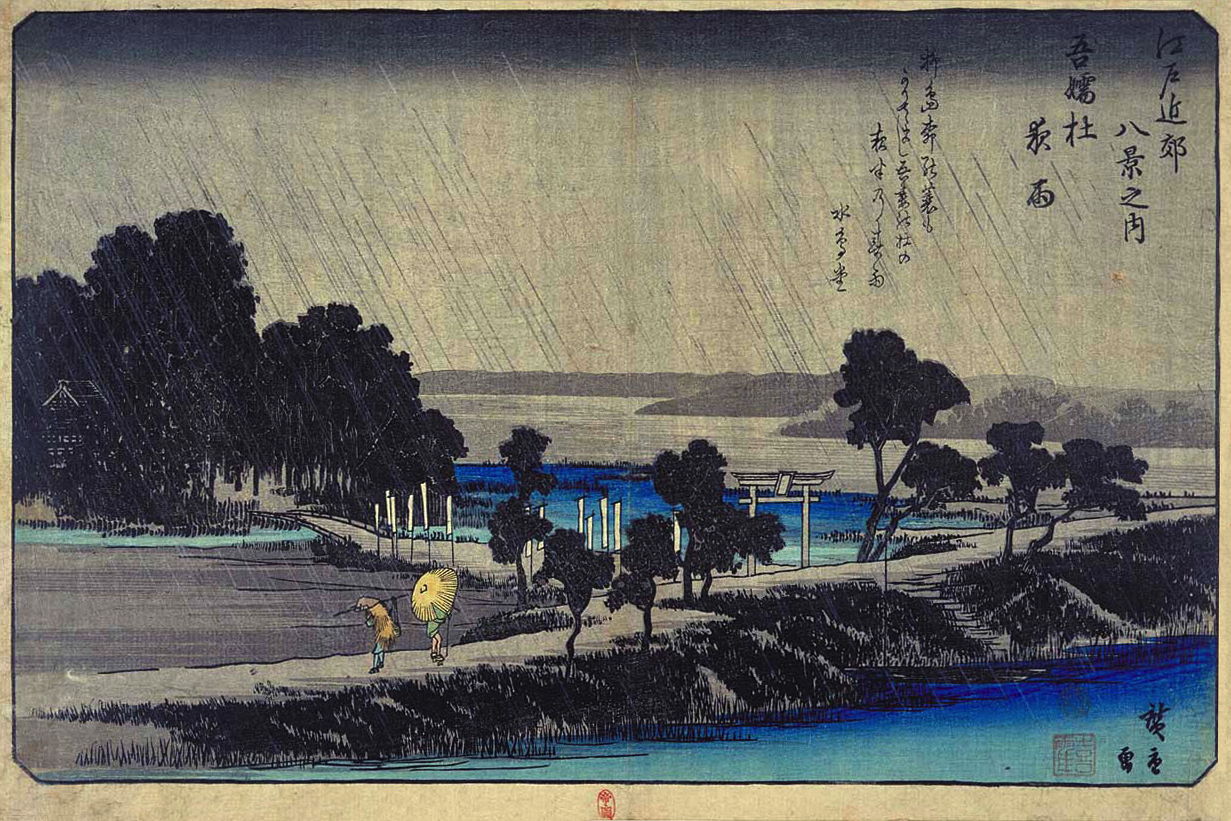
It’s this print by Hiroshige, Evening Rain at Azumi-no Mori (吾嬬杜夜雨) (Edo, 1837-8), that is now thought to have been influential in Vincent van Gogh’s Rain – Auvers (1890), shown below, that he painted just a few days before his death.


Japonisme came to dominate Pierre Bonnard’s early paintings too. Probably the earliest of these is this exquisite three-panelled screen of The Stork and Four Frogs completed around 1889. To mimic the appearance of east Asian lacquerware, Bonnard painted this in distemper on red-dyed cotton fabric. Its story is, though, thoroughly European, based on the fable retold by Jean de la Fontaine of The Frogs who Demand a King.
As Europeans were enthralled by Japanese woodcuts, so more Japanese artists travelled to Europe to learn painting styles and techniques. The son of a samurai in Kagoshima (in the far south-west of Japan), Viscount Kuroda Seiki (黒田 清輝) (Kuroda Kiyoteru) moved to Tokyo, where he first learned English, then switched to French. He went to Paris in 1884 to study law, being supported by his brother-in-law, a member of the Japanese diplomatic mission in France. However after two years there, he changed to study painting in the atelier of Raphael Collin, where he met Kume Keiichirō, also a student of Collin’s; together they explored plein air painting. In 1890 he moved to the international artists’ colony at Grez-sur-Loing, south of Paris, which had been made popular by masters such as Jules Bastien-Lepage.

In France, Hokusai’s Great Wave found greater interest with Paul Gauguin and his circle who gathered first in Pont-Aven then Le Pouldu in Brittany. Gauguin’s gouache Seaweed Gatherers I (1888-90) shows two Breton women gathering seaweed on the beach. Behind them is a huge wave, its spume formed into a claw, which could only have come from Hokusai.

In 1889, Gauguin painted two works showing Ondine in the sea among waves. The first, known now as In the Waves, or Ondine (I), also refers to Hokusai.
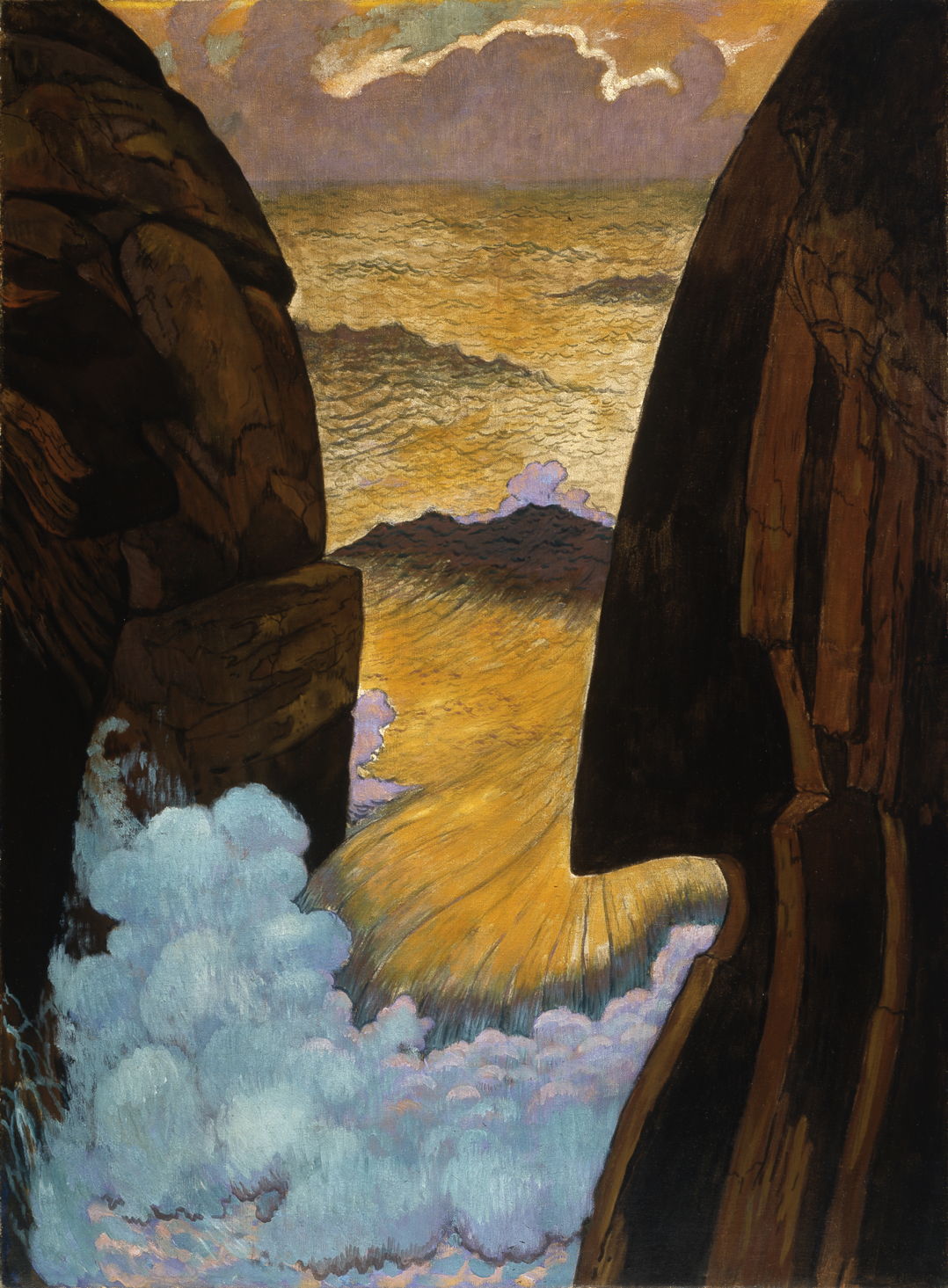
The Nabi sculptor, and painter from Gauguin’s school, Georges Lacombe took Hokusai’s motif forward in several of his paintings. This is his treatment of Vorhor, The Green Wave in egg tempera, showing an Atlantic swell coming into the seacliffs of Vorhor near Camaret-sur-Mer in Brittany.
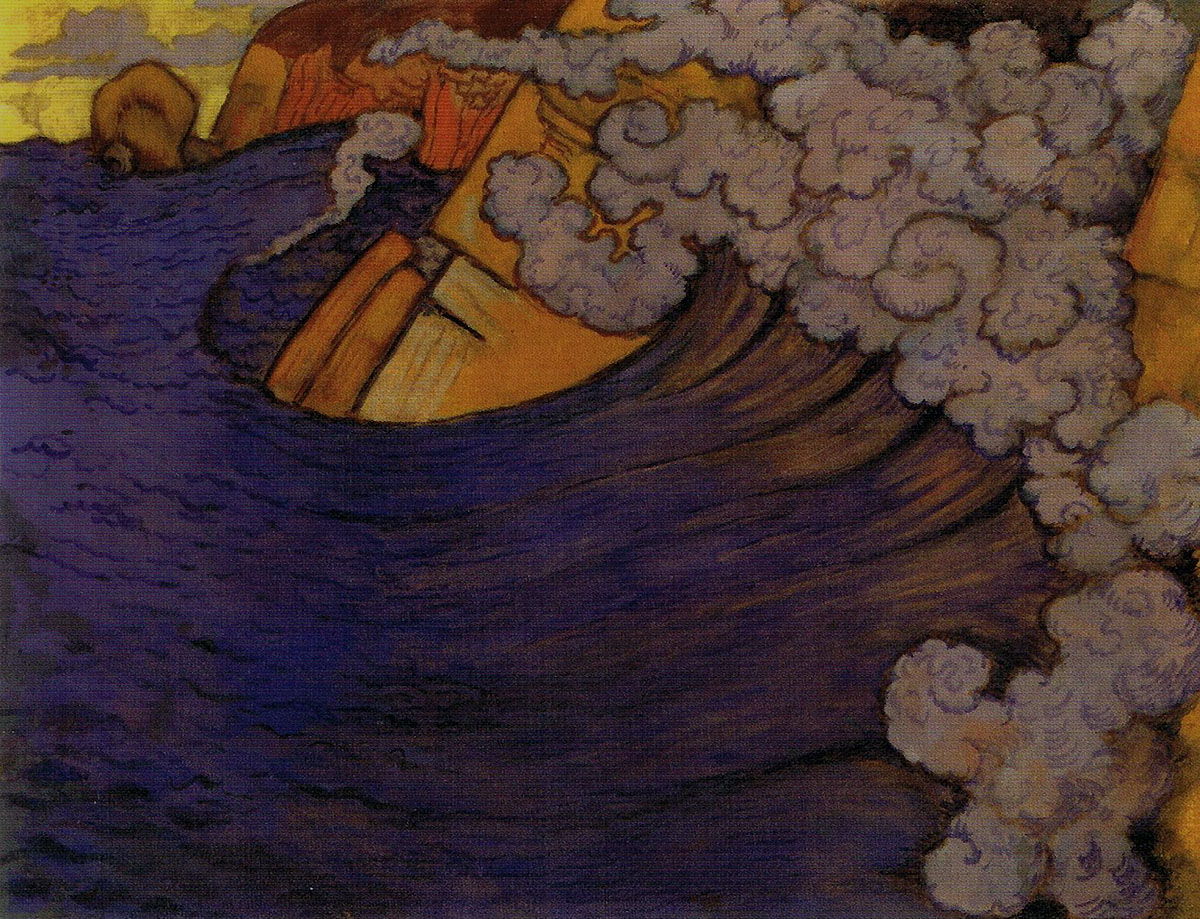
Lacombe’s slightly later The Violet Wave also makes its influence abundantly clear.

In that same year, even the notorious academic artist William-Adolphe Bouguereau joined Hokusai’s crowd of admirers, in The Wave.
As Japanese artists were studying in Europe, Westerners like Helen Hyde went to Japan. She made friends with an unrelated namesake, Josephine Hyde, and in 1899 the two travelled to Japan to learn Japanese print and painting techniques. Helen Hyde was soon making woodblock prints, which she learned from the Austrian Emil Orlik who was also living in Tokyo at the time.
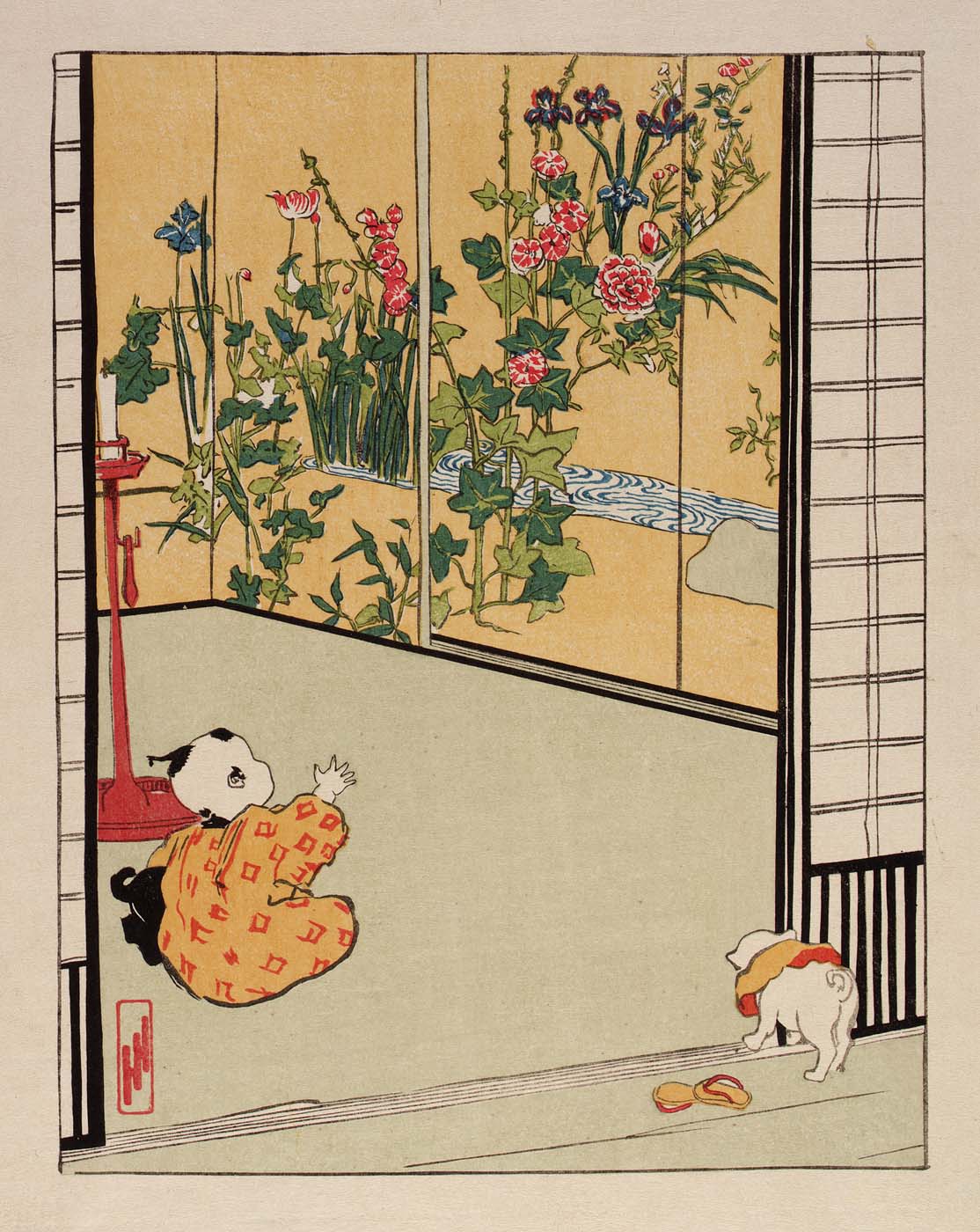
Interior Decoration from 1900 shows how quickly Hyde learned the technique, and her fascination for Japanese art in everyday settings.
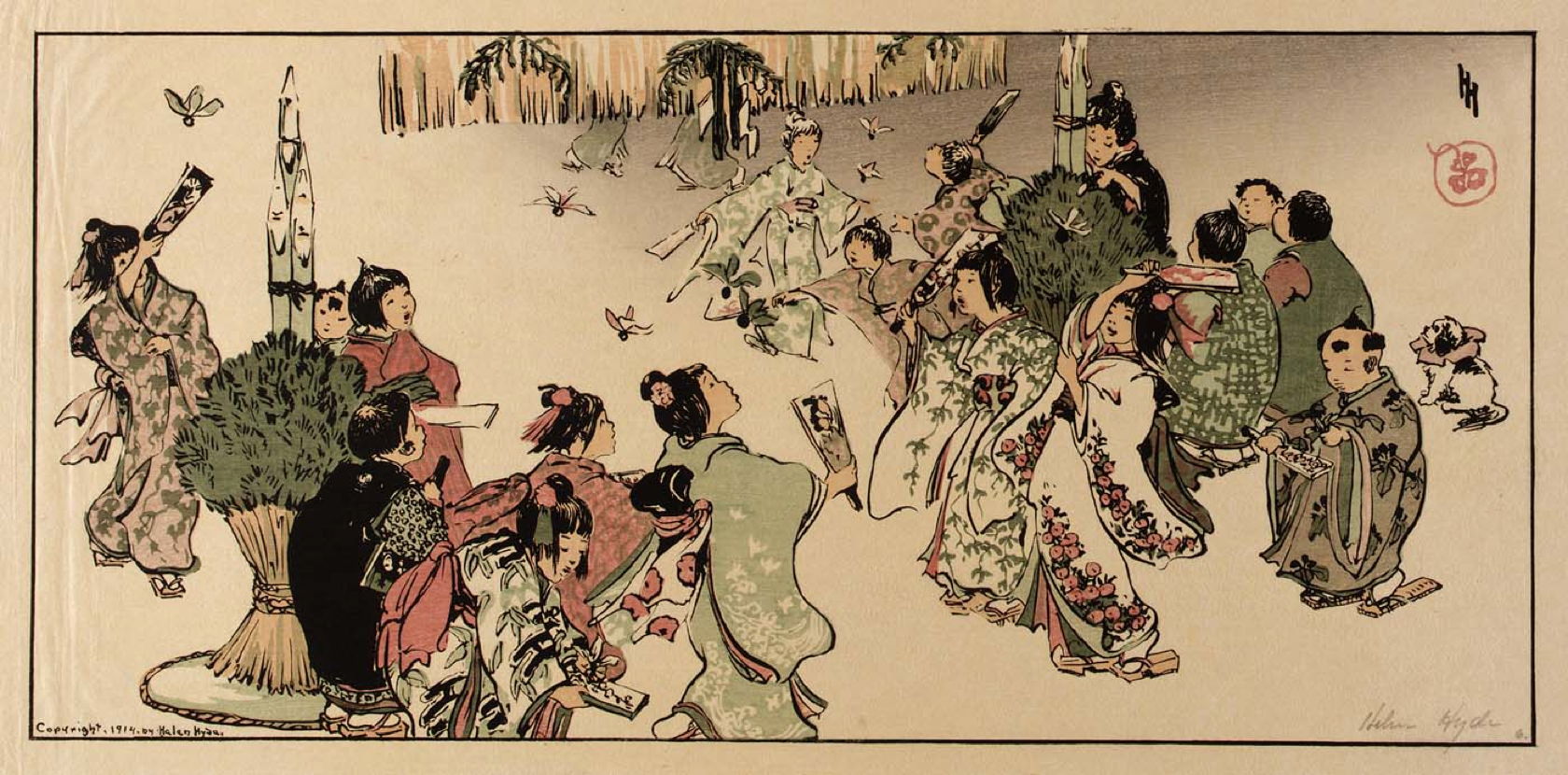
Hyde’s New Year´s Day in Tokyo, from 1912, is grander in conception, and a carefully composed print of key elements in the Japanese New Year celebrations.

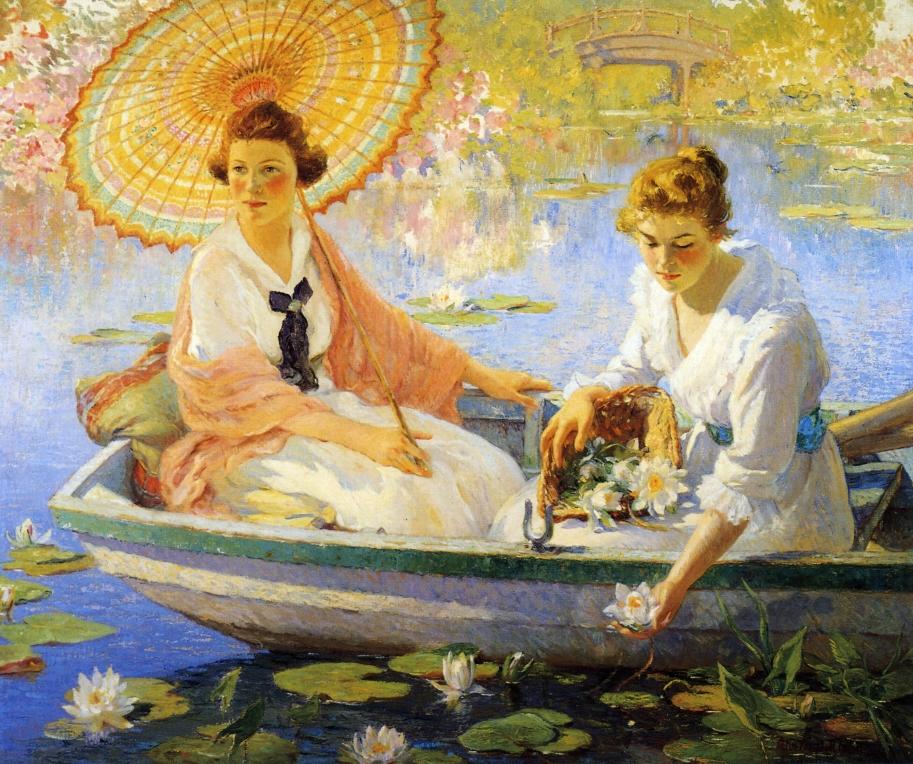
My final example was painted in 1918, at the end of the First World War, far from the mud and blood of Europe’s battlefields. Colin Campbell Cooper’s Summer (1918) is inspired by Japonisme, fortified here by the east Asian influence of California, and by Monet’s paintings of his garden at Giverny, itself based on a Japanese water garden.
 The Eclectic Light Company