
Not content with Naiads and other water nymphs, the alchemist and proto-scientist Paracelsus (1493-1541) invented his own elemental beings associated with water, Undines or Ondines. He also elaborated their nature: although they cunningly resemble beautiful young women, they aren’t human, so lack a soul. The only way they can enjoy an afterlife is thus to marry a human.
Although that might appear a beguiling option for both, any man who is unfaithful to their Ondine wife will die as a result. The children of a union between a man and an Ondine are humans, having a soul, but also have a trait linked to water, known as a watermark. This might be some anatomical abnormality that periodically has to be bathed in water, for example.
By the nineteenth century, this amalgam of classical Naiads and alchemical elements was becoming popular in artistic creation. In 1842, the year after his death from tuberculosis, Aloysius Bertrand’s (1807-1841) collection of prose poems Gaspard de la Nuit was published, featuring the poem Ondine. The collection inspired Maurice Ravel’s brilliant piano suite of the same name, of which the first piece is the ferociously difficult Ondine.
Undine, a novella by Friedrich de la Motte Fouqué (1777-1843), was published in 1811, and has since influenced a slightly different tradition. It gave rise to Hans Christian Andersen’s story of The Little Mermaid in 1837, which became extremely popular throughout Europe and North America.
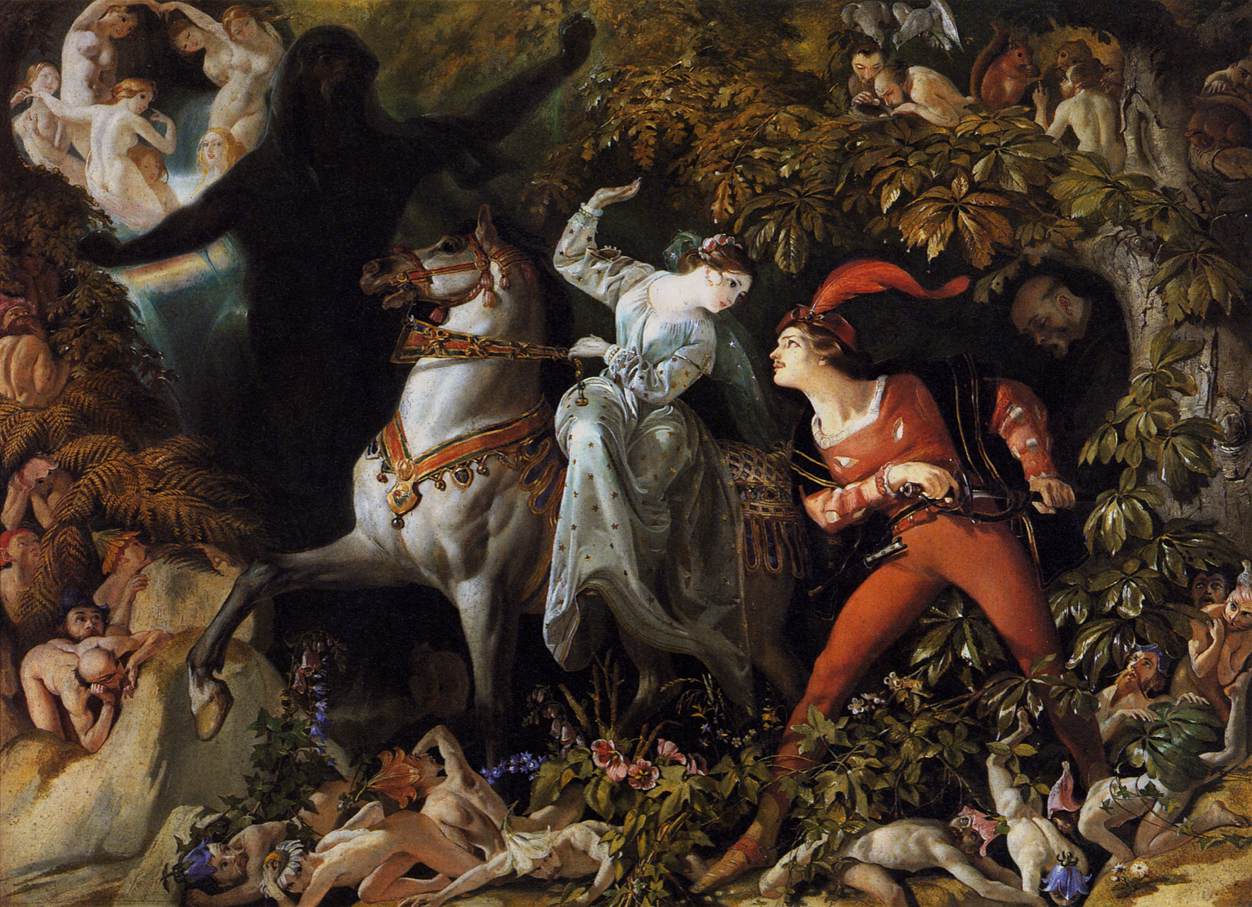
In the 1840s, versions of Fouqué’s story had made their way to London in the form of a play. One of the first artists to commit this to canvas was the great ‘faerie painter’ Daniel Maclise, in his 1843 depiction of A Scene from ‘Undine’. Although there are other Undines frolicking in the water at the upper left, Maclise concentrates on the romance between Undine and the man who is to give her a soul, in exchange for his lifelong fidelity.
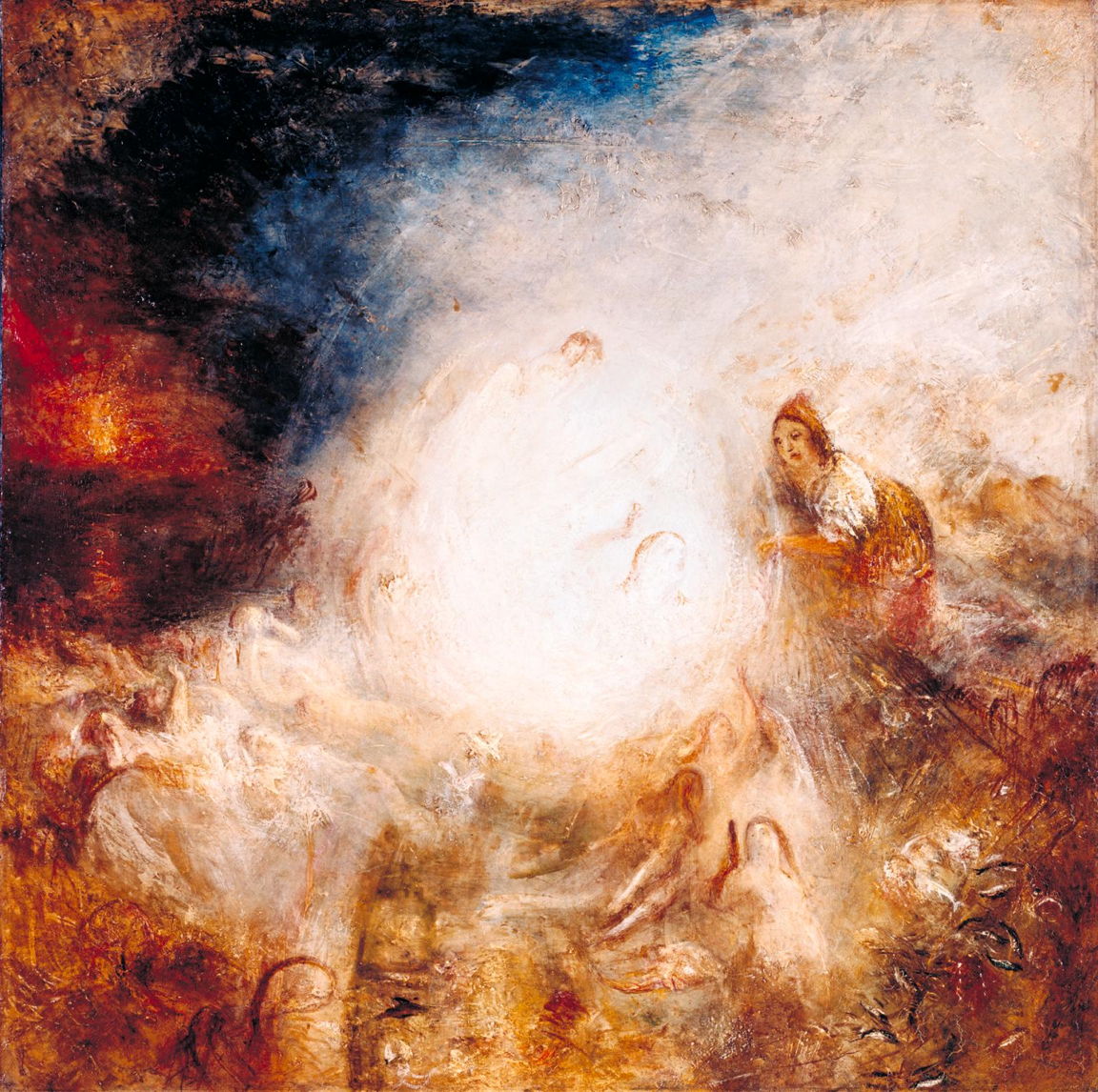
JMW Turner appears to have seen a similar stage production that inspired his Undine Giving the Ring to Massaniello, Fisherman of Naples of 1846. This is one of a pair of his paintings in which spiritual power and transformation are represented by brilliant light; the other, The Angel standing in the Sun, is a vision of the Last Judgement. Turner apparently shows Undine offering a wedding ring to a fisherman, although much of its detail has now been lost in the dazzling light. Around are other Undines in the waves.

Perhaps living up to his name, John William Waterhouse painted Undine in 1872, arising from a fountain, and modestly dressed. This was twenty years before he took to the nude Naiads of Hylas, shown in yesterday’s article.

Jules Lefebvre had no qualms with turning his Ondine of 1882 into yet another classical nude, although her brilliant red hair is an unusual touch.

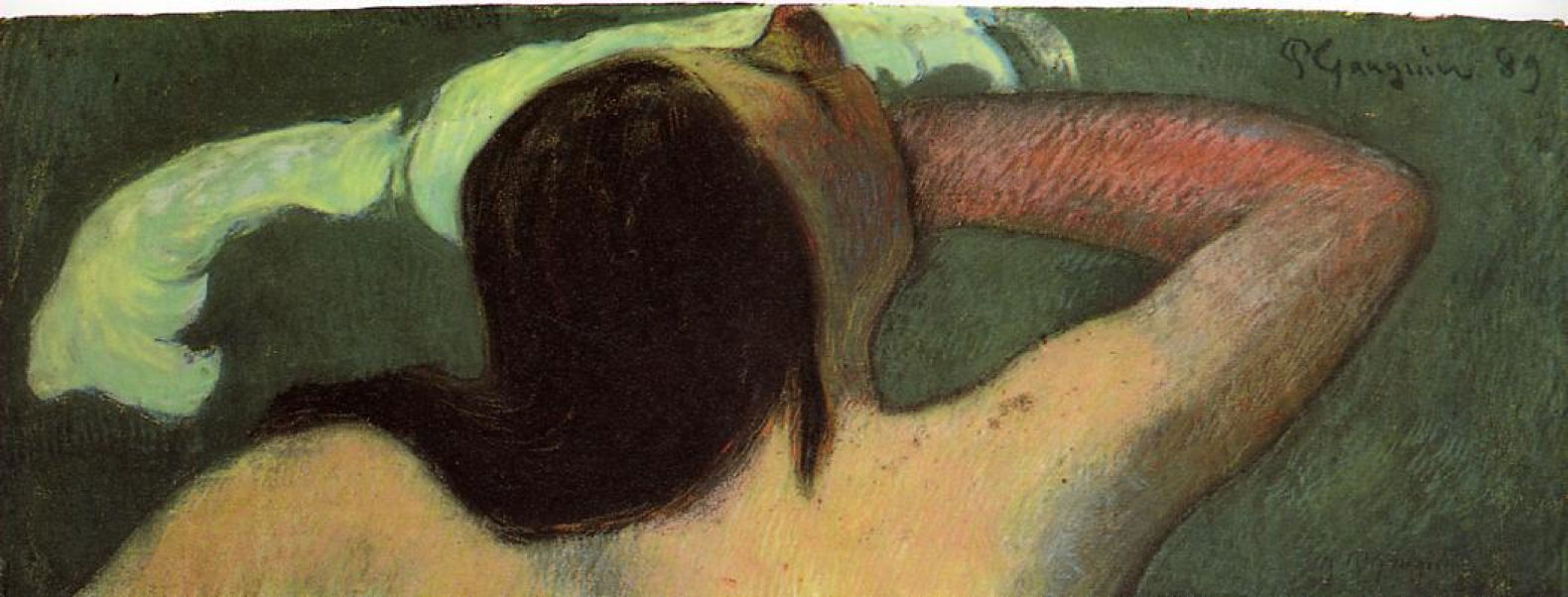
In 1889, Paul Gauguin painted two works in which Ondine is shown among waves in the seas. The first, known now as In the Waves, or Ondine (I) (above), appears the more complete. Ondine II, in pastel and gouache (below), seems likely to have been a study, and its lower edge appears to have been cut or cropped out. He may well have seen Lefebvre’s painting, as the fuller version also features red hair.
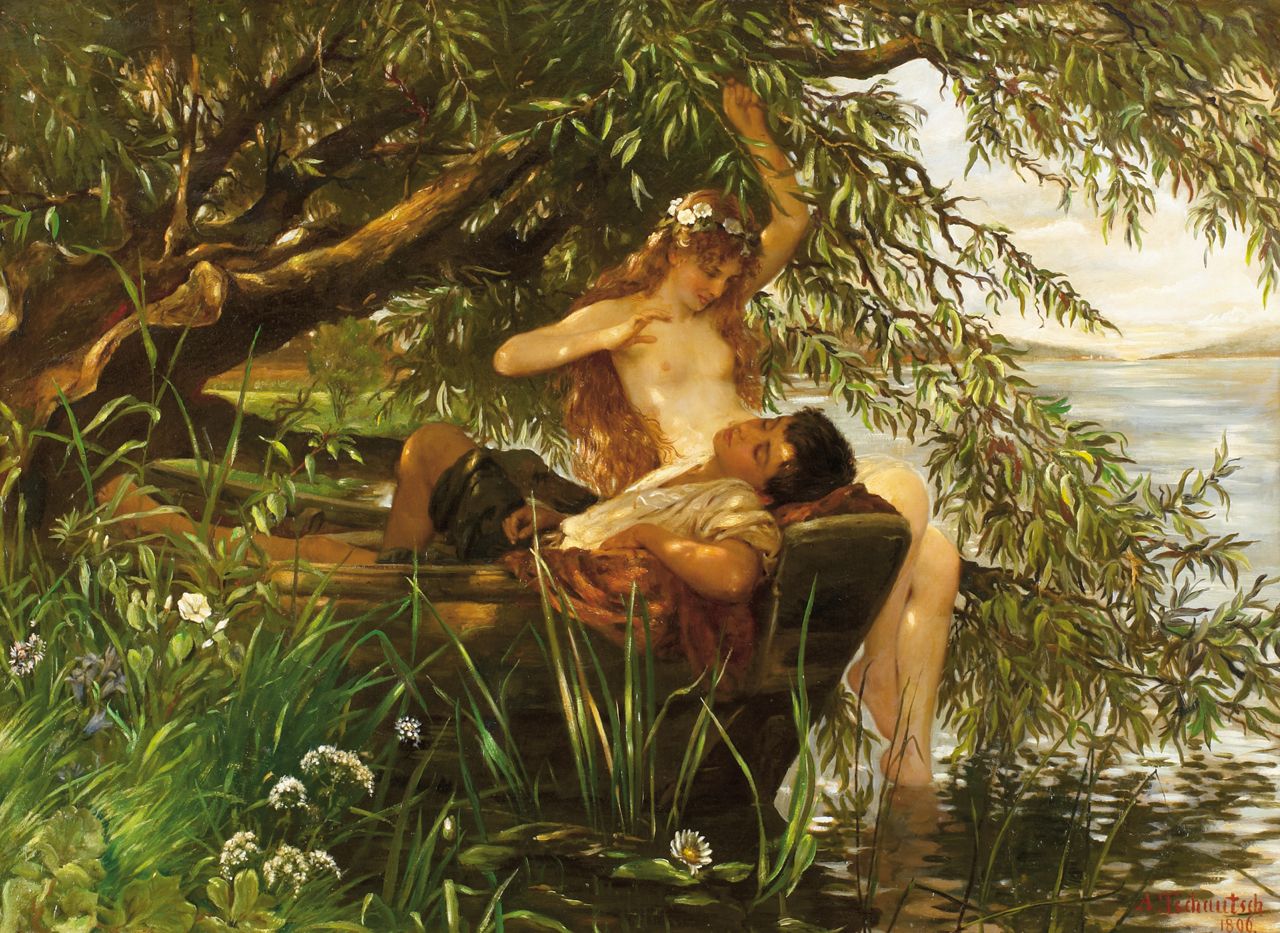
With interest growing in the femme fatale, Ondine was revamped into a figure like Medea, who cast a spell on her husband. Albert Tschautsch’s Enchantment from 1896 is an example of this changing image.

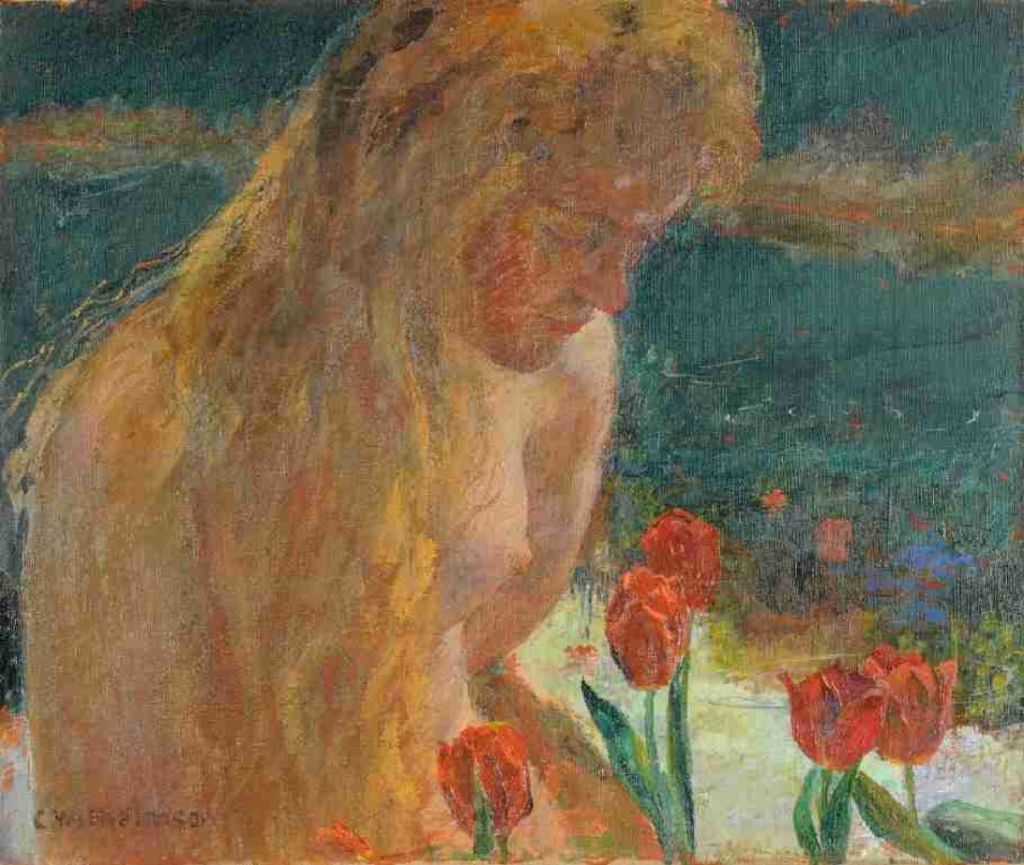
Carl Wilhelmson is one of the few who has succeeded in making Undine (1899) appear not quite physically there, as she shimmers among red tulips.
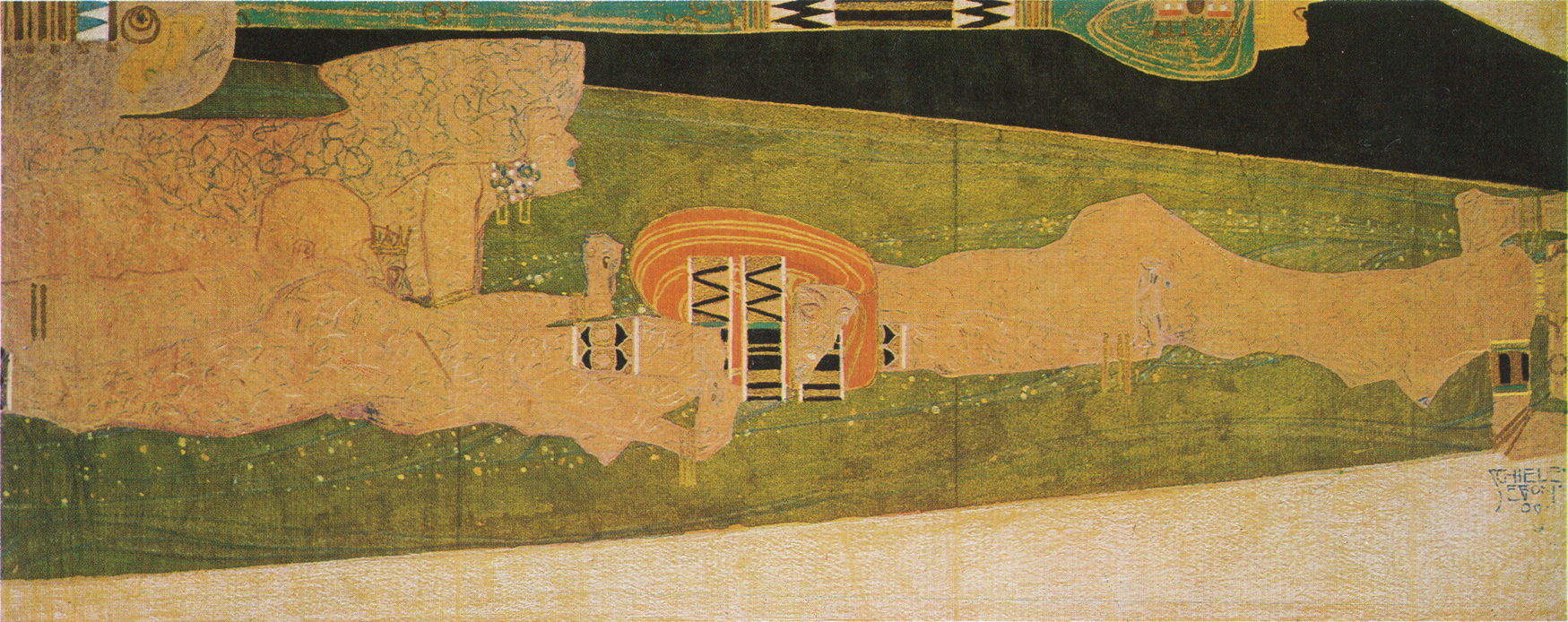
Egon Schiele’s Undine II of 1908 was made in truly mixed media, including gouache, crayons, watercolour, white and gold paints, and a dash of Cubism too, it would appear. Although notoriously hard to read, I can see Undine at the upper left, propped up on her elbows. Nearer to the viewer is a bald-headed man, and there are other presumably female figures laid across the centre of the paper.
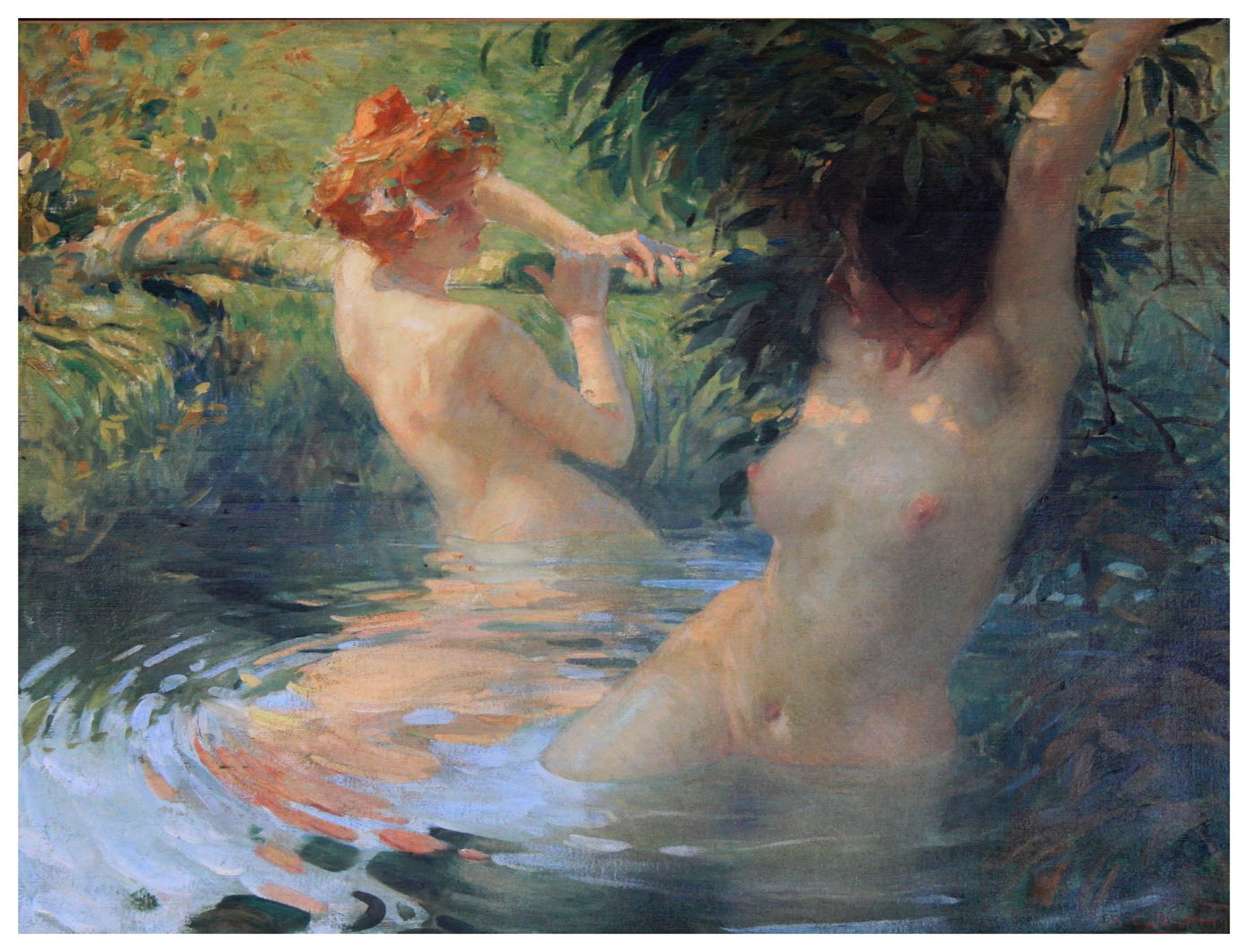
My final selection is an undated work from around the turn of the 19th-20th centuries by Antoine Calbet: Ondines, showing two nymphs in a rippled pool of water. One has red hair, which may refer to Gauguin’s version. His style is reminiscent of the great Swedish figurative painter Anders Zorn.
In 1939, Jean Giradoux based his play Ondine on Fouqué’s novella of 1811, and that has in turn been performed in a ballet by Hans Werner Henze (music) and Frederick Ashton (choreography). Ondine there tells her future husband Hans that she will be the breath of his lungs. After they are married, Hans reunites with his first love Bertha; when Hans later marries Bertha, he has to make a conscious effort to breathe. Ondine then kisses Hans, causing him to stop breathing and die, a femme fatale indeed.
There is a rare medical condition in which the automatic control of breathing fails, putting the patient at risk of stopping breathing when they fall asleep. This is known as congenital central hypoventilation syndrome, or Ondine’s curse. I’m confident that neither Paracelsus nor Giradoux had ever come across this condition, but their concepts and words proved extraordinarily prescient.
 The Eclectic Light Company