
As with other popular religious narratives, the nineteenth century brought innovation in the depiction of the Annunciation by the angel Gabriel to Mary, telling her that she will become the mother of Jesus Christ, the first step leading to the Nativity that follows in the coming week.
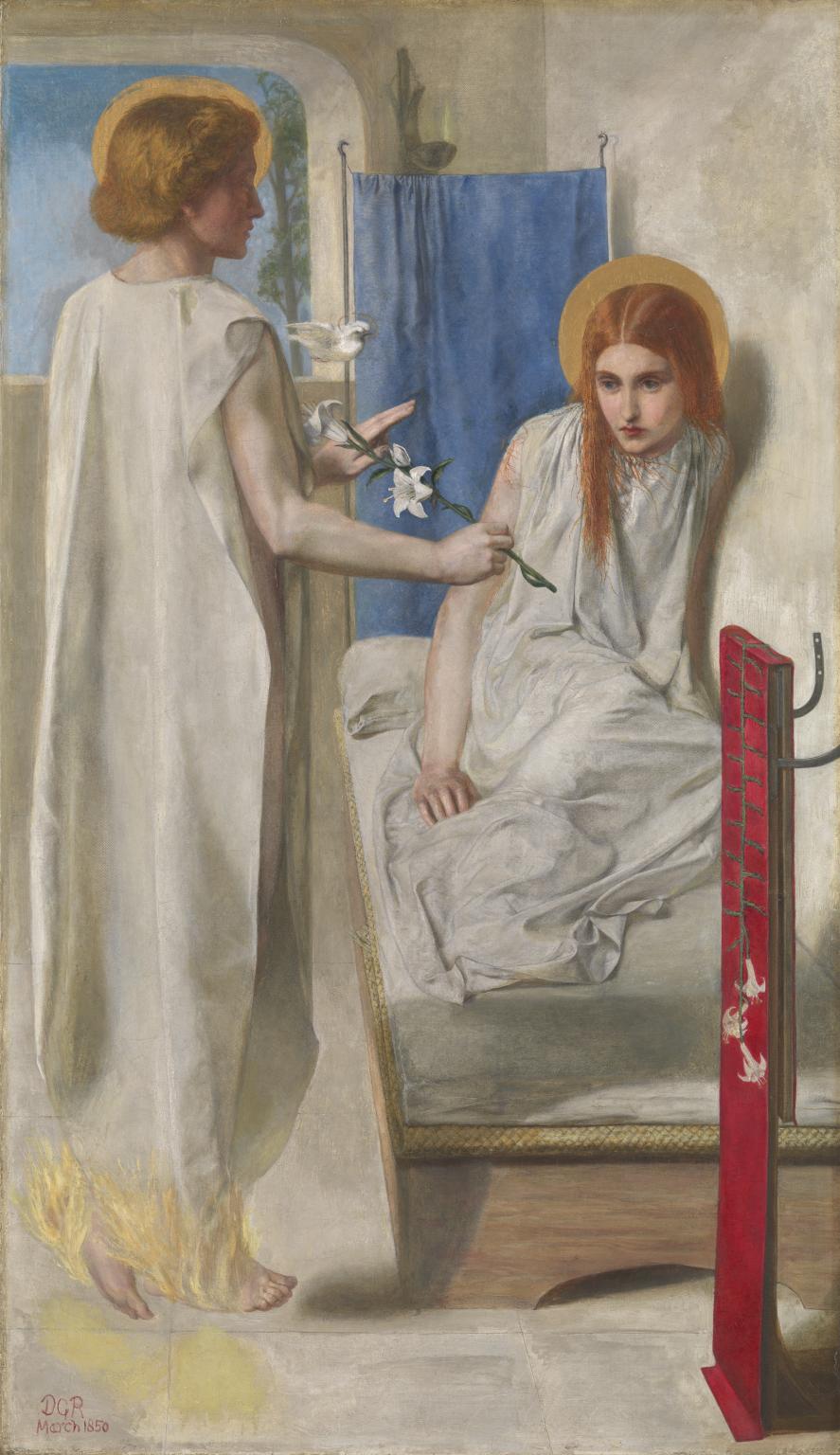
Dante Gabriel Rossetti’s Ecce Ancilla Domini! (The Annunciation) (1849–50) is as radical a reinterpretation of the traditional Annunciation painting, as his The Girlhood of Mary Virgin (1848-49) was of the life of Mary. There are gilt halos amid natural and realistic depictions of the figures and objects, in accordance with the ideals of the Pre-Raphaelite Brotherhood.
Symbols shown include: white robes for purity, the lily for purity and its traditional association with the Annunciation, a dove representing the Holy Spirit, red embroidery referring forward to Christ’s crucifixion, a blue curtain for heaven, and flames at the feet of the angel Gabriel rather than traditional wings.
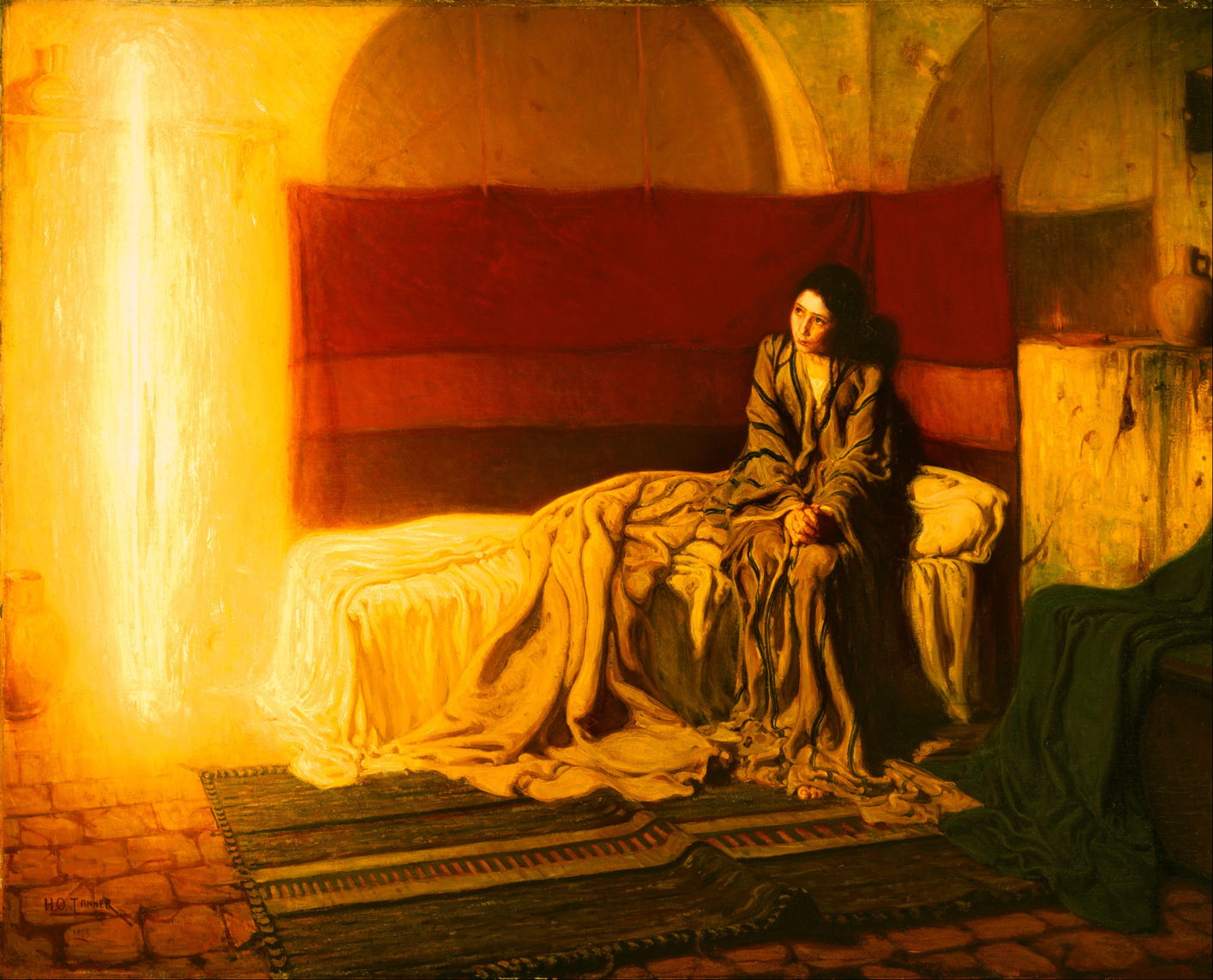
This Annunciation from 1898 is one of Henry Ossawa Tanner’s most unconventional paintings of a traditional scene. He sets it in the private space of Mary’s bedroom, with the bedclothes rumpled untidily, and Mary in casual night dress. There is no angel as such, but a dazzling fire of the spirit, forming a subtle crucifix with a shelf behind. This painting was accepted for the Salon of 1898, and was widely reproduced in magazines afterwards.
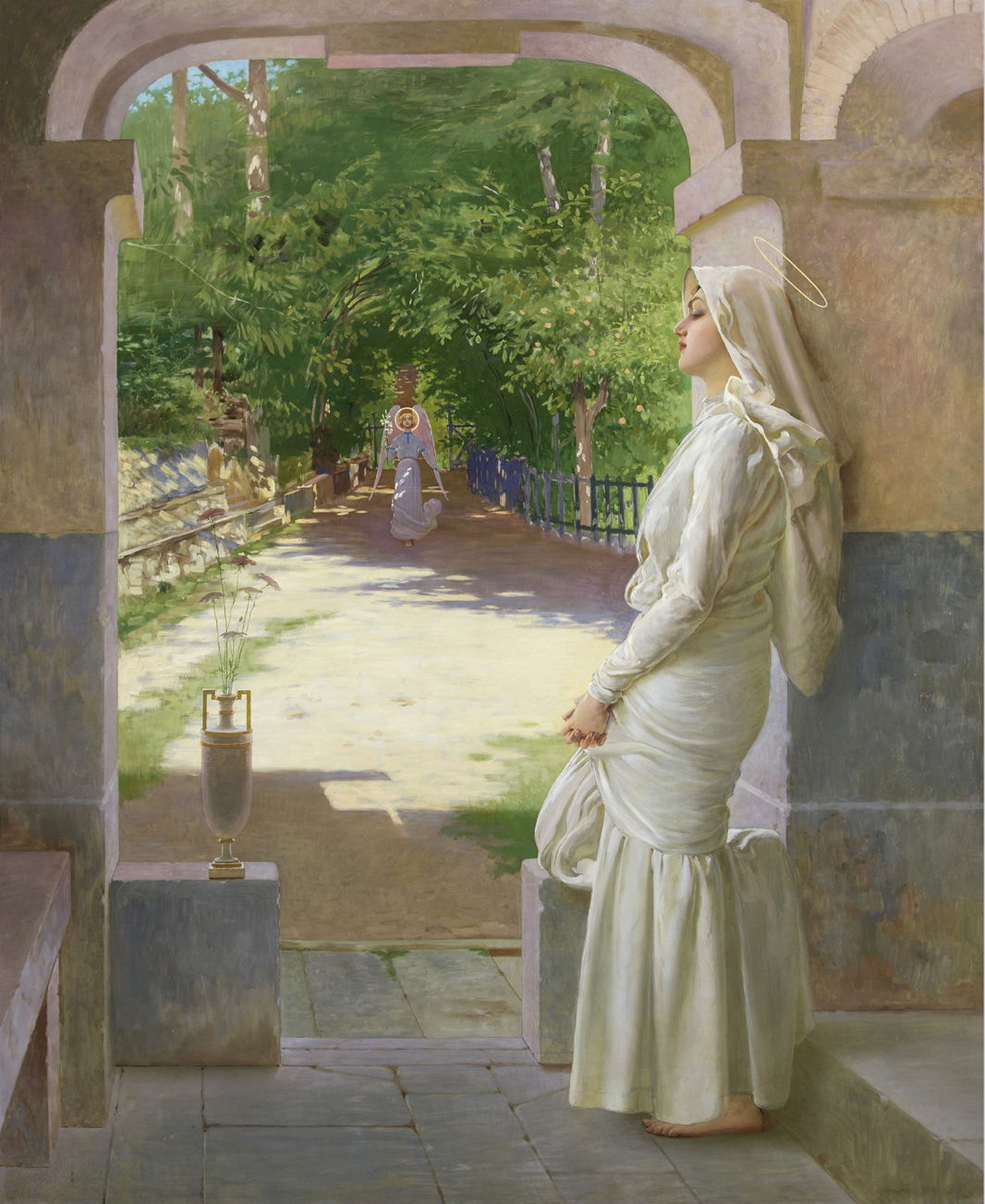
In 1904, Vittorio Matteo Corcos completed this remarkable painting for the Convento di San Francesco in Fiesole, Italy. Mary has a highly contemporary look as she stands in contemplation with her hands clasped together in prayer. Gabriel approaches from the distance, walking through a tunnel formed by trees.

Of all these paintings, it’s Oleksandr Murashko’s Annunciation, probably from 1907-08 or 1909, that I find most breathtaking. Apparently, he was first inspired to paint this when he saw a girl part light curtains to enter his house from the terrace outside. He saw a parallel with the entry of the Archangel Gabriel in the Annunciation.
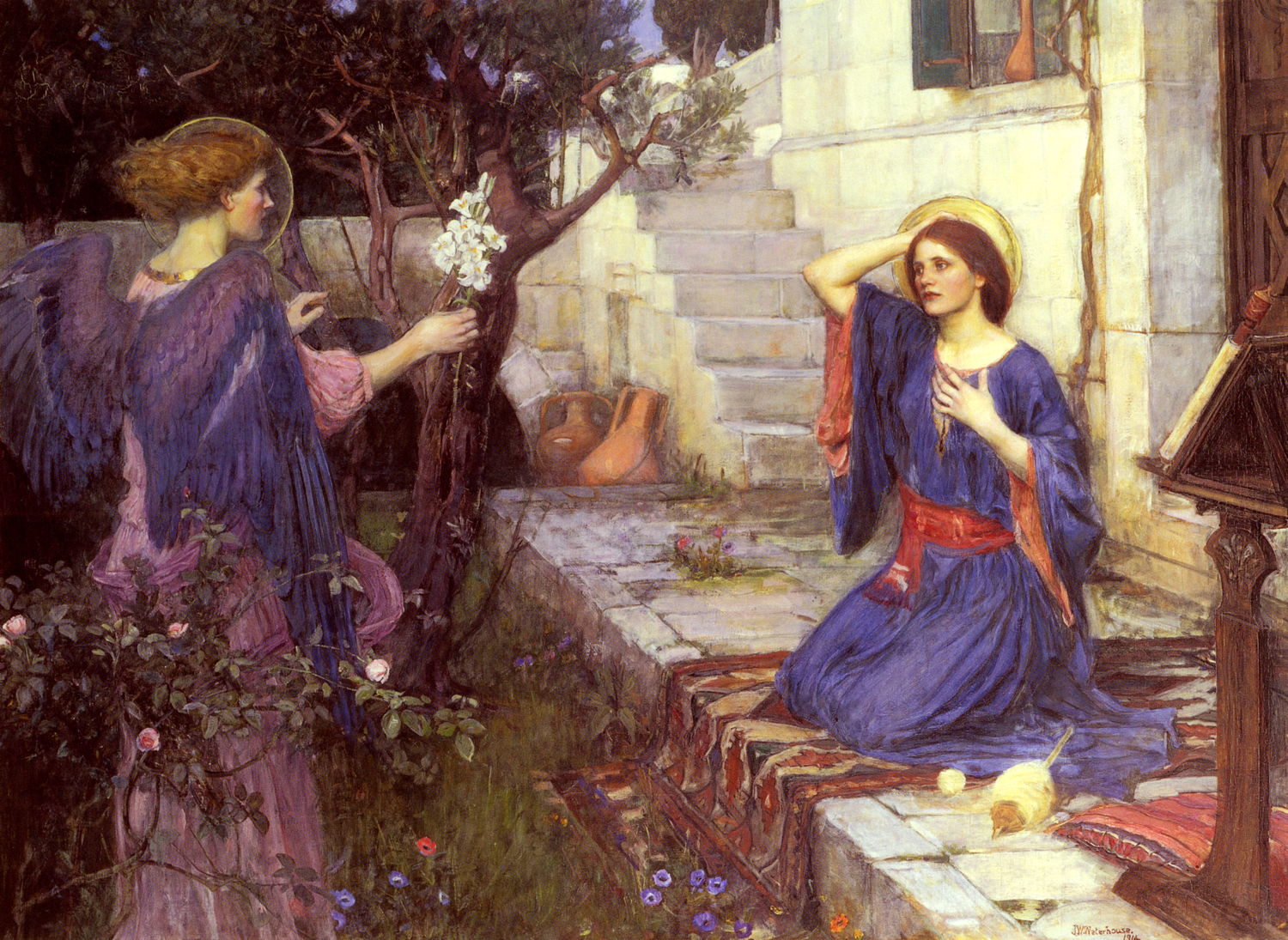
Just before the First World War broke out, John William Waterhouse painted his one and only religious work, The Annunciation (1914). Although completed over fifteen years after Tanner’s, it remains deeply traditional, with Gabriel bearing white lilies for Mary, who is kneeling and has dropped her spinning. Both figures have conventional halos.

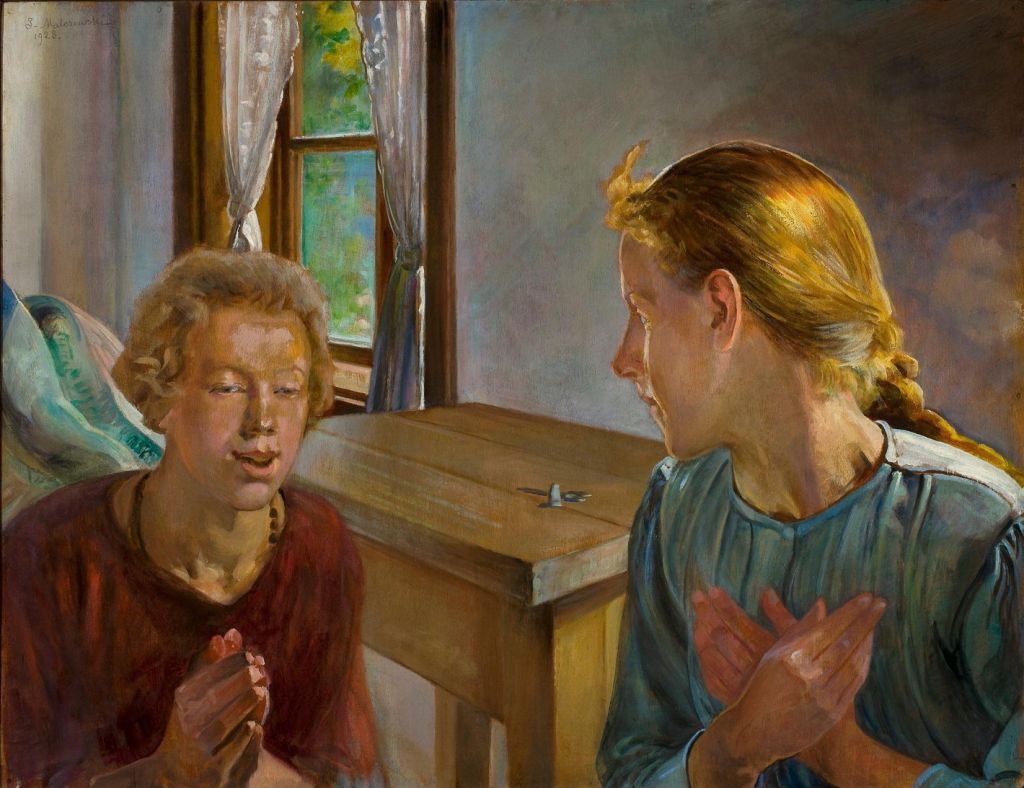
Jacek Malczewski’s Mary (right) is a modern young woman of 1923, whose thimble and scissors rest on a bare wooden table behind. Gabriel is in the midst of breaking the news to her, his hands held together as he speaks. The window and curtains make clear that this is twentieth century Poland, not the Holy Land two millennia ago.
 The Eclectic Light Company