Book Review: Clouds, Edward Graham

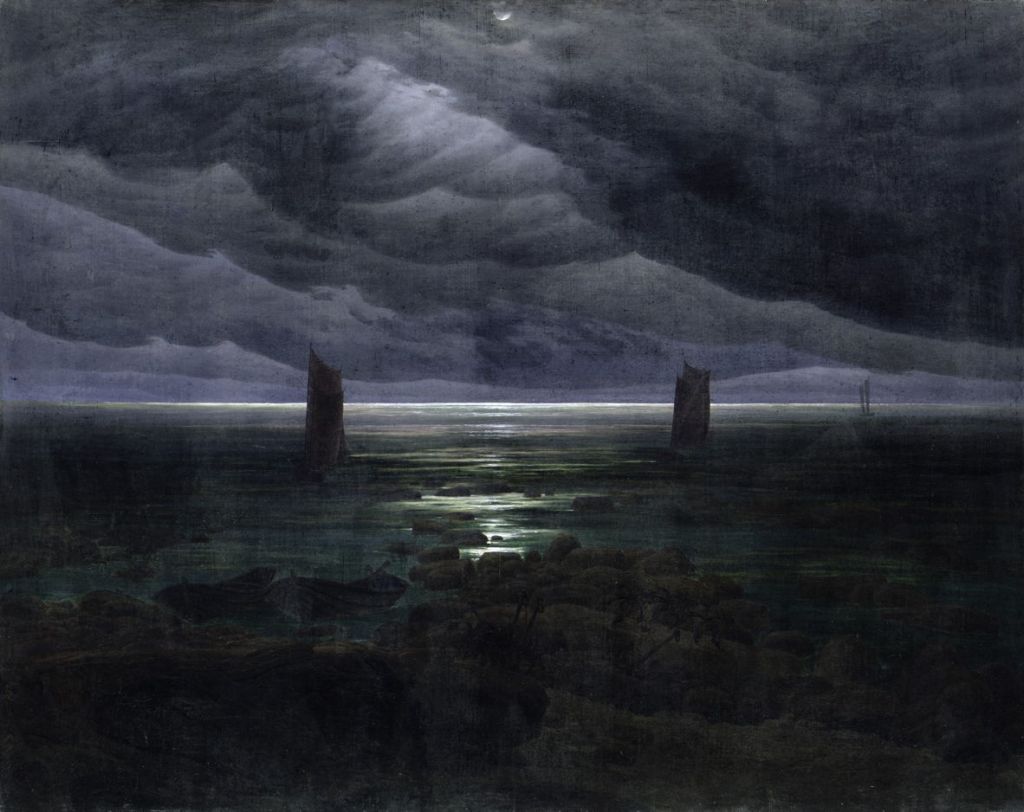
Caspar David Friedrich, Seashore by Moonlight (1835–36), oil on canvas, 134 × 169.2 cm, Kunsthalle, Hamburg. Wikimedia Commons.

Edward Graham: Clouds: How to Identify Nature’s Most Fleeting Forms (2025), Princeton University Press, 224 pages, hardcover, ISBN 978 0 691 26248 2. Approx £20-£25.

There are several fine guides to the identification of clouds, but none like this. Edward Graham, an atmospheric physicist and meteorologist, has chosen to illustrate this with an exceptional collection of paintings rather than photos. Although the author provides a little information about the artists responsible, and discusses each painting briefly, this book isn’t about the art of skying. It presents a throughly accessible systematic account of clouds, their naming and classification, and their physics.

A foreword by Richard Hamblyn, a prolific writer on clouds, establishes the link between paintings of clouds and their science. Graham then lays the foundation of cloud classification and explains some of their relevant physics. The main sequence of chapters deals with low, mid-level and high cloud species systematically, before concluding with a chapter on rare and unique types of cloud. There’s also an excellent and comprehensive index.

To give you a taste of what’s in store, here’s a small selection of paintings that appear, with Graham’s formal identification of the type of cloud in each.
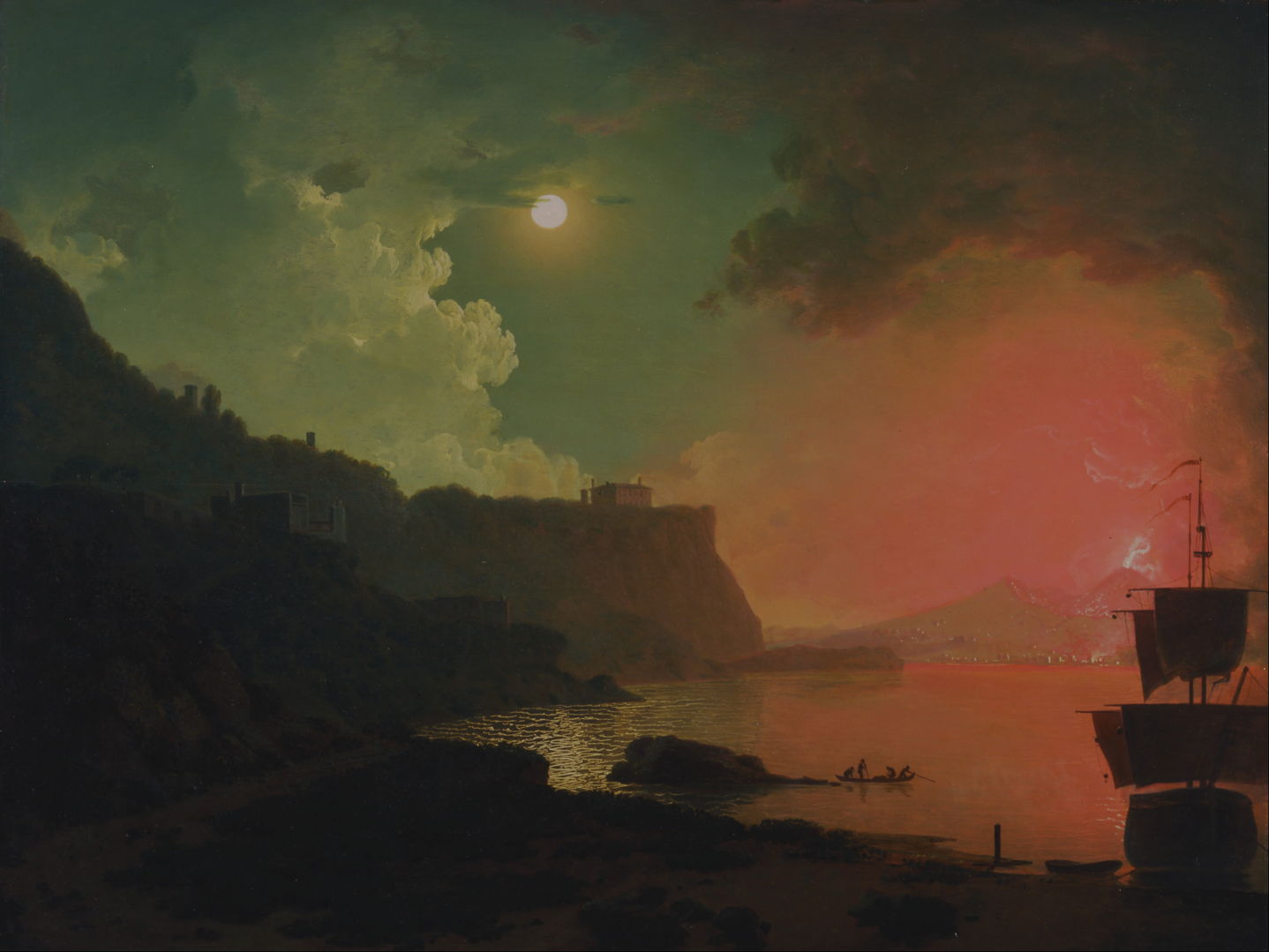
wrightderbyvesuviusposillipo
Joseph Wright (of Derby) (1734–1797), Vesuvius from Posillipo (c 1788), oil on panel, 63.5 x 83.8 cm, Yale Center for British Art, New Haven, CT. Wikimedia Commons.

Cumulonimbus calvus flammagenitus.

palmerhailshamsussexstorm
Samuel Palmer (1805–1881), At Hailsham, Sussex: a Storm Approaching (1821), watercolor and graphite on medium, slightly textured, medium wove paper, 43.8 x 59.7 cm, Yale Center for British Art, New Haven, CT. Wikimedia Commons.

Cumulus congestus.

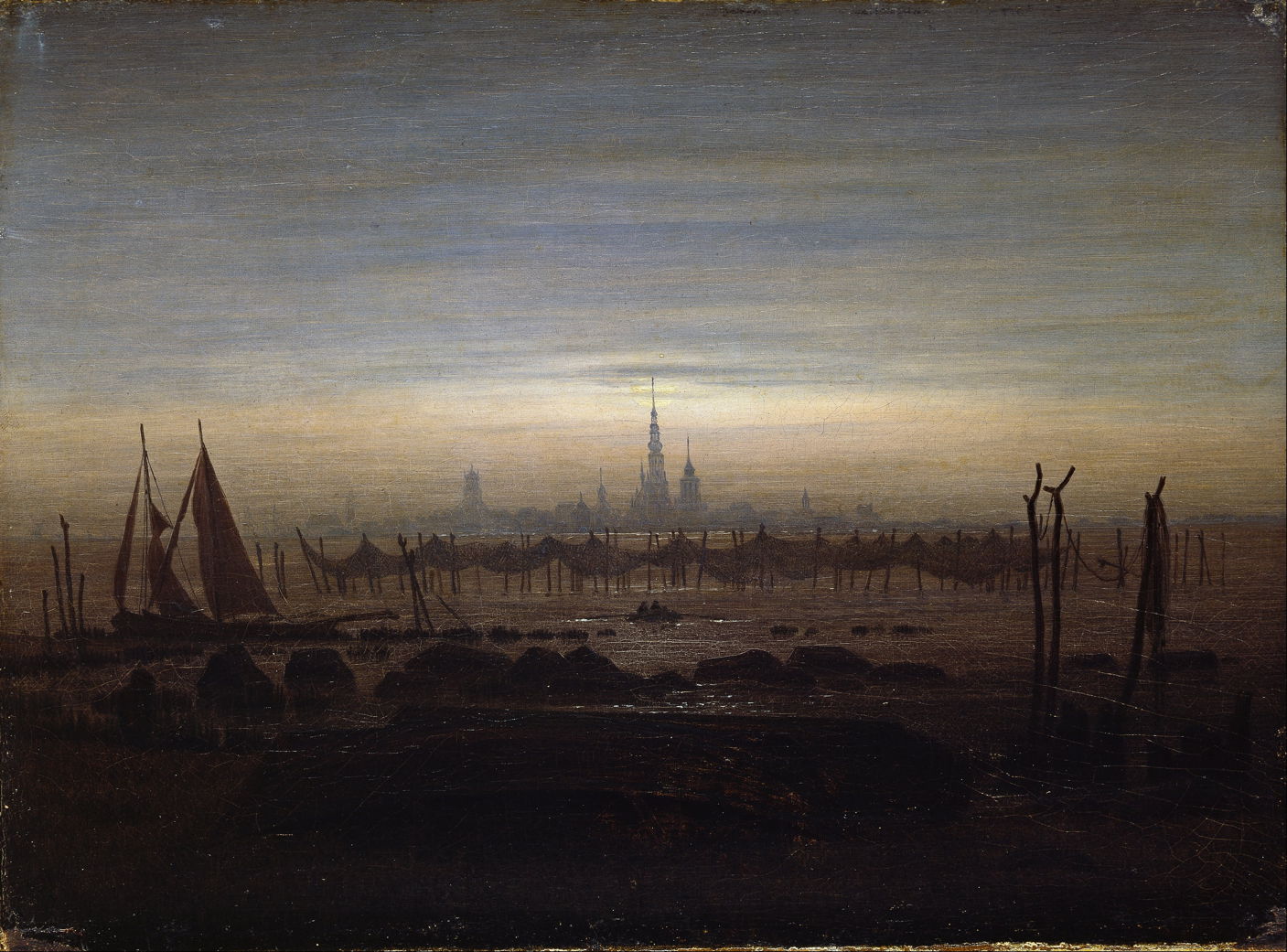
friedrichgreifswaldmoonlight
Caspar David Friedrich (1774–1840), Greifswald in Moonlight (1817), oil on canvas, 22.5 × 30.5 cm, Nasjonalgalleriet, Oslo, Norway. Wikimedia Commons.

Altostratus translucidus with undulatus and perlucidus.

brettnwgaleofflongships
John Brett (1831–1902), A North-West Gale off the Longships Lighthouse (1873), oil on canvas, 106.7 x 213.2 cm, Birmingham Museum and Art Gallery, Birmingham, England. Wikimedia Commons.

Stratocumulus radiatus.

Samuel Palmer, Sunset (1861), watercolour, gouache, gum and graphite on paper, 27 x 38.7 cm, Yale Center for British Art, New Haven, CT. Wikimedia Commons.
Samuel Palmer (1805–1881), Sunset (1861), watercolour, gouache, gum and graphite on paper, 27 x 38.7 cm, Yale Center for British Art, New Haven, CT. Wikimedia Commons.

Altocumulus undulatus, a mackerel sky.

Caspar David Friedrich, Seashore by Moonlight (1835–36), oil on canvas, 134 × 169.2 cm, Kunsthalle, Hamburg. Wikimedia Commons.
Caspar David Friedrich (1774–1840), Seashore by Moonlight (1835–36), oil on canvas, 134 × 169.2 cm, Kunsthalle, Hamburg. Wikimedia Commons.

Asperitas.

If you haven’t already ordered a copy, now’s the time to do so.