
In this alphabet of landscape painting, M stands for le Midi, the south of France including its Mediterranean coast, which came to the fore at the end of the nineteenth century. European landscape painting first flourished in the countryside around Rome, its campagna, where its founding fathers Nicolas Poussin and Claude Lorrain spent most of their careers.
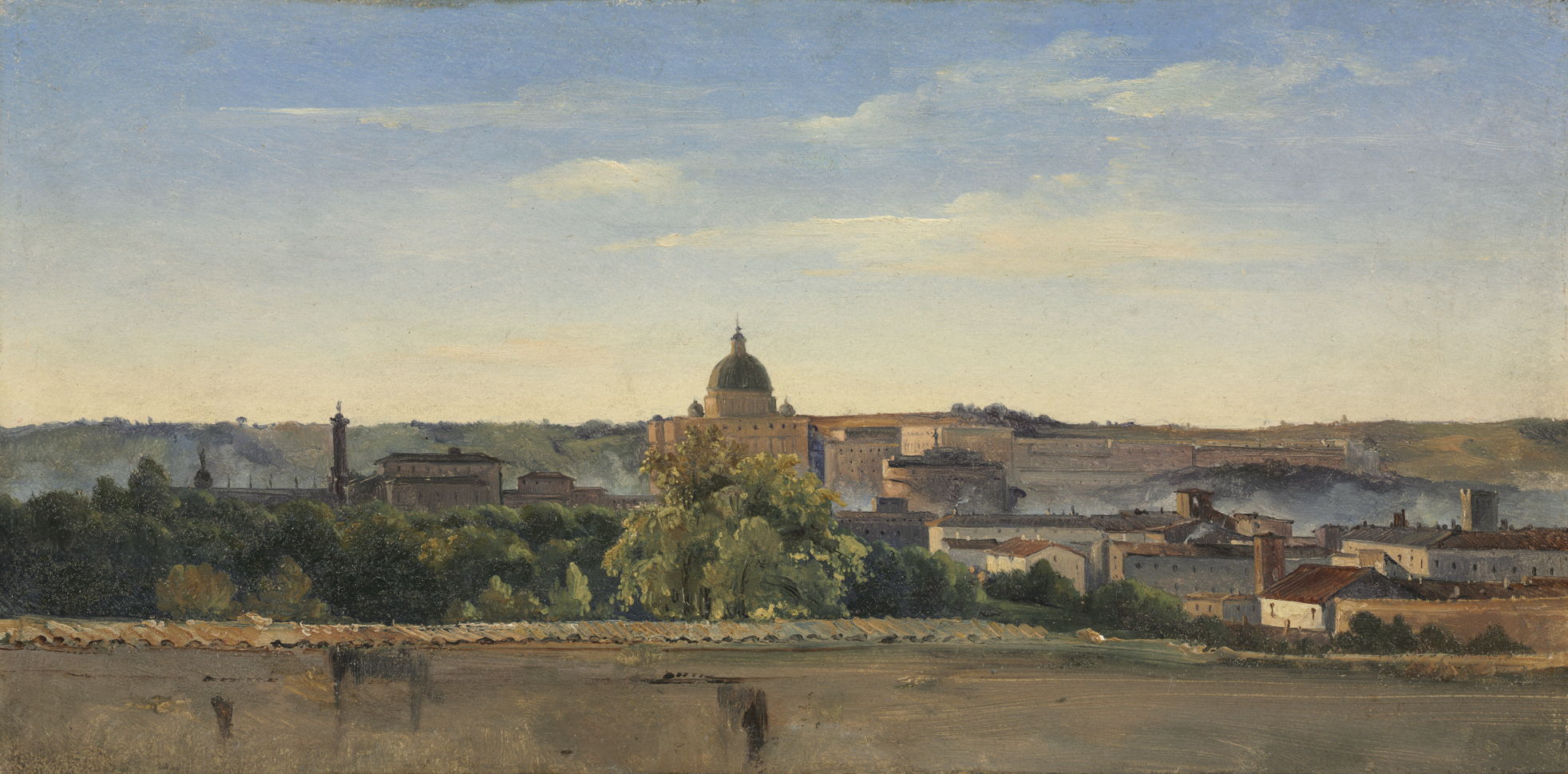
The young Pierre-Henri de Valenciennes made copious oil sketches in the Roman Campagna in 1782-85. He not only built himself a large visual library of sketches from nature, but published a widely used book on landscape painting in which he recommended the practice. His magnificent View of Rome was painted in front of the motif during that period.

The young Camille Corot followed suit around forty years later, and on his return to France became one the group of artists gathering in Barbizon village, to the south-east of Paris. In about 1830 he painted Fontainebleau Forest (The Oak), characteristic of the Barbizon School.

Successors to Corot and the Barbizon School were the French Impressionists, who painted most frequently near the River Seine in the Île de France, around Paris. Camille Pissarro’s large view of The Garden of Les Mathurins at Pontoise, belonging to the Deraismes Sisters (1876) is a fine example of the style that developed in this area.
Although Paul Cézanne had painted alongside Pissarro in the countryside of northern France, in the early 1880s he returned to his home at Aix-en-Provence in the far south, in the region popularly known as le Midi.
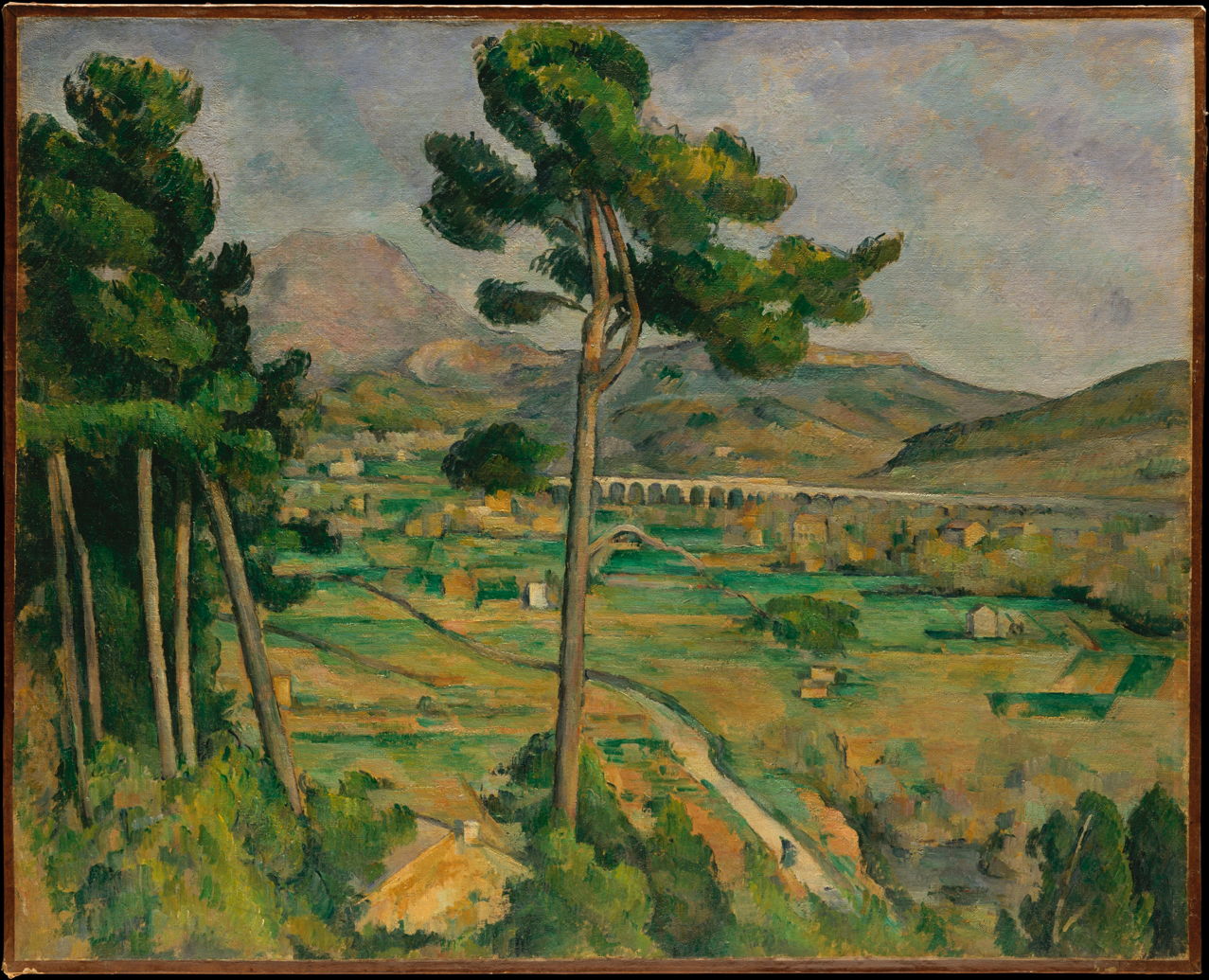
For the final twenty years of his life, Cézanne was obsessed with a number of motifs around Aix, most prominently views of Mont Sainte-Victoire to its south-east. This is one of the many views that he painted of the mountain, showing his departure from the light and colours that were prevalent in the north.
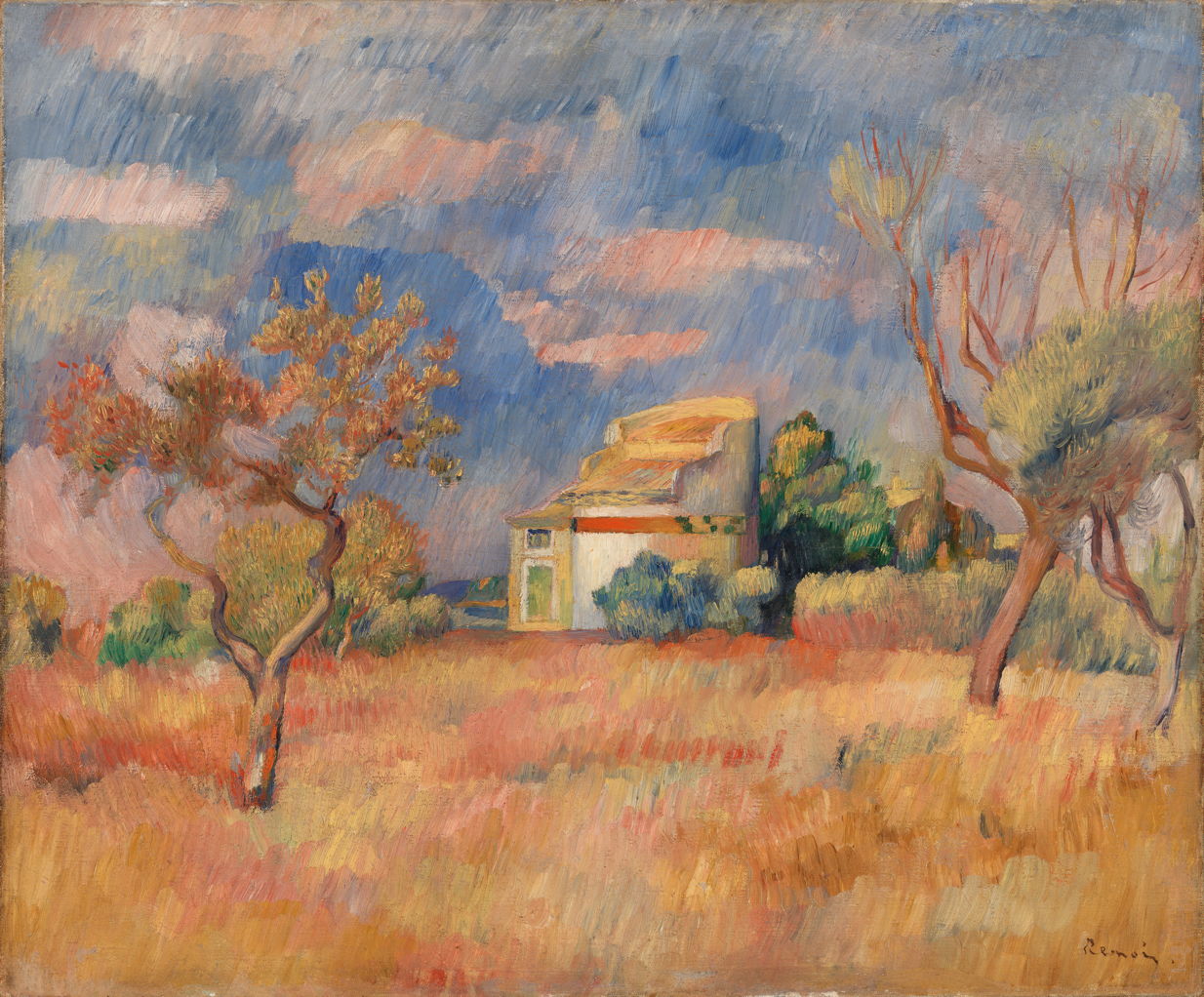
In about 1888-89, Cézanne’s old friend Auguste Renoir visited him at Aix, and the pair painted alongside one another in the dazzling light of le Midi. Renoir’s Dovecote at Bellevue is one of the results in which he shows the influence of Cézanne’s style.
At that time, the French Mediterranean coast was largely undiscovered and unspoilt, although it was well-served by fast direct trains from Paris, making it highly accessible well before the arrival of motor vehicles.

Claude Monet stayed in the town of Bordighera, just inside the border with Italy, for three months in 1884. The intensity of colour here isn’t just the different light of le Midi, but also the result of the artist’s early use of cadmium yellow pigment.
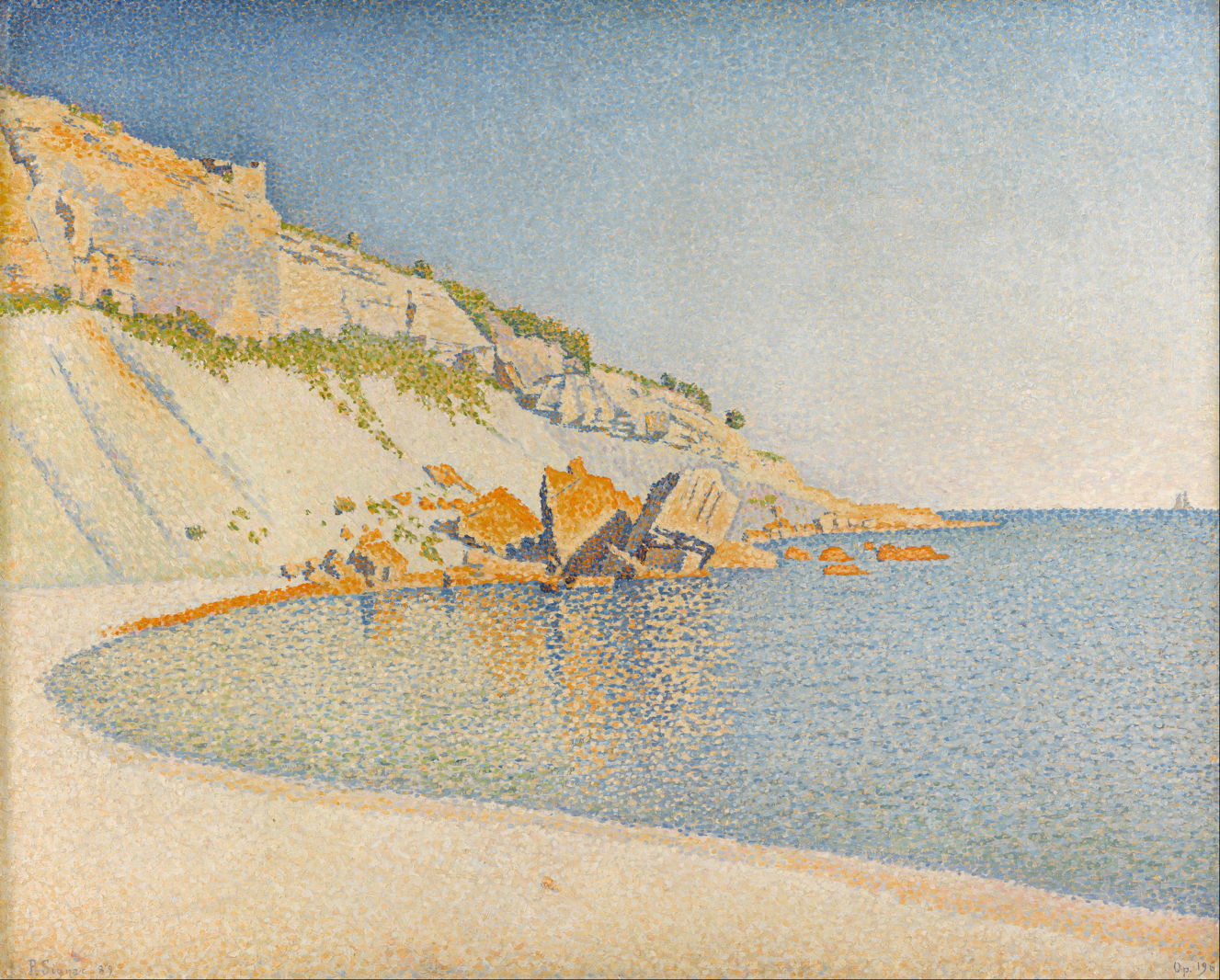
Five years later, in March 1889, Paul Signac travelled to Cassis, to the east of Marseille, where he stayed until June. His painting of Cassis. Cap Lombard from that period makes clear how different the light is. This is one of twelve works he exhibited under the series title The Sea.
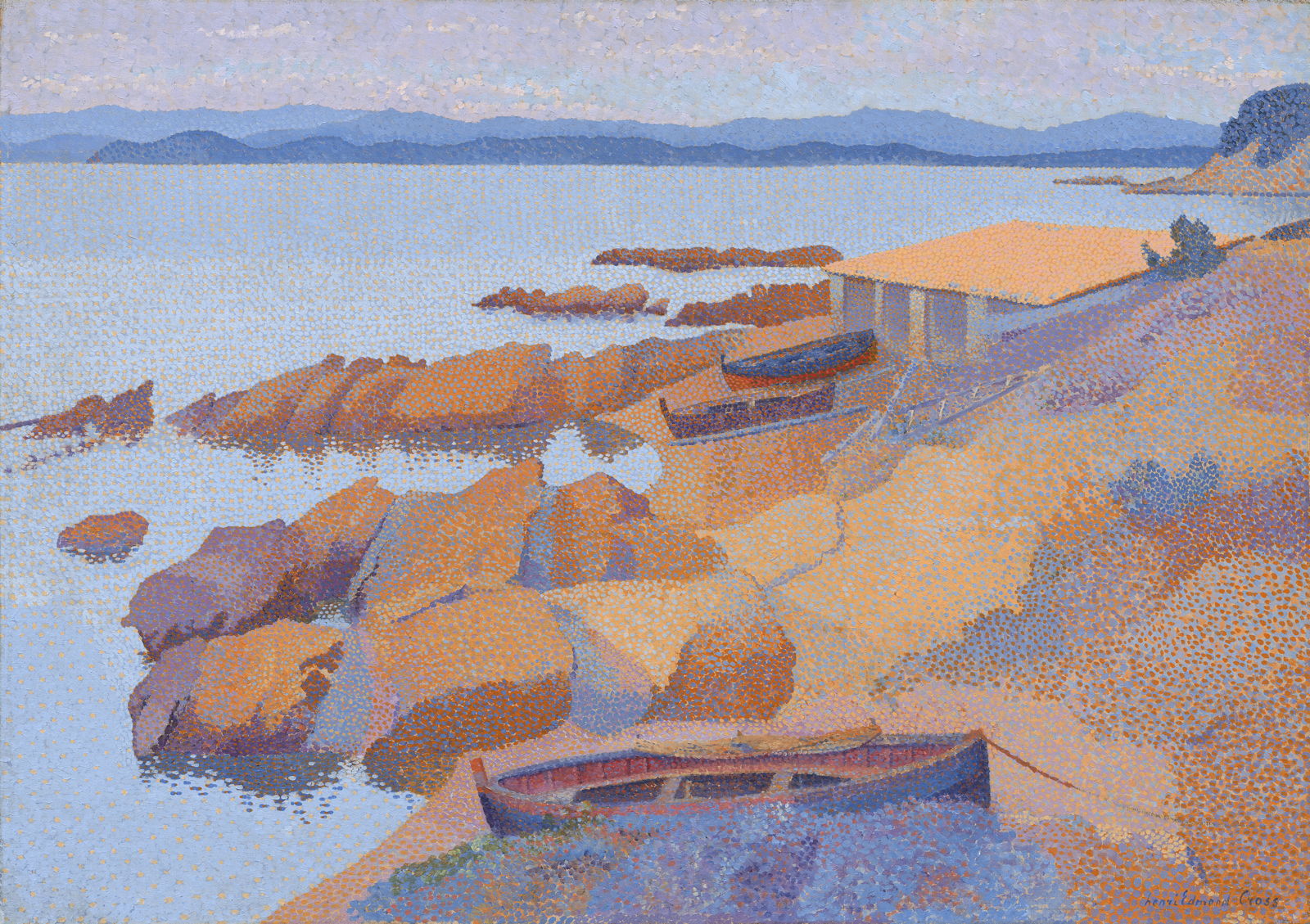
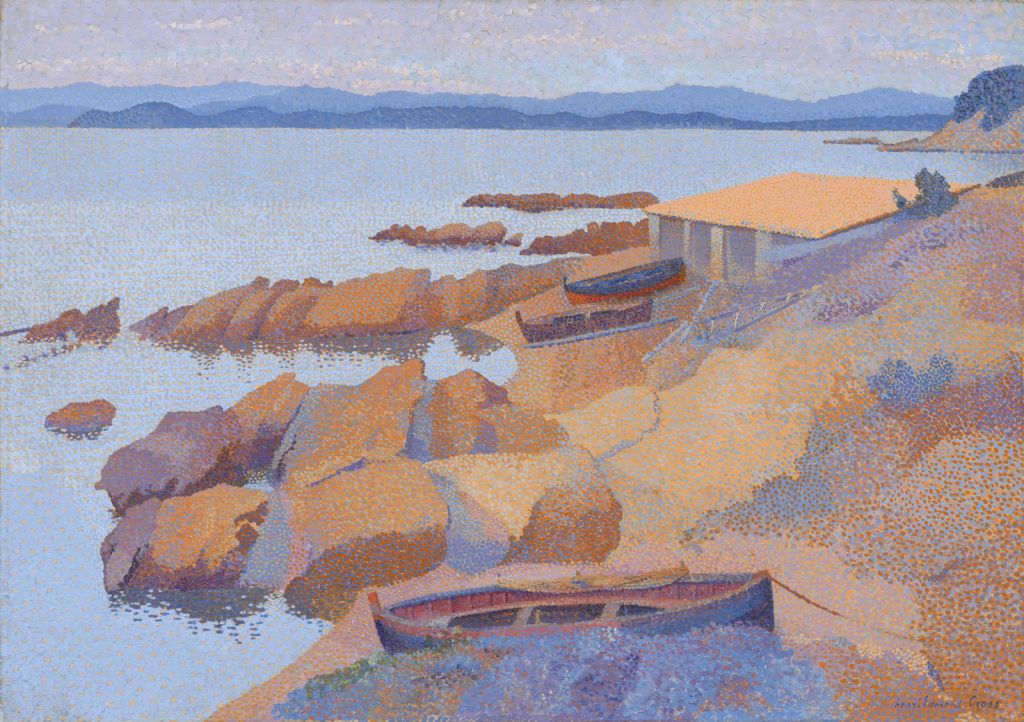
Henri-Edmond Cross had first visited the Mediterranean coast in 1883, and started spending much of each winter there, until he moved to Cabasson, near Le Lavandou, in 1891, to help his rheumatism. By the following year, when Signac moved to nearby Saint-Tropez, Cross had settled in the small seaside village of Saint-Clair, where he remained for the rest of his life. The earliest accessible paintings by Cross appear from his first years in le Midi, 1891-92, when he painted this view of the Coast near Antibes.

Another early visitor was Maximilien Luce, whose Rocks at Agay from 1894 shows one of the more rugged sections of the Côte d’Azur, between Saint-Tropez and Cannes, an area being actively developed for tourism at the time.

Then came Théo van Rysselberghe, whose view of Pointe Saint-Pierre, Saint-Tropez was painted in 1896.

Paul Signac started work on this view of the port of Saint-Tropez in 1901, but didn’t complete it until early the following year.
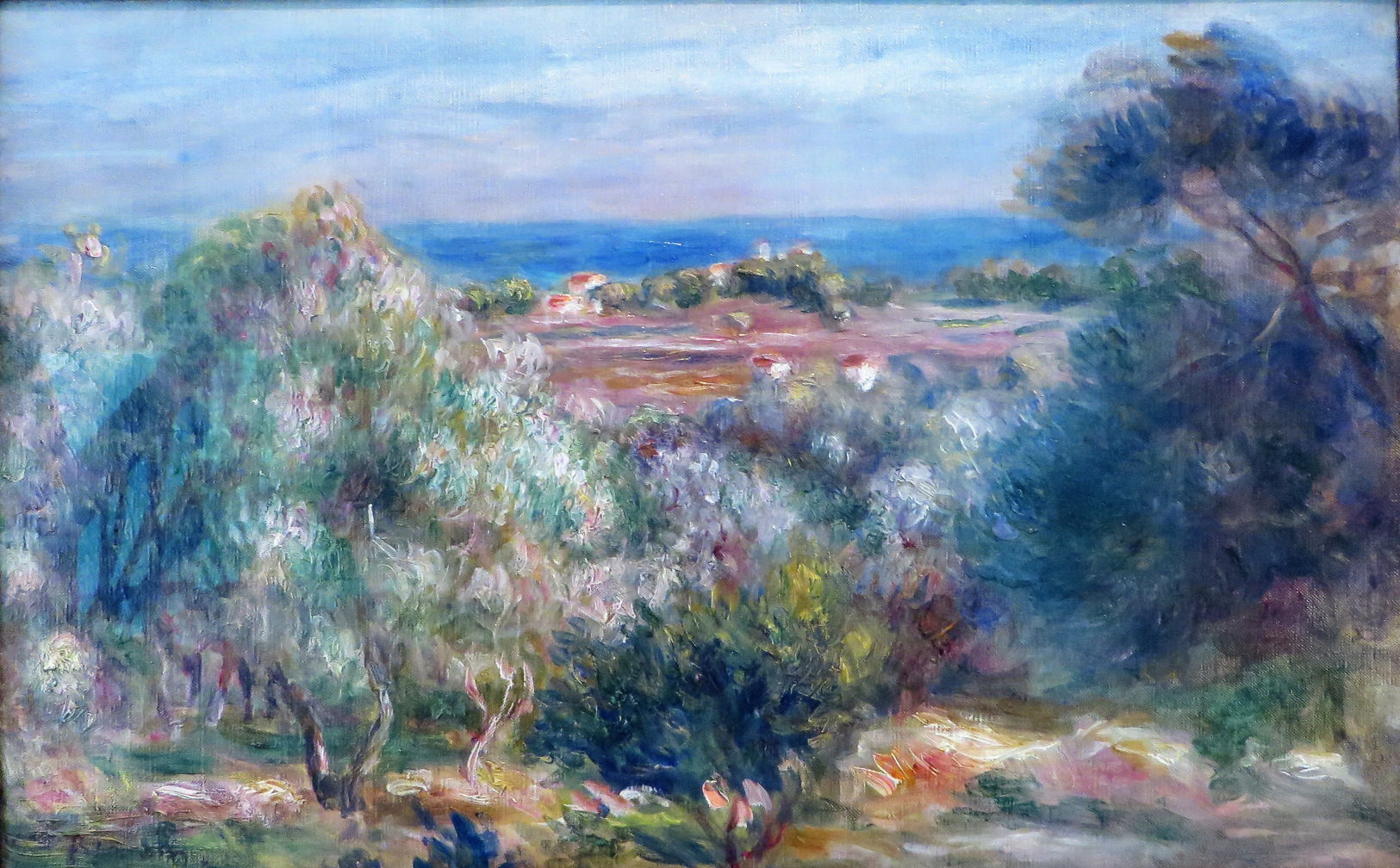
Like so many other painters who went to live along the Mediterranean coast, Auguste Renoir recognised the distinctive effects of its light. These are prominent in his View of the Sea from Haut-Cagnes, from 1903, with its great lightness and colours.
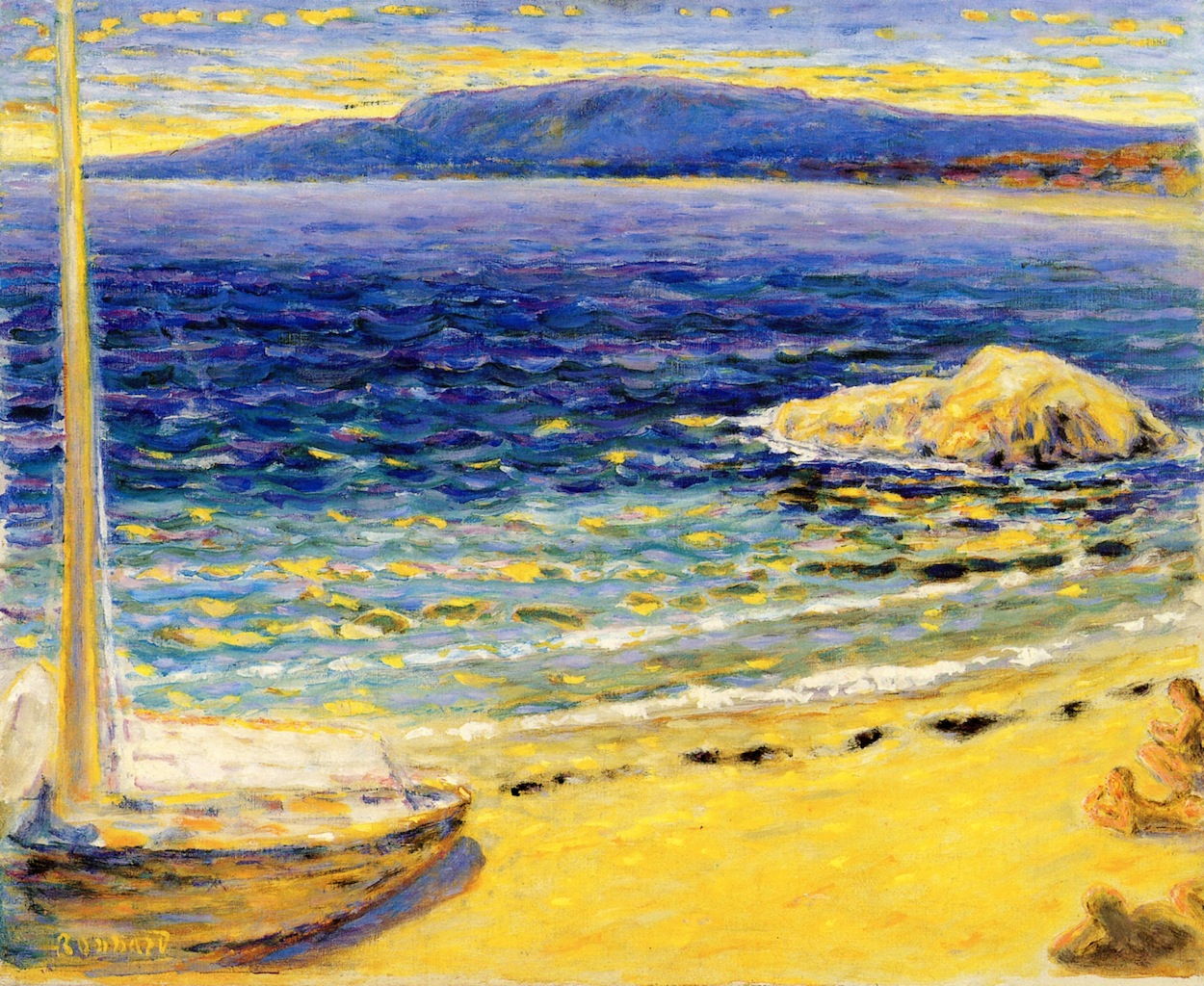
Pierre Bonnard’s landscapes painted in le Midi, such as this Marine Scene from about 1910, are vibrant in colour. Although already well-connected by fast rail services to Paris, resorts like Saint Tropez were still in their early development at that time. It wasn’t until the 1920s that it was made highly fashionable by the likes of Coco Chanel.

Meanwhile in 1923, van Rysselberghe painted this view of The Bay of Saint-Clair, now a popular beach close to Le Lavandou.

Bonnard’s The Riviera from about 1923 shows le Midi in the brilliant white light of the middle of the day, with much of its colour burnt out by dazzle.
 The Eclectic Light Company