
Across much of the northern hemisphere, this is one of the best times to go and paint nature, as it bursts into the flames of autumn/fall. This weekend I celebrate the changing colours of trees and their leaves. This first article shows paintings predominantly from the nineteenth century, and tomorrow’s will conclude with those from the early twentieth century.
It has been claimed that Impressionism depended largely on two technical advances in oil paint: their presentation in tubes making it easier to paint en plein air, and the advent of modern synthetic pigments of high chroma. Neither is true, of course, as these first few paintings demonstrate.

Back in 1652, Paulus Potter developed the effects of light together with the early autumn season almost to the point of being impressionist in his use of colour in Cattle in the Meadow.
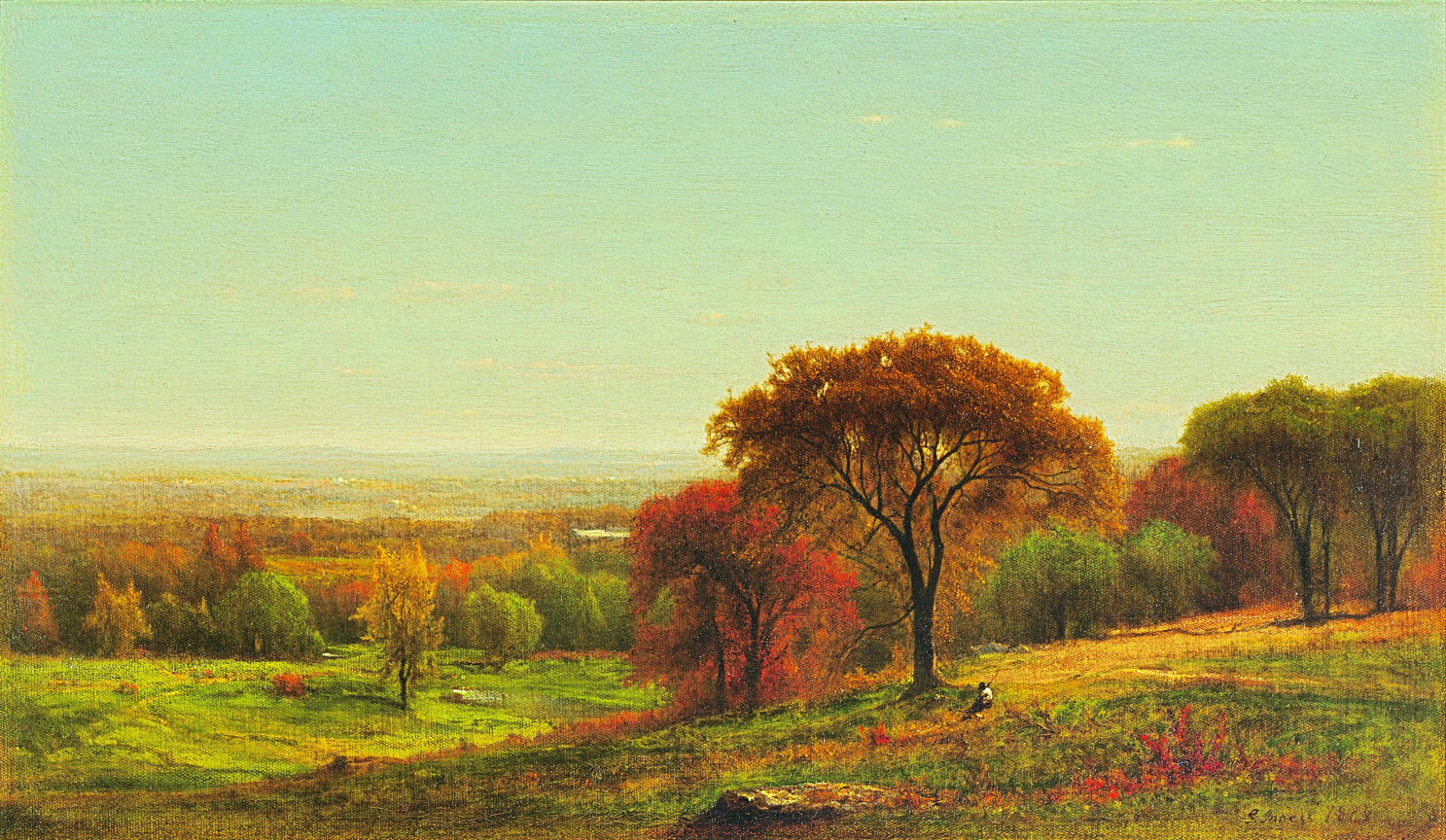
Several of George Inness’s views of the Catskills were painted in the fall. This view Across the Hudson Valley in the Foothills of the Catskills (1868) is my favourite for his perfect timing, in catching a mixture of different colours, from just the right location to show the contrast between those trees that have burst into flame, and those still left in summer’s green.

Claude Monet’s masterwork Autumn on the Seine, Argenteuil from 1873 is an excellent example of his waterscapes of this period, with its finely broken and rippled reflections and brilliant colour.
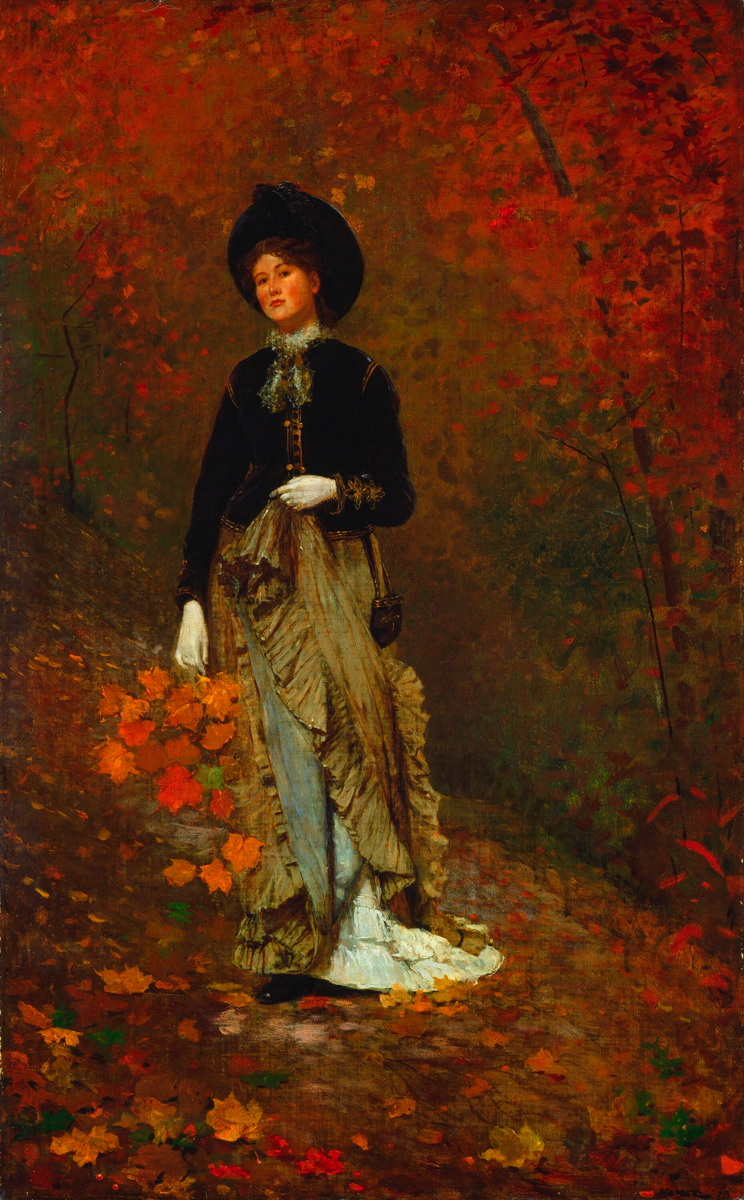
Winslow Homer also made full use of autumn colours. Although this painting of Autumn (1877) was made before he stayed at Cullercoats in north-east England, to my eye it is one of the best works of his early career.
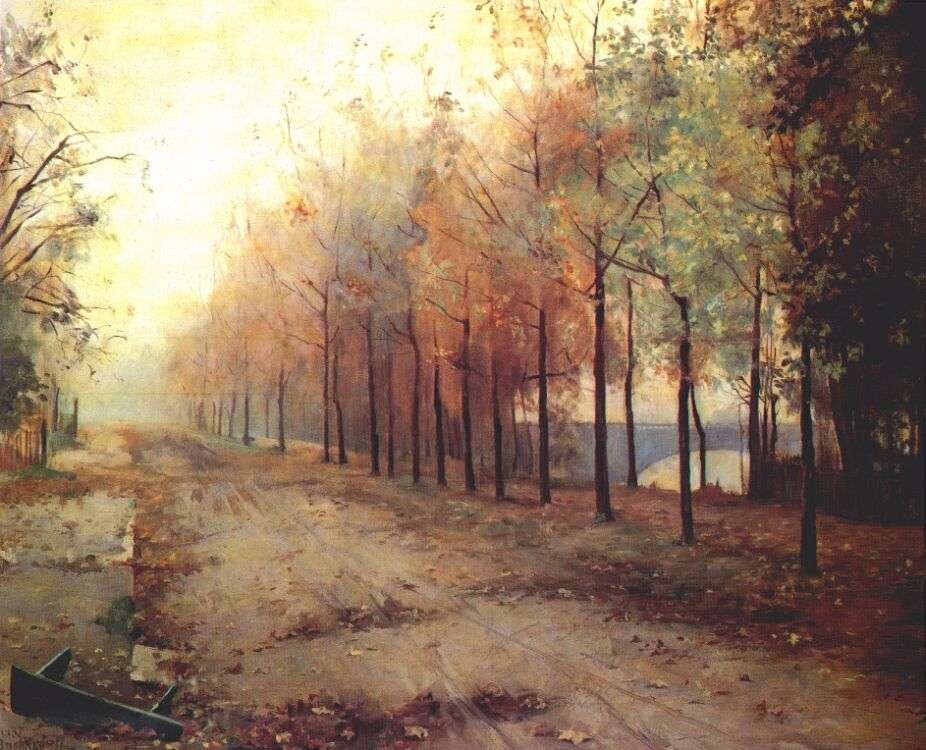
Marie Bashkirtseff, protégé of Jules Bastien-Lepage, painted her view of Autumn in 1883. Although both are known as Naturalists, this is an Impressionist depiction of a row of trees on the bank of the River Seine in the centre of Paris. At the end of October the following year, when she was only twenty-five, she died of tuberculosis.
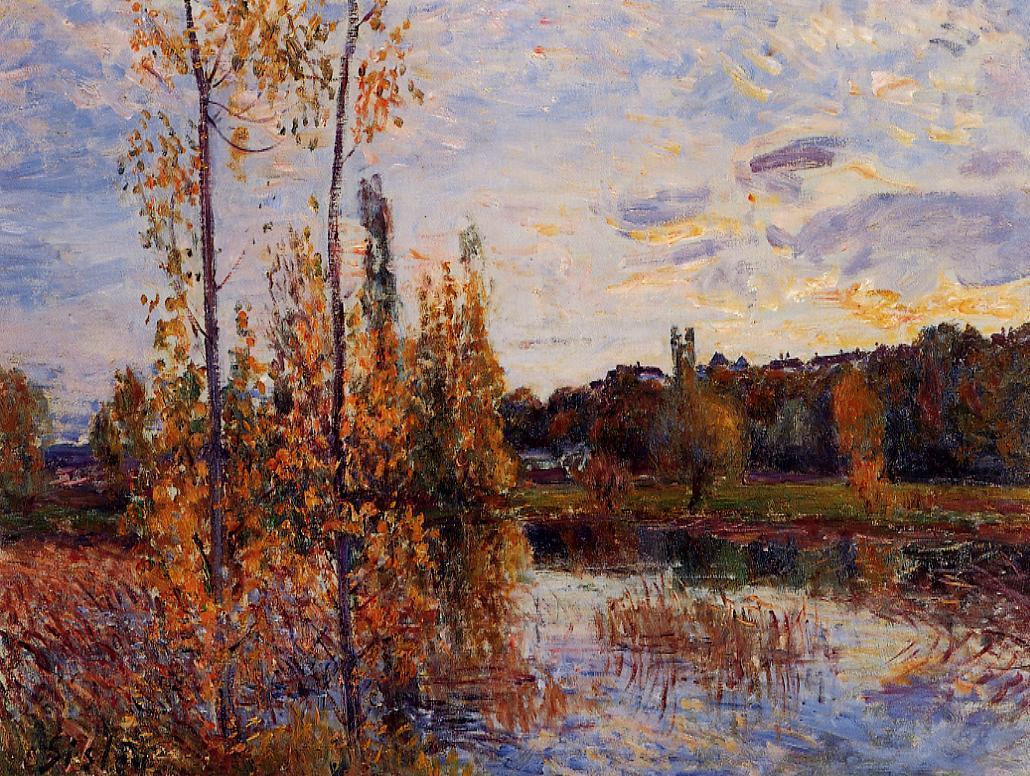
Alfred Sisley’s l’Etang de Chevreuil from about 1888 shows a pond near the River Loing to the south-east of Paris.
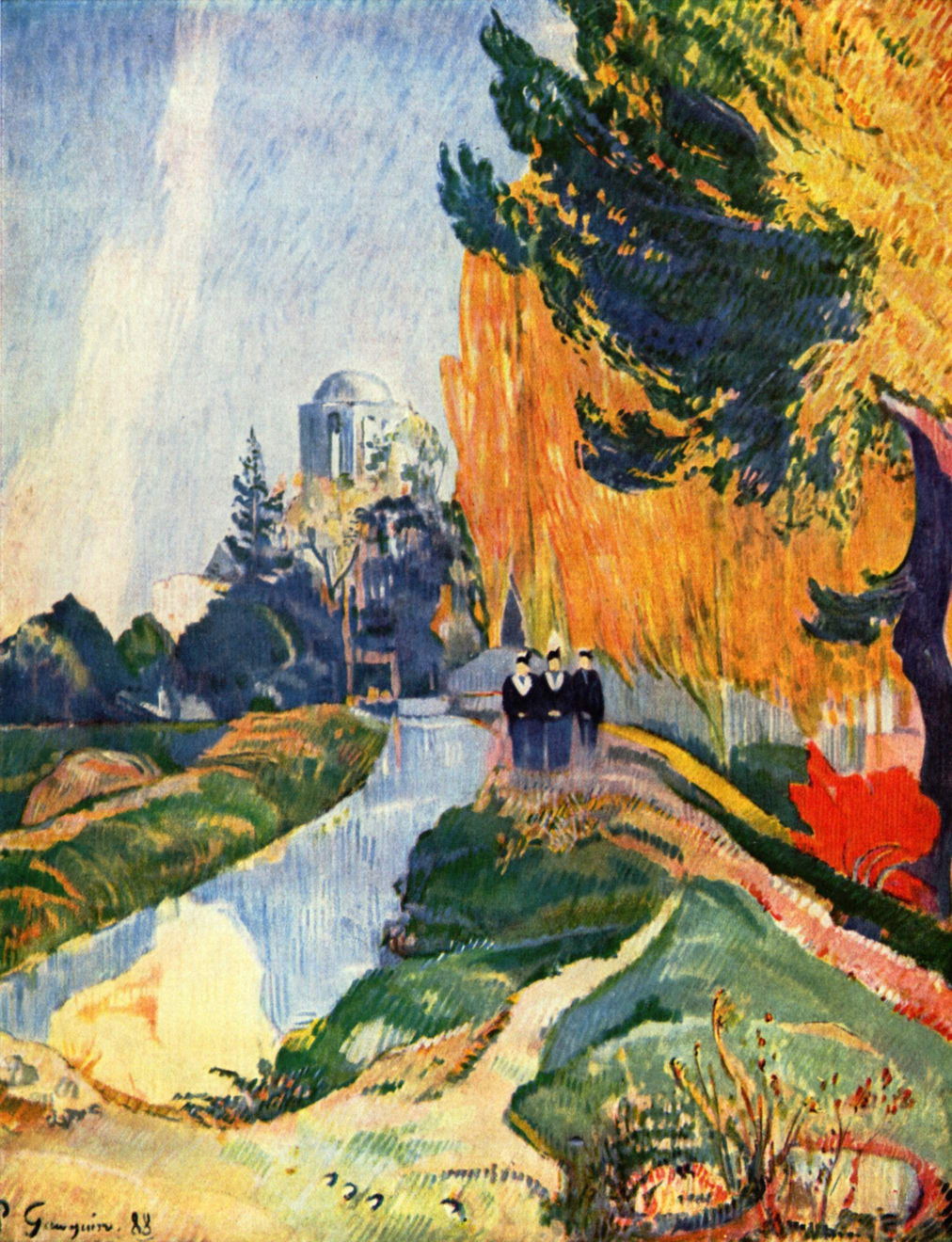
This is one of two views painted by Paul Gauguin at Les Alyscamps, Arles, on 28-31 October 1888, subtitled The Three Graces at the Temple of Venus.
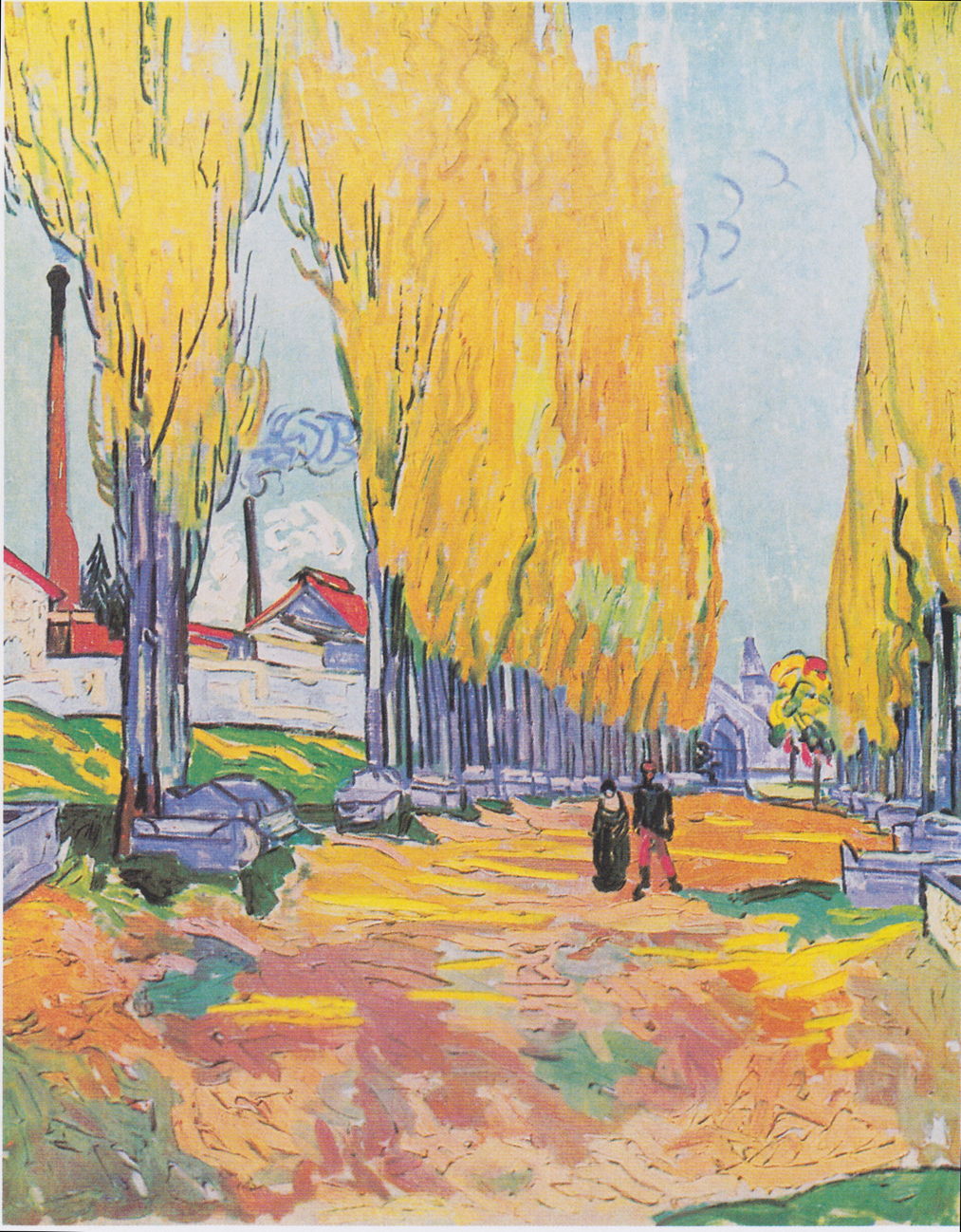
Gauguin painted those alongside Vincent van Gogh, who also painted two views of his own, including Les Alyscamps, Avenue in Arles, showing the same avenue of poplars with old Roman stone sarcophagi.
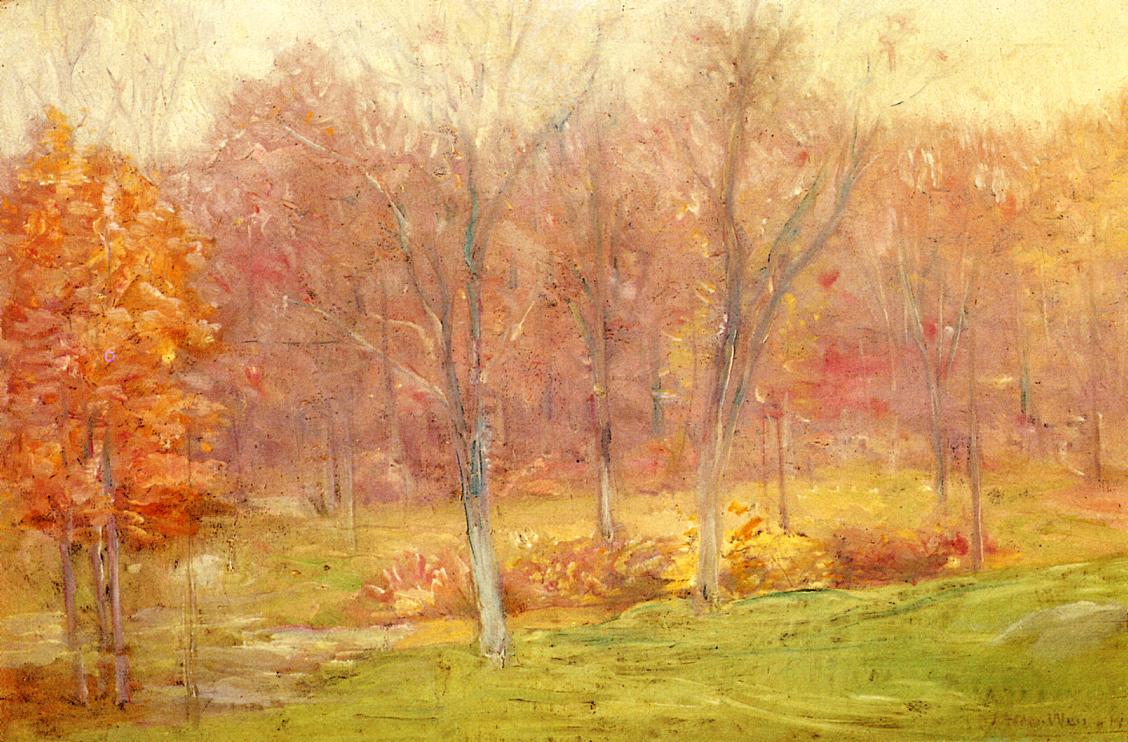
Julian Alden Weir’s Autumn Rain (1890) shows the intensification of chroma that often occurs following rain.
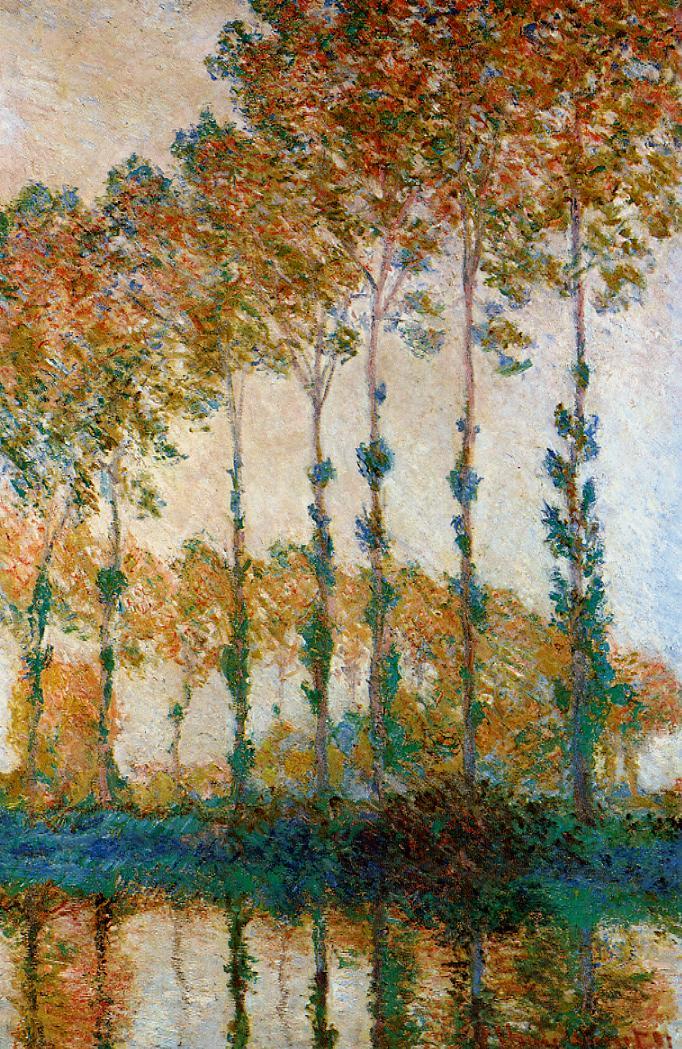
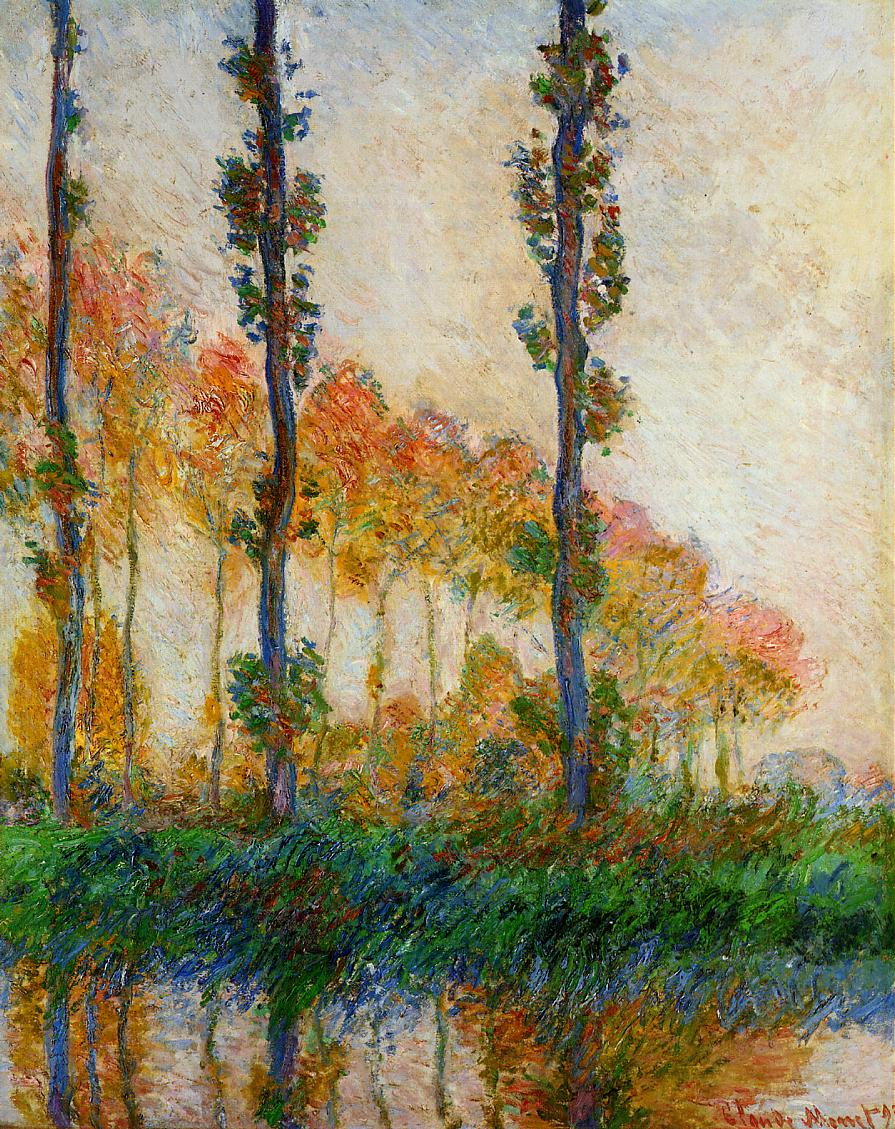
In 1891, Claude Monet painted his first formal series of rhythmic poplars, including Poplars on the Bank of the Epte, Autumn: eleven paintings in all. These articulate the contrasts in form within each tree, with sections of bare trunk, and those of extensive canopy, the colours cast by light and those of the leaves themselves, the rhythmic assembly of the line of trees, their reflections in the water, and the formation of the line of poplars into sweeping curves in depth.
A branch of that main series consists of six further paintings of poplars, also completed in 1891, of which The Three Trees, Autumn is an example. These explore the same themes but with different emphasis within them.

William Merritt Chase painted the whole countryside in blazing colours, near his country retreat at Shinnecock on Long Island, in October of about 1893.
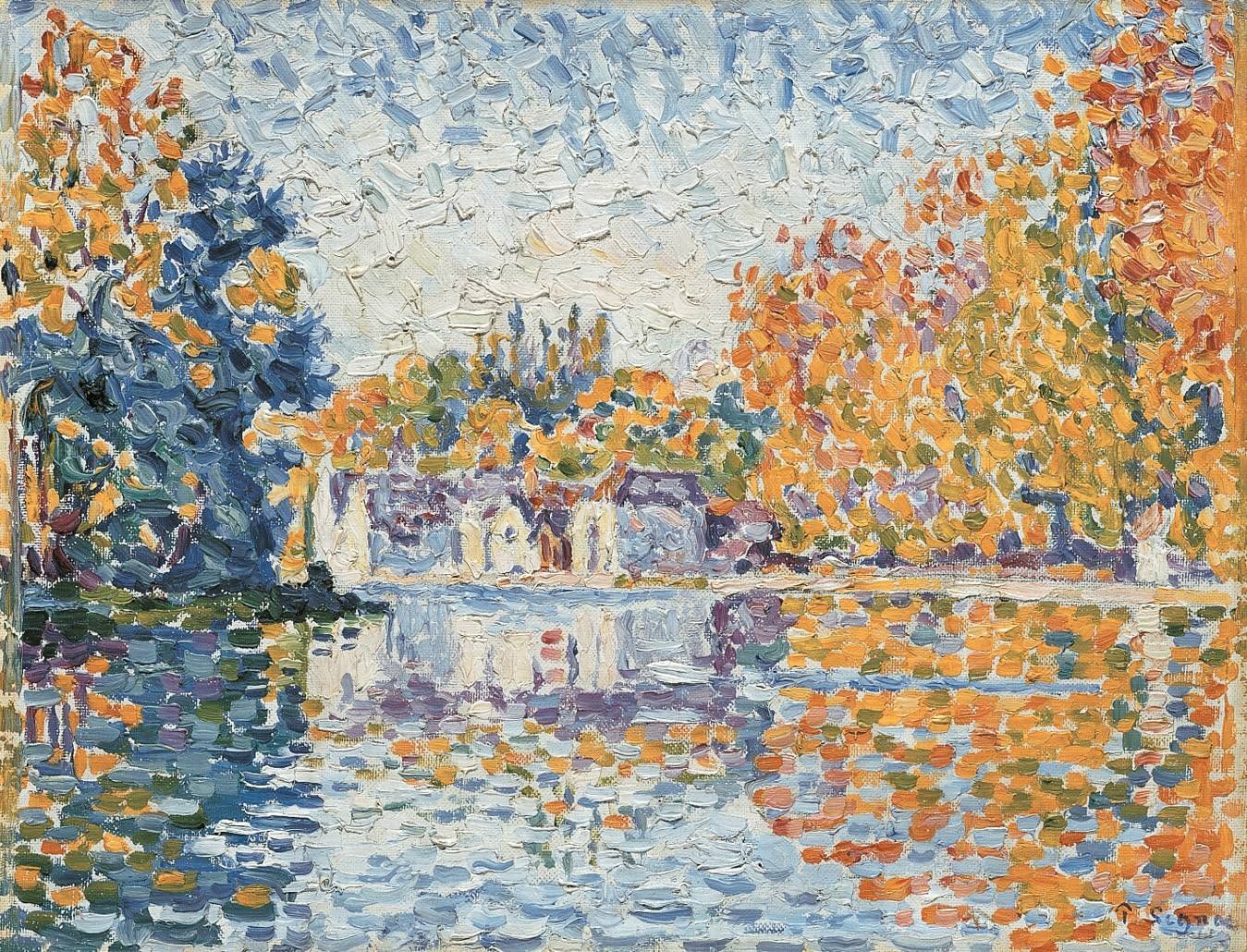
In the autumn of 1899, probably October, Paul Signac stayed in the little town of Samois, near Fontainebleau to the south-east of Paris. He painted a series of small Divisionist oil studies of the River Seine there, among them this view of The Seine at Samois.

Signac painted this view of Castellane during the winter of 1902-03. This shows Notre Dame du Roc, the small chapel at the left end of the rock towering over the River Verdon, with the village of Castellane at the lower left. Its companion shows the small town of Sisteron nestling in its gorge on the River Durance. Both were exhibited at the Salon des Indépendants in 1903, and went on to acclaim at several exhibitions in Germany, where they helped establish his reputation.
 The Eclectic Light Company