
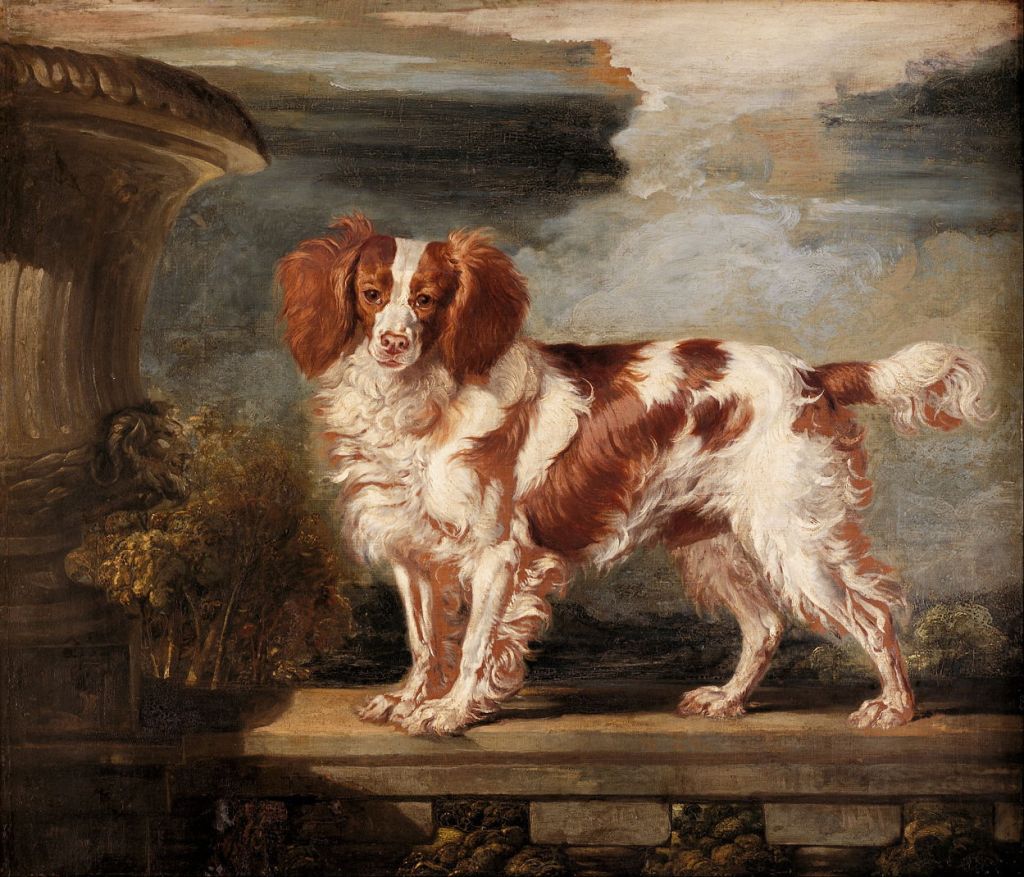
In the first article of this pair, yesterday, I showed examples of dogs playing roles in stories, and in working partnerships with humans. To conclude this topic, today I show a small sample of the many paintings of dogs in their role as companions.
Although largely forgotten today, the British artist Briton Rivière became a specialist in painting dogs in the late nineteenth century.
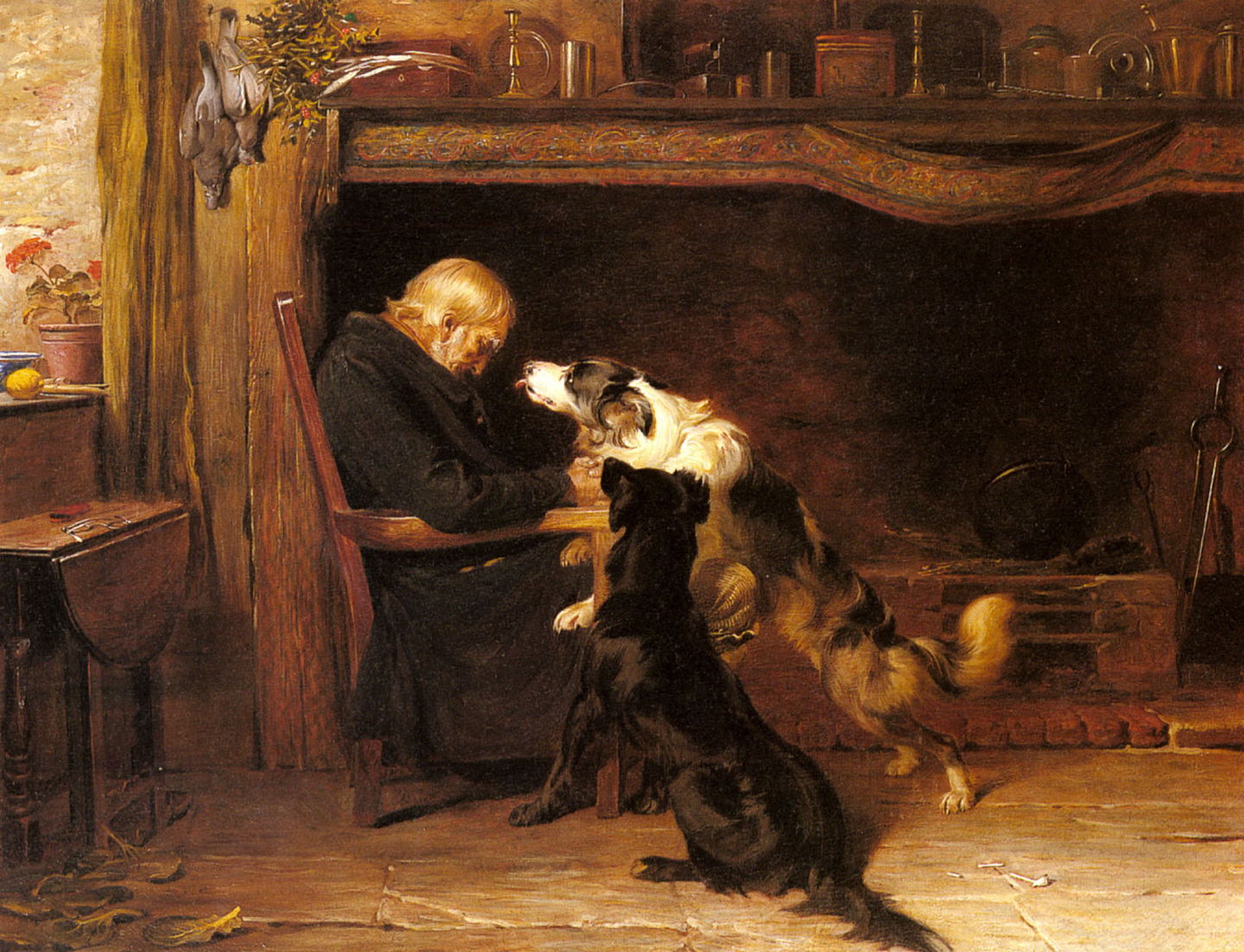
Rivière played on contemporary sentimentality with great success. The old man in The Long Sleep from 1868 may well have died quietly as he slept by the empty fireplace, and his faithful dogs are now trying to wake him up. On the floor in the right foreground are the fragments of a broken clay smoking pipe, and at the far left leaves are scattered, hints of his demise.
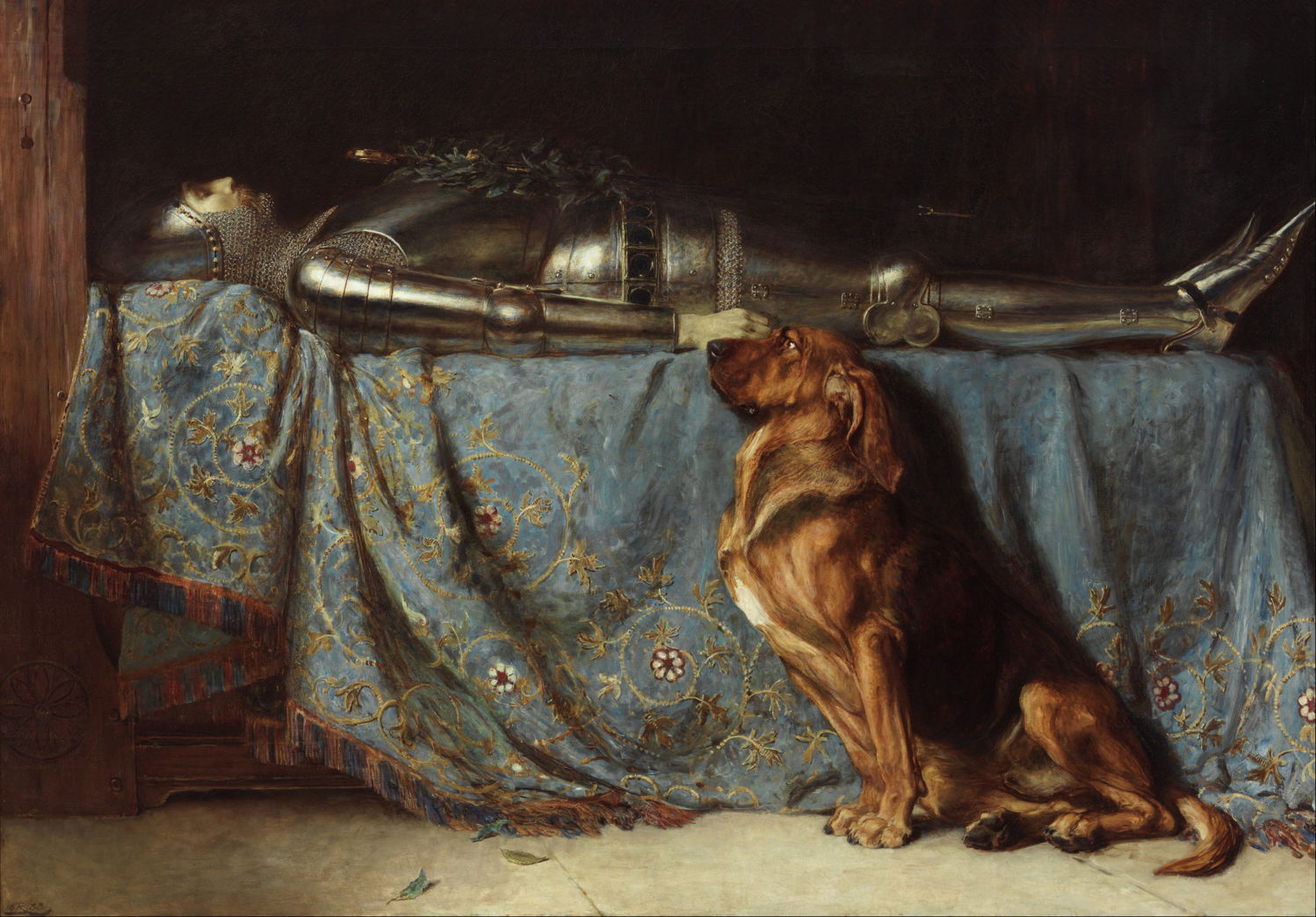
Of all his depictions of the loyalty of domestic dogs, it’s Rivière’s Requiescat from 1888 which epitomises the relationship. This is less about the death of the knight clad in armour than the devotion of his dog, who sits pining for its master.
The many breeds of domestic dogs each have their own associations and readings in visual art.

There has been speculation as to whether Carpaccio’s Two Venetian Ladies from about 1490 were bored upper class wives, or courtesans in between gigs, although opinion currently favours their nobility. They sit amid a menagerie of peacock, doves and their two dogs, staring into the distance.

Just as hunting dogs were a sign of social status, so other breeds became associated with wealth and success. Rembrandt’s self-portrait from 1631-33 shows the artist in fancy dress with a large poodle, making it clear that he had truly arrived.
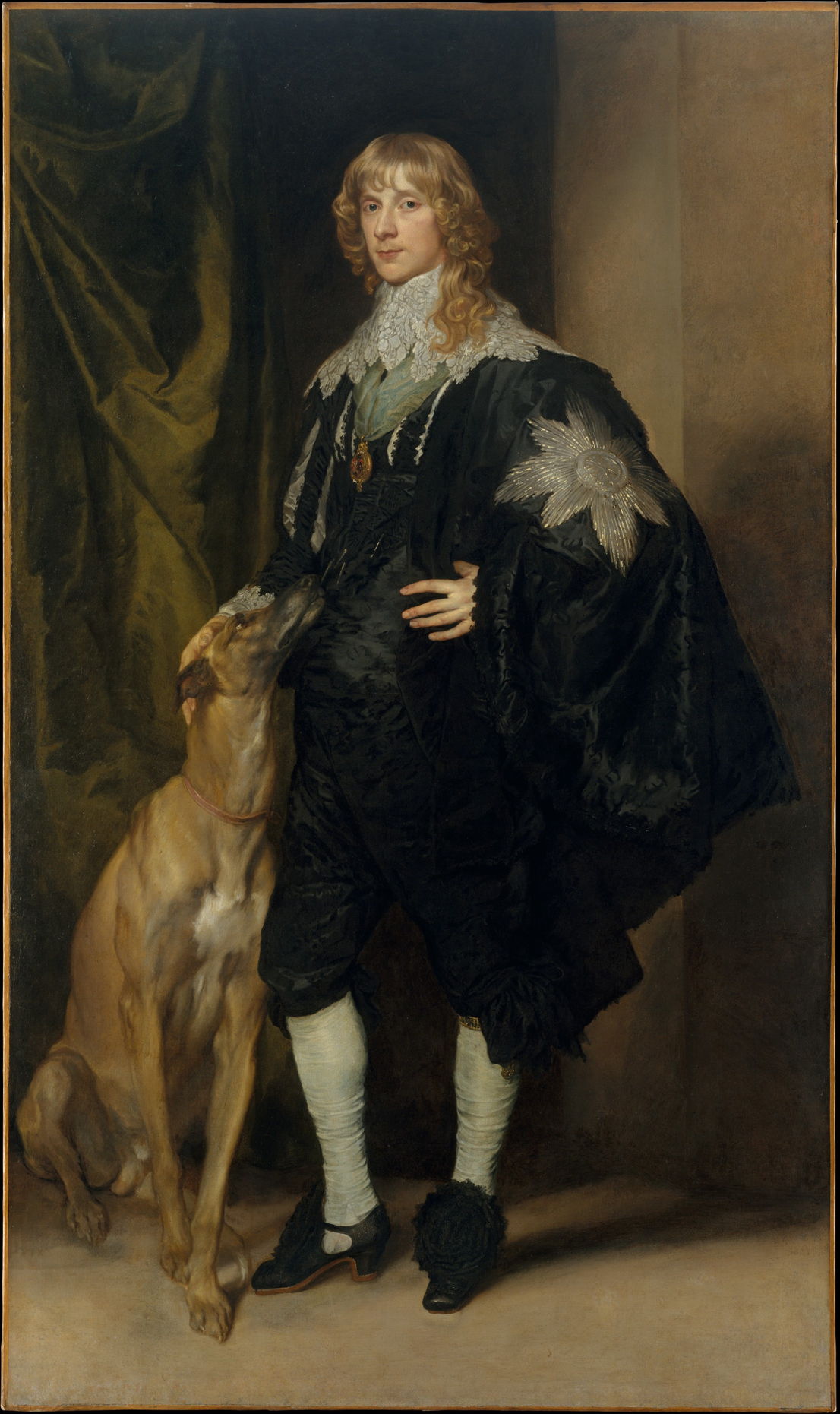
Portraits of dogs with their masters became highly fashionable, as seen in Van Dyck’s painting of James Stuart (1612–1655), Duke of Richmond and Lennox (1633–35) stroking his Great Dane’s head.

Although formal portraits of cats are decidedly rare, they must be even trickier than children, it became and remains popular to paint portraits of much-loved dogs.

This is James Ward’s delightful Portrait of Dash, a Favourite Spaniel, the Property of Lady Frances Vane-Tempest from 1819. This dog’s owner was the nineteen year-old Marchioness of Londonderry, and the great-grandmother of Sir Winston Churchill.

Gustave Courbet showed dogs as fashion accessories for several of his erotic nudes. Nude Woman with a Dog from 1861-62 shows his lover at the time, Léontine Renaude, on a beach, playing with a small white dog to relieve their mutual boredom.

Several dogs occupy the immediate foreground of Ford Madox Brown’s Work (1863), where they appear just about to break into a fight.
Pierre Bonnard and his long-serving partner Marthe were seldom without a dog, and several of their pets found their way into his paintings.
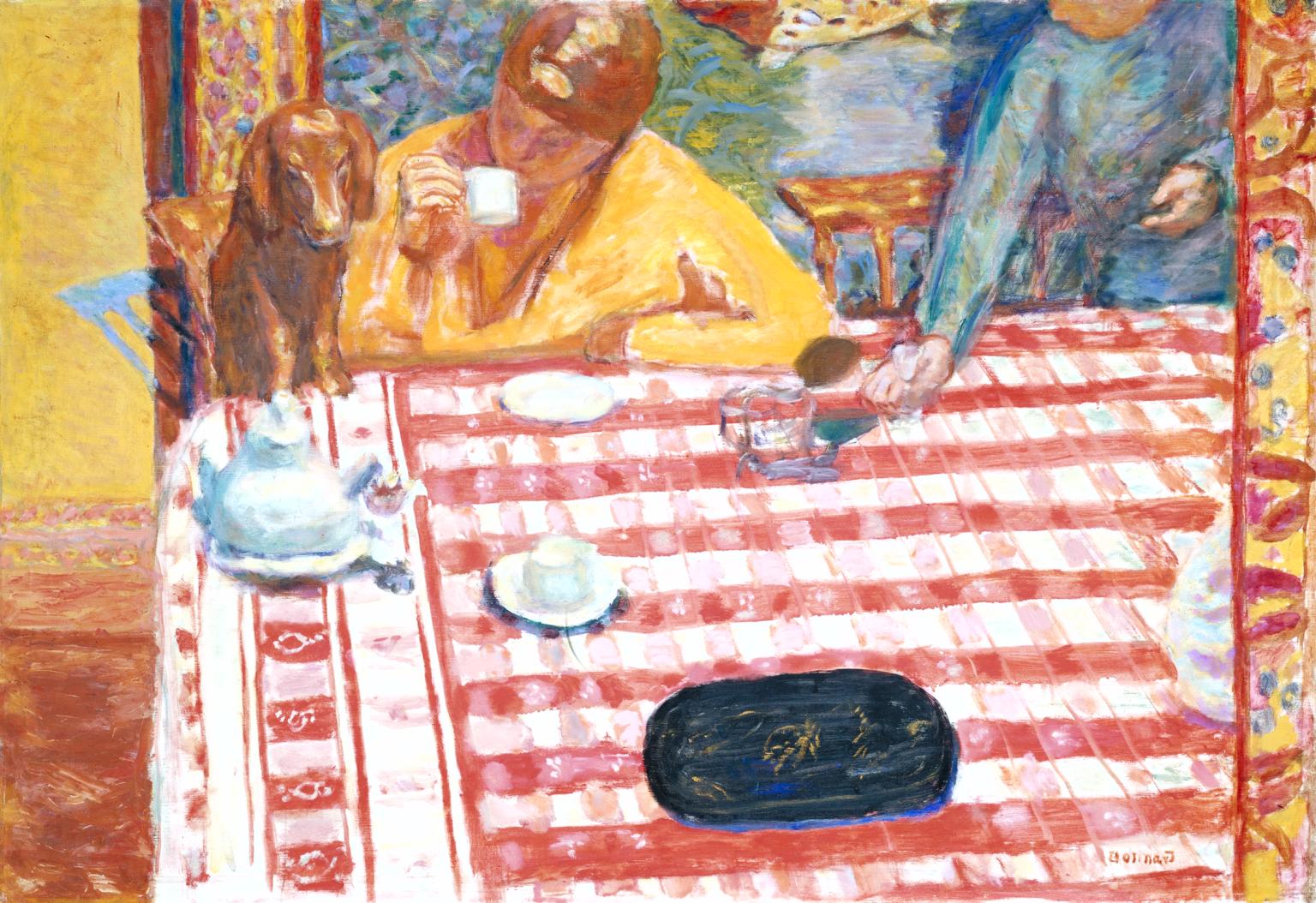
Bonnard’s Coffee from 1915 shows one of his favourite motifs, in which Marthe’s dog looks longingly at objects arrayed on the tabletop.
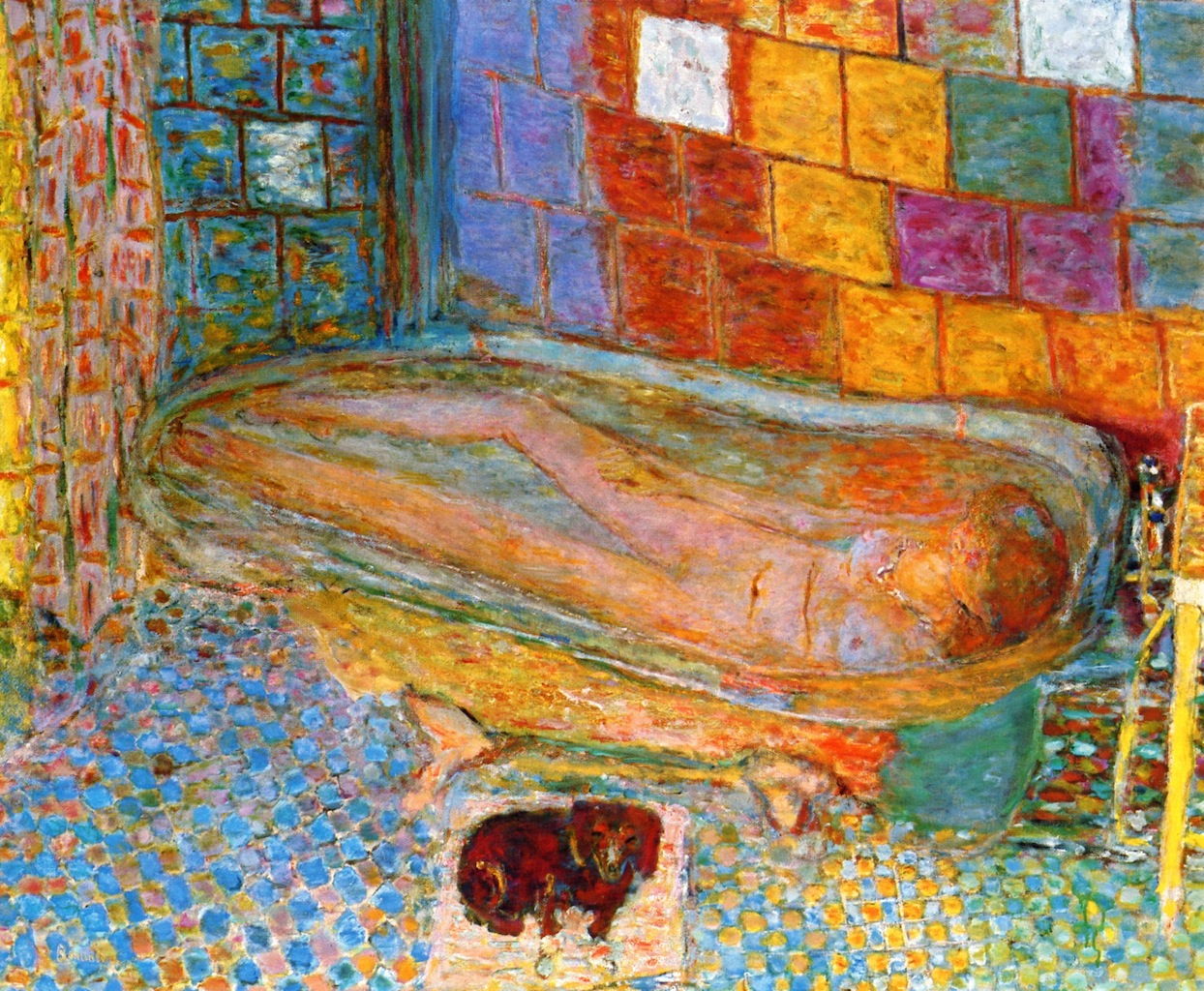
It’s one of his last paintings of Marthe, though, that I find most haunting. In Nude in Bathtub from about 1938-41, she lies back undergoing her medicinal soak in the bath as her dog awaits, looking up at the viewer. A year or two later, Marthe Bonnard died in their villa at Le Cannet in the south of France.
 The Eclectic Light Company