
Although cats were probably domesticated (if that’s the right word) at the dawn of civilisation in the Fertile Crescent, they weren’t popular as house pets among the Greeks or Romans during classical times, who oddly preferred to keep weasels for control of mice and other rodents. It wasn’t until the Middle Ages that cats became popular. Thus, while cats have ensured that they appear in many paintings, few if any depict them in any of the classical myths.
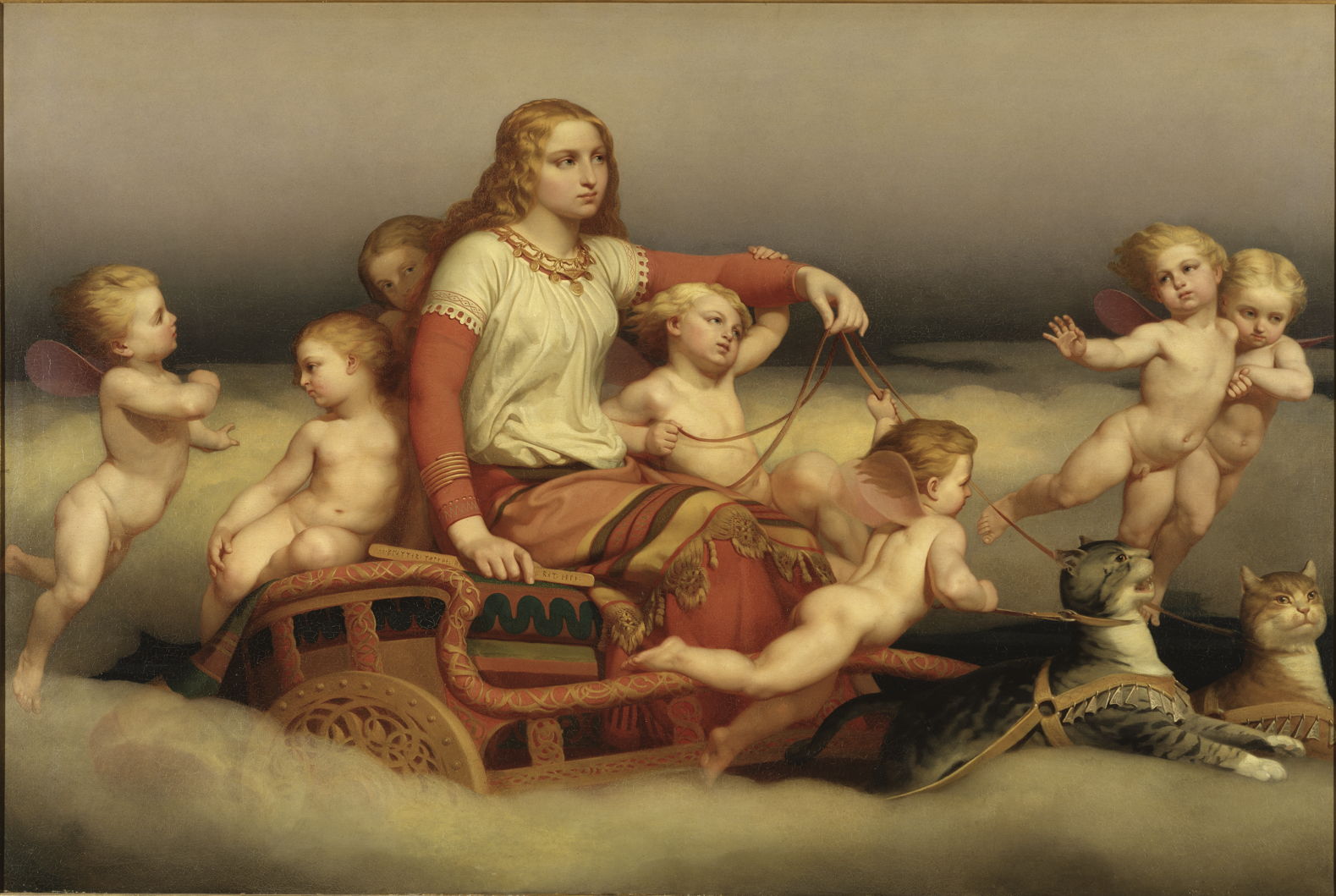
They do feature in Norse mythology, though. Nils Jakob Blommér’s undated painting of Freyja Seeking her Husband shows the Norse goddess in her chariot drawn by cats, wearing her golden necklace Brisingamen. As she rides through clouds she’s surrounded by winged cupids, borrowed from more Roman influences.
They also feature in many fables.

Perhaps the best-known and certainly the cruellest of fables involving cats is shown in Landseer’s The Cat’s Paw (c 1824). This was popularised in La Fontaine’s fable of the Monkey and the Cat (La Fontaine IX.17), and is thought to have originated in around 1560.
Bertrand the monkey was roasting chestnuts in the embers of a fire. Rather than risk burning himself retrieving the nuts from the heat, he promised Raton the cat a share of them if the cat would scoop them out for him. The cat agreed, and as Bertrand ate the chestnuts when they emerged from the fire, the cat’s paw became more and more burned. Before the cat could claim its reward, the pair were disturbed by a maid. The monkey then profited from the cat’s efforts and suffering, but the cat was cheated from enjoying its share.
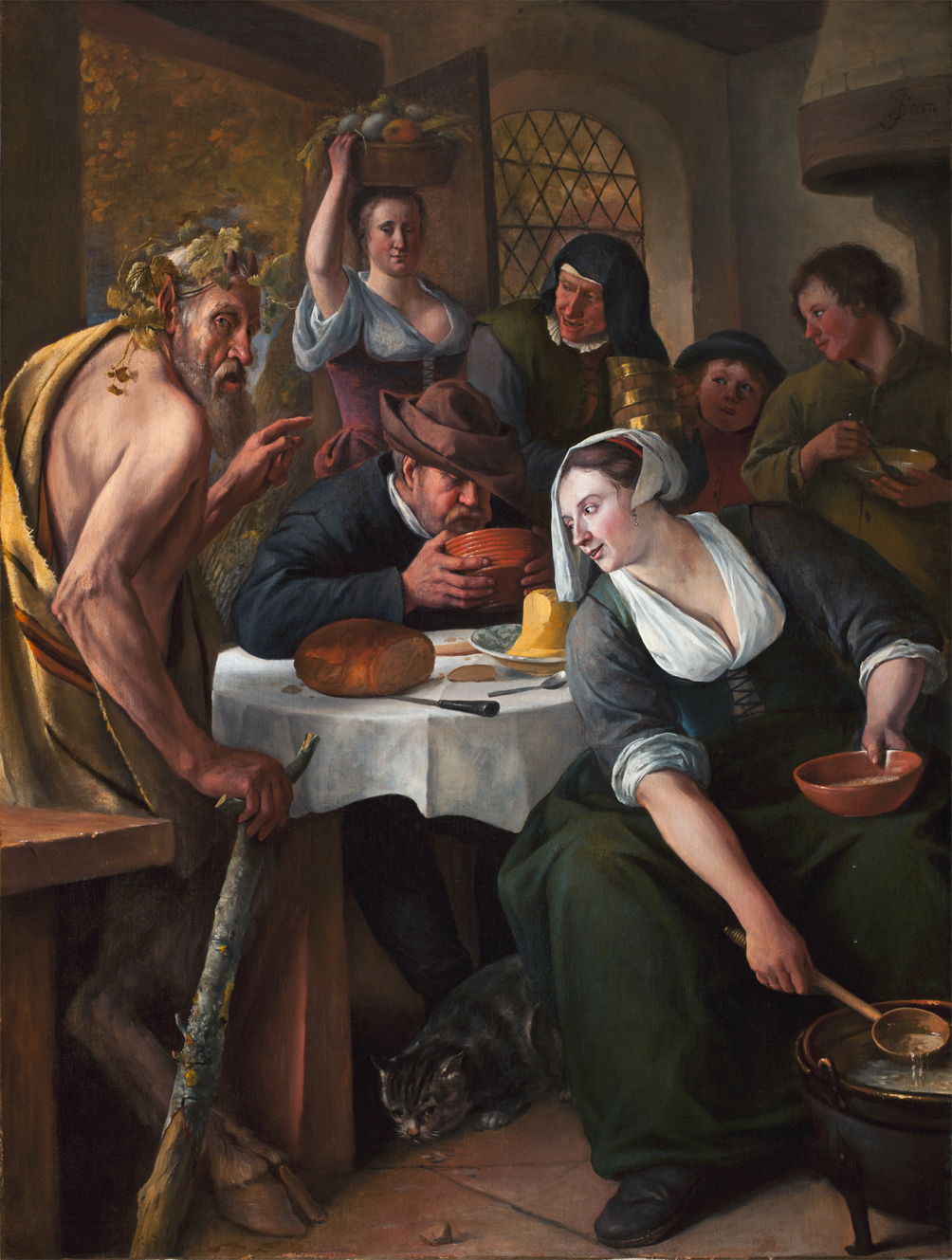
Cats are well aware of the importance of skulking quietly where they might find food. Jan Steen’s retelling of the fable of The Satyr and the Peasant “Who Blows Hot and Cold” (c 1660) shows a feline scavenger poised under the table to feed on any carelessly dropped scraps.
Their strongest symbolic association is with the Dark Arts, where black cats in particular are a reliable clue that there’s a witch around.
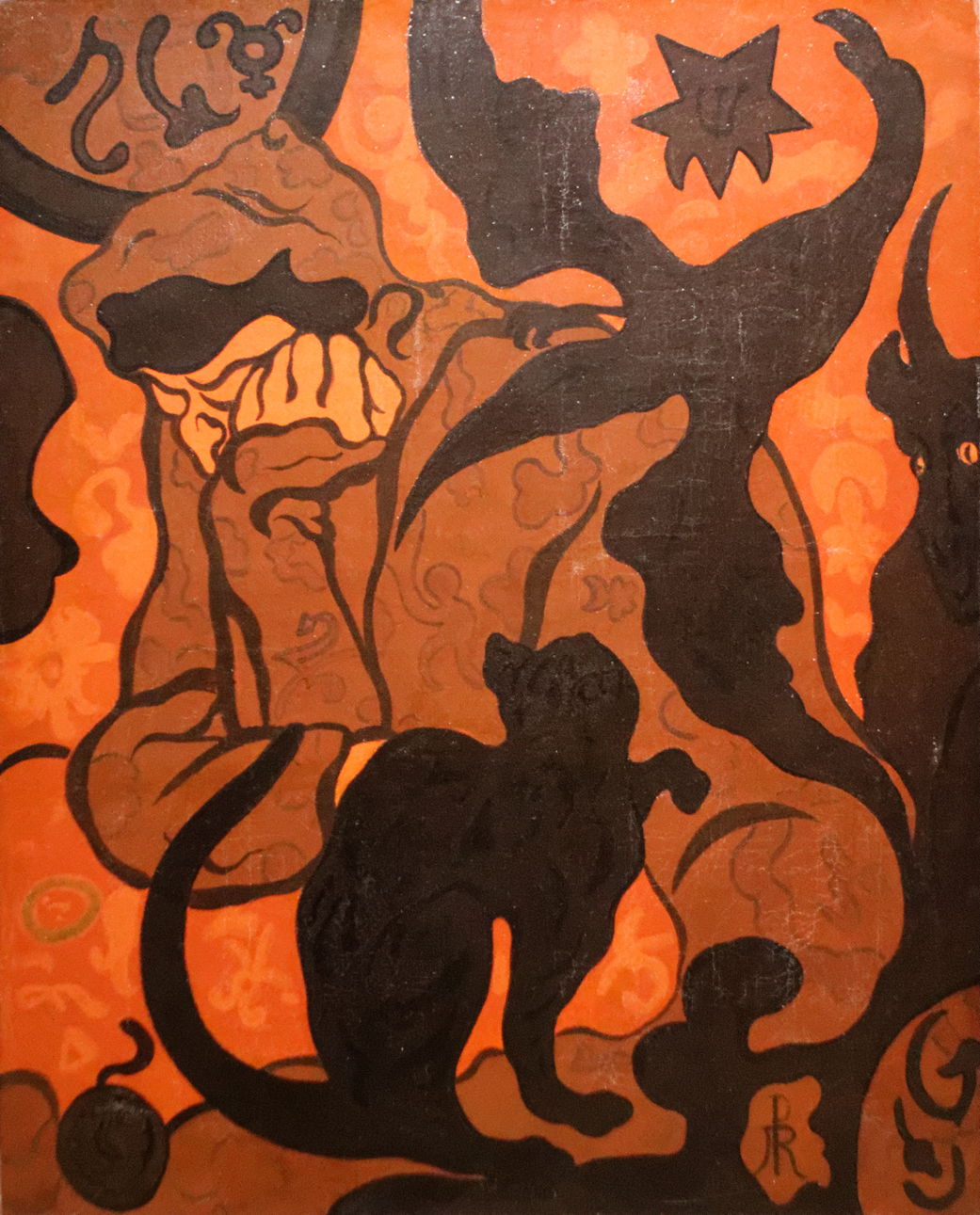
Paul Ranson developed the theme of witchcraft early in his career, and in his Witch with a Black Cat from 1893 revisits this combination in a decorative style.

Among the many connotations of the cat is with the ‘kept woman’ of the nineteenth century, shown so well in William Holman Hunt’s The Awakening Conscience from 1851-53. The cat under the table has caught a bird with a broken wing. The cat implies that the woman is being ‘kept’ and needs its company when her lover is away with his family, and the bird represents her moral plight.

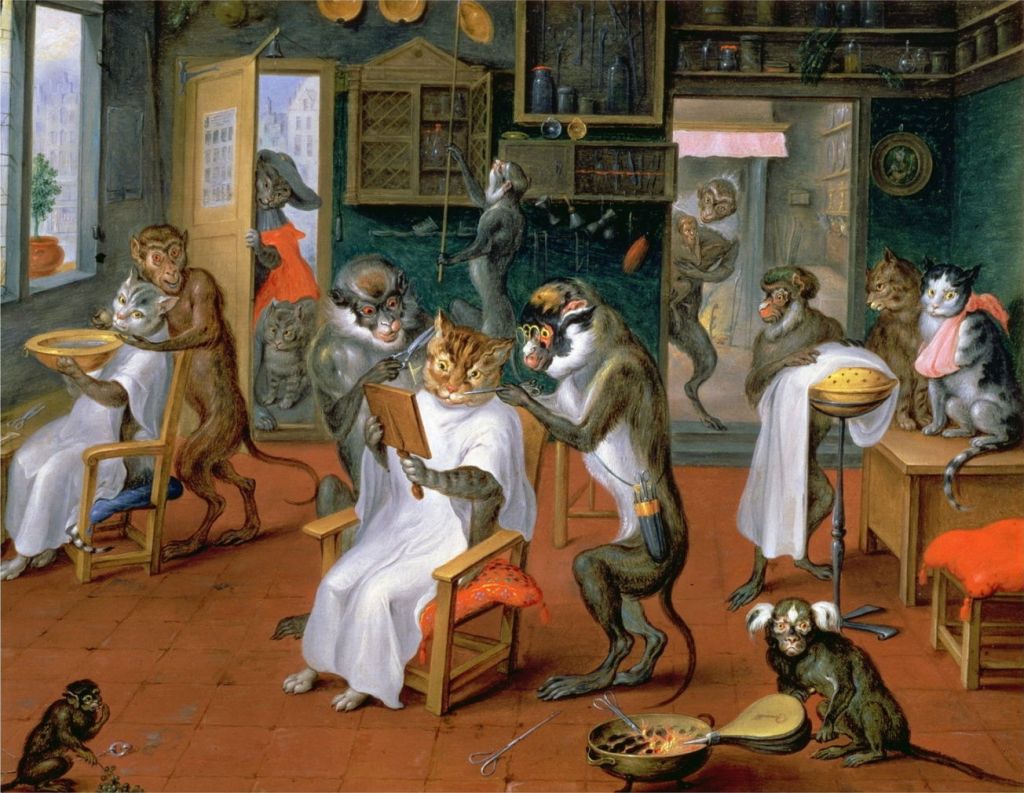
There was a fad for humorous animal paintings during the Dutch Golden Age, when Abraham Teniers painted this comical view of a Barbershop with Monkeys and Cats. He clearly understands the cat’s obsession with grooming.
As common members of many households rich and poor, cats can often be seen in paintings of indoor scenes.

They can be companions even in the most difficult of circumstances, as shown in Jules Bastien-Lepage’s moving Little Chimneysweep (Damvillers), painted shortly before the artist’s early death.
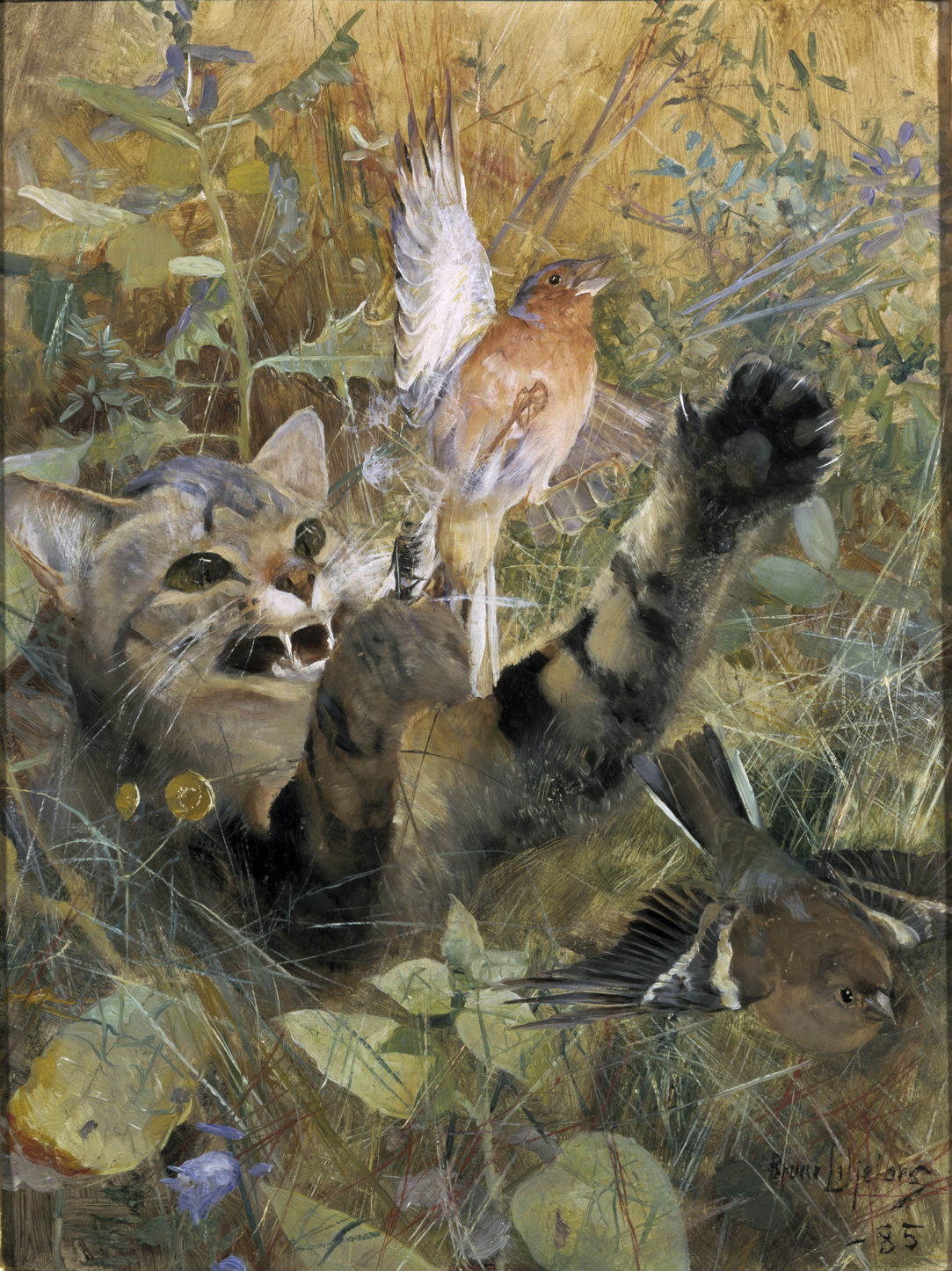
Cats appear in some of the early nature paintings of Bruno Liljefors too. A Cat and a Chaffinch is one of several works containing ‘five studies in a single painting’ that he made in 1885 to demonstrate his virtuoso skills. That’s a cat to keep well clear of.
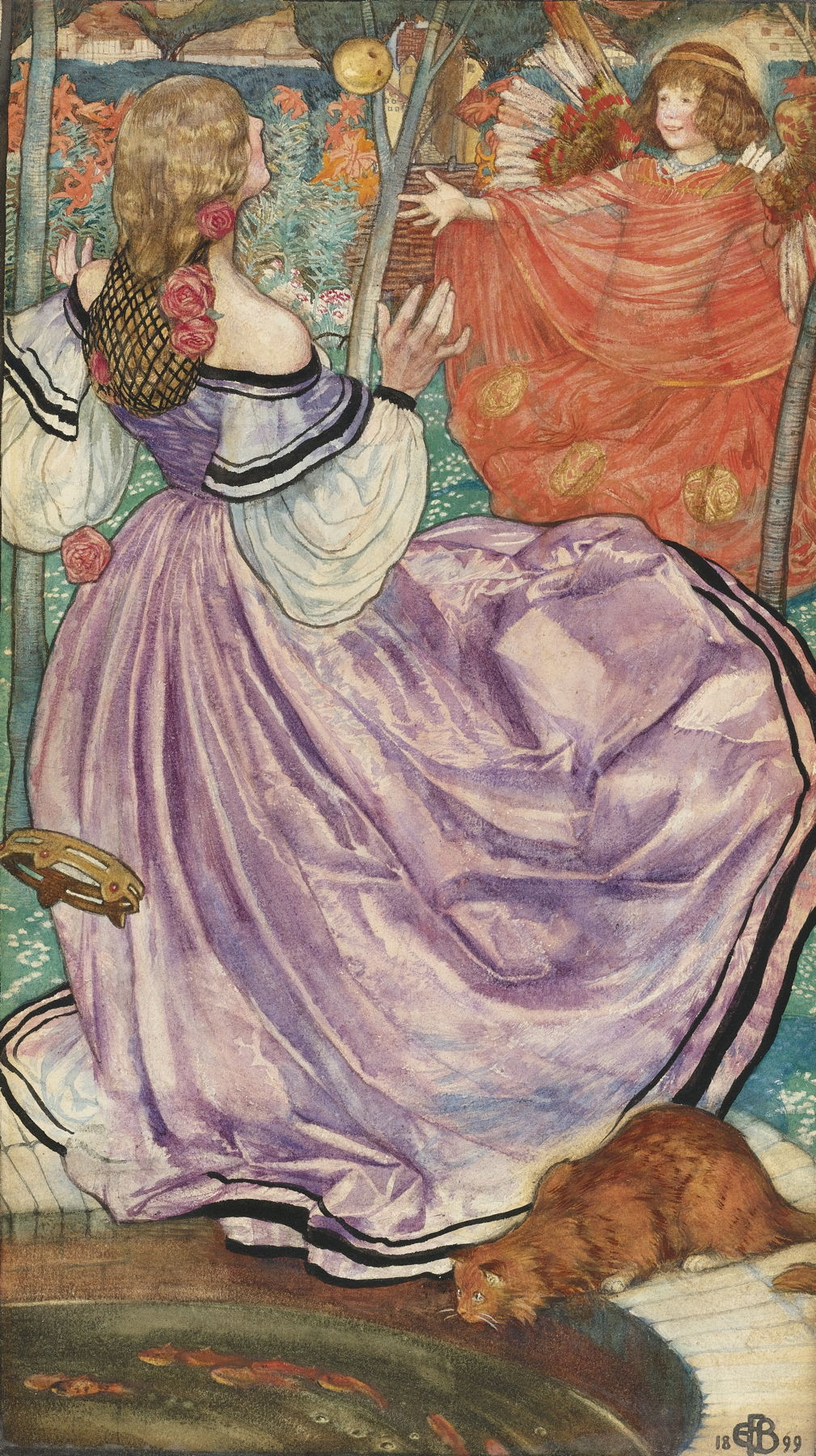
One of my favourite painted cats is that in Eleanor Fortescue-Brickdale’s watercolour The Gilded Apple, from 1899. This shows a fairytale princess being thrown the gilded apple of its title; just as her crown is about to fall into the fishpond behind her, there’s a cat sizing up a takeaway from the water.

Cats have an amazing ability to sit dissociated from everything that’s going on around them, just as does the cat in the foreground of Lovis Corinth’s Harem (1904). Recalling the association between cats, fleshly women and sensuality, this puss looks straight at the viewer and ignores the horseplay taking place behind it. How detached can you get?

I also love Carl Larsson’s watercolour of his large extended family gathering for Christmas, with its huge turkey, roaring fire, and the cat under the table where it’s sure no one will notice it eating its share of the bird.
Pierre Bonnard had a close relationship not only with the mysterious Marthe but also with their pet cats and dogs.
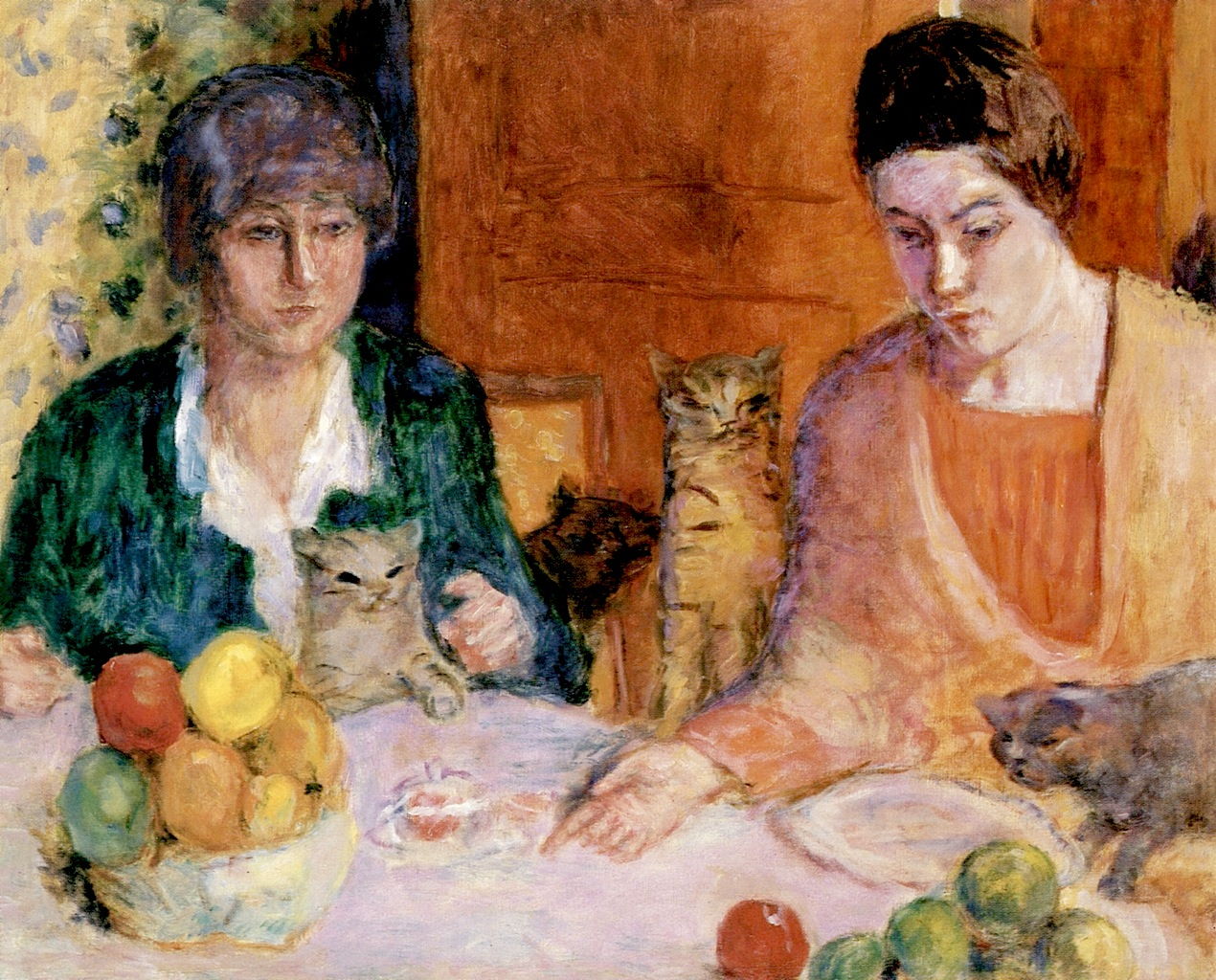
In his Cats’ Lunch from about 1906, two women are sat at the table, feeding their four cats. Oddly, though, the women don’t look at the cats, nor at one another, but stare blankly into the space in front of them, like cats themselves.

Bonnard’s best-known painting of a cat is The Bowl of Milk from 1919. A woman has just poured milk into a small bowl, which she is now about to put down for her cat. The black cat is of course pacing the floor at the woman’s feet, but was only added to this composition in this final painting.
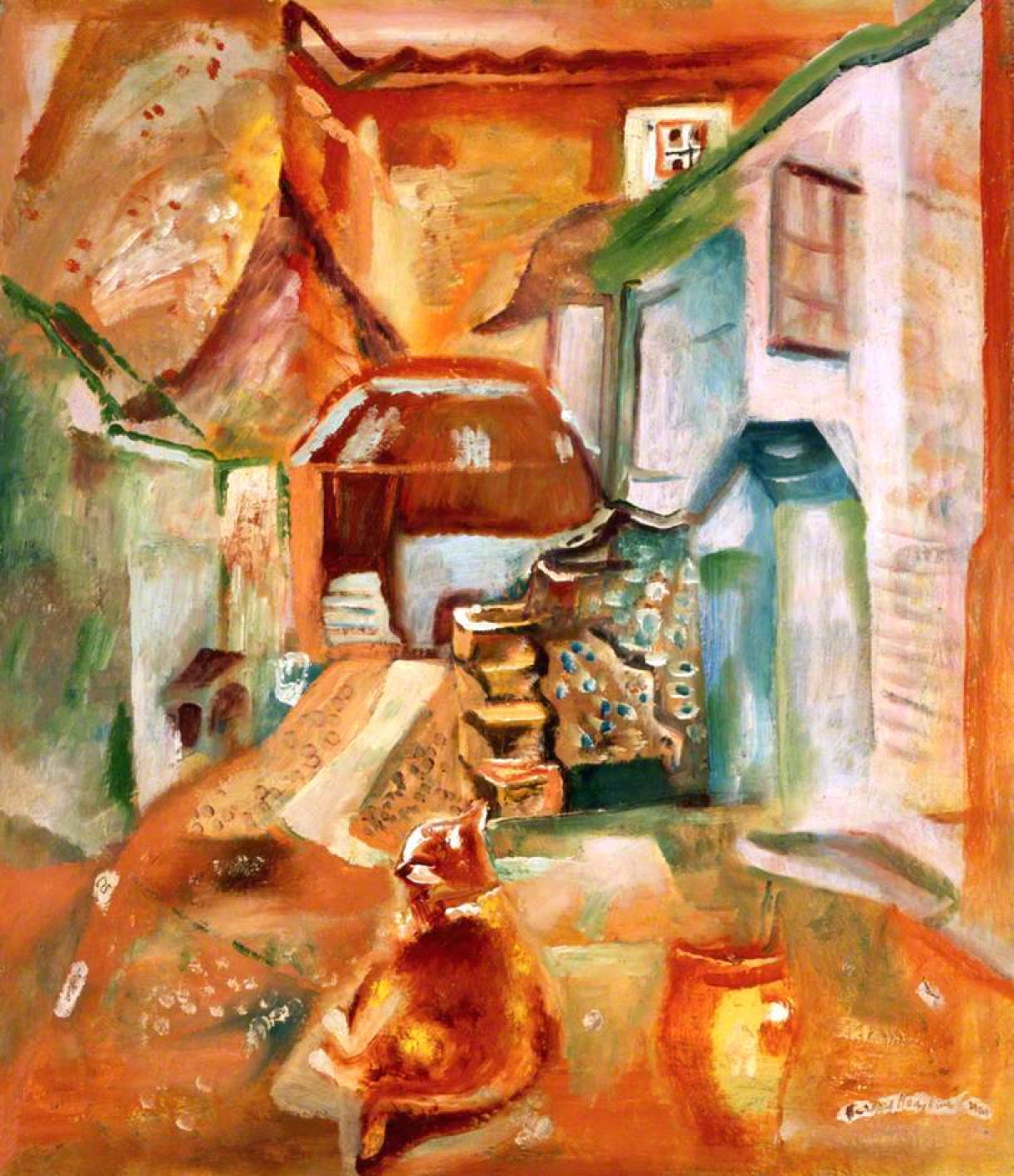
My final painting is this wonderful work from the late years of the itinerant New Zealand artist Frances Hodgkins. In Purbeck Courtyard, Morning from 1944, Hodgkins shows the small yard behind tight-packed buildings, glowing red in the morning sunlight. In the centre foreground is a large cat basking in the sun, doing exactly what cats do best.

