
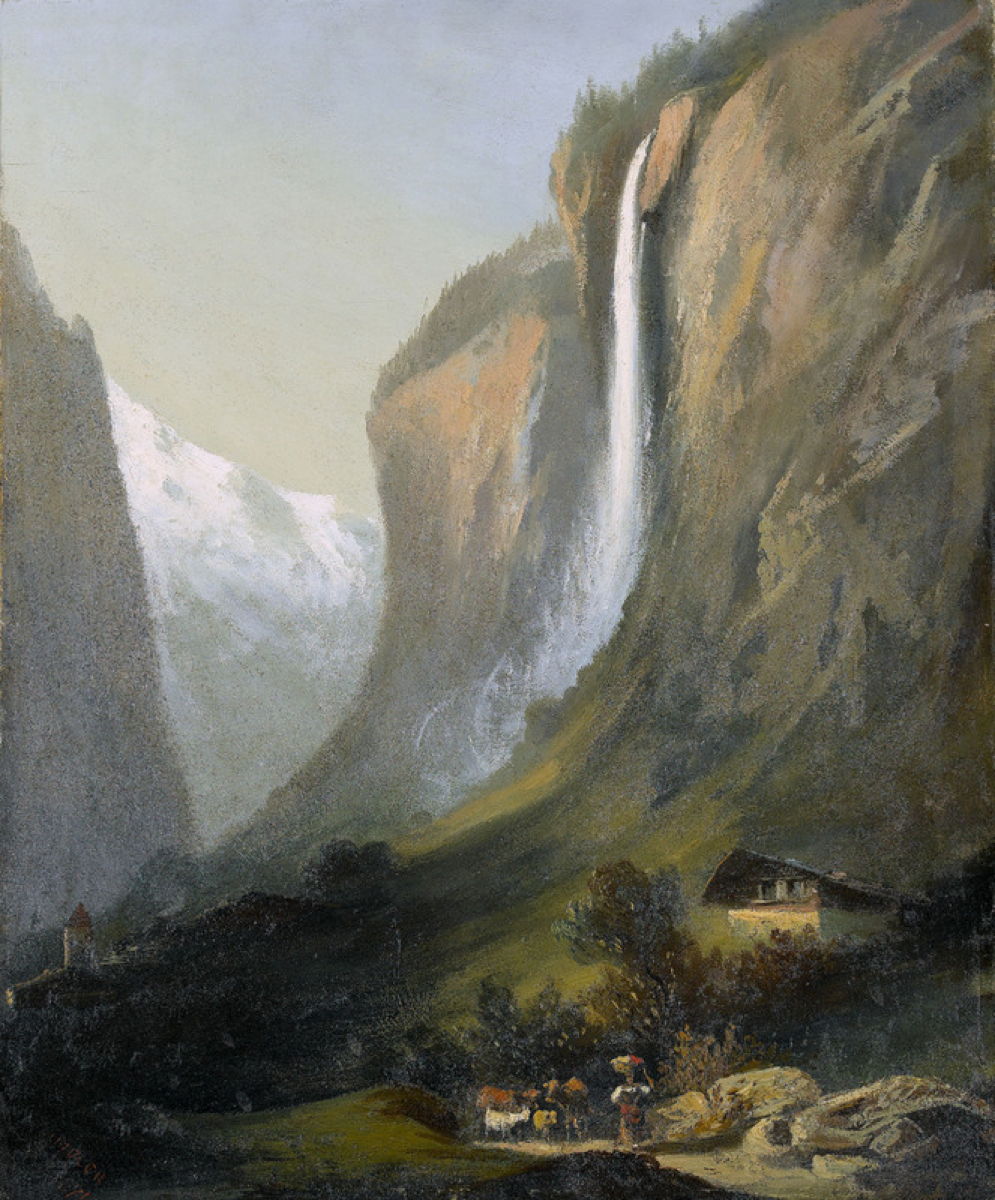
Waterfalls don’t require mountains, and most of the world’s most famous waterfalls aren’t in mountainous locations. But where they are in upland areas, they’re the more spectacular and inaccessible. Here’s a small collection of examples of water tumbling down where the peaks also ascend, painted by artists who made the considerable effort to get to them.
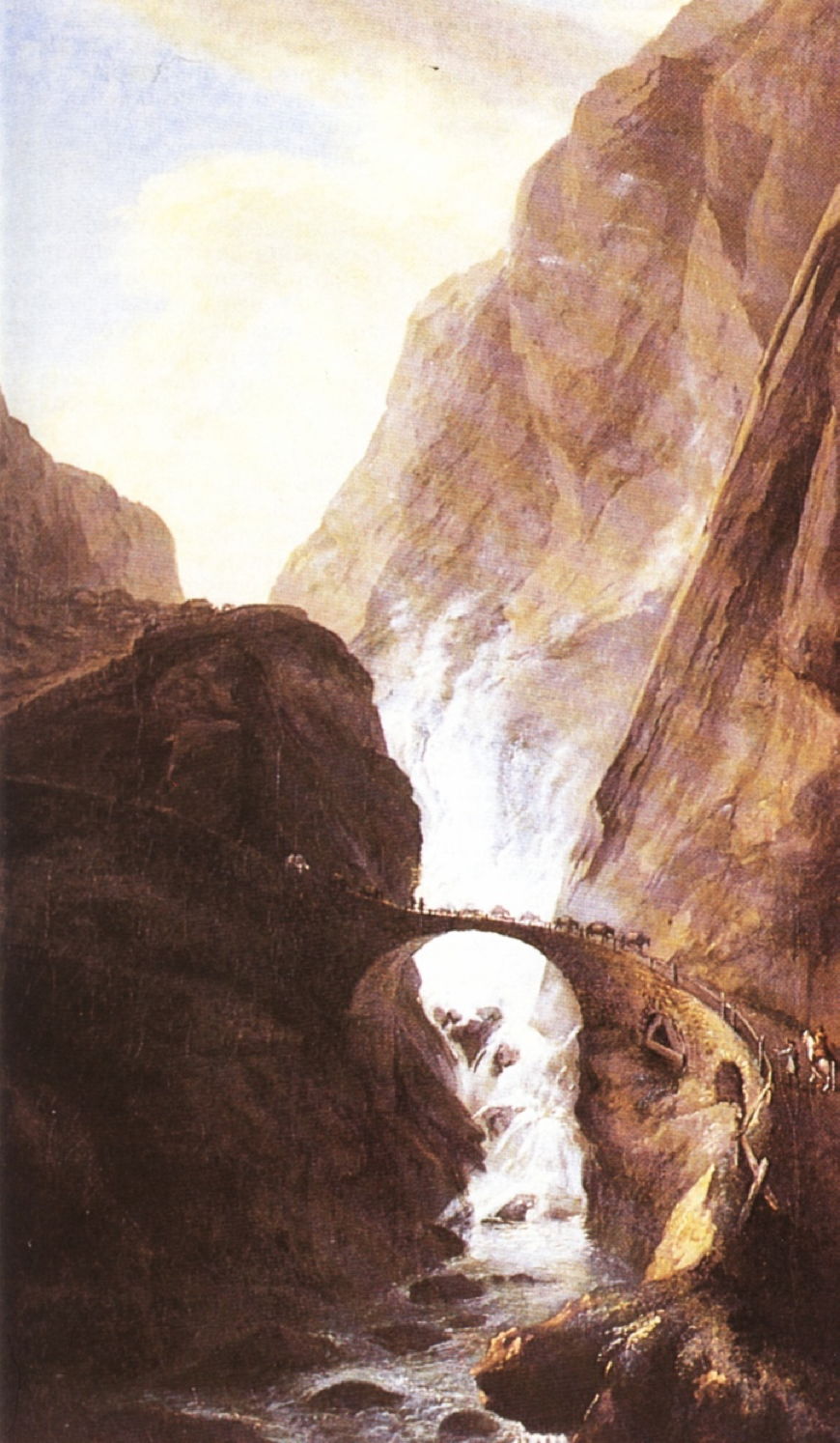
One of Caspar Wolf’s most popular paintings was this view of the Devil’s Bridge in the Saint Gothard Pass, from 1777. This connects northern and southern Switzerland, and the bridge across the Schöllenen Gorge was first built in wood in around 1220. It probably wasn’t replaced by a stone bridge until the seventeenth century, and by 1775 it had become wide enough to allow passage of the first carriage. The river here is the upper Reuss, and has consumed a few who came to grief during their crossing of the gorge.
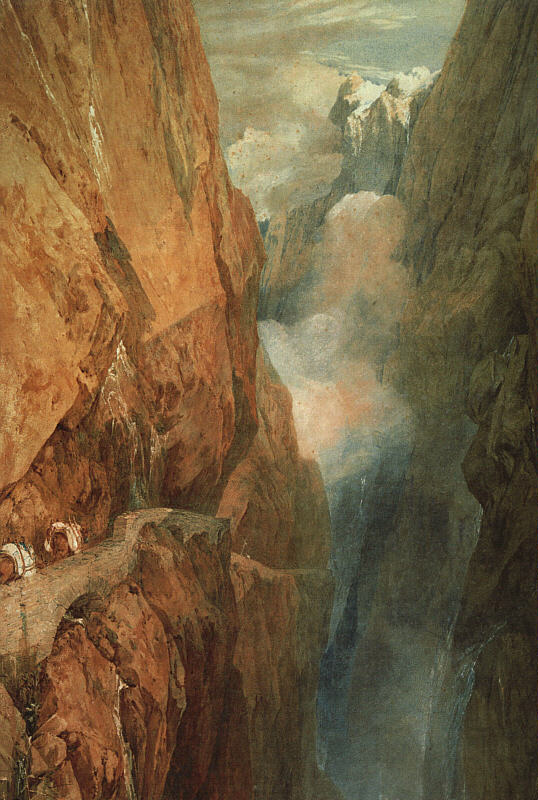
Less than thirty years later, JMW Turner exercised his imagination and exaggerated vertical scale in his famous view from the bridge. Here, the waterfall is shown by allusion, in the clouds of spray, leaving the mind to imagine the awesomeness of the falls themselves.
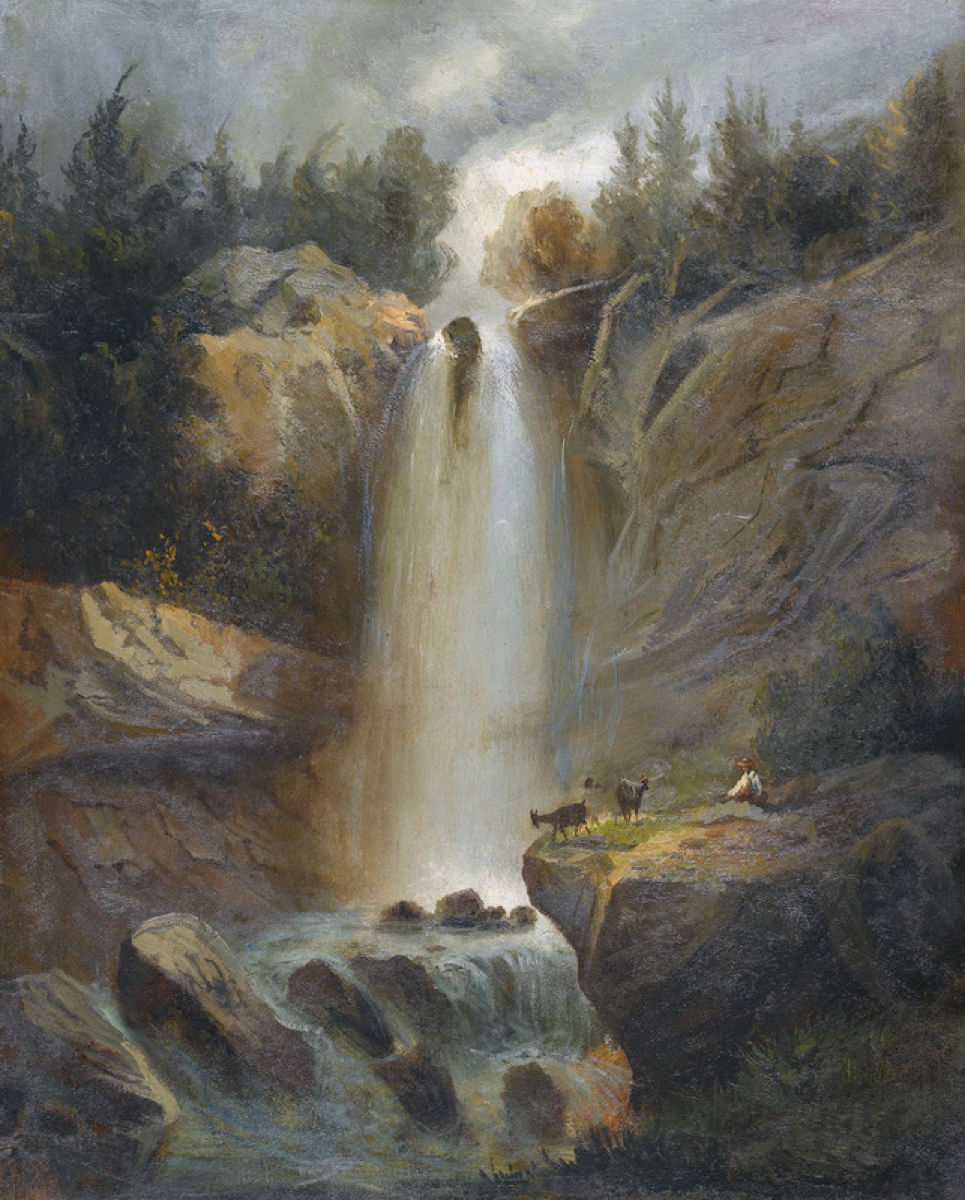
Among Ferdinand Hodler’s earliest surviving works are impressive views of two of the most famous Alpine waterfalls: The Upper Reichenbach Falls (c 1871), above, and The Staubbach Falls (1871), below. Both are painted in oils on cardboard, and the type of view that must have proved popular with tourists of the day.
The Reichenbach Falls take a tributary of the River Aare down a series of seven steps with a total drop of about 250 metres (820 feet). The tallest of the seven is known as the Upper or Grand Reichenbach Falls, with a drop of 110 metres (360 feet). It was made famous by Sir Arthur Conan Doyle as the setting for the final fight between the fictional detective Sherlock Holmes and the evil Professor Moriarty.

The Staubbach Falls drop almost 300 metres (nearly 1,000 feet), but haven’t achieved the same fame as the Upper Reichenbach Falls.

Hans Thoma’s 1904 painting of The Lauterbrunnen Valley shows the gorge which travels five miles up to the spectacular Staubbach Falls, seen as a thin ribbon of white water, with the Eiger and other peaks beyond.

The mountains of Norway also have many grand waterfalls, although few would have been readily accessible to a nineteenth century landscape painter. In 1848, Hans Gude must have made sketches in front of the motif for this studio painting of Tessefossen in Vågå at Midday. I haven’t been able to identify this waterfall’s exact location, but believe it’s in the Jotunheimen Mountains.
My next painting is a geographical mongrel, painted by the great American landscape artist Albert Bierstadt while he was travelling in Europe, but showing mountains on the other side of an ocean and a continent.

When Bierstadt was in Rome during the winter of 1867-68, he painted Among the Sierra Nevada, California. This was first exhibited in London, won a gold medal in Berlin, and itself toured Europe on a wave of critical appreciation. This was based on his visit to the Sierra Nevada in 1863, and in 1873 was purchased for Helen Huntington Hull, granddaughter of William Brown Dinsmore, to grace a wall in The Locusts, the family estate in Dutchess County, New York.
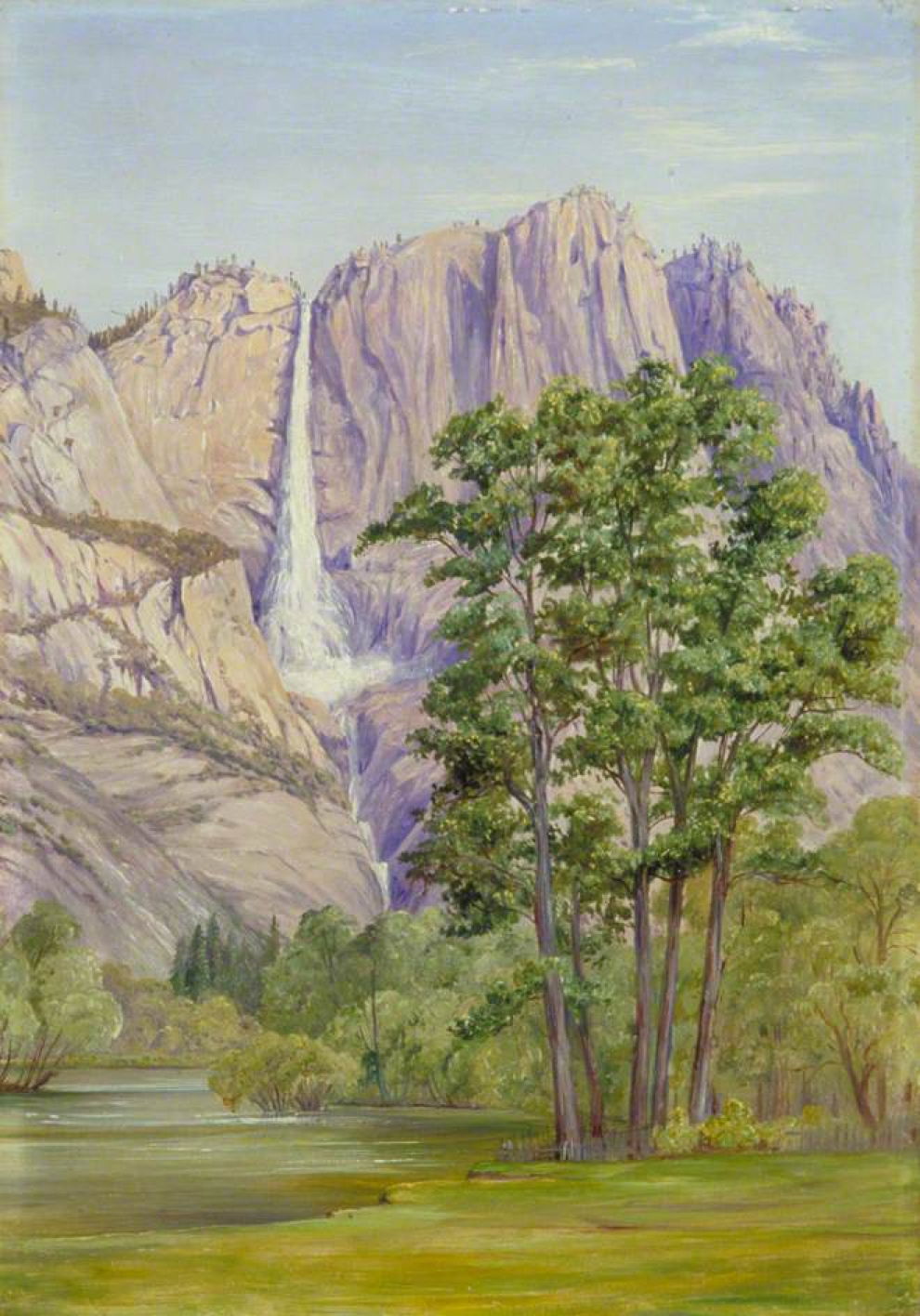
In return, one of the finest paintings of an American waterfall must be that made by the British botanical artist Marianne North. The Yosemite Waterfall, California (1875) shows the highest waterfall in what’s now Yosemite National Park, which drops a total of 739 metres (2,425 feet) in two major plunges.
 The Eclectic Light Company