

In yesterday’s article I showed lighthouses in fair weather; today’s paintings show them during storms, when they’re so vital to protect the lives of those who go down to the sea and ships.
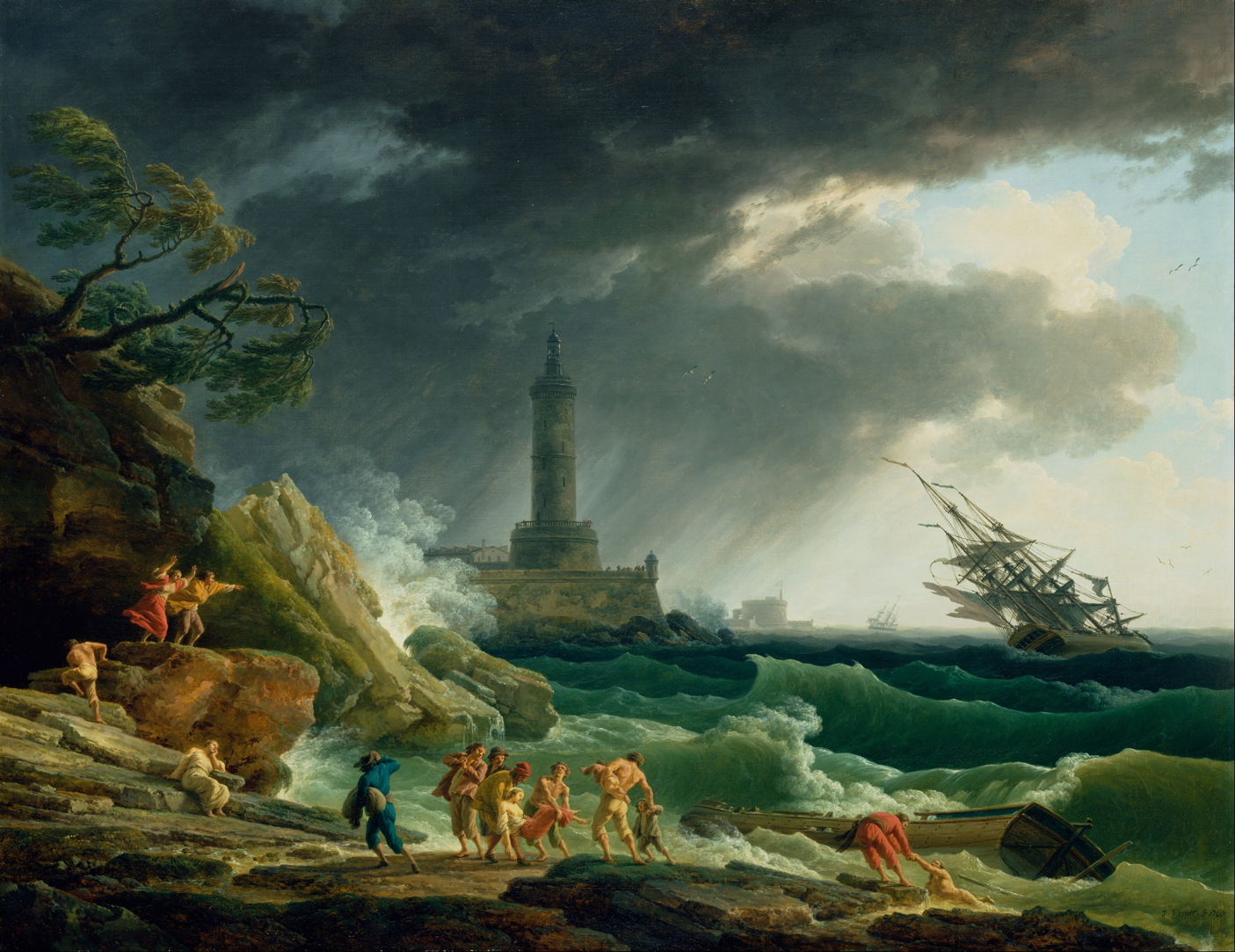
Throughout the ages, a popular image of the lighthouse is during severe weather. Claude Joseph Vernet’s dramatic depiction of A Storm on a Mediterranean Coast (1767) captures this forcefully. In the distance, to the right of the prominent lighthouse, is a second, set atop a round tower. Sadly, they are both too late for the survivors being dragged out of the sea in the foreground.

JMW Turner’s watercolour of the Bell Rock Lighthouse (1819) is not only one of his finest topographic paintings from his early career, but shows a historic lighthouse. Situated on the east coast of Angus, Scotland, it’s the world’s oldest surviving lighthouse that is washed by the sea, rather than on dry land.
It was built by Robert Stevenson between 1807-10, and was thus quite recent when Turner painted it. Stevenson was a civil engineer who specialised in building lighthouses around the Scottish coast, and did such a good job here that Bell Rock still stands today, and has never required replacement of any of its main structure.
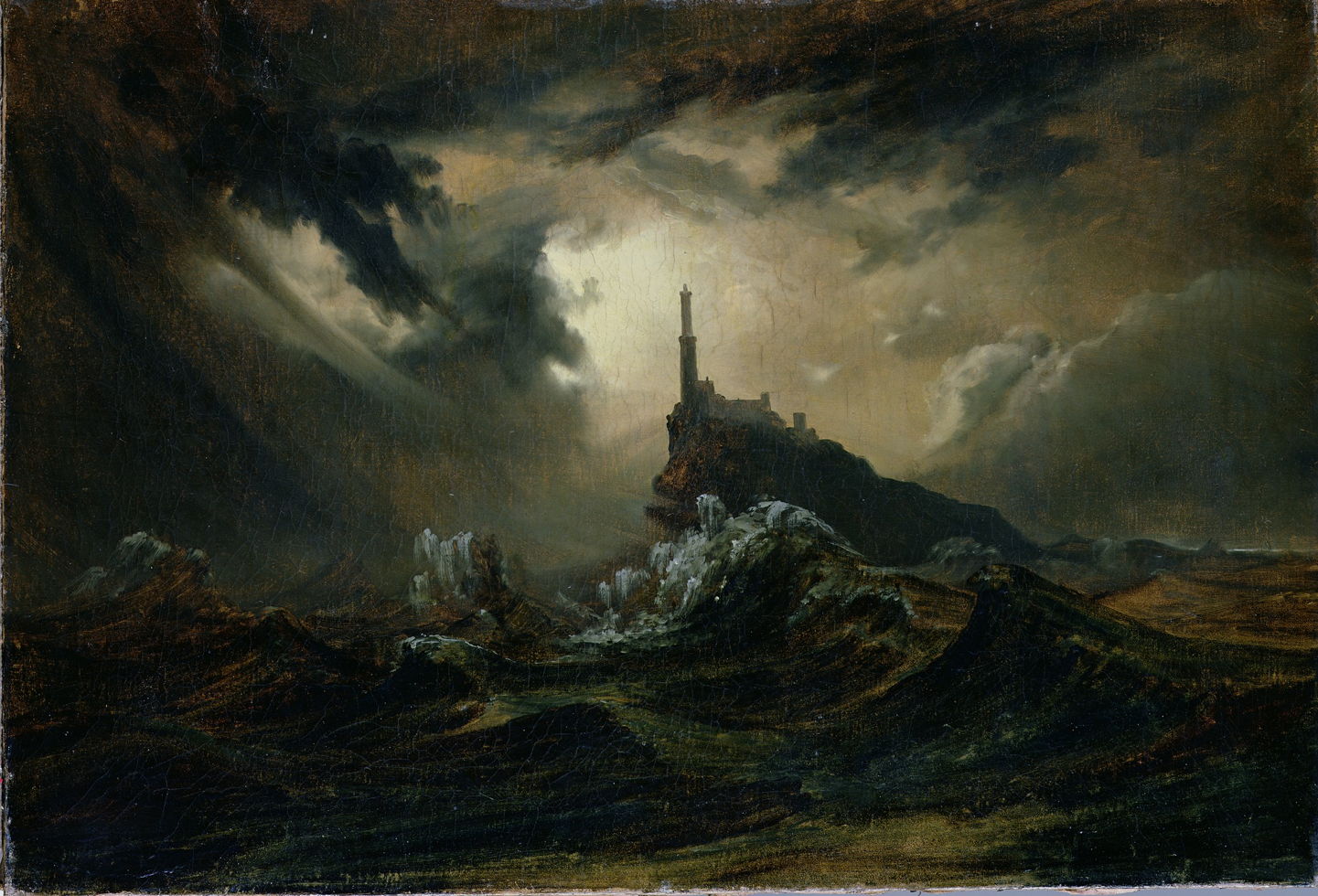
Carl Blechen’s romantic painting of a Stormy Sea with Lighthouse (c 1826) is a good example of his pre-Impressionist style, with rough and painterly brushstrokes forming the sea, and more finished facture for the dramatic sky.
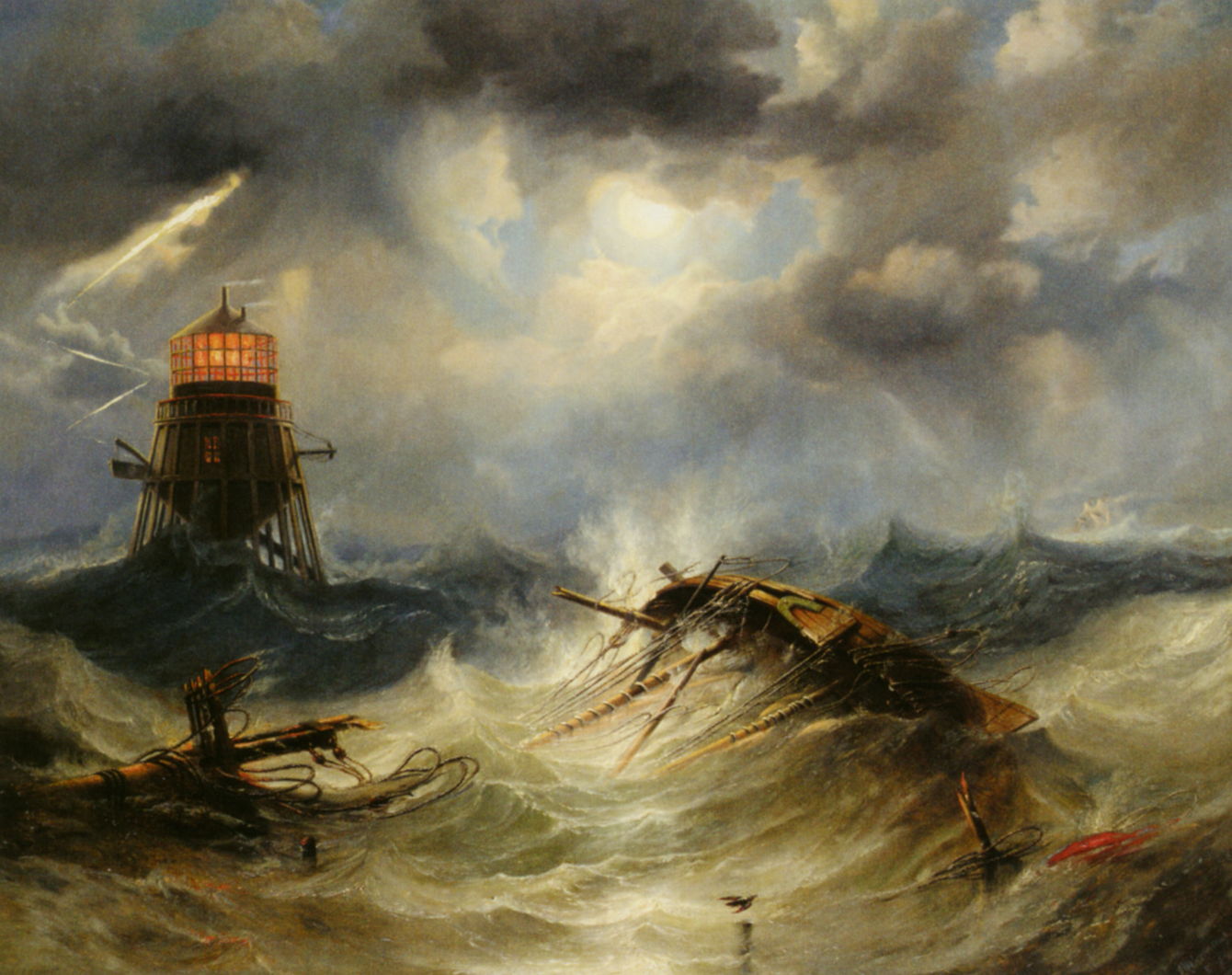
James Wilson Carmichael’s dramatic painting of The Irwin Lighthouse, Storm Raging from 1851 shows a ship dismasted and broached in front of an old wooden lighthouse typical of the period. I have been unable to identify its location.

Denmark is formed from an archipelago, stretching between Jutland (Jylland) and Øresund, which separates the country from southern Sweden. The Great Belt (Storebælt) separates the islands Funen (Fyn) and Zealand (Sjælland), and is now crossed by a bridge built in 1997-98. Anton Melbye’s Lighthouse on the Great Belt (1846) shows one of the lighthouses marking the coast beside the Great Belt. Anton was one of three brothers who were renowned marine artists of their day, the others being Vilhelm and Fritz.
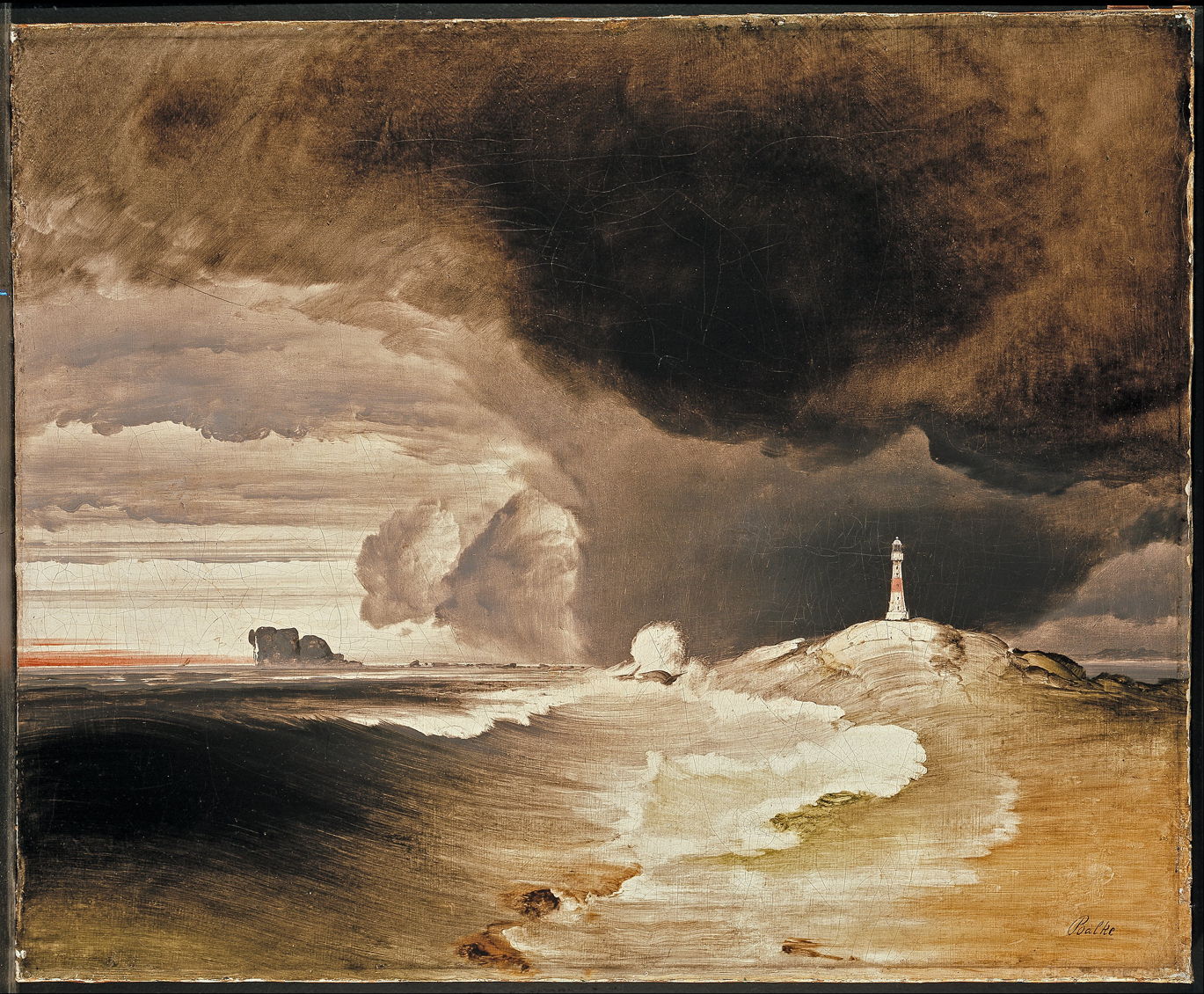
Peder Balke’s Lighthouse on the Norwegian Coast (1855) shows one of the chain of remote and rugged lighthouses marking the hazards of the Norwegian coast. Balke was an idiosyncratic artist, who journeyed to North Cape and painted a series of works showing the stark beauty of that Arctic coastline. He was also a social reformer, and founded his own idealistic colony on the outskirts of Oslo.
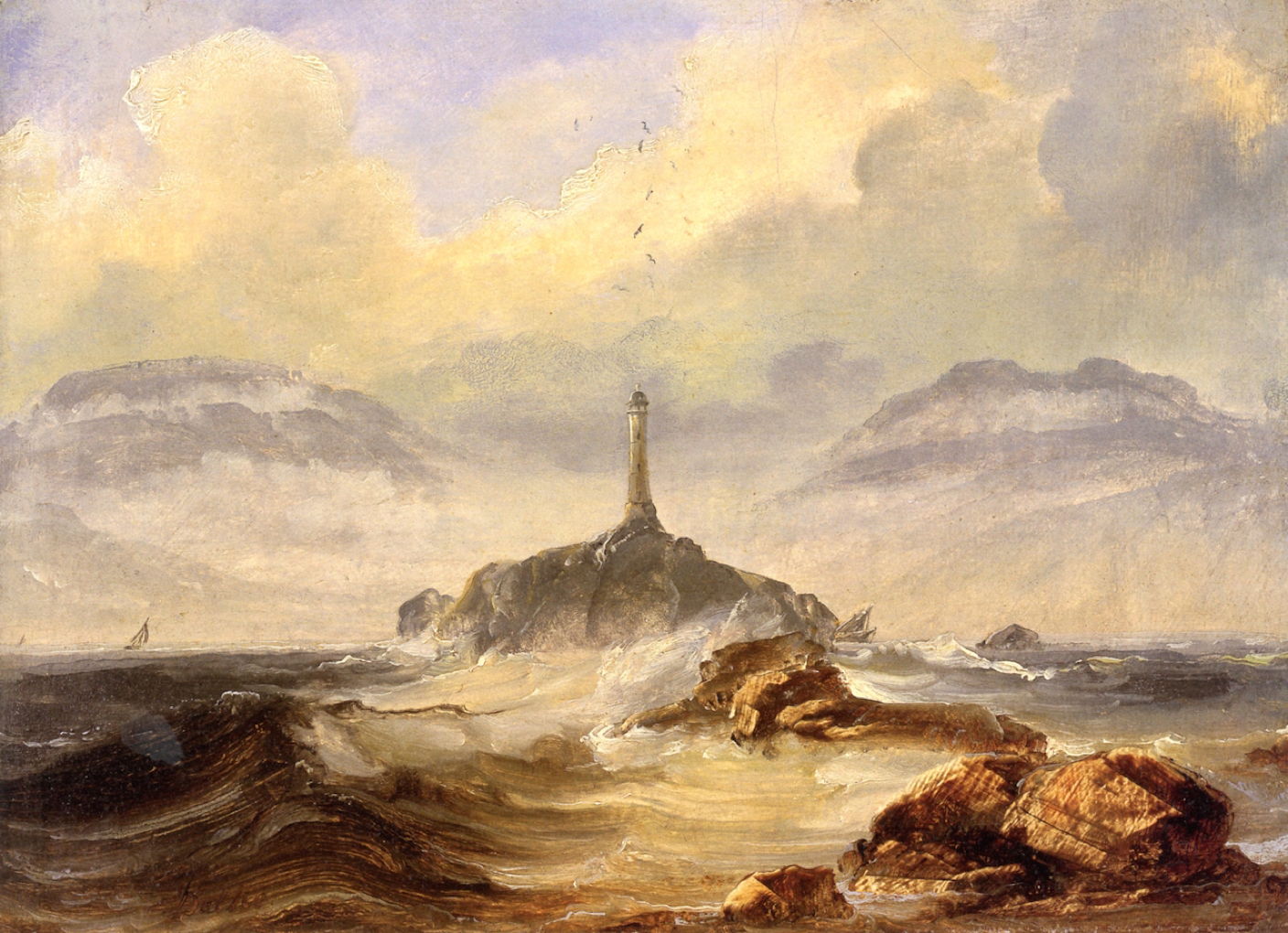
In his later paintings, Balke started applying his oil paint in distinctive striated strokes, as seen in the sea in his Lighthouse on the Coast from some time in the 1860s.

This painting has been attributed to Anton Melbye’s younger brother Vilhelm, and shows Shipping off the Eddystone Lighthouse. The Eddystone lighthouse is one of the most famous, being on rocks which are about nine miles south of the entrance to Plymouth Harbour, in Devon, England. The first lighthouse built here in 1696-98 was destroyed completely by a storm in 1703, killing its builder, Henry Winstanley, and five others. This painting shows the third lighthouse, also known as Smeaton’s Tower after its designer, and remained in use until erosion to its foundation rocks allowed it to rock in storms. The current lighthouse replaced it in 1882.

In John Brett’s large maritime canvas of A North-West Gale off the Longships Lighthouse (1873) the lighthouse and rocks are the only clues given as to its location. He painted this in his studio after notes and preparatory sketches, and it was well received when exhibited at the Royal Academy in 1873.
The Longships Lighthouse is off the coast of Land’s End in Cornwall, England, marking the south-western tip of mainland Britain. Brett shows this at an interesting time, as its original tower, built in 1793-95, was in the process of being replaced by the modern lighthouse that still stands there today. Work started in 1869, and the new tower was first lit in December 1873, not long after Brett’s painting had been shown in London.
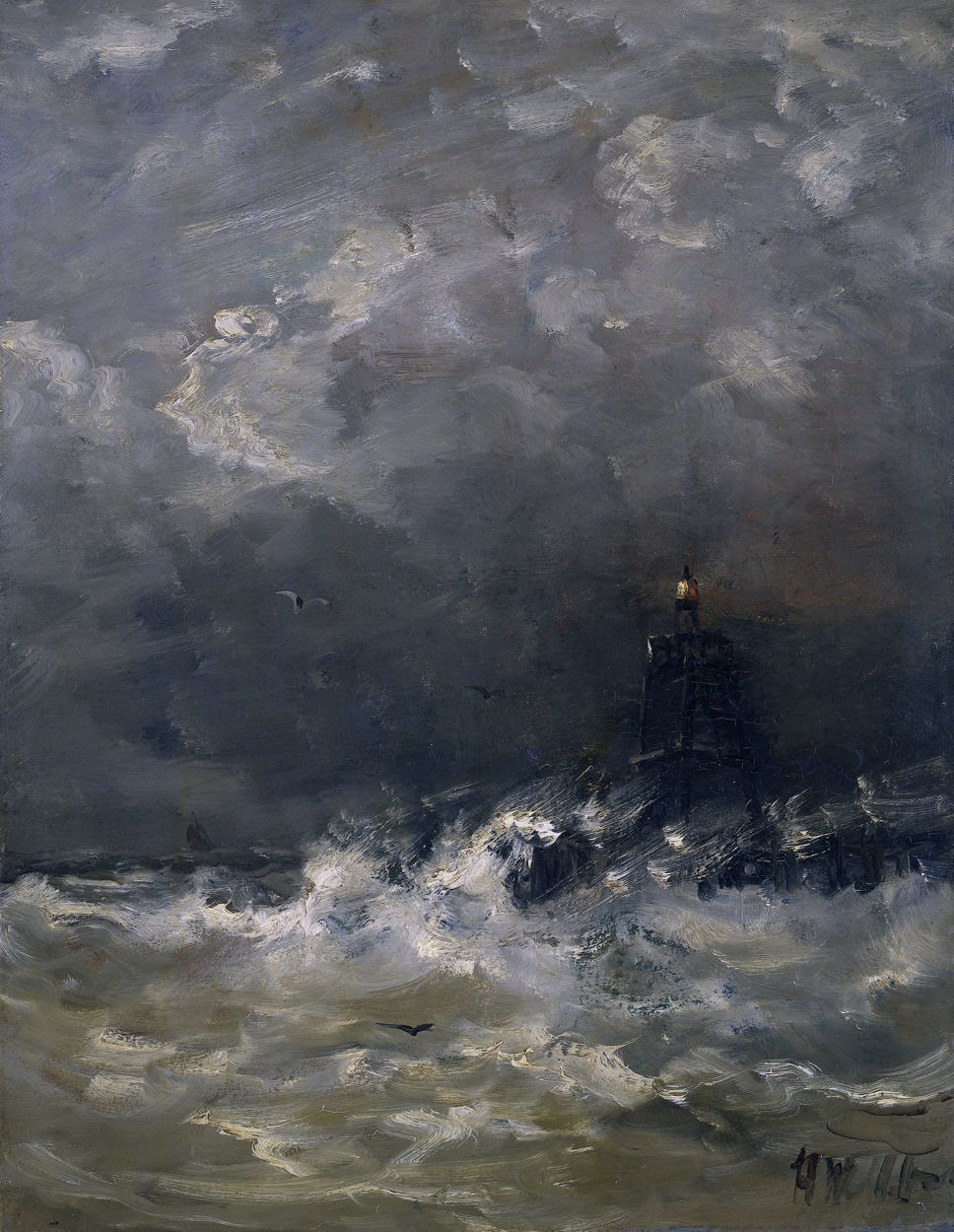
Hendrik Willem Mesdag is known from his vast painted panorama of the village of Scheveningen. He was an acclaimed marine artist in the Netherlands, and his painting of Lighthouse in the Surf is an original approach to its motif. Far from paintings depicting robust stone lighthouses weathering storms, this shows just how weak their lights could appear.
 The Eclectic Light Company