
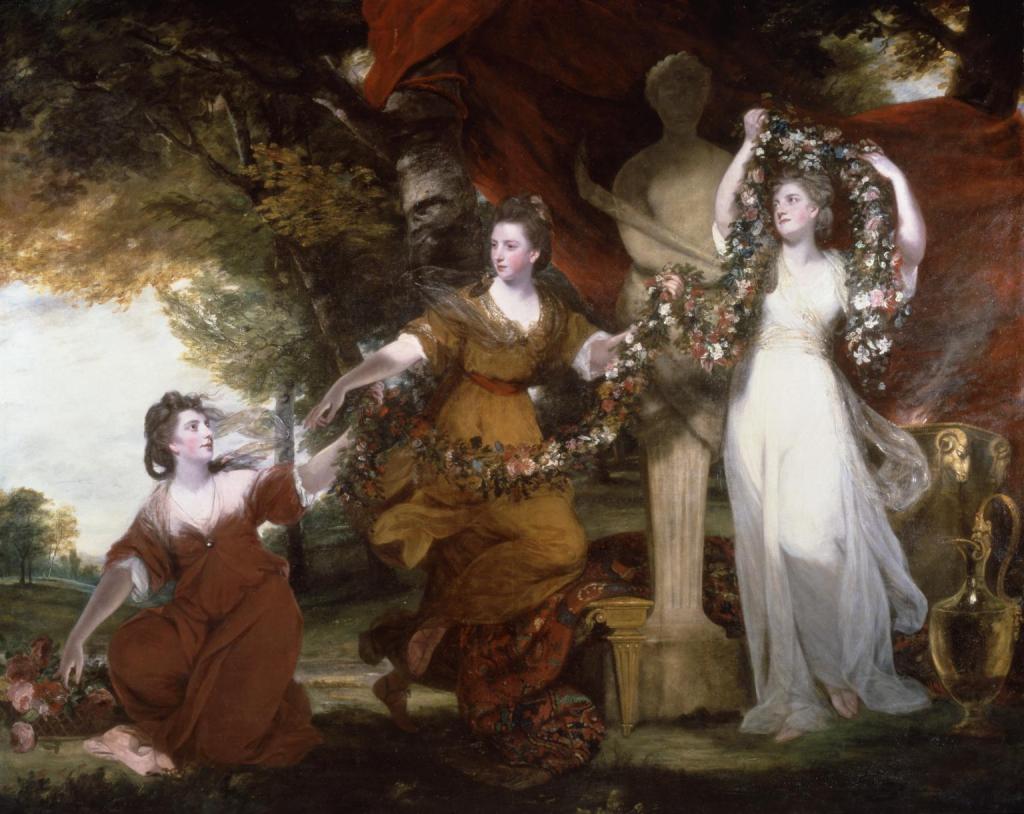
Three centuries ago today, Sir Joshua Reynolds (1723–1792), one of the leading British portrait painters and first President of the Royal Academy of Arts, was born. In two previous articles I have looked at the development of his painting, and the experiments he made later in his career. This final article considers his greatest legacy, his influence on art at the time and in the period since.
Thomas Gainsborough
Reynolds’ great rival was Thomas Gainsborough (1727–1788), who was the more successful painter of portraits, a brilliant landscape painter, and with Richard Wilson (1714-1782) co-founder of the British school of landscape painting.

By comparison, Reynolds’ landscapes were few in number and generally accepted as being far inferior. Of the two, Gainsborough was both technically and artistically superior, and they both knew that. Gainsborough was one of the earliest members of the precursor of the Royal Society of Arts, but was invited to become a founding member of the Royal Academy in 1769. By 1773, though, his relationship with the Academy had become strained, and he ceased exhibiting with it, and didn’t return until 1777.
Angelica Kauffman
Angelica Kauffman (1741–1807) was one of two women who were founding members of the Royal Academy, at a time when women were seldom allowed to paint professionally, and their art was generally suppressed. She had been born in Switzerland in 1741, and by the time she came to Britain in 1765, she was well-established and highly successful.

She was a close friend of Reynolds, and they painted one another’s portraits around 1766, and exhibited at the Royal Academy from 1769 to 1782, when she retired to Rome.
Mary Moser
Although Mary Moser (1744–1819) enjoyed similar success at the time, and took an active role in the Academy, her paintings have been neglected since her death.

After Mary Moser and Angelica Kauffmann, the next woman to be elected a full member of the Royal Academy was Dame Laura Knight, in 1936. For well over a century, not a single academician was a woman.
Benjamin West
When the American painter Benjamin West (1738–1820) arrived in London in 1763, he only intended making a brief visit during his return journey to Philadelphia, but ended up staying for nearly sixty years. He soon met with Richard Wilson and his then student, Joshua Reynolds.
West painted portraits to pay the bills, and history paintings for his art. King George III not only became West’s most important patron, but the pair became good friends, the King reading from translations of the classics to inspire West’s history painting. West was involved in the birth of the Royal Academy in 1768, although at that time he was one of the leaders of a rival group, the Society of Artists of Great Britain, founded in 1760, allowing Reynolds to become the Academy’s first president.

West set out to paint modern history. His biographer Galt later claimed that Reynolds gave West extraordinary advice about the dress of the figures in The Death of General Wolfe (1770), concluding “with urging me earnestly to adopt the classic costume of antiquity, as much more becoming the inherent greatness of my subject than the modern garb of war.” Although widely repeated, this claim doesn’t stand up to careful examination.
West succeeded Reynolds as second president of the Academy in 1792, following Reynolds’ death.
Henry Fuseli
Towards the end of the eighteenth century, the Royal Academy had two influential and controversial members: James Barry, who became Professor of Painting but then became the only member to be expelled until a few years ago, and Henry Fuseli, also Professor of Painting and renowned for his ‘Gothic’ works. Both were major influences over the Academy and its trainees.
Fuseli (1741–1825) was born as Johann Heinrich Füssli in Zürich, Switzerland, but fled the country in 1761 because of his involvement in exposing an unjust magistrate, and arrived in England in 1765. He then seized the chance to show Reynolds his drawings, and was advised to devote himself to painting. To further this goal he went to Italy in 1770, where he studied painting and changed his last name to Fuseli.
On his return to England in 1779 his reputation was already building, and he won a commission to paint for Boydell’s new Shakespeare Gallery, a bold but ultimately unsuccessful scheme to develop an English school of history painting.

Fuseli’s breakthrough occurred in 1782, when he exhibited The Nightmare (1781) at the Royal Academy, and it remains the work by which he’s best known. In 1790, he became an academician, then in 1799 was appointed its Professor of Painting.
William Blake
Although he was later to be critical of the Academy, William Blake (1757–1827) entered the Academy Schools as a student in the autumn of 1779, when Reynolds was still its president. Blake aspired to become a history painter, and there met the sculptor James Flaxman, who was to remain a friend and important benefactor.
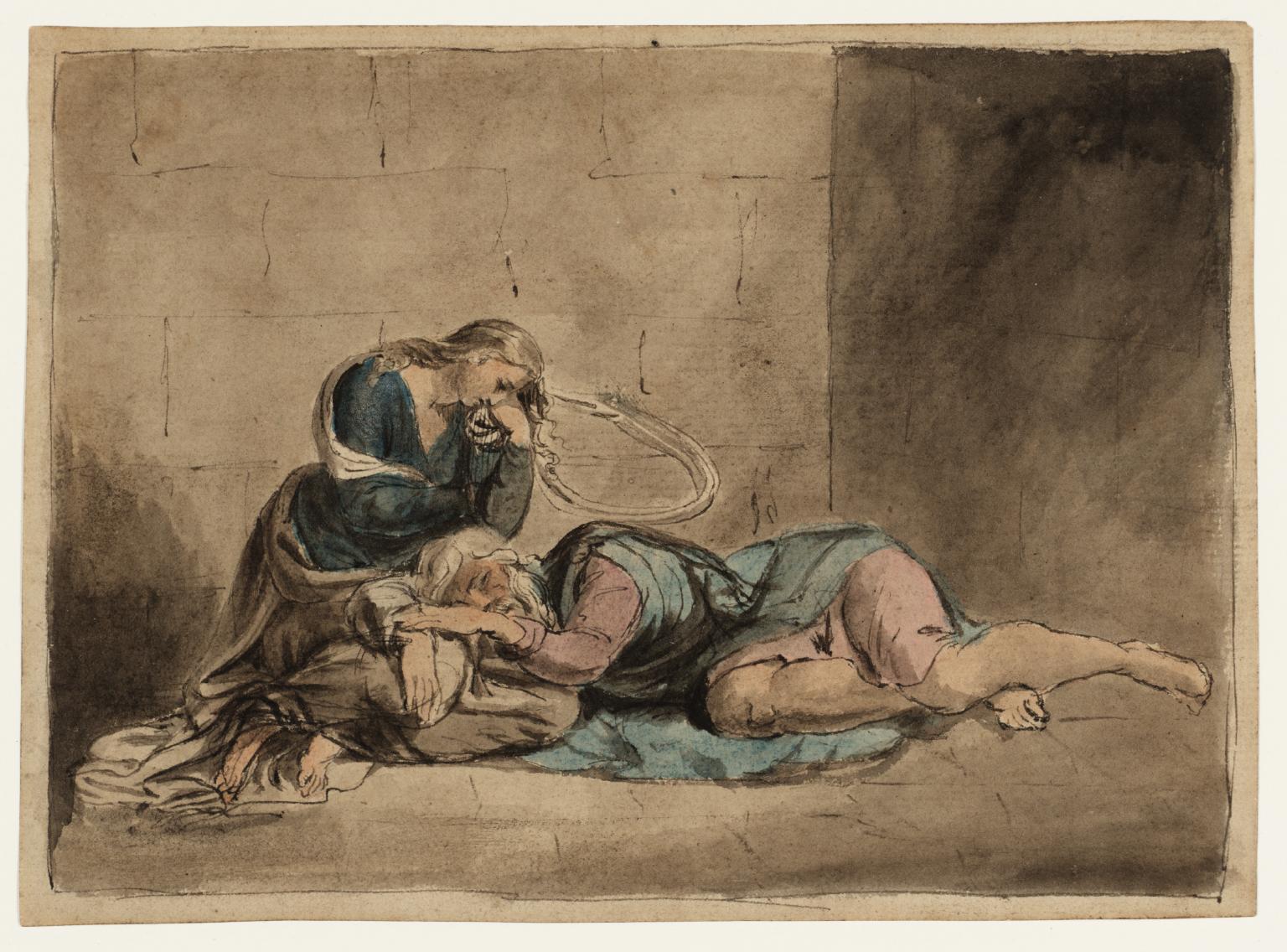
Lear and Cordelia in Prison from about 1779 is one of Blake’s earliest paintings in ink and watercolour, made when he had only just started his studies. It shows a scene from Shakespeare’s play King Lear.
John Constable
John Constable (1776-1837) was born and brought up in the deeply rural hamlet of East Bergholt, on the southern edge of Suffolk. Although expected to take over the family’s diverse businesses, he started sketching and painting during his youth. At the age of 21, he managed to convince his father to allow him to pursue a career as a painter, and in 1797 entered the Royal Academy Schools in London.
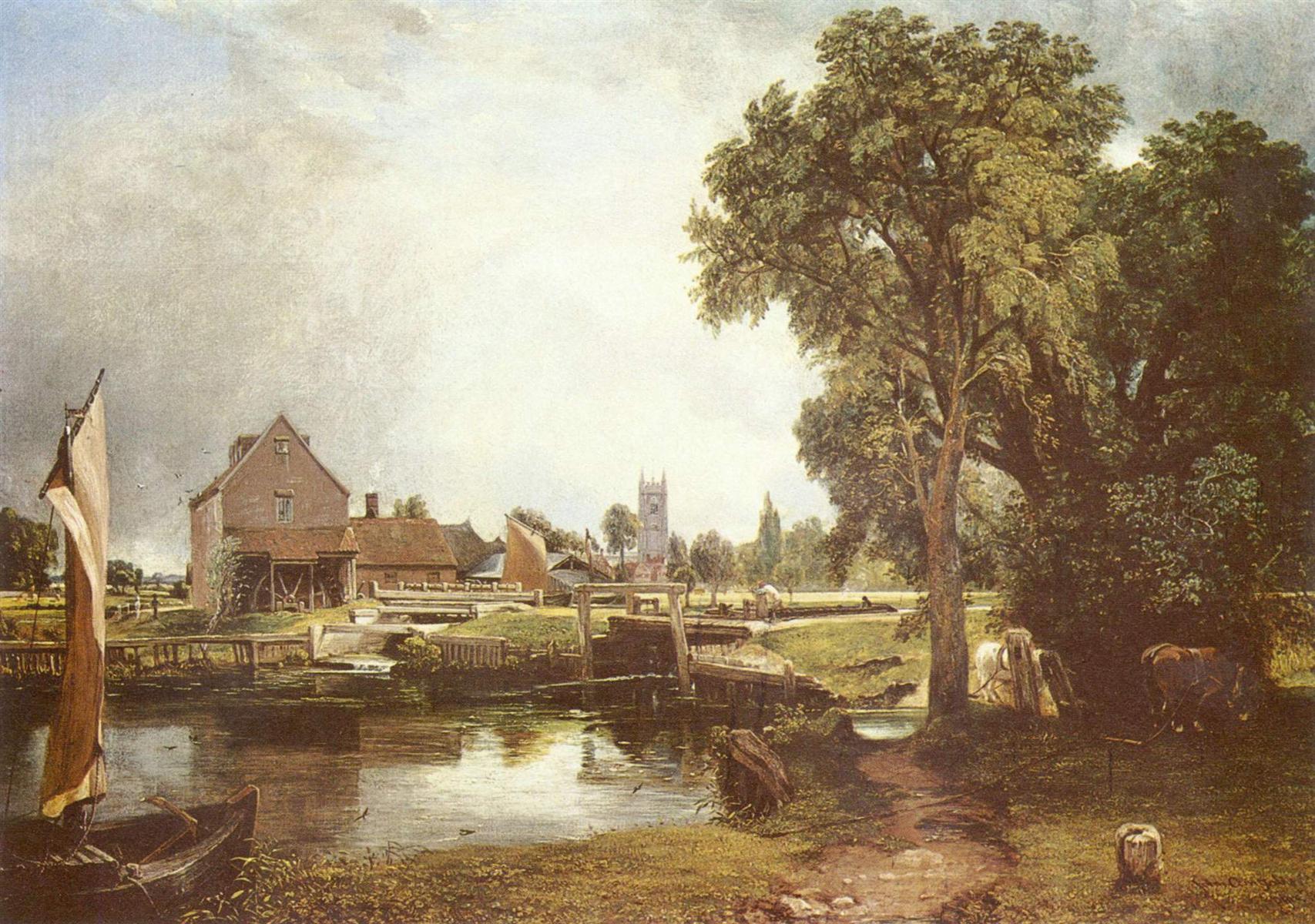
There, and through his long friendship with the collector George Beaumont, he was attracted to the landscapes of Claude Lorrain, Rubens, van Ruisdael, and Gainsborough. He exhibited at the Royal Academy by 1803, and toured the British coast and Lake District, sketching and painting avidly.
JMW Turner
Turner (1775–1851) entered the Royal Academy Schools in 1789 at the age of only 14, and the following year exhibited his first watercolour at its annual exhibition. He attended classes there diligently, his name appearing in its register over a hundred times between the summer of 1790 and autumn 1793.
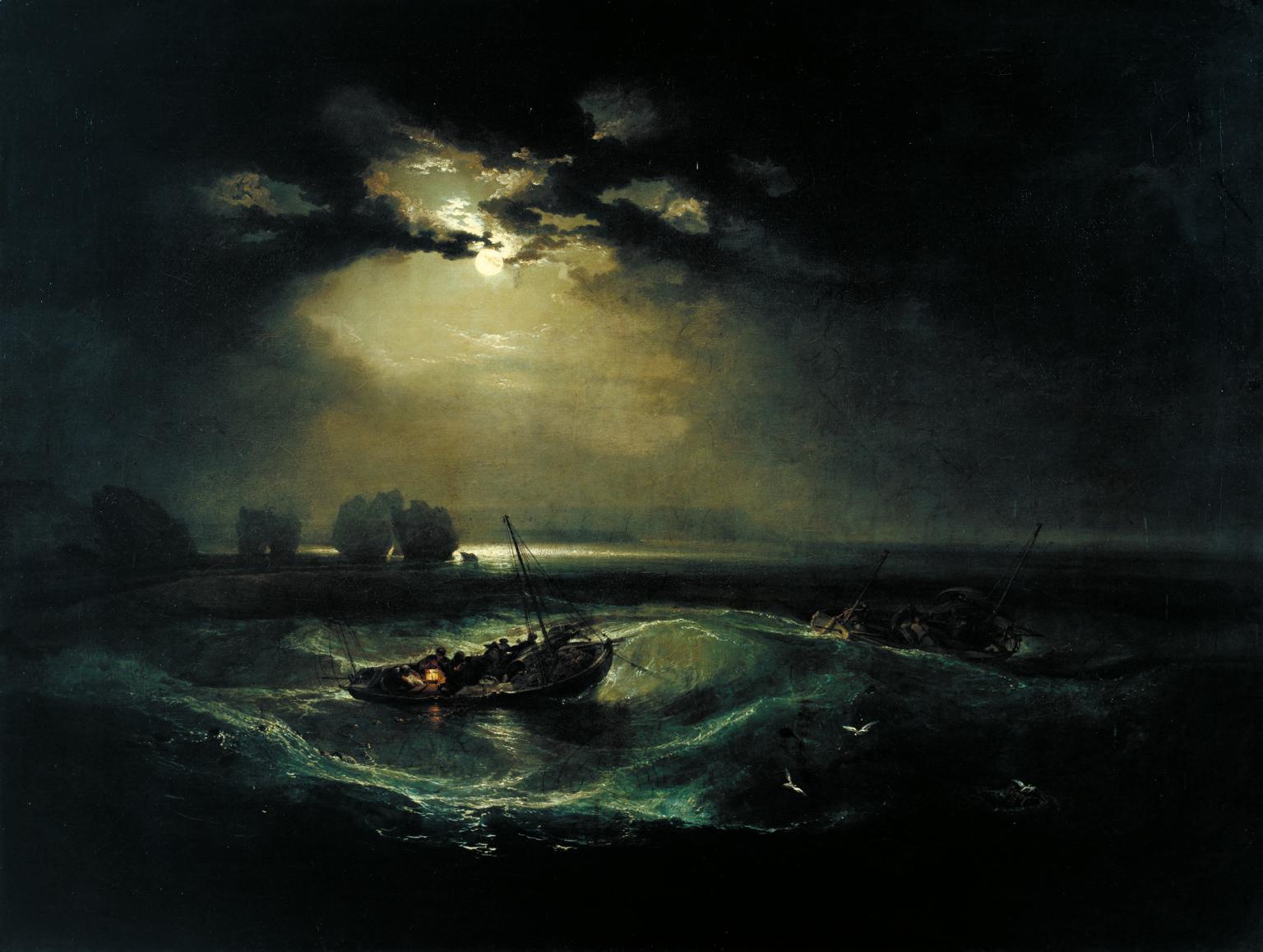
Turner’s Fishermen at Sea (1796), showing small fishing boats working in heavy swell off The Needles, on the Isle of Wight, is probably the most famous and successful coastal nocturne of all time. This was his first oil painting to be exhibited at the Royal Academy, when Turner was just twenty-one.
Legacy
The foundation of the Royal Academy of Arts, and its first president, were the greatest influences on art in Britain during the late eighteenth and early nineteenth centuries. Many of those who attended the Academy’s schools in London became major artists.
Whatever you might think of Reynolds’ portraits, or the prescriptive views that he expressed in the discourses that he delivered to the students of the Royal Academy Schools, no other individual had greater influence over British painting until the twentieth century.
 The Eclectic Light Company