

For much of his career, Sir Joshua Reynolds (1723–1792) had greatly admired the paintings of Rembrandt and Titian, and sought to emulate their handling of paint. Although he became extremely skilled, in his later years he experimented more with the making of his paint, and the manner in which he applied it.
He had received a conventional training in traditional and conservative methods with roots dating back to the late 1600s. Reynolds had painted in layers, starting with dead colouring, the laying in of shadows and lights, then blending in transitions of shading and colour wet-on-wet. Highlights were then brought out, and shadows glazed, to produce a series of thin layers of oil paint, and a smooth, finished paint surface.

Reynolds’ early stages are shown well in this abandoned portrait of Mrs Robinson from about 1784, where most of the paint layer is sufficiently thin as to allow the texture of the canvas to show through. When used with ‘lean’ paint, this dried quickly and complies with the longstanding edict of applying ‘fat’ over ‘lean’, so that the lowest layers dry first.

Seeing that the works of Masters, such as Rembrandt, had passages with quite thick applications of paint, Reynolds also applied his paint thickly when he felt it appropriate. In order to make his paint sufficiently viscous, he took to adding mediums which he thought resembled those used by the Masters. He seldom scraped paint back in order to correct or change his paintings, but applied more paint over the top of up to ten previous layers, some of them viscous and thick. For example, he admitted that his Infant Hercules Strangling Serpents in his Cradle (1788) had “ten pictures under it, some better, some worse.”
His accounts of ‘experiments’ with paint aren’t recorded in sufficient detail to reproduce any of his materials, but refer to the use of:
- copaiba balsam, a controversial oleo-resin thickener which can inhibit drying;
- wax, which he was convinced was the secret of success of the Masters;
- bitumen, which inhibits drying and is a common cause of poor structural integrity in paint layers.
His drying oils were linseed, walnut, and poppy seed, with the latter two mainly used for lighter-coloured paints. They were often heat-treated to pre-polymerise and thicken them.
His greatest error, as far as the longevity of his paintings is concerned, was his excessive use of resins, including mastic, pine, and copal, as well as copaiba balsam. As a result, contemporaries reported that some of his portraits cracked before they had even left his studio.
Reynolds also experimented with the most dangerous medium of all, Megilp. Known by a variety of similar names, he is the first British painter known to have referred to its use. Megilp is made by heating a drying oil with a lead drier, usually litharge, then adding substantial amounts of resin until it produces a thick paint of buttery consistency. Variants using different kinds of ‘black oil’ were even more likely to compromise the structural integrity and longevity of paintings. Reynolds seems to have been addicted to them.
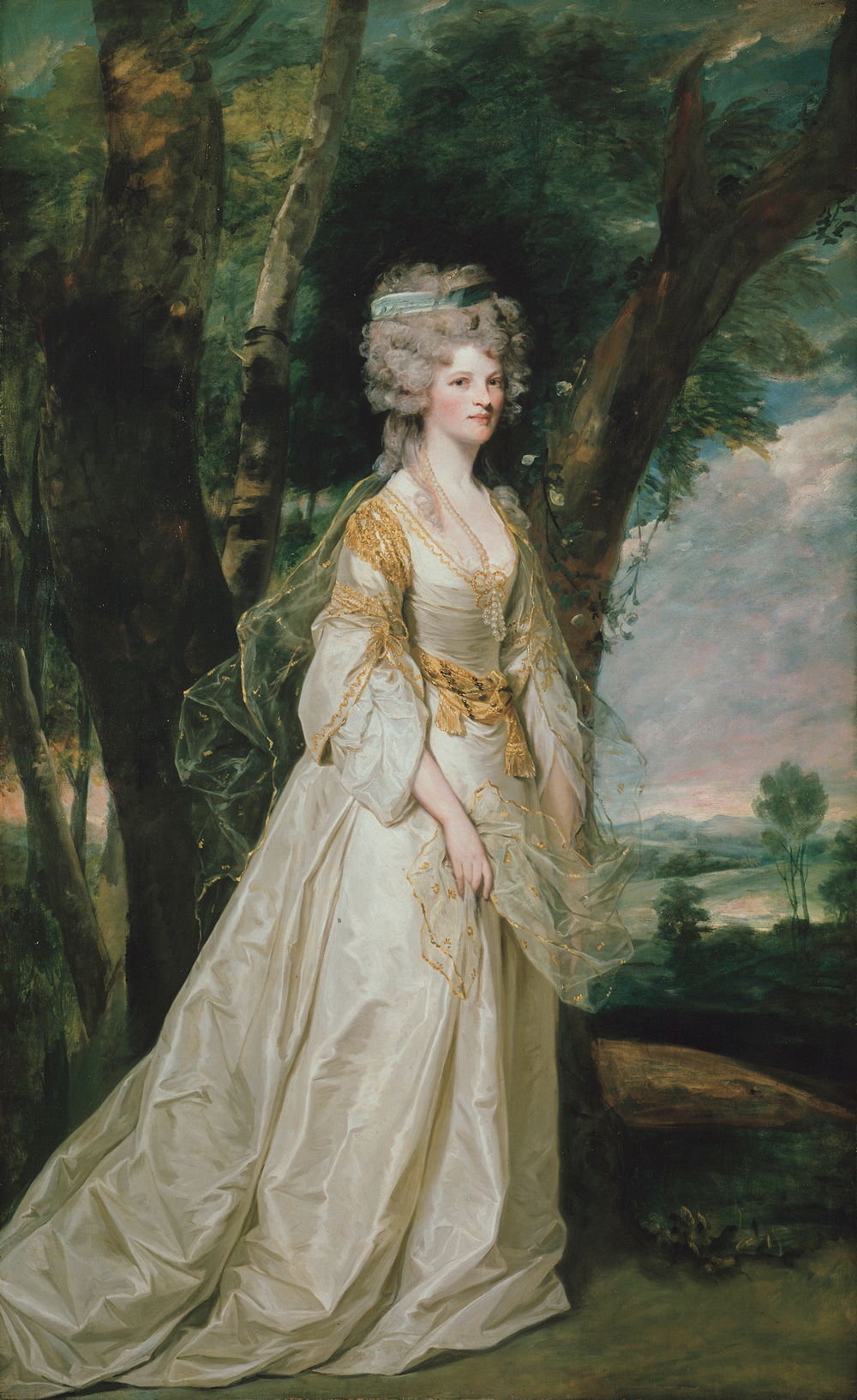
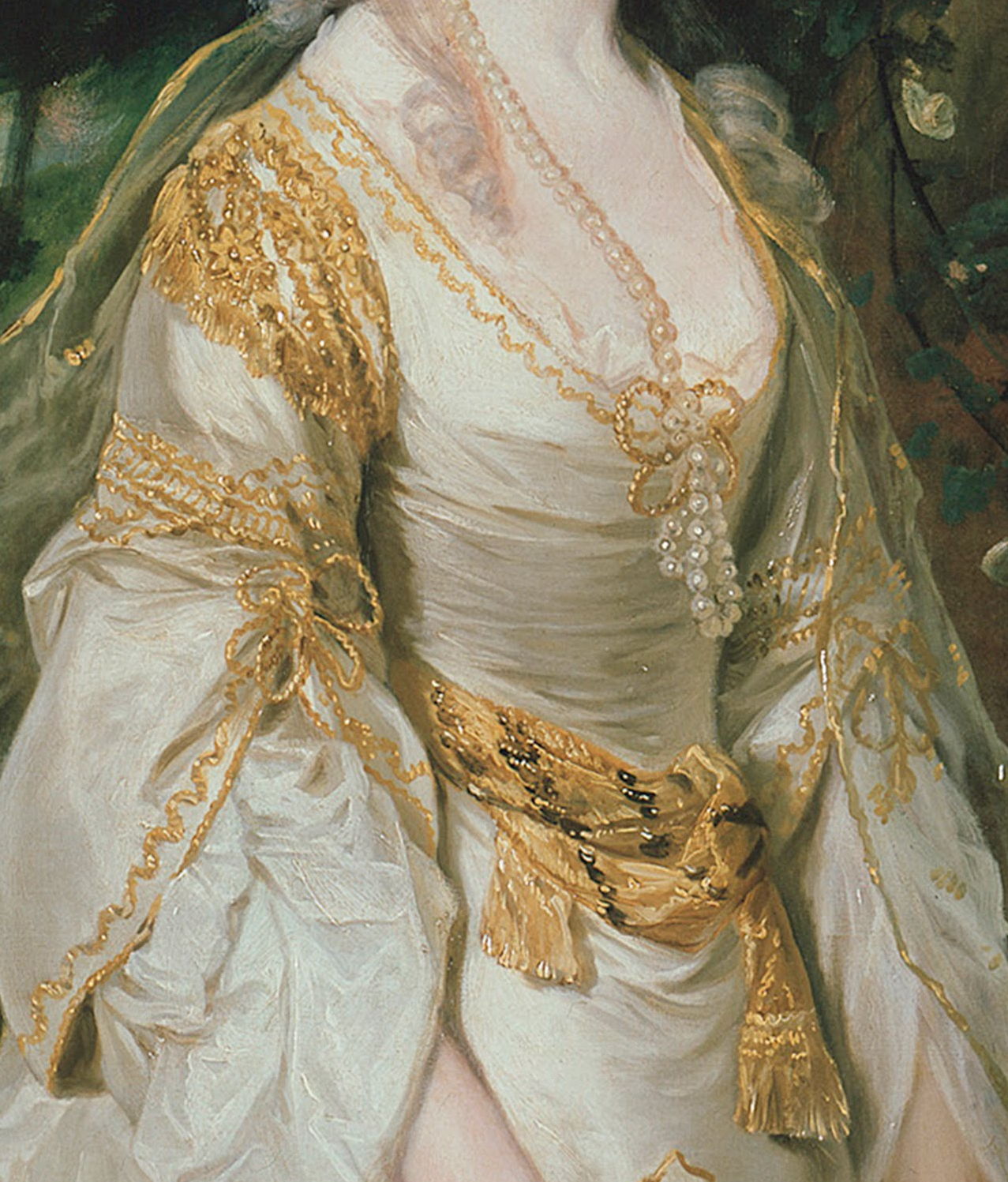
His portrait of Lady Sunderland from 1786 has survived rather better than many of his paintings.

But a more careful look at its background shows where paint, presumably diluted with turpentine to aid its rapid application, has run, although other parts of the same brushstroke still show the marks of the brush, indicating that the paint had also been thickened prior to dilution.
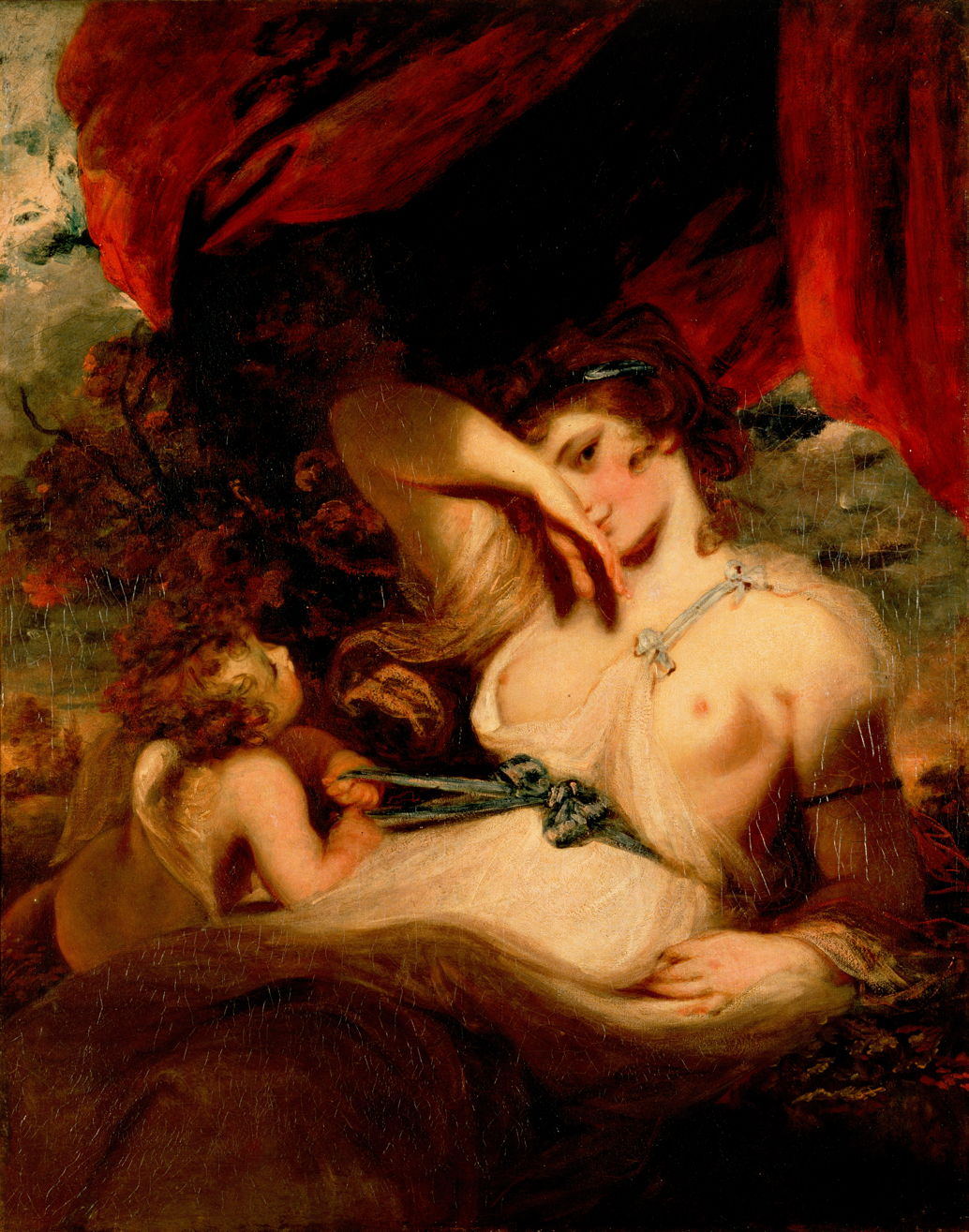

His Cupid Untying the Zone of Venus (1788) has catastrophic cracking indicating that surface layers of paint have detached from lower layers. In parts, those cracks have become filled with lighter paint which has risen from lower layers, which were drying more slowly than the more superficial layers. This is the exact reverse of the ‘fat over lean’ rule. This detail also shows the wide variation in thickness of the paint layer: some passages are thin enough to allow the texture of the canvas to show through, while others are so thick that layers have separated.
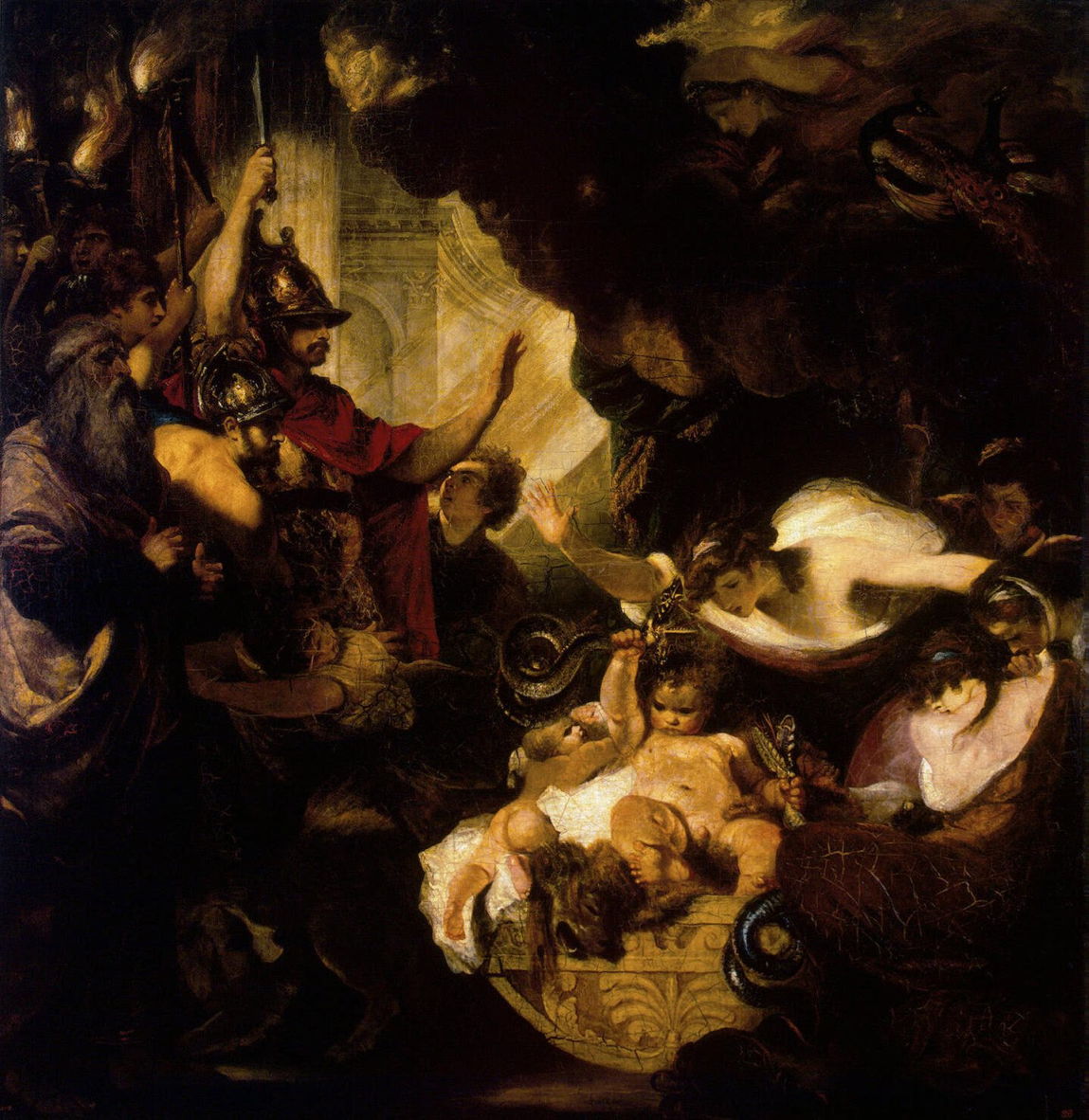
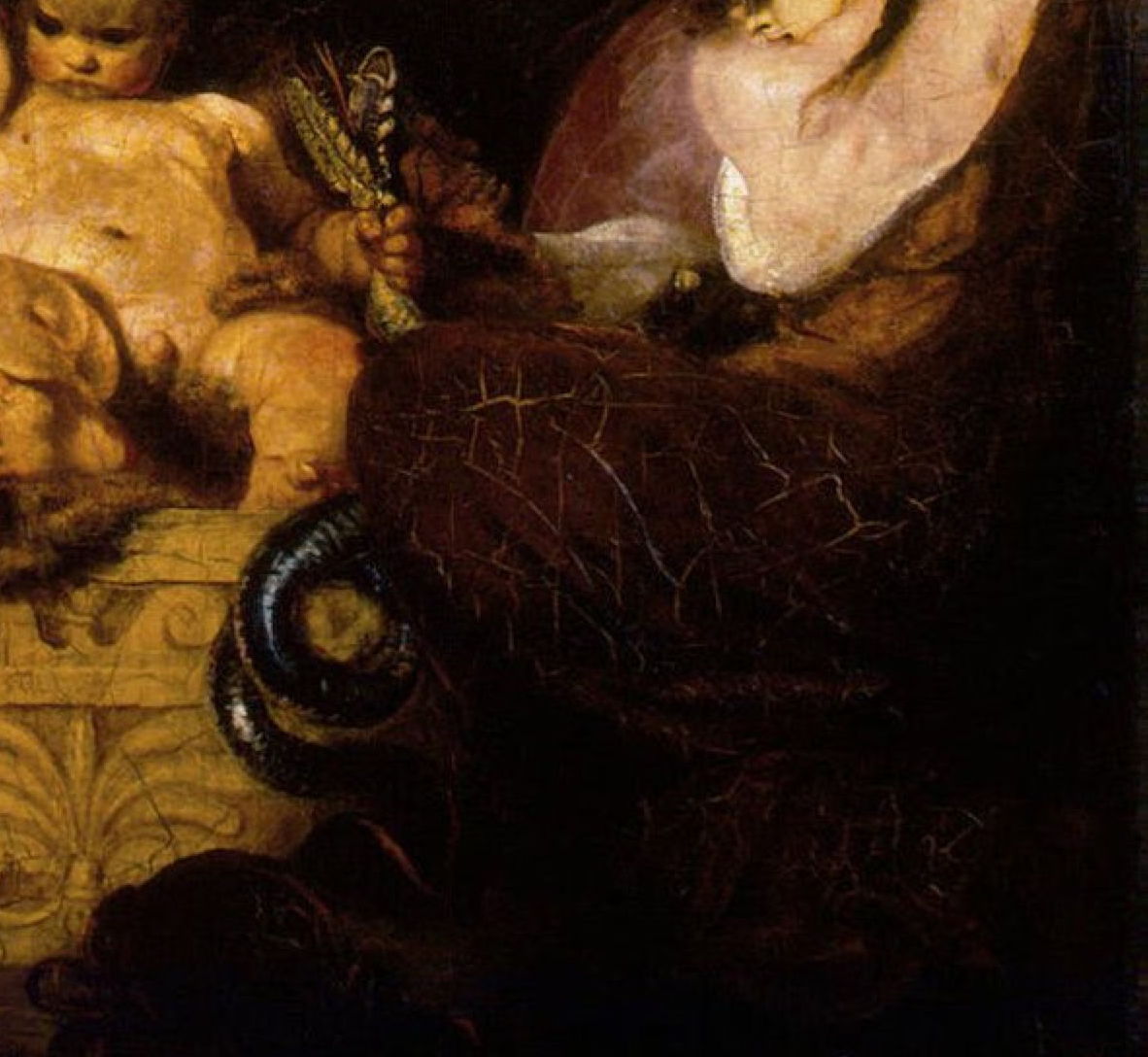
Similar loss of structural integrity has afflicted his Infant Hercules Strangling Serpents in his Cradle from 1788, in its thickly-painted passages.

Other parts of that painting appear to be in need of extensive conservation work to restore details that have become largely unintelligible because of these problems in the paint layer.
Sadly, Reynolds was not the first, and by no means the last, painter to compromise their oil paintings, from their desire to emulate the Masters. There were also many more who were tempted to use Megilp and its variants, in the forlorn hope that it would improve their paintings.
Reference
Gent A (2015) Reynolds, Paint and Painting: a Technical Analysis, in Joshua Reynolds, Experiments in Paint, eds. L Davis & M Hallett, The Wallace Collection & Paul Holberton. ISBN 978 0 9007 8575 7.
 The Eclectic Light Company