
When Odysseus pleaded his case to the princess Nausicaä, he didn’t explain who he was. In spite of that, her father King Alcinous agreed to provide him with a ship in which to return to Ithaca. The king then entertained Odysseus while arrangements were made for his departure. During this, the blind bard Demodocus told the story of the Trojan Horse, and Odysseus had to reveal his identity to the court, and tell the story of his return from Troy.
Another tale related by Demodocus, and given in the Odyssey as a story within a story, was that of the affair between Mars/Ares and Venus/Aphrodite. Vulcan/Hephaistos caught the couple making love in his marriage bed, and quickly forged a fine but unbreakable net to throw over them. Once they had been made captive by his net, he summoned the other gods, who came and roared with laughter at the ensnared couple. This was intended as comedy, to cheer Odysseus up when he was being entertained by King Alcinous.
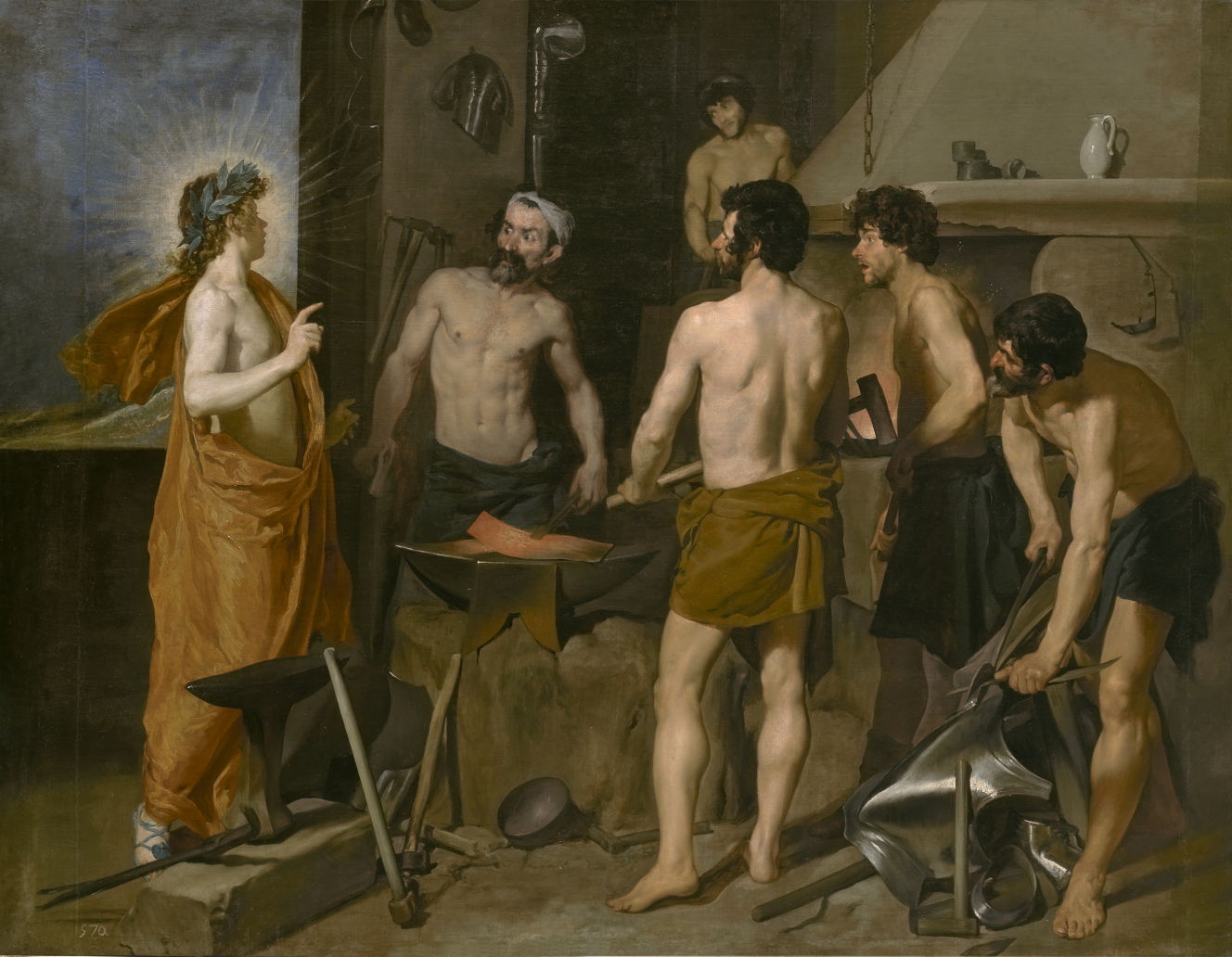
Homer’s story is also retold by Ovid in his Metamorphoses, the likely source for Diego Velázquez’s The Forge of Vulcan from 1630. This shows Apollo, at the left, visiting Hephaistos (to the right of Apollo) in his forge, to tell him about this infidelity, a marked variation from the original. As shown in the faces, this arouses great shock.
Paintings showing the adulterous couple naked together have long been one of the most risqué themes in art.
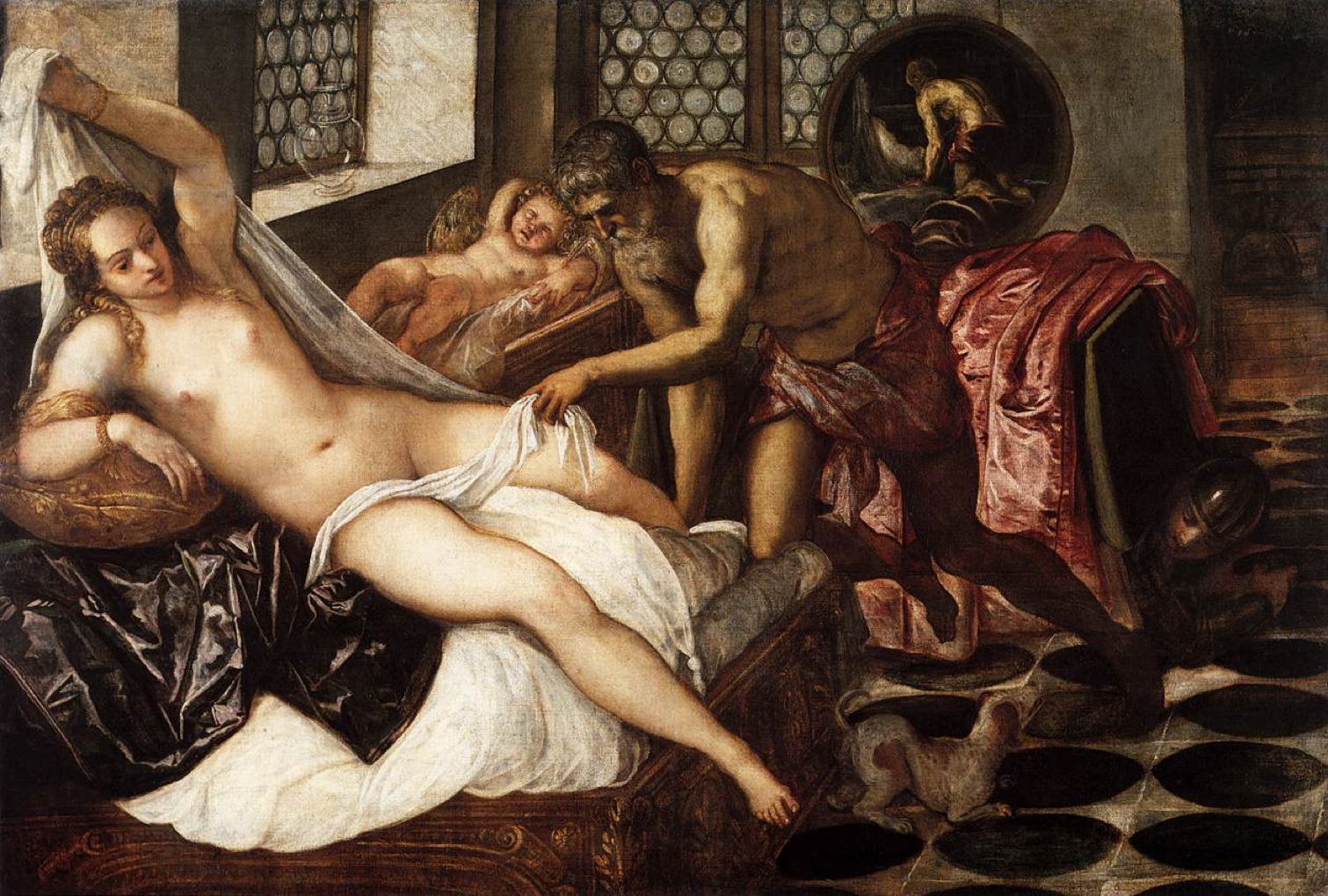
Tintoretto’s Venus and Mars Surprised by Vulcan from about 1545 offers an unusual interpretation: Hephaistos is inspecting his wife, as Ares cowers under the bed at the right. A small dog is drawing attention to Ares’ hiding place, and Aphrodite’s child, Eros, rests in a cradle behind them. Within this is skilful mirror-play: the circular mirror behind the bed reflects an image of Hephaistos leaning over Aphrodite (below). The artist also shows off his technique in other ways, in a glass jar on the window sill at the upper right, and in optical effects in the window glass.

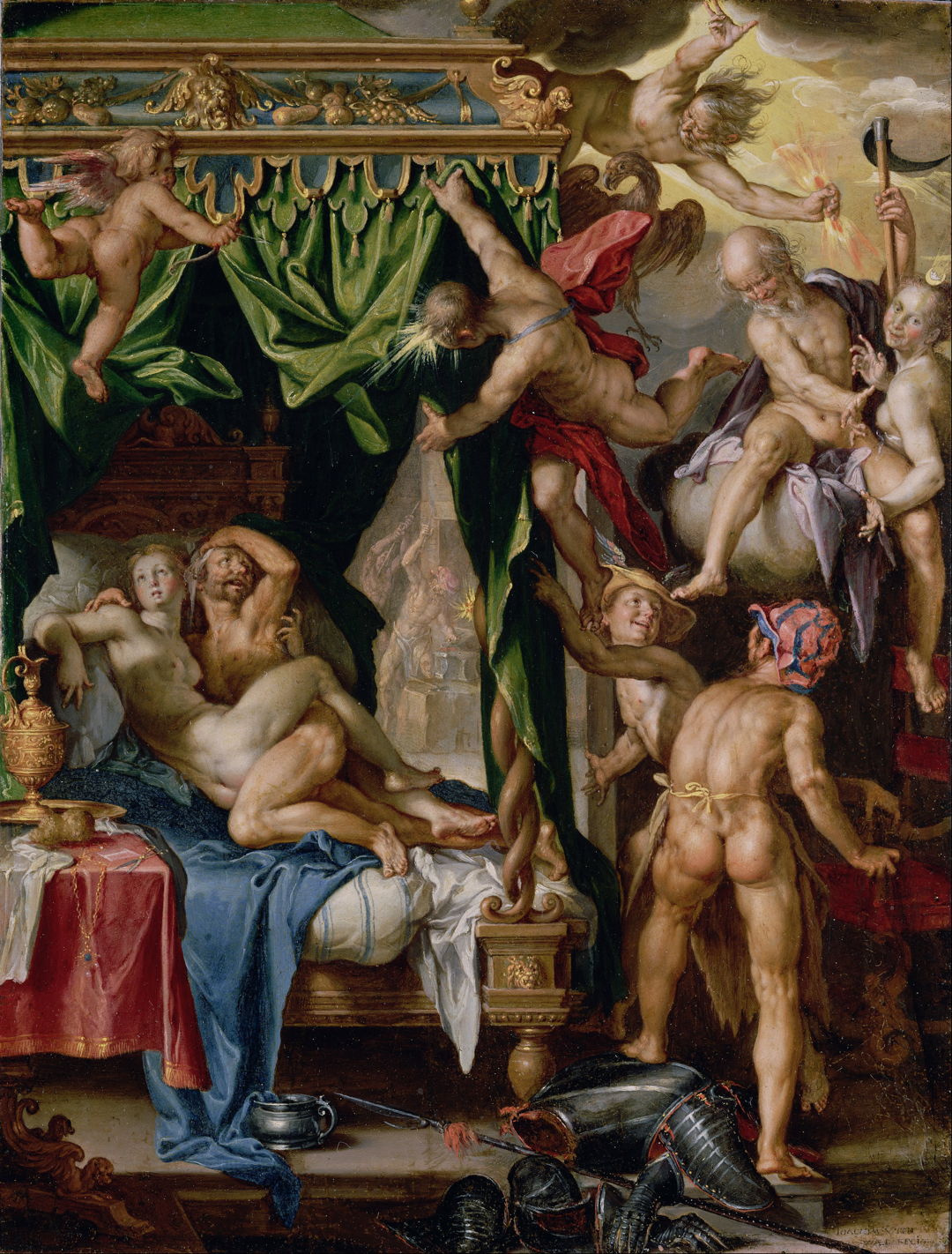
Joachim Wtewael’s Mars and Venus Surprised by the Gods from about 1606-10 gives a full visual account of the story, and leaves the viewer in no doubt as to what the couple were doing, even adding a flush to the cheeks of Aphrodite. He uses multiplex narrative: Hephaistos is seen forging his fine net in the far background, and again at the right, as he is about to throw the finished net over the couple. Ares’ armour is scattered over the floor, and there’s a chamber-pot under the bed. Behind Hephaistos the other gods are arriving, and laughing with glee at the raunchy scene being unveiled to them.
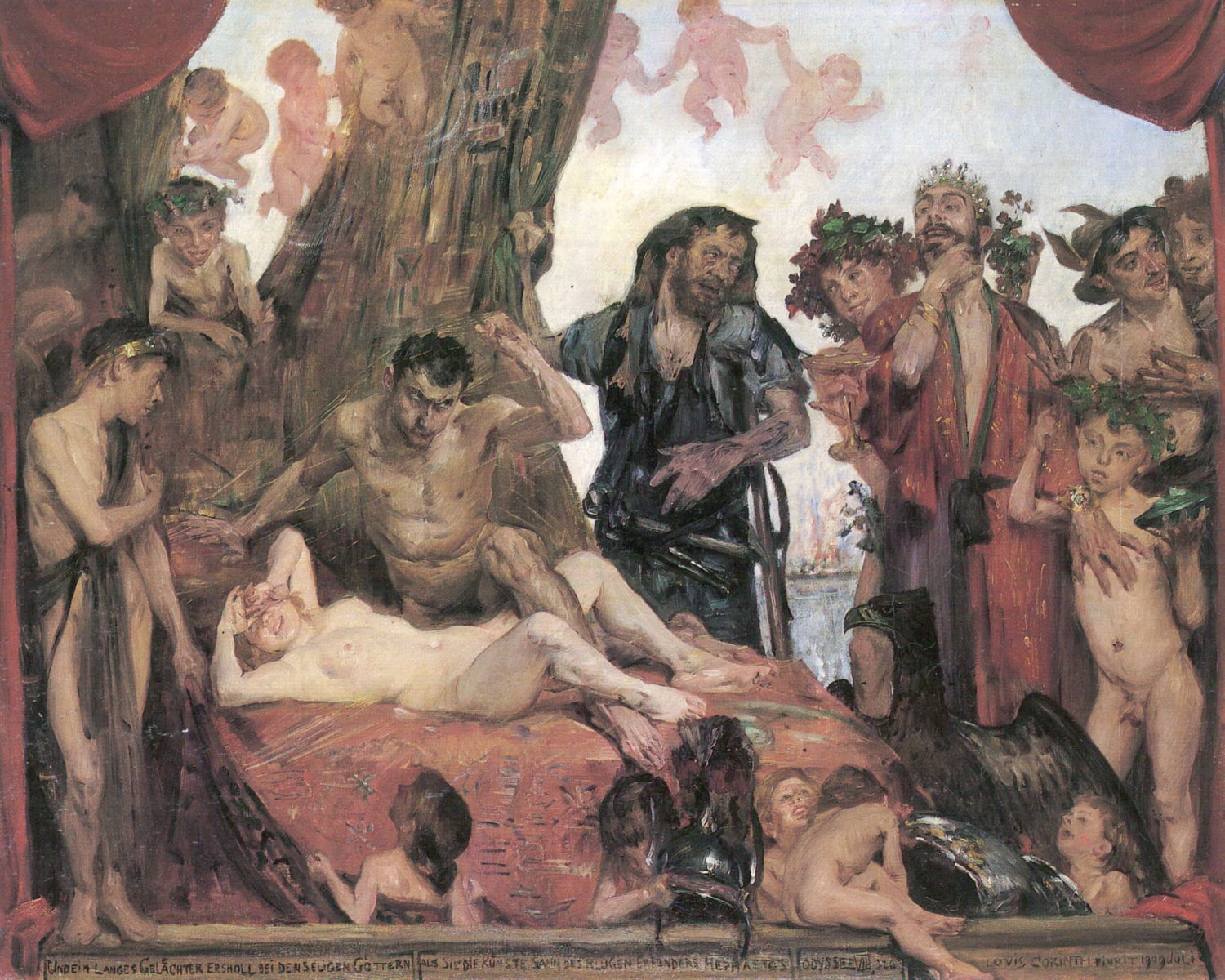
Lovis Corinth’s Homeric Laughter from 1909 is an obvious platform for humour, this time centred on age-old jokes surrounding cuckolds and adultery, without which Shakespeare’s plays would be dull and dry. Corinth offers a clue to its reading in the long inscription (originally in German translation):
unquenchable laughter arose among the blessed gods as they saw the craft of wise Hephaestus
together with the reference to Homer’s Odyssey book 8 line 326. Hephaistos may have been wise and crafty in fabricating the net with which he caught the couple, but the laughter is also on him as the cuckold, something he appears not to realise.
King Alcinous provided Odysseus with more treasure than he would ever have received as spoils of the war against Troy, and one of his ships delivered Odysseus to a hidden harbour on Ithaca in the dead of night, while he was still asleep.

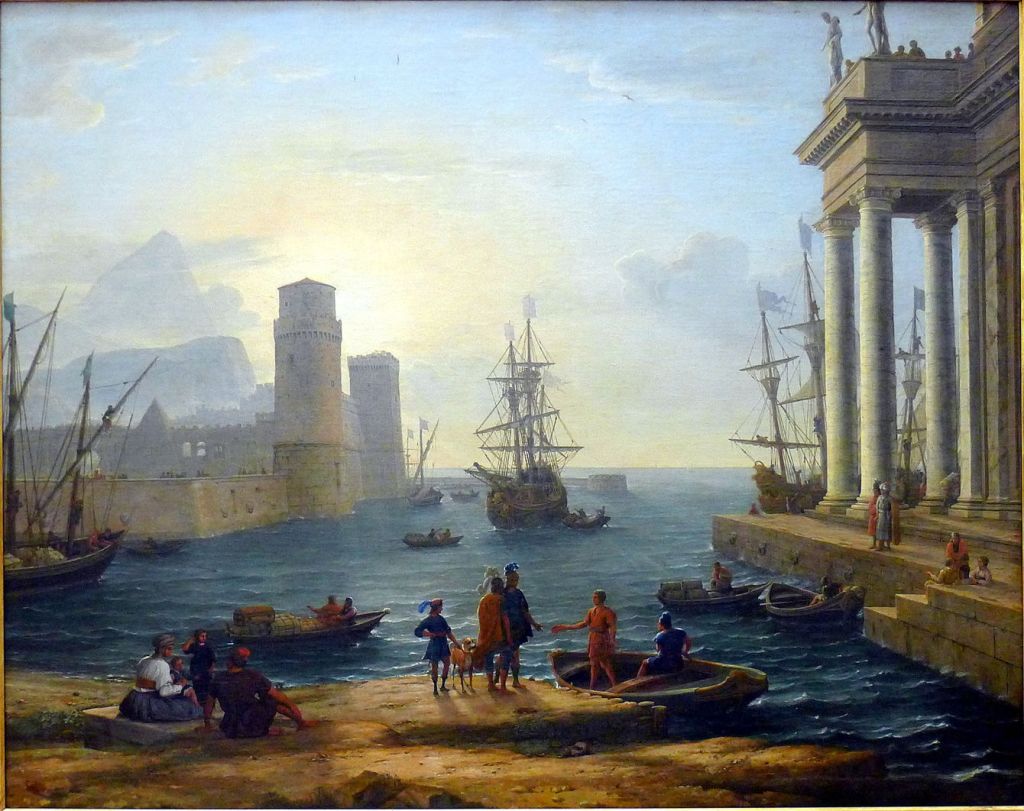
Claude Lorrain’s Embarkation of Ulysses (1646) is one of his later paintings with a port theme, also known as Odysseus Departs from the Land of the Phaeacians, showing Odysseus’ departure at dusk.

Edward Poynter’s Cave of the Storm Nymphs shows a story drawn from book 13 of the Odyssey, of naiads living in a sea cave as ‘Wreckers’, who lured ships onto rocks in order to steal their precious cargos. This made them sirens without the distasteful habit of cannibalism.

Over the years of Odysseus’ absence from his wife Penelope and their son Telemachus, she had attracted the attentions of many suitors, as shown in John William Waterhouse’s Penelope and the Suitors (1912). They took over her court, living off her kingdom, raping a dozen of her maids, and their number had risen to over a hundred by the time that Odysseus returned.
Penelope had been forced to adopt devious tactics to keep them at bay. The most celebrated was her promise that she could only consider her suitors once she had completed weaving the shroud for Laertes, the father of Odysseus who had sailed with Jason as one of the Argonauts. Although the suitors saw her weaving intently by day, she then unravelled her work each night.

As Angelica Kauffman shows in Penelope Awoken by Eurykleia (1772), each night Odysseus’ nurse would wake her up, and she would then resort to her subterfuge.
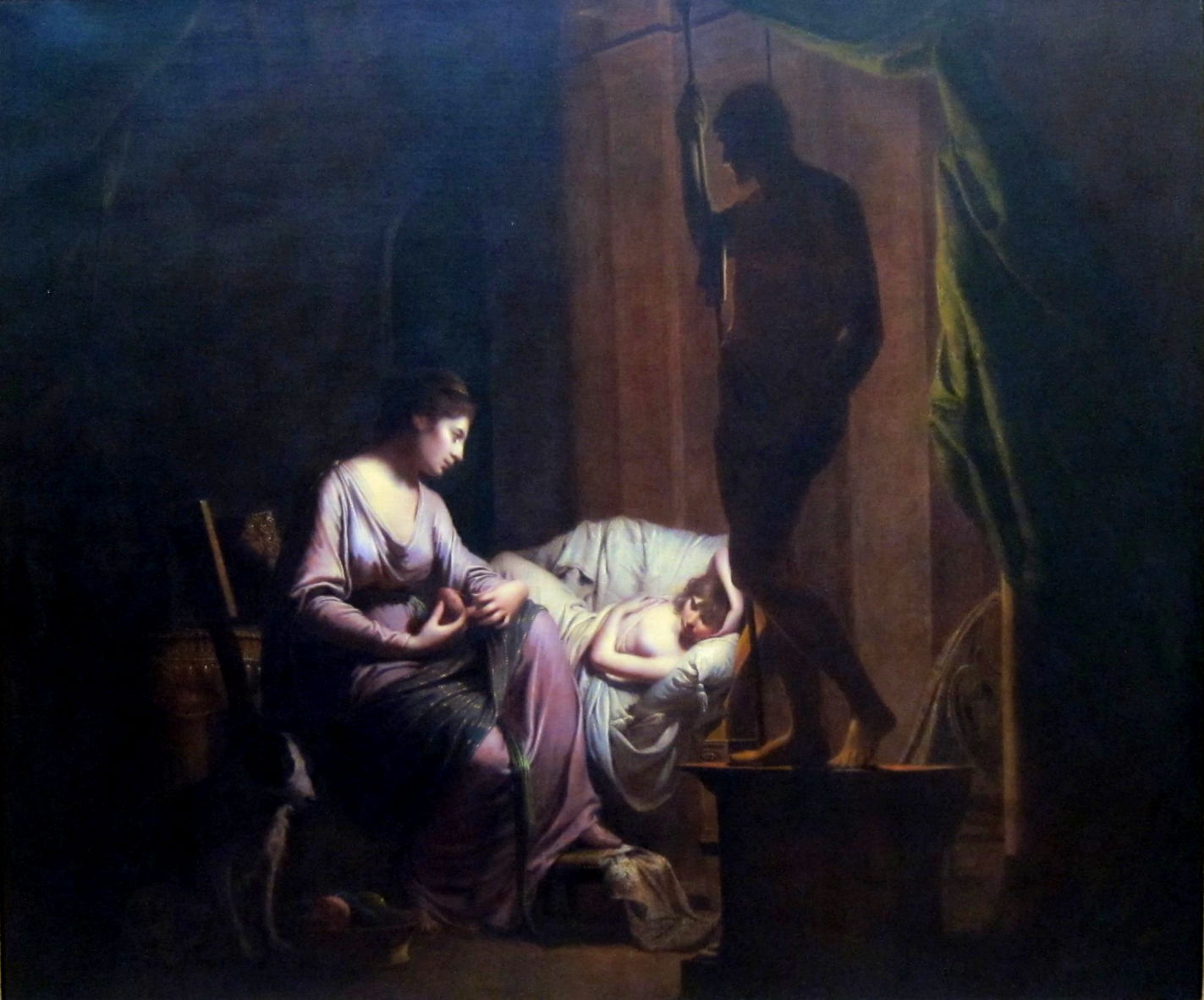
Joseph Wright of Derby’s Penelope Unravelling her Web by Lamp-light (1785) shows her watching over her sick child, while Odysseus’ statue watches her carefully unravelling her day’s work.
When Odysseus awoke on Ithaca he didn’t know where he was. It took Athena herself to confirm that he wasn’t on yet another distant land, but home at last. The goddess then hid the treasure the Phaeacians had given, and disguised him as a beggar so he could assess the situation in his kingdom before revealing himself as its long-lost king.
 The Eclectic Light Company