
Long before artists in Europe dared to produce dedicated landscape paintings, they were showing cameo appearances of countryside views in the background. These typically appeared through windows, either behind or to the side of the portraits that were the main subject of the painting. These first came to prominence in the finely detailed oil paintings of the Northern Renaissance, and spread to the Southern Renaissance over time. They remained popular among some, even to the present day, despite landscape becoming a popular genre in its own right. This weekend I celebrate those cameo views of the world beyond the main theme of paintings.
Although not the first, one of the best-known cameo or vignette landscapes is that in Jan van Eyck’s masterpiece The Madonna of Chancellor Rolin from about 1435.

Set behind the three figures who are the subjects of the painting, and divided vertically by two pillars transforming the panel into a triptych, a garden, city, and distant countryside are shown in fine detail.
The garden is rich in symbolic objects, including rabbits, magpies, peacocks, lilies, irises, peonies, and roses, which commentators have interpreted as having contemporary meanings. The garden is contained within a crenellated castle wall, against which two figures, their backs to the viewer, face towards the river below them; again various interpretations have been suggested for those figures.
Behind the wall, stretching into the distant haze, is a large city with its grand buildings, divided vertically by a major river. Van Eyck has not spared any detail, showing a built-up island, bridge, even a boat with several occupants, and abundant reflections on the glassy calm water surface. Around the city are rolling hills with fields and small woods.

This landscape gives great depth to the painting, locates it, and augments the importance of the Chancellor, who is shown as overseeing the wealth and bustle of the city.
The cameo landscape shown in Rogier van der Weyden’s portrait of Saint Ivo (1450) is smaller, simpler, and in keeping with the painting’s monastic simplicity.
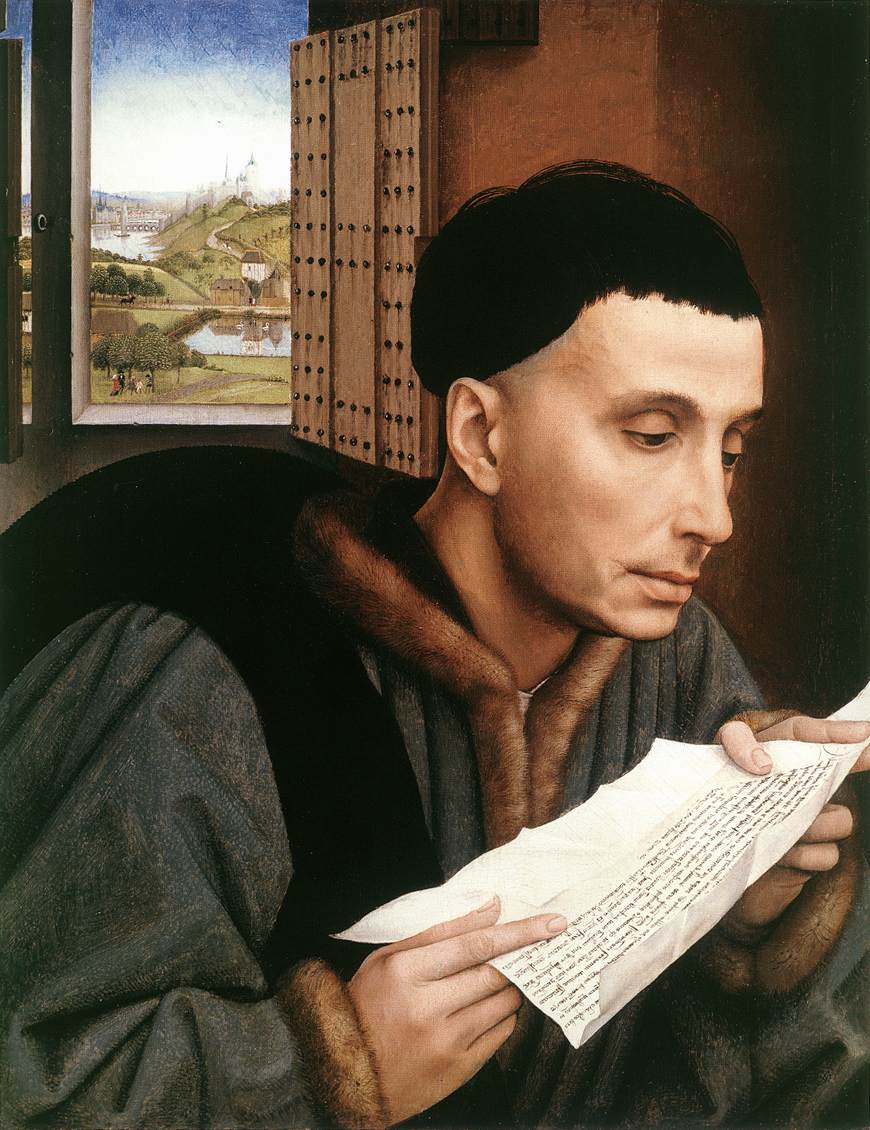
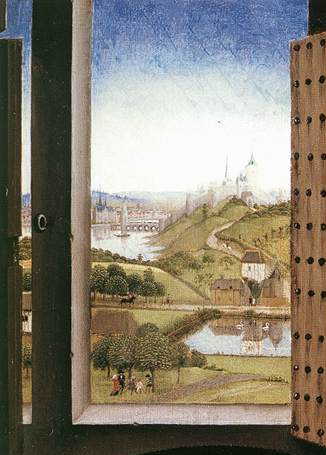
Seen through a small window above and to the left of the subject of the painting, its middle distance shows a country house or farm, with a lake and deer park. Behind those are hills, with towers and spires of a town. This too is clustered on the banks of a river, which is crossed by a bridge. There is also a boat visible on the river, and beyond the town the landscape fades into distant haze.
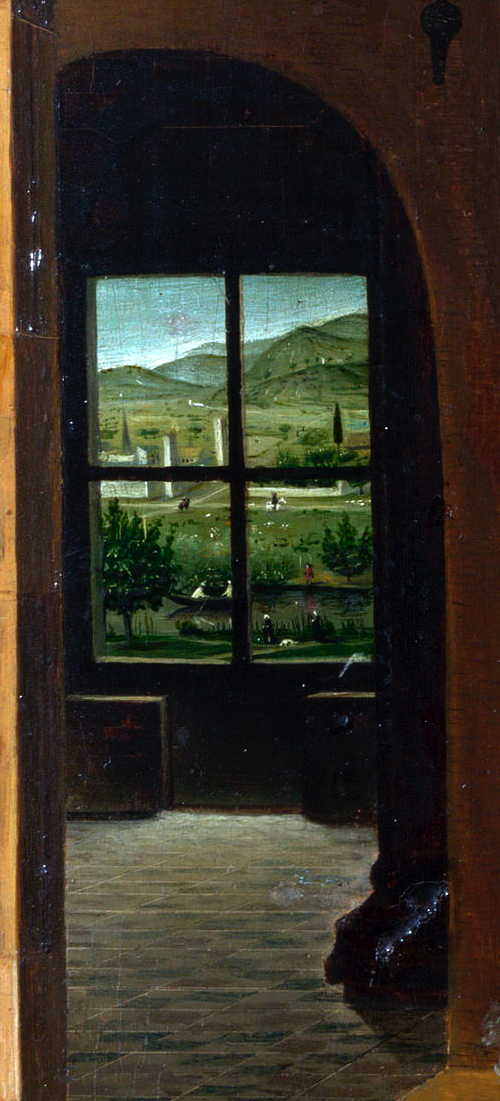
Working mainly in Sicily during the Southern Renaissance, Antonello da Messina provided even smaller glimpses of landscape in his masterwork Saint Jerome in his Study (c 1475). Two small windows, themselves repoussoir behind the frontmost framing stone archway, are placed at the same level as Saint Jerome’s body.
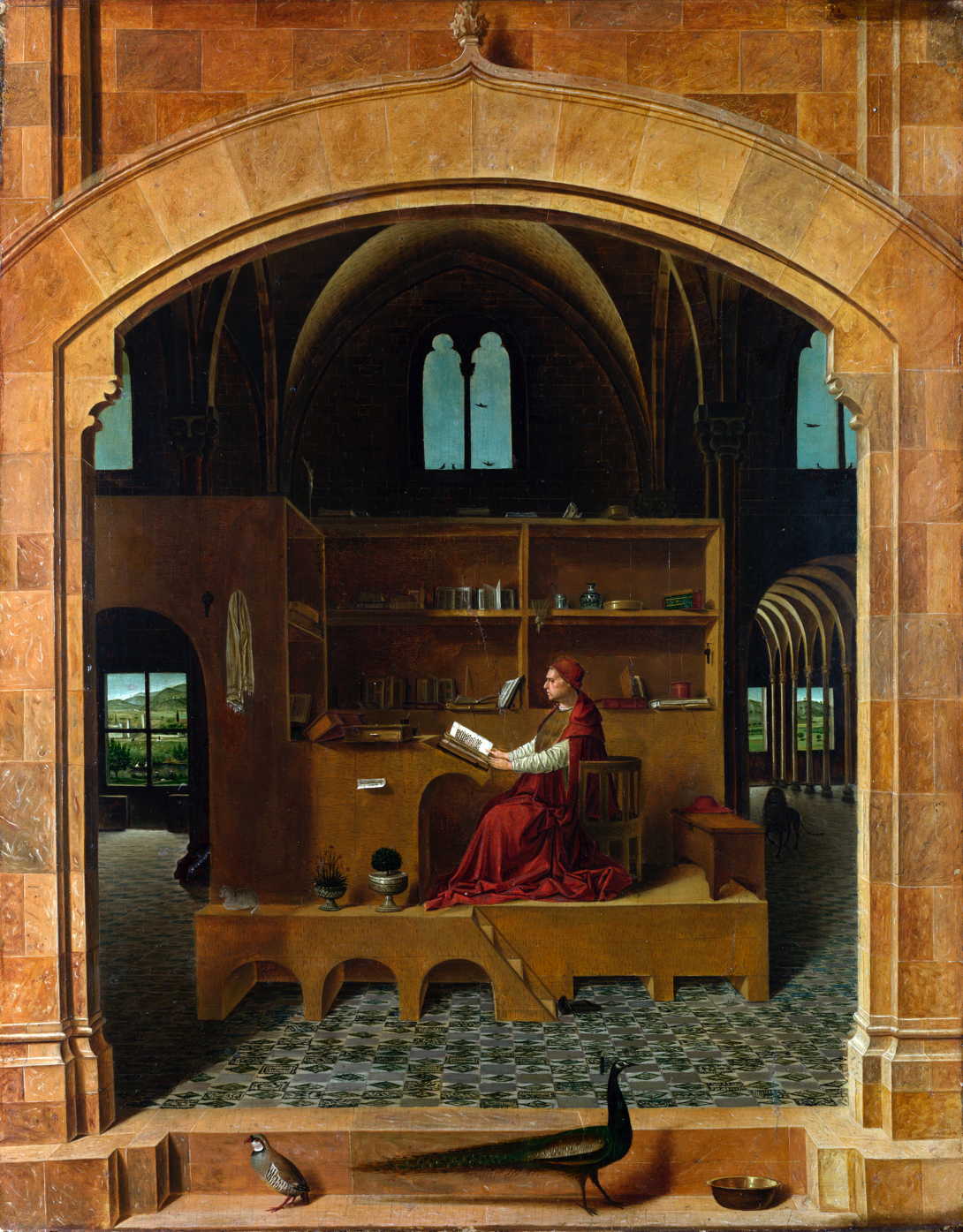
The views shown through these windows depict pastoral countryside, with a castellated house, a pond with a boat on it, and distant rolling hills. They’re not dissimilar to that in Saint Ivo, although too generic to give a location.
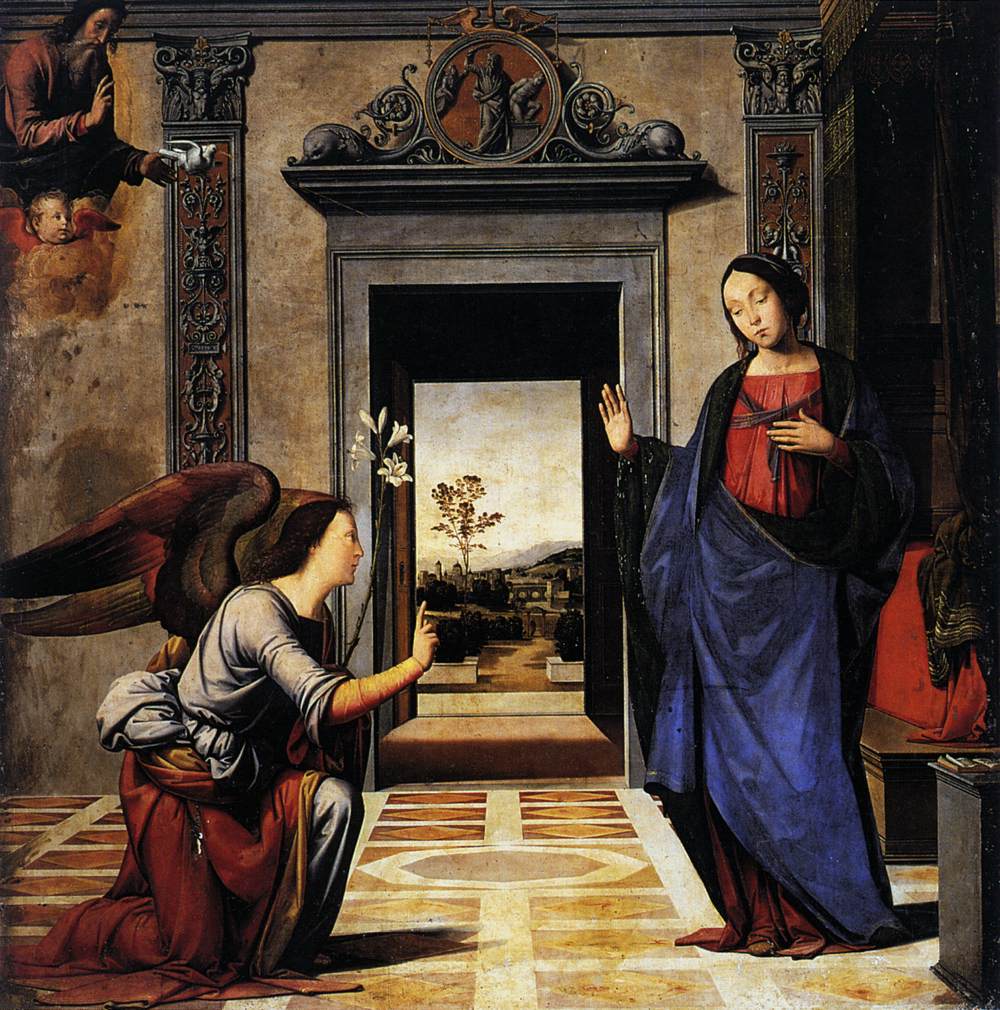
Two of Fra Bartolomeo’s early religious paintings, both from about 1497, have embedded landscapes. In The Annunciation, Gabriel holds a white lily, and its landscape is visible through the open doors. It shows a Renaissance town on a bridged river, and a prominent tree echoing the lily.
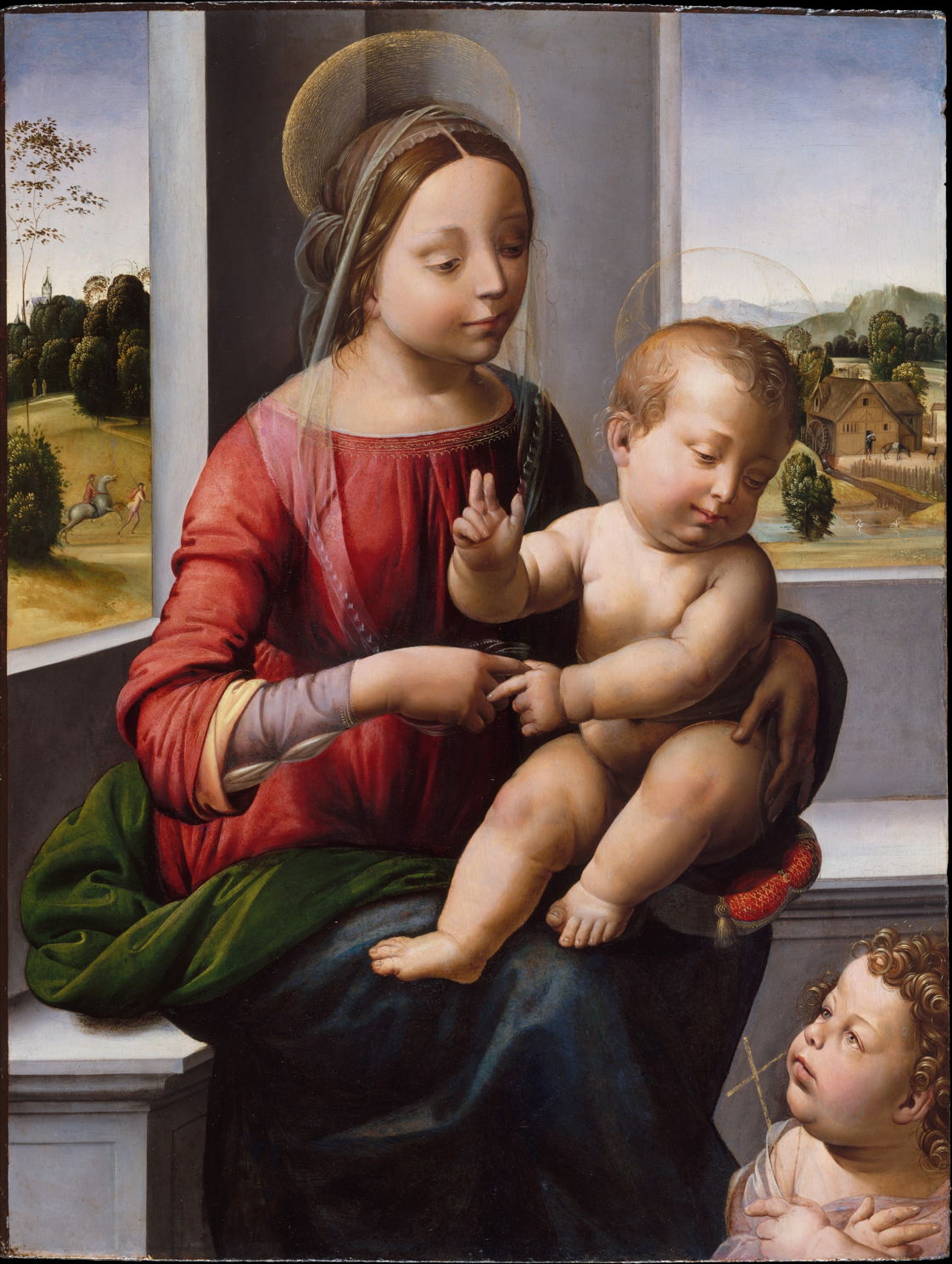
Bartolomeo’s Madonna and Child with the Young Saint John the Baptist affords small glimpses of a distant landscape that are a rustic delight, with a watermill and distant church.
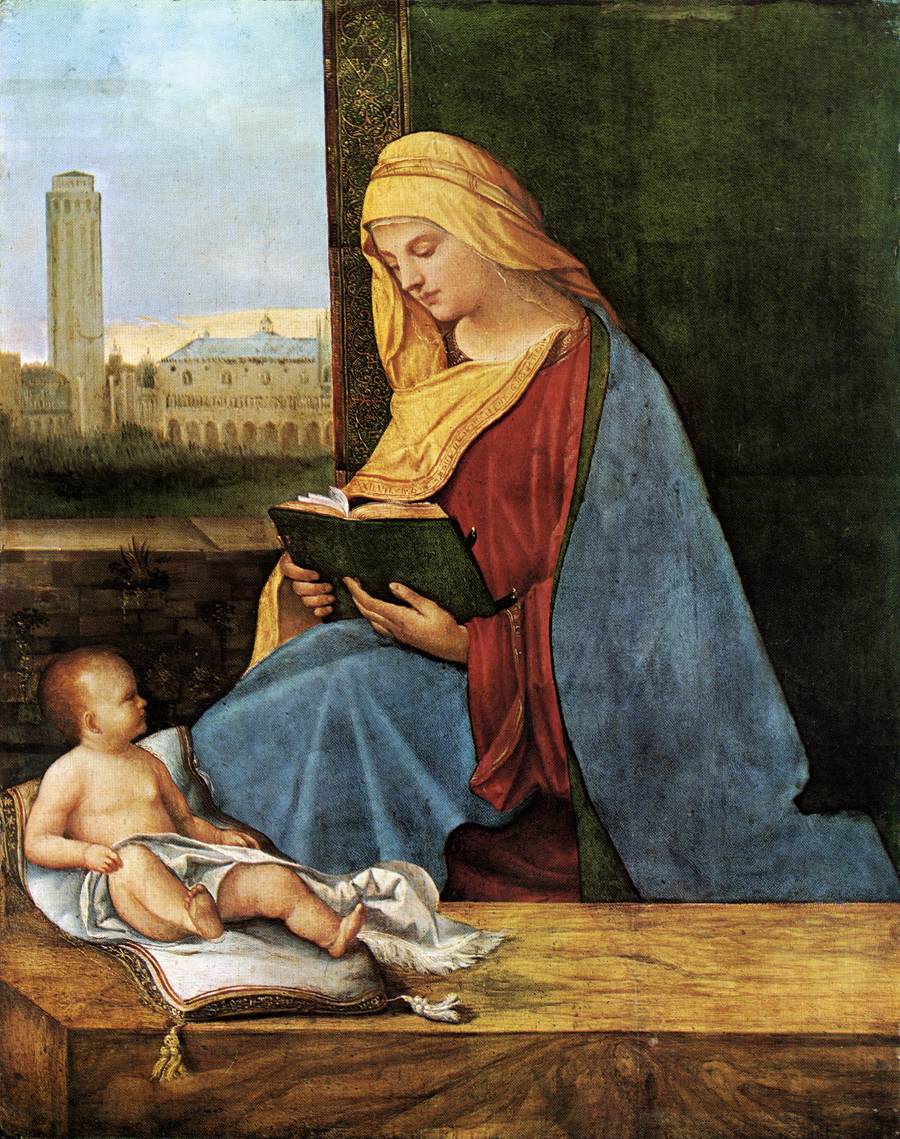
Attributed to Giorgione or his circle, The Virgin and Child with a View of Venice, also known as the Tallard Madonna, from about 1500, is an excellent example of an embedded landscape seen through a window. The Virgin Mary and infant Jesus, who never of course came anywhere near Venice, are seen with a view through the window of the south-eastern corner of the Piazza san Marco, during completion of the first Campanile, when it still had a flat roof, in place between 1489-1511. Surprisingly the painter doesn’t take the opportunity to show the frontage of the Basilica.
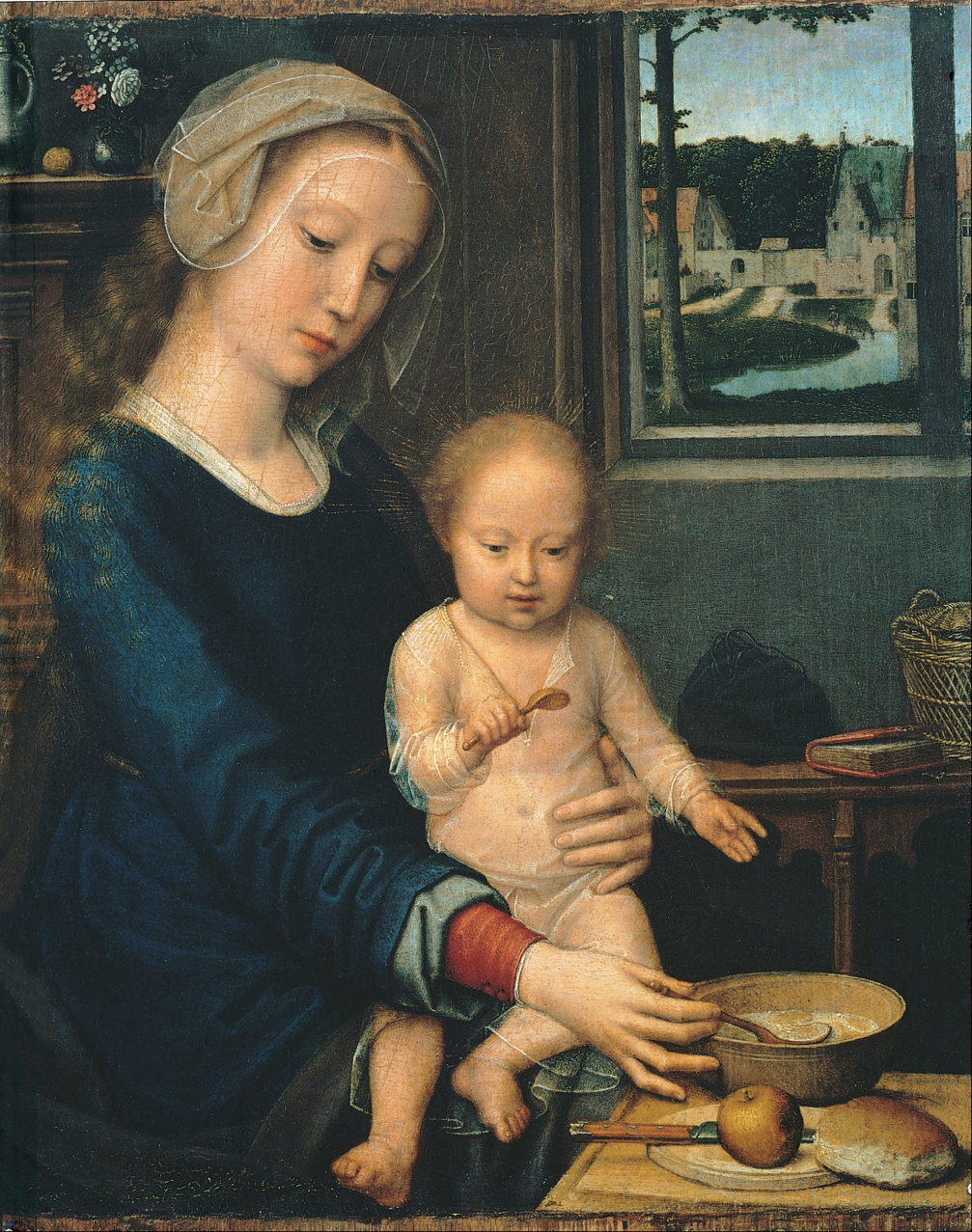
Gerard David’s unusual Madonna and Child with Milk Soup, from 1510-15 has apposite details including a small floral still life at the upper left, a bread roll, apple and knife in the foreground, and a local view in its cameo landscape.

Awe-inspiring mountains and lonely castles date further back to landscape backdrops in Renaissance paintings. They make a cameo appearance in Sofonisba Anguissola’s Portrait of the Artist’s Family of 1557-58. This shows the artist’s younger sister Minerva, father Amilcare, and young brother Asdrubale, with a fantasy landscape of classical ruins and the rising towers of distant castles, receding to a dramatic mountain. Given that the artist and her family lived on the plain of the River Po in Cremona, Lombardy, that landscape could only have been wishful thinking.

