
In the latter half of the nineteenth century, the small trickle of European artists who visited Egypt grew into a steady stream. A few ventured out into the desert to paint some of the spectacular ancient remains. The two colossi associated with the myth of Memnon at Al Bairat near Luxor had been known since classical times, and became popular motifs for Orientalist artists in the nineteenth century.

Gustav W. Seitz’s Egypt: the Statues of Memnon, seen here as a colour lithograph of his original watercolour, is highly atmospheric, and an excellent demonstration of the moon illusion.

The colours in Charles Vacher’s watercolour of The Statues of the Memnons (1864) are superb.

Albert Zimmermann’s oil painting of The Memnon Statues captures the heat haze, and shows a snake moving through the water.
Jean-Léon Gérôme was another artist who fell in love with Egypt during his first visit in 1856, and early in his career was a prolific Orientalist painter.

Gérôme’s The Grain Threshers, Egypt (1859) shows the traditional means of threshing grain, still used extensively at that time.
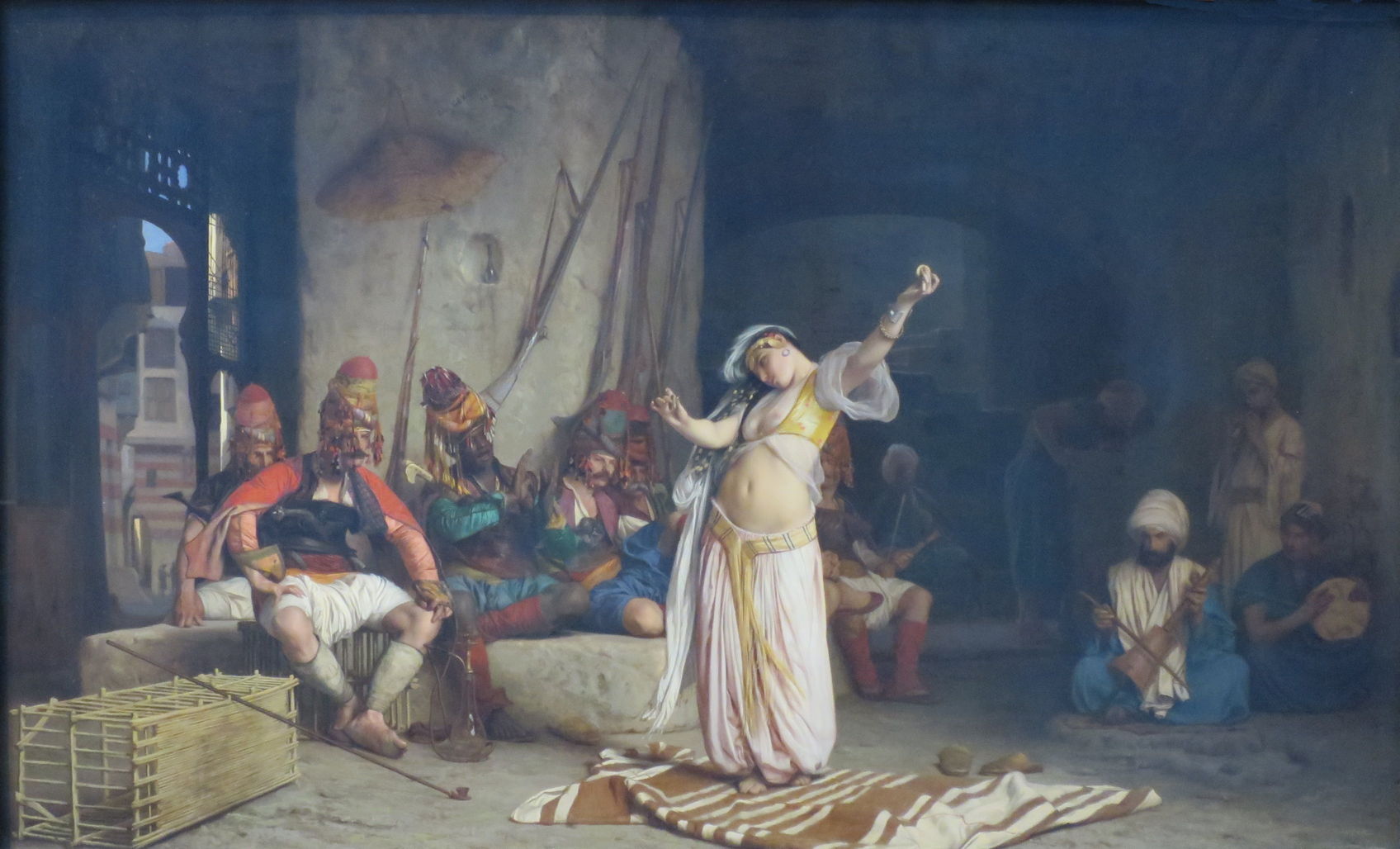
His Dance of the Almeh (The Belly-Dancer) from 1863 is a more conventional Orientalist scene. Today this may seem trite, but at the time precious few images were made of such places, and some showed locations that had hardly been visited by Europeans.

Gérôme’s The Carpet Merchant (of Cairo) (1887) is one of the best of these. It gives the carpets a grandeur from their display in very everyday surrounds. There’s also a touch of mystery in the white-robed figure shown in the deep shadow of a doorway just to the right of the centre.
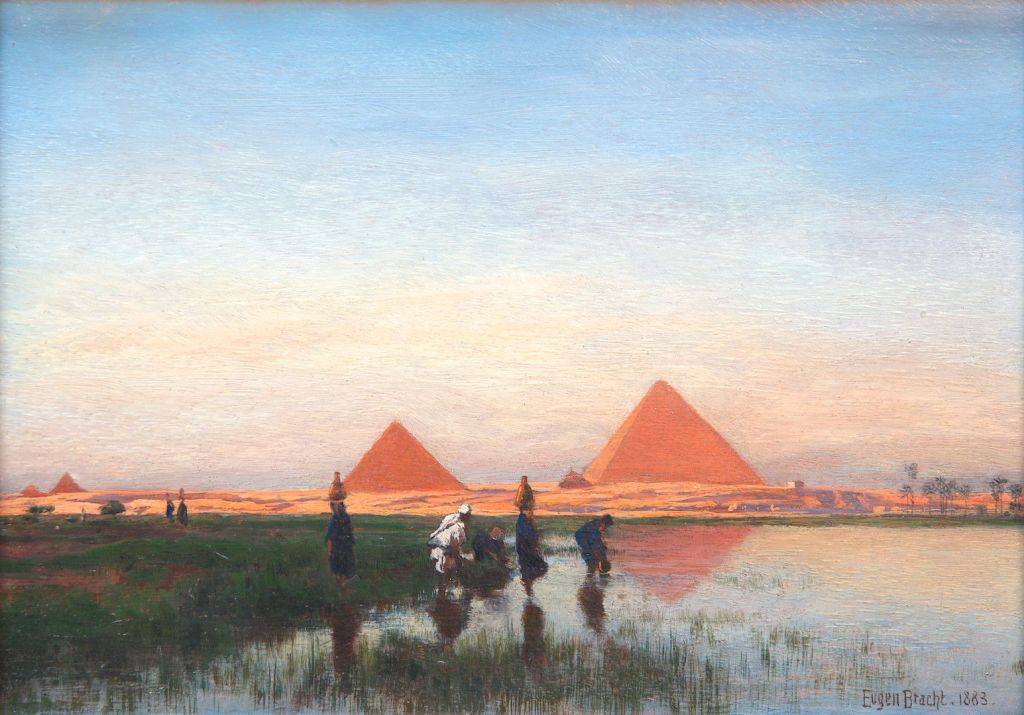
Like Gérôme, Eugen Bracht made copious sketches and studies during his visit to Egypt, Syria and Palestine in 1880-81, and when he returned to his studio he turned them into finished oil paintings.
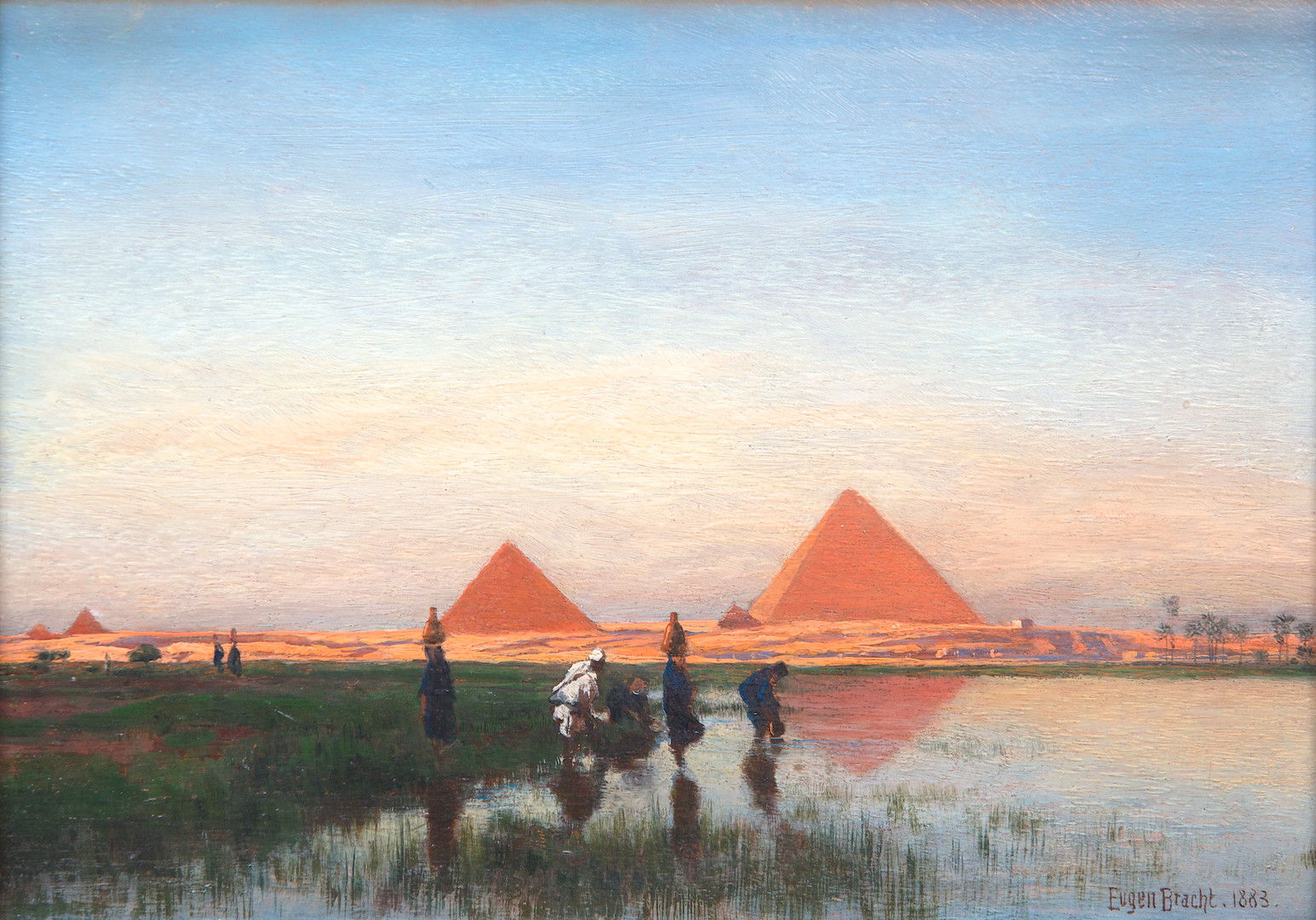
Although painted when back in Berlin, Bracht’s Memory of Gizeh (1883) captures the scene and its rich colours perfectly.

Best known for his Naturalist paintings of rural Denmark, Hans Andersen Brendekilde travelled across Europe, Egypt, Syria and Palestine in 1889-90, where he painted this unusual view of The Graves of the Apostles Jacob and Zacharias near Cairo (1889-91). These appear to be in a cemetery on a hill above the city, and the Pyramids can be seen on the skyline.
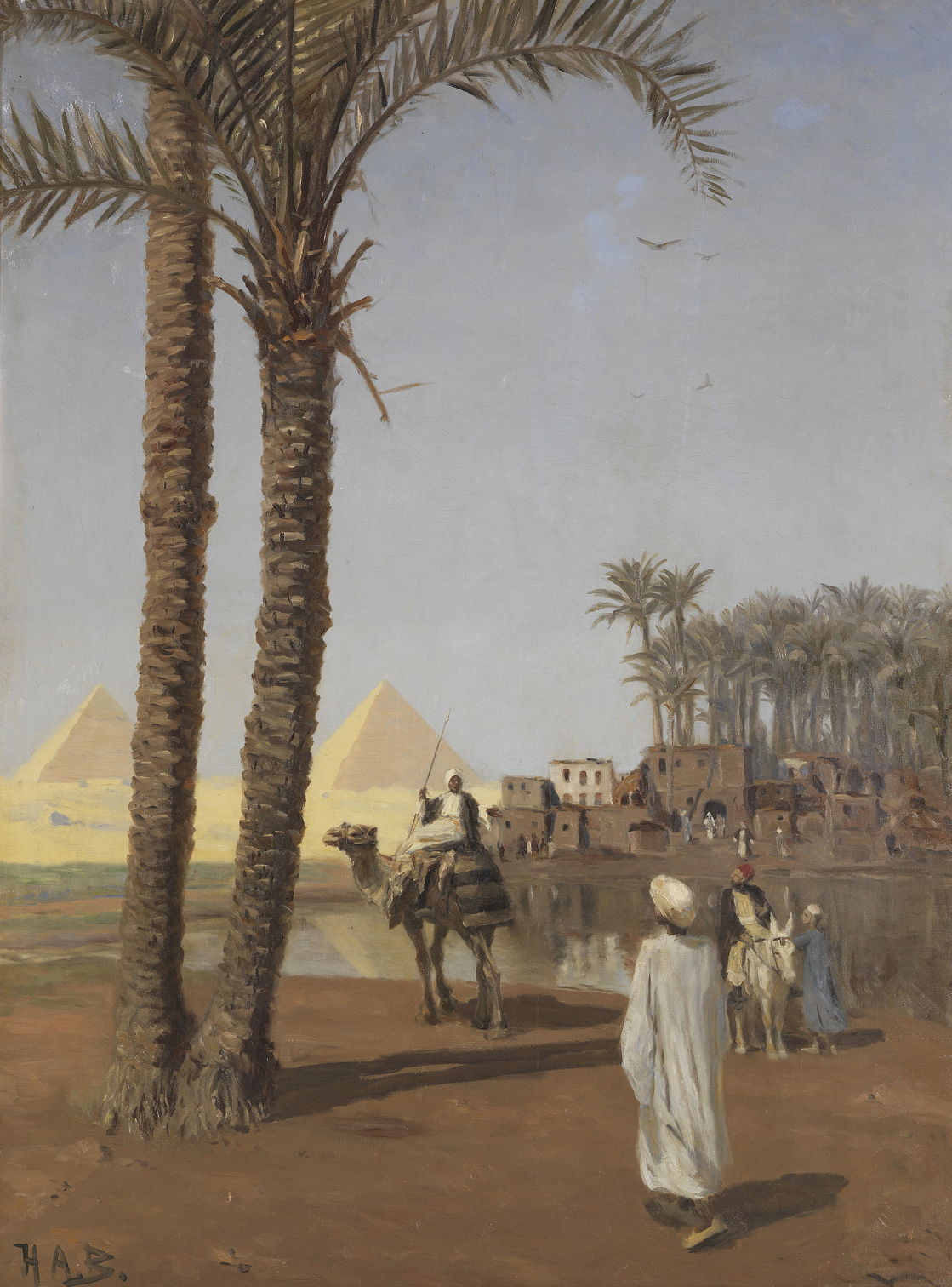
Brendekilde’s Oriental Scene with the Pyramids of Giza in the Background, probably from about 1890, shows one of the most famous sites just outside the city of Cairo.
My last visiting artist travelled from even further: when the Australian Impressionist Arthur Streeton moved from Sydney, Australia, to London in 1897, he took the opportunity to visit Cairo and Naples en route.

Streeton’s oil sketch of a Cairo Street (Mosque, Sultan Hassan) (1897) captures the scene in the dazzle of sunlight, an optical experience we won’t enjoy until well into next year.

