
Vincent van Gogh was one of the most radical painters in a century famous for radical painting. It has become popular to attribute much of this not to his artistic intent, but to some form of abnormal visual perception. Three main claims have been made, that he:
- had yellow-tinted vision in what’s termed xanthopsia,
- suffered from digitalis toxicity, which can cause xanthopsia and other visual disturbances,
- had visual disturbances from other toxins, either from drinking absinthe or from pigments in his paints.
Inevitably, careful examination of documentary evidence from his period in hospital near Arles, and his contacts with his close friend Doctor Gachet fail to provide any support. Indeed, the doctor assessed his visual acuity as being excellent. Thus the only evidence presented is based on the paintings from the last couple of years of his life.
If van Gogh did suffer from xanthopsia or any similar disturbance of colour perception, then he wouldn’t have painted whites without yellow tint, and what should have been blues would be visibly tinted green. I can’t show a complete collection of his many paintings from this period, but here are some of the better-known works.
1888

The Blue Train (Viaduct in Arles) has rich blues, and its yellows are more ochre.
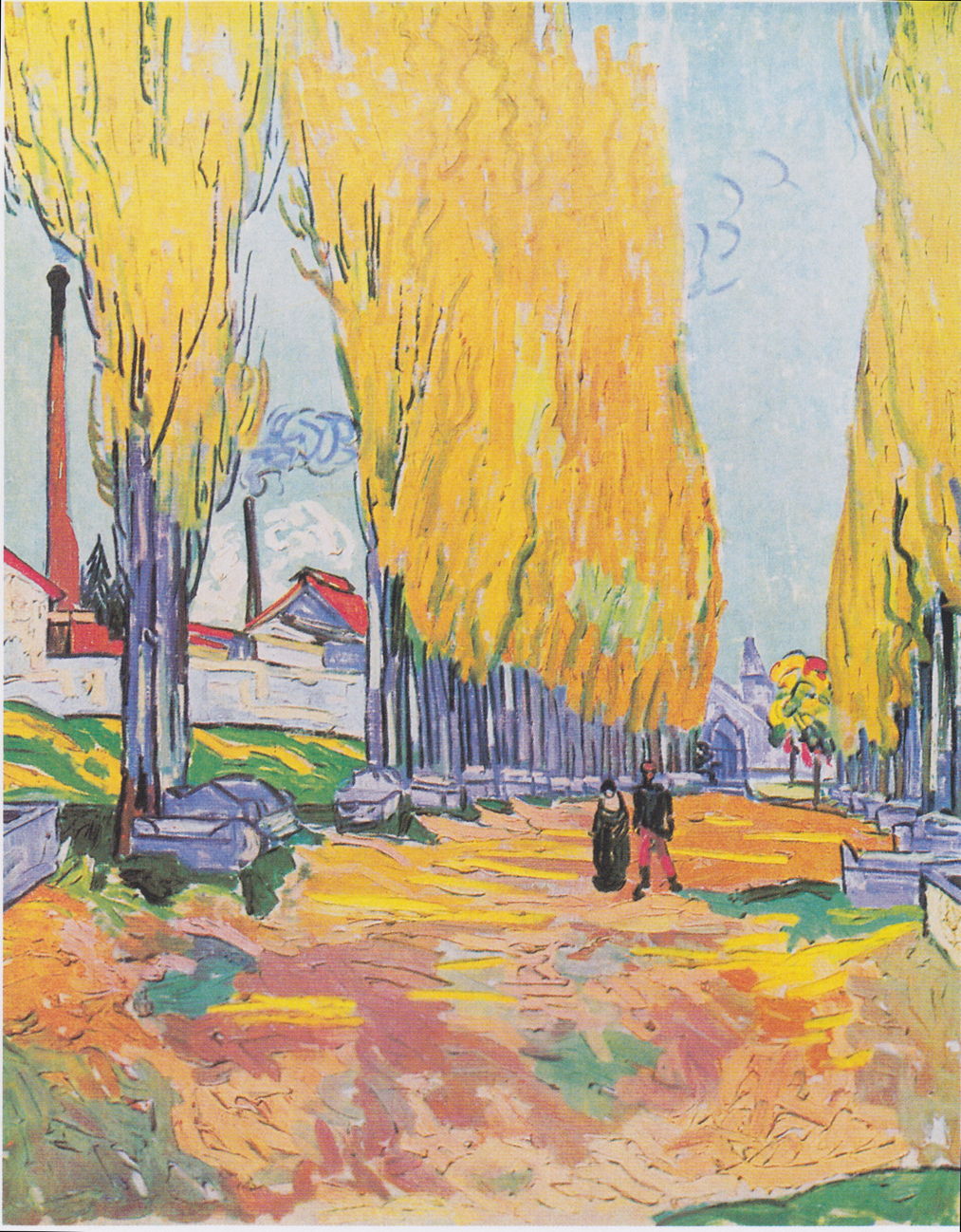
He painted Les Alyscamps, Avenue in Arles alongside Paul Gauguin. It too has plenty of blue.

The Langlois Bridge at Arles with Women Washing also features rich blues.

Starry Night over the Rhône is overwhelmingly blue.

Still Life: Vase with Twelve Sunflowers painted in August 1888, known as the third version, does have a pale blue-green background.

Still Life: Vase with 15 Sunflowers, known as the fourth version of this series, is overwhelmingly yellow.

Van Gogh’s Chair, completed in November or December 1888, even has pale blue outlines to the chair.
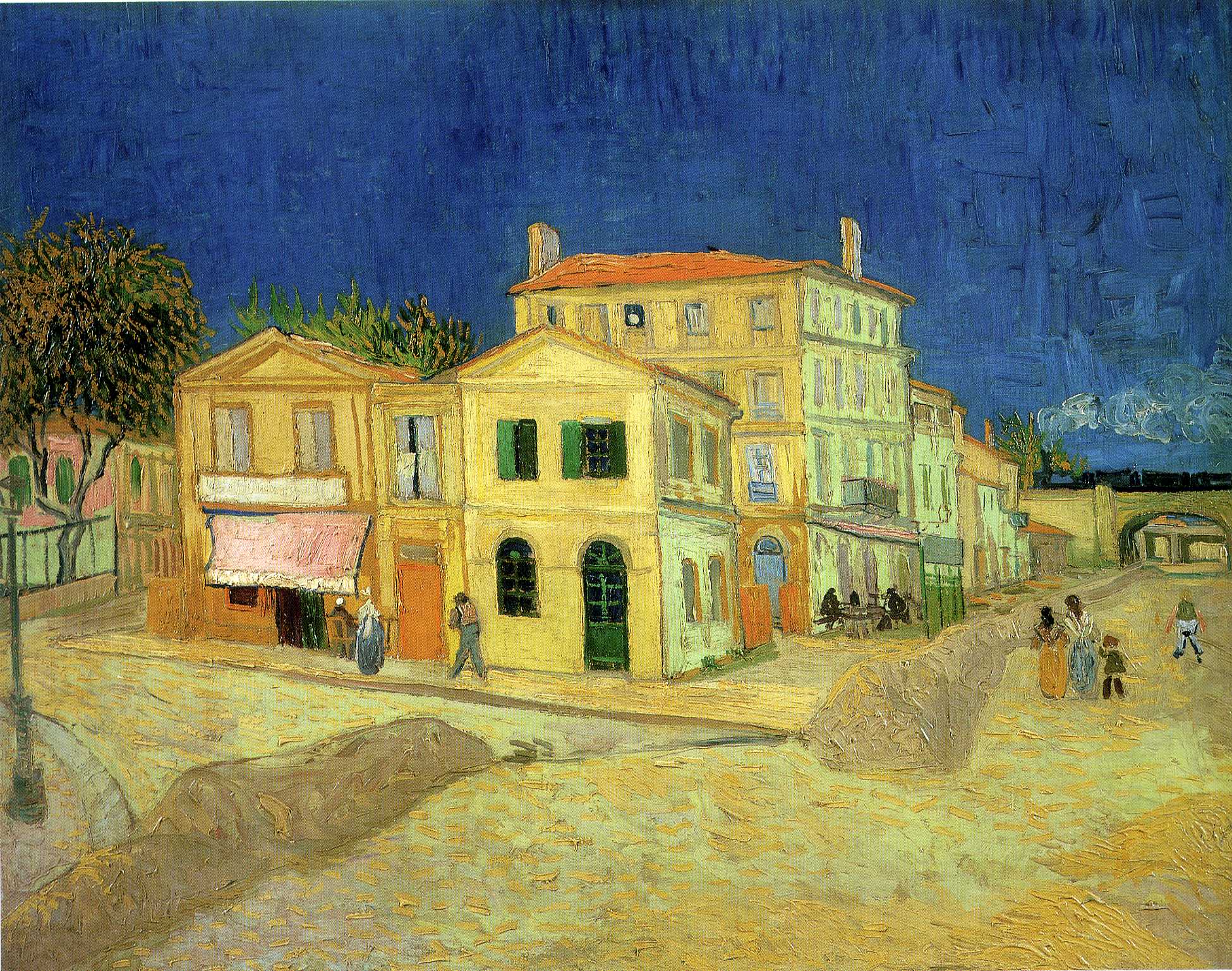
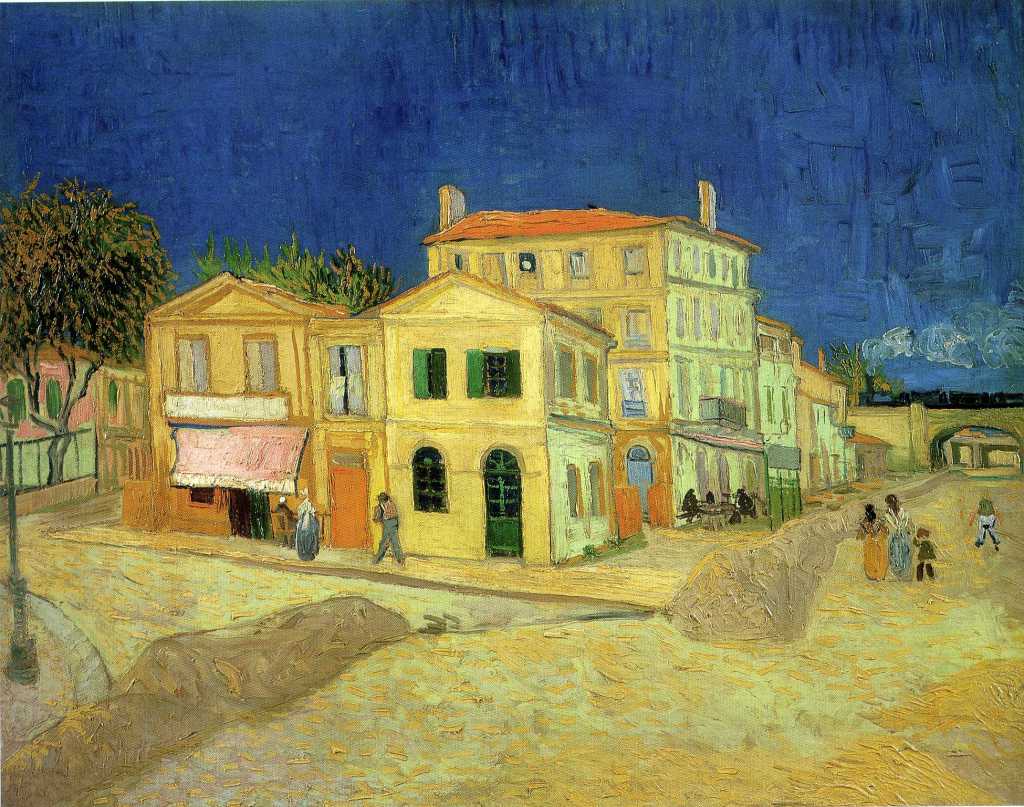
Vincent’s House in Arles (The Yellow House) is strikingly yellow and deep blue, with relatively little green.
1889

Still Life of Oranges and Lemons with Blue Gloves from January 1889 is dominated by oranges and yellows, with contrasting dark blue gloves.

Cypresses features an impasto of rich yellows and greens, against a sky that ranges from pale blue to pale pink with some strokes of pure white.

Wheat Field with Cypresses has a similar range of colours, with small patches of red poppies in the foreground. Note the blue hills in the distance.

His second version of A Wheatfield, with Cypresses is similar.

Olive Grove, from July, is dominated by blues, yellows and greens, with olive trunks and branches in blue and green.
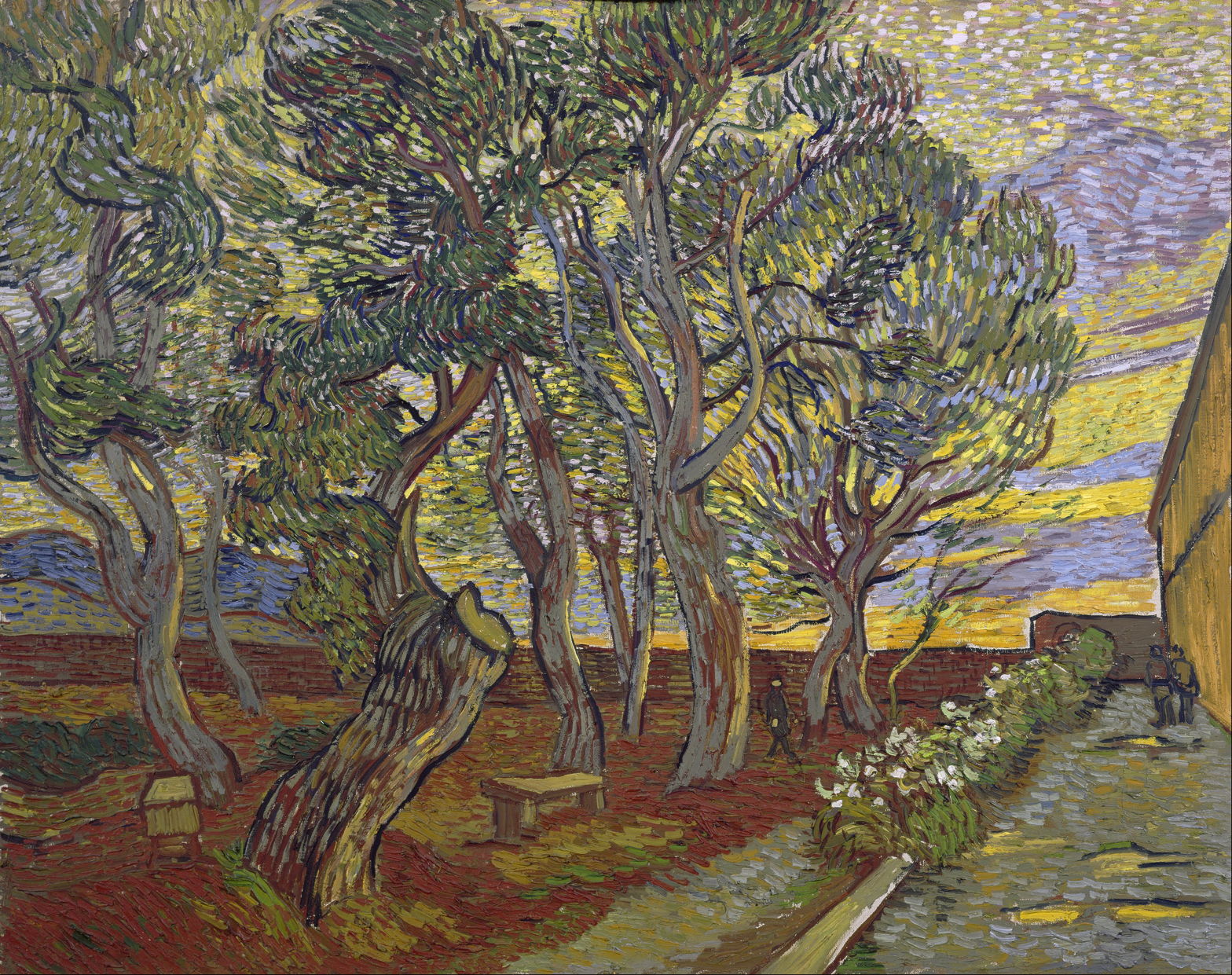
The Garden of Saint Paul’s Hospital adds red-browns, and white flowers, with a sky alternately blue and yellow.

Dormitory in the Hospital in Arles has more yellow and green dominance.
1890

Irises from May 1890 has deep blues and greens against yellows.
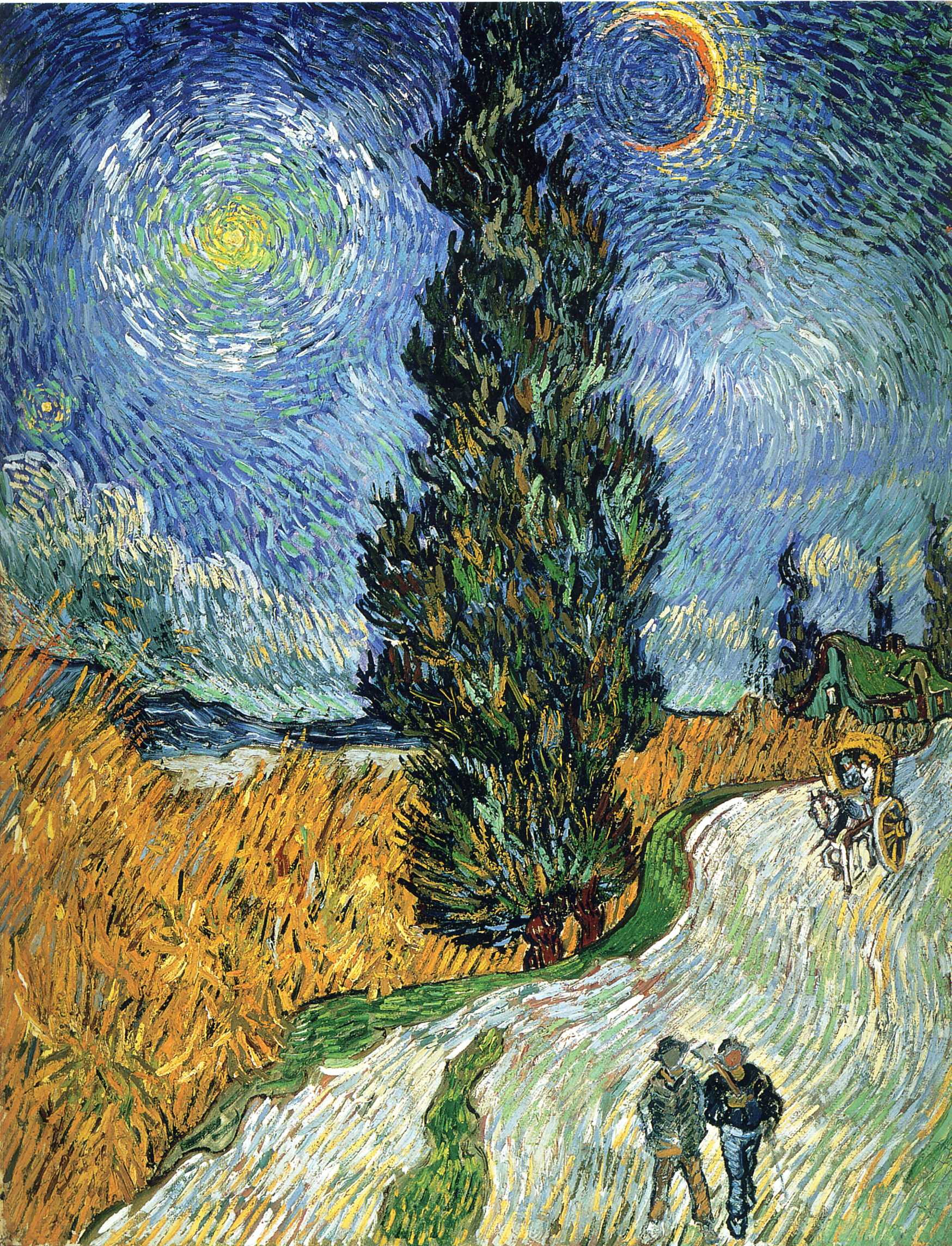
Road with Cypress and Star, painted just two months before his death, includes wide ranges of colours, with many blues and pure whites.

Rain – Auvers, from a few days before his death, features blues tending towards lavender rather than green.
I think you’ll agree that Vincent van Gogh’s late paintings show no evidence of any disturbance of colour perception or vision. For those who still feel the need to explain away his unique art, perhaps the problem rests with the viewer not the artist.
Reference
Michael F Marmor & James G Ravin (2009) The Artist’s Eyes. Vision and the History of Art, Abrams. ISBN 978 0 8109 4849 5.

