
When Edward Adrian Wilson (1872–1912) went to the Antarctic he was first and foremost a physician, secondly a zoologist and ornithologist, and last a talented painter and draftsman.
He was the son of a physician, and during his childhood he decided to become a naturalist, leading to his enthusiasm for drawing animals. He was awarded first class honours in his degree in Natural Sciences at Cambridge, and then moved to study at Saint George’s Hospital Medical School in London. During those medical studies, he undertook mission work in the slums around Battersea in London, where he caught tuberculosis.
He recovered from a severe acute bout of tuberculosis in Norway and Switzerland, where he also improved his painting. He was well enough again by 1900 to complete his medical training, then the following year he got married less than a month before leaving Britain with Robert Falcon Scott’s Discovery Expedition to the Antarctic.
Wilson, Scott and Ernest Shackleton sledged ‘furthest south’ than anyone else during the Antarctic summer of 1902-03. Their journey turned into something of an epic, with serious failures such as the food for their dogs turning bad, and Shackleton in particular being very sick from scurvy and more.

Wilson painted the portraits of these Two Emperor Penguins, both carrying chicks (Cape Crozier rookery) on 13 September 1903, after he had recovered from their journey.
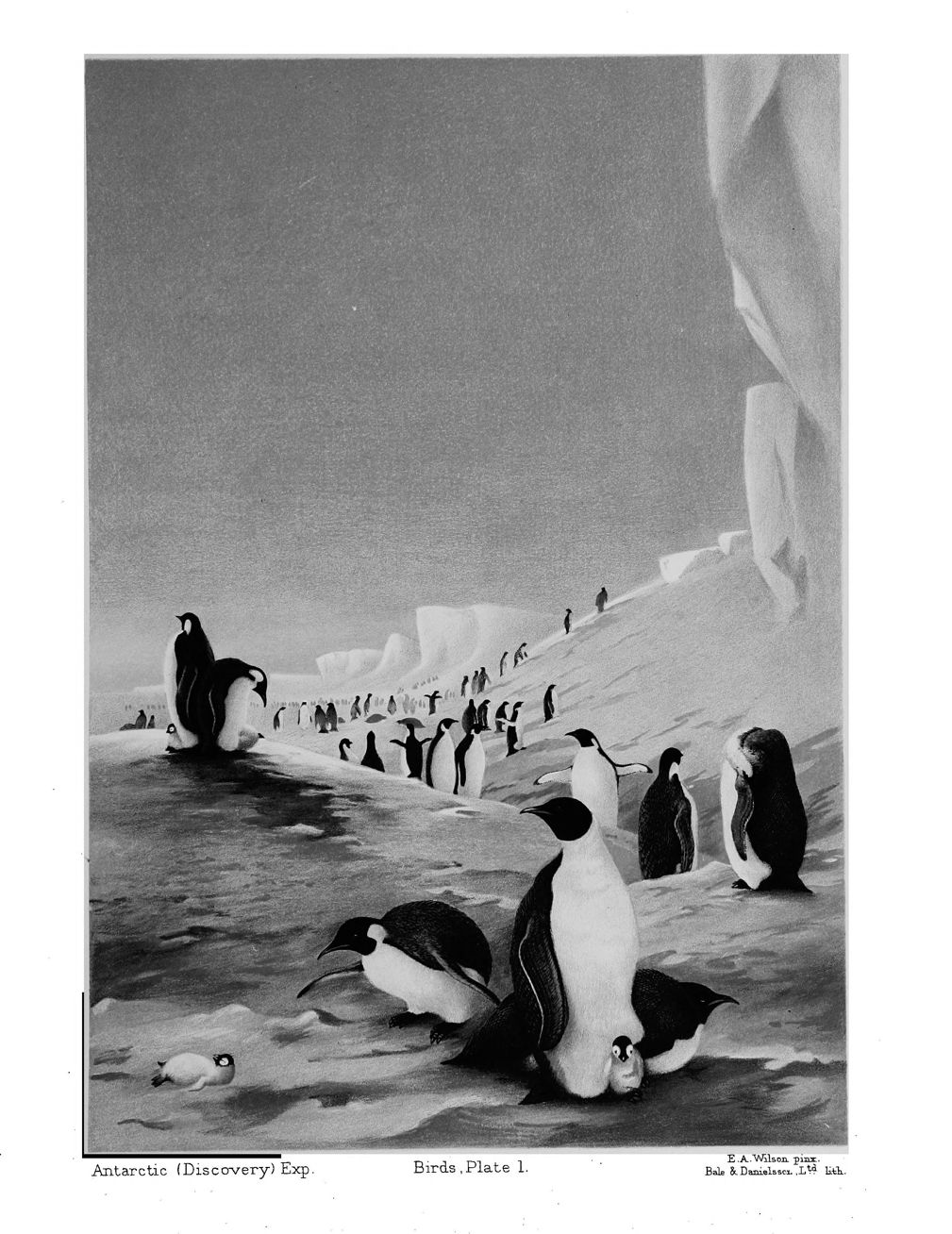
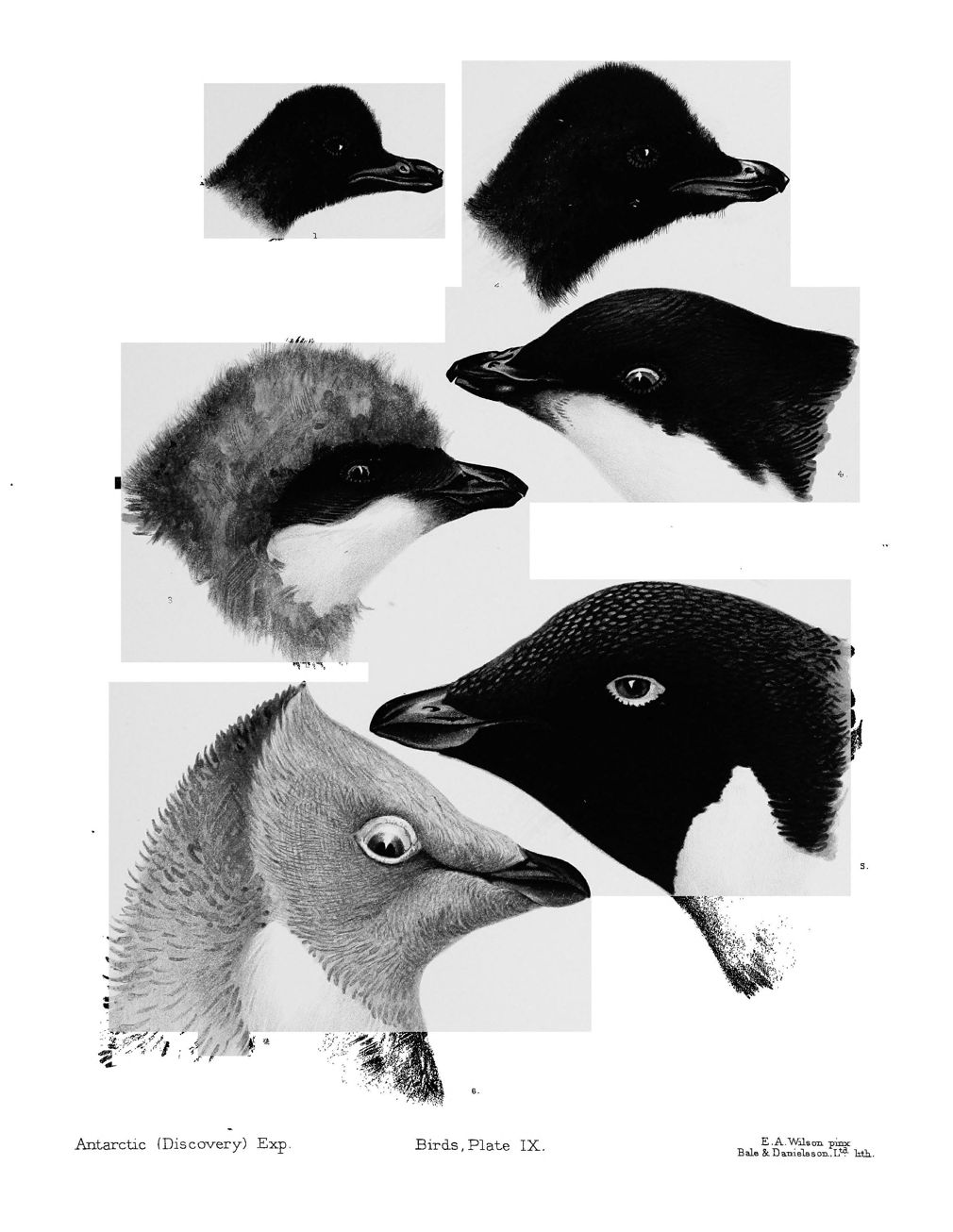
His plates, above and below, from the official account of the expedition demonstrate his skills at ornithological illustration.
During the few years he was back in Britain, Wilson completed a set of paintings for an account of the mammals of Britain, published in 1910.

This of the Dormouse is typical of their high quality.
In June 1910, Wilson left Britain for his next Antarctic expedition, again with Scott, in the Terra Nova, in January 1911 finally arriving at Cape Evans on Ross Island, Antarctica, where they were to be based.

This rough pencil sketch of Camping after Dark (1910) shows a cutaway of an Antarctic ‘pyramid’ tent, its three occupants crammed in tightly together. From their tangle of legs and boots to the mittens and balaclava hats hanging to thaw and dry above them, it’s cramped but warm and sheltered.
Soon after their arrival, Wilson painted several watercolours of local views.

Beaufort Island, Ross Sea, Antarctica, 4 January 1911 shows a small island to the north of Scott’s base camp. It has colonies of two species of penguin, emperor and Adélie.

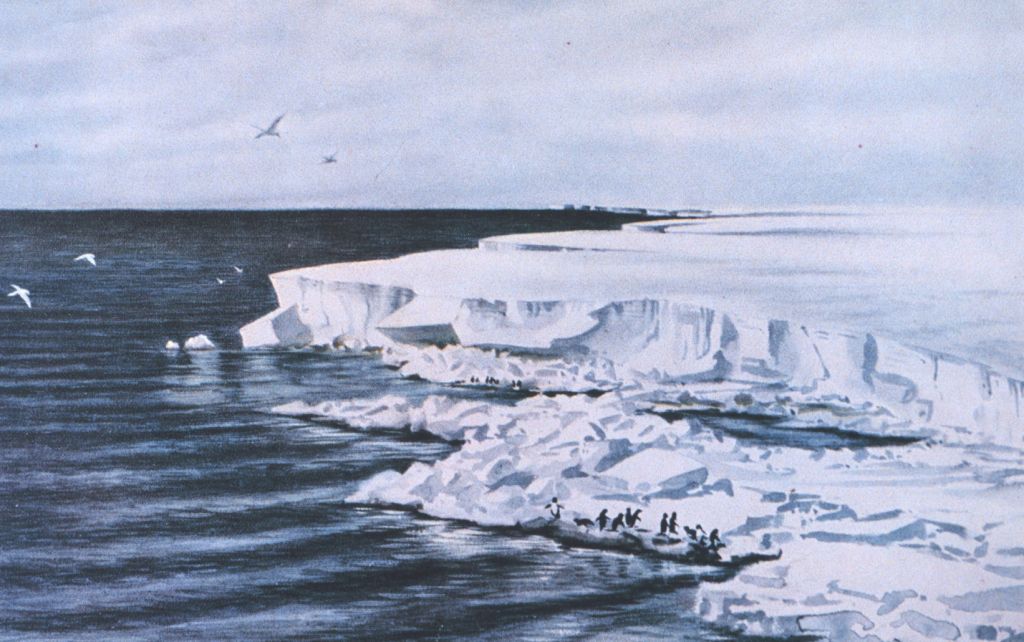
Wilson’s watercolour of The Great Ice Barrier – looking east from Cape Crozier was also painted on 4 January 1911, and shows small groups of penguins on the ice cliffs at the edge of the Ross Ice Shelf. Cape Crozier has one of the largest colonies of Adélie penguins in the world, emperor penguins, and a large breeding colony of south polar skuas, well-known scavengers.
In July 1911, in the depth of the Antarctic winter with no daylight at all, Wilson led a party of three to Cape Crozier to collect three eggs from the large emperor penguin colony there. At one stage they lost their tent, one of the worst disasters possible, but fortunately found it had only blown about half a mile away. One of Wilson’s party, Apsley Cherry-Garrard, later dubbed their five week trip ‘the worst journey in the world’.
On 1 November 1911, Wilson was one of Scott’s chosen team to make the attempt to reach the South Pole. When they arrived there on 18 January 1912, they discovered that Roald Amundsen’s team had beaten them to the pole by five weeks. The five men then attempted to return, but some time after 29 March, Wilson died alongside Scott, 148 miles (238 km) from their destination of base camp. Their bodies were discovered the following Spring, and they were buried under a snow cairn in the remains of their tent.
Further reading and images
Wikipedia
Scott Polar Research Institute collection

