
With his twelve labours for King Eurystheus completed, Heracles was absolved of his sin of killing his wife Megara and their children, and was granted immortality by Hera and Zeus. He then fell in love with Iole, daughter of King Eurytus, but was spurned by the king and his sons, bar one, Iphitus. Heracles killed them, including Iphitus whom he threw over a city wall in another fit of madness brought on by Hera.
Once again he was forced to seek the advice of the Oracle at Delphi, and this time ended up being sent into slavery to Omphale, the queen of Lydia, for a year or more. It was in her court the once-mighty demi-god experienced his greatest humiliation. He was subjugated, stripped of the hide of the Nemean lion, his trademark club taken away, and the women of the court dressed him in their (or possibly Omphale’s) clothes, and gave him a distaff so he could spin with them. The queen asserted her authority by donning his lion-skin, and wielding his club.
From early in the telling of this story, it has also developed sexual frisson, amplified by a dubious appendix in which Heracles is in Omphale’s bed, only for Pan to get in, assuming he is the queen. Heracles promptly kicks Pan out of the bed, and welcomes the queen instead.

This mosaic from Llíria, Valencia, is one of the most unusual summaries of Heracles’ career in depicting the twelve labours around its central panel.

There, in the midst of his swashbuckling adventures, Heracles is seen dressed as a woman, holding his distaff and spindle, while Omphale sits on the Nemean lion-skin on her throne, clutching his club.

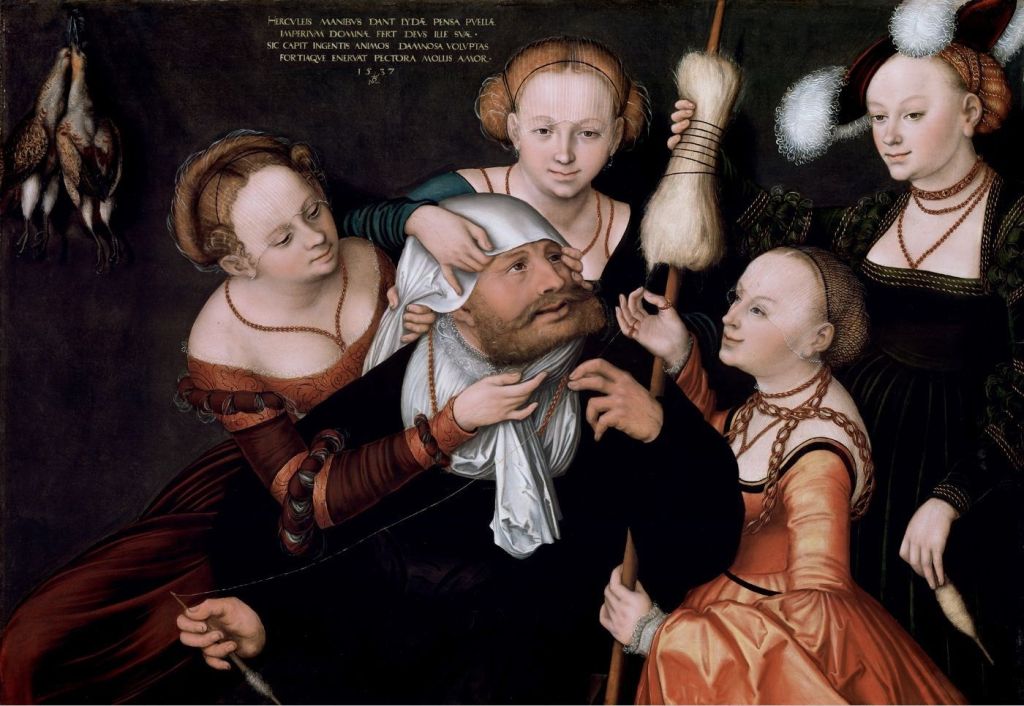
Lucas Cranach the Elder made several slightly different paintings on the same theme of Hercules and Omphale (1537), showing Heracles being humiliated in a respectable and amicable way by the women of Omphale’s court.

Bartholomeus Spranger’s Hercules and Omphale (c 1585) uses the same exchange of attributes, but plays openly with the eroticism of Omphale’s position.
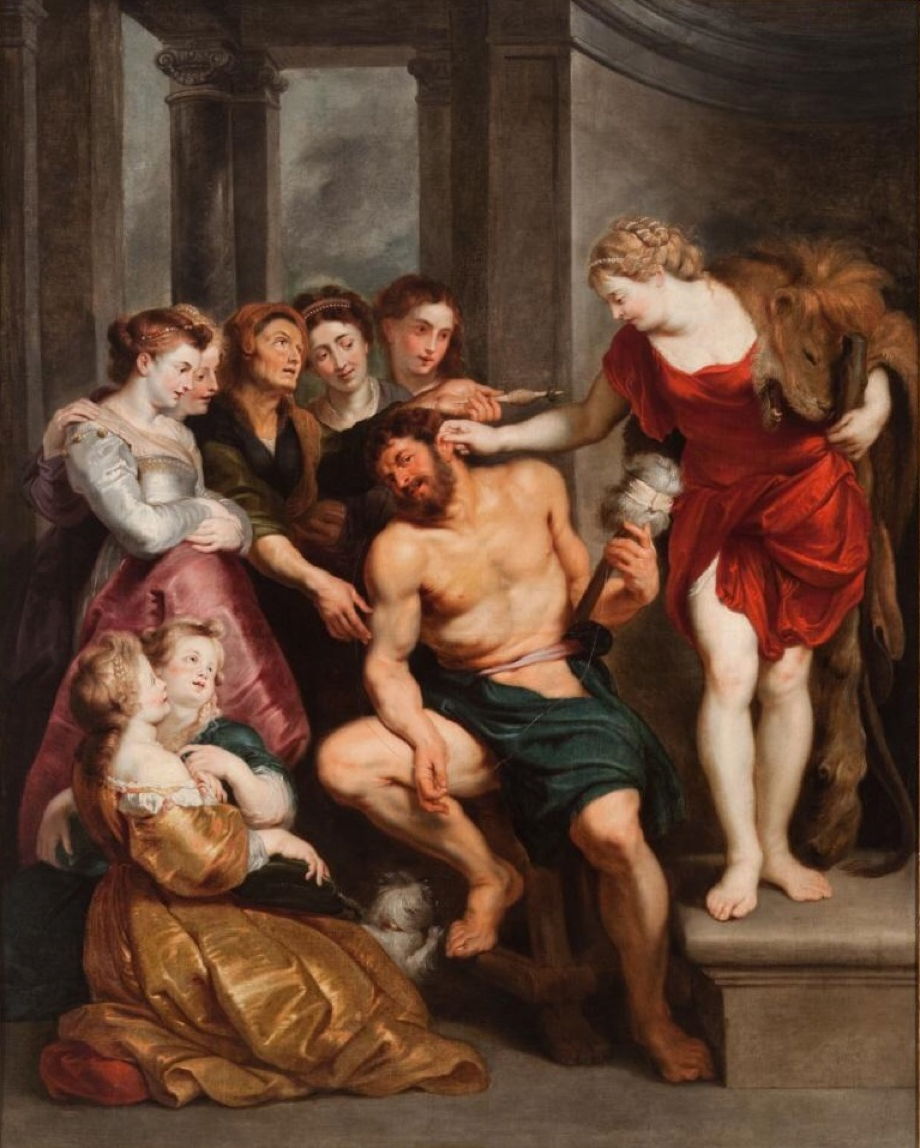
Hercules and Omphale (c 1620) has been attributed to Peter Paul Rubens, and explores the humiliation of the hero in a more conventional way, as Omphale tugs at his ear as if he were an errant schoolboy.

Bernardo Cavallino puts the enslaved and degraded Hercules on display in the court, in his Hercules and Omphale from about 1640.
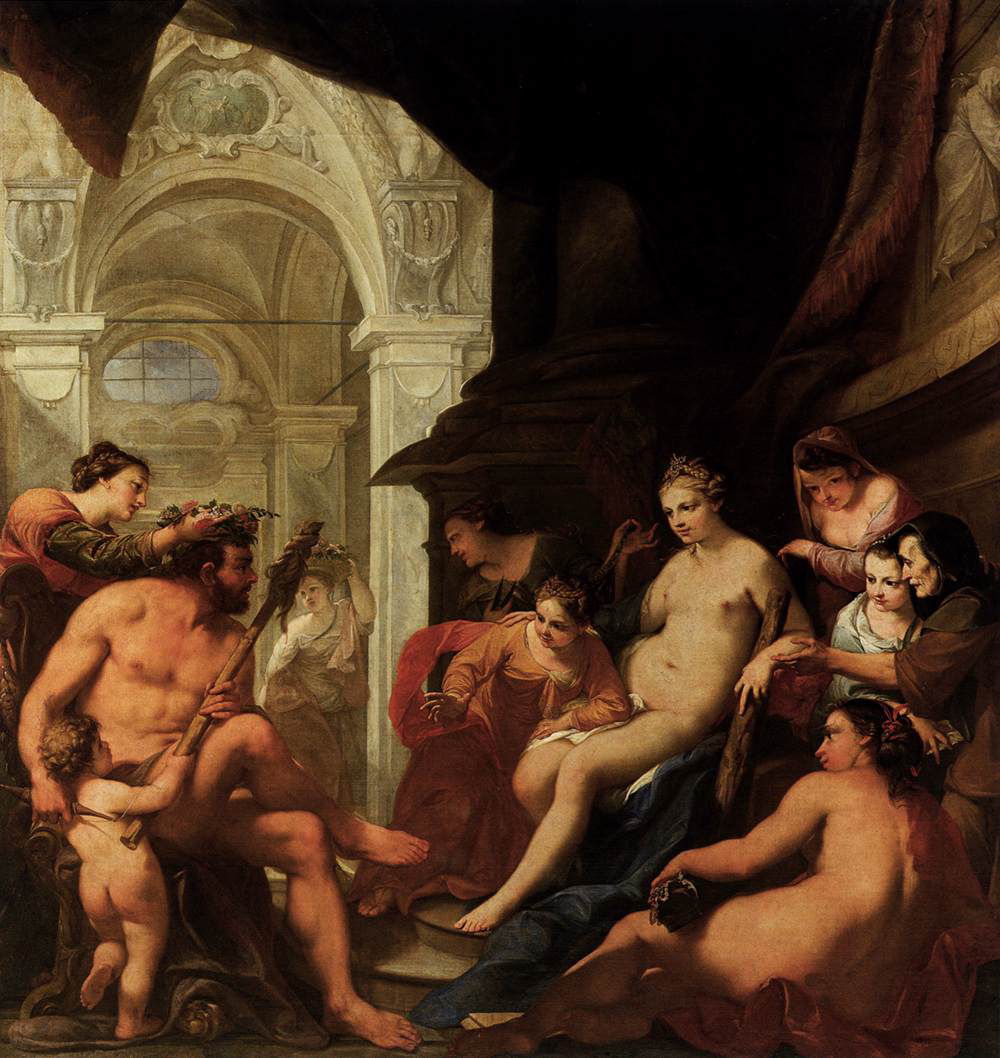
Antonio Bellucci cedes Heracles’ club to the queen, but not yet the lion-skin, in his Hercules in the Palace of Omphale (c 1698). But look carefully at the directions of gaze of Omphale and her attendant women: they aren’t looking Heracles in the eye, although he appears to be remonstrating with the queen as a floral crown is put on his head, and a distaff in his left hand.

Luigi Garzi’s Hercules and Omphale (c 1700-10) lets Heracles put his spinning gear behind him, as he entertains the court with a song and the tambourine. Omphale seems to be enjoying her new position on the lion-skin, and holding his club in her left hand.

Only Goya is more straight-laced, in his Hercules and Omphale (c 1810); there is no exchange of clothing, but Heracles sits attempting some fine task – threading a needle perhaps? – with his sword under the control of a courtier.
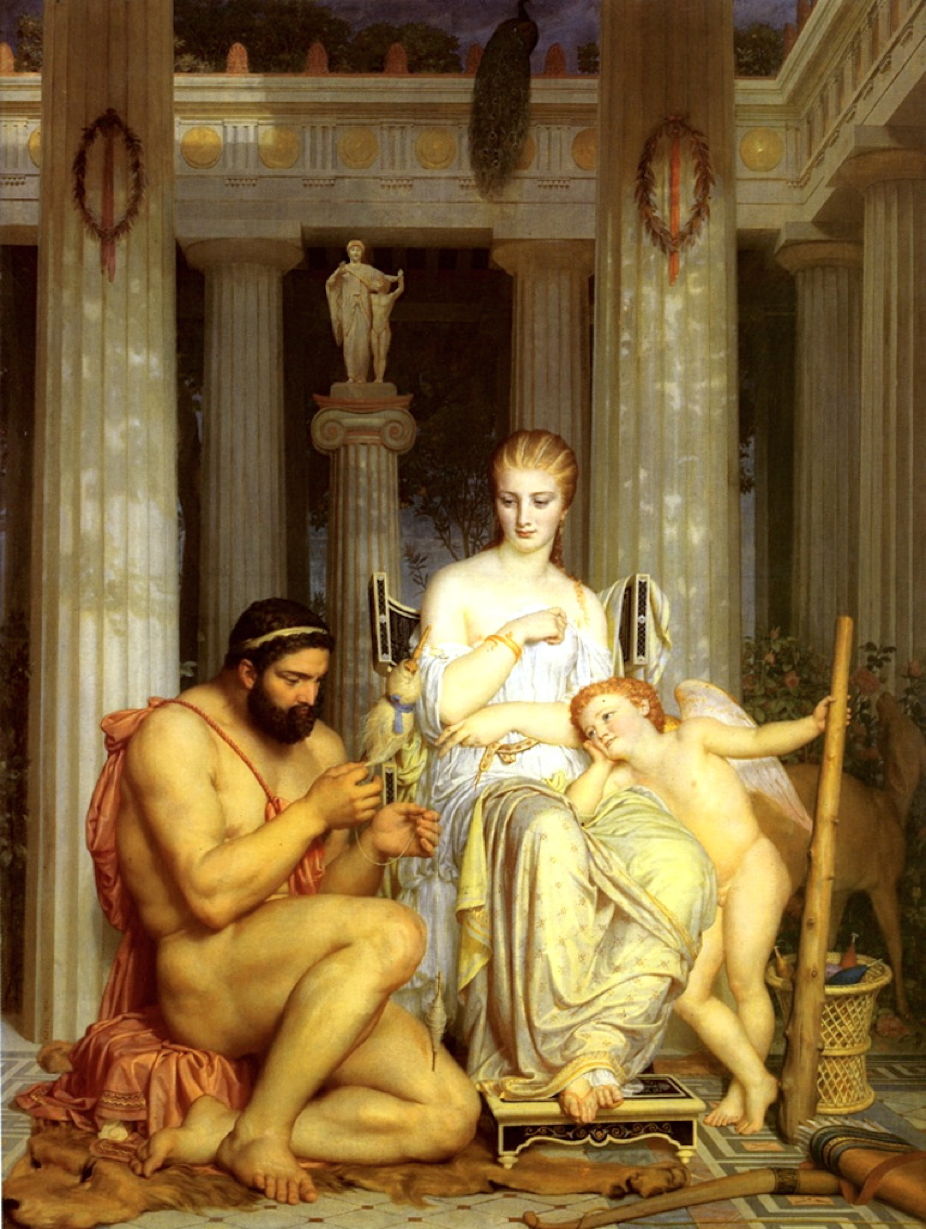
As the nineteenth century wrestled with the future of history painting and mythology, the story of Heracles’ humiliation didn’t die by any means. This is Charles Gleyre’s Hercules and Omphale from 1862, showing the hero learning to spin.
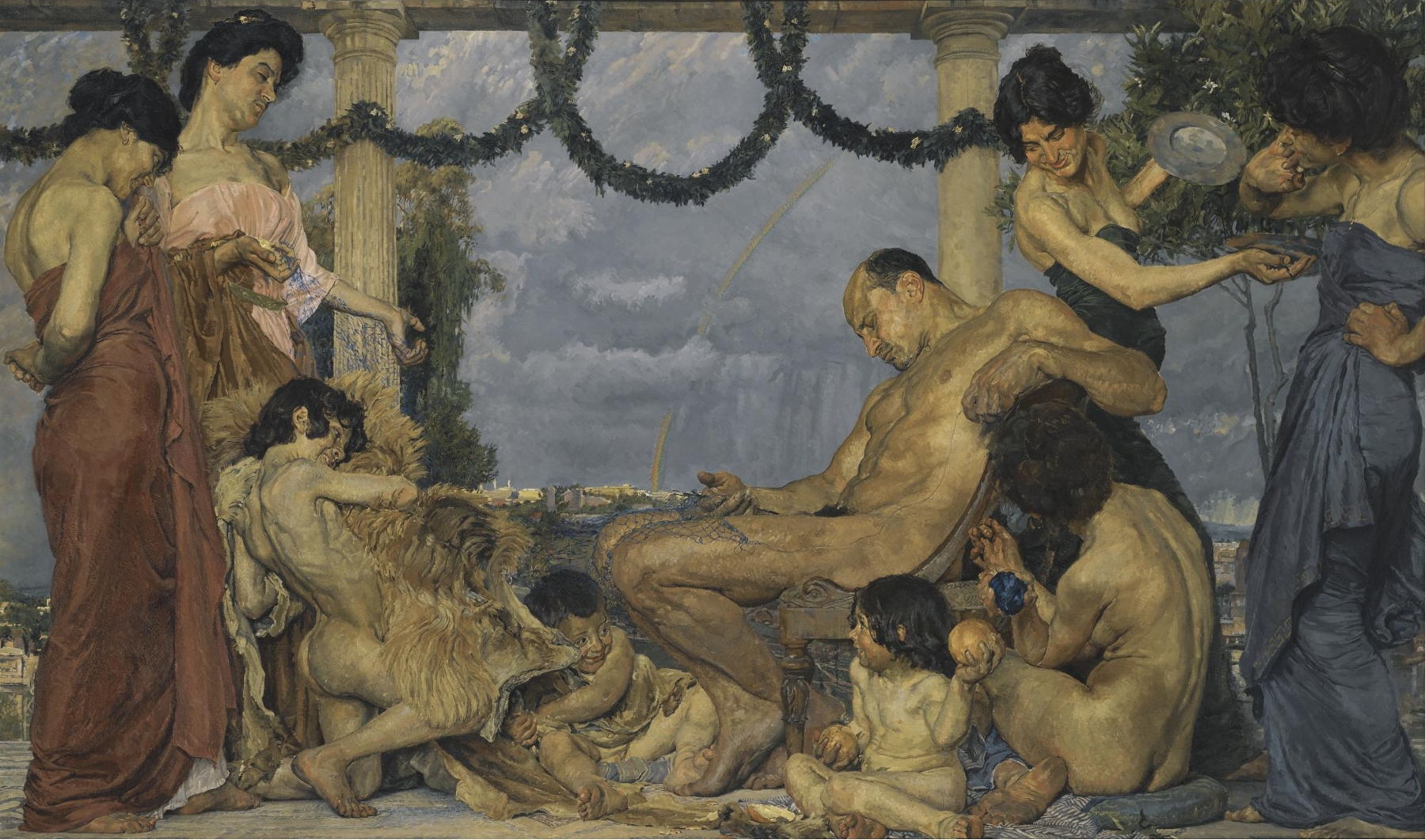
Into the twentieth century, this story held out when most others were falling into disfavour. Otto Greiner’s Hercules and Omphale (1905) shows an older and exhausted Heracles who has fallen asleep because of his exertions, amid the taunting court.
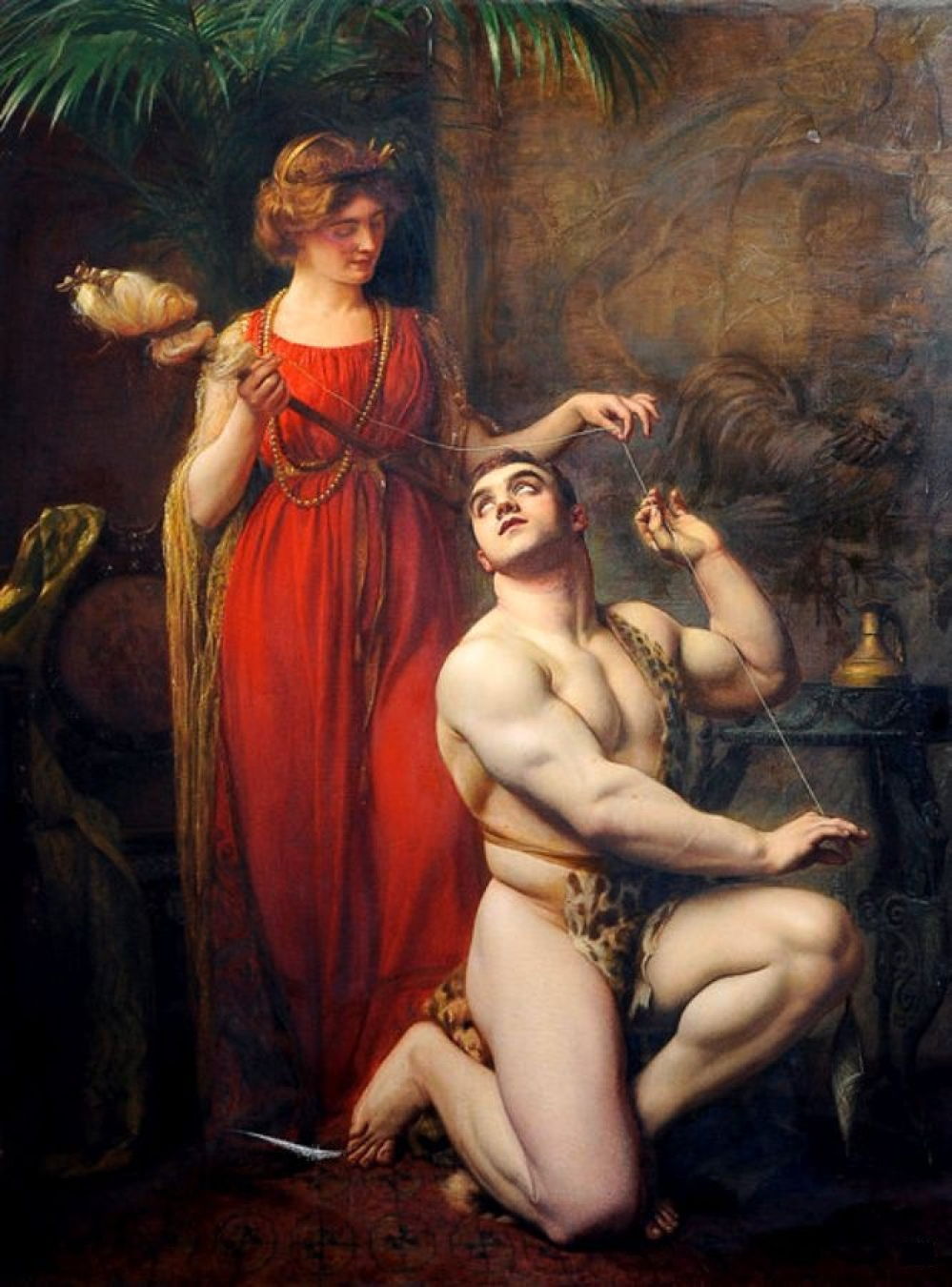
As the First World War loomed close, Gustave-Claude-Etienne Courtois cast Heracles as a circus strong-man, a ‘toy-boy’ kneeling in front of an opulent Omphale, in his Hercules at the Feet of Omphale (1912).

Finally, Byam Shaw ignores the figure of Heracles altogether, showing a triumphant and erotically charged Omphale (1914), against a background of the twelve labours, in a remarkable reconfiguration of the ancient Roman mosaic.

